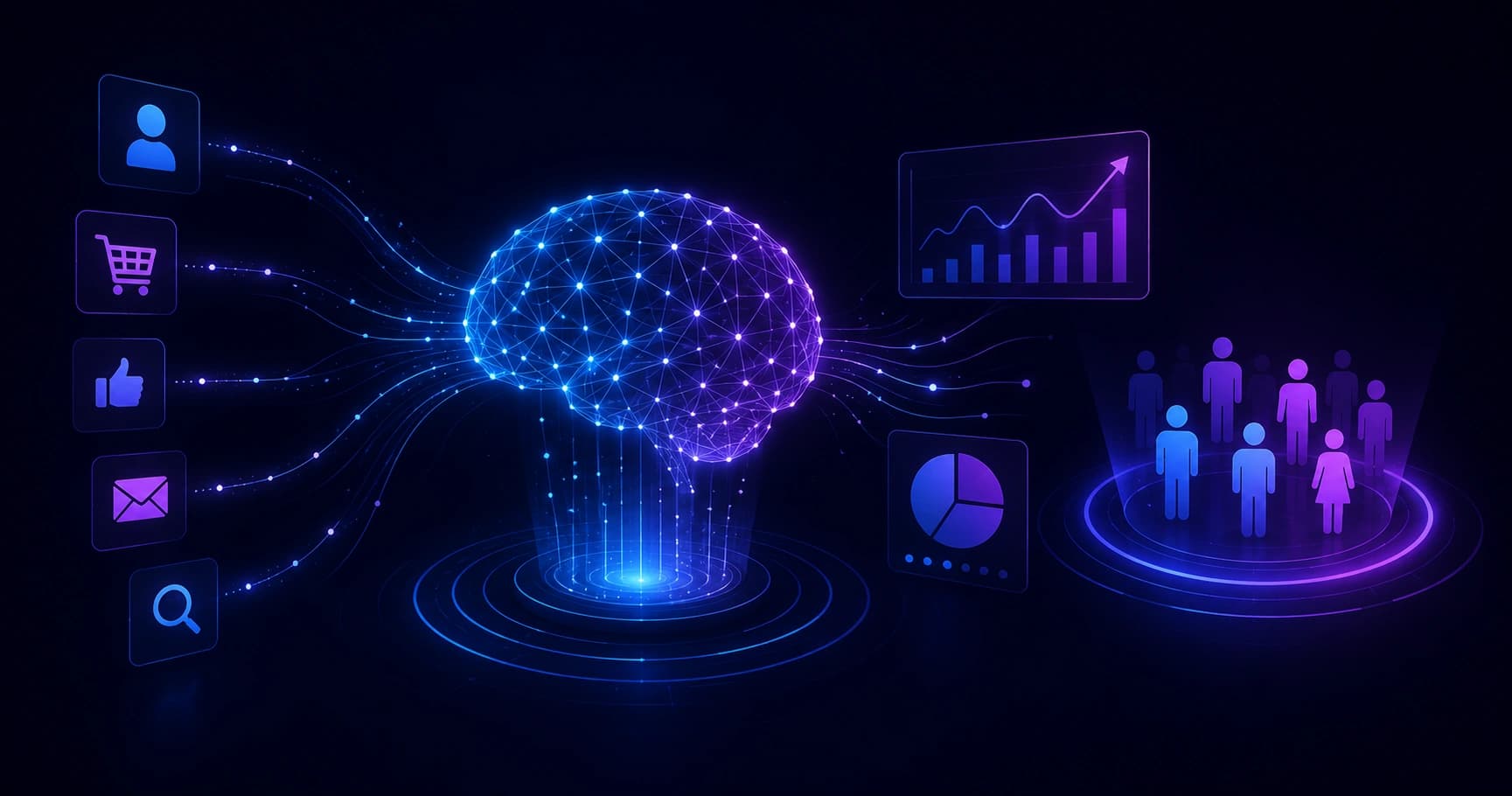
Machine learning has reshaped marketing by automating targeting, forecasting customer behavior, and personalizing campaigns at scale. Here is what actually changed, with data, comparisons, and practical steps.
What Impact Has Machine Learning Made on the Marketing Industry
Machine learning did not simply add a new tool to the marketer's toolbox. It changed who makes the decisions. Ten years ago, a media buyer chose bids, a copywriter chose subject lines, and an analyst chose segments. Today, models make millions of those micro-decisions per hour, and the marketer's job has shifted to setting objectives, feeding clean data, and auditing outcomes. That shift is the single biggest structural change the industry has seen since the arrival of paid search.
This article explains exactly where machine learning has changed marketing outcomes, where its impact is overstated, and how teams of any size can capture the value without a data science department.
Quick Answer: Machine learning has transformed marketing by automating ad bidding, predicting customer behavior, personalizing content in real time, and scoring leads automatically. It shifted marketers from manual campaign control to objective-setting and oversight, improving targeting accuracy, reducing wasted spend, and making one-to-one personalization possible at scale.
What Machine Learning Actually Means in Marketing
Machine learning is a method of building systems that improve their predictions by finding patterns in historical data, rather than following rules a human wrote. In marketing, that data is behavioral: clicks, scroll depth, cart additions, email opens, purchase history, and time between visits.
The distinction matters because it explains the limits. A rule-based system says "email everyone who abandoned a cart after two hours." A machine learning system estimates, per person, the probability that a message sent at a particular hour recovers the sale, and it acts only where the expected value is positive. The first approach treats everyone identically. The second treats prediction as a continuous variable.
Three families of models do most of the work in marketing today:
- Classification models predict a category: will this lead convert, will this user churn, is this review positive.
- Regression models predict a number: expected lifetime value, forecast revenue, optimal bid.
- Recommendation and ranking models order items or content by predicted relevance for a specific person.
Almost every marketing feature branded as "AI" reduces to one of these three.
The Six Areas Where the Impact Is Measurable
1. Audience Targeting and Segmentation Became Behavioral, Not Demographic
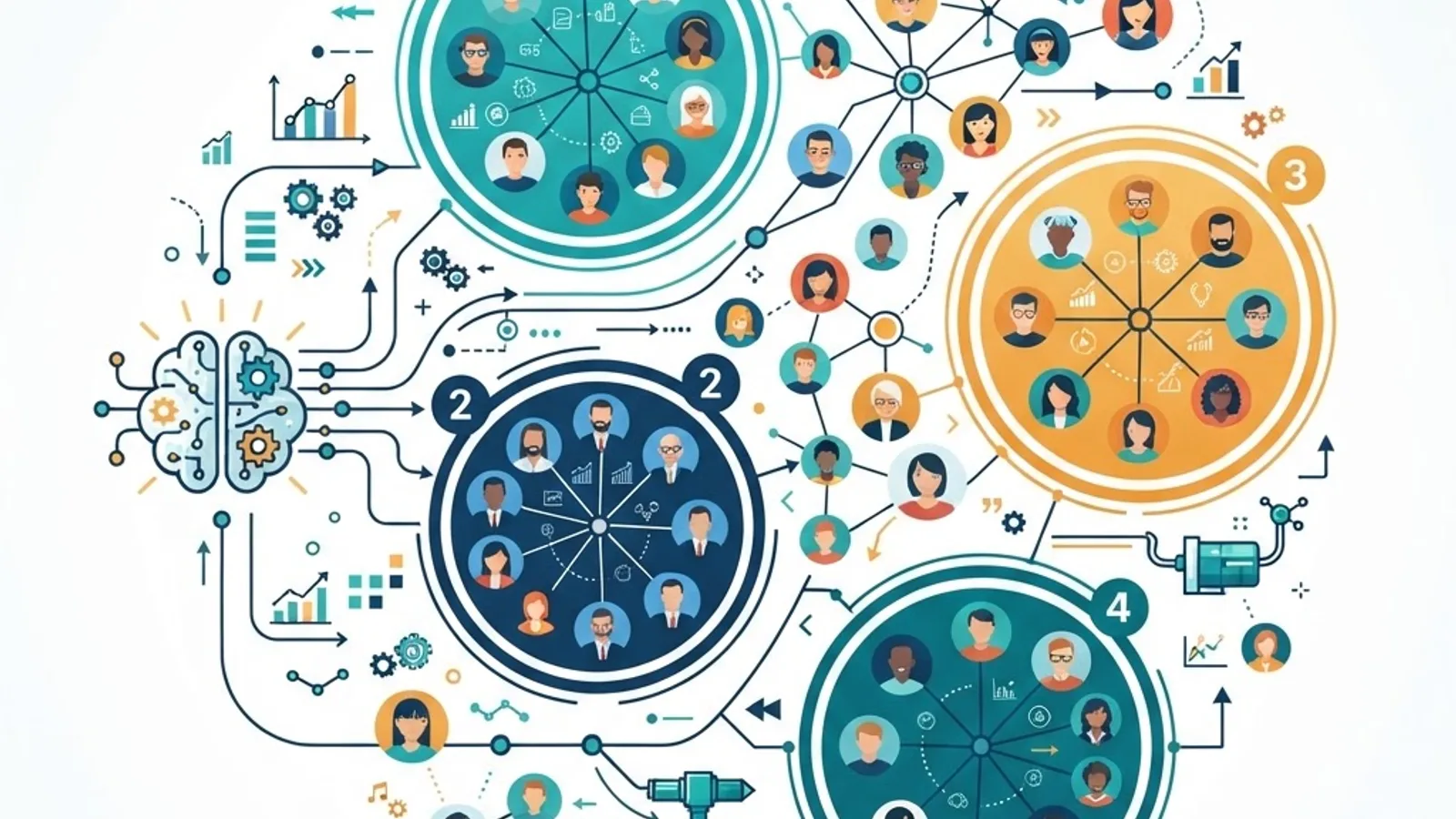
Traditional segmentation grouped people by age, gender, and location because that data was cheap to collect. Machine learning clustering algorithms group people by what they do, which correlates far more strongly with purchase intent.
The practical result: a fitness brand no longer targets "women aged 25 to 34." It targets "users whose session pattern resembles previous buyers of the twelve-week program," a segment that may span four decades of age. Marketers who made this switch typically find their old demographic segments were hiding two or three distinct buying behaviors inside each bucket.
2. Predictive Analytics Moved Marketing From Reporting to Forecasting
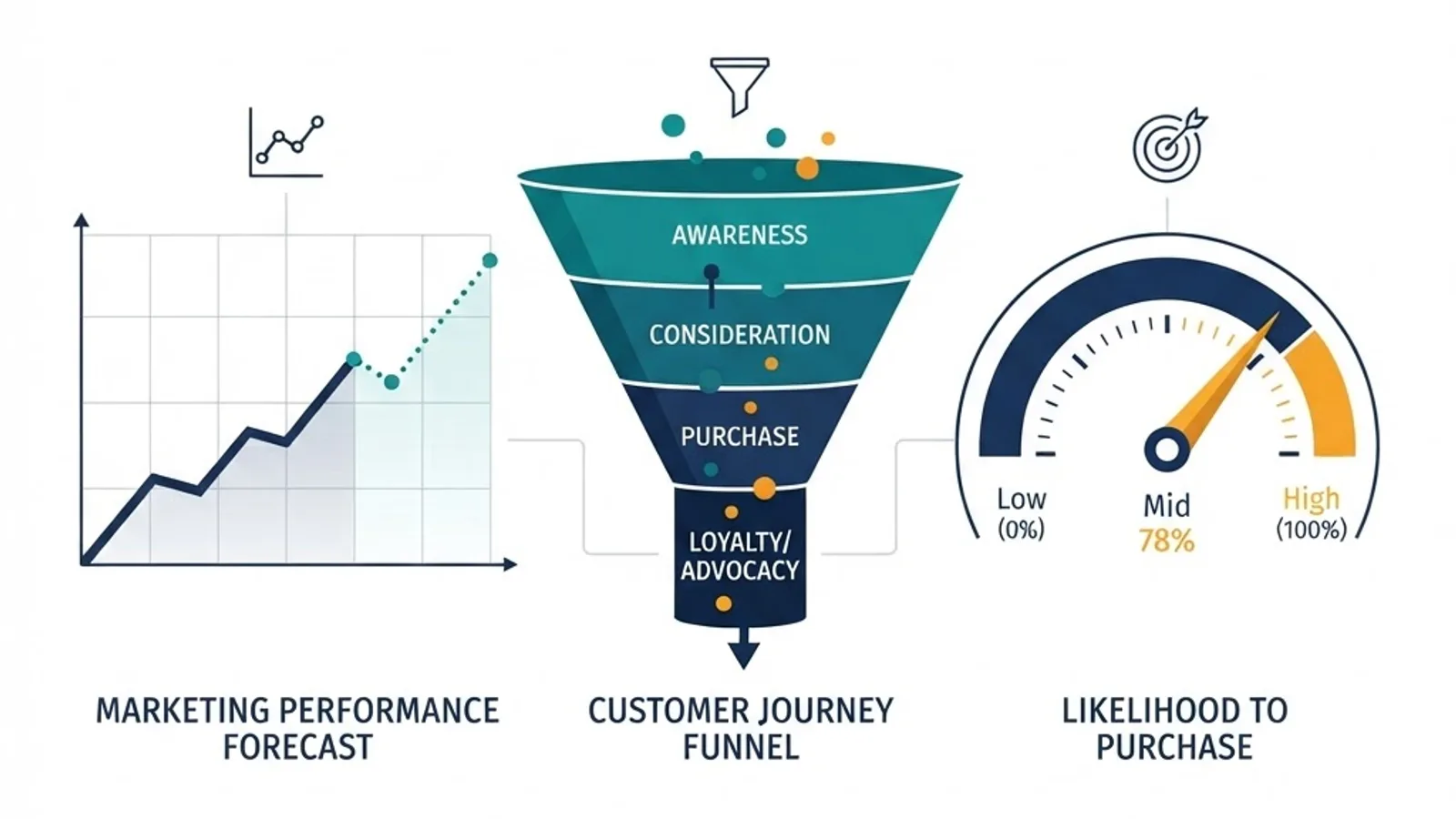
This is the most underrated change. Marketing analytics used to answer "what happened last month." Predictive models answer "what will happen next quarter if we do nothing, and what changes if we act."
The most useful predictions in practice are:
- Propensity to buy within a defined window, used to prioritize outreach.
- Churn risk scores, used to trigger retention offers before cancellation.
- Predicted customer lifetime value at the point of acquisition, used to set profitable bid ceilings.
That third one changed acquisition economics permanently. When you can estimate lifetime value on day one, you can rationally pay more for a customer than the first order is worth. Brands that could not forecast lifetime value were structurally forced to bid conservatively and lost the auctions that mattered.
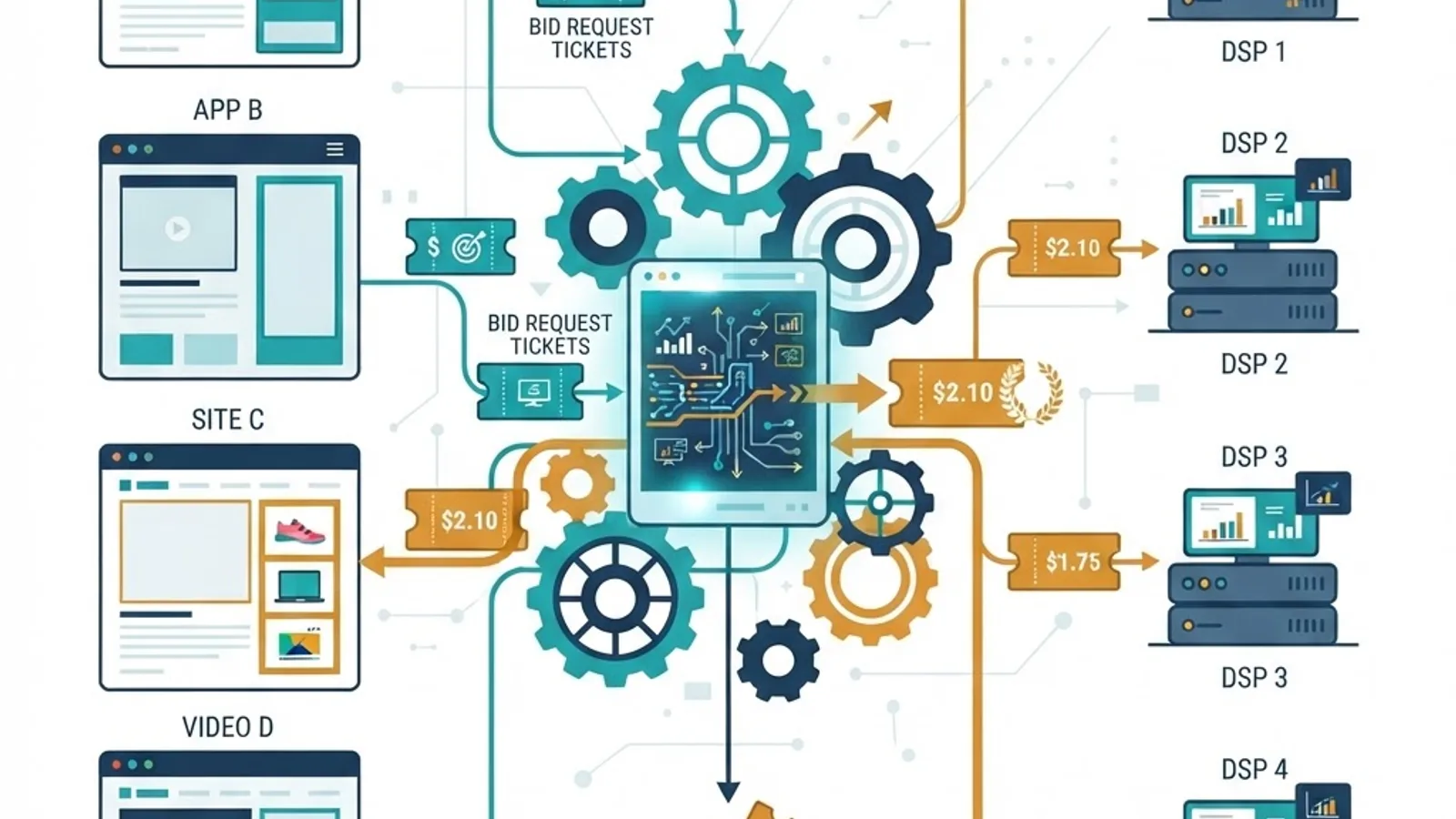
3. Advertising Became an Automated Auction Marketers Supervise Rather Than Operate
Programmatic advertising is where machine learning displaced the most human labor. Real-time bidding systems evaluate each impression, estimate conversion probability, and set a bid in milliseconds. Google's own automated bidding strategies, Smart Bidding, adjust bids per auction using signals including device, location, time, browser, and remarketing list membership, at a granularity no manual bid schedule can match.
The honest trade-off: automated bidding usually improves efficiency, but it also reduces transparency. You gain performance and lose the ability to explain exactly why a bid was placed. Experienced teams manage this by controlling inputs, conversion definitions, exclusion lists, budget caps, and creative variety, rather than trying to out-bid the algorithm manually.
4. Personalization Stopped Being a Feature and Became an Expectation
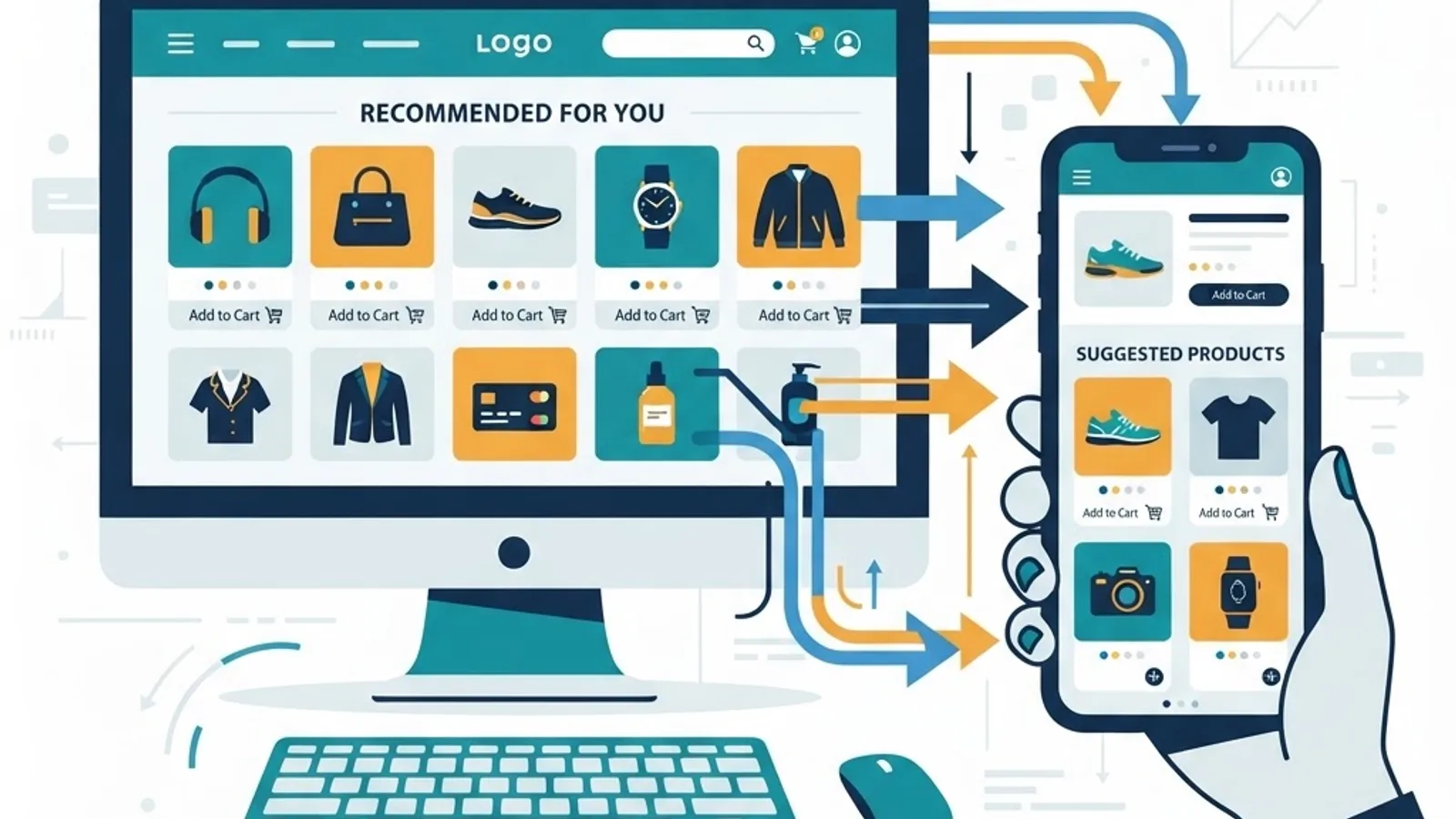
Recommendation engines are the clearest commercial proof of machine learning's value. According to McKinsey, roughly 35 percent of what consumers purchase on Amazon comes from product recommendations, and about 75 percent of what viewers watch on Netflix comes from recommendations. Those figures set the consumer baseline: shoppers now expect a store to know what they are likely to want.
For smaller brands, the achievable version is narrower but still valuable:
- Reordering category pages by predicted relevance per visitor.
- Dynamic email content blocks chosen by the model instead of a hardcoded rule.
- Send-time optimization, which alone frequently lifts open rates because it removes the guesswork from scheduling.
Teams building this into a storefront or platform usually need engineering support alongside the modeling work, which is where custom web application development becomes the bottleneck rather than the algorithm itself.
5. Customer Conversations Scaled Without Proportional Headcount
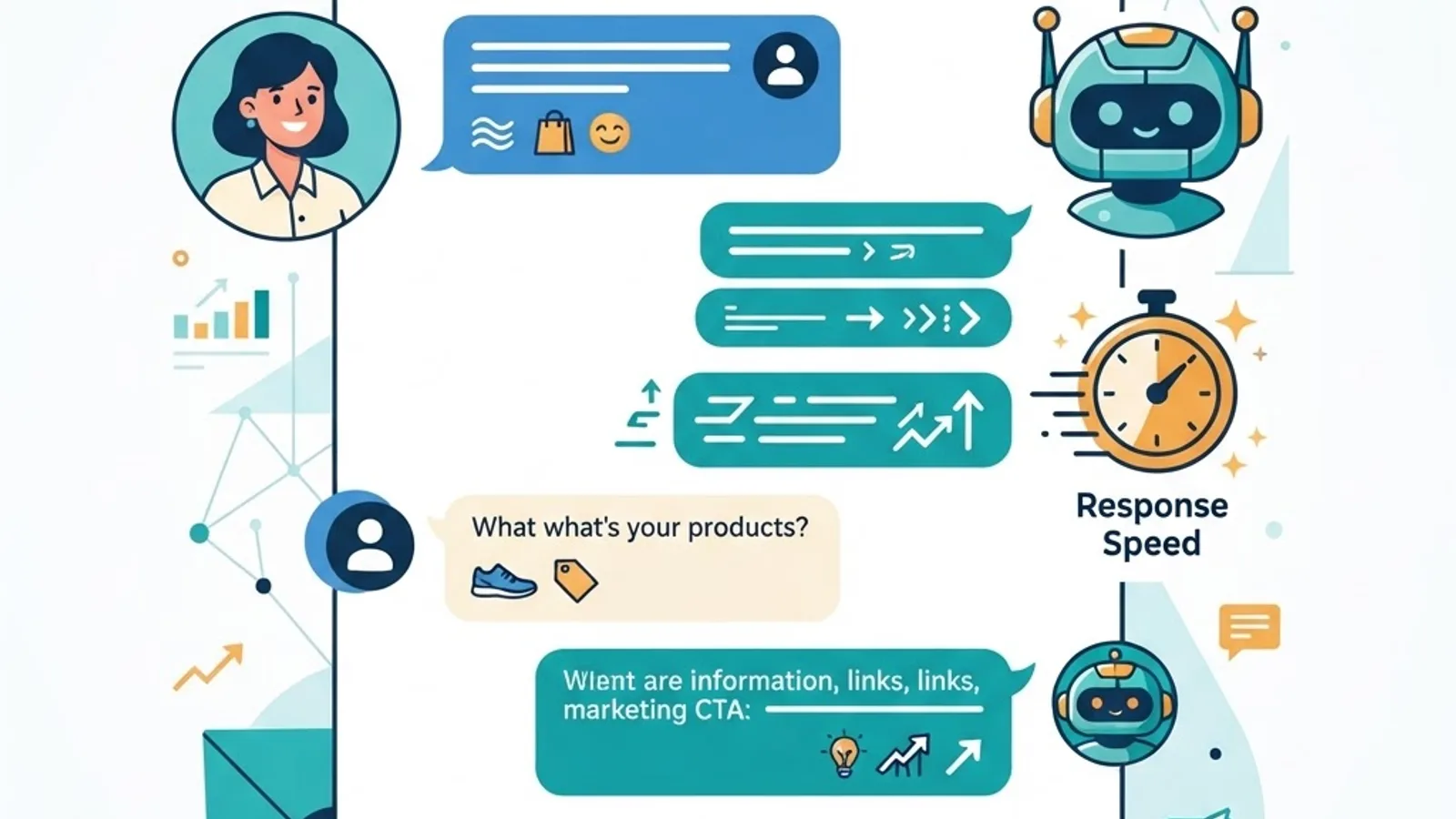
Natural language models changed the economics of response time. Support and pre-sales questions that previously queued for hours now receive an instant, contextual answer. The measurable marketing impact is on conversion rate, because unanswered pre-purchase questions are a leading cause of abandoned carts.
What works: handling repetitive, factual questions such as shipping timelines, sizing, compatibility, and order status. What fails: pretending a model is a human, or letting it improvise on refunds, pricing exceptions, and complaints. The best implementations resolve routine questions and escalate ambiguity fast, with a visible handoff to a person.
6. Creative Testing Compressed From Months to Days
Machine learning changed testing in two ways. Multi-armed bandit algorithms replaced rigid A/B splits by shifting traffic toward winning variants while the test runs, reducing the cost of losing variants. Separately, generative models made it cheap to produce the volume of variants that automated systems need to optimize against. A team that once shipped four ad variants per month can now ship forty, and the algorithm has enough material to find the winner.
The risk is volume without judgment. Forty mediocre variants produce a well-optimized mediocre campaign. Human strategy still determines the ceiling; machine learning only determines how quickly you reach it.
Before and After: How Marketing Work Changed
| Marketing Task | Before Machine Learning | With Machine Learning | Who Decides Now |
|---|---|---|---|
| Ad bidding | Manual bids and dayparting schedules | Per-auction bids set by model | Model, within human guardrails |
| Segmentation | Demographic buckets | Behavioral clusters from live data | Model, validated by marketer |
| Lead prioritization | Chronological or manual scoring | Propensity scores ranked automatically | Model, sales team acts |
| Email send timing | Fixed schedule for all | Per-recipient optimal send time | Model |
| Creative testing | Sequential A/B tests over weeks | Continuous multivariate optimization | Shared: human concepts, model allocation |
| Budget allocation | Quarterly reallocation by report | Continuous shifts toward best predicted return | Model, human approves ceilings |
| Brand strategy and positioning | Human | Human | Human, unchanged |
That last row is the one most articles omit. Machine learning optimizes within a strategy. It does not choose the strategy.
Where the Impact Is Genuinely Overstated
Honesty about limitations is what separates useful advice from vendor marketing. Four claims deserve scepticism.
Machine learning does not fix bad data. Models trained on inaccurate conversion tracking will confidently optimize toward the wrong goal. In practice, most disappointing results trace back to measurement problems, not model problems. Audit your conversion events before blaming the algorithm.
Small datasets limit what is possible. Propensity and lifetime value models need meaningful volumes of historical conversions to generalize. A business with two hundred lifetime orders will not get a reliable churn model, and a rule-based approach will often outperform a poorly trained one.
Automation does not remove accountability. If a model targets protected characteristics indirectly through proxy variables, the brand carries the legal and reputational risk, not the vendor.
Attribution is still unresolved. Machine learning improved attribution modeling, but privacy changes, signal loss from cookie deprecation, and cross-device gaps mean no model observes the full journey. Treat attribution output as directional, not exact.
How to Capture the Value Without a Data Science Team
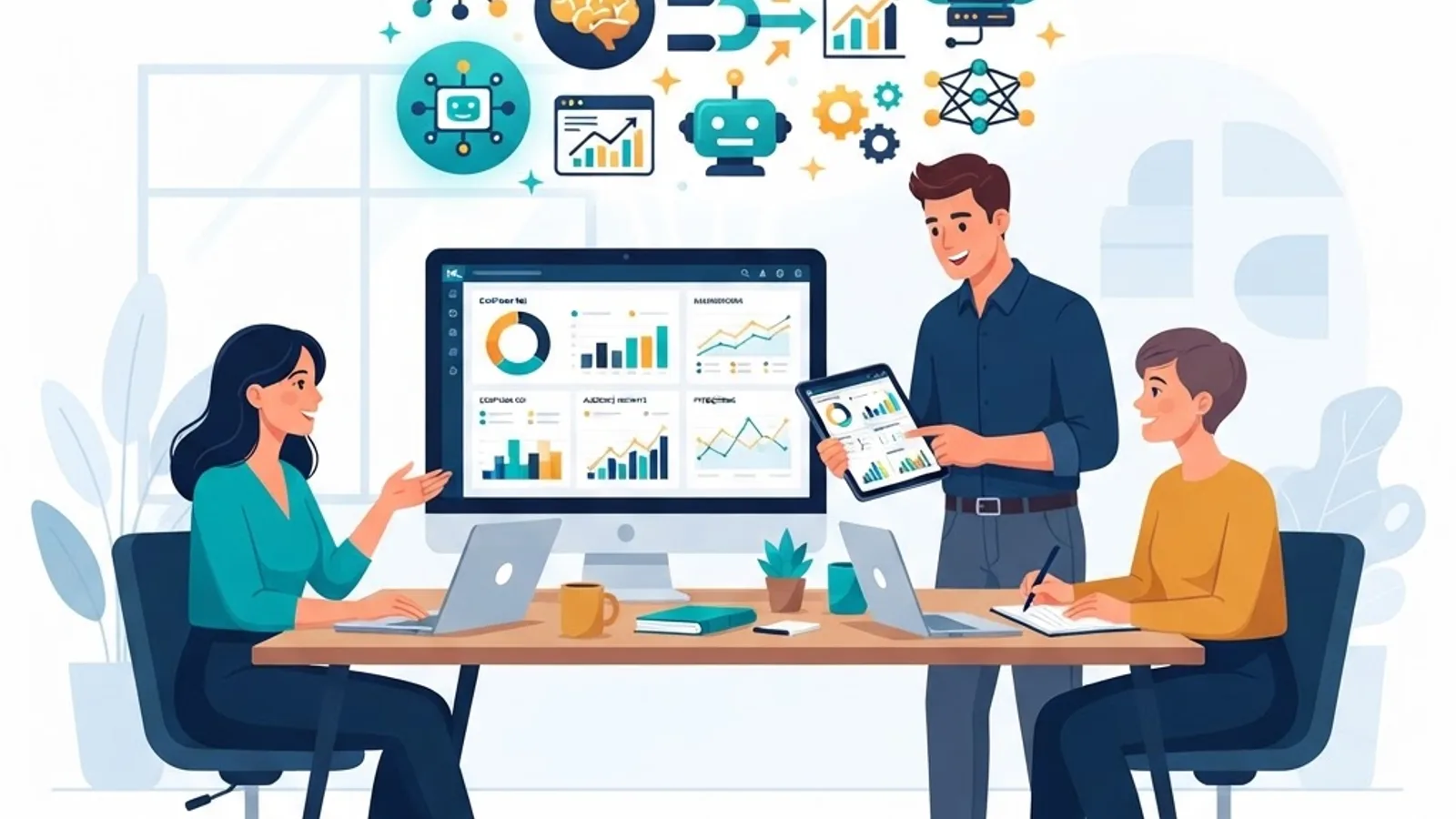
A practical sequence that works for most mid-sized marketing teams:
- Fix measurement first. Verify that every conversion event fires once, accurately, with correct values. Everything downstream depends on this.
- Consolidate customer data. Models need one identity per customer across email, site, and ads. Fragmented data caps accuracy regardless of model quality.
- Adopt built-in intelligence before building custom models. Your ad platform, email platform, and commerce platform already ship trained models. Use them for a full quarter before considering custom work.
- Pick one high-value prediction to build. Usually churn risk or predicted lifetime value. One well-implemented score beats five half-finished experiments.
- Define human guardrails. Budget caps, excluded audiences, brand-safe placements, and required human review for pricing and refund logic.
- Measure incrementally. Use holdout groups. Without a holdout, you cannot distinguish model performance from demand you would have captured anyway.
Teams that want implementation support across modeling and deployment typically work with a partner such as ZoneTechify, while strategy and organic visibility guidance is available through WebPeak.
Privacy Changed the Rules, and Models Adapted
The deprecation of third-party cookies and stricter consent regulation removed much of the individual-level tracking that early marketing models relied on. The response was not less machine learning, it was different machine learning: modeled conversions that estimate unobserved outcomes statistically, and first-party data models trained on data the brand owns directly.
The strategic implication is clear. The brands with the strongest machine learning results now are the ones with the richest consented first-party data, not the ones with the best algorithms. Owned email lists, logged-in experiences, loyalty programs, and clean CRM records became competitive assets specifically because models depend on them.

Key Takeaways
- Machine learning shifted marketers from operating campaigns to supervising automated systems that make micro-decisions at scale.
- According to McKinsey, about 35 percent of Amazon purchases and 75 percent of Netflix viewing come from recommendation engines, setting consumer expectations for personalization.
- Google Smart Bidding adjusts bids for each individual auction using signals such as device, location, time, and audience list, a granularity manual bidding cannot replicate.
- Predicted lifetime value at acquisition changed bidding economics by letting brands pay more than first-order value profitably.
- Behavioral segmentation consistently outperforms demographic segmentation because behavior correlates more strongly with intent.
- Most disappointing results trace to measurement and data quality issues, not model quality.
- First-party consented data is now the primary constraint on model performance, more than algorithm choice.
- Brand strategy, positioning, and ethical judgment remain human responsibilities that machine learning does not replace.
Frequently Asked Questions (FAQ)
How has machine learning changed digital marketing jobs?
It removed most manual bid, schedule, and segment management, and added demand for data quality, measurement design, and prompt or model oversight skills. Marketers now spend more time defining objectives, auditing outputs, and creating strategy, and far less time adjusting settings inside ad platforms manually.
Is machine learning worth it for a small business?
Yes, but through built-in platform features rather than custom models. Small businesses gain immediately from automated bidding, send-time optimization, and product recommendations. Custom predictive models generally need thousands of historical conversions to be reliable, so most small businesses should not build their own initially.
What is the difference between machine learning and AI in marketing?
Artificial intelligence is the broad field of machines performing tasks that require intelligence. Machine learning is the specific subset where systems learn patterns from data instead of following written rules. Nearly all marketing tools labelled AI today are actually machine learning models trained on behavioral data.
Can machine learning replace marketers entirely?
No. Models optimize within goals humans define, and they cannot choose positioning, judge brand risk, or understand cultural context. They excel at prediction and allocation at scale. Strategy, creative direction, ethical judgment, and customer empathy remain human work that automation has not displaced.
How do I measure whether machine learning improved my marketing results?
Use holdout groups. Withhold the model-driven treatment from a randomly selected portion of your audience and compare results against the treated group. Without a holdout you cannot separate genuine incremental lift from conversions that would have happened regardless of the model.
What data do I need before using predictive marketing models?
You need accurate conversion tracking, a single unified customer identity across channels, and at least several months of historical behavior including purchases, sessions, and email engagement. Clean, consented first-party data matters more than volume alone, since inaccurate events train models toward the wrong objective.