
A Director of Technology Innovation sits in the executive-level technology management category, not engineering or R&D. Here is how the role is classified, paid, and structured.
What Category Is a Director Technology Innovation Role
Hiring managers, HR teams, and candidates all trip over the same question: when a company posts a Director of Technology Innovation opening, which job category does it actually belong to? The answer matters for salary banding, job board taxonomy, visa classification, internal leveling, and even how the role is measured at performance review time. Miscategorize it and you end up paying a program manager salary for an executive-scope job, or worse, hiring an engineer for a role that is fundamentally about commercial risk.
This guide breaks the classification down using the frameworks that actually govern it: standard occupational codes, corporate leveling systems, and job board taxonomies. It also explains where the role reports, what it owns, and how it differs from adjacent titles that look similar on paper.

Quick Answer: A Director of Technology Innovation belongs to the executive-level technology management category, most commonly classified under Computer and Information Systems Managers (SOC 11-3021). It is a senior leadership role, not an engineering role, combining technology strategy, R&D portfolio ownership, and commercial validation of emerging technologies.
The Short Classification: Technology Management, Not Engineering
The defining test for categorization is not the word technology in the title, it is whether the person is accountable for other people's work and for capital allocation. A Director of Technology Innovation is accountable for both. That places the role in management, and specifically in technology management.
Under the U.S. Bureau of Labor Statistics Standard Occupational Classification system, the closest and most widely used code is 11-3021, Computer and Information Systems Managers. The BLS projects employment in this occupation will grow 15 percent between 2024 and 2034, far faster than the average across all occupations, which reflects how aggressively companies are staffing technology leadership below the C-suite.
The 11-xxxx prefix matters. Every code beginning with 11 is a management occupation. Engineering and development roles fall under 15-xxxx (Computer and Mathematical Occupations) or 17-xxxx (Architecture and Engineering). So when a compliance form, immigration filing, or compensation survey asks for the occupational family, the correct answer is management, not technical staff.
What the Role Is Not
Being precise about exclusions prevents mis-hiring:
- It is not a Research and Development scientist role. R&D scientists are classified under 19-xxxx (Life, Physical, and Social Science) and are measured on discovery, not deployment.
- It is not a Software Engineering Manager role. Engineering managers own delivery of committed roadmap items. Innovation directors own the pipeline before anything is committed.
- It is not a Product Management role, though the overlap is real. Product managers own shipped products with revenue attached. Innovation directors own bets that may never ship.
- It is not a C-suite role. It reports into the C-suite, usually to a CTO, CIO, or Chief Innovation Officer.
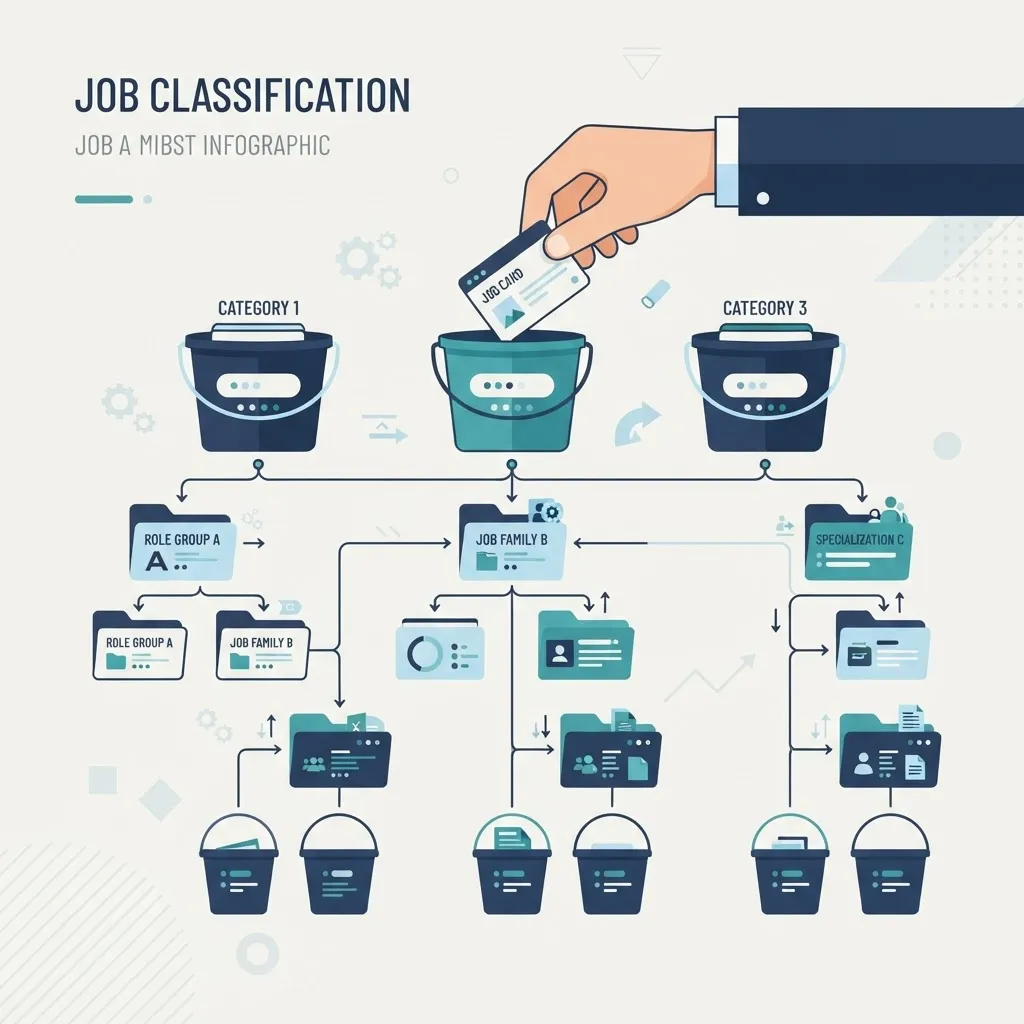
How Job Boards and HR Systems Categorize It
Different systems use different labels for the same role, which is the main source of confusion. Here is how the major taxonomies map it.
| System / Platform | Category Used | Typical Level or Code |
|---|---|---|
| BLS SOC (U.S.) | Computer and Information Systems Managers | 11-3021 |
| O*NET | Management Occupations, Bright Outlook | 11-3021.00 |
| LinkedIn Job Functions | Information Technology plus Business Development | Director |
| Indeed Category | Management, IT and Software | Senior or Director level |
| Internal corporate leveling | Technology Leadership | D-level, typically L7 to L8 |
| Payscale and Salary surveys | IT Executive Management | Director tier |
| UK SOC 2020 | Information Technology Directors | 1132 |
The practical takeaway: if you are posting the job, list it under Management plus Information Technology and set the seniority to Director. Listing it under Engineering suppresses applications from the strategic operators you actually want, and attracts senior individual contributors who will be frustrated by the lack of hands-on work.
Why the Dual-Category Approach Works Best
In practice, the strongest applicant pools come from cross-listing the role in two categories: technology management and corporate strategy or business development. The reason is structural. Roughly half the job is technical evaluation, and half is building a business case that a CFO will approve. Candidates who only browse engineering categories rarely have the second half.
Teams building this kind of hybrid technical-commercial capability often lean on external partners for execution capacity while the internal director focuses on strategy. Agencies such as ZoneTechify and WebPeak are commonly used to prototype and validate concepts before a company commits headcount to them.
Director of Technology Innovation vs. Adjacent Titles
The fastest way to categorize the role correctly is to compare it against the titles it is most often confused with.

| Dimension | Director, Technology Innovation | CTO | Engineering Director | Director of R&D |
|---|---|---|---|---|
| Primary output | Validated technology bets | Company-wide tech strategy | Shipped software | New technical knowledge |
| Time horizon | 12 to 36 months | 3 to 5 years | 1 to 4 quarters | 2 to 7 years |
| Owns production systems | No | Yes | Yes | No |
| Owns a budget | Yes, innovation portfolio | Yes, full tech budget | Yes, team budget | Yes, research budget |
| Reports to | CTO, CIO, or CINO | CEO | VP Engineering or CTO | CTO or Chief Scientist |
| Success metric | Pilots converted to production | Business enablement | Velocity and reliability | Patents and publications |
| Category | Technology management | Executive management | Engineering management | Research management |
The cleanest distinction is the production systems row. If the role is accountable for uptime, it is engineering management. If it is accountable for what the company should be building in two years, it is innovation management.
What the Role Actually Owns Day to Day
Categorization becomes obvious once you look at the actual responsibility set. Across job descriptions from enterprise, healthcare, financial services, and manufacturing employers, five responsibilities appear consistently.

- Own the innovation portfolio. Maintain a staged pipeline of technology bets with explicit funding gates, typically discovery, pilot, scale, and sunset. Killing projects is as much of the job as starting them.
- Run structured technology scouting. Evaluate vendors, startups, research output, and open-source ecosystems against a defined scoring rubric rather than vendor enthusiasm.
- Build the business case. Translate technical capability into a financial model that finance leadership can approve or reject on numbers.
- Broker internal partnerships. Secure engineering, legal, security, and operations participation without direct authority over those teams. This is the hardest part of the job and the most common failure point.
- Report portfolio health to executives. Present conversion rates, cycle times, and capital deployed to a board or executive committee on a fixed cadence.
The Definition Worth Memorizing
Director of Technology Innovation (definition): A senior technology management position responsible for identifying, funding, validating, and transitioning emerging technologies into production business value, while managing the risk and capital allocation of an innovation portfolio.
Every clause in that definition is a management activity. None of them are individual technical contribution. That is the classification argument in one sentence.
Where It Sits on the Career Ladder

The role typically sits two steps below the CEO and one to two steps below the CTO. A common progression looks like this:
- Senior Engineer or Senior Consultant, 5 to 8 years experience
- Engineering Manager, Product Manager, or Solutions Architect
- Senior Manager or Head of Emerging Technology
- Director of Technology Innovation
- VP of Innovation or VP of Technology Strategy
- CTO, CIO, or Chief Innovation Officer
Most postings ask for 10 to 15 years of total experience with at least 3 to 5 years leading teams or programs. Notably, the strongest candidates rarely come from a single track. A background that mixes hands-on technical depth with either consulting or commercial roles maps far better to the job than a purely engineering path, because the role is judged on adoption, not architecture.
The Skill Mix That Defines the Category
- Technology evaluation and architecture literacy, enough to challenge vendors credibly
- Financial modeling, including NPV, payback periods, and risk-adjusted returns
- Stakeholder influence without formal authority
- Portfolio and stage-gate governance
- Change management and internal communication
- Vendor, startup, and academic ecosystem relationship management
Compensation Confirms the Classification

Pay data is the least ambiguous evidence of category. BLS reports a median annual wage of roughly 169,510 dollars for Computer and Information Systems Managers as of May 2024, with the top decile exceeding 239,000 dollars. Director-level technology innovation roles in the U.S. typically land in a total compensation band of 165,000 to 260,000 dollars, with equity common at technology employers.
That band sits above senior individual-contributor engineering pay in most markets and below VP and C-suite pay. If a posted range falls below roughly 130,000 dollars in a major U.S. market, the role is almost certainly a manager or program lead wearing a director title, and should be categorized and leveled accordingly.
How to Categorize It in Your Own Organization

Use this four-question test before you assign a category, a level, or a salary band:
- Does the role control discretionary funding? If yes, it is management, not IC.
- Is the role accountable for production reliability? If yes, it is engineering management, not innovation.
- Does the role have direct reports, or does it influence borrowed teams? Borrowed teams mean the role needs a higher influence-skill weighting and a director-level band to be credible internally.
- What is the measured outcome? Pilots converted to production means innovation. Features shipped means engineering. Patents means R&D.
Answer those four honestly and the category resolves itself in minutes.
Key Takeaways
- A Director of Technology Innovation is classified under executive-level technology management, SOC code 11-3021, not engineering or research.
- The 11-xxxx SOC prefix confirms management status; engineering roles use 15-xxxx or 17-xxxx.
- BLS projects 15 percent growth for Computer and Information Systems Managers from 2024 to 2034, well above average.
- Median pay for this occupational group was approximately 169,510 dollars in May 2024, with director-level innovation roles typically ranging from 165,000 to 260,000 dollars total compensation.
- Cross-list job postings under Management plus Information Technology to reach candidates with both technical and commercial depth.
- The deciding classification test is production accountability: no production ownership plus portfolio funding authority equals innovation management.
Frequently Asked Questions (FAQ)
Is a Director of Technology Innovation an executive role?
It is a senior leadership role but generally not C-suite. It sits at the director tier, typically reporting to a CTO, CIO, or Chief Innovation Officer. In smaller companies it may carry executive committee visibility, and it is usually classified within executive-level technology management for compensation and reporting purposes.
What SOC code applies to a Director of Technology Innovation?
The closest and most widely accepted match is SOC 11-3021, Computer and Information Systems Managers, under the U.S. Bureau of Labor Statistics system. In the UK, the equivalent is SOC 2020 code 1132, Information Technology Directors. Both codes sit firmly within management occupation families rather than technical ones.
Is this role technical or business focused?
Both, roughly evenly split. The role requires enough technical depth to evaluate architectures and challenge vendors credibly, plus enough financial fluency to build business cases a CFO will approve. Candidates who are strong in only one half typically struggle, because the job is measured on adoption rather than technical elegance.
How is it different from a CTO?
A CTO owns overall technology strategy and production systems across the company and reports to the CEO. A Director of Technology Innovation owns a forward-looking portfolio of unproven technology bets, carries no production uptime accountability, and reports into the CTO or an equivalent executive.
What experience do employers expect for this role?
Most postings ask for 10 to 15 years total experience, including 3 to 5 years leading teams, programs, or portfolios. Employers strongly favor mixed backgrounds that combine hands-on technical work with consulting, product, or commercial experience, since the role depends on influence across departments without direct authority.
Which job board category should I post it under?
Post it under Management combined with Information Technology, with seniority set to Director. Cross-listing in corporate strategy or business development widens the pool meaningfully. Avoid listing it purely under Engineering, which attracts senior individual contributors who expect hands-on work the role does not include.