
A practical guide to what the top AI strategy consultants for enterprise businesses actually do, how to evaluate them, and how to pick the right partner.
Top Artificial Intelligence Strategy Consultants for Enterprise Businesses Are

Enterprise leaders keep asking the same question: what separates a truly elite AI strategy consultant from a vendor selling hype? After years advising mid-market and Fortune 500 teams on AI adoption, we have seen the pattern clearly. The best consultants are not the ones with the flashiest demos. They are the ones who tie every model, pipeline, and prompt back to a measurable business outcome. This guide breaks down exactly what top artificial intelligence strategy consultants for enterprise businesses are, what they do differently, and how to choose one that will not waste your budget.
Quick Answer: Top AI strategy consultants for enterprise businesses are advisors who align AI investments with measurable revenue, cost, and risk outcomes. They assess data readiness, build phased roadmaps, govern models responsibly, and prove ROI, rather than selling isolated tools or unproven pilots.
What AI Strategy Consultants Actually Do
An AI strategy consultant translates business goals into a technical execution plan. Their job is not to write every line of code. It is to decide where AI should be applied, why it matters financially, and how to deploy it without creating compliance, security, or reputational risk.
Definition: AI strategy consulting is the practice of assessing an organization's data, processes, and goals to design a prioritized, risk-managed plan for adopting artificial intelligence that produces measurable value.
The strongest consultants operate across three layers at once: business (what problem are we solving), data (do we have the fuel), and governance (can we do this safely and legally). Weak consultants only work one layer, which is why so many enterprise pilots stall before production. Teams like those at ZoneTechify and WebPeak approach engagements this way, starting with outcomes rather than tooling.
Why Enterprises Struggle Without Strategic Guidance
The failure rate of AI initiatives is the single strongest argument for expert guidance. According to Gartner, roughly 85% of AI projects fail to deliver on their intended outcomes, often due to poor data quality, unclear objectives, or lack of organizational alignment. Meanwhile, McKinsey's research shows that organizations embedding AI into core workflows report meaningfully higher revenue growth than peers who treat it as a side experiment.
The gap is rarely about technology. It is about strategy. Enterprises fail when they:
- Launch pilots with no clear success metric.
- Underestimate data cleaning and integration effort.
- Ignore change management and employee adoption.
- Skip governance until regulators or customers force the issue.
A capable consultant removes these failure points before they compound. That is the real return on their fee.
Core Traits of Top AI Strategy Consultants
Top artificial intelligence strategy consultants for enterprise businesses share a recognizable set of traits. Use this as a checklist when evaluating any firm or individual.
1. Business-First Thinking
They start with your P&L, not with a model. Before discussing large language models or computer vision, they identify which processes cost the most, which decisions are made too slowly, and where AI can compress that cycle. Every recommendation ties to revenue growth, cost reduction, or risk mitigation.
2. Deep Data Readiness Assessment
AI runs on data, and most enterprise data is messy. Elite consultants audit data quality, access, lineage, and governance early. They tell you honestly if you need six months of data engineering before any model is worth building, even when that answer is inconvenient.
3. Phased, Realistic Roadmaps
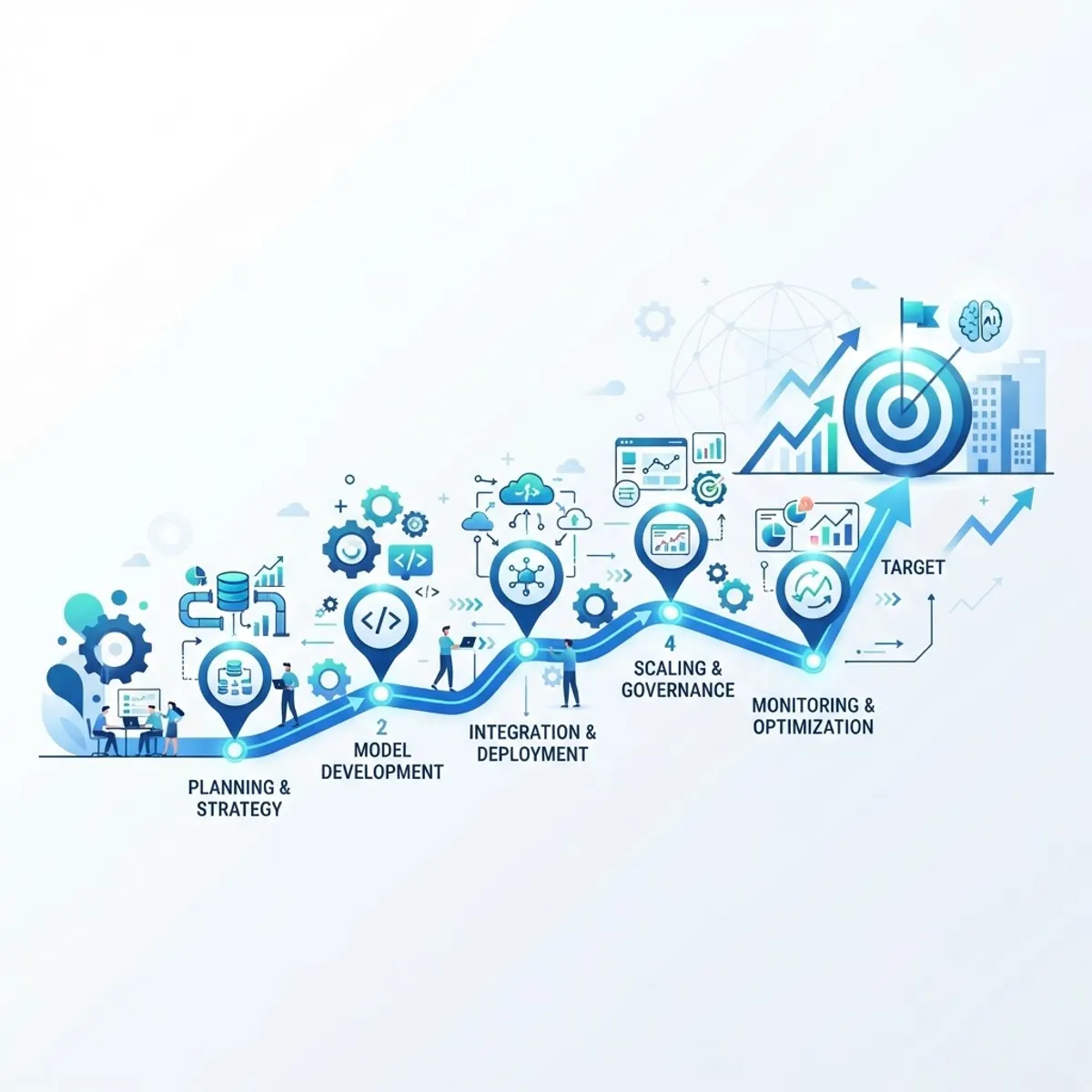
Instead of a big-bang transformation, the best consultants sequence quick wins first to fund and prove the larger program. A typical roadmap moves from a high-value proof of concept, to a governed production deployment, to enterprise-wide scaling.
4. Responsible AI Governance
They build guardrails for bias, privacy, security, and regulatory compliance from day one. With the EU AI Act and similar frameworks tightening, governance is no longer optional for enterprise deployments.

How Enterprise AI Consulting Differs From SMB Consulting
Enterprise engagements are a different discipline. The stakes, complexity, and stakeholder count are far higher. The table below compares what changes as you move upmarket.
| Factor | SMB AI Consulting | Enterprise AI Consulting |
|---|---|---|
| Primary goal | Fast automation wins | Scalable, governed transformation |
| Data complexity | Few systems, cleaner scope | Many siloed legacy systems |
| Governance needs | Light | Heavy compliance and audit |
| Stakeholders | 1 to 3 | 10 or more across departments |
| Timeline | Weeks | Multiple quarters |
| Risk tolerance | Higher | Low, brand and legal exposure |
This is why enterprise-focused consultants invest heavily in change management, security reviews, and cross-department alignment. A tactic that works for a 20-person company can create serious liability at a 20,000-person one.
The Enterprise AI Consulting Process Step by Step
The most reliable consultants follow a repeatable process. Understanding it helps you hold any partner accountable.
- Discovery and opportunity mapping. Interview stakeholders, document workflows, and rank use cases by value and feasibility.
- Data and infrastructure audit. Assess data quality, model hosting options, and integration constraints.
- Roadmap and business case. Define phases, budgets, expected ROI, and success metrics for each initiative.
- Proof of concept. Build a focused pilot with a clear go or no-go metric.
- Production deployment. Harden the solution, integrate it into live systems, and add monitoring.
- Governance and scaling. Establish oversight, retraining schedules, and an expansion plan across the organization.
If a consultant wants to skip straight to step four without steps one through three, treat that as a warning sign.
Measuring ROI: How the Best Prove Their Value
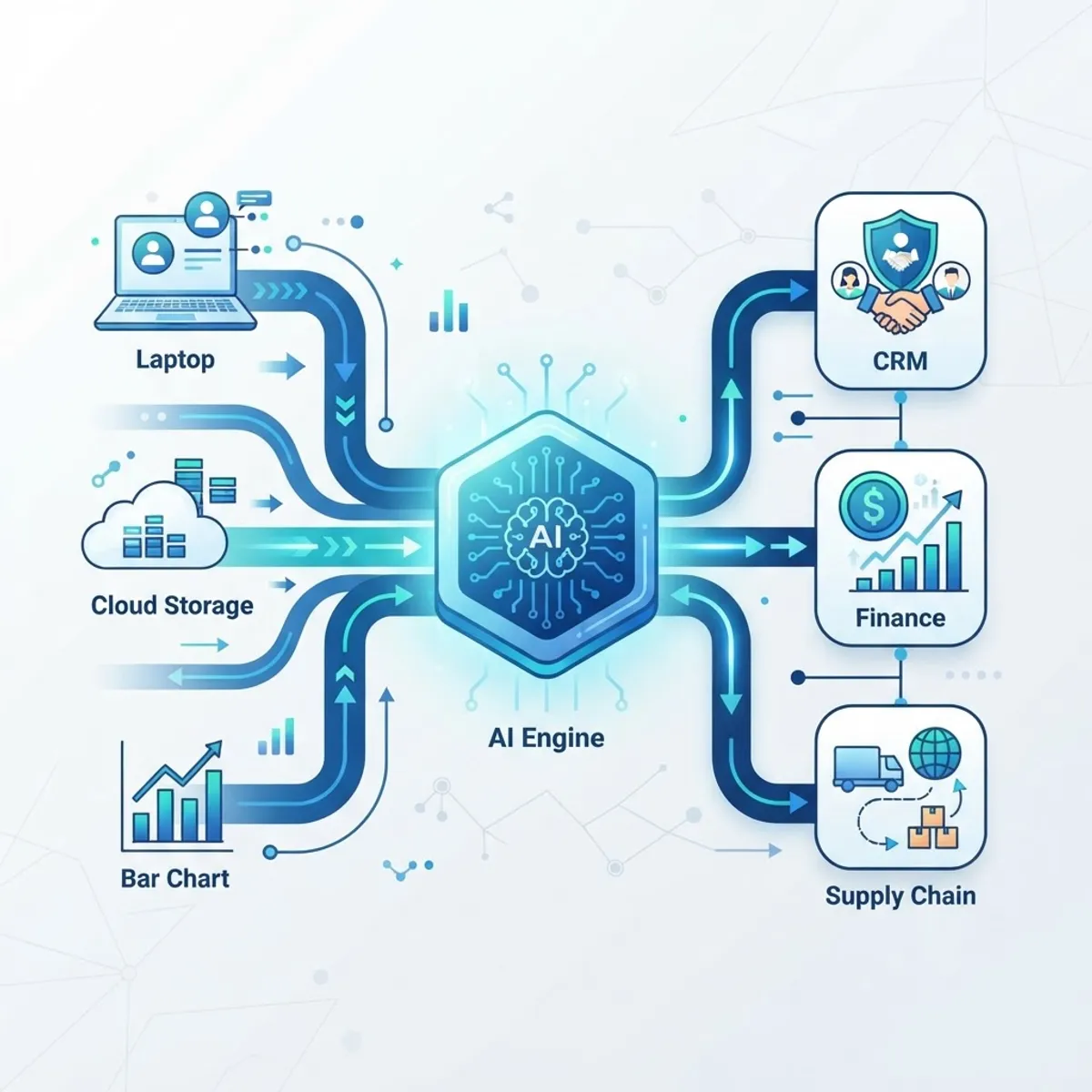
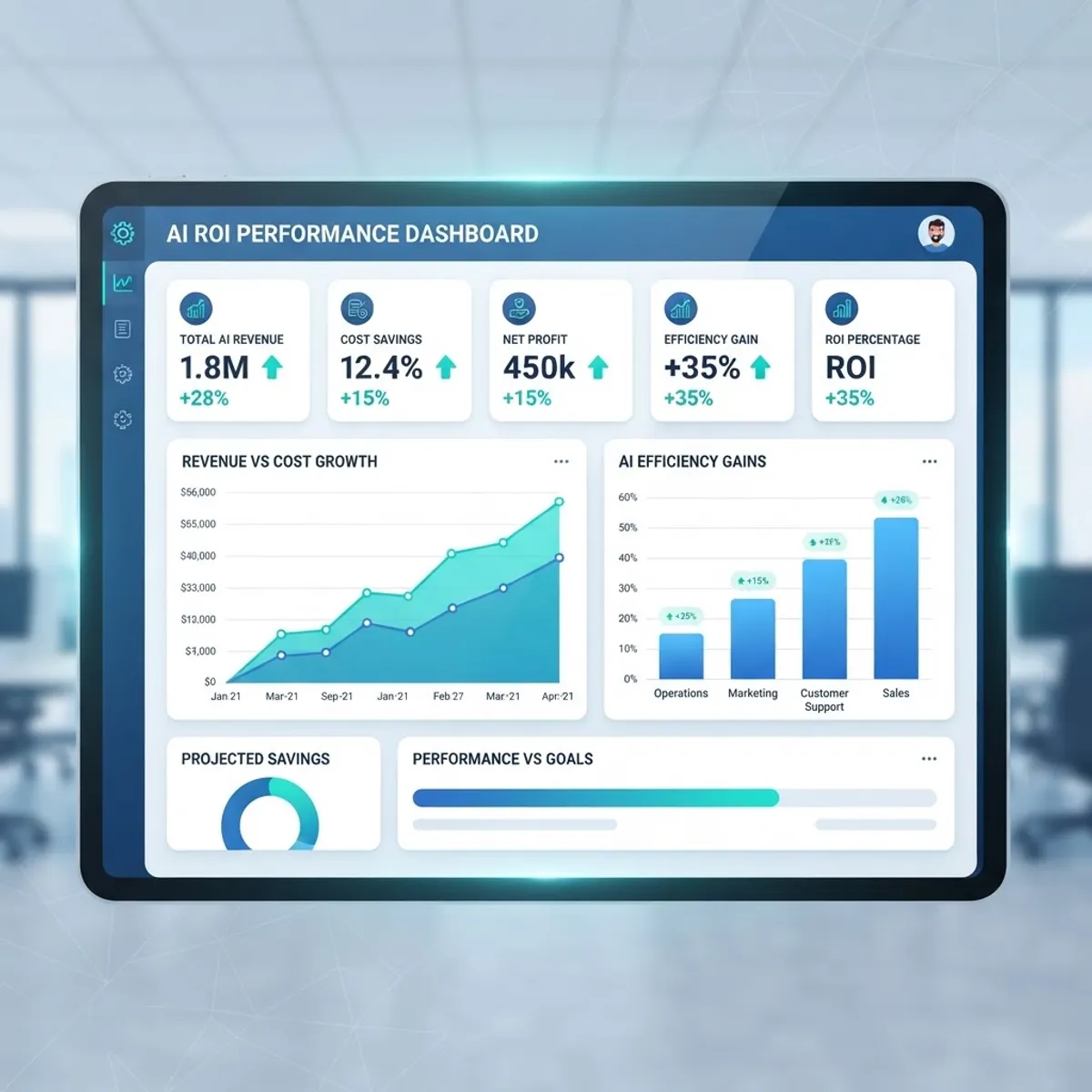
The defining habit of top consultants is relentless measurement. They agree on metrics before the work begins, not after. For a customer service AI deployment, that might mean average handle time, resolution rate, and cost per ticket. For a supply chain model, it could be forecast accuracy and inventory carrying cost.
Strong consultants also build a baseline. Without knowing your current numbers, no one can honestly claim improvement. They then report against that baseline transparently, including where results fell short. This honesty is a hallmark of trustworthy advisors and a reason enterprises retain them for years. Firms offering dedicated artificial intelligence services typically bake this measurement discipline into their engagement contracts.
Responsible AI and Governance: The Non-Negotiable Layer
Governance separates mature consultants from opportunists. Enterprises face real exposure from biased outputs, data leakage, and regulatory penalties. A capable consultant establishes a governance framework covering model documentation, human oversight, bias testing, access controls, and incident response.
They also prepare you for audits. As regulations expand, the ability to explain why a model made a decision becomes a legal requirement, not a nice-to-have. Consultants who ignore this leave enterprises with technical debt that becomes expensive to fix later.

How to Choose the Right AI Strategy Consultant
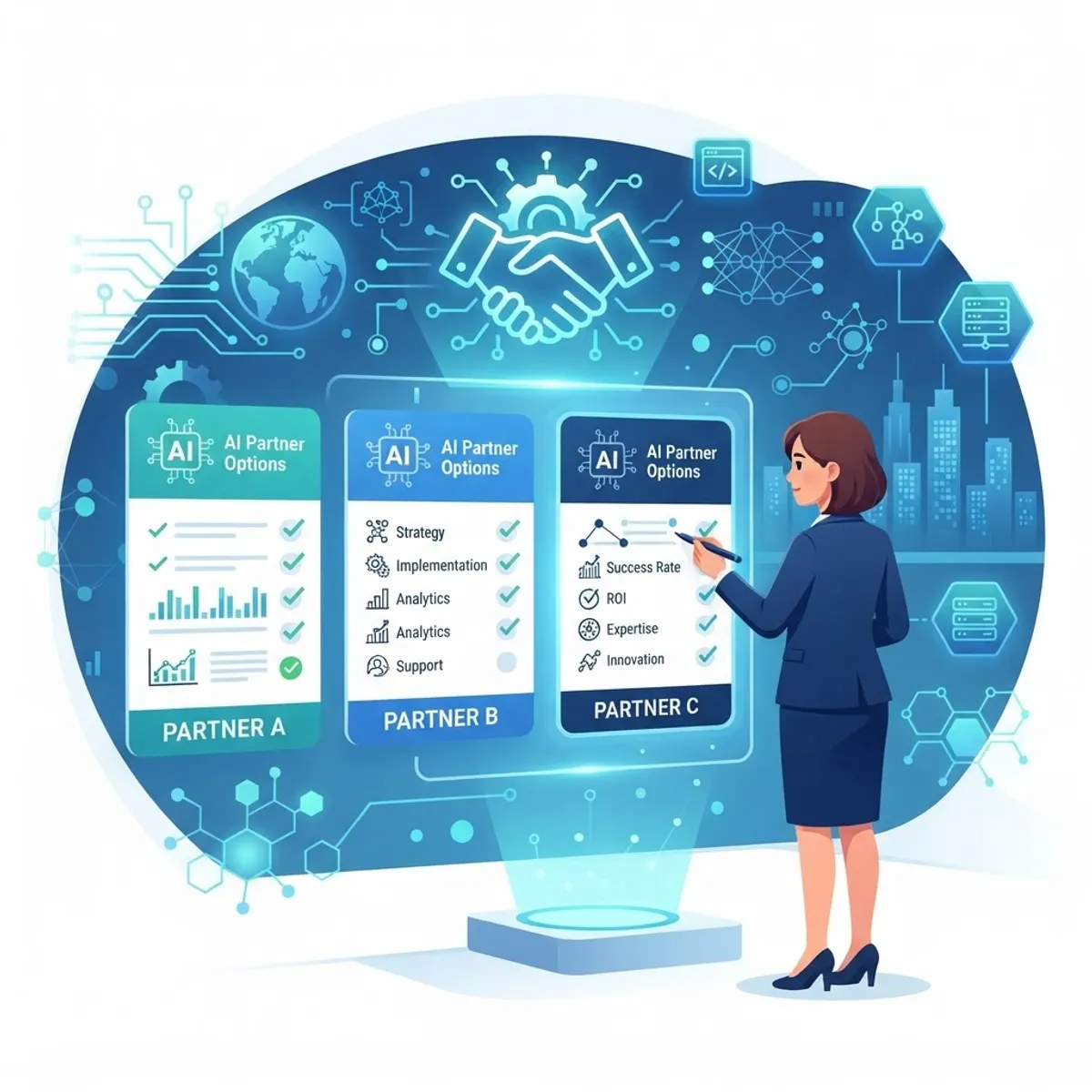
Choosing a partner is easier when you ask sharp questions. Use these to filter candidates quickly:
- Can you show a comparable enterprise engagement and its measured results?
- How do you assess data readiness before proposing solutions?
- What is your governance and compliance approach?
- How do you handle change management and employee adoption?
- How will we measure ROI, and what is the baseline?
- Who owns the models and data after the engagement ends?
Avoid anyone who promises transformation without discussing your data, guarantees specific accuracy before seeing your systems, or cannot explain their governance approach in plain language. For organizations that also need supporting execution, providers such as ZoneTechify's artificial intelligence services pair strategy with hands-on implementation, which reduces the handoff friction that often kills momentum.
Key Takeaways
- Top AI strategy consultants align every AI investment with measurable revenue, cost, or risk outcomes rather than selling isolated tools.
- Roughly 85% of AI projects fail to meet intended outcomes, according to Gartner, usually from poor data quality and unclear goals.
- Enterprise consulting demands heavier governance, more stakeholders, and lower risk tolerance than SMB work.
- A trustworthy consultant sets baselines and success metrics before building anything.
- Responsible AI governance for bias, privacy, and compliance is non-negotiable for enterprise deployments.
Frequently Asked Questions (FAQ)
What does an AI strategy consultant do for an enterprise?
An AI strategy consultant identifies where AI creates the most business value, assesses whether your data can support it, and builds a phased roadmap. They align technical work with revenue, cost, and risk goals, then govern deployment so the solution scales safely across the organization.
How much do enterprise AI consultants cost?
Enterprise AI consulting typically ranges from tens of thousands for a focused assessment to several hundred thousand dollars for multi-quarter transformation programs. Cost depends on data complexity, number of use cases, and governance requirements. The best value comes from consultants who tie fees to measurable business outcomes.
How do I know if an AI consultant is legitimate?
Legitimate consultants show comparable enterprise case studies with measured results, assess your data before proposing solutions, and explain governance clearly. Be cautious of anyone guaranteeing specific accuracy before reviewing your systems or promising transformation without discussing your data quality first.
How long does an enterprise AI project take?
Most enterprise AI initiatives span multiple quarters. A focused proof of concept may take six to twelve weeks, while full production deployment and scaling often require six to eighteen months. Data readiness is usually the largest variable affecting the timeline.
Do I need a consultant or an in-house AI team?
Many enterprises use both. Consultants accelerate strategy, governance, and early wins while your internal team builds long-term capability. A strong consultant actively transfers knowledge, so your organization becomes self-sufficient rather than permanently dependent on outside help.
Final Thoughts
The top artificial intelligence strategy consultants for enterprise businesses are outcome-obsessed advisors who blend business insight, data honesty, and governance discipline. They protect you from the most common failure modes and prove value with numbers, not promises. Choose a partner who starts with your goals and your data, and AI stops being a gamble and becomes a durable competitive advantage.