Discover what The Artificial Intelligence Infrastructure Workshop EPUB teaches, who it is for, and how to use it to master scalable AI systems in 2026.
The Artificial Intelligence Infrastructure Workshop EPUB
Building intelligent applications is no longer just about writing clever algorithms. The hardest part today is the plumbing underneath: the servers, pipelines, storage, and orchestration that turn a trained model into a reliable product. That is exactly the gap The Artificial Intelligence Infrastructure Workshop EPUB sets out to close. In this guide I break down what the book covers, who benefits most from it, and how to turn its lessons into working systems.
I have spent years helping teams move models from a data scientist's laptop into production, and the single biggest failure point is always infrastructure, not accuracy. A workshop-style EPUB that teaches this discipline hands-on is genuinely valuable, so let us look at what makes it worth your time.

Quick Answer: The Artificial Intelligence Infrastructure Workshop EPUB is a hands-on digital guide that teaches you to design, deploy, and scale the systems behind AI models, covering compute, data pipelines, MLOps, and orchestration. It suits engineers and data professionals who want production-ready skills rather than theory.
What Is The Artificial Intelligence Infrastructure Workshop EPUB?
The Artificial Intelligence Infrastructure Workshop is a project-based learning book delivered in EPUB format. Unlike theory-heavy textbooks, a workshop title is built around guided exercises: you read a concept, then immediately build something. The EPUB edition makes that structure portable, letting you follow along on a tablet, e-reader, phone, or laptop while you work in a second window.
At its core, the book answers one practical question: how do you build the technical foundation that lets AI models run reliably, affordably, and at scale? It treats infrastructure as a first-class engineering discipline rather than an afterthought bolted on once a model works in a notebook.
Defining AI Infrastructure
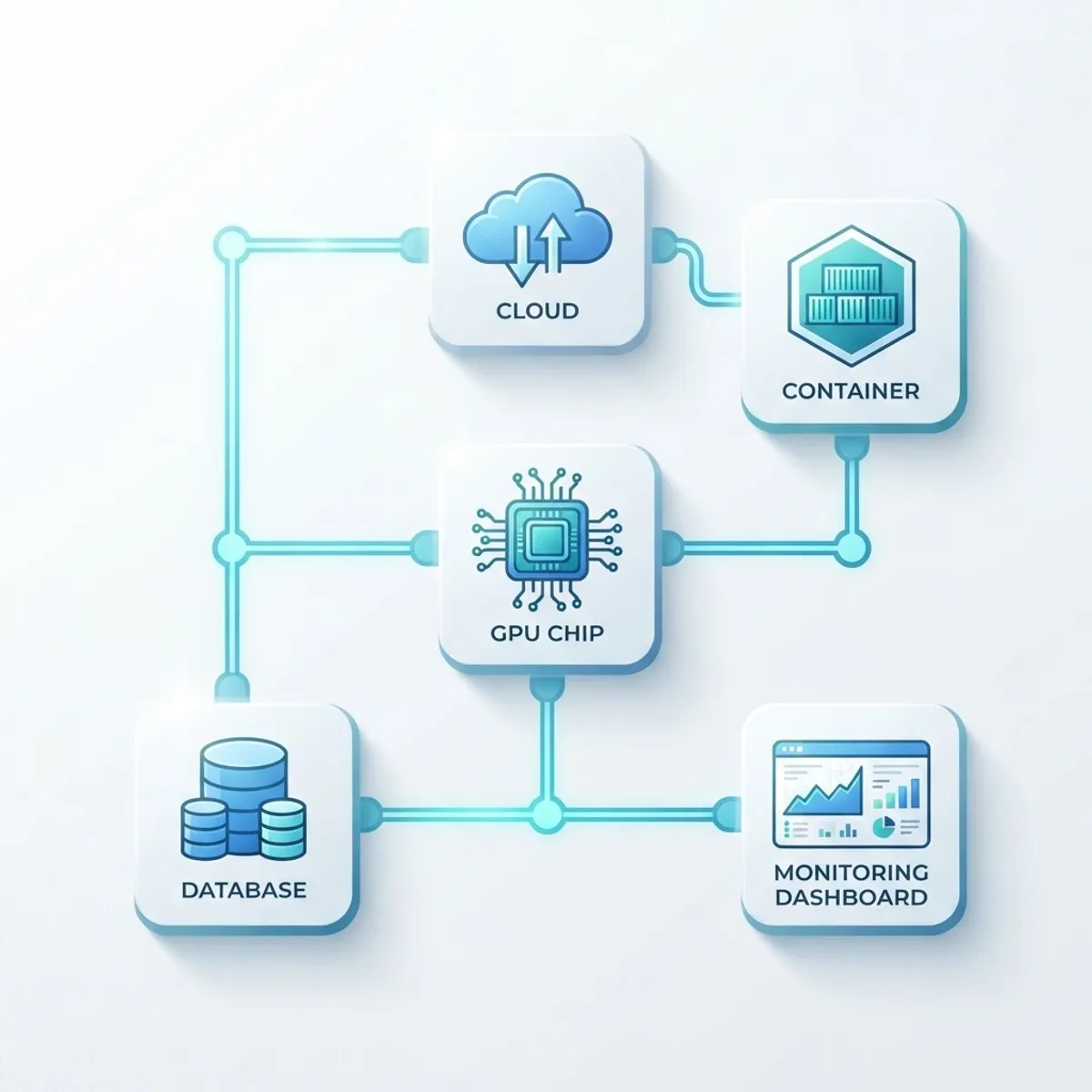
AI infrastructure is the combined set of hardware, software, and processes used to develop, train, deploy, and maintain machine learning systems. It includes compute resources such as GPUs and CPUs, data storage and pipelines, containerization and orchestration tools, model serving layers, and monitoring systems that keep everything healthy in production.
Who Should Read This Workshop?
This EPUB is aimed at practitioners who are ready to move beyond tutorials. Based on the topics it covers, the ideal readers are:
- Machine learning engineers who can train models but struggle to deploy them reliably.
- Data engineers who want to understand how their pipelines feed model training and inference.
- DevOps and platform engineers moving into MLOps and needing AI-specific patterns.
- Backend developers tasked with adding AI features to existing products.
- Technical leads and architects who must make build-versus-buy and scaling decisions.
If you have never trained a model or written code, the book will move quickly. It assumes comfort with Python, basic cloud concepts, and the command line.

What Topics Does The Workshop Cover?
While exact chapter lists vary by edition, workshop-style AI infrastructure books consistently teach a recognizable progression. Here is the practical arc you should expect and prioritize.
1. Compute And Hardware Foundations
You learn how CPUs, GPUs, and specialized accelerators differ, when each matters, and how to size resources for training versus inference. This section usually explains cost trade-offs, because compute is often the largest line item in any AI budget.
2. Data Pipelines And Storage
Models are only as good as the data feeding them. The workshop covers ingestion, transformation, feature stores, and the difference between batch and streaming pipelines. You build repeatable flows so training data stays consistent and versioned.
3. Containerization And Orchestration
Here you package models with Docker and deploy them with Kubernetes or managed equivalents. This is where many engineers finally understand how a model becomes a scalable service that survives traffic spikes and node failures.
4. Model Serving And APIs
The book shows how to expose models through REST or gRPC endpoints, handle batching, and manage latency. Serving is the layer your end users actually touch, so reliability here is non-negotiable.
5. MLOps, Monitoring, And Governance
Finally, you learn to automate the lifecycle: continuous training, deployment pipelines, drift detection, and observability. This closes the loop so systems improve safely over time.

Why The EPUB Format Works So Well For Technical Learning
The EPUB format is not a trivial detail for a hands-on book. EPUB is a reflowable, open ebook standard that adapts text to any screen size, unlike fixed PDFs. For a workshop you follow while coding, that flexibility matters.
Key advantages include:
- Reflowable text that stays readable on a phone during a commute or a large monitor at your desk.
- Adjustable fonts and contrast, which reduces eye strain during long study sessions.
- Fast search and bookmarking, so you can jump straight to the deployment chapter when a build breaks.
- Offline access, letting you learn on flights or in environments without reliable internet.
According to the World Wide Web Consortium, EPUB 3 is the global standard for digital publications precisely because of this device independence. For a discipline as fast-moving as AI, a portable format you can revisit anywhere keeps the material useful long after the first read.

The AI Infrastructure Stack Explained
One of the most useful mental models the workshop reinforces is the layered stack. Each layer depends on the one below it, and weakness anywhere causes failures that look like model problems but are actually infrastructure problems.
| Layer | Purpose | Common Tools |
|---|---|---|
| Application | Delivers AI features to users | Web apps, mobile apps |
| Model serving | Exposes models as APIs | FastAPI, TensorFlow Serving |
| Orchestration | Scales and schedules workloads | Kubernetes, Ray |
| Data pipeline | Feeds clean data to models | Airflow, Spark, Kafka |
| Storage | Holds datasets and artifacts | S3, data lakes, feature stores |
| Compute | Runs training and inference | GPUs, CPUs, TPUs |
Reading the stack top to bottom clarifies why teams that skip fundamentals struggle later. You cannot fix a data drift issue at the application layer if your pipeline has no versioning at the storage layer.
Turning The Workshop Into Real Skills
The difference between reading and learning is deliberate practice. Here is the approach I recommend to anyone working through this EPUB.
- Build every example yourself. Do not just read the code. Type it, break it, and fix it.
- Recreate exercises with your own data. Swap the sample dataset for a problem you care about.
- Deploy at least one model publicly. Nothing teaches infrastructure like real traffic.
- Document your architecture decisions. Writing down why you chose a tool cements the reasoning.
- Automate a full pipeline. Once one model works, wire up retraining and monitoring end to end.
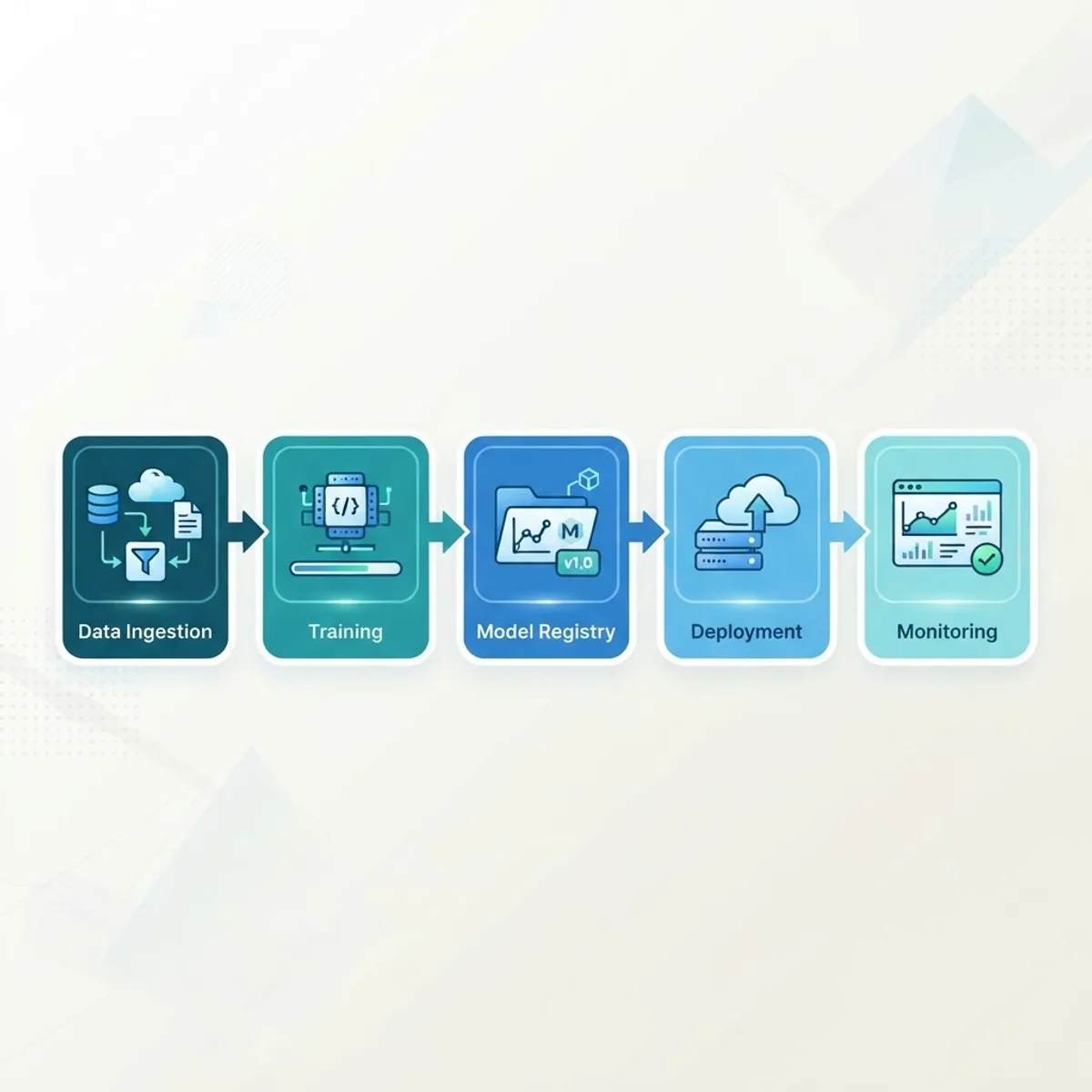
Teams that need help operationalizing these patterns often bring in specialists. If you would rather accelerate delivery, professional artificial intelligence services can implement the same production-grade infrastructure the workshop describes, from data pipelines to scalable model serving.
Common Mistakes The Workshop Helps You Avoid
From experience, most AI projects stall for predictable reasons. A good infrastructure workshop trains you to sidestep them early:
- Overprovisioning compute and burning budget on idle GPUs.
- Ignoring data versioning, which makes results impossible to reproduce.
- Deploying without monitoring, so silent model drift degrades quality unnoticed.
- Manual deployments that are slow, error-prone, and impossible to roll back cleanly.
- Treating security as optional, leaving models and data exposed.
Each chapter of a workshop-style book reinforces the habit of building for reliability from day one rather than patching problems after launch.
How This Fits Into A Broader Learning Path
Infrastructure knowledge compounds. Once you understand the stack, adjacent skills like cost optimization, distributed training, and edge deployment become far easier to pick up. The workshop is best treated as the backbone of a longer journey rather than a single destination.
According to Grand View Research, the global machine learning market is projected to grow at a compound annual rate exceeding 30 percent through the decade, which means demand for engineers who can operate AI systems, not just build models, will keep rising. Investing in infrastructure fluency now positions you ahead of that curve.

For readers who want to keep expanding, resources like WebPeak and the guides at ZoneTechify publish practical material on AI, automation, and modern development that complements the workshop. Teams building AI-first products can also explore dedicated AI services from WebPeak to pair learning with real-world implementation support.
Key Takeaways
- The Artificial Intelligence Infrastructure Workshop EPUB teaches production AI systems through hands-on, project-based exercises rather than pure theory.
- AI infrastructure spans six layers: compute, storage, data pipelines, orchestration, model serving, and the application itself.
- The EPUB format offers reflowable, device-independent reading that suits code-along learning, and EPUB 3 is the W3C global standard for digital publications.
- The book best serves engineers with Python and basic cloud experience who want to deploy and scale models reliably.
- The machine learning market is projected to grow over 30 percent annually, increasing demand for infrastructure skills.
Frequently Asked Questions (FAQ)
What is the Artificial Intelligence Infrastructure Workshop about?
It is a hands-on EPUB that teaches you to build the systems behind AI models, including compute, data pipelines, containerization, model serving, and MLOps. Instead of theory, it uses guided exercises so you learn by deploying real, scalable machine learning infrastructure step by step.
Do I need coding experience to read this workshop?
Yes, some experience helps. The book assumes comfort with Python, the command line, and basic cloud concepts. Complete beginners can still follow along, but they should expect to pause and learn foundational programming skills before attempting the deployment and orchestration exercises effectively.
Why is the EPUB format good for a technical workshop?
EPUB is reflowable, so text adapts to any screen, making it easy to code on one device while reading on another. It supports search, bookmarks, adjustable fonts, and offline access, which suits long study sessions and quick reference far better than fixed PDFs.
What tools does the AI infrastructure workshop teach?
Expect coverage of Docker, Kubernetes, data pipeline tools like Airflow or Spark, model serving frameworks such as FastAPI or TensorFlow Serving, and cloud storage. The focus is on patterns and reasoning, so the skills transfer across platforms rather than locking you into one vendor.
Is learning AI infrastructure worth it in 2026?
Absolutely. As models become commodities, the ability to deploy, scale, and monitor them reliably is the differentiator. With the machine learning market growing over 30 percent annually, engineers who understand infrastructure are in high demand and command strong, durable career opportunities.