
Learn how artificial intelligence is reshaping content strategy, what AI can and cannot replace, and how to build a smarter, human-led AI content workflow.
Replace Content Strategy AI Artificial Intelligence
Every marketing team is asking the same uncomfortable question: can artificial intelligence replace content strategy, or does it simply change how strategy gets done? After building AI-assisted content systems for dozens of brands, the honest answer is nuanced. AI replaces the mechanical parts of content strategy at scale, but it does not replace strategic judgment, brand understanding, or accountability. Treating AI as a replacement for thinking is where most teams fail.
This guide breaks down exactly what AI can take over, what it cannot, and how to build a workflow where machines handle volume and humans own direction. If you want experienced help building this system, teams like ZoneTechify and WebPeak do this daily.

Quick Answer: Artificial intelligence does not fully replace content strategy. It replaces repetitive strategy tasks such as research, clustering, drafting, and reporting. Human strategists remain essential for goals, brand voice, editorial judgment, and accountability. The winning model is AI-assisted strategy led by experienced people, not automation alone.
What Does "Content Strategy" Actually Mean?
Content strategy is the planning, creation, governance, and optimization of content to achieve specific business goals. It answers who you are talking to, what you will publish, why it matters, and how success is measured. Strategy is not writing articles; it is deciding which articles deserve to exist.
This distinction matters because AI is excellent at execution and weak at intent. A model can generate 50 blog outlines in minutes, but it cannot tell you which five will move revenue without your data, positioning, and market context. That gap is where strategic value lives.
Can AI Really Replace Content Strategy?
No single tool replaces strategy, but AI absorbs a growing share of the workflow. According to McKinsey's 2023 State of AI report, 40% of organizations planned to increase AI investment because of generative AI, and marketing was among the top functions adopting it. That signals augmentation, not elimination, of strategic roles.
The practical reality is a division of labor. AI compresses the time-consuming groundwork, freeing strategists to focus on decisions only humans can defend.

Tasks AI Can Replace or Automate
- Keyword and topic research at scale, clustering thousands of queries in seconds.
- Content briefs and outlines based on top-ranking patterns.
- First drafts for straightforward, factual formats.
- Repurposing long content into social posts, emails, and summaries.
- Performance reporting, surfacing trends across analytics data.
Tasks AI Cannot Replace
- Business goal setting tied to revenue, retention, or positioning.
- Original expertise from lived experience and proprietary data.
- Brand voice and editorial taste that feels authentically human.
- Ethical and legal accountability for what gets published.
- Relationship-driven strategy, such as trust building and thought leadership.
AI Content Strategy vs Traditional Content Strategy
The difference between old and new workflows is speed and scale, not the disappearance of strategy. Below is a direct comparison based on real implementation experience.
| Factor | Traditional Strategy | AI-Assisted Strategy |
|---|---|---|
| Research time | Days per topic cluster | Minutes per cluster |
| Draft production | 1 to 3 articles per week | 10 or more drafts per week |
| Cost per asset | High (fully manual) | Lower (AI drafts, human edits) |
| Personalization | Limited by team capacity | Scalable across segments |
| Strategic direction | Human-led | Human-led (unchanged) |
| Accountability | Human | Human |
Notice that the last two rows never change. AI accelerates the pipeline, but ownership of direction and accountability stays firmly human. Teams that forget this ship generic, error-prone content that erodes trust.

How to Build an AI-Assisted Content Strategy Workflow
A reliable workflow treats AI as a fast junior team member that always needs review. Here is the framework I use with clients, refined across real projects.
Step 1: Define Human-Owned Strategy First
Before any prompt, lock down goals, audience, and positioning. Document your unique point of view and proprietary data. AI amplifies whatever direction you give it, so vague inputs produce forgettable output.
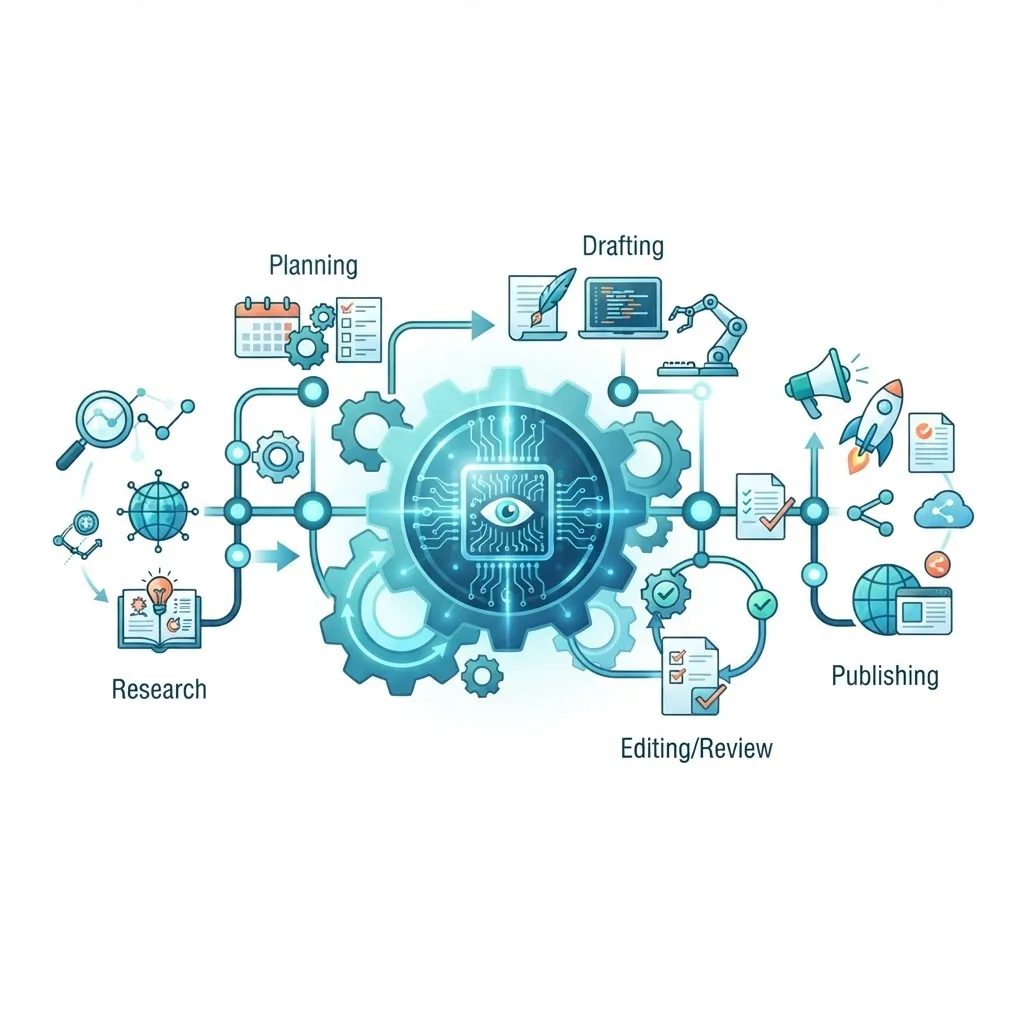
Step 2: Use AI for Research and Structure
Feed the model your audience and goals, then let it cluster topics, map search intent, and draft briefs. This is where AI saves the most time without risking brand integrity.
Step 3: Draft With AI, Edit With Experts
Generate first drafts, then have a subject expert rewrite for accuracy, voice, and original insight. Google's guidance is clear: content should demonstrate real experience and expertise, regardless of how it is produced. Unedited AI output rarely meets that bar.
Step 4: Personalize at Scale
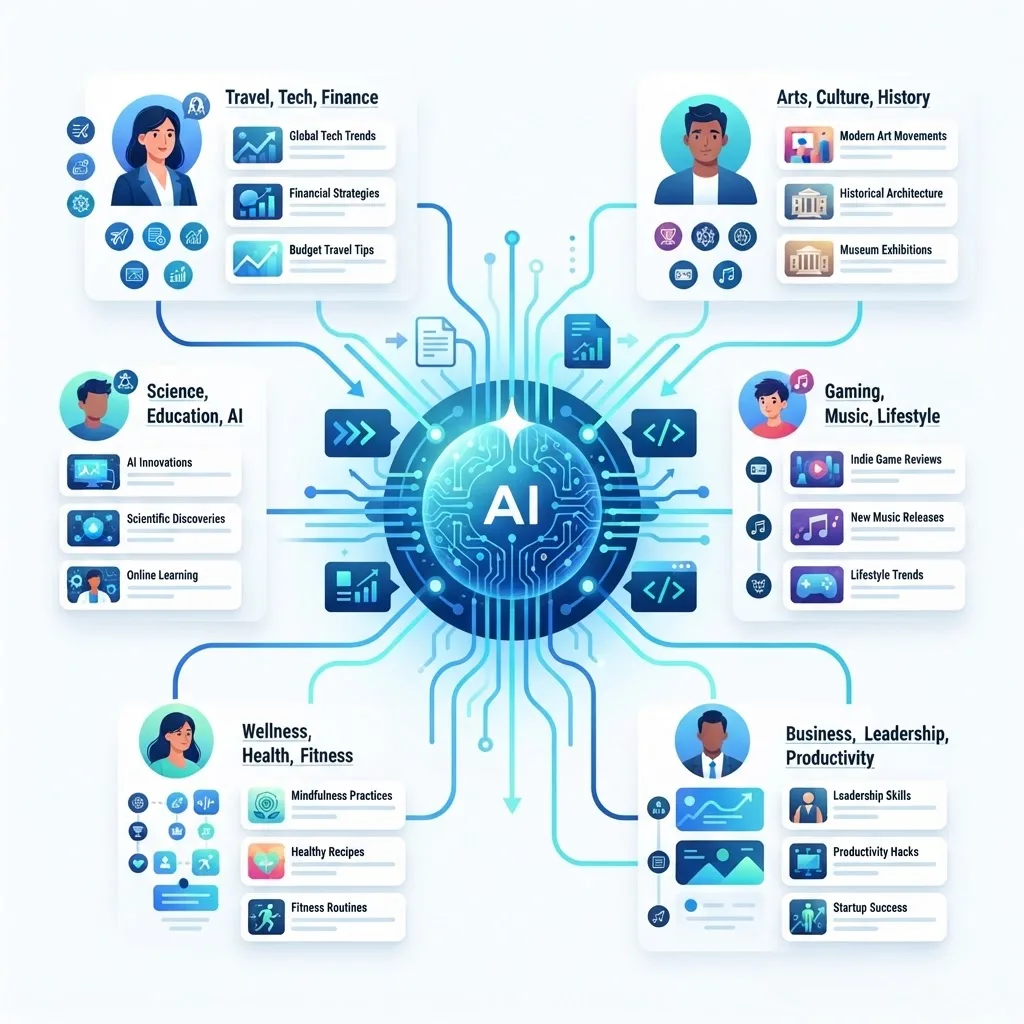
Use AI to adapt one strong asset into variations for different audience segments, channels, and buyer stages. This is a genuine capability gain that manual teams cannot match economically.
Step 5: Measure and Refine Continuously
Let AI surface performance patterns, then have humans decide what to double down on or cut. Analytics tell you what happened; strategists decide what it means.

The Framework That Keeps Humans in Control
The safest way to adopt AI is to define which layers stay human and which can be automated. Keep the strategic top of the pyramid human and automate the production base.
- Layer 1 (Human): Goals, positioning, and audience definition.
- Layer 2 (Human-led, AI-supported): Topic strategy and editorial standards.
- Layer 3 (AI-heavy, human-reviewed): Drafting, repurposing, and formatting.
- Layer 4 (AI-supported, human-decided): Reporting and optimization signals.
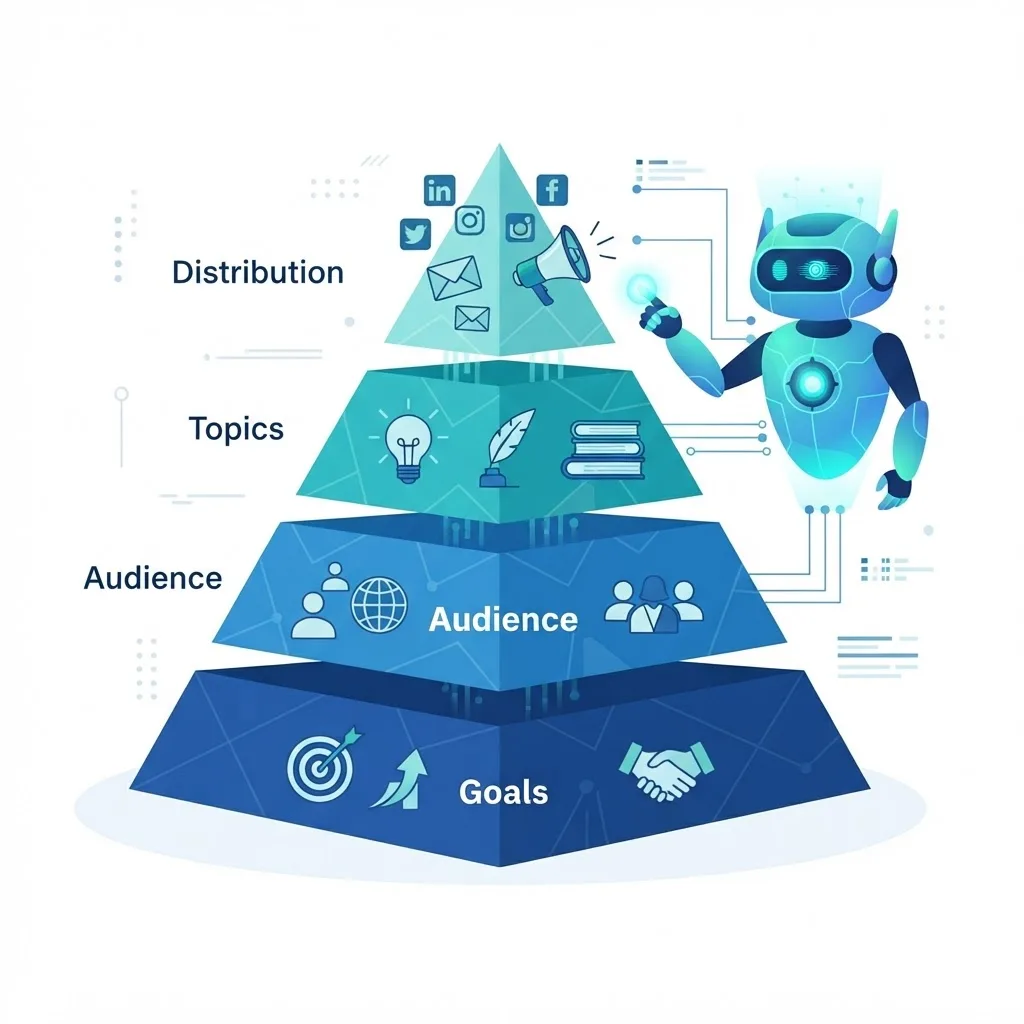
This structure prevents the most common failure mode: automating decisions that require judgment. If your organization needs a partner to implement this responsibly, ZoneTechify's artificial intelligence services can help design an AI content system that keeps humans accountable.
Common Mistakes When Replacing Strategy With AI
Most failures are predictable and avoidable. Watch for these patterns:
- Publishing unedited AI drafts, which harms accuracy and trust.
- Removing human review to cut costs, then losing brand voice.
- Optimizing for volume over relevance, flooding sites with thin content.
- Ignoring E-E-A-T, so content lacks real experience signals.
- Treating AI as a strategist, not a tool that executes strategy.
Avoiding these keeps AI a multiplier instead of a liability.
The Future of AI in Content Strategy
The trajectory is clear: AI will handle more execution every year, while human strategists move up the value chain. According to Gartner, a significant share of enterprise content is expected to be AI-assisted by mid-decade, but the brands that win will be those pairing automation with genuine human expertise. The role of the strategist is not disappearing; it is being upgraded.
Expect strategists to spend less time producing and more time directing, editing, and validating. That is a better job, not a lost one.

Key Takeaways
- AI replaces repetitive strategy tasks (research, drafting, reporting), not strategy itself.
- Human strategists remain essential for goals, voice, expertise, and accountability.
- The winning model is AI-assisted, human-led content strategy.
- Google rewards content with real experience and expertise, however it is produced.
- Automating judgment is the most common and damaging AI mistake.
- Strategists are moving from production to direction, editing, and validation.
Frequently Asked Questions (FAQ)
Can AI completely replace a content strategist?
No. AI can automate research, drafting, and reporting, but it cannot own business goals, brand voice, or accountability. A content strategist provides judgment, original expertise, and direction that AI models lack. The most effective approach uses AI to execute a strategy that a human still designs and controls.
Is AI-generated content bad for SEO?
Not inherently. Google evaluates quality and helpfulness, not the production method. AI content ranks well when it is accurate, original, and edited by experts who add real experience. Unedited, generic AI output usually underperforms because it lacks the depth and trust signals search engines and readers reward.
How do I start using AI in my content strategy?
Begin by defining human-owned goals, audience, and positioning. Then use AI for research, clustering, briefs, and first drafts, while keeping expert review mandatory. Start with one workflow, measure results, and expand gradually. This staged approach captures speed gains without sacrificing quality or brand integrity.
Will AI reduce content marketing jobs?
AI reshapes roles more than it eliminates them. Repetitive production work shrinks, while demand grows for editors, strategists, and specialists who can direct AI and validate output. Professionals who learn to lead AI workflows become more valuable, not less, as content volume and personalization needs increase.
What is the biggest risk of AI content strategy?
The biggest risk is automating decisions that require human judgment. Publishing unedited drafts, ignoring accuracy, and prioritizing volume over relevance damages trust and rankings. Keeping humans in control of strategy, editing, and accountability is the single most important safeguard when adopting AI for content.
Final Thoughts
Artificial intelligence does not replace content strategy; it replaces the slow, manual parts of it. The brands that thrive will treat AI as a powerful execution engine guided by experienced humans who own the vision. Build that balance, and you get scale without sacrificing trust. For hands-on help designing an AI-driven, human-led content system, explore ZoneTechify and WebPeak.