Discover how real-time feedback with Agile and DevOps AI accelerates delivery, catches defects early, and drives continuous, data-driven software improvement.
Real-Time Feedback with Agile and DevOps Artificial Intelligence
Software teams no longer compete on how fast they can write code — they compete on how fast they can learn from it. Real-time feedback, powered by artificial intelligence and woven into Agile and DevOps practices, has become the defining advantage of high-performing engineering organizations. When feedback arrives in seconds instead of days, teams ship safer releases, catch defects earlier, and make product decisions grounded in live evidence rather than assumptions.
This guide explains, from hands-on delivery experience, how AI transforms the feedback loops inside Agile sprints and DevOps pipelines. You will learn where AI adds measurable value, which signals matter, and how to adopt these tools without disrupting the human collaboration that makes Agile work in the first place.
Quick Answer: Real-time feedback with Agile and DevOps AI means using artificial intelligence to instantly analyze code, tests, and production data so teams get actionable insights the moment issues appear — accelerating delivery, reducing defects, and enabling continuous, data-driven improvement across every stage of the software lifecycle.
What Is Real-Time Feedback in Agile and DevOps?
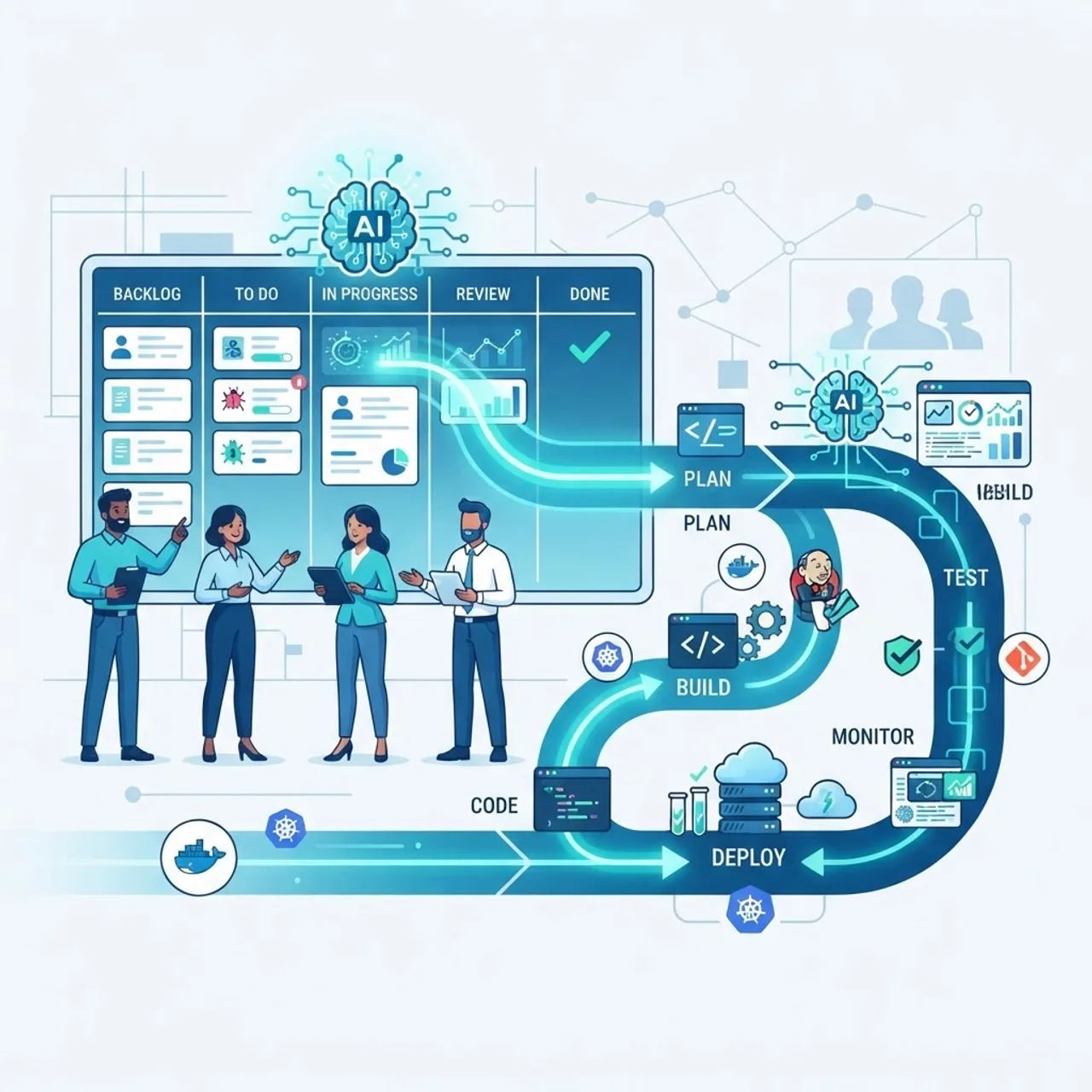
Real-time feedback is the practice of surfacing insights about code quality, system behavior, and user impact the instant they become measurable — not at the end of a sprint or after a customer complaint. In Agile, feedback traditionally arrived through sprint reviews and retrospectives. In DevOps, it came from monitoring dashboards and incident reports. Both were valuable but slow.
Artificial intelligence compresses that delay to near zero. AI models continuously watch commits, test results, deployment logs, and production telemetry, then flag anomalies, predict risks, and recommend fixes automatically. The result is a living feedback system that learns from every release and gets sharper over time.
Key definition: AI-driven feedback loops are automated cycles in which machine learning systems collect data from the software lifecycle, analyze it in real time, and return prioritized, actionable guidance to developers, testers, and operators.
Why Speed of Feedback Determines Delivery Performance
The DevOps Research and Assessment (DORA) program, backed by Google Cloud, found that elite performers deploy code far more frequently and recover from incidents dramatically faster than low performers. According to Google's DORA research, top teams restore service in under one hour, while low performers can take a week or more. The difference almost always traces back to how quickly they detect and act on feedback.
There is a hard economic reason behind this. Industry research consistently shows that a defect caught during coding costs a fraction of one caught in production — some studies estimate production fixes cost up to 30 times more than fixes made during development. AI shifts detection left, catching issues while they are cheap to resolve.
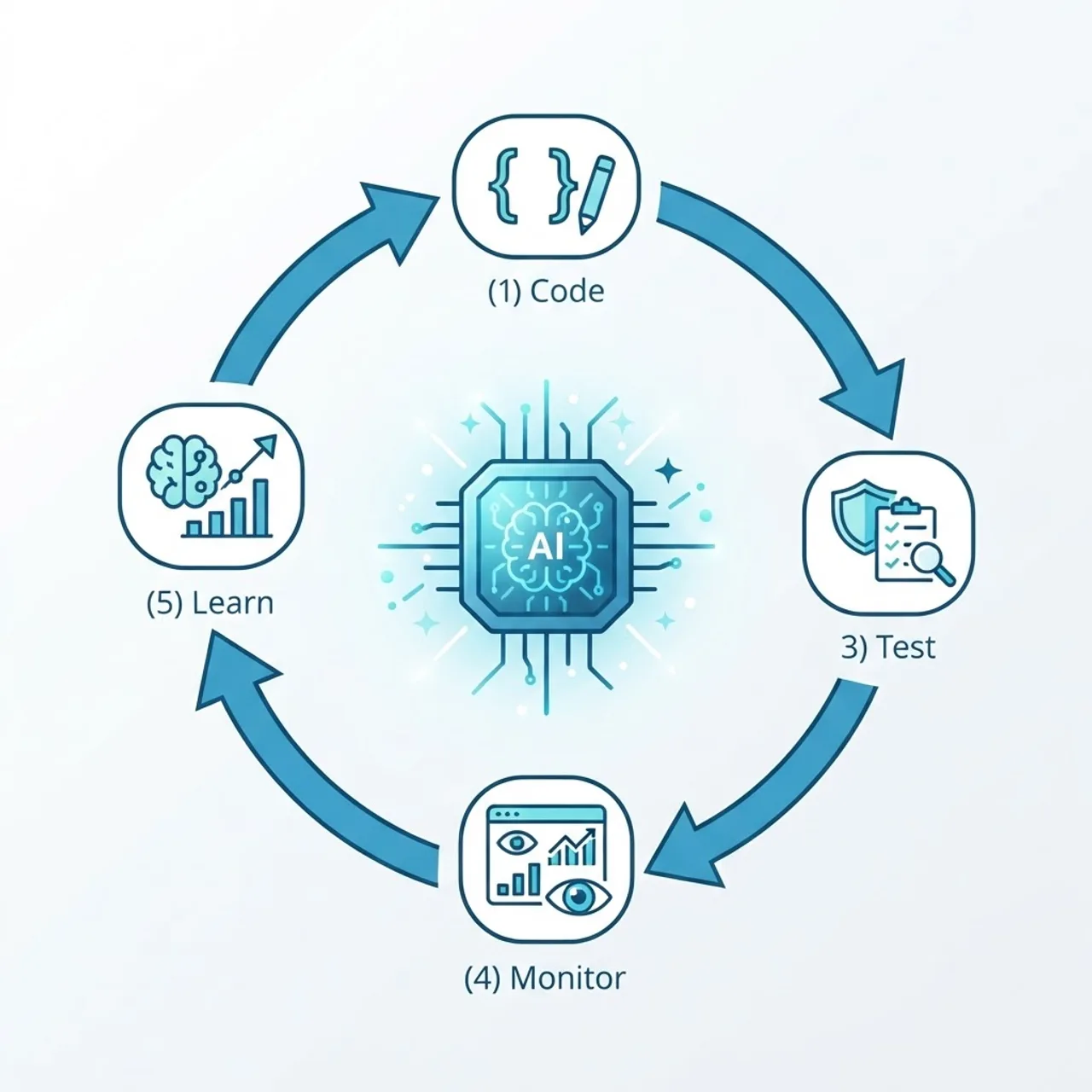
When feedback is instant, three things happen. First, developers stay in flow because they fix problems in the same context they created them. Second, risk becomes visible before it compounds. Third, the entire team builds a shared, evidence-based understanding of system health rather than arguing over opinions.
How AI Powers Real-Time Feedback Across the Pipeline
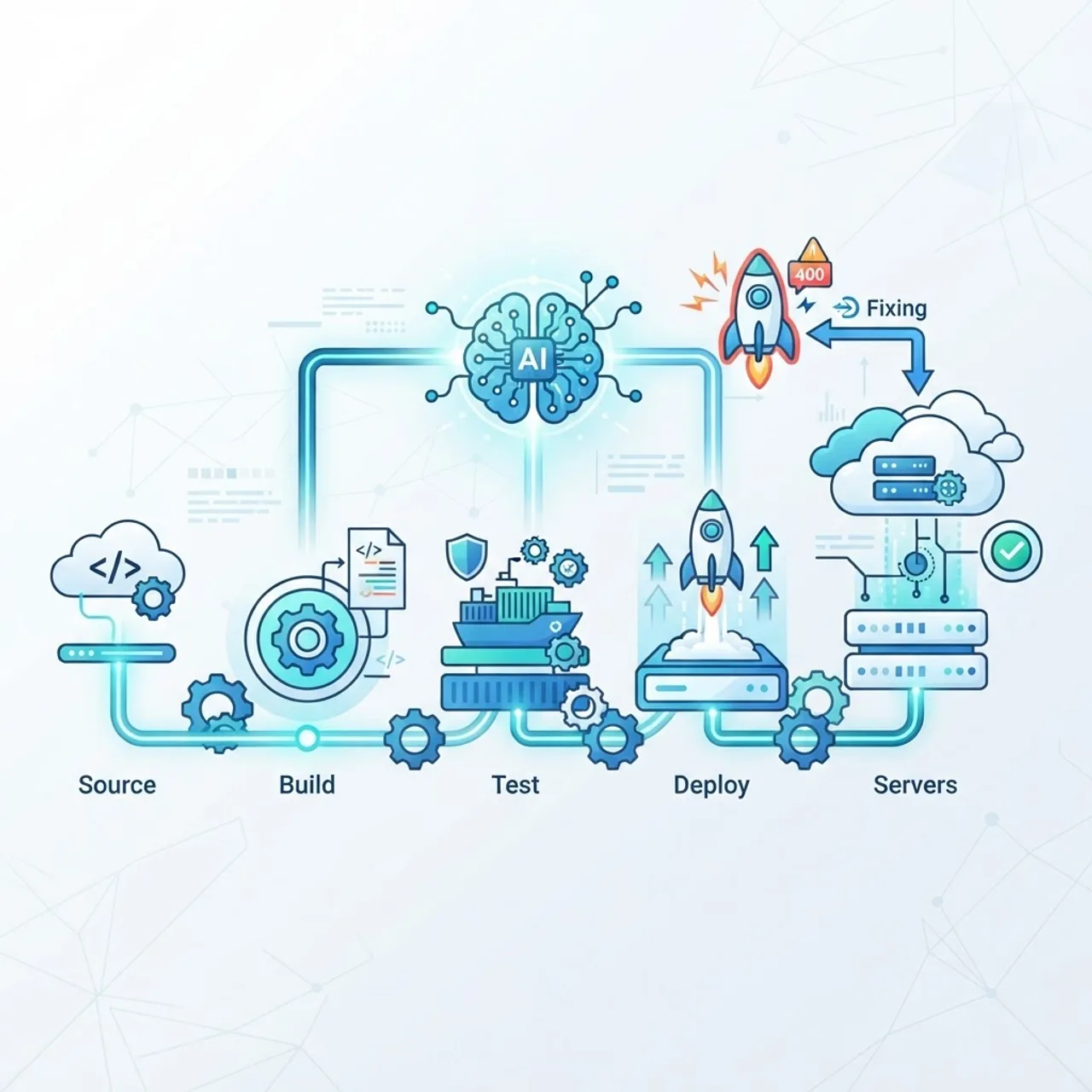
AI is not a single feature bolted onto DevOps — it operates at every stage of the delivery pipeline. Here is where it delivers the most value based on real project outcomes.
1. Intelligent Code Review
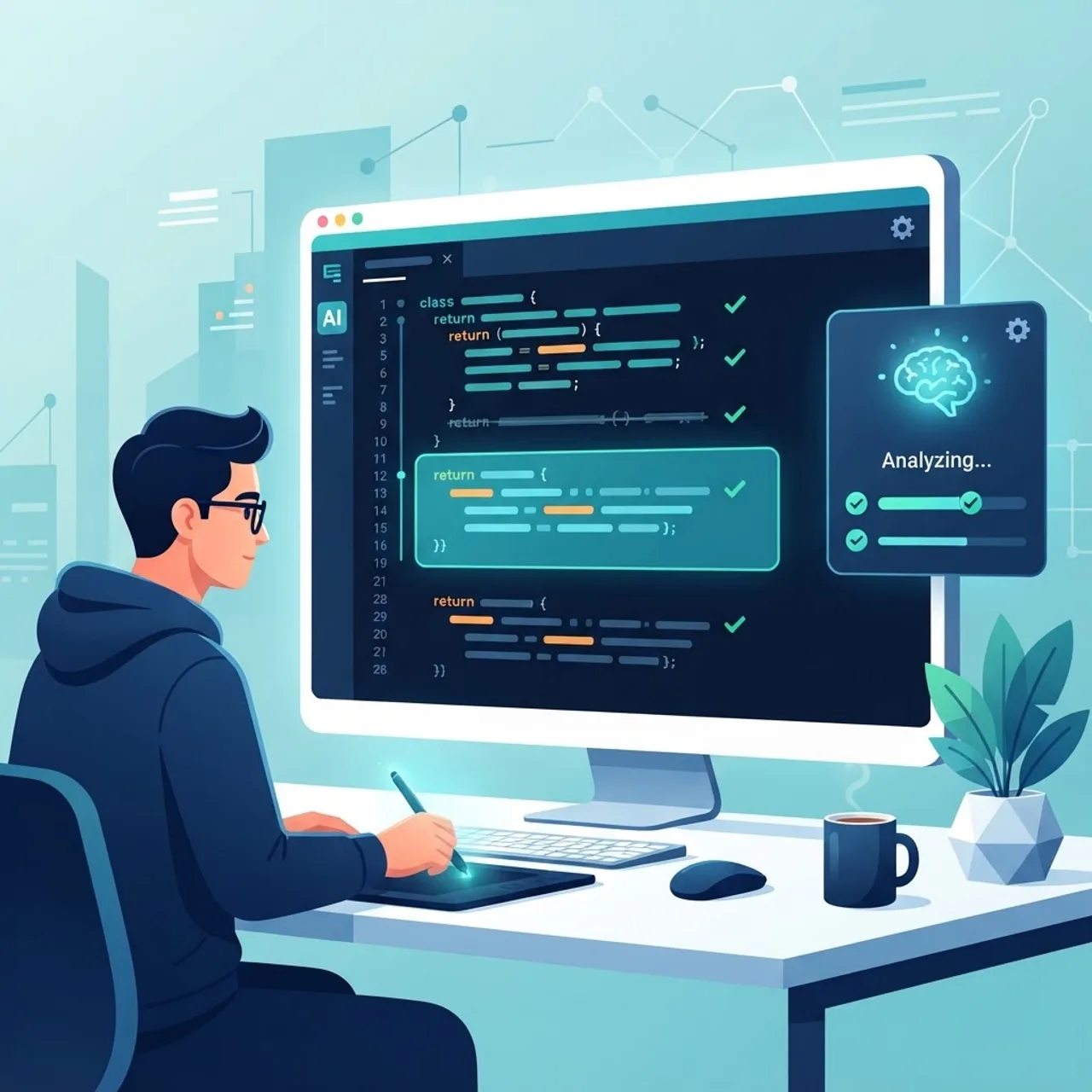
AI code assistants review pull requests the moment they open, flagging security vulnerabilities, style violations, and logic errors before a human reviewer even looks. This does not replace peer review; it removes the noise so engineers can focus on architecture and intent.
2. Predictive Test Selection
Instead of running an entire test suite on every commit, AI predicts which tests are most likely to fail based on the changed files. This can cut pipeline run times significantly while keeping coverage where it matters, giving developers feedback in minutes rather than hours.
3. Automated Anomaly Detection
In production, AI observability tools learn normal system behavior and alert teams the moment latency, error rates, or resource usage drift outside expected ranges — often before users notice anything is wrong.
4. Continuous Deployment Guardrails
AI-driven pipelines analyze each release in real time, automatically rolling back deployments that show early signs of degradation. This turns risky releases into safe, reversible experiments.
AI-Enhanced Agile Ceremonies
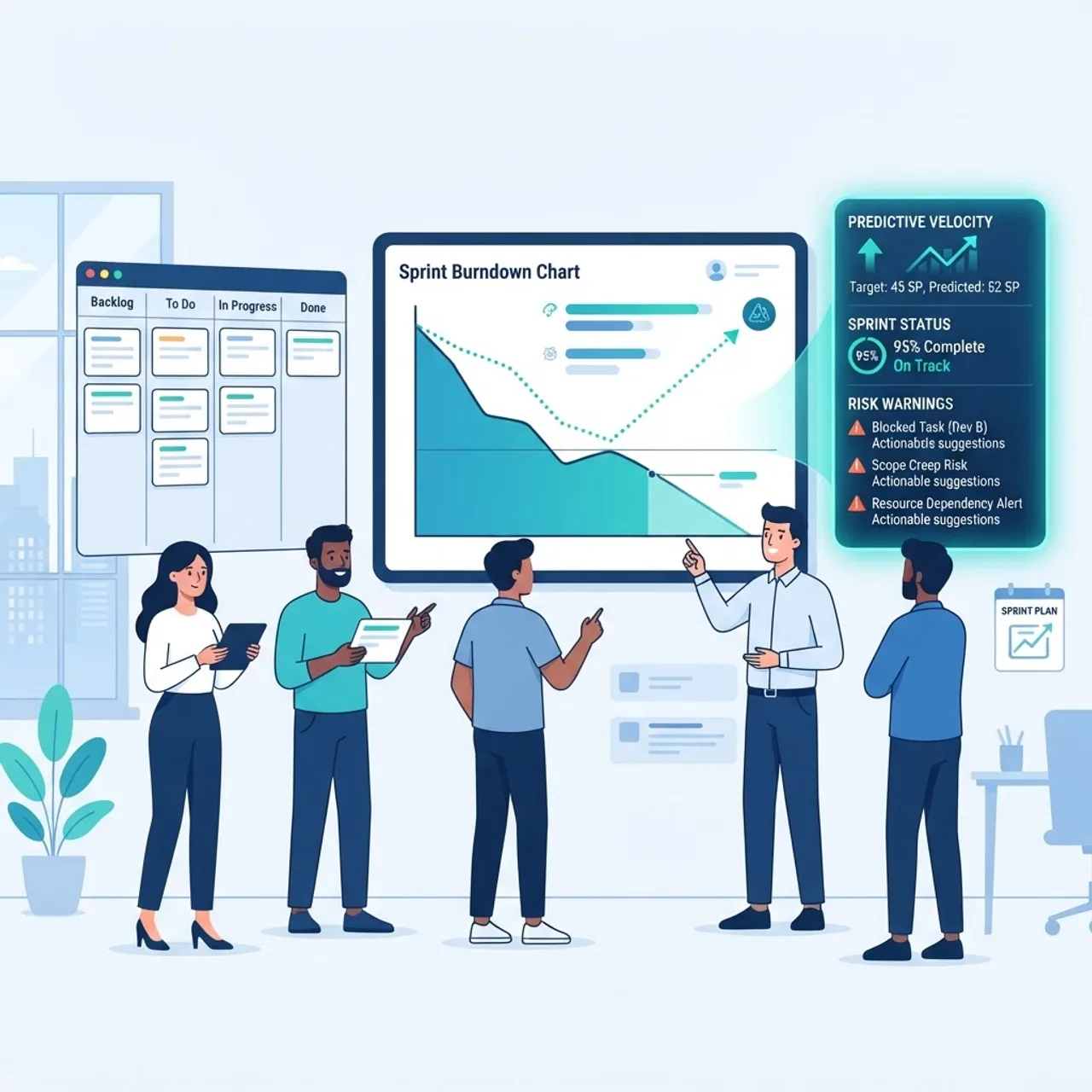
Agile ceremonies gain new depth when AI feeds them live data. Sprint planning becomes more accurate when AI analyzes historical velocity, ticket complexity, and team capacity to forecast realistic commitments. Standups shift from status reporting to problem-solving because everyone already sees the same real-time dashboards.
Retrospectives improve the most. Instead of relying on memory, teams review AI-generated summaries of what actually happened — cycle times, blocked tickets, defect clusters, and recurring bottlenecks. This grounds continuous improvement in facts rather than the loudest voice in the room.
Teams that combine these practices with expert guidance — such as the artificial intelligence services offered by ZoneTechify — tend to adopt AI feedback faster because the integration is tailored to their existing workflows rather than forced on top of them.
Comparing Traditional Feedback with AI-Driven Feedback
The table below shows how AI reshapes each dimension of the feedback loop.
| Dimension | Traditional Feedback | AI-Driven Real-Time Feedback |
|---|---|---|
| Speed | Hours to days | Seconds to minutes |
| Trigger | Manual review or incident | Continuous, automatic |
| Defect detection | Late, often in production | Early, during coding |
| Data source | Human observation | Live telemetry and logs |
| Scalability | Limited by team size | Scales across systems |
| Consistency | Varies by reviewer | Uniform and repeatable |
The pattern is clear: AI does not just make feedback faster, it makes it continuous, consistent, and scalable in ways human-only processes never could.
Real-Time Monitoring: The Backbone of the Loop
None of these benefits materialize without strong observability. Real-time monitoring dashboards are where AI feedback becomes visible and actionable. Modern platforms unify metrics, logs, and traces, then layer AI on top to correlate events and surface root causes automatically.
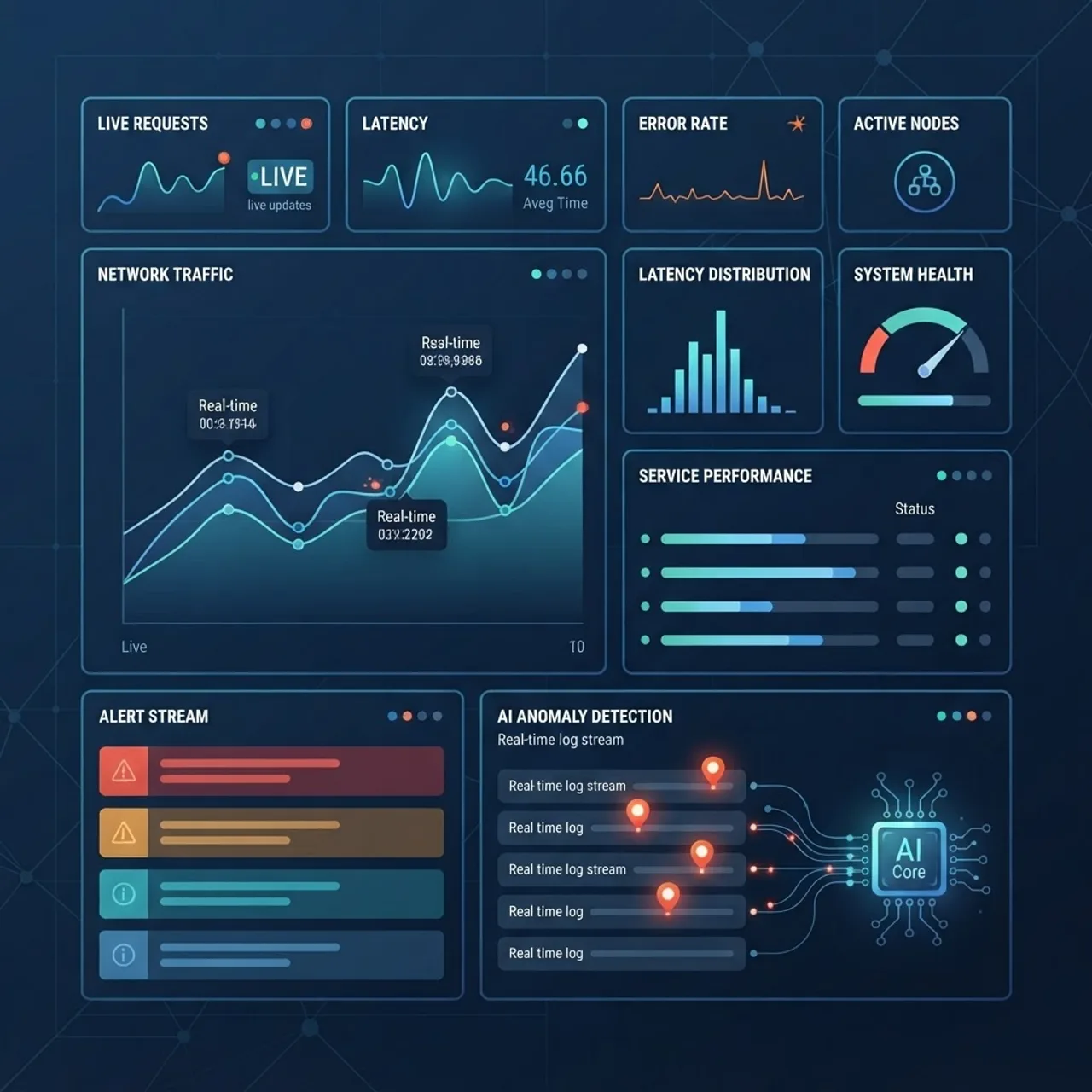
The practical advice from experience is to instrument early and instrument everything that matters to users: response times, error rates, throughput, and business KPIs. AI is only as good as the signals it receives, so invest in clean, well-structured telemetry before expecting intelligent insights. For teams building customer-facing platforms, pairing this with reliable engineering support from resources like ZoneTechify and WebPeak helps keep both the infrastructure and the feedback layer healthy.
A Practical Roadmap to Adopt AI Feedback
You do not need to rebuild your stack overnight. Follow this sequence for a low-risk rollout:
- Establish a baseline. Measure current cycle time, deployment frequency, and defect escape rate so you can prove improvement later.
- Add AI code review. Start where feedback is cheapest to act on — the pull request.
- Introduce predictive testing. Reduce pipeline time while maintaining coverage.
- Deploy AI observability. Turn on anomaly detection in production with sensible alert thresholds.
- Automate guardrails. Add automatic rollbacks once you trust the signals.
- Feed data back into Agile. Use AI summaries in retrospectives to close the loop.
Roll each step out to one team first, validate the impact against your baseline, then expand. This measured approach builds trust and avoids alert fatigue.
Common Pitfalls to Avoid
Experience teaches that AI feedback fails for predictable reasons. Over-alerting is the biggest: if every anomaly pages the team, people stop listening. Tune thresholds and let AI prioritize severity. Another trap is treating AI output as absolute truth — it is guidance, not gospel, and human judgment must stay in the loop. Finally, do not neglect data quality; poorly instrumented systems produce misleading insights that erode confidence in the entire program.
The Future of AI in Agile and DevOps
The trajectory is toward increasingly autonomous systems. Self-healing pipelines already remediate common failures without human intervention, and predictive models are beginning to forecast outages before they occur. The near future will feature AI agents that plan releases, negotiate resource trade-offs, and continuously optimize delivery — with humans setting strategy and guardrails.
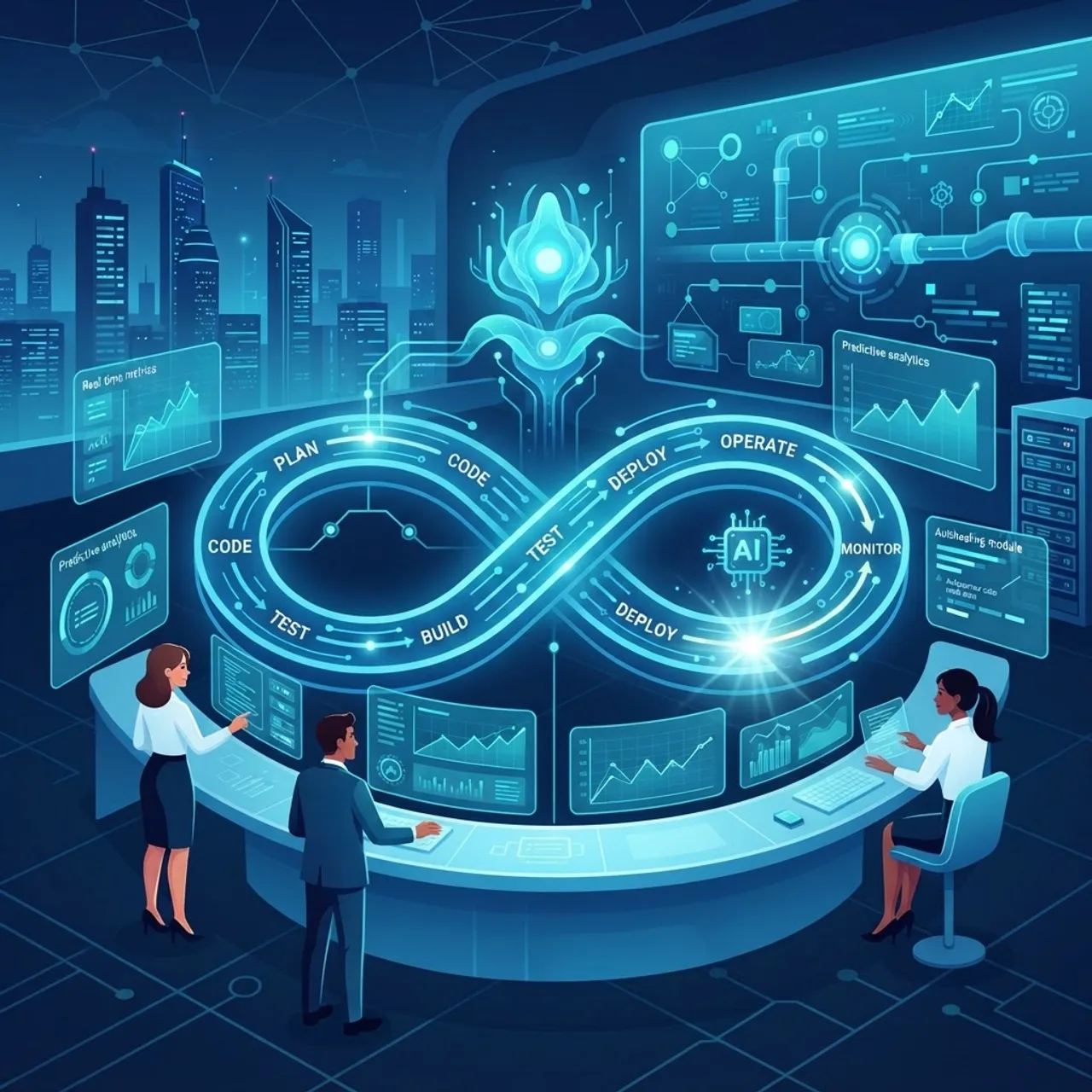
The organizations that win will be those that treat AI feedback as a collaborative partner, amplifying human expertise rather than replacing it. The goal has never changed: deliver value to users quickly and safely. AI simply makes that goal reachable at a scale and speed previously impossible.
Key Takeaways
- Real-time feedback turns Agile and DevOps into a continuous learning system, replacing slow, manual reviews with instant, automated insight.
- According to Google's DORA research, elite teams recover from incidents in under an hour, largely because of fast feedback loops.
- Defects caught during development can cost up to 30 times less than those found in production, making early AI detection highly valuable.
- AI adds value at every pipeline stage: code review, predictive testing, anomaly detection, and automated deployment guardrails.
- Success depends on clean telemetry, tuned alerts, and keeping human judgment firmly in the loop.
Frequently Asked Questions (FAQ)
What is real-time feedback in Agile and DevOps?
It is the practice of surfacing insights about code, tests, and production the instant they are measurable. AI powers this by continuously analyzing commits, pipelines, and telemetry, then returning prioritized, actionable guidance so teams fix issues immediately instead of waiting for reviews or incident reports.
How does AI improve DevOps feedback loops?
AI improves DevOps feedback by reviewing code automatically, predicting which tests to run, detecting production anomalies before users notice, and enabling automatic rollbacks. This shifts problem detection earlier, shortens pipeline times, and gives developers reliable, continuous signals rather than slow, manual, and inconsistent human checks.
Does AI replace Agile ceremonies like retrospectives?
No, AI enhances rather than replaces Agile ceremonies. It provides factual data — cycle times, defect clusters, and bottlenecks — so retrospectives and planning are grounded in evidence instead of memory. Teams still make decisions; AI simply ensures those decisions rest on accurate, real-time information.
Is AI-driven feedback safe for production systems?
Yes, when implemented carefully. Start with monitoring and anomaly detection before enabling automatic actions like rollbacks. Tune alert thresholds to avoid noise, validate AI recommendations with human review, and expand gradually. This measured approach keeps production stable while steadily building trust in automated feedback.
How do I start adopting AI feedback in my team?
Begin by measuring baseline metrics like cycle time and defect rate. Then add AI code review at the pull request stage, introduce predictive testing, and deploy observability with anomaly detection. Roll each step out to one team first, validate results, and expand once the impact is proven.