A clear, expert breakdown of the biggest AI breakthroughs of 2026 — from autonomous agents and reasoning models to healthcare, enterprise adoption, and regulation.
Latest Advancements in Artificial Intelligence 2026
Artificial intelligence in 2026 has crossed a clear threshold: it no longer just answers questions, it now plans, reasons, and acts. After years of chatbots and image generators grabbing headlines, this year is defined by systems that complete real work with less human supervision. As a team that builds and deploys AI solutions for clients every week, we have watched this shift move from demos to daily production use. This guide breaks down the advancements that actually matter in 2026 — what changed, why it matters, and how to use it.
Quick Answer: The latest advancements in artificial intelligence in 2026 center on autonomous AI agents, powerful reasoning models, and true multimodal understanding. AI now plans multi-step tasks, integrates text, image, audio, and video, and is being adopted across healthcare, enterprise, and daily workflows at record speed.
What Makes 2026 Different for AI
The defining change in 2026 is autonomy. Earlier AI waited for a prompt and returned a single output. Today's leading systems break a goal into steps, call tools, check their own work, and retry when they fail. This is the leap from a helpful assistant to a capable coworker.
According to McKinsey's global research, roughly 78% of organizations now report using AI in at least one business function, up sharply from previous years. That adoption curve is the backdrop for every advancement below. If you want practical help applying these tools, ZoneTechify and WebPeak both work with businesses adopting modern AI in real projects.
AI Agents: From Chatbots to Autonomous Workers
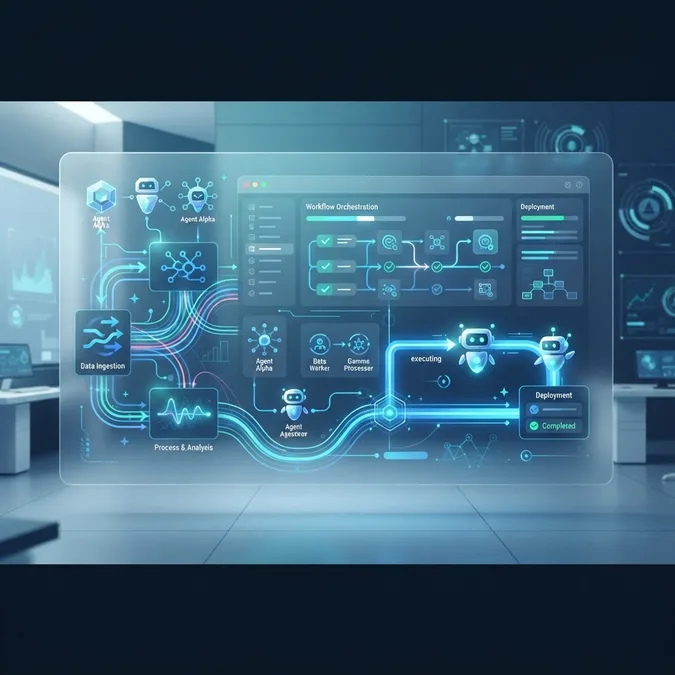
AI agents are the single biggest story of 2026. An AI agent is a system that can pursue a goal independently by planning steps, using external tools, and adapting based on results — without needing a human to guide every action.
In practice, this means an agent can now book travel, reconcile invoices, write and test code, or run a customer support queue end to end. What changed technically is reliability: better memory, tool-calling standards, and self-correction loops have reduced the error cascades that made earlier agents fragile.
Where agents deliver real value today
- Software development: Agents scaffold apps, fix bugs, and open pull requests with human review.
- Customer support: They resolve tier-one tickets and escalate only genuine edge cases.
- Operations: They handle scheduling, data entry, and cross-system reporting.
- Research: They gather sources, summarize findings, and flag contradictions.
Our own experience deploying agents shows the winning pattern is "human-in-the-loop" — let the agent do 90% of the work, but keep a person approving high-stakes actions. Fully unattended agents remain risky for anything involving money or compliance.
Reasoning Models: AI That Thinks Before It Answers

Reasoning models are AI systems trained to work through problems step by step before producing a final answer. Instead of predicting the next word instantly, they generate an internal chain of thought, test intermediate conclusions, and only then respond.
This matters because it dramatically improves accuracy on math, coding, science, and multi-step logic — exactly the tasks where older models produced confident but wrong answers. In 2026, reasoning has become a standard feature rather than a premium novelty, with models dynamically spending more "thinking time" on harder questions.
The practical takeaway: for complex work, a reasoning model will outperform a fast generic model, but it costs more compute and responds slower. Choose based on the task. A simple summary does not need deep reasoning; a financial analysis or a debugging session does.
Multimodal AI: One Model That Sees, Hears, and Reads
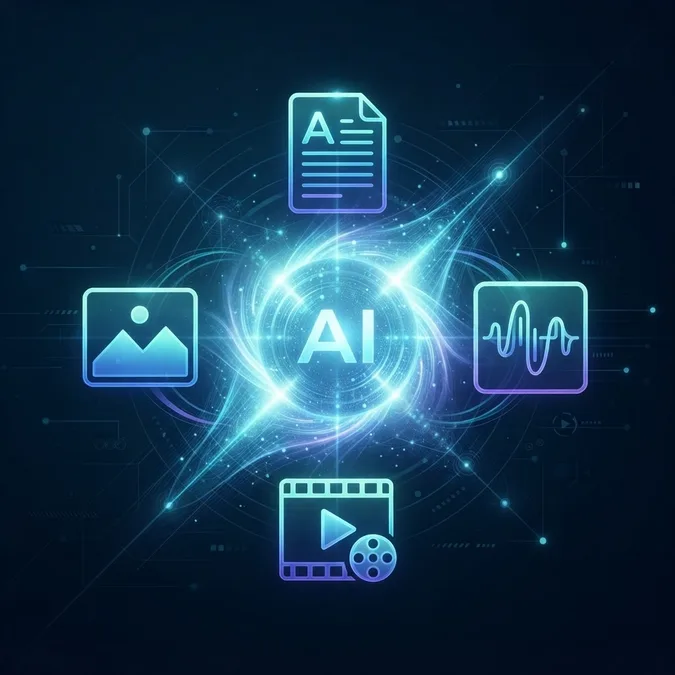
Multimodal AI refers to models that process and generate multiple data types — text, images, audio, and video — within a single system. In 2026 this is no longer bolted on; it is native.
You can now show a model a photo of a broken appliance, describe the noise it makes, and get a diagnosis with repair steps. Designers feed a rough sketch and receive production-ready variations. Marketers turn a single brief into copy, images, and a short video. This convergence collapses workflows that once required five separate tools.
The business impact is speed. Tasks that took teams days now take hours, which is why creative, support, and analytics roles are being redesigned around AI-native workflows rather than replaced outright.
Generative AI in the Enterprise

Enterprise adoption is where 2026's advancements turn into measurable ROI. Companies have moved past experimentation and are embedding AI into core systems — CRMs, help desks, coding pipelines, and analytics platforms.
The biggest shift is data grounding. Through retrieval-augmented generation (RAG), models now answer using a company's own verified documents instead of guessing, which sharply reduces hallucinations and builds trust. Governance, access control, and audit logging have become standard requirements before deployment.
Businesses that want to build custom AI features into their platforms often need proper engineering support, which is where ZoneTechify's artificial intelligence services help teams move from prototype to production safely.
Comparison: 2023 AI vs 2026 AI
| Capability | AI in 2023 | AI in 2026 |
|---|---|---|
| Task style | Single prompt, single answer | Multi-step autonomous goals |
| Reasoning | Shallow, error-prone | Step-by-step, self-checking |
| Inputs | Mostly text | Text, image, audio, video |
| Reliability | Frequent hallucinations | Grounded on verified data |
| Enterprise use | Pilots and experiments | Core production workflows |
| Oversight | Manual, constant | Human-in-the-loop approval |
AI in Healthcare and Science

Healthcare is one of the highest-impact frontiers for AI in 2026. Models now assist with medical imaging analysis, drug discovery, and clinical documentation, freeing clinicians from paperwork and speeding diagnosis.
AI-driven protein and molecule modeling has compressed early-stage drug research timelines that once took years into months. In diagnostics, multimodal systems cross-reference scans, lab results, and patient history to flag conditions earlier. Crucially, these tools are being positioned as decision support — they augment doctors rather than replace clinical judgment, which keeps accountability with licensed professionals.
The same pattern is repeating in climate modeling, materials science, and physics, where AI accelerates the slow, expensive parts of discovery.
AI Ethics, Safety, and Regulation

Regulation matured significantly in 2026. With the EU AI Act's obligations rolling into force and similar frameworks emerging worldwide, organizations now face real requirements around transparency, risk classification, and data handling.
This is a healthy correction. As agents gain the ability to act, the cost of an unchecked mistake rises. Leading teams now treat safety as a feature: they log AI decisions, disclose AI-generated content, test for bias, and set hard limits on what agents can do autonomously.
For any business deploying AI, our advice is direct — document your data sources, keep a human accountable for consequential decisions, and never deploy a system you cannot explain. Trust is now a competitive advantage.
The Road Ahead: What to Expect Next

The trajectory points toward more capable, more specialized, and more integrated AI. Expect smaller, efficient models that run on devices, deeper agent-to-agent collaboration, and AI woven invisibly into everyday software.
The winners will not be those who simply own the biggest model, but those who apply AI thoughtfully to real problems with strong data and clear guardrails. The technology is now good enough that strategy, not raw capability, is the deciding factor.
Key Takeaways
- Autonomous agents are 2026's defining advancement — AI now plans and acts, not just answers.
- Reasoning models think step by step, sharply improving accuracy on complex tasks.
- Multimodal AI natively handles text, images, audio, and video in one system.
- Enterprise adoption is mainstream, with ~78% of organizations using AI in at least one function.
- RAG and data grounding have reduced hallucinations and made AI outputs trustworthy.
- Regulation and ethics matured, making transparency and human oversight non-negotiable.
- Human-in-the-loop remains the safest, most effective deployment pattern.
Frequently Asked Questions (FAQ)
What is the biggest AI advancement in 2026?
The biggest advancement is the rise of autonomous AI agents. Unlike earlier chatbots, these agents plan multi-step tasks, use external tools, check their own work, and complete real jobs with minimal human input, marking the shift from AI assistants to capable AI coworkers.
What is a reasoning model in AI?
A reasoning model is an AI system trained to think through a problem step by step before answering. It generates an internal chain of thought, tests intermediate steps, and then responds. This greatly improves accuracy on math, coding, science, and complex multi-step logic tasks.
Is AI replacing jobs in 2026?
AI is reshaping jobs more than eliminating them outright. It automates repetitive tasks and redesigns workflows, while creating demand for people who can direct, review, and govern AI systems. The most effective approach in 2026 remains human-in-the-loop, pairing human judgment with AI speed.
What does multimodal AI mean?
Multimodal AI describes models that understand and generate several data types — text, images, audio, and video — within one system. This lets you combine a photo, a voice note, and a description in a single request, collapsing workflows that once required multiple separate specialized tools.
How can businesses safely adopt AI in 2026?
Businesses should ground AI on verified internal data, keep a human accountable for consequential decisions, log AI actions, and follow emerging regulations like the EU AI Act. Start with low-risk, high-value use cases, measure results, and expand only after building clear guardrails and trust.
Final Thoughts
The latest advancements in artificial intelligence in 2026 are not about flashy demos — they are about systems that reliably do useful work. Agents, reasoning, and multimodal understanding have turned AI into practical infrastructure. The organizations that pair these tools with strong data and responsible oversight will lead their industries. If you are ready to apply modern AI to your own business, teams like ZoneTechify and WebPeak can help you build it the right way.