A practical guide to choosing a Java app development company, covering engagement models, real cost ranges, architecture decisions, security requirements, and the exact questions to ask before you sign.
Java App Development Company
Choosing a Java app development company is a decision you live with for years, not months. Java powers banking cores, insurance claim engines, airline reservation systems, telecom billing platforms, and Android apps used by billions of people. When you commit to Java, you are committing to a long-lived codebase, and the partner who writes the first 10,000 lines determines how expensive the next 500,000 will be. This guide is written from the perspective of teams that have inherited both excellent and disastrous Java codebases, and it focuses on what actually separates the two.
Quick Answer: A Java app development company builds enterprise-grade backend systems, APIs, and Android applications using Java, Spring Boot, and the JVM ecosystem. The right partner offers senior JVM engineers, a documented architecture, automated testing, CI/CD, security review, and a clear handover plan so you own your code outright.
What a Java App Development Company Actually Does
Definition: A Java app development company is a software firm that designs, builds, tests, deploys, and maintains applications on the Java Virtual Machine, typically using Java or Kotlin with frameworks such as Spring Boot, Quarkus, Micronaut, or Jakarta EE.
The deliverable is rarely just an app. In practice, a competent Java partner produces five things:
- A domain model that reflects how your business actually works, not a generic CRUD schema.
- A service layer and API contract documented with OpenAPI so other teams can integrate without meetings.
- An automated test suite covering unit, integration, and contract tests.
- A deployment pipeline that builds a container image and ships it without manual steps.
- Operational instrumentation including structured logs, metrics, health checks, and traces.
If a vendor proposal mentions only screens and features, they are quoting for a prototype. Ask specifically which of the five deliverables above are in scope, and get the answer in writing before the contract is signed.
Why Java Still Wins for Long-Lived Business Applications
Java's advantage is not raw speed of initial development. It is the cost of change five years in. According to the TIOBE Index, Java has remained in the top three programming languages for more than two decades, which means the hiring pool for maintenance never dries up. Oracle reports that Java runs on billions of devices worldwide, and the JVM's backward compatibility record means code written a decade ago typically still compiles today.
Three concrete engineering reasons Java holds up:
- Static typing catches integration errors at compile time. In a system with 200 endpoints and 40 domain entities, the compiler becomes your cheapest test suite.
- The JVM is genuinely mature under load. Garbage collectors such as G1 and ZGC give you predictable pause times, and tools like JFR, JMC, and async-profiler let engineers diagnose production issues without guessing.
- The library ecosystem is battle-tested for regulated work. Spring Security, Hibernate, Flyway, Liquibase, Kafka clients, and JDBC drivers have decades of production hardening behind them.
When Java Is the Wrong Choice
Honest advice matters more than selling a stack. Java is a poor fit for short-lived marketing microsites, simple content-driven websites, and single-purpose scripts. If your project is a brochure site with a contact form, a Java backend adds cost with no benefit. A capable web application development partner will tell you this before invoicing you.
The Java Architecture Decision You Cannot Undo Cheaply

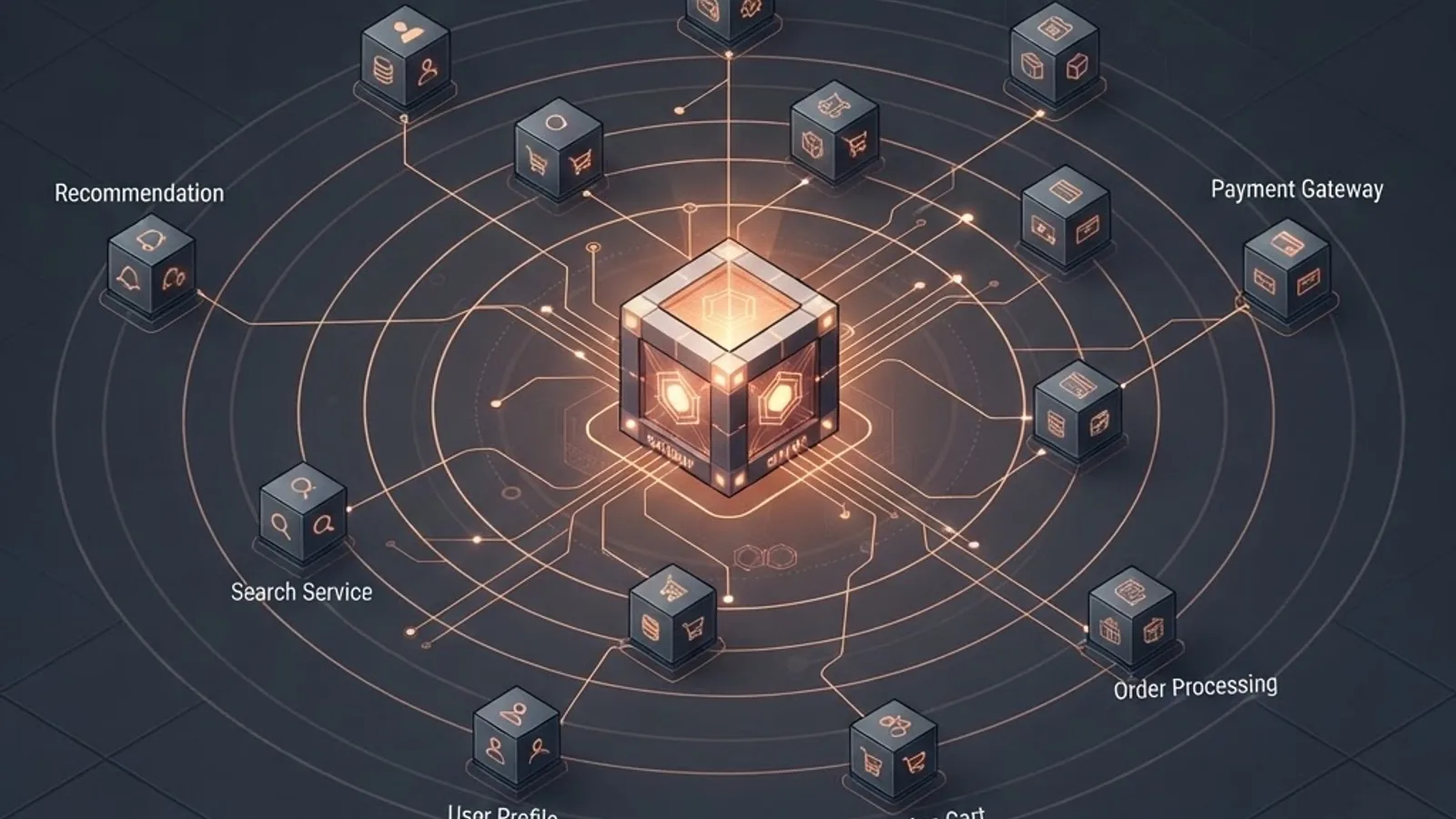
The single most consequential decision your Java app development company will make is whether to start with a modular monolith or a distributed microservice architecture. Getting this wrong is the most common cause of budget overrun on Java projects.
Start with a modular monolith when your team is under roughly fifteen engineers, your domain boundaries are still shifting, and you deploy as one product. A single Spring Boot application with strictly enforced package boundaries gives you the organizational clarity of services without distributed-system debugging costs.
Move to microservices when specific parts of your system need independent scaling, different release cadences, or separate ownership by different teams. The trigger should be an organizational constraint, not architectural fashion.
Warning Signs in a Vendor's Architecture Proposal
- Twelve services proposed for a product with no users yet.
- Shared database tables across services, which recreates monolith coupling with added network latency.
- No mention of transaction boundaries, idempotency, or how retries are handled.
- No answer to how a developer runs the whole system locally.
If a vendor cannot explain, in one paragraph, how a payment retried twice will not charge a customer twice, they are not ready to build your financial workflows.
The Modern Java Stack a Credible Partner Should Propose in 2026
| Layer | Recommended Choice | Why It Matters |
|---|---|---|
| Language version | Java 21 or 25 LTS | Virtual threads, pattern matching, records reduce boilerplate significantly |
| Framework | Spring Boot 3.x | Largest ecosystem, mature security, huge hiring pool |
| Lightweight alternative | Quarkus or Micronaut | Faster startup and lower memory for serverless workloads |
| Data access | Spring Data JPA plus jOOQ for complex reads | ORM for writes, typed SQL for reporting queries |
| Migrations | Flyway or Liquibase | Schema changes become reviewable, versioned code |
| Build | Gradle or Maven with a lockfile | Reproducible builds across machines and CI |
| Testing | JUnit 5, Testcontainers, WireMock | Real database and real HTTP in tests, not mocks |
| Observability | Micrometer plus OpenTelemetry | Metrics and traces from day one, not retrofitted |
One detail worth insisting on: Testcontainers. If a vendor tests database logic against an in-memory H2 database instead of the real PostgreSQL or MySQL engine you deploy to, expect production bugs that never appeared in testing. Real-engine integration testing is a strong signal of engineering maturity.
Virtual threads, delivered in Java 21, deserve a specific mention. For I/O-bound web services, they let a single JVM handle very high concurrency without reactive-programming complexity. A vendor still proposing reactive WebFlux purely for throughput on a new project should be asked to justify the added debugging cost.
What Java App Development Actually Costs

Cost varies mainly by seniority and location, not by tooling. Typical 2026 market ranges for Java engineering, based on widely published contracting rates:
| Engagement Model | Typical Rate Range | Best For | Main Risk |
|---|---|---|---|
| Fixed-price project | 15,000 to 120,000 USD per phase | Well-defined, stable scope | Change requests become expensive |
| Dedicated team | 4,000 to 12,000 USD per engineer monthly | Evolving multi-year products | Requires your own product ownership |
| Time and materials | 25 to 150 USD hourly | Discovery and modernization work | Needs disciplined budget tracking |
| Staff augmentation | 30 to 110 USD hourly | Filling specific JVM skill gaps | Knowledge leaves when contract ends |
The hidden costs that break budgets are rarely development hours. They are data migration from a legacy system, third-party integration quirks, compliance audits, and load testing. Insist that these four items appear as separate, estimated line items rather than being folded into a vague "integration" bucket.
A Practical Way to De-Risk the First Contract
Buy a two to four week paid discovery sprint before committing to a full build. Deliverables should include a domain model, an architecture decision record, a risk register, and a working vertical slice: one real feature running end to end, deployed, with tests. You will learn more about a vendor's real capability from that slice than from any portfolio deck.
Evaluating the Engineering Team, Not the Sales Deck

Ask to interview the engineers who will actually write your code, and ask these specific questions:
- "Walk me through how you would diagnose a memory leak in production." A strong answer mentions heap dumps, JFR recordings, and GC log analysis. A weak answer says "restart the service."
- "How do you handle database schema changes with zero downtime?" Expect expand-and-contract migration patterns, backward-compatible columns, and feature flags.
- "Show me a test that would have caught a real bug you shipped." This reveals honesty and testing culture simultaneously.
- "What is your code review turnaround, and who can approve a merge?" Long review queues silently double delivery timelines.
- "How do we take full ownership of this codebase if we part ways?" Repository ownership, documented runbooks, and no proprietary framework lock-in.
A strong partner welcomes these questions. Teams that deflect them toward account managers are usually hiding thin senior bench strength. Agencies such as ZoneTechify and WebPeak that publish their engineering process make this verification easier.
Java for Android and Mobile Backends

Java remains fully supported for Android development, though Kotlin is now Google's recommended default. In practice, most production Android codebases are mixed, and both languages compile to the same bytecode and interoperate seamlessly.
The more common Java mobile scenario in 2026 is the backend: a Spring Boot API serving native iOS and Android clients. Non-negotiable requirements for that backend:
- API versioning from day one, because mobile clients you cannot force-update will call old endpoints for years.
- Payload discipline, since mobile networks punish oversized JSON responses.
- Offline-tolerant design with idempotent write endpoints so a retried request from a flaky connection cannot duplicate data.
Security and Compliance Requirements to Contract Explicitly
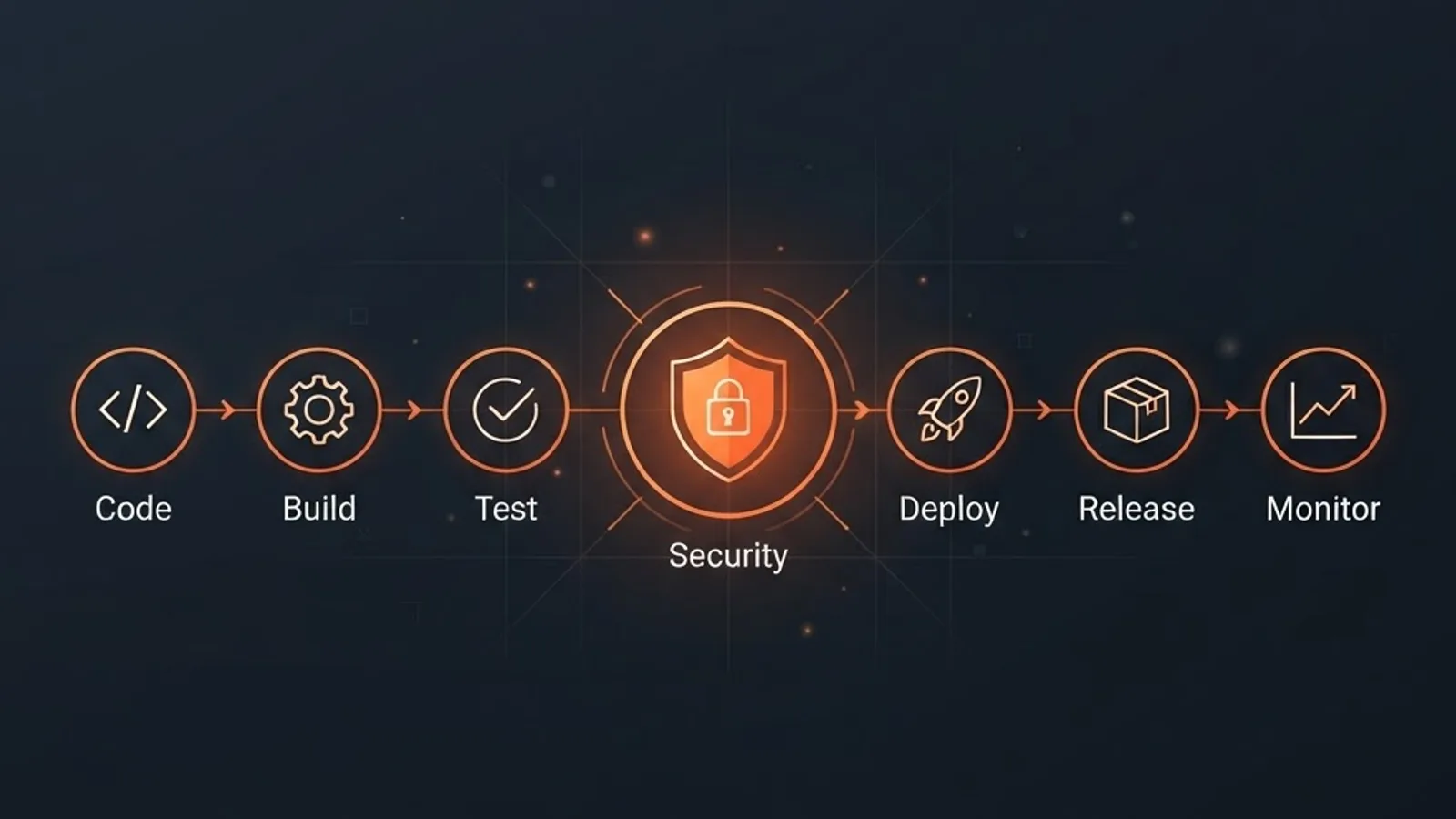
The Log4Shell vulnerability disclosed in December 2021 affected an enormous portion of enterprise Java deployments and demonstrated that dependency risk is not theoretical. Any serious Java app development company should build these controls into the pipeline by default:
- Automated dependency scanning using OWASP Dependency-Check or Snyk on every build, failing the build on critical findings.
- A software bill of materials (SBOM) generated per release for audit purposes.
- Secrets kept out of source control, injected through a vault or platform environment configuration.
- Spring Security configured explicitly, with authorization tested as code rather than assumed.
- Static analysis via SonarQube, SpotBugs, and ErrorProne wired into pull requests.
If you operate under GDPR, HIPAA, PCI DSS, or SOC 2, name the framework in the statement of work and require the vendor to map controls to specific deliverables. Compliance retrofitted after launch routinely costs several times more than building it in.
A Hiring Checklist You Can Use This Week
- Confirm at least two engineers with five or more years of production JVM experience on your team.
- Request a redacted code sample or public repository and read the tests first.
- Verify Testcontainers or equivalent real-dependency integration testing.
- Require an architecture decision record for every major choice.
- Confirm you own the repository, CI configuration, and infrastructure code.
- Get a written maintenance and support SLA with response times by severity.
- Insist on a documented handover: runbooks, onboarding guide, and a recorded walkthrough.
Any vendor unwilling to commit to item five should be eliminated immediately. Code ownership is not negotiable.
Key Takeaways
- Java has stayed in the top three of the TIOBE Index for over twenty years, guaranteeing a durable maintenance hiring pool.
- Start with a modular monolith; adopt microservices only when an organizational or scaling constraint demands it.
- Java 21 and 25 LTS with virtual threads deliver high concurrency without reactive-programming complexity.
- Dedicated Java teams typically cost 4,000 to 12,000 USD per engineer monthly; fixed-price phases commonly run 15,000 to 120,000 USD.
- Log4Shell in 2021 proved dependency scanning and SBOM generation are baseline requirements, not extras.
- Testcontainers-based integration testing is one of the clearest signals of genuine engineering maturity.
- Buy a paid discovery sprint with a deployed vertical slice before committing to a full build.
Frequently Asked Questions (FAQ)
How much does it cost to hire a Java app development company?
Most Java projects fall between 15,000 and 120,000 USD per delivery phase for fixed-price work, or 4,000 to 12,000 USD per engineer monthly for a dedicated team. Rates depend on seniority and region. Always budget separately for data migration, integrations, compliance, and load testing.
Is Java still a good choice for new applications in 2026?
Yes, for long-lived business systems. Java 21 and 25 LTS added virtual threads, records, and pattern matching, which cut boilerplate substantially. Java's strength is the low cost of change over five to ten years, backed by strong tooling and a deep hiring pool. Skip it for simple brochure websites.
How long does it take to build a Java application?
A production-ready MVP with authentication, a core workflow, and deployment automation typically takes three to five months with a team of three to five engineers. Enterprise platforms involving legacy migration and compliance usually run nine to eighteen months. Ask for a phased roadmap with a deployable milestone every four to six weeks.
Should my Java app use a monolith or microservices?
Start with a modular monolith unless you have a specific reason not to. Adopt microservices when separate teams need independent release cycles or when one component requires very different scaling. Premature microservices add distributed debugging, network latency, and operational overhead before you gain any benefit.
What questions should I ask before signing a Java development contract?
Ask who owns the repository, how zero-downtime schema migrations are handled, what the automated test coverage strategy is, how dependencies are scanned for vulnerabilities, and what the documented handover includes. Also request direct interviews with the engineers who will write your code, not only the account manager.
Can a Java development company also build my Android app?
Yes. Java and Kotlin both compile to the same bytecode and interoperate freely, so JVM teams handle Android naturally. Most modern Android codebases mix both languages. Verify the team has shipped to the Play Store and understands API versioning, since older app versions keep calling your endpoints for years.
Final Word
The best Java app development company for you is the one that pushes back on your assumptions, documents its decisions, tests against real dependencies, and hands you a codebase your own engineers can confidently take over. Judge vendors on their engineering artifacts, not their sales pitch. Run a paid discovery sprint, read the tests before the slides, and make code ownership a contractual requirement.