
A practical guide to digital marketing web development: how to build websites that load fast, rank in search and AI answers, and convert visitors into revenue.
Digital Marketing Web Development
Most businesses treat their website and their marketing as two separate budgets. The developers build, the marketers promote, and nobody owns the space in between. That gap is where money leaks. A campaign can drive 10,000 visitors to a page that takes six seconds to load, and 40 percent of those people will never see the offer. Digital marketing web development closes that gap by treating the website as a performance asset rather than a brochure.
This guide explains what digital marketing web development actually involves, which technical decisions affect marketing results, and how to sequence the work so you see measurable returns instead of a redesign that looks nicer but earns the same.

Quick Answer: Digital marketing web development is the practice of building and optimizing websites specifically to support marketing goals. It combines technical development, SEO architecture, page speed, analytics tracking, and conversion-focused design so every page is built to attract qualified traffic and turn it into leads or sales.
What Digital Marketing Web Development Really Means
Definition: Digital marketing web development is website development where every technical and design decision is evaluated against a marketing outcome: more organic visibility, lower acquisition cost, higher conversion rate, or better customer retention.
The difference is not cosmetic. A traditional web project succeeds when the site launches on time and matches the design file. A marketing-driven web project succeeds when organic sessions rise, bounce rate falls, and the cost per acquired customer drops. Those are different definitions of "done," and they lead to different technical choices.
In practice, this means developers make decisions marketers usually cannot influence after launch: how URLs are structured, whether content is server-rendered or client-rendered, how many third-party scripts load before first paint, whether the CMS lets a content team publish without a deployment, and whether conversion events fire reliably.

Why the Two Disciplines Cannot Be Separated
Search engines and ad platforms evaluate your website, not your marketing plan. When Google decides how to rank a page, it measures the delivered experience — load speed, mobile usability, content structure, internal linking. When Google Ads calculates Quality Score, landing page experience is one of the three scoring inputs, which means bad development literally raises your cost per click.
Here are two data points worth keeping in front of any stakeholder debating budget:
- According to Google research, 53 percent of mobile visits are abandoned if a page takes longer than three seconds to load. That is not a ranking penalty — that is lost traffic you already paid for.
- Google's own guidance states that pages meeting Core Web Vitals thresholds are less likely to be abandoned, and Google has confirmed page experience signals are used in ranking systems alongside content relevance.
The implication is direct: a marketing team can double its content output and still lose ground to a competitor whose site renders in 1.2 seconds with clean semantic HTML.
The Five Technical Layers That Drive Marketing Results
1. Performance and Core Web Vitals
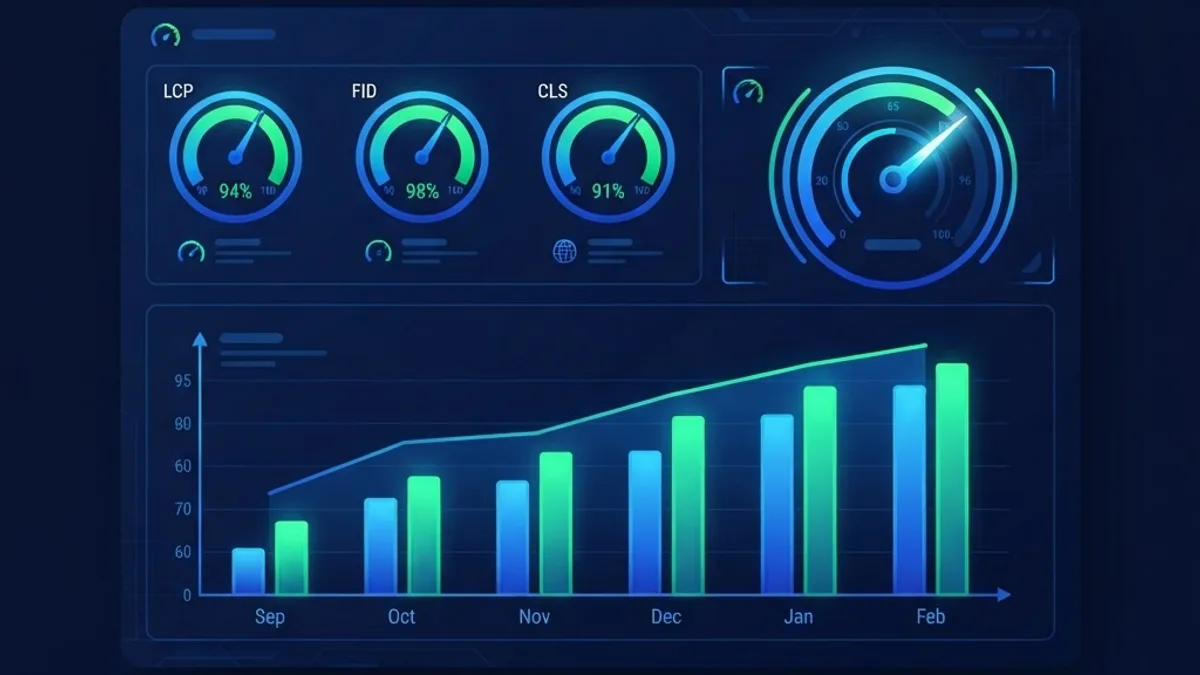
Core Web Vitals are Google's three measurable experience metrics: Largest Contentful Paint (loading), Interaction to Next Paint (responsiveness), and Cumulative Layout Shift (visual stability). Aim for LCP under 2.5 seconds, INP under 200 milliseconds, and CLS under 0.1.
The fixes that produce the biggest gains are consistently the same:
- Serve images in WebP or AVIF at the actual displayed dimensions, never full-resolution originals scaled down in CSS.
- Defer or remove third-party scripts. Chat widgets, heatmap tools, and multiple tag managers routinely add 500KB or more of blocking JavaScript.
- Reserve explicit width and height on images and ad slots to eliminate layout shift.
- Use server-side rendering or static generation for any page you want indexed, so crawlers receive HTML rather than an empty shell.
2. Crawlable, Intent-Mapped Architecture
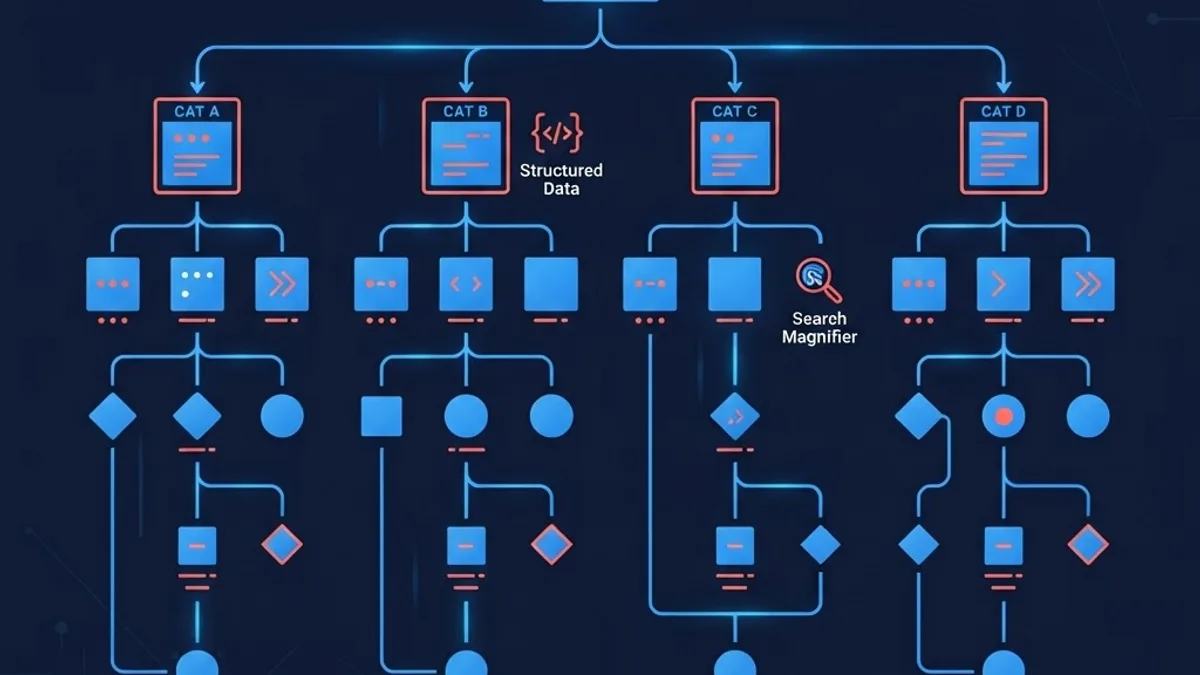
Your URL structure is a marketing decision made by a developer. Every important topic should have one canonical page, reachable in three clicks or fewer from the homepage, with a URL that reads like the search query it targets.
Specific rules that prevent the most common damage:
- One page per search intent. Two pages competing for the same keyword split authority and neither wins.
- Use static, descriptive paths (
/services/web-development) rather than parameters or IDs. - Set canonical tags on every page and handle pagination, filters, and faceted navigation deliberately so you do not generate thousands of thin duplicate URLs.
- Add structured data (Organization, Article, Product, FAQPage, BreadcrumbList) as JSON-LD, because it is how search and AI systems parse what a page is about.
Teams that need this built correctly from the ground up rather than patched later usually work with a partner that handles both sides — for example the web development team at ZoneTechify, which builds sites against marketing KPIs rather than design mockups alone.
3. Conversion-Focused Front-End Design
Traffic that does not convert is a rounding error. Conversion rate optimization is largely a front-end development discipline: what loads first, how forms behave, how fast interactions respond.
The highest-leverage patterns:
- One primary action per page. Multiple competing CTAs measurably reduce completion.
- Shorten forms to the fields sales actually uses. Every removed field lifts completion; email plus one qualifying question outperforms an eight-field form in nearly every test.
- Validate inline, not on submit. Users who see errors only after submitting abandon at a much higher rate.
- Design mobile-first for the thumb zone. Primary CTAs belong in the lower half of the viewport on mobile.
- Show real proof near the decision point — client logos, specific results, review counts — not on a separate testimonials page nobody visits.

4. Measurement You Can Trust
You cannot optimize what you measure inconsistently. Tracking must be built during development, not bolted on afterward.
A reliable minimum setup includes: server-side or first-party analytics to survive ad blockers and cookie restrictions, named conversion events for every meaningful action (form submit, call click, add to cart, checkout complete), UTM conventions documented and enforced across every campaign, and consent handling that respects regional privacy law while still recording aggregate outcomes.
The most common failure I see in audits is a redesign that silently breaks event tracking. Three months of data disappears, and nobody notices until a quarterly report looks wrong. Always verify events fire in staging before launch.

5. Content Infrastructure and AI Search Visibility
Search is no longer only ten blue links. AI assistants and answer engines increasingly summarize answers directly, and they extract from pages that are clearly structured and unambiguous.
Build for extraction:
- Answer the question in the first two sentences under each heading, then elaborate.
- Define key terms explicitly, because definitions are the easiest content for an AI system to lift and cite.
- Use real headings, tables, and lists instead of styled divs that carry no semantic meaning.
- Publish specifics — numbers, processes, constraints — since generic advice is never the version that gets quoted.
This is where technical build quality and editorial quality converge. Resources like WebPeak and ZoneTechify both approach the problem the same way: the page has to be machine-readable and genuinely useful, or it earns neither rankings nor citations.

Traditional Web Development vs Digital Marketing Web Development
| Factor | Traditional Web Development | Digital Marketing Web Development |
|---|---|---|
| Primary goal | Launch a site that matches the design | Generate qualified traffic and conversions |
| Success metric | On-time delivery, visual accuracy | Organic sessions, conversion rate, cost per acquisition |
| SEO involvement | Added after launch | Architecture planned before the first line of code |
| Analytics | Basic pageview tracking | Named conversion events, funnel and attribution reporting |
| Performance budget | Rarely defined | Explicit Core Web Vitals targets enforced in CI |
| Content updates | Developer ticket required | Marketing team publishes independently via CMS |
| Post-launch work | Bug fixes and maintenance | Continuous testing and iteration on live data |
A Practical 90-Day Sequence
Most teams try to do everything at once and finish nothing. This order produces compounding results.
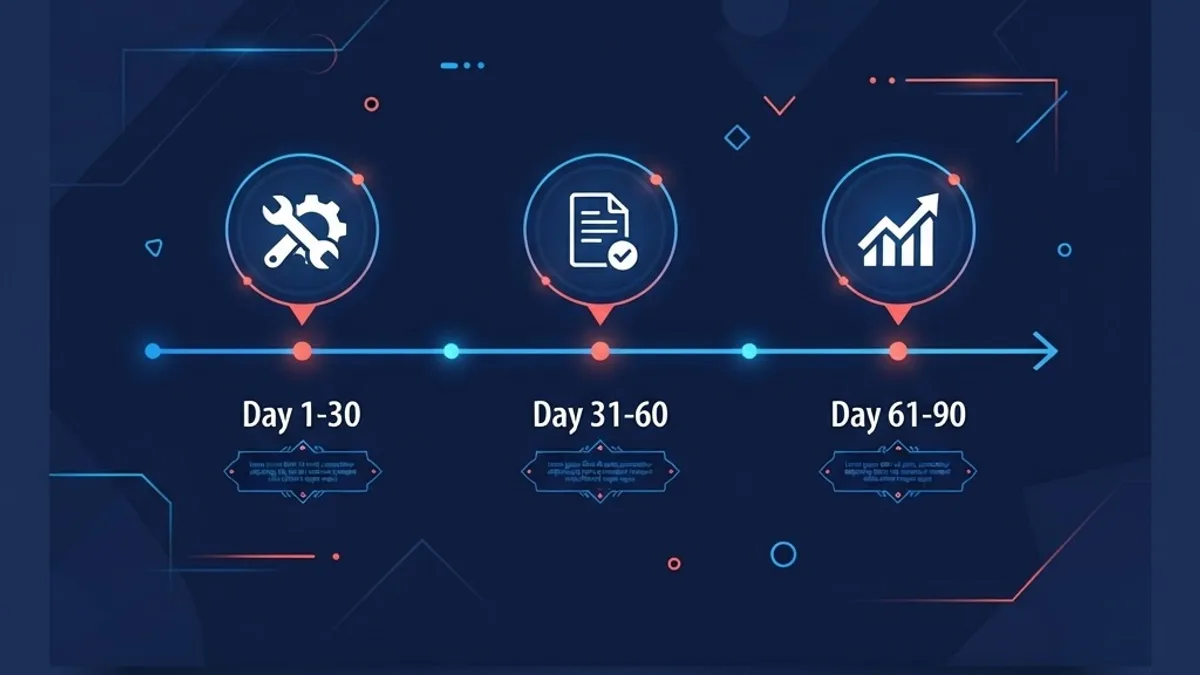
Days 1–30: Fix the foundation. Run a technical audit. Resolve crawl errors, broken redirects, duplicate titles, and missing canonicals. Compress images and remove unused third-party scripts. Verify analytics and conversion events are firing correctly.
Days 31–60: Build the content and conversion layer. Map keywords to a single page each. Rewrite the pages already ranking on page two, since they need the least effort to move. Rebuild your top two landing pages around one clear action.
Days 61–90: Amplify and iterate. Now that the site converts, add paid traffic, email capture, and retargeting. Run one A/B test at a time on high-traffic pages. Review Search Console query data monthly and expand the topics already earning impressions.
Mistakes That Cost the Most
- Redesigning without migrating URLs. Missing 301 redirects can erase years of accumulated rankings in weeks.
- Shipping heavy JavaScript for content pages. If the HTML source has no text, you are gambling on rendering.
- Choosing a CMS marketers cannot use. If publishing needs a developer, your content velocity collapses.
- Measuring vanity metrics. Pageviews and time on site do not pay salaries; qualified leads and revenue do.
- Ignoring mobile checkout and form UX while more than half of traffic arrives on phones.
Key Takeaways
- Digital marketing web development means building websites where every technical decision is judged by a marketing outcome.
- Google reports 53 percent of mobile visits are abandoned when a page takes over three seconds to load.
- Target Core Web Vitals thresholds of LCP under 2.5s, INP under 200ms, and CLS under 0.1.
- Landing page experience directly affects Google Ads Quality Score, so slow pages raise media costs.
- Plan SEO architecture, structured data, and conversion tracking before development begins, not after launch.
- Server-render or statically generate any page you want indexed and cited by AI answer engines.
- Sequence work as foundation, then content and conversion, then paid amplification.
Frequently Asked Questions (FAQ)
What is digital marketing web development?
It is website development guided by marketing goals rather than design deliverables alone. Developers make architecture, performance, and tracking decisions that improve search visibility and conversion rate, so the finished site actively generates qualified traffic and leads instead of simply existing online.
Do I need a developer and a marketer, or one team?
One integrated team almost always performs better. When SEO architecture, page speed budgets, and conversion tracking are decided during development, you avoid costly rework. Separate vendors create handoff gaps where technical decisions quietly undermine campaign performance and nobody clearly owns the result.
How fast should my website load for marketing to work?
Aim for a Largest Contentful Paint under 2.5 seconds on mobile. Google research shows 53 percent of mobile visits are abandoned beyond three seconds. Compressing images, removing unused third-party scripts, and server-rendering content typically delivers the largest measurable improvement first.
Will a website redesign hurt my search rankings?
It can, if URLs change without proper 301 redirects, or if content and internal linking are reduced. Preserve existing URLs where possible, map every changed path to its replacement, keep the ranking content intact, and verify tracking still fires before you launch.
How do I make my website visible in AI search results?
Answer questions directly in the first two sentences under each heading, define key terms plainly, use semantic HTML with real headings and tables, add JSON-LD structured data, and include specific numbers or processes. AI engines cite clear, verifiable, well-structured pages far more often.
How long before I see results from this approach?
Technical fixes like speed and crawl errors can improve within two to four weeks. Content and ranking gains typically appear in three to six months. Conversion improvements are fastest — a rebuilt landing page can show measurable lift within days of receiving traffic.