
A practical guide to how iterative testing raises AI model accuracy, cuts silent failures, and keeps performance stable in production. Includes metrics, loops, and a repeatable workflow.
How Iterative Testing Improves AI Model Accuracy and Performance
Most AI models do not fail because the algorithm was wrong. They fail because nobody tested them enough times, in enough ways, against the messy reality they were deployed into. A model that scores 94 percent on a clean validation set can drop to 71 percent on live traffic within weeks, and the team will only notice when a customer complains. Iterative testing is the discipline that closes that gap.
This guide explains exactly how repeated, structured testing cycles improve accuracy and runtime performance, which metrics actually matter at each stage, and how to build a loop your team can run every week instead of once per quarter.
Quick Answer: Iterative testing improves AI model accuracy by exposing failures in small, repeatable cycles: you measure a baseline, change one variable, re-evaluate on held-out data, and analyze errors before shipping. Each loop removes a specific weakness, so accuracy, latency, and reliability compound instead of degrading silently in production.
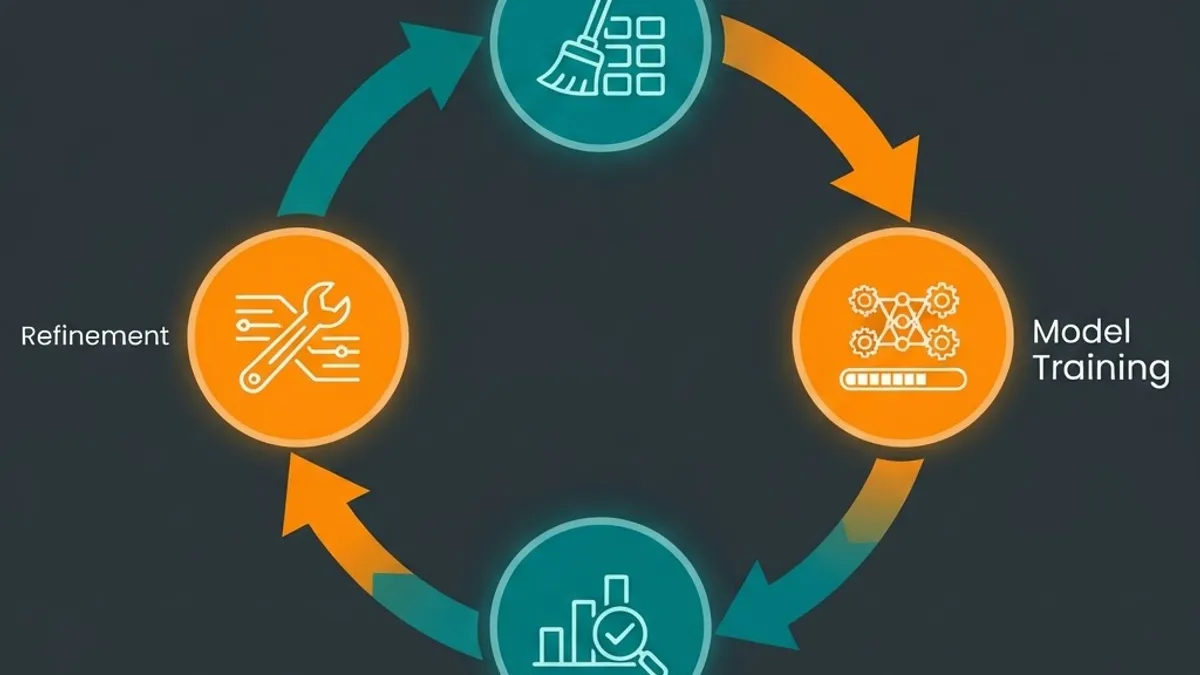
What Iterative Testing Actually Means in Machine Learning
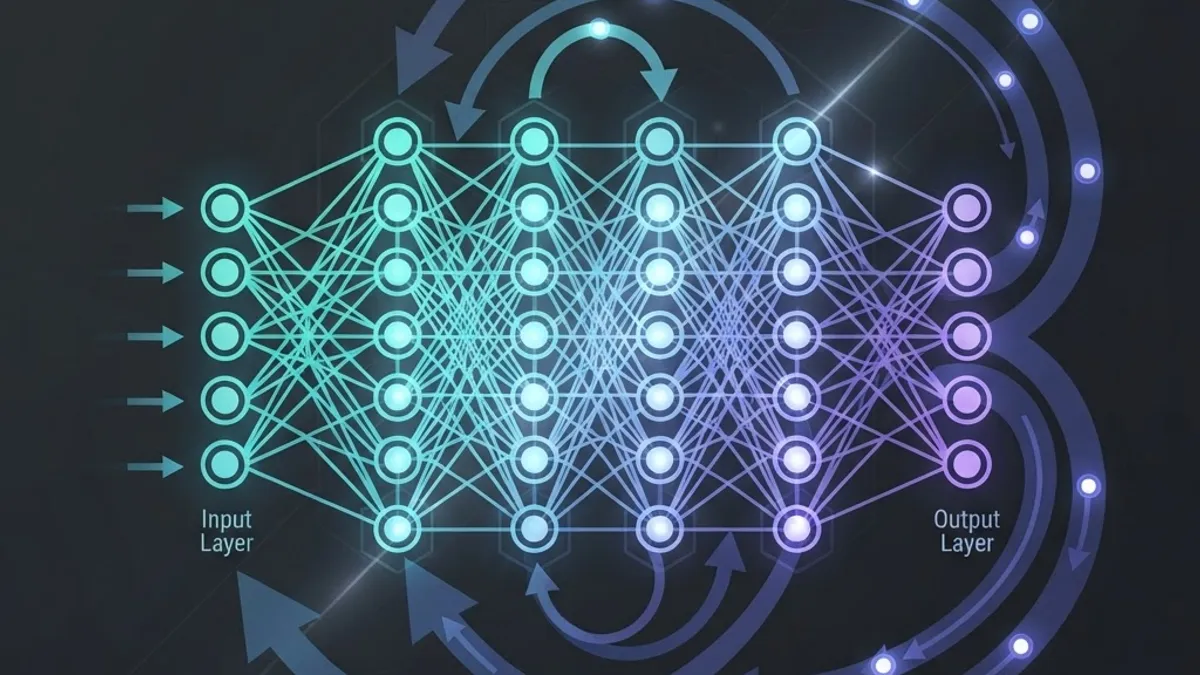
Iterative testing is the practice of evaluating a model in short, controlled cycles where each cycle changes one thing and measures the effect. It is the opposite of the build-once-and-hope approach that still dominates rushed AI projects.
A single iteration has five parts:
- Measure a baseline on a frozen evaluation set so every future result is comparable.
- Form a hypothesis about what is limiting accuracy, such as label noise or class imbalance.
- Change one variable only: data, features, hyperparameters, or architecture.
- Re-evaluate on the same held-out set plus a fresh slice of real data.
- Analyze errors and record the result, even when it is negative.
The value comes from attribution. If you change your dataset, your learning rate, and your architecture in the same week and accuracy improves by four points, you have learned nothing you can reuse. Change one variable and you own a fact.
Key Terms Defined
- Accuracy: the share of predictions that are correct. Useful only when classes are balanced.
- Precision: of everything the model flagged, how much was right.
- Recall: of everything it should have flagged, how much it caught.
- F1 score: the harmonic mean of precision and recall, used when both errors are costly.
- Drift: the gradual change in live input data that makes a trained model stale.
- Regression: a case the model used to get right and now gets wrong.
Why a Single Training Run Is Never Enough
One training run tells you how a model performs on data you already have. It says almost nothing about how it performs on data you will get next month.
Google's widely cited research paper on hidden technical debt in machine learning systems documented that model code typically accounts for only a small fraction of a real ML system, with the surrounding data collection, verification, and monitoring infrastructure making up the vast majority. That imbalance is why testing has to be continuous rather than a final gate.
The second data point matters just as much: industry surveys consistently report that a large share of machine learning projects never reach production, with common estimates placing the failure rate well above half. The dominant causes are not exotic math problems. They are untested data assumptions, undetected drift, and evaluation sets that never resembled real usage.
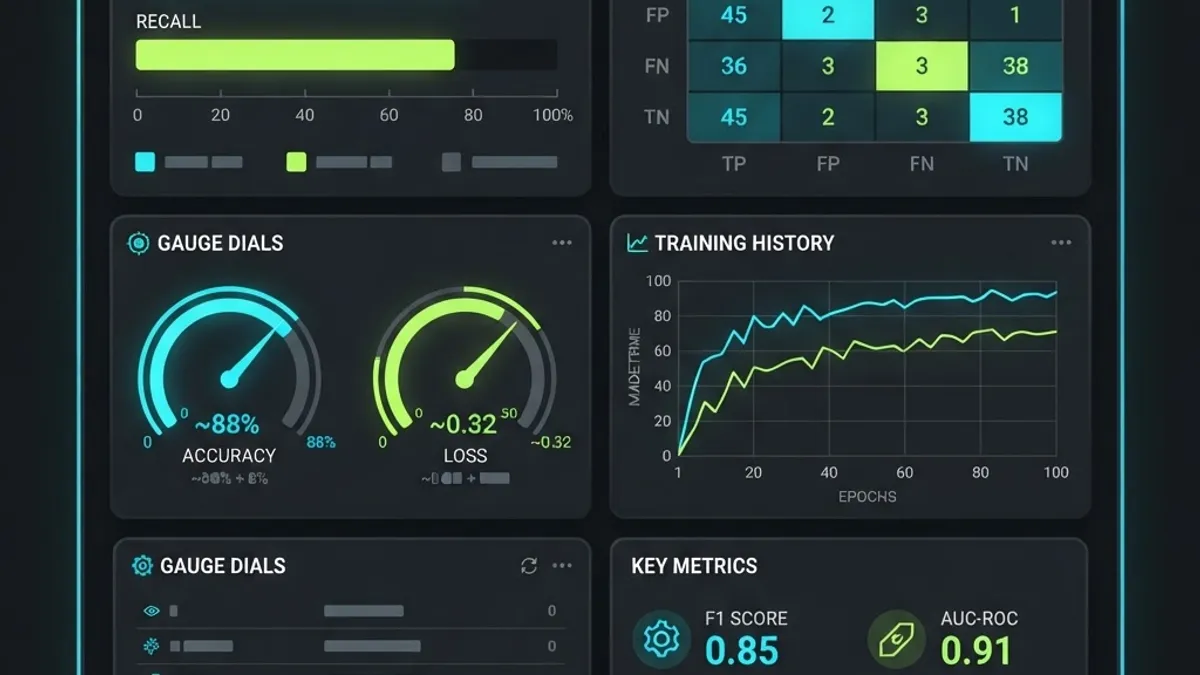
The Iterative Testing Loop That Raises Accuracy
A reliable loop has four stages, and each one answers a different question.
Stage 1: Lock a Trustworthy Baseline
Before optimizing anything, freeze an evaluation set that nobody trains on and nobody edits. Record accuracy, precision, recall, F1, latency at the ninety-fifth percentile, and cost per thousand predictions. If your baseline moves every week, your improvements are unmeasurable.
A practical rule: your evaluation set should include at least fifty examples of every category you care about, including the rare ones. Rare classes are where accuracy quietly collapses.
Stage 2: Test the Data Before the Model
In most projects, data changes beat model changes. Run these tests first:
- Label audit: manually review a random sample of two hundred labels. Disagreement above five percent means your ceiling is label noise, not architecture.
- Duplicate and leakage check: confirm no evaluation example appears in training. Leakage is the single most common cause of unrealistically high scores.
- Class balance check: if one class is ninety percent of the data, plain accuracy is meaningless and you need F1 or balanced accuracy.
- Slice coverage: confirm each real user segment appears in the evaluation set.
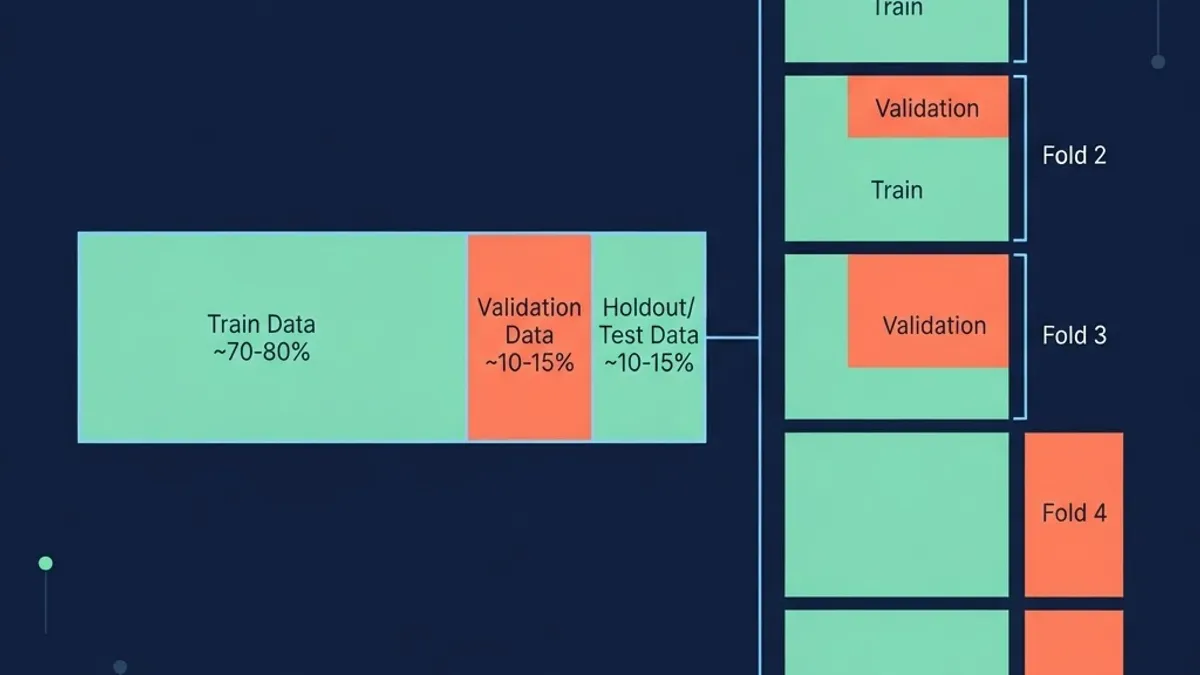
Stage 3: Tune Systematically, Not Randomly
Hyperparameter tuning works when it is logged. Use cross validation with five folds so a single lucky split cannot mislead you, and record every trial with its configuration and score.
Random search usually beats manual guessing because it explores more of the space per unit of compute. Bayesian methods beat random search once each trial becomes expensive. The choice depends on your training cost, not on fashion.
Stop tuning when improvements fall below your measurement noise. If run-to-run variance is plus or minus one point, a half-point gain is not a gain.

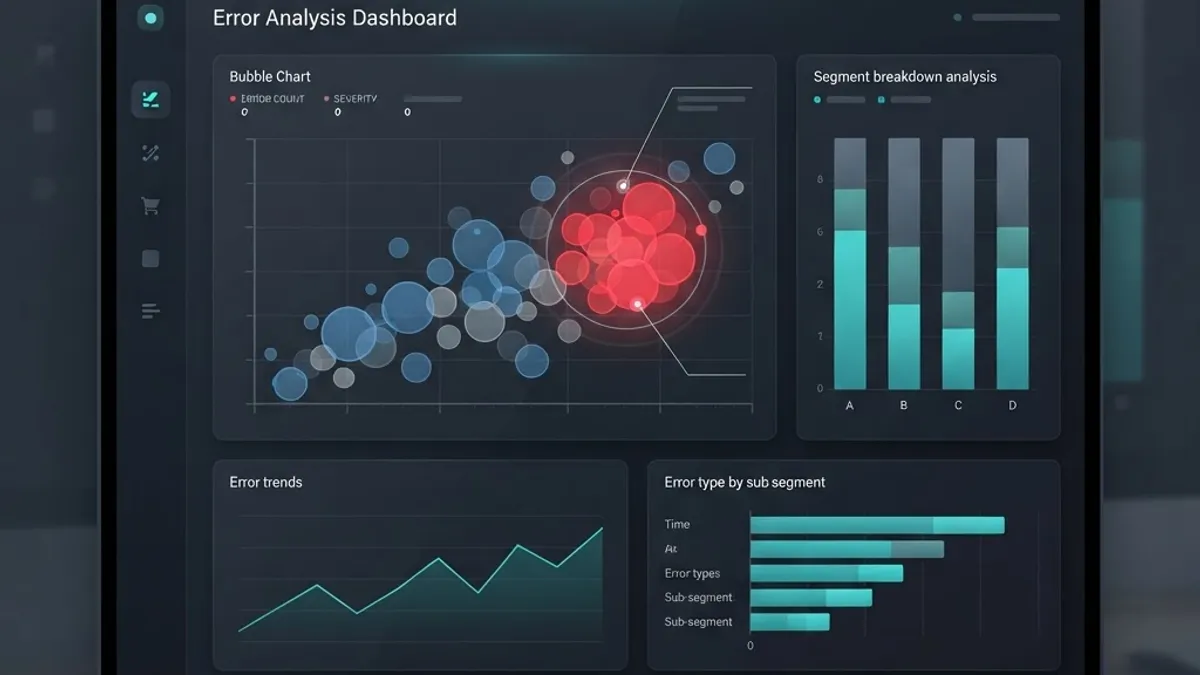
Stage 4: Do Error Analysis, Not Just Scoring
This is the stage teams skip, and it is where the largest gains hide. Pull the two hundred worst predictions and group them by cause. Typical clusters include ambiguous inputs, missing context, underrepresented segments, and genuinely mislabeled ground truth.
One concrete pattern worth internalizing: when a model shows strong overall accuracy but weak performance on a single segment, the fix is almost always more representative data for that segment, not a bigger model. Scaling parameters amplifies the pattern you trained on, including its blind spots.
Iterative Testing Versus One-Shot Evaluation
| Factor | One-Shot Evaluation | Iterative Testing |
|---|---|---|
| Failure discovery | After users complain | Before deployment |
| Attribution of gains | Unknown, many variables changed | Clear, one variable per cycle |
| Handling of drift | None until retraining | Detected by scheduled re-evaluation |
| Rare-class accuracy | Usually unmeasured | Tracked per slice |
| Rollback safety | Risky, no reference scores | Safe, every version has recorded metrics |
| Team knowledge | Lives in one engineer's head | Documented in an experiment log |
How Iterative Testing Improves Runtime Performance, Not Just Accuracy
Accuracy is only half the story. A model that is two points more accurate but four times slower can be a net loss for a product with a real-time interface.
Treat latency, memory, and cost as first-class metrics in every iteration:
- Measure tail latency, not averages. The ninety-fifth and ninety-ninth percentiles determine perceived speed.
- Test quantization and distillation as experiments. Reducing precision often costs a fraction of a point in accuracy while cutting inference cost substantially, but you only know the tradeoff by measuring it.
- Batch and cache deliberately. Repeated identical inputs are common in production and cheap to cache.
- Re-test after every optimization, because performance work can silently change outputs.
Teams that build this measurement habit early ship faster later, which is why experienced engineering partners such as the ZoneTechify Team treat evaluation infrastructure as part of the initial build rather than an afterthought.
Testing Does Not Stop at Deployment
Production is the only environment that tells the truth. A deployed model faces input distributions that shift with seasons, pricing changes, new user cohorts, and competitor behavior.
Build these four checks into your release process:
- Shadow deployment: run the new model alongside the current one on live traffic without serving its output. Compare disagreements before switching.
- Canary release: route five percent of traffic to the new version and watch business metrics, not just model metrics.
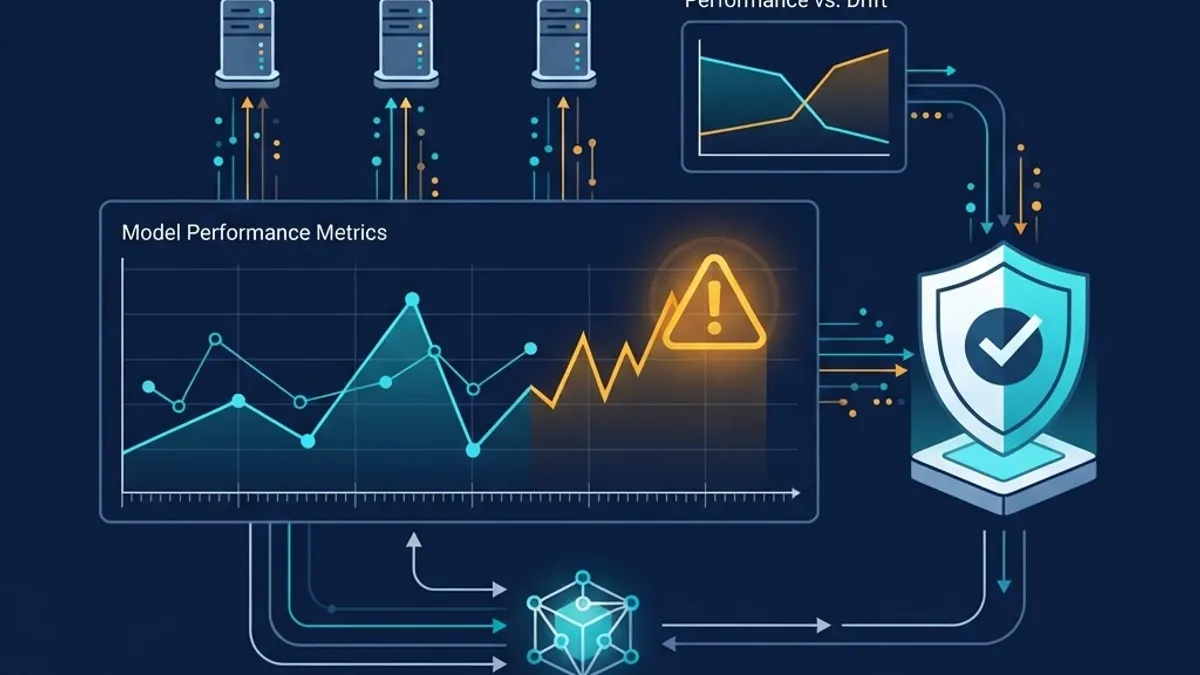
- Drift monitoring: track input feature distributions and prediction distributions weekly. A sudden shift in prediction confidence is an early warning even before accuracy drops.
- Feedback capture: log corrections from users and reviewers, then feed them into the next training cycle. This closes the loop and is where compounding accuracy gains come from.
For teams building this end to end, structured AI automation services typically pair model development with monitoring pipelines so drift is caught by an alert rather than by a support ticket.
A Practical Weekly Cadence
Iteration fails when it is too heavy to repeat. A workable cadence looks like this:
- Monday: review last week's production errors and pick one failure cluster.
- Tuesday to Wednesday: run two or three experiments against that single cluster.
- Thursday: evaluate on the frozen set plus a fresh live sample, and check latency.
- Friday: ship to canary if metrics hold, or log the negative result and move on.
Negative results are assets. A documented log of what did not work prevents your team from repeating expensive dead ends six months later, and it is the clearest evidence of genuine engineering experience.
Key Takeaways
- Iterative testing improves accuracy by isolating one variable per cycle, which makes every gain attributable and repeatable.
- Model code is a small fraction of a real ML system, so testing must cover data, evaluation, and monitoring infrastructure.
- A large share of ML projects fail before production, usually due to untested data assumptions rather than algorithm choice.
- Data quality work, especially label audits and leakage checks, usually delivers larger gains than architecture changes.
- Error analysis on the worst two hundred predictions reveals fixable failure clusters that aggregate metrics hide.
- Latency at the ninety-fifth percentile, memory, and cost per prediction should be tracked in every iteration alongside accuracy.
- Shadow deployments, canary releases, and drift monitoring extend testing into production where real distributions live.
Frequently Asked Questions (FAQ)
How many iterations does it take to meaningfully improve an AI model?
Most teams see meaningful gains within five to ten focused iterations, provided each one targets a specific failure cluster. Volume matters less than attribution. Ten disciplined cycles that each change one variable will outperform fifty unlogged experiments that change several things at once.
Does iterative testing mean retraining the model every time?
No. Many iterations test data quality, evaluation coverage, prompt design, thresholds, or serving optimizations without touching training. Retraining is one lever among several, and it is often the most expensive. Test cheaper levers first, then retrain when the evidence points clearly at the model.
What metrics should I track besides accuracy?
Track precision, recall, and F1 to expose imbalance, per-segment accuracy to catch blind spots, and calibration to check whether confidence scores are trustworthy. On the performance side, track tail latency at the ninety-fifth percentile, memory usage, and cost per thousand predictions.
How do I know when to stop iterating on a model?
Stop when improvements fall below your measurement noise or below the business value threshold. If run-to-run variance is one point and your last three cycles gained half a point each, further tuning is not real progress. Redirect effort to data quality or monitoring instead.
Can iterative testing prevent model drift?
Iterative testing cannot prevent drift, because drift comes from the outside world changing. What it does is detect drift early through scheduled re-evaluation and distribution monitoring, so you retrain on a planned schedule rather than reacting after accuracy has already damaged user trust.
Is iterative testing worth it for small models and small teams?
Yes, and often more so. Small teams cannot absorb the cost of a silent failure. A frozen evaluation set, a simple experiment log, and a weekly error review take a few hours to set up and prevent the most expensive category of mistake: shipping a model nobody can debug.