
A practical, experience-based survival guide to CSCI-561 at USC, covering the three homework assignments, exam strategy, time budgeting, and the habits that separate students who pass comfortably from those who scramble.
Surviving CSCI-561: Foundations of Artificial Intelligence - Lessons Learned
CSCI-561 is the graduate Foundations of Artificial Intelligence course at the University of Southern California, and it has a reputation among computer science students for being the course that either builds your confidence or breaks your semester. The difficulty is rarely conceptual. Search, adversarial games, logic, and learning are all teachable. What catches people off guard is the combination of unforgiving autograders, hard deadlines, large hidden test cases, and exams that reward reasoning speed over memorization.
This guide is written from the perspective of what actually moves the grade needle in a course structured like CSCI-561. It is not a syllabus summary. It is a set of decisions you can copy.
Quick Answer: Surviving CSCI-561 comes down to three habits: start each homework the day it is released, write your own brute force reference solution to validate optimized code, and practice exam problems by hand on paper. Students who treat the homeworks as multi week engineering projects rather than weekend coding tasks consistently score higher.

What CSCI-561 Actually Tests
CSCI-561 tests whether you can turn a formal specification into correct, efficient code under a time limit. That is a different skill from understanding AI theory.
The course typically covers four blocks: uninformed and informed search, adversarial search and game playing, knowledge representation and inference, and an introduction to machine learning. Assessment usually splits into three programming homeworks and two exams, with the exams carrying the majority of the weight.
Here is the practical consequence. You can score full marks on every homework and still finish with a mediocre grade if you treat the exams as an afterthought. Conversely, homework grades are the most controllable component because they are deterministic. The autograder does not have a bad day.
Key Terms Worth Defining Early
- Admissible heuristic: a heuristic that never overestimates the true cost to the goal. Required for A star to guarantee optimality.
- Consistent heuristic: a stronger condition where the heuristic difference between neighbors never exceeds the step cost. Consistency implies admissibility.
- Alpha beta pruning: an optimization of minimax that skips branches which cannot influence the final decision. It does not change the result, only the runtime.
- Branching factor: the average number of successors per node. It is the single variable that determines whether your search finishes inside the time limit.
If you cannot state these four definitions from memory by week three, the exams will be painful.
Homework Strategy: The Single Biggest Lever
Start on release day. This sounds like generic advice, but in CSCI-561 it is mechanically important because the homeworks have a hidden difficulty curve. The specification looks simple, and the last twenty percent of test cases are where the actual engineering lives.
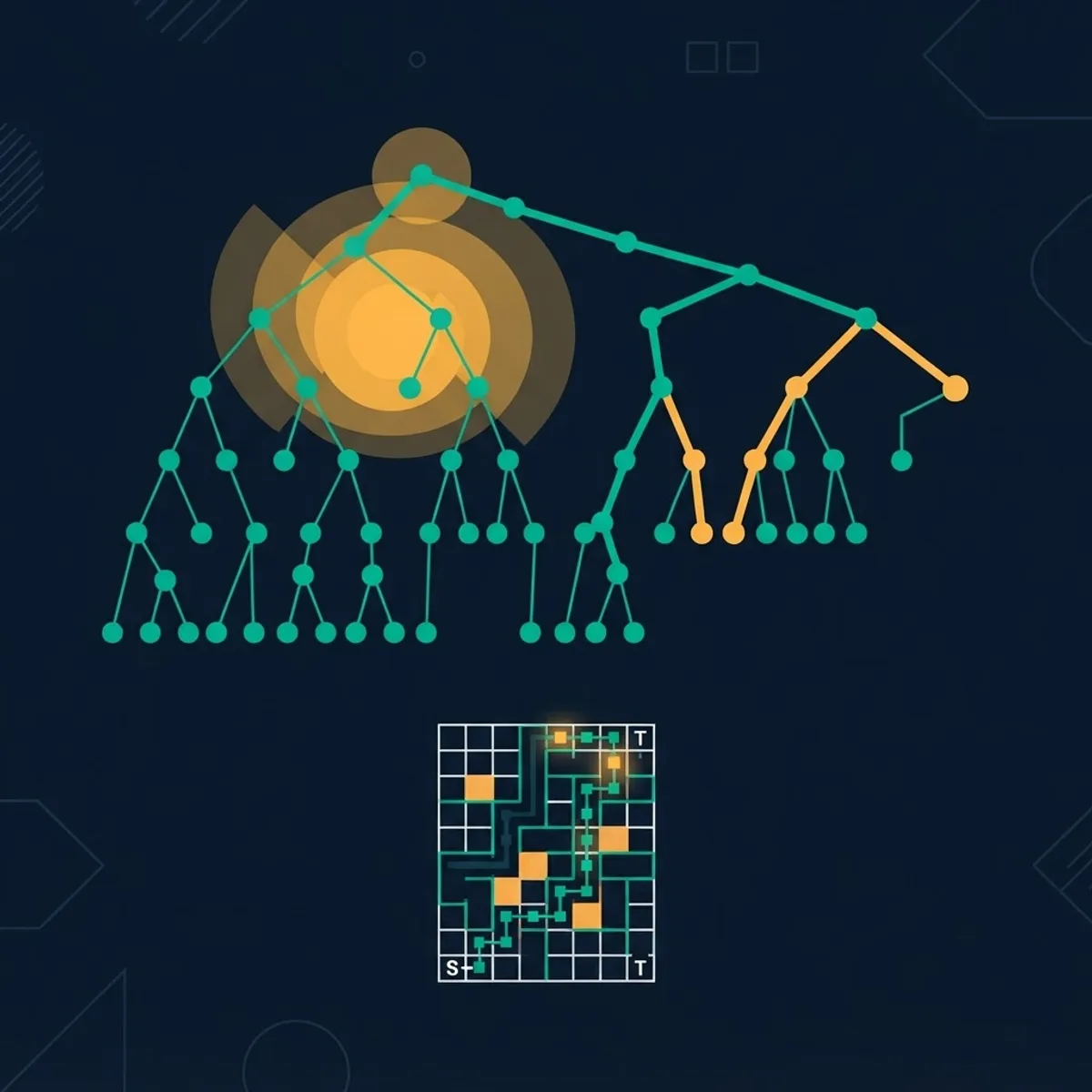
A workflow that repeatedly produces high scores:
- Read the specification twice, then write the input parser first. Input format errors cause more zero scores than algorithm errors. Parse, print what you parsed, and confirm it matches the sample file byte for byte.
- Implement the slow, obviously correct version first. A plain breadth first search or a full minimax with no pruning is your ground truth oracle.
- Build a random test generator. Generate hundreds of small random inputs, run both your slow and fast implementations, and compare outputs. This catches the class of bug that only appears on case 43 of the hidden suite.
- Profile before optimizing. Most students optimize the wrong loop. Measure where time is actually spent.
- Add a hard internal time guard. If the assignment gives you a wall clock limit, make your program return its best answer before that limit rather than being killed mid computation.
Step three is the one almost nobody does, and it is the highest return activity in the entire course. Differential testing against your own reference implementation converts invisible correctness risk into a visible failing test.
Language Choice Matters More Than You Think
If the course permits multiple languages, the tradeoff is real. Python gets you to a working solution fastest and is the safest choice for the logic and learning assignments. For the game playing assignment, where a fixed time budget per move directly determines search depth, a compiled language buys you an extra ply or two of lookahead.
| Factor | Python | C++ or Java |
|---|---|---|
| Time to first working version | Fastest | Slower |
| Search depth within a time limit | Lower | Higher |
| Debugging convenience | Excellent | Moderate |
| Risk of memory or pointer bugs | Very low | Meaningful |
| Best fit assignment | Search, logic, learning | Game playing |
The honest recommendation for most students is Python everywhere, with aggressive algorithmic pruning instead of raw speed. Better move ordering in alpha beta typically beats a language switch, because effective branching factor reduction compounds exponentially while a constant factor speedup does not.
Time Budgeting Across the Semester
CSCI-561 is a three unit course, and USC guidance for graduate coursework generally assumes roughly two to three hours of outside work per unit per week, which puts the expected load near six to nine hours weekly. In practice, students routinely report homework weeks that consume fifteen to twenty five hours. The variance, not the average, is what wrecks schedules.
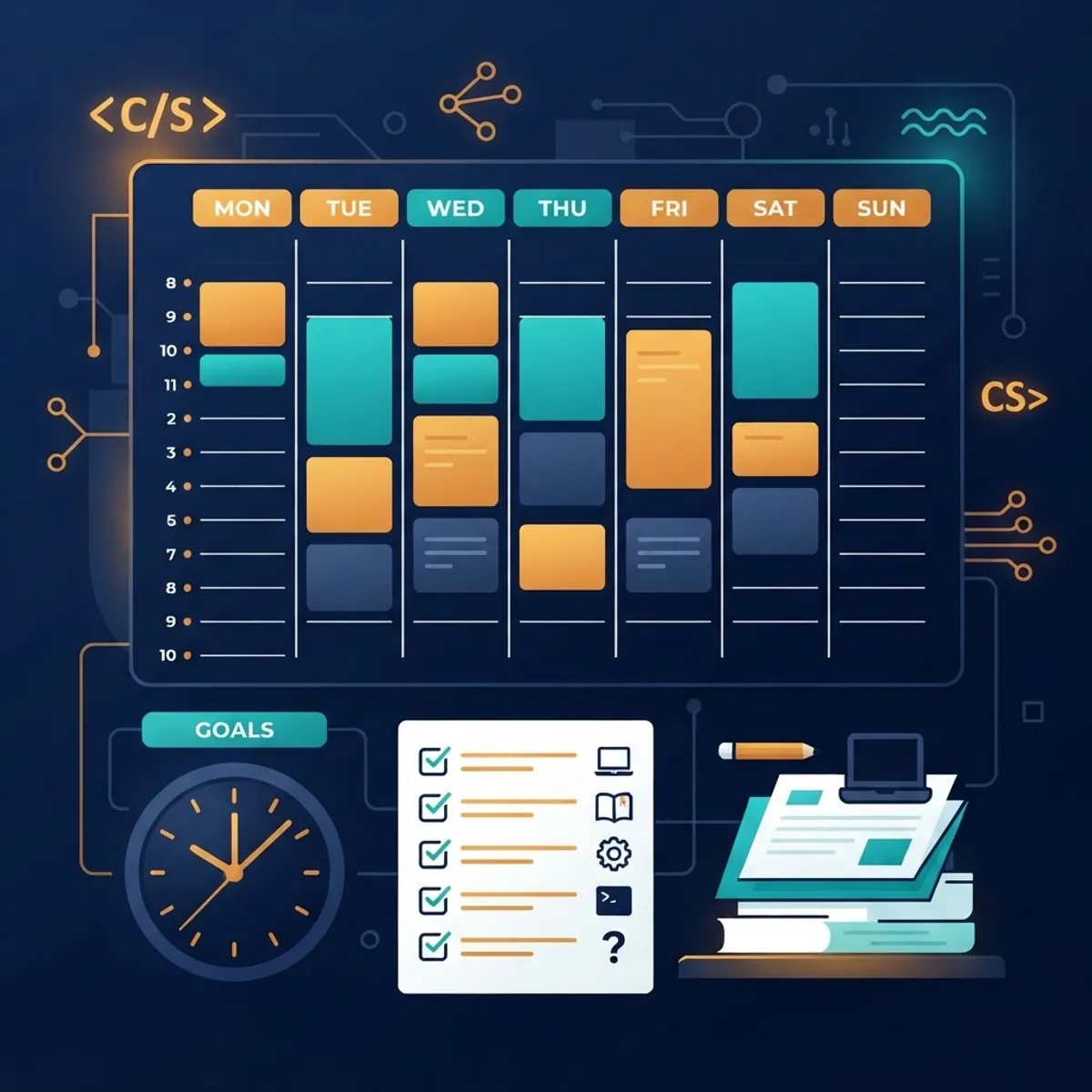
Plan for the spike. A workable allocation looks like this:
- Non homework weeks: four to six hours. Lecture review, textbook reading, and hand worked practice problems.
- Homework weeks: fifteen to twenty hours, front loaded into the first half of the window.
- Exam weeks: ten to twelve hours of problem solving, not rereading slides.
The front loading detail matters. Autograder feedback often comes with limited submission attempts or delayed results, so late progress cannot be corrected. Finishing a working submission with several days to spare is what converts a passing score into a full score.
If you are balancing this course with client work or a job, the same discipline that keeps engineering teams shipping applies here: fixed scope, early integration, and no heroics at the deadline. Teams building production grade web apps operate the same way, because the alternative is discovering integration failures the night before delivery.
Exam Preparation That Actually Works
Exams in CSCI-561 reward mechanical fluency. You will be asked to trace an algorithm, expand nodes in a specific order, prune a game tree, or resolve a set of logic clauses, and you will be asked to do it quickly.

Three tactics that consistently pay off:
- Hand simulate every algorithm at least three times. Draw the frontier, the explored set, and the order of expansion. Typing code does not build this skill; a pencil does.
- Work old problem sets under a timer. The constraint on the exam is minutes, not understanding.
- Build a one page derivation sheet. Not formulas to memorize, but the derivation steps: how you check admissibility, how you order alpha beta children, how you convert a sentence to conjunctive normal form.
A useful benchmark: if it takes you more than four minutes to correctly expand an A star search over an eight node graph with given heuristic values, you are not exam ready yet.
The Adversarial Search Assignment
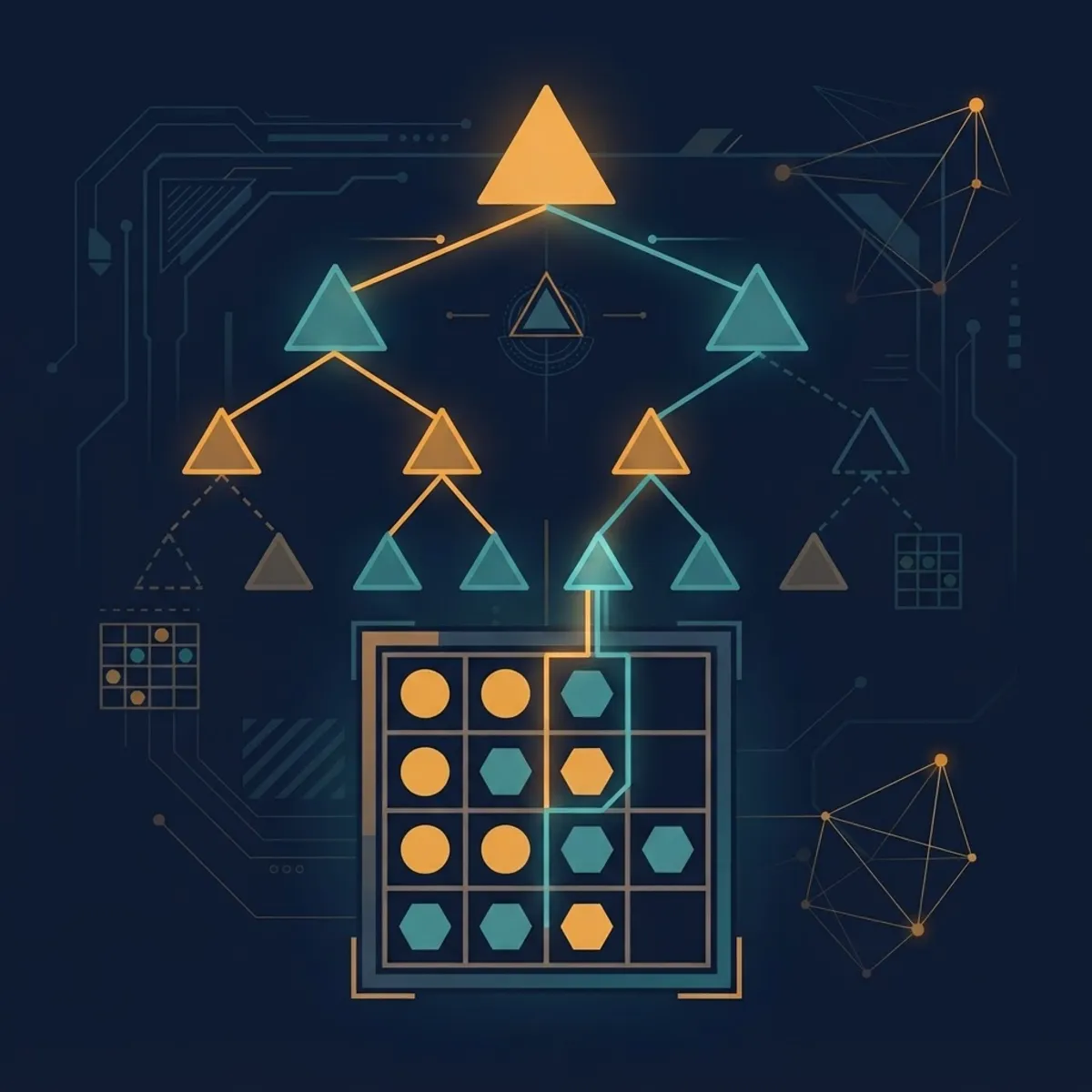
This is usually the assignment students remember. Two things dominate your score.
First, move ordering. Alpha beta pruning with perfect move ordering reduces the effective branching factor to roughly the square root of the original, which in theory allows searching about twice as deep in the same time. Random ordering gives you almost none of that benefit. Sort candidate moves by a cheap static evaluation before recursing.
Second, evaluation function design. A simple, fast, well calibrated evaluation searched deeply beats a sophisticated slow one searched shallowly. Count the cheap features that correlate with winning, weight them, and stop there.
Also implement iterative deepening with a time check. It guarantees you always have a legal move ready, which prevents the worst possible outcome of timing out and forfeiting.
The Machine Learning Assignment
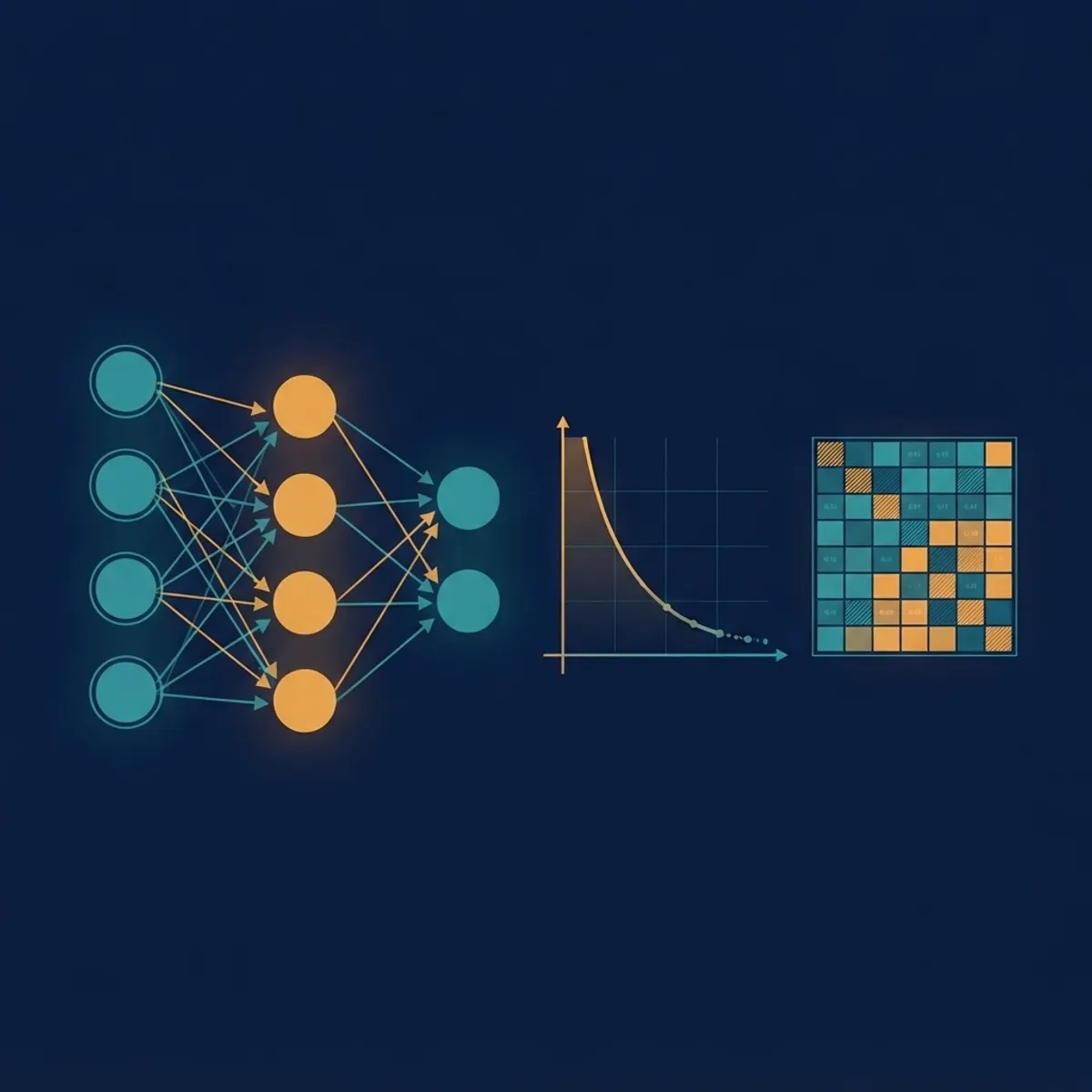
The learning assignment is usually restricted to core numerical libraries with no high level frameworks, which means you implement forward and backward passes yourself. The failure mode here is almost never conceptual misunderstanding. It is shape mismatches and unnormalized inputs.
A checklist that prevents most lost points:
- Verify gradients numerically on a tiny network before training anything large.
- Normalize or standardize inputs. Unscaled features are the most common cause of a network that refuses to learn.
- Initialize weights with a scaled random distribution, never all zeros.
- Print the loss every epoch. A loss that plateaus immediately signals a bug, not a hard dataset.
- Hold out a validation split even when the assignment does not require one.
This is also the point in the course where the gap between coursework AI and production AI becomes visible. Coursework optimizes accuracy on a fixed dataset. Production systems optimize latency, cost, monitoring, and retraining, which is the practical discipline that agencies delivering AI automation services deal with daily.
Academic Integrity Is Not a Footnote
CSCI-561 submissions are checked with automated similarity detection across the entire cohort and across previous semesters. Shared code is detectable even after variable renaming, because structural fingerprinting compares control flow rather than text. Discuss approaches, never share code. The downside risk is not a lower grade; it is an academic integrity finding on your record.
Key Takeaways

- Homework scores are the most controllable part of the grade because autograders are deterministic. Start on release day.
- Differential testing a fast implementation against your own brute force reference is the highest value debugging technique in the course.
- Alpha beta pruning with good move ordering can reduce the effective branching factor to roughly the square root of the original, roughly doubling searchable depth.
- Input parsing errors, not algorithm errors, cause the largest share of avoidable zero scores.
- Exams reward speed of correct hand simulation. Practice with pencil and a timer, not by rereading slides.
- Expect six to nine hours weekly in normal weeks and fifteen to twenty hours during homework weeks.
- An admissible heuristic never overestimates true cost; consistency is stronger and implies admissibility.
Frequently Asked Questions (FAQ)
Is CSCI-561 hard?
CSCI-561 is demanding but predictable. The concepts are standard AI foundations, and the difficulty comes from strict autograders, large hidden test suites, and timed exams. Students who start assignments early and practice algorithm tracing by hand generally find it manageable rather than overwhelming.
How many hours a week should I plan for CSCI-561?
Budget six to nine hours in weeks without an assignment and fifteen to twenty hours during homework weeks. The workload is spiky rather than steady, so protect large blocks of time in the first half of each assignment window instead of relying on the final weekend.
What programming language is best for CSCI-561 assignments?
Python is the best default because it minimizes development time and debugging friction. Consider a compiled language only for the game playing assignment, where extra search depth within a fixed time limit matters. Better move ordering usually beats a language change.
Do I need machine learning experience before taking CSCI-561?
No prior machine learning experience is required. You do need comfortable programming skills, basic linear algebra, probability, and algorithm analysis. The learning portion starts from fundamentals, but you will implement forward and backward passes yourself without high level frameworks.
How should I study for the CSCI-561 exams?
Practice hand simulating each algorithm under a timer, expanding nodes and pruning trees on paper. Build a one page sheet of derivation steps rather than memorized formulas. Rework old problem sets until each one takes minutes, not tens of minutes.
What is the most common mistake students make in CSCI-561?
Underestimating the last twenty percent of hidden test cases. A solution that passes the sample input often fails on scale or edge cases. Writing a random test generator and comparing against a brute force reference implementation catches these before submission.
Final Thought
CSCI-561 is less a test of intelligence than a test of engineering discipline applied to AI fundamentals. The students who do well are not the ones who already knew A star. They are the ones who parsed the input carefully, tested against their own reference implementation, and practiced with a pencil. Those habits outlast the course, which is the actual point.