
A practical breakdown of the ten sales recruiting roles AI companies are hiring for in 2026, including what each job actually owns, who it reports to, and the skills that get candidates hired.
Top 10 Sales Recruiter Positions in AI Companies You Should Know About in 2026
AI companies do not hire sales recruiters the way traditional software companies do. When a foundation model vendor sells a six-figure platform contract to a bank, the seller has to explain inference costs, data residency, and evaluation benchmarks in the same meeting. That means the recruiter hiring that seller has to understand those things too. As a result, the sales recruiting function inside AI companies has split into ten distinct, well-paid roles that barely existed five years ago.
This guide breaks down each of those ten positions: what the role actually owns day to day, who it reports to, the hiring signals that matter, and where it sits on the compensation ladder. It is written for recruiters planning a career move, and for founders trying to figure out which recruiting seat to fill first.
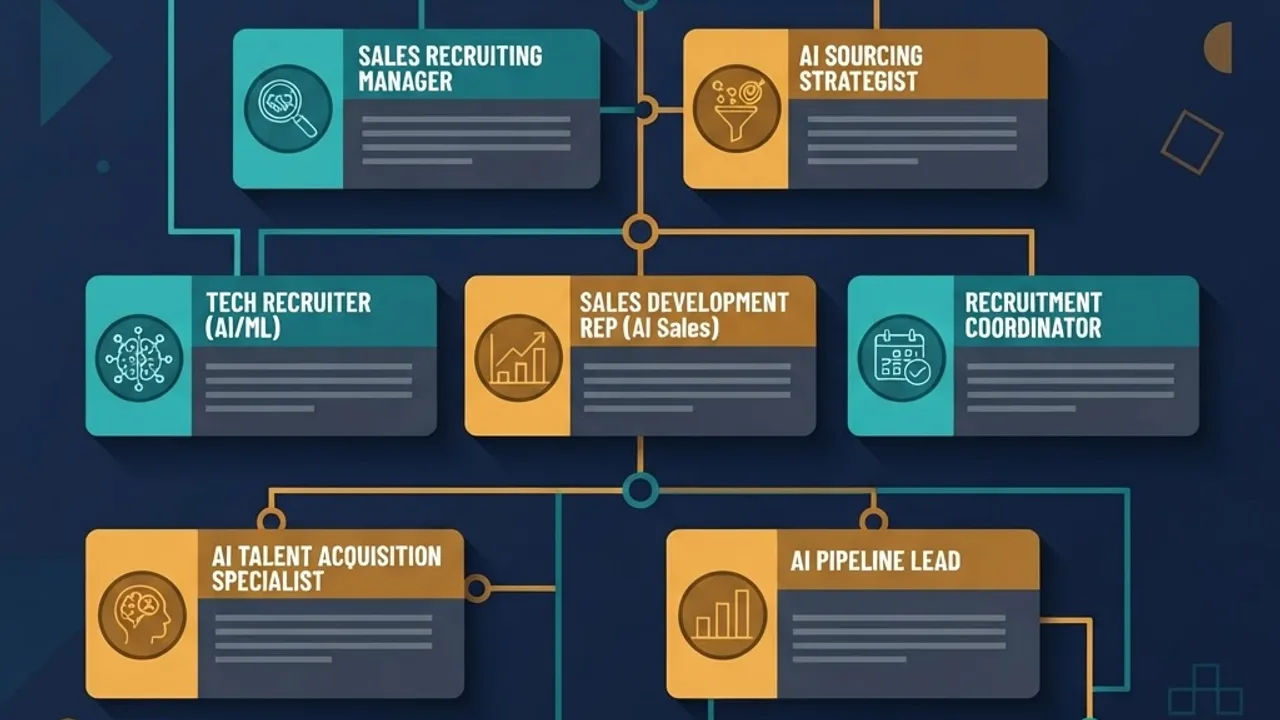
Quick Answer: The top sales recruiter positions in AI companies for 2026 are GTM Recruiter, Enterprise Sales Recruiter, Technical Sales Recruiter, Sales Leadership Recruiter, Sales Sourcer, Recruiting Coordinator, Sales Recruiting Manager, Head of GTM Talent, Sales Talent Partner, and Revenue Recruiting Operations Analyst. Each owns a different slice of the revenue hiring funnel.
Why AI Companies Recruit Sellers Differently
The core difference is proof burden. A traditional SaaS buyer evaluates features; an AI buyer evaluates accuracy, hallucination risk, and cost per token. That shifts what a good seller looks like, and therefore what a good sales recruiter must screen for.
Two data points frame the market. First, the US Bureau of Labor Statistics projects roughly 6 percent growth for human resources specialists, including recruiters, between 2023 and 2033, which is faster than the average across all occupations. Second, the World Economic Forum Future of Jobs Report 2025 lists AI and big data as the fastest-growing skill category through 2030. Put those together and you get the 2026 reality: recruiting demand is growing steadily, but demand for recruiters who can speak AI fluently is growing much faster than the baseline.
That gap is exactly where the ten roles below sit.
Key Term Definitions
- GTM recruiting: Hiring for all revenue-generating functions, including sales, solutions engineering, customer success, and partnerships.
- Quota-carrying role: Any position measured against a revenue number, which changes how you assess a candidate's track record.
- Technical sales: Pre-sales and post-sales roles that require hands-on product depth, such as solutions engineers and forward-deployed engineers.
1. Go-To-Market (GTM) Recruiter
The GTM Recruiter is the generalist backbone of AI sales hiring. This person runs full-cycle searches across account executives, sales development representatives, and customer success managers, usually carrying 8 to 15 open requisitions at once.
What makes the AI version of this role different is calibration speed. Product positioning changes every quarter, so the recruiter has to rewrite scorecards and interview questions continuously rather than reusing a template. The strongest GTM recruiters sit in on pipeline reviews so they hear the objections sellers face before they write the next job description.
2. Enterprise Sales Recruiter
This role focuses exclusively on senior account executives and strategic account directors selling into regulated industries such as finance, healthcare, and government.
The screening bar is specific. Instead of asking whether a candidate hit quota, an effective enterprise sales recruiter asks for deal anatomy: how many stakeholders signed off, how procurement handled the data processing agreement, and what the security review timeline looked like. Candidates who can narrate a 200-day enterprise cycle in detail almost always outperform candidates who only quote attainment percentages.

3. Technical Sales Recruiter
Technical Sales Recruiters hire solutions engineers, sales engineers, and forward-deployed engineers. These are the hardest AI revenue roles to fill because the candidate pool overlaps with software engineering, where compensation is competitive.
This recruiter needs functional literacy in retrieval-augmented generation, fine-tuning, evaluation harnesses, and API integration patterns. They do not need to write production code, but they must distinguish a candidate who has built demo environments from one who has only watched them. Building that literacy is exactly the kind of internal capability that teams offering AI automation services develop when they train customer-facing staff on real model behavior rather than slide decks.

4. Sales Leadership Recruiter
This position handles searches for sales managers, regional directors, and VPs of Sales. Volume is low and stakes are high; a single mis-hire at VP level can stall an entire segment for three quarters.
The differentiating skill here is org-design judgment. A leadership recruiter should be able to tell a founder that hiring a VP from a company with a mature demand engine will fail in a startup with no inbound flow. That advisory posture, not sourcing volume, is what earns the seat.
5. Sales Sourcer
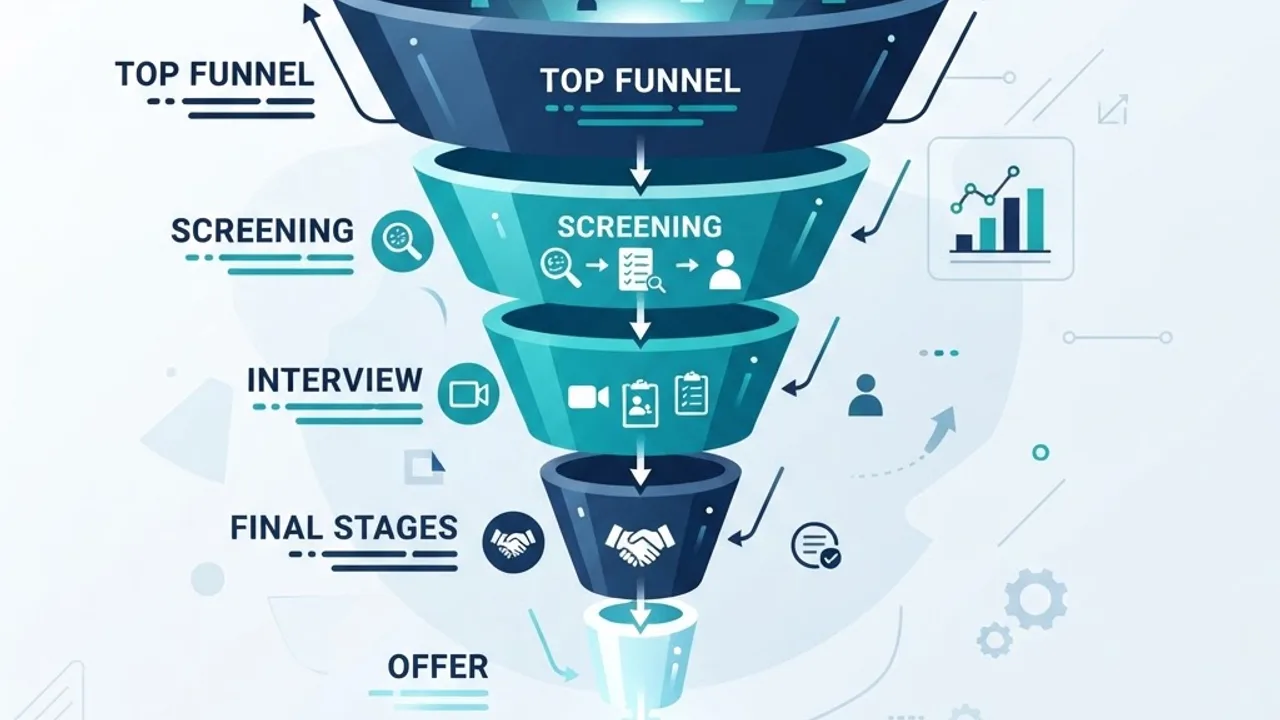
Sourcers own the top of the funnel: mapping target companies, identifying passive candidates, and generating qualified first conversations. In AI companies, sourcing is competitive enough that response rate is the primary metric, often benchmarked between 25 and 40 percent for well-personalized outreach.
The best sourcers in 2026 build market maps rather than lists. A market map shows which competitor teams are shrinking, which have recently missed targets, and where compensation is compressed, all of which predict who will answer a message.
6. Recruiting Coordinator, Revenue Team
Coordinators schedule interviews, manage candidate communication, and protect the process from delay. This role is frequently undervalued and consistently decisive: in fast-moving AI hiring markets, the company that completes an interview loop in seven days beats the company that takes twenty-one, even when the second company pays more.
Coordinators who learn to run structured debriefs and enforce scorecard completion are the most common internal promotions into full-cycle recruiting.

7. Sales Recruiting Manager
The Sales Recruiting Manager leads a team of three to eight recruiters and sourcers, owns capacity planning, and reports into the Head of Talent. Their job is throughput and quality, not personal requisition load.
Strong managers maintain a simple operating cadence: weekly pipeline review by requisition, monthly quality-of-hire review against ramp data, and quarterly recalibration of interview rubrics. Agencies that scale delivery teams the same way, such as the practitioners behind WebPeak Digital, treat process discipline as the product rather than an afterthought.
8. Head of GTM Talent
This is the executive seat. The Head of GTM Talent owns the entire revenue hiring strategy, negotiates headcount with the CRO and CFO, and is accountable for cost per hire, time to fill, and first-year retention across the sales organization.
The measurable output is a defensible hiring plan: which segments get headcount, what ramp assumptions justify it, and what happens to the plan if pipeline coverage drops below three times quota. Candidates for this role are evaluated on financial reasoning as much as recruiting craft.
9. Sales Talent Partner (Embedded)
A Sales Talent Partner is embedded inside one business unit or region and acts as the permanent recruiting counterpart to a specific sales leader. Unlike a GTM Recruiter who rotates across teams, this partner stays with one leader long enough to learn their bar precisely.
The advantage is calibration accuracy. Embedded partners typically cut interview rounds because the hiring manager trusts their screen, which shortens cycle time without lowering standards.
10. Revenue Recruiting Operations Analyst
This is the newest role on the list and the fastest growing. The analyst owns applicant tracking system hygiene, funnel analytics, offer-acceptance modeling, and compensation benchmarking for revenue roles.
Their deliverables are concrete: conversion rates at every funnel stage, source-of-hire attribution, and pay-band recommendations tied to market data. Companies that staff this role stop arguing about hiring from anecdote and start arguing from numbers.

Comparison Table: The Ten Roles at a Glance
| Position | Primary Owner Of | Seniority | Core Metric | Hardest Skill to Find |
|---|---|---|---|---|
| GTM Recruiter | Full-cycle sales hiring | Mid | Time to fill | Fast recalibration |
| Enterprise Sales Recruiter | Senior AE searches | Mid to senior | Quality of hire | Deal-cycle literacy |
| Technical Sales Recruiter | Solutions engineering | Mid to senior | Offer acceptance | Product depth |
| Sales Leadership Recruiter | Manager and VP searches | Senior | Leader retention | Org-design judgment |
| Sales Sourcer | Top-of-funnel pipeline | Entry to mid | Response rate | Market mapping |
| Recruiting Coordinator | Interview logistics | Entry | Cycle speed | Process control |
| Sales Recruiting Manager | Team throughput | Senior | Team capacity | Coaching |
| Head of GTM Talent | Hiring strategy | Executive | Cost per hire | Financial planning |
| Sales Talent Partner | One business unit | Mid to senior | Manager trust | Deep calibration |
| Revenue Recruiting Ops Analyst | Data and benchmarking | Mid | Funnel conversion | Analytics fluency |
How to Choose the Right Role for Your Career
Match the role to the strength you already have, then close one adjacent gap.
- Strong at outreach and research: start as a Sales Sourcer, then add interviewing skill to move into GTM Recruiter.
- Strong at stakeholder management: target Sales Talent Partner, where trust compounds faster than requisition volume.
- Strong at technical curiosity: go for Technical Sales Recruiter, the least crowded and best-paid individual contributor path.
- Strong at spreadsheets and reporting: Revenue Recruiting Operations Analyst is the shortest route to influence.
- Strong at leading people: build a two-year track record in one specialization before pursuing Sales Recruiting Manager.
What Hiring Managers Should Build First
If you are a founder or CRO staffing this function from zero, sequence matters more than headcount. Hire one full-cycle GTM Recruiter first, because a generalist covers the widest surface area. Add a Recruiting Coordinator second, since speed is usually the constraint before sourcing capacity is. Add specialists third, and only once a single segment consistently generates more than four open roles per quarter.
One original observation from watching these teams build: companies that hire a Revenue Recruiting Operations Analyst before their fourth recruiter make better long-term decisions than companies that hire a fourth recruiter first. Visibility beats volume when hiring bars are still being set.
Key Takeaways
- Ten distinct sales recruiter positions now exist inside AI companies, from Sales Sourcer at entry level to Head of GTM Talent at executive level.
- The US Bureau of Labor Statistics projects about 6 percent growth for HR specialists including recruiters from 2023 to 2033, faster than the all-occupation average.
- The World Economic Forum Future of Jobs Report 2025 ranks AI and big data as the fastest-growing skill category through 2030, which explains premium pay for AI-literate recruiters.
- Technical Sales Recruiter is the least crowded specialization because it requires genuine product depth, not just sourcing volume.
- Interview cycle speed frequently decides offers in AI hiring, which makes the Recruiting Coordinator role far more strategic than its title suggests.
- Hiring a Revenue Recruiting Operations Analyst early gives small teams better decision quality than adding another generalist recruiter.

Frequently Asked Questions (FAQ)
What does a sales recruiter at an AI company actually do?
A sales recruiter at an AI company runs full-cycle hiring for revenue roles: writing scorecards with sales leaders, sourcing passive candidates, screening for deal-cycle depth and technical literacy, managing interview loops, and closing offers. They also advise on compensation bands and rewrite role requirements as the product positioning shifts each quarter.
Do I need a technical background to become an AI sales recruiter?
No, a formal technical background is not required, but functional literacy is. You should understand what a model API, fine-tuning job, and evaluation benchmark are well enough to follow a candidate's story. Recruiters who spend a few hours weekly in product demos and pipeline reviews close this gap within a quarter.
Which sales recruiting role pays the most in AI companies?
Head of GTM Talent pays the most because it carries executive accountability for the entire revenue hiring plan, cost per hire, and retention. Among individual contributor roles, Technical Sales Recruiter typically commands the highest compensation due to the scarcity of recruiters who can credibly assess solutions engineers.
How do I move from a recruiting coordinator role into full-cycle recruiting?
Start by owning interview debriefs and scorecard completion rather than only scheduling. Volunteer to run initial screens for one requisition, document your calibration notes, and ask a hiring manager to review your assessments. Most coordinators who do this consistently move into a sourcer or full-cycle recruiter seat within twelve months.
What skills should I list on my resume for AI sales recruiting jobs?
List measurable outcomes first: requisitions closed, time to fill, offer acceptance rate, and first-year retention. Then add tool fluency such as applicant tracking systems and sourcing platforms, plus AI domain terms you genuinely understand. Avoid listing technologies you cannot discuss for two minutes in an interview.
Are AI companies still hiring sales recruiters in 2026?
Yes. Demand has shifted rather than shrunk. Generalist requisition-filling roles face more automation pressure, while specialized seats such as Technical Sales Recruiter, Sales Talent Partner, and Revenue Recruiting Operations Analyst continue to grow because they require judgment, market context, and analytical work that tooling does not replace.
Final Word
The ten positions above are not job-title trivia; they are a map of how AI companies convert headcount budget into revenue capacity. Pick the seat that matches your existing strength, learn enough product depth to be credible in a technical conversation, and measure your own work the way a sales team measures theirs. Recruiters who operate with that discipline, and teams like the ZoneTechify Team that treat hiring as an engineered process, consistently outperform those relying on volume alone.