A complete step-by-step guide to earning the Artificial Intelligence merit badge, covering every requirement, counselor expectations, and the projects that get approved fastest.
How to Earn the Artificial Intelligence Merit Badge (Step by Step)
The Artificial Intelligence merit badge is one of the newest additions to the Scouting America (formerly Boy Scouts of America) merit badge program, released in 2025 as part of a wider push to modernize STEM offerings. It is not a badge you can finish in one afternoon. It asks a Scout to define technical terms in their own words, evaluate real AI tools, think carefully about ethics and privacy, complete a hands-on project, and then teach what they learned to other people. That final teaching requirement is where most Scouts stall, and it is also the requirement that makes the badge genuinely valuable.
This guide walks through the badge the way an experienced counselor would: requirement by requirement, with specific deliverables, realistic timelines, and the mistakes that cause a Scout to get sent back for more work.
Quick Answer: To earn the Artificial Intelligence merit badge, get a signed blue card from your Scoutmaster, find a registered counselor, then complete every requirement: define AI terms, explore AI history and careers, test real AI tools, discuss ethics and safety, build a hands-on AI project, and teach an AI topic to others.
What the Artificial Intelligence Merit Badge Actually Covers
The badge is a literacy badge, not a programming certification. Scouting America designed it so a Scout with no coding background can complete it, while still leaving room for a Scout who already writes Python to go deeper. The requirements cluster into five skill areas: vocabulary and concepts, history and impact, hands-on use of AI tools, ethics and safety, and communication through teaching.
That structure matters for planning. Roughly 40 percent of your effort goes into understanding and explaining, 35 percent into building or testing something real, and 25 percent into the ethics discussion and teaching session. Scouts who treat it as a pure research badge get stuck at the project stage. Scouts who jump straight to building something get stuck when the counselor asks them to explain what a neural network actually is.
Prerequisites and Age Guidance
There is no minimum age or rank requirement, and the badge is elective rather than Eagle-required. Practically, Scouts aged 13 and up handle the ethics and bias discussions with more confidence, because those requirements ask for judgment rather than recall. Younger Scouts can absolutely earn it with a counselor who is willing to slow down on the abstract sections.
Step 1: Get Your Blue Card Signed Before You Start Anything
Start with the paperwork, not the research. Ask your Scoutmaster for a signed blue card (the Application for Merit Badge) before you begin work. Counselors are allowed to accept work started earlier, but many will not, and there is no appeal if they decline. Getting the signature first also forces a useful conversation about which counselor in your district is registered for this specific badge.
Because the badge is new, registered counselors are still scarce in many councils. If your unit has none, ask your district advancement chair for the district-wide counselor list, or ask whether a merit badge college or STEM university event nearby is offering it. Do not accept an unregistered adult as your counselor, even a professional software engineer. The badge will not be recorded.
Step 2: Learn and Define the Core Terminology
The first requirement asks you to explain key terms in your own words. Copying a dictionary definition into a notebook is the single most common reason a Scout gets asked to redo this section. Counselors are trained to ask a follow-up question, so build understanding, not flashcards.
Here is a working glossary written the way a Scout should be able to say it out loud:
- Artificial intelligence: software that performs tasks we normally associate with human thinking, such as recognizing images, translating language, or making predictions.
- Machine learning: a branch of AI where a system improves at a task by finding patterns in examples instead of following rules a person wrote by hand.
- Neural network: a model loosely inspired by brain cells, built from layers of simple math units that pass signals forward and adjust their strength during training.
- Training data: the collection of examples a model learns from. If the examples are narrow or skewed, the model will be too.
- Algorithm: a fixed set of steps for solving a problem. AI systems use algorithms, but the learned behavior comes from data.
- Large language model: a model trained on very large amounts of text that predicts likely next words, which is why it can sound confident while being wrong.
- Hallucination: when a generative AI tool produces information that is fluent, plausible, and factually false.
Use a concrete demonstration for each term. Explaining machine learning by describing how your email inbox learns which messages you mark as spam is worth more than three paragraphs of theory.
Step 3: Trace the History and Real World Impact of AI
The history requirement is easier to satisfy well when you anchor it to a small number of turning points and explain why each mattered. Counselors want cause and effect, not a list of dates.
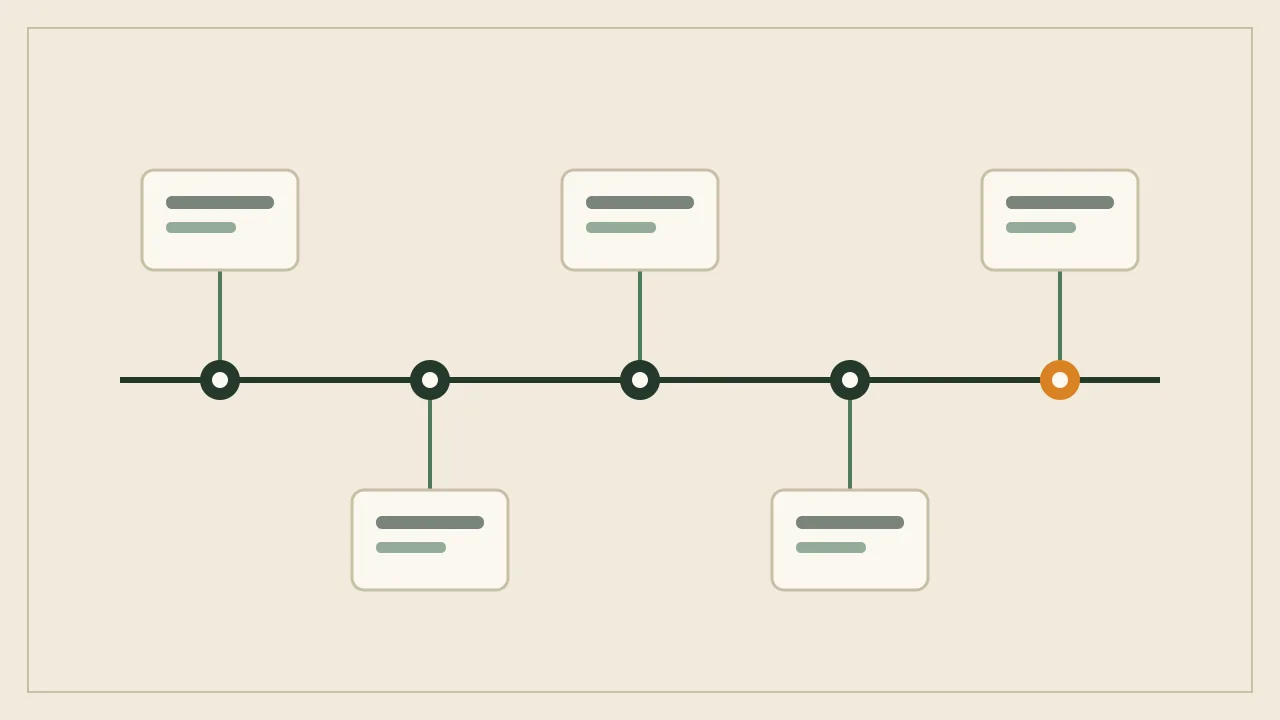
Five milestones that carry the whole story:
- 1950: Alan Turing proposes a test for machine intelligence, framing the question that the field still argues about.
- 1956: The Dartmouth Summer Research Project names the field artificial intelligence and sets its early research agenda.
- 1997: IBM Deep Blue defeats world chess champion Garry Kasparov, proving specialized systems can beat top humans at narrow tasks.
- 2012: A deep neural network wins the ImageNet competition by a wide margin, which triggered the modern deep learning boom.
- 2022 onward: Consumer generative AI tools reach mainstream users. ChatGPT reportedly reached roughly 100 million monthly users within about two months of launch, one of the fastest consumer software adoption curves ever recorded.
For impact, bring numbers. The World Economic Forum Future of Jobs Report 2025 found that around 40 percent of employers expect to reduce headcount where AI can automate work, while also projecting net job growth in AI and data-related roles. That tension, displacement in some roles alongside creation in others, is exactly the nuance counselors are listening for.
Careers Worth Naming in Your Discussion
When the requirement asks about AI careers, avoid the vague answer that you could be an AI engineer. Name the role, the daily work, and the entry path: machine learning engineer (builds and deploys models, usually a computer science degree), data annotator or data quality specialist (labels and audits training data, often an entry-level path), AI product manager (decides what a system should do and where it must not be used), and AI ethics or policy analyst (reviews systems for bias, safety, and compliance). Teams building real production systems, such as the engineers behind AI automation services, typically combine all four of these roles on a single project, which is a useful thing to mention to your counselor.
Step 4: Test Real AI Tools and Document What You Find
This requirement is where the badge stops being abstract. You need direct experience with AI tools, and you need notes a counselor can review.
A testing method that consistently satisfies counselors:
- Pick three tools of different types, for example a chat assistant, an image generator, and a voice or translation tool.
- Give each tool the identical task, such as summarizing the same short article or describing the same scene.
- Record the exact prompt you used, the output, and how long it took.
- Fact-check every factual claim in the output against an independent source.
- Write one sentence on where each tool was genuinely useful and one on where it failed.
Fact-checking is the step Scouts skip and counselors reward. If a chat assistant invents a statistic and you catch it, document that. A single verified hallucination in your notes demonstrates more understanding than five pages of praise for how impressive the tool is.
| Requirement Area | What You Produce | Typical Time | Where Scouts Get Stuck |
|---|---|---|---|
| Terminology and concepts | Written definitions in your own words plus examples | 2 to 3 hours | Copying definitions instead of explaining them |
| History and impact | Milestone summary with cause and effect | 1 to 2 hours | Listing dates with no analysis |
| Tool exploration | Prompt log with outputs and fact-checks | 2 to 4 hours | Not documenting failures or errors |
| Ethics, bias, privacy | Discussion notes with real examples | 2 hours | Speaking in generalities |
| Hands-on project | Working demo or trained model plus write-up | 4 to 8 hours | Scope too large to finish |
| Teaching session | Lesson plan, delivery, counselor sign-off | 2 to 3 hours | No practice run before presenting |
Step 5: Work Through Ethics, Bias, and Privacy Honestly
The ethics requirements are graded on specificity. Saying that AI can be biased earns nothing. Explaining that a hiring model trained mostly on resumes from one demographic will learn to prefer that demographic, and that the fix involves auditing the training data rather than patching the output, earns the sign-off.

Cover four areas with a concrete example for each:
- Bias: a model reflects whatever imbalance exists in its training data, so representation in the data is a design decision, not an accident.
- Privacy: anything you paste into a consumer AI tool may be retained or used for training. Never enter addresses, school records, medical details, or another person's information.
- Accountability: when an AI system causes harm, responsibility sits with the people who built and deployed it, not the software.
- Academic honesty: using AI to draft your merit badge work is dishonest and easy for a counselor to spot when they ask you to explain a sentence you did not write.
Spotting Deepfakes and Synthetic Media
Synthetic media is now part of the safety conversation, and it is a topic where Scouts can build a genuinely useful skill. Check for inconsistent lighting between a face and its background, hands or teeth that shift between frames, audio that lacks breathing sounds, and text in the image that dissolves into nonsense on close inspection.
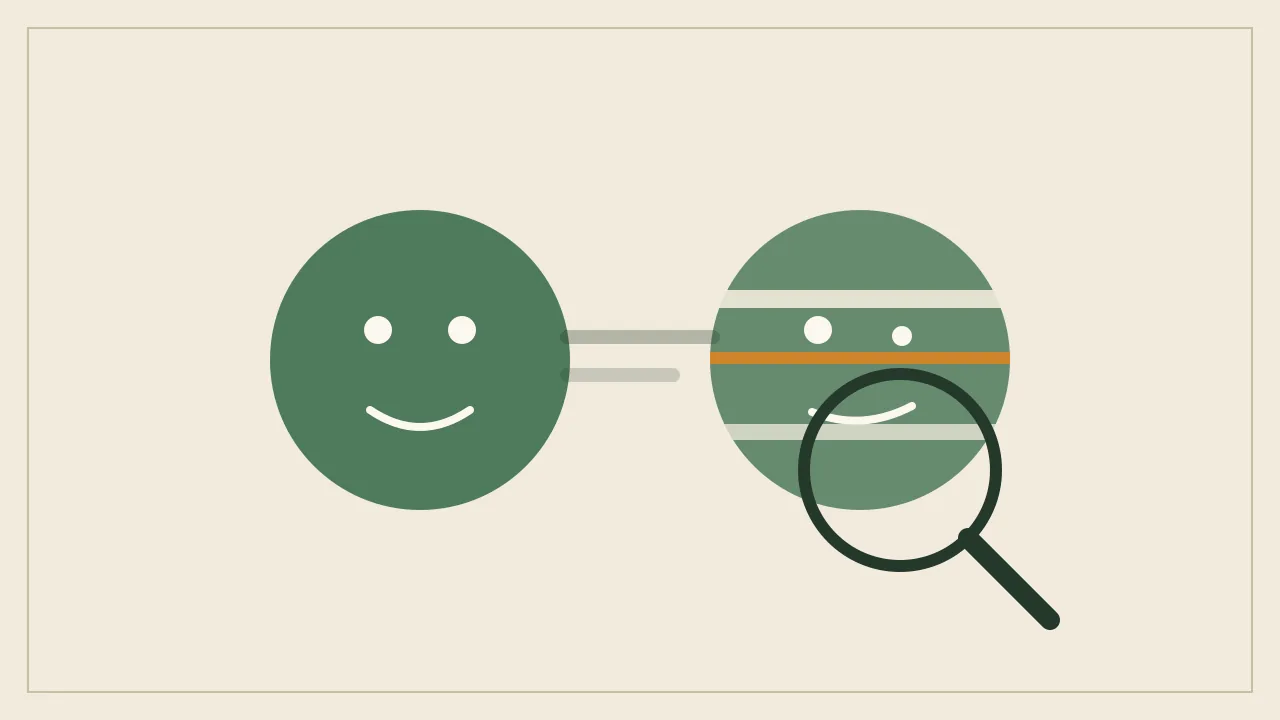
The more durable habit is source verification rather than pixel inspection. Detection cues improve away as models improve, but tracing a clip back to a primary publisher works permanently. Teach that ordering to your audience in Step 7.
Step 6: Complete a Hands-On AI Project That You Can Actually Finish
The project requirement rewards a small, complete, well-documented build far more than an ambitious unfinished one. Choose based on your comfort with code.
No-code options that still demonstrate real machine learning:
- Train an image classifier in Google Teachable Machine to distinguish three objects, then deliberately test it with edge cases it will get wrong.
- Build a decision tree by hand on paper for a Scouting task, such as choosing whether conditions are safe for a hike, then compare it to how a model would learn the same rule.
- Design and test a prompt library for one specific task, measuring which phrasing produces the most accurate result.
Code-based options if you already program:
- Train a simple classifier in Python on a public dataset and report its accuracy honestly, including where it fails.
- Build a small chatbot that answers questions about your troop using a documented rule set or a language model API.
Whatever you choose, keep a build log: what you tried, what broke, what you changed. Documented failure is evidence of learning, and it is exactly what professional engineering teams record. The AI-augmented development team approach used by modern software agencies follows the same discipline, treating each failed experiment as data rather than something to hide. Scouts who want to see how these ideas scale into production systems can learn more about how real engineering teams document, test, and ship AI features.
Step 7: Teach an AI Topic to Others
The teaching requirement exists because explaining a concept is the only reliable proof that you understand it. Plan for a 10 to 15 minute session with your patrol, a troop meeting, a den of Cub Scouts, or a classroom.
A lesson structure that works:
- Open with a question your audience can answer, such as how their phone knows which photos contain a dog.
- Define one core term clearly, then stop. One term taught well beats six rushed.
- Show a live demonstration, ideally your own project from Step 6.
- Break the demonstration on purpose so the audience sees a limitation firsthand.
- Close with one safety rule they can apply the same day, such as never pasting personal information into an AI tool.
Rehearse once out loud before the real session, with a timer. Nearly every Scout who gets sent back on this requirement skipped the rehearsal and either ran out of material in four minutes or overran by ten.
Step 8: Final Counselor Review and Blue Card Completion
Bring everything to the final meeting: your written definitions, milestone notes, tool testing log with fact-checks, ethics notes, project build log and working demo, and evidence of the teaching session. Counselors sign each requirement as it is completed, then sign the card once all are met.
Keep the applicant portion of the blue card after your unit records the badge. It is your only personal proof of completion, and reconstructing a lost record years later is difficult. Turn in the unit portion promptly so the badge appears at the next court of honor.
Realistic Timeline
A Scout working steadily needs three to five weeks: one week on terminology and history, one to two weeks on tool testing and the project, one week on ethics and teaching preparation, and a final meeting for review. Merit badge fairs that compress this into a single day usually assign the project and teaching requirement as prerequisite homework, so confirm what is expected before you attend.
Key Takeaways
- The Artificial Intelligence merit badge launched in 2025 as an elective STEM badge and is not required for Eagle Scout.
- Get your blue card signed by your Scoutmaster before starting any requirement work.
- Requirements span terminology, history, hands-on tool testing, ethics and privacy, a project, and a teaching session.
- Definitions must be in your own words. Counselors ask follow-up questions specifically to test this.
- ChatGPT reached roughly 100 million monthly users within about two months of launch, making it one of the fastest adopted consumer apps recorded.
- The World Economic Forum Future of Jobs Report 2025 found around 40 percent of employers expect AI-driven role reductions alongside growth in AI and data careers.
- A small finished project with a documented build log outperforms a large unfinished one.
- Expect three to five weeks of steady work, and confirm prerequisites before attending a one-day merit badge fair.
Frequently Asked Questions (FAQ)
Is the Artificial Intelligence merit badge required for Eagle Scout?
No. The Artificial Intelligence merit badge is an elective badge, so it counts toward the total number of merit badges needed for Eagle but does not replace any required badge. Scouts choose it for STEM interest, career exploration, or as preparation for the Nova and Supernova STEM awards.
Do I need to know how to code to earn this badge?
No coding is required. The badge is designed as an AI literacy credential, and the hands-on project can be completed with no-code tools like Google Teachable Machine or even a hand-drawn decision tree. Scouts who already program can choose a harder project, but that is optional rather than expected.
How long does the Artificial Intelligence merit badge take to complete?
Most Scouts finish in three to five weeks working a few hours each week. Terminology and history take two to five hours, tool testing and the project take six to twelve hours, and the ethics discussion plus teaching session take about four hours including rehearsal and the final counselor review.
Can I use ChatGPT to help complete the merit badge requirements?
You may use AI tools as the subject of your research and testing, which the requirements actively encourage. You may not use them to write your definitions or answers for you. Counselors ask follow-up questions, and a Scout who cannot explain their own submitted work will be asked to redo it.
What if my troop has no registered AI merit badge counselor?
Ask your district advancement chair for the council-wide counselor list, since registered counselors often serve multiple units. Merit badge colleges, STEM universities, and council camps frequently offer newer badges. Never work with an unregistered adult, because the completed badge cannot be officially recorded.
What counts as an acceptable hands-on AI project?
Any project where you build, train, or systematically test an AI system and document the results. Training a three-category image classifier, designing and measuring a prompt library, or coding a simple troop chatbot all qualify. The deciding factor is a written build log showing what you tried, what failed, and what you changed.