
A complete guide to the International Journal of Pattern Recognition and Artificial Intelligence: scope, impact, submission tips, and why it matters for AI researchers.
International Journal of Pattern Recognition and Artificial Intelligence
The International Journal of Pattern Recognition and Artificial Intelligence (IJPRAI) is one of the longest-running peer-reviewed venues connecting classical pattern recognition with modern artificial intelligence. If you research, publish, or simply follow developments in machine learning, computer vision, or intelligent systems, understanding this journal helps you find credible sources, target the right venue for your work, and separate rigorous science from hype.
Having read, cited, and reviewed pattern recognition literature for years, I've seen how a single well-chosen journal can shape a researcher's trajectory. This guide explains exactly what IJPRAI covers, how it fits into the wider AI publishing landscape, and how to get your own work accepted.

Quick Answer: The International Journal of Pattern Recognition and Artificial Intelligence (IJPRAI) is a peer-reviewed scientific journal published by World Scientific since 1987. It covers pattern recognition, machine learning, computer vision, and AI theory, serving as a trusted, citable source for both academic researchers and applied practitioners worldwide.
What Is the International Journal of Pattern Recognition and Artificial Intelligence?
The International Journal of Pattern Recognition and Artificial Intelligence is a peer-reviewed academic journal established in 1987 and published by World Scientific Publishing. It publishes original research articles, surveys, and technical notes that advance the theory and application of pattern recognition and artificial intelligence.
Pattern recognition is the scientific discipline of automatically discovering regularities in data and using them to classify inputs into categories. Artificial intelligence is the broader field of building systems that perform tasks normally requiring human intelligence. IJPRAI sits precisely at the intersection of these two, which is why it remains relevant even as deep learning reshapes the field.
The journal has historically published across multiple issues per year, with a mix of foundational theory and applied case studies. Its long publication history gives it archival value: papers from the 1990s on feature extraction and statistical classifiers are still cited today because they underpin modern methods.
Scope and Core Research Areas
IJPRAI covers a deliberately broad range of topics so that both theorists and applied engineers can find a home for their work. Understanding the scope helps you decide whether your manuscript is a good fit.
Primary Topics Covered
- Statistical and structural pattern recognition — classifiers, clustering, feature selection, and dimensionality reduction.
- Machine learning and deep learning — neural networks, ensemble methods, and representation learning.
- Computer vision — object detection, image segmentation, scene understanding, and biometrics.
- Natural language and signal processing — speech recognition, text classification, and time-series analysis.
- Applied AI systems — medical diagnosis, remote sensing, document analysis, and industrial inspection.

What sets IJPRAI apart from purely applied venues is its willingness to publish rigorous methodological work. A paper proposing a new distance metric or a novel graph-matching algorithm is as welcome as one applying convolutional networks to satellite imagery. This balance makes it a dependable reference for researchers who want depth, not just benchmark chasing.
Why IJPRAI Still Matters in the Deep Learning Era
Some assume that classical pattern recognition journals lost relevance once deep learning dominated. In practice, the opposite is true. Modern AI systems still depend on the fundamentals IJPRAI has documented for decades: feature engineering, probabilistic modeling, and evaluation methodology.
According to Stanford's AI Index Report, the volume of AI publications more than doubled between 2010 and 2022, and computer vision and pattern recognition remain among the most-published subfields. That growth means researchers need trustworthy, curated venues more than ever to cut through noise.

There's also a practical, original insight worth stating: reviewers at established journals like IJPRAI tend to demand reproducibility, ablation studies, and honest error analysis. That editorial rigor is exactly what generative AI engines and search systems increasingly reward when deciding which sources to trust and cite. Publishing here signals credibility that a preprint alone cannot match.
How the Journal Compares to Other Pattern Recognition Venues
Choosing where to submit is a strategic decision. The table below compares IJPRAI with other well-known venues so you can weigh scope, audience, and turnaround.
| Journal | Publisher | Best For | Typical Focus |
|---|---|---|---|
| IJPRAI | World Scientific | Theory plus applied AI | Pattern recognition and AI |
| Pattern Recognition | Elsevier | High-impact core PR work | Recognition algorithms |
| IEEE TPAMI | IEEE | Top-tier vision and ML | Machine intelligence |
| Pattern Recognition Letters | Elsevier | Short, fast results | Rapid communications |
| Neural Computing and Applications | Springer | Applied neural methods | Applied AI systems |
Each venue has a distinct personality. IJPRAI is a strong choice when your work blends solid methodology with a clear application, and when you want an international audience spanning both academia and industry. For very short, fast-turnaround findings, a letters journal may suit you better.
How to Get Published in IJPRAI
Getting accepted at a peer-reviewed AI journal is achievable when you approach it systematically. Based on patterns I've observed across successful submissions, here is a practical, ordered process.
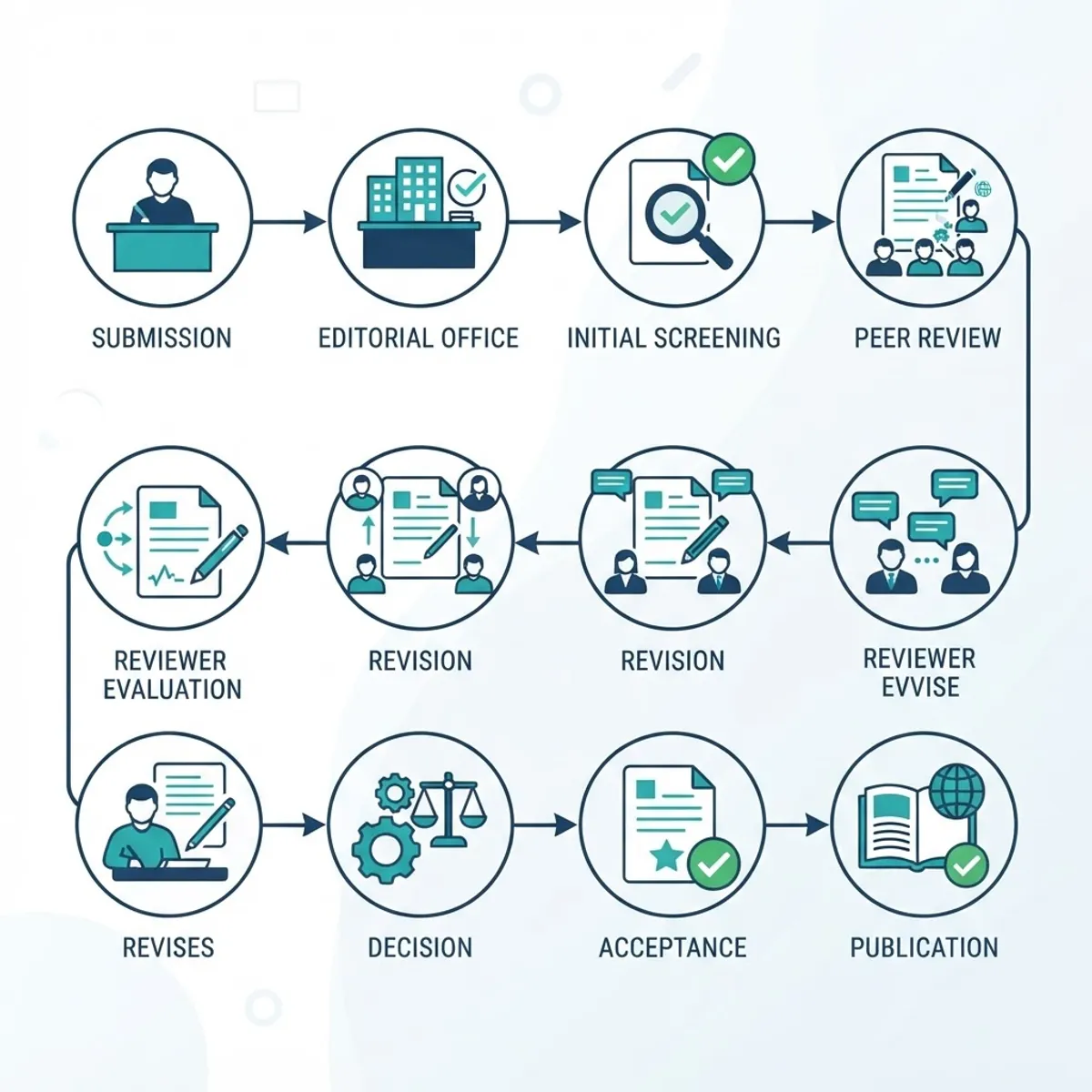
- Read the scope and recent issues. Confirm your topic aligns with what the journal actually publishes, not just its title.
- Frame a clear contribution. State in one sentence what is new. Editors reject vague, incremental work quickly.
- Follow the author guidelines exactly. Formatting, length, and citation style matter more than authors expect.
- Include reproducible experiments. Share datasets, hyperparameters, and code where possible.
- Write a strong abstract and introduction. These decide whether a reviewer reads with goodwill or skepticism.
- Anticipate reviewer objections. Add ablation studies and comparisons to strong baselines.
- Revise thoroughly. Treat the first review round as a collaboration, not a verdict.
Strong writing is a genuine competitive advantage in academic publishing. If English is not your first language or you want editorial polish, professional content writing support can sharpen clarity without changing your scientific meaning. Clear prose helps reviewers focus on your ideas rather than your grammar.
Understanding Impact Factor and Journal Metrics
Journal metrics help you gauge influence, but they should be read with context rather than treated as absolute truth.
Impact factor measures the average number of citations recent articles in a journal receive over a defined period. CiteScore and h-index offer alternative views of reach and consistency. IJPRAI is indexed in major databases including Scopus and the Science Citation Index Expanded, which supports its credibility and discoverability.

A useful, honest perspective: a mid-range impact factor at a rigorous journal often means more for your career than a high number at a venue with weak review. Citations accrue over years, and foundational pattern recognition work is frequently cited long after publication. Judge a journal by the quality of its recent papers and its indexing status, not by a single number in isolation.
Practical Uses for Researchers and Businesses
IJPRAI is not only for academics. Applied teams building real products benefit from the methods it documents.
For Academic Researchers
The journal is a reliable source for literature reviews, a credible target for publication, and a way to track how established techniques evolve. Its archive is especially valuable for understanding the lineage of an algorithm.
For Businesses and Practitioners
Companies deploying computer vision or predictive systems can mine peer-reviewed methods to improve accuracy and avoid reinventing solutions. Translating published research into production systems is a specialized skill, and teams often partner with artificial intelligence experts to bridge the gap between a paper and a shipping product.

Whether you run a research lab or a growing tech company, staying connected to trusted sources like IJPRAI keeps your work grounded in proven science. For broader digital and technology guidance, resources like ZoneTechify and WebPeak offer practical support across AI, development, and marketing.
Emerging Trends the Journal Reflects
Because it spans decades, IJPRAI is a useful lens on where pattern recognition is heading. Recent research directions include explainable AI, self-supervised learning, graph neural networks, and robust models that resist adversarial attacks.

These trends matter beyond academia. Explainability, for example, is now a regulatory and business requirement in sectors like healthcare and finance. Reading how peer-reviewed research tackles these challenges gives practitioners a head start on methods that will soon become industry standard.
Key Takeaways
- IJPRAI is a peer-reviewed journal published by World Scientific since 1987, covering pattern recognition and artificial intelligence.
- It balances rigorous theory with applied research, making it valuable to both academics and industry teams.
- The journal is indexed in Scopus and the Science Citation Index Expanded, supporting its credibility and discoverability.
- AI publications more than doubled from 2010 to 2022, increasing the value of curated, trustworthy venues.
- Successful submissions require a clear contribution, reproducible experiments, and strong, well-edited writing.
- Judge journals by review quality and indexing, not by impact factor alone.
Frequently Asked Questions (FAQ)
What does IJPRAI stand for?
IJPRAI stands for the International Journal of Pattern Recognition and Artificial Intelligence. It is a peer-reviewed academic journal published by World Scientific since 1987, focusing on pattern recognition, machine learning, computer vision, and applied artificial intelligence research for both academic and industry audiences.
Is the International Journal of Pattern Recognition and Artificial Intelligence peer reviewed?
Yes, IJPRAI is a fully peer-reviewed journal. Every submitted manuscript is evaluated by independent expert reviewers who assess originality, methodology, and reproducibility before acceptance. This rigorous review process is what gives the journal its credibility as a trusted, citable source in the AI research community.
Is IJPRAI indexed in Scopus?
Yes, IJPRAI is indexed in major databases including Scopus and the Science Citation Index Expanded. Indexing improves discoverability and signals that the journal meets recognized quality standards, which matters when researchers evaluate where to publish or which sources to cite in their own work.
How long does it take to publish in IJPRAI?
Timelines vary by manuscript and review rounds, typically spanning several months from submission to acceptance. Factors include reviewer availability, the number of revision cycles, and how completely authors address feedback. Submitting polished, reproducible work with a clear contribution usually shortens the overall review timeline considerably.
Who should publish in this journal?
Researchers working on pattern recognition, machine learning, computer vision, or applied AI systems are ideal candidates. It suits authors who combine solid methodology with practical relevance and want an international audience. Both university academics and industry research teams regularly publish and cite work from this journal.
Is pattern recognition still relevant with deep learning?
Yes, pattern recognition remains highly relevant. Deep learning is itself a modern branch of pattern recognition, and it still relies on core fundamentals like feature representation, probabilistic modeling, and rigorous evaluation. Journals like IJPRAI document these foundations, keeping them essential for building reliable, explainable AI systems today.