
A practical, publisher-tested guide to finding advertisers for your website, from building a media kit and pricing ad slots to cold outreach that actually gets replies.
How to Find Advertisers for Your Website
Most publishers do not have a traffic problem. They have a packaging problem. A site with 15,000 monthly sessions in a narrow niche can earn more from three direct advertisers than a general-interest site with 200,000 sessions earning programmatic pennies. The difference is not luck. It is knowing who buys, what they buy, and how to hand them a reason to say yes.
This guide covers the exact sequence: qualifying your inventory, building proof, choosing between networks and direct deals, running outreach that gets replies, pricing without guessing, and keeping advertisers past their first campaign.
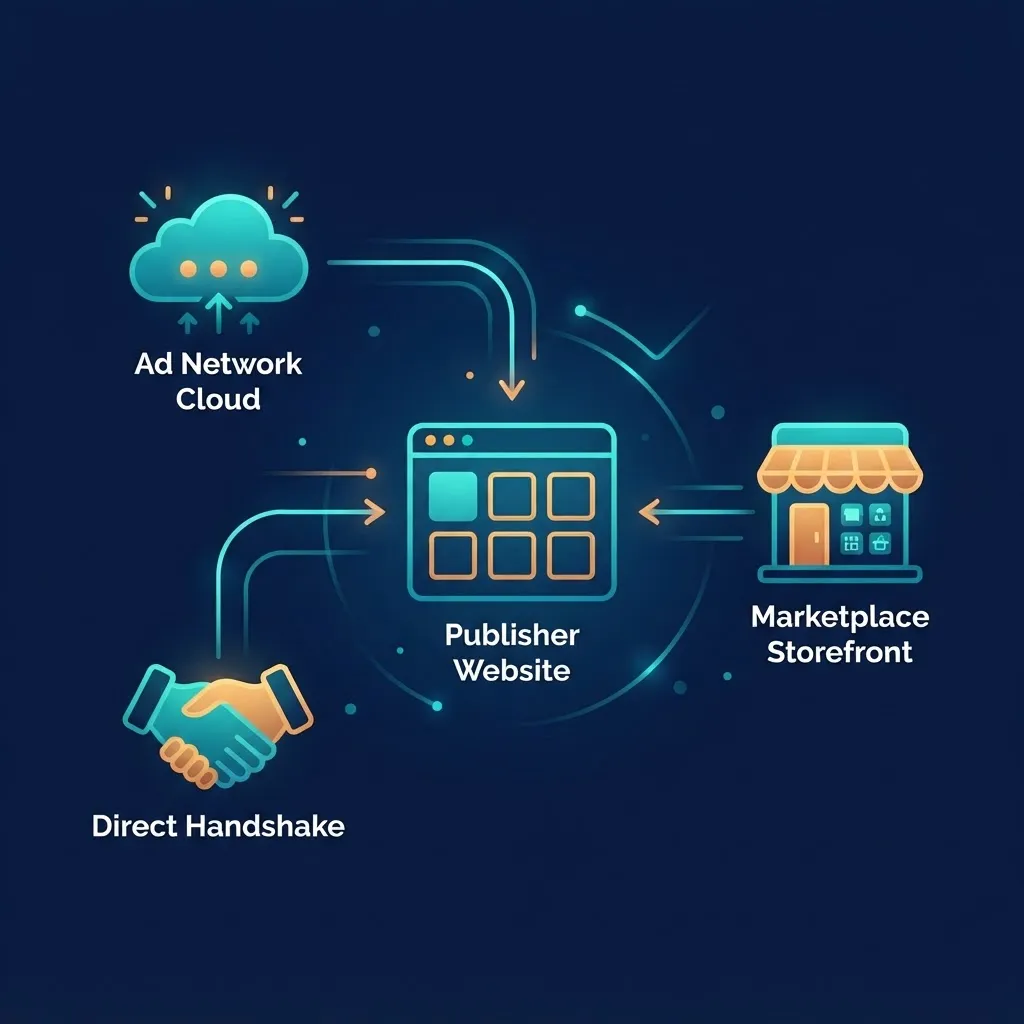
Quick Answer: Find advertisers by first proving audience value with a media kit, then pursuing three channels in parallel: ad networks for instant baseline revenue, direct outreach to brands already advertising near your niche, and marketplaces or affiliate programs. Direct deals pay the most but require traffic data, a rate card, and consistent follow-up.
What Advertisers Are Actually Buying
Advertisers do not buy pageviews. They buy access to a specific person at a specific moment of intent. That distinction changes everything about how you pitch.
A SaaS company paying for a sidebar placement on a niche accounting blog is buying qualified attention from finance managers. The same company will not pay for a placement on a general news site at any CPM, because the audience is unsorted. Understand this and you stop competing on volume and start competing on precision.
Key terms defined:
- CPM (cost per mille): the price an advertiser pays per 1,000 ad impressions.
- CPC (cost per click): payment triggered only when a visitor clicks.
- Direct deal: an advertiser buys space from you without a middleman, usually as a flat monthly fee.
- Programmatic: automated auctions fill your ad slots through exchanges, with no negotiation.
- Fill rate: the percentage of your available ad impressions that actually get sold.
Step 1: Qualify Your Inventory Before You Pitch Anyone
Before contacting a single brand, audit what you are actually selling. Advertisers ask the same four questions every time, and vague answers end conversations.
- Traffic volume and trend. Report monthly sessions and users for the last six months, not a single peak month. Trend direction matters more than raw size.
- Traffic source mix. Organic search traffic is worth more than social traffic because it signals intent and stability. If 60 percent or more of your traffic is organic, lead with that.
- Audience composition. Top countries, device split, and any known job titles or interests. A US-heavy audience commands materially higher rates than an untargeted global mix.
- Engagement proof. Average engagement time, pages per session, returning visitor share, and newsletter list size.
One underused signal: your top 10 landing pages by search traffic. If your best page ranks for a commercial keyword like "best project management software," that single page is a sellable asset on its own and often worth more than a sitewide banner.

Step 2: Build a One-Page Media Kit That Closes
A media kit is a single-page document that turns your audience into a purchasable product. Keep it to one page. Marketing managers forward one-pagers internally; they do not forward 12-slide decks.
Include exactly this:
- A one-sentence description of who your audience is
- Monthly sessions, users, and organic traffic percentage
- Top five countries and device breakdown
- Available ad placements with pixel dimensions
- Pricing, either as a flat monthly rate or a CPM range
- Two screenshots showing placements in context
- One contact email dedicated to advertising inquiries
Add a live /advertise page on your site as well. This page does quiet work forever: brands researching where to spend will find it through search, and it converts inbound interest while you sleep. Publishers who add a dedicated advertise page frequently report inbound inquiries within the first quarter, purely from branded and niche-related search queries.
Step 3: Choose Your Channel Mix
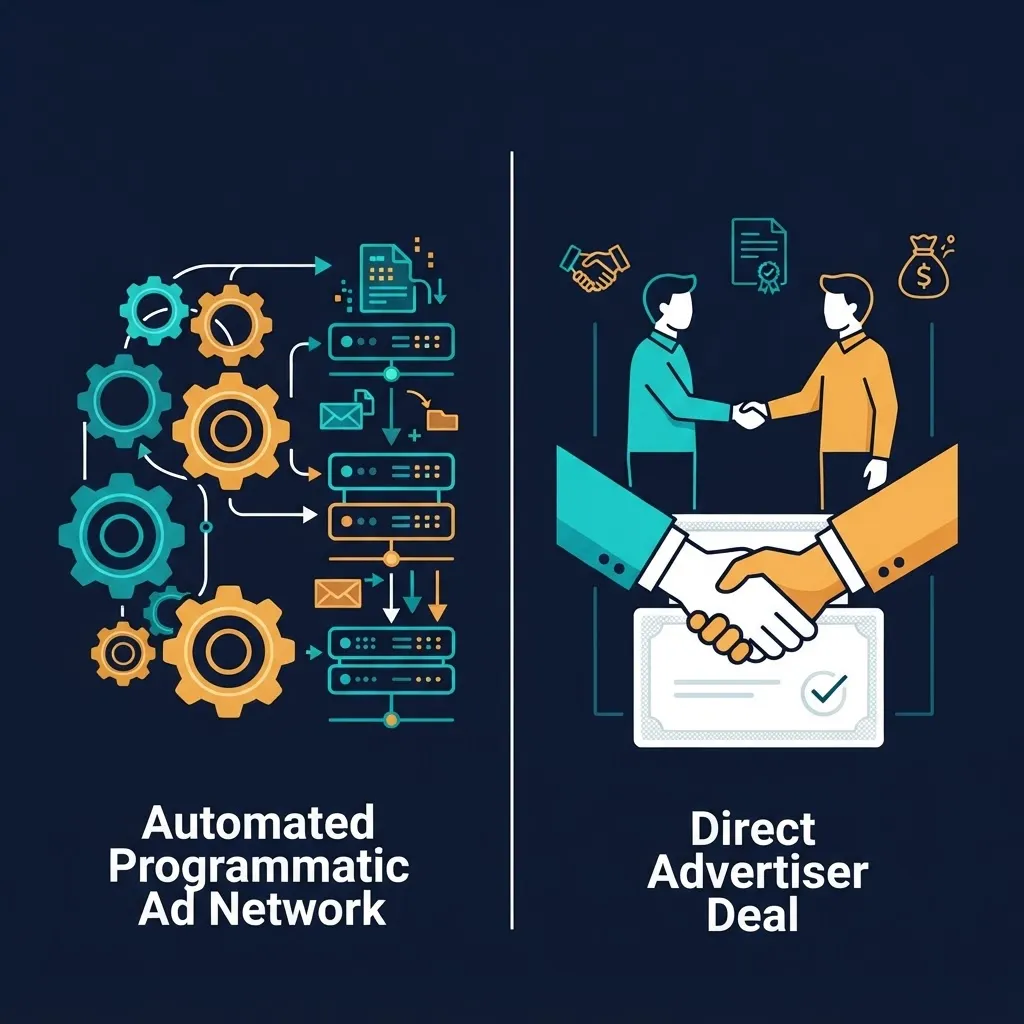
There is no single best route. Run a baseline network for guaranteed revenue and pursue direct deals for margin. Here is how the main options compare.
| Channel | Typical Revenue Level | Effort Required | Time to First Payment | Best For |
|---|---|---|---|---|
| Programmatic ad networks | Low to medium | Very low | 30 to 60 days | Any site with steady traffic |
| Premium ad networks | Medium to high | Low | 30 to 60 days | Sites above roughly 50,000 monthly sessions |
| Direct advertiser deals | High | High | 14 to 45 days | Niche sites with clear audience identity |
| Affiliate partnerships | Variable, can be high | Medium | 30 to 90 days | Review, comparison, and buying-guide content |
| Sponsored content | High per placement | Medium | On invoice | Sites with strong topical authority |
| Ad marketplaces | Low to medium | Low | Varies | Filling unsold inventory |
A realistic sequence for a growing site: start with a programmatic network to establish a revenue floor, add affiliate partnerships on your commercial pages, then use those earnings figures as leverage when negotiating direct deals. Knowing your programmatic CPM gives you a hard number to beat in every direct negotiation.
Step 4: Build a Prospect List of Brands That Already Buy Ads
The fastest path to a paying advertiser is finding companies already spending money on advertising in your topic area. They have a budget, an approval process, and a media buyer. You are not creating demand; you are redirecting it.
Five reliable sourcing methods, in order of hit rate:
- Check who advertises on competing sites. Visit five sites in your niche with an ad blocker disabled and log every brand you see. These companies have already decided your audience is worth reaching.
- Search your own money keywords. Whoever is paying for search ads on your top keywords is actively spending to reach your exact visitors.
- Mine sponsorships in niche newsletters and podcasts. Newsletter sponsors are unusually receptive to display and content placements because they already buy niche media.
- Review your outbound referral data. If your visitors already click through to a brand, that brand is a warm prospect. You can prove you send them traffic.
- Look at trade show exhibitor lists. Exhibitors have annual marketing budgets and quarterly spending pressure.
Aim for 50 qualified prospects before starting outreach. At a realistic 5 to 10 percent reply rate for cold outreach, 50 prospects produce three to five conversations, and one or two typically convert. That maths is why small lists fail.
Step 5: Write Outreach That Gets Replies
The most common outreach mistake is leading with your traffic numbers. Media buyers see numbers all day. What they lack is a reason to believe your audience matches theirs.
A structure that works, kept under 120 words:
- Line one, specific relevance. Name the page or topic where their product fits.
- Line two, the audience match. One sentence on who reads it and why they are in-market.
- Line three, one proof number. Monthly sessions on that section or organic traffic share. One number, not five.
- Line four, a low-friction ask. Offer a two-week test placement instead of a quarterly commitment.
Send to the person who owns the outcome: demand generation, growth, or partnerships. Marketing directors delegate; demand-gen managers decide on small test budgets. Follow up twice, four and eleven days later, adding a new piece of information each time rather than repeating the ask.

Step 6: Price Your Ad Inventory Without Guessing
Pricing paralysis kills more publisher deals than rejection does. Use a floor-and-ceiling method.
Your floor is what programmatic already pays you. If your ad slot earns a 4 dollar CPM through a network and delivers 40,000 monthly impressions, that slot generates 160 dollars a month passively. Never sell it direct for less.
Your ceiling is anchored to the advertiser's alternative cost. If they pay 6 dollars per click on search ads for your niche keywords, and your placement realistically delivers 200 clicks a month, you are competing against 1,200 dollars of spend. Price between the floor and roughly half the ceiling and you will look like a bargain while tripling your programmatic rate.
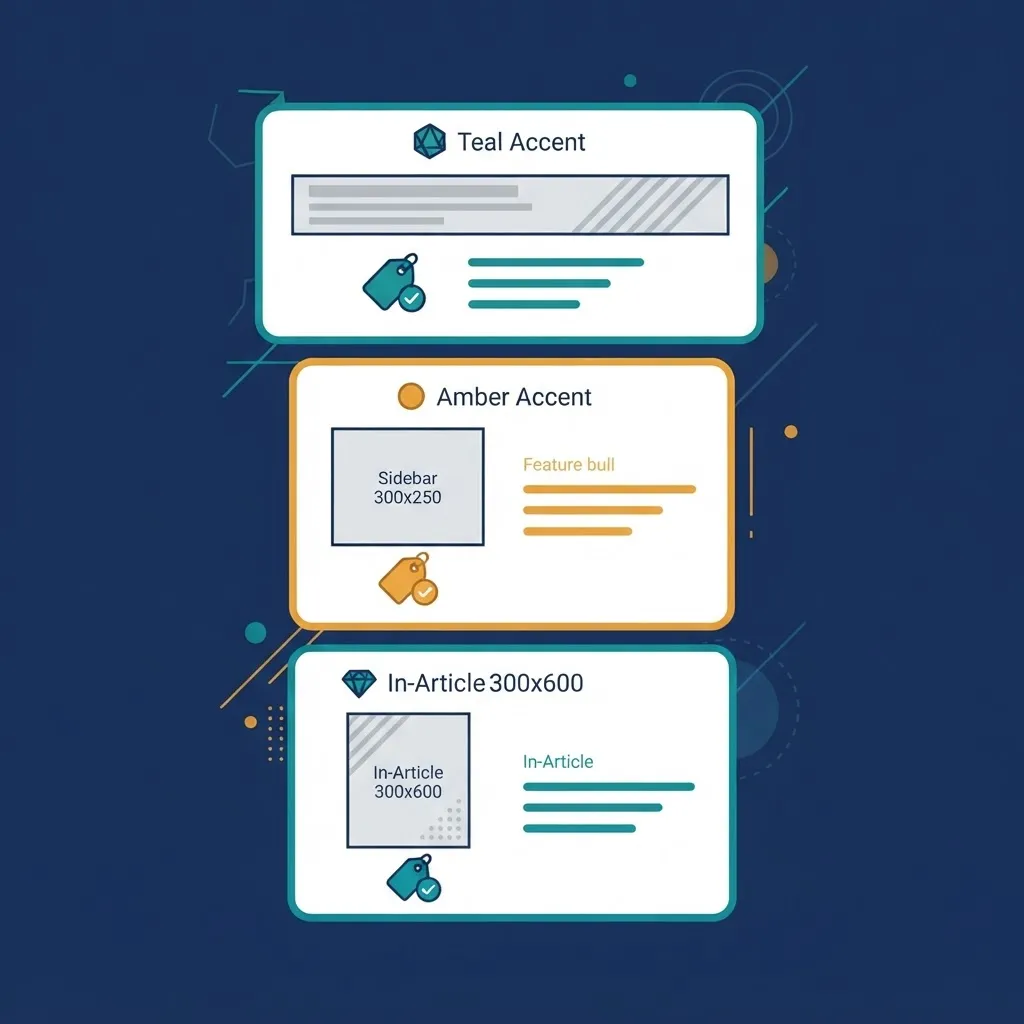
Practical structure for a first rate card:
- Sitewide banner: flat monthly fee, priced at two to three times programmatic floor
- In-article placement: premium tier, priced 40 to 60 percent above the banner
- Single-page sponsorship on a commercial page: highest tier, priced against search ad costs
- Newsletter placement: priced per send based on list size and open rate
Always include a two-week trial rate. Trials remove the risk that stalls first-time buyers, and renewal rates on satisfied trials are consistently strong.
Step 7: Keep Advertisers Longer Than One Campaign
Renewals are where publisher revenue compounds. Acquiring a new advertiser costs weeks of outreach; renewing one costs a single email with a good report attached.
Send a short monthly report containing impressions delivered, clicks, click-through rate, and one observation about what performed best. That last item is the differentiator. Telling an advertiser "your creative performed 30 percent better on mobile in-article slots, so I would shift budget there next month" positions you as a partner rather than a vendor.
Two further retention levers:
- Offer creative feedback. Many small advertisers use weak banner creative. Suggesting a clearer call to action improves their results and your renewal odds.
- Give first refusal on new inventory. Existing advertisers should hear about a new placement before anyone else.
This reporting discipline is standard practice in performance marketing, and applying it on the publisher side is what separates sites with one-off sponsors from sites with recurring ad revenue.

Common Mistakes That Cost Publishers Advertisers
- Selling before you can measure. Without analytics and impression tracking, you cannot report, and without reports you cannot renew.
- Overloading pages with ad slots. Excess ads slow load times, and slow pages reduce the very engagement advertisers pay for.
- Pitching enterprise brands first. Large companies have locked annual budgets and agency gatekeepers. Mid-sized companies decide faster.
- Hiding your advertise page. If it is not linked in your footer, it does not exist.
- Accepting irrelevant ads. Off-topic advertising erodes reader trust and lowers long-term earnings per visitor.
If your site technically cannot support fast-loading placements or accurate tracking, fix that before selling anything. Teams like WebPeak Digital handle the performance and tracking layer that ad-supported publishing depends on, while data-driven marketing work on the strategy side helps translate audience data into offers advertisers understand.
Key Takeaways
- Advertisers buy audience precision, not raw traffic volume; niche sites can out-earn larger general sites.
- A one-page media kit plus a live
/advertisepage are the two highest-return assets a publisher can create. - Run programmatic networks as a revenue floor and pursue direct deals for margin, not one instead of the other.
- Build a list of at least 50 prospects, since typical cold outreach reply rates of 5 to 10 percent require volume.
- Price direct deals between your programmatic floor and roughly half of the advertiser's search ad alternative cost.
- Monthly performance reports with one actionable insight are the single strongest driver of advertiser renewals.
Frequently Asked Questions (FAQ)
How much traffic do I need before advertisers will pay me?
There is no universal minimum. Premium networks often want around 50,000 monthly sessions, but direct advertisers care about audience fit more than volume. Highly targeted sites have secured paid placements with under 10,000 monthly sessions by proving their readers match the advertiser's ideal customer profile.
Is it better to use ad networks or find advertisers directly?
Use both. Ad networks give you immediate, hands-off baseline revenue and fill unsold inventory. Direct advertisers pay significantly more per placement but require a media kit, outreach effort, and reporting. Run a network as your revenue floor while selling premium slots directly for higher margin.
What should I charge for a banner ad on my website?
Start with your programmatic earnings for that slot as an absolute floor, then price two to three times higher for direct deals. Cross-check against what advertisers pay per click for your niche keywords. Offer a discounted two-week trial rate to reduce risk for first-time buyers.
How do I find companies that want to advertise on my website?
Look at brands already advertising on competing sites in your niche, companies bidding on your top commercial keywords, and sponsors of newsletters or podcasts covering your topic. These businesses have active budgets and approval processes, so you are redirecting existing spend rather than creating demand.
Do too many ads hurt my search rankings?
Excessive or intrusive ads can hurt indirectly by slowing page load speed and pushing content below the fold, both of which worsen user experience signals. Keep ads clearly separated from content, avoid layout shift, and limit placements so your core content remains immediately readable.
How long does it take to land the first direct advertiser?
Expect four to eight weeks from a standing start. That covers building a media kit, assembling a 50-prospect list, running outreach with two follow-ups, and negotiating terms. Sites with an existing advertise page and clean analytics frequently move faster because proof is already in place.