A practical, clinician-informed guide to building a mental health app, covering validation, core features, HIPAA and GDPR compliance, tech stack, cost, and retention.
How to Develop a Mental Health App
Building a mental health app is less a coding problem and more a trust problem. The engineering is well understood: authentication, encrypted storage, scheduling, push notifications, video sessions. What separates the apps people keep on their home screen for two years from the thousands that get deleted in a week is clinical grounding, privacy discipline, and a design that respects someone on their worst day. This guide walks through the full build, from validating the idea to shipping a compliant version 1 and measuring whether it actually helps.
Quick Answer: To develop a mental health app, validate a specific clinical use case with real clinicians, define an evidence-based feature set such as mood tracking or guided CBT exercises, design for privacy and crisis safety, build a HIPAA and GDPR compliant encrypted backend, ship a focused MVP, then iterate on retention and measured clinical outcomes.
Start With One Clinical Problem, Not a Category
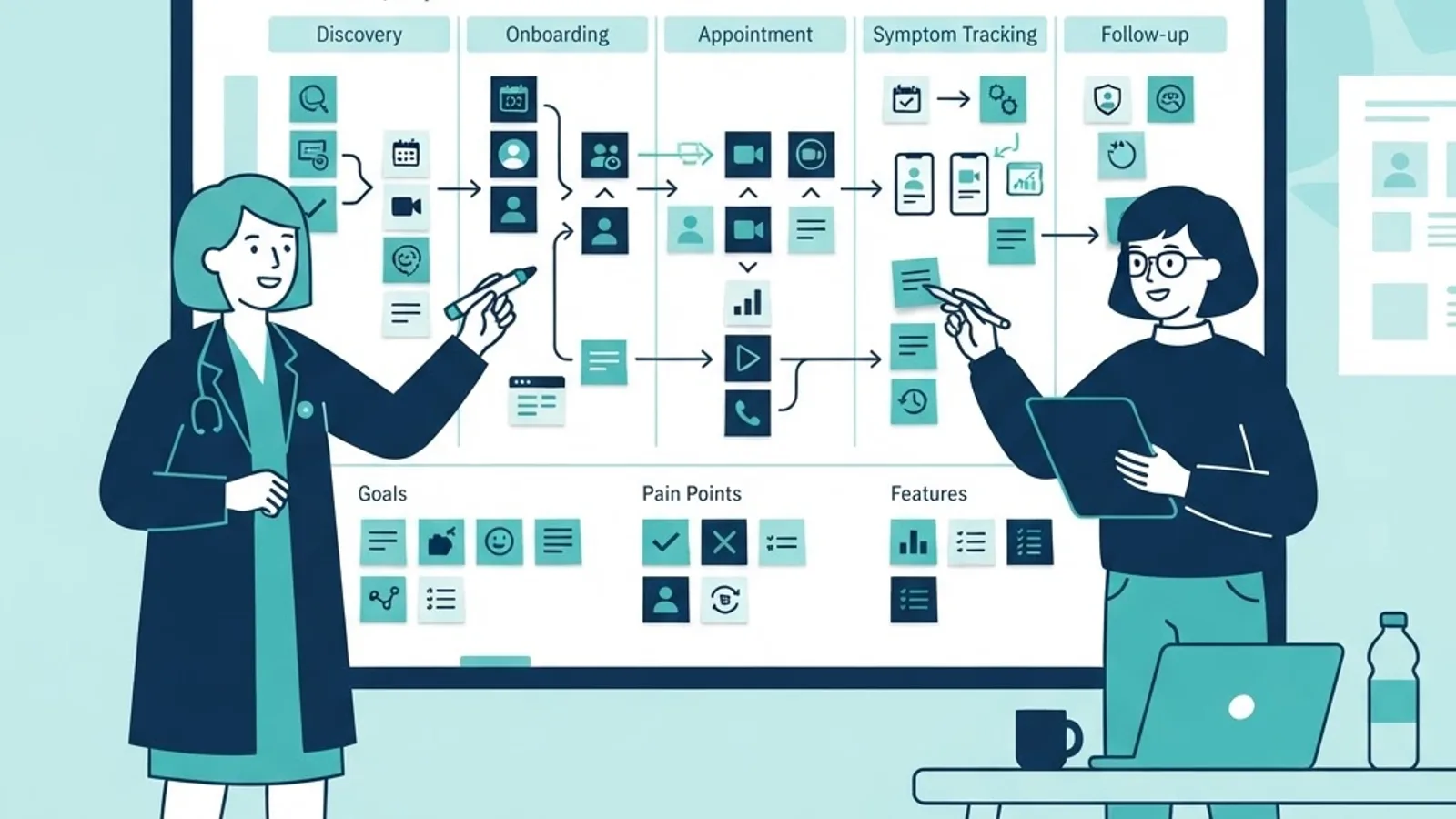
The most common failure in this space is scope. Teams try to build meditation, therapy booking, journaling, peer chat, and AI coaching in one release, and end up with an app that does nothing memorably well. Pick one problem and one population: sleep anxiety in shift workers, relapse prevention for outpatient addiction programs, mood monitoring between psychiatry appointments, or burnout support for a specific employer.
Two data points should shape this decision. The World Health Organization reports that depression and anxiety disorders cost the global economy roughly one trillion US dollars each year in lost productivity, which is why employer-funded and payer-funded models are the strongest commercial routes. At the same time, a widely cited analysis of mobile health apps found median 30 day retention in the single digits to low teens, meaning most downloads never become habits. Your entire product plan should be organized around beating that retention number for one narrow group.
Validation Steps That Actually De-Risk the Build
- Interview at least ten licensed clinicians in your target specialty and ask what they currently do between sessions.
- Interview fifteen to twenty people with lived experience of the condition, focusing on what they abandoned and why.
- Choose a published clinical framework to anchor features, such as CBT, DBT skills, behavioural activation, or ACT.
- Define one primary outcome metric before writing code, for example a validated PHQ-9 or GAD-7 score change over eight weeks.
- Prototype the core loop as clickable screens and test it with ten users before committing to engineering.
Define an Evidence-Based Feature Set
Every feature in a mental health app should trace back to a clinical rationale. "Users like streaks" is not a rationale when streak loss can trigger shame in someone with depressive symptoms. Behaviour change mechanics need to be adapted, not copied from consumer fitness apps.
The Realistic MVP Scope
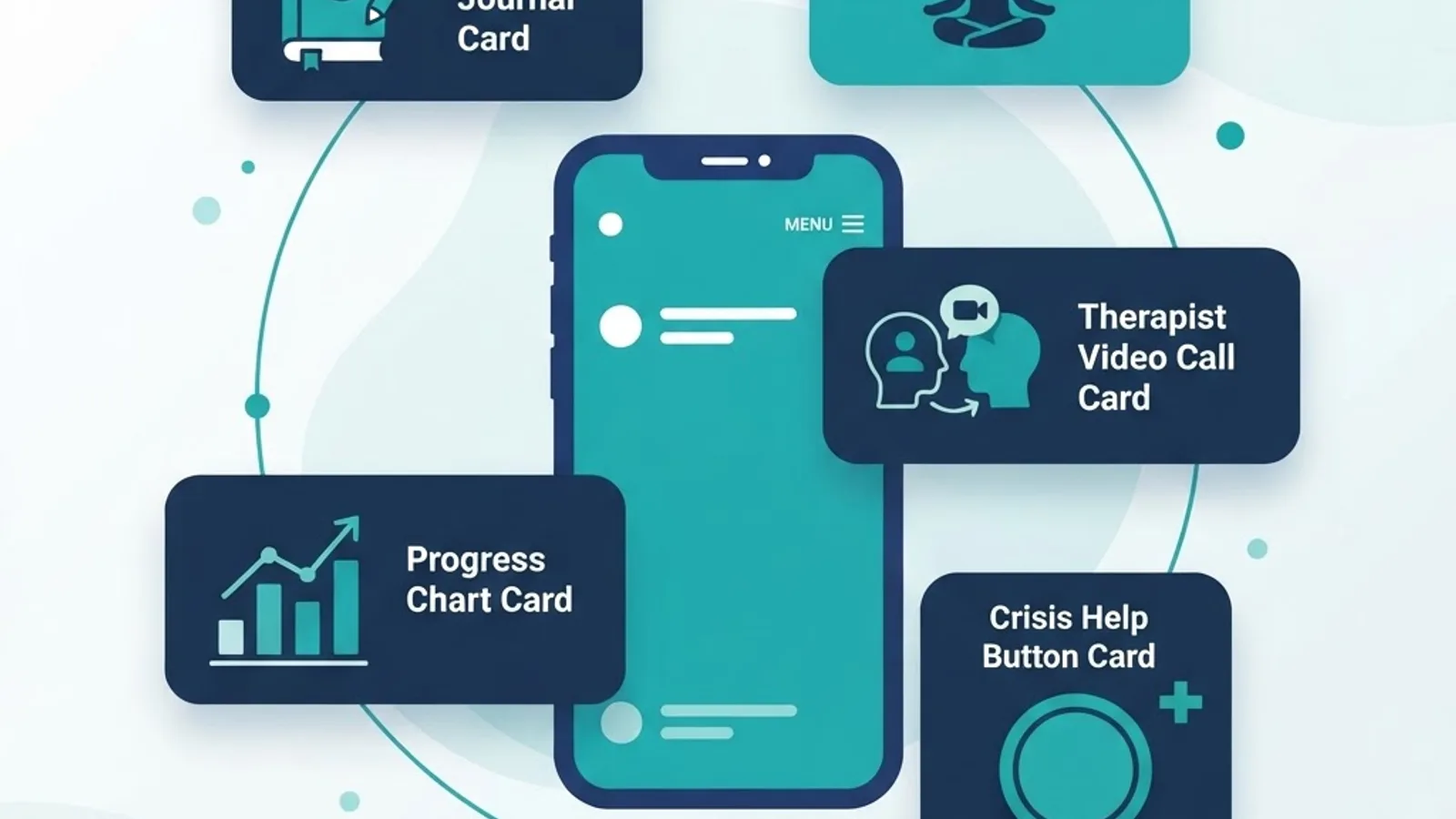
- Secure onboarding and consent: plain language explanation of what data you collect, who can see it, and how to delete it.
- Structured self-monitoring: mood, sleep, triggers, and medication adherence captured in under thirty seconds a day.
- Guided intervention library: short, scripted exercises such as thought records, grounding techniques, or paced breathing.
- Progress reflection: trend visualisations that show patterns without diagnosing or alarming the user.
- Crisis pathway: a persistent, one-tap route to local emergency numbers and crisis text lines, available offline.
- Clinician or coach layer, if relevant: secure messaging, session notes, and appointment scheduling.
Defer AI journaling companions, peer communities, wearable integrations, and gamified rewards to later releases. Peer chat in particular introduces moderation liability that a small team cannot safely absorb at launch. If you are weighing whether to build a native app, a web app, or both, the tradeoffs are laid out clearly in this breakdown of desktop application vs web application architectures.
Treat Compliance as an Architecture Decision
Mental health data is among the most sensitive categories in existence. In the United States, if you handle protected health information on behalf of a covered entity, HIPAA applies and you need a Business Associate Agreement with every vendor that touches that data. In the EU and UK, health data is a special category under GDPR Article 9, requiring explicit consent and a lawful basis. Many teams discover this after building on infrastructure that cannot be made compliant, then rebuild.

Non-Negotiable Technical Controls
- Encryption in transit with TLS 1.2 or higher, and encryption at rest with managed keys.
- Role-based access control with least privilege, plus immutable audit logs of every record access.
- Data minimisation: do not collect a birth date, precise location, or contact list unless a feature genuinely requires it.
- Separate identifiers from clinical content so analytics never joins a name to a symptom score.
- Session timeouts, biometric app lock, and screenshot suppression on sensitive screens.
- A working data export and hard delete flow, not a support ticket process.
Also plan your edge protection early. Public health endpoints attract automated abuse, and layering a firewall in front of your API is standard practice, as explained in this guide to web application firewall and load balancer setups.
Regulatory Classification
If your app claims to diagnose, treat, or cure a condition, it may be regulated as a medical device by the FDA or under EU MDR. Wellness and general support positioning avoids that path but limits your marketing claims. Decide this with a regulatory advisor before writing your app store description, because retroactive repositioning is expensive.
Design for the Worst Day, Not the Demo
Accessibility and emotional safety are the design core here. Assume the user is tired, distracted, possibly in distress, and using the app one-handed at 2am.
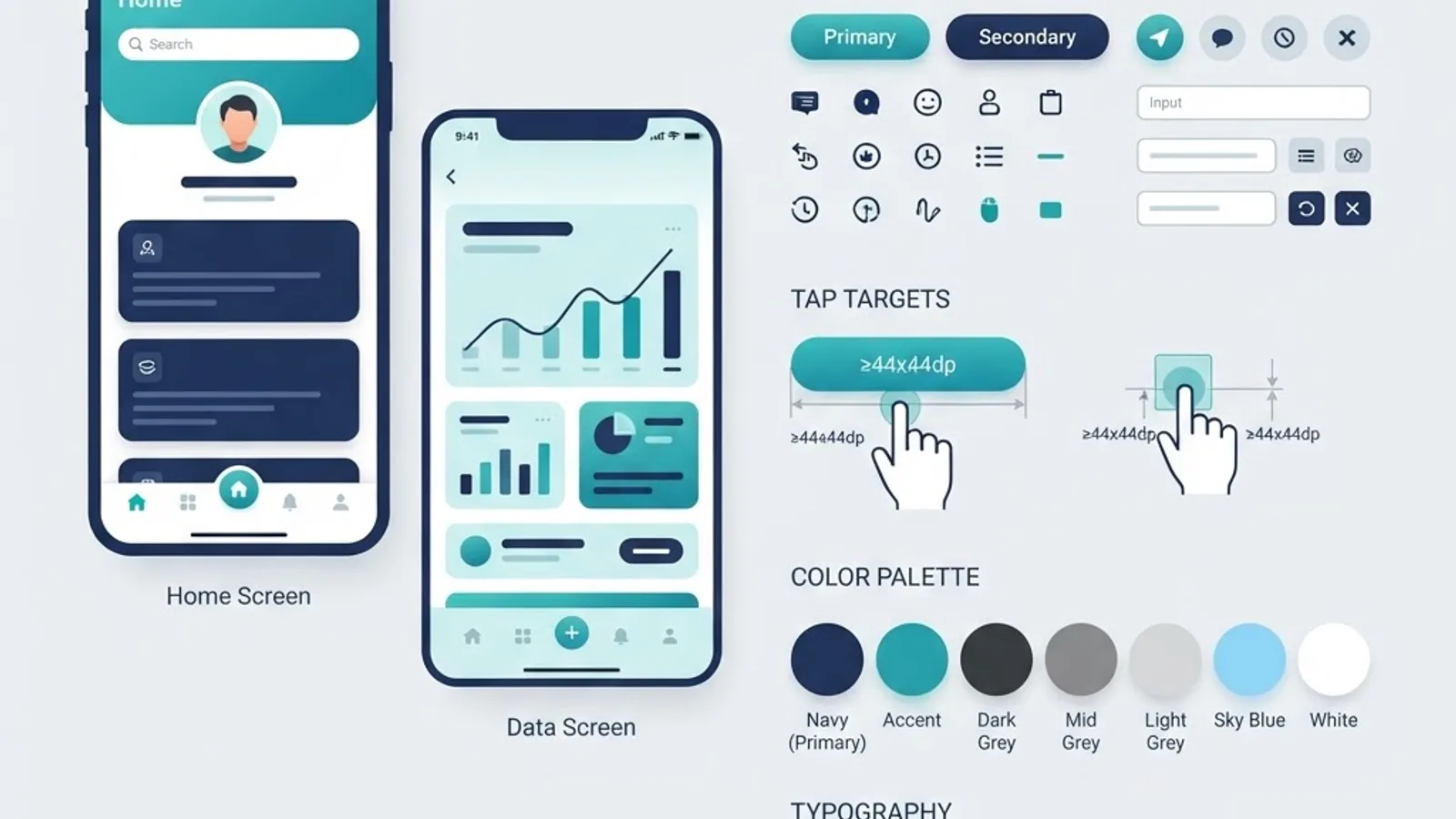
Practical rules that hold up in usability testing:
- Keep the primary daily action reachable in one tap from launch.
- Use calm, low-saturation palettes with a genuine dark mode, and meet WCAG 2.2 AA contrast of at least 4.5 to 1 for body text.
- Support dynamic type up to 200 percent without breaking layouts.
- Write copy in second person, non-clinical, and never judgemental. Replace "You failed your streak" with "Welcome back."
- Make notifications opt-in per category and never guilt-based.
- Let users skip any question. Forced fields in a symptom check-in produce false data.
Brand and interface consistency matter more than novelty in this category, which is why many teams bring in a specialist brand identity design partner rather than improvising visual language mid-build.
Choose a Stack You Can Audit
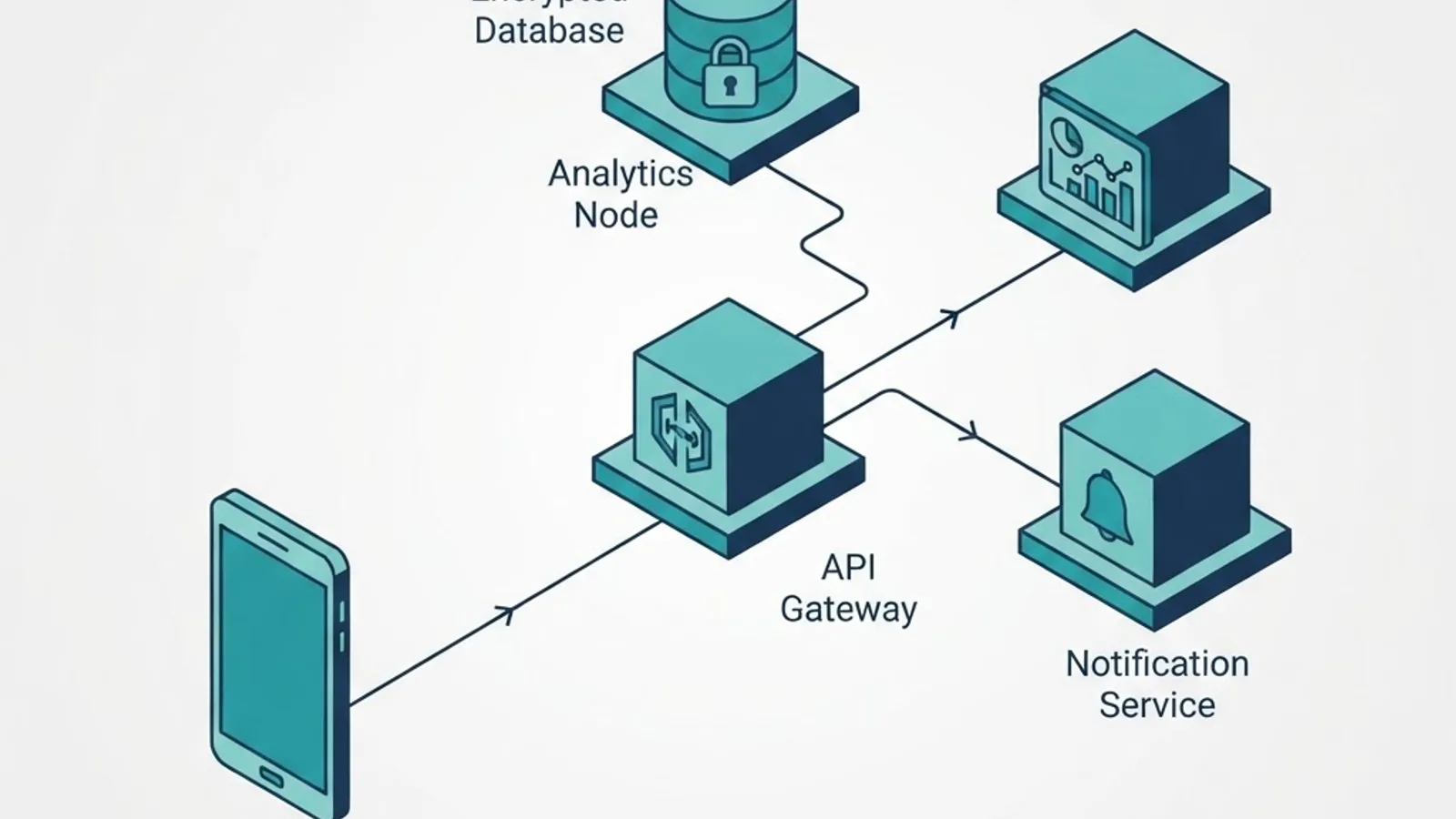
For most teams, React Native or Flutter delivers iOS and Android from one codebase with acceptable performance, while native Swift and Kotlin make sense when you need deep HealthKit, Google Health Connect, or background sensor access. On the backend, Node.js with TypeScript or Python with FastAPI both work well; the decisive factor is your hosting provider signing a BAA and offering audit logging, encrypted managed Postgres, and regional data residency.
| Layer | Recommended Option | Why It Fits Mental Health Apps |
|---|---|---|
| Mobile client | React Native or Flutter | One codebase, faster iteration, strong offline support |
| Backend API | Node.js with TypeScript or FastAPI | Mature auth ecosystems and clear typed contracts |
| Database | Managed PostgreSQL with encryption at rest | Relational integrity for clinical records and audit trails |
| Video sessions | Compliance-ready WebRTC vendor with a BAA | Avoids building and certifying media infrastructure |
| Analytics | Self-hosted or privacy-first, event-level only | Prevents leaking identifiable health data to ad networks |
| Notifications | Provider with content-free payloads | Notification text must never reveal clinical detail |
If your product also serves clinics, employers, or insurers, the multi-tenant and permissions work is substantial, and the patterns in this overview of b2b web application development map directly onto provider dashboards. For clinic-specific workflows such as EHR interoperability through HL7 FHIR, this guide to healthcare web application development covers the integration realities.
Budget and Timeline You Can Defend
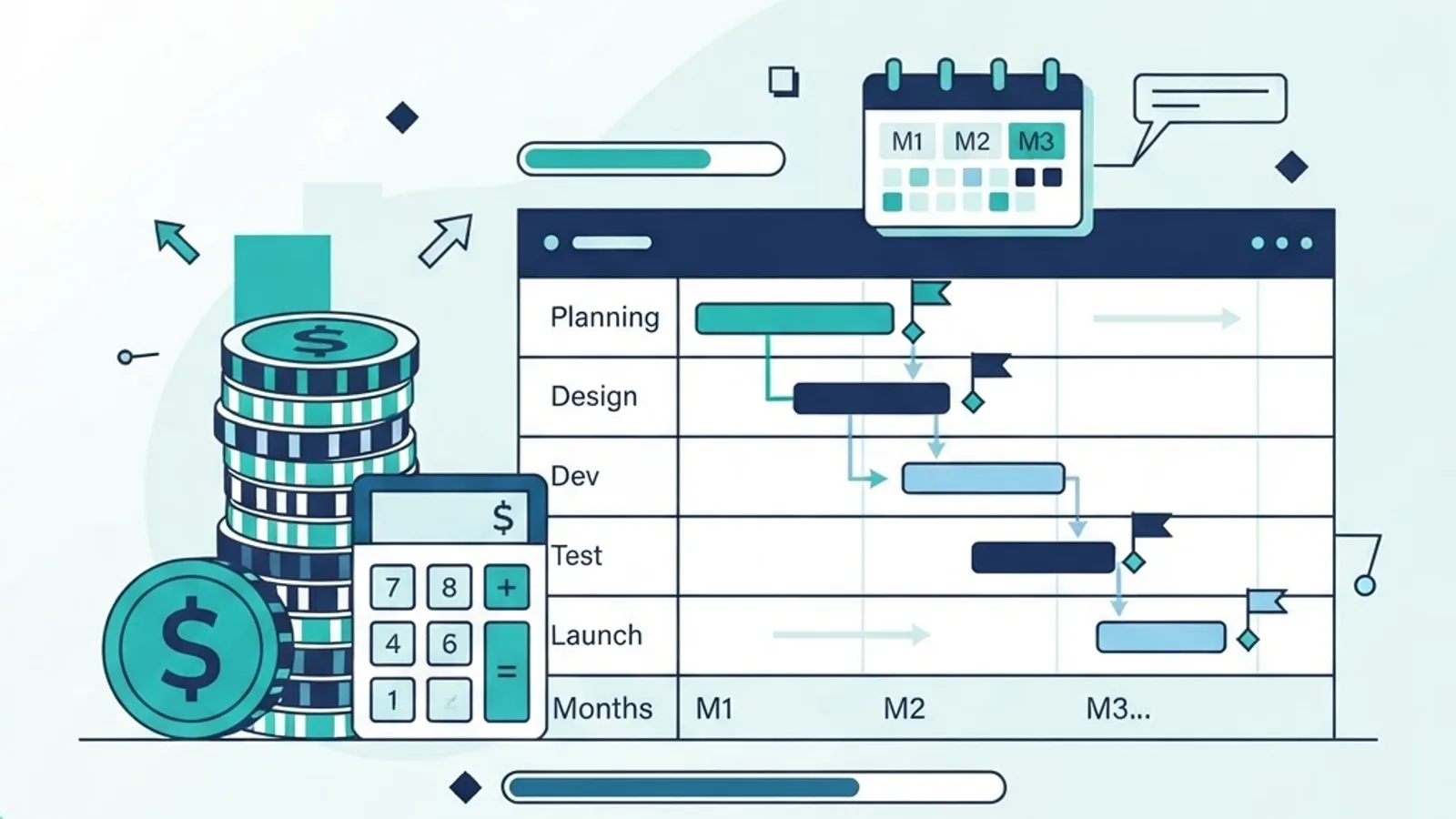
A compliant MVP with self-monitoring, an intervention library, and a crisis pathway typically takes twelve to twenty weeks with a small senior team. Adding clinician accounts, secure messaging, and video pushes that toward twenty-four to thirty-six weeks. Compliance work, penetration testing, and clinical content authoring commonly consume twenty to thirty percent of the budget, and teams that omit them from estimates almost always overrun.
Budget breakdown that holds up in practice:
- Discovery, clinical advisory, and prototyping: 10 to 15 percent.
- Design system and accessible UI: 15 percent.
- Mobile and backend engineering: 45 to 50 percent.
- Security, compliance, and third-party penetration testing: 15 percent.
- QA, clinical content review, and app store submission: 10 percent.
Recurring costs are easy to underestimate. Video minutes, push infrastructure, encrypted backups, and annual security reviews are ongoing line items. Teams that need a tailored rather than templated build should read this piece on customized application software before committing to an off-the-shelf platform.
Launch, Then Measure What Matters
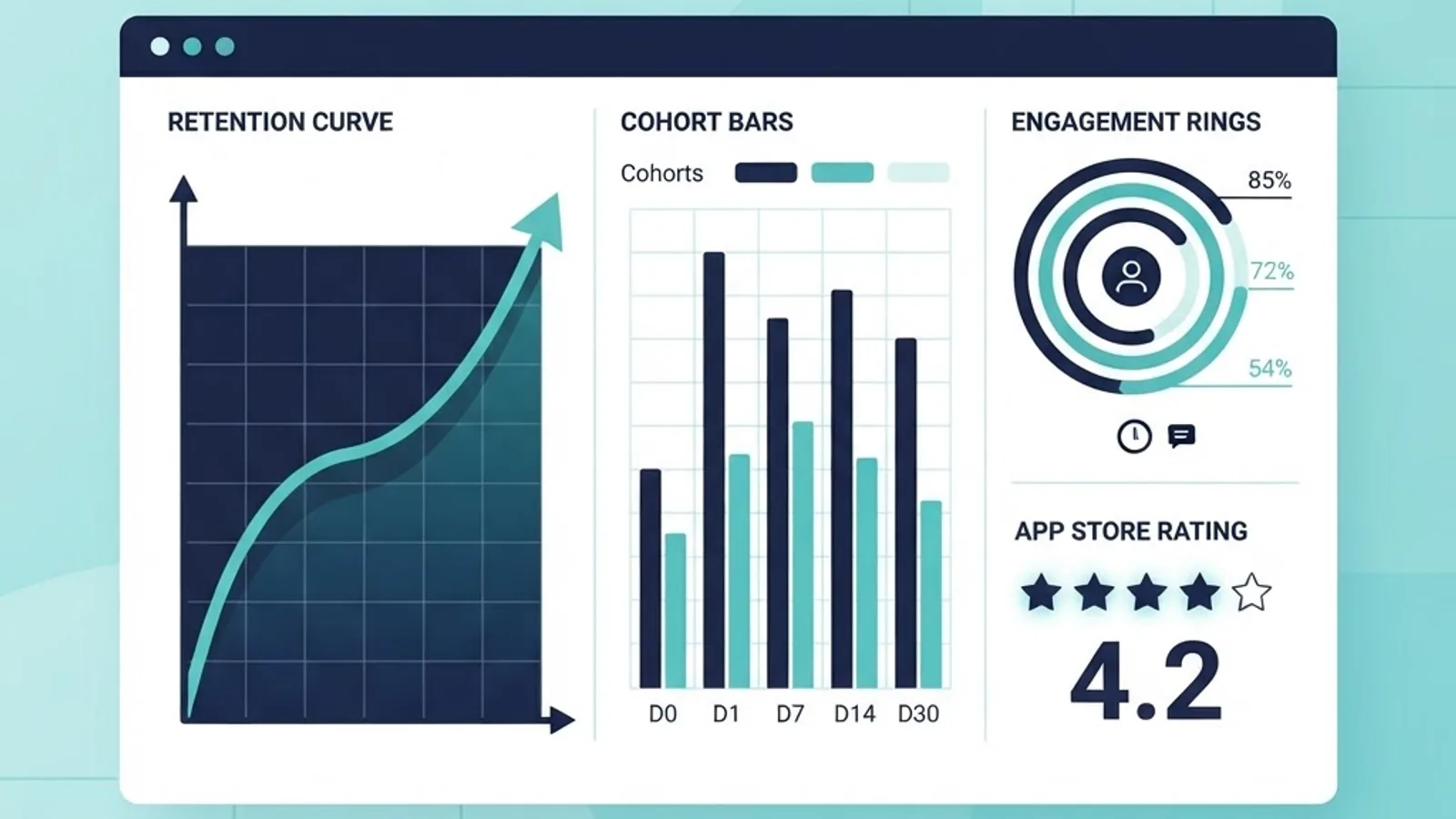
Downloads are a vanity metric in this category. Track day 7, day 30, and day 90 retention, the percentage of users completing at least one intervention per week, and above all your predefined clinical outcome measure. A small cohort study of one hundred users over eight weeks, showing a meaningful reduction in GAD-7 scores, is worth more to payers and employers than a hundred thousand installs.
A disciplined post-launch cadence looks like this: ship a closed beta to fifty recruited users, run weekly qualitative interviews for six weeks, fix the top three drop-off points, then open to public release. Hiring for this work is competitive, and if you are staffing internally the market context in these senior software engineer jobs listings shows what the talent pool currently expects. Teams that would rather not build a health engineering function in-house often partner with a web app development team that has already shipped regulated products.
Key Takeaways
- Mental health app success depends on one narrow clinical use case, not a broad wellness category.
- Median 30 day retention for mobile health apps sits in the single digits to low teens, so retention design is the product.
- HIPAA and GDPR Article 9 obligations must shape architecture from day one, including BAAs with every vendor.
- A compliant MVP realistically takes twelve to twenty weeks, with compliance consuming twenty to thirty percent of budget.
- A persistent, offline-capable crisis pathway is a baseline safety requirement, not a feature.
- Validated outcome measures such as PHQ-9 or GAD-7 change are the metrics payers and employers will ask for.
Frequently Asked Questions (FAQ)
How much does it cost to develop a mental health app?
A compliant MVP with mood tracking, guided exercises, and a crisis pathway generally costs between 60,000 and 150,000 US dollars. Adding clinician accounts, secure messaging, and video therapy raises that to 150,000 to 300,000. Compliance, penetration testing, and clinical content review typically account for twenty to thirty percent of the total.
Does a mental health app need to be HIPAA compliant?
If your app stores or transmits protected health information for a covered entity such as a clinic, insurer, or therapy provider, HIPAA compliance is mandatory. Pure consumer wellness apps with no covered entity relationship may fall outside HIPAA, but still face GDPR, state privacy laws, and app store health data rules.
How long does it take to build a mental health app?
A focused MVP takes twelve to twenty weeks with a small senior team. A platform with clinician dashboards, secure messaging, and video sessions typically needs twenty-four to thirty-six weeks. Regulatory review, clinical content authoring, and third-party security testing should be scheduled in parallel rather than treated as final-stage tasks.
What features should a mental health app include first?
Start with secure consent-driven onboarding, fast daily self-monitoring, a short library of evidence-based exercises, simple progress reflection, and a persistent crisis pathway. Defer AI companions, peer communities, gamified rewards, and wearable integrations until you have proven that people return weekly and complete interventions.
Which technology stack is best for a mental health app?
React Native or Flutter for the mobile client, Node.js with TypeScript or Python with FastAPI for the backend, and managed PostgreSQL with encryption at rest. The decisive criterion is not the framework but whether your hosting and video vendors will sign a Business Associate Agreement and provide audit logging.
How do you keep users engaged in a mental health app?
Make the daily action completable in under thirty seconds, use supportive rather than punitive language, and avoid streak mechanics that shame lapses. Send few, opt-in, content-free notifications. Show users a pattern they could not see themselves, such as a link between sleep and mood, because insight drives return visits better than rewards.