
A practical, experience-based guide to penetration testing web application environments, covering methodology, tools, OWASP risks, costs, and remediation workflows.
Penetration Testing Web Application
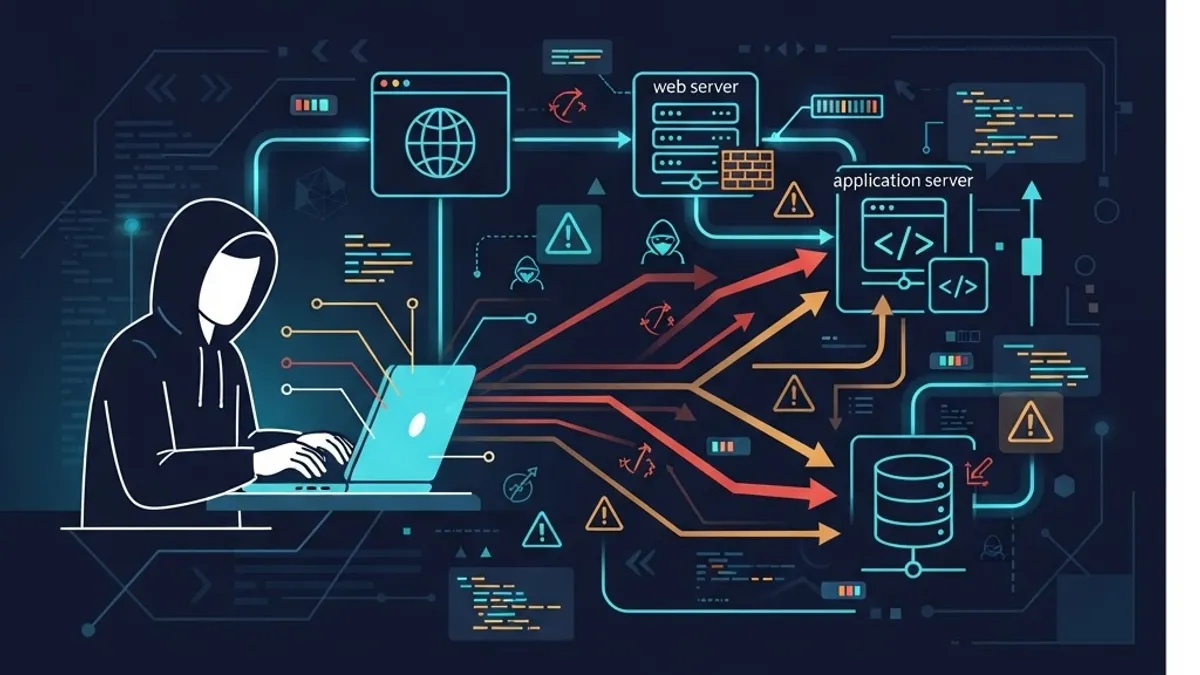
Most teams discover their real security posture at the worst possible moment: when an attacker finds a flaw first. Penetration testing web application systems flips that order. Instead of waiting for an incident, you hire skilled testers to attack your own application under controlled conditions, document exactly what breaks, and fix it before it costs you customers, contracts, or compliance status.
This guide is written from the perspective of teams that ship production web apps and have to defend them. It explains what a web application penetration test actually involves, how it differs from a vulnerability scan, what a credible report looks like, and how to budget for it without wasting money on shallow automated output dressed up as a security audit.
Quick Answer: Penetration testing a web application is a controlled, authorized simulated attack on your app to find exploitable flaws before criminals do. Testers probe authentication, access control, input handling, business logic, and APIs, then deliver a report with proof of exploitation, risk ratings, and prioritized remediation steps.
What Is Web Application Penetration Testing?
Web application penetration testing is an authorized security assessment in which testers attempt to exploit real weaknesses in a running application, rather than only listing theoretical issues. The defining characteristic is proof: a finding is only confirmed when the tester demonstrates impact, such as reading another user's data, escalating from a standard account to an admin role, or extracting database records through an injection flaw.
Three terms are frequently confused, so define them clearly before you buy anything:
- Vulnerability scanning is automated pattern matching against known signatures. Fast, cheap, high false-positive rate.
- Penetration testing is human-led exploitation with scanning as a support step. Slower, expensive, low false-positive rate.
- Red teaming is a goal-driven adversary simulation across people, process, and infrastructure, not just one application.
If a vendor sells you a scan and calls it a penetration test, you are paying senior rates for junior output. The clearest signal is the report: real tests contain reproduction steps, request and response evidence, and business impact written in plain language.
Why Web Applications Are the Primary Attack Surface
Web applications sit directly on the public internet, hold session tokens, and connect to the databases that matter. That combination makes them the highest-value target in most organizations.
Two data points frame the risk with useful context:
- The Verizon Data Breach Investigations Report has repeatedly identified web applications as one of the top attack vectors in confirmed breaches, with stolen credentials and exploited vulnerabilities among the most common entry paths.
- IBM's Cost of a Data Breach research has placed the global average breach cost above USD 4 million, and consistently shows that organizations with tested incident response and earlier detection pay materially less per incident.
The practical takeaway is not the headline number. It is the shape of the curve: cost scales with time to detection and time to containment. A penetration test compresses both by finding the flaw before it becomes an incident, which is why security-mature teams schedule testing around releases rather than around audits.
The Vulnerability Classes That Actually Get Exploited
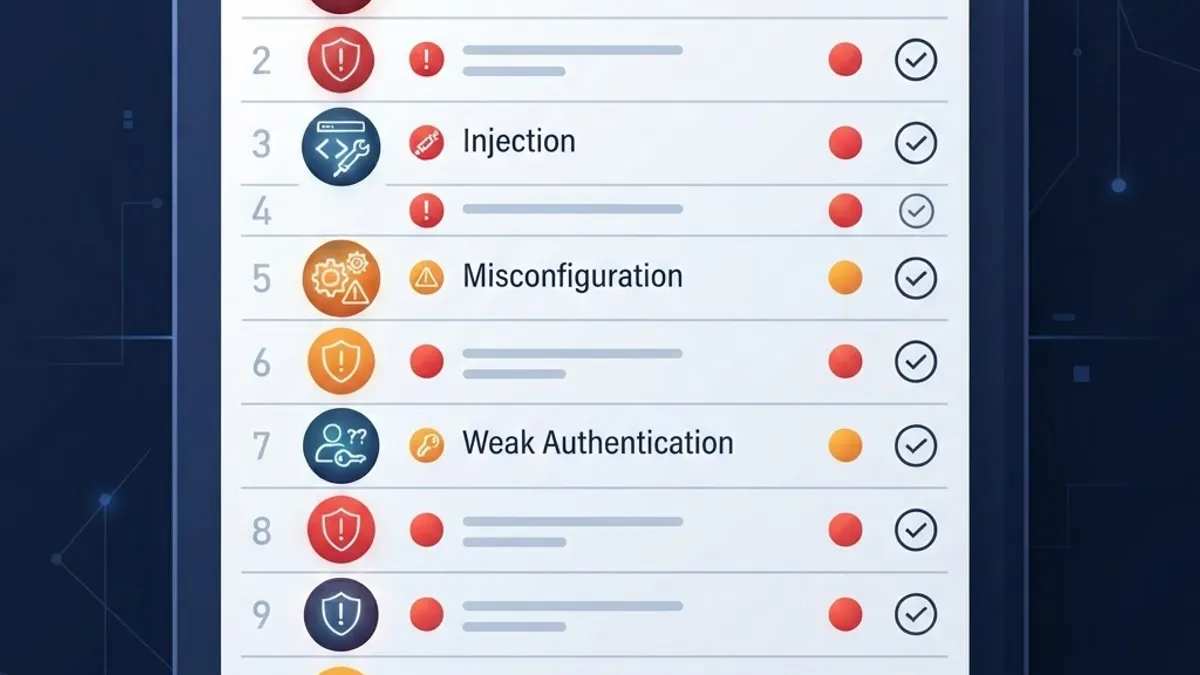
The OWASP Top 10 remains the most useful shared vocabulary for web risk. In practical engagements, a small number of categories generate the majority of high-severity findings:
- Broken access control: changing an ID in a URL or API call and retrieving another tenant's records. The single most common critical finding in multi-tenant SaaS.
- Injection: SQL, NoSQL, command, and template injection where untrusted input reaches an interpreter.
- Authentication and session weaknesses: missing rate limits on login, predictable password reset tokens, sessions that survive logout or password change.
- Security misconfiguration: debug endpoints in production, permissive CORS, verbose stack traces, default credentials on admin panels.
- Server-side request forgery: tricking the server into fetching internal metadata endpoints or private services.
- Business logic flaws: negative quantities, price tampering, coupon stacking, and workflow steps that can be skipped. Scanners never find these because they are not bugs in code syntax, they are bugs in rules.
That last category is where human testing earns its fee. An automated tool cannot know that your checkout should never allow a refund larger than the original charge.
The Penetration Testing Methodology, Step by Step
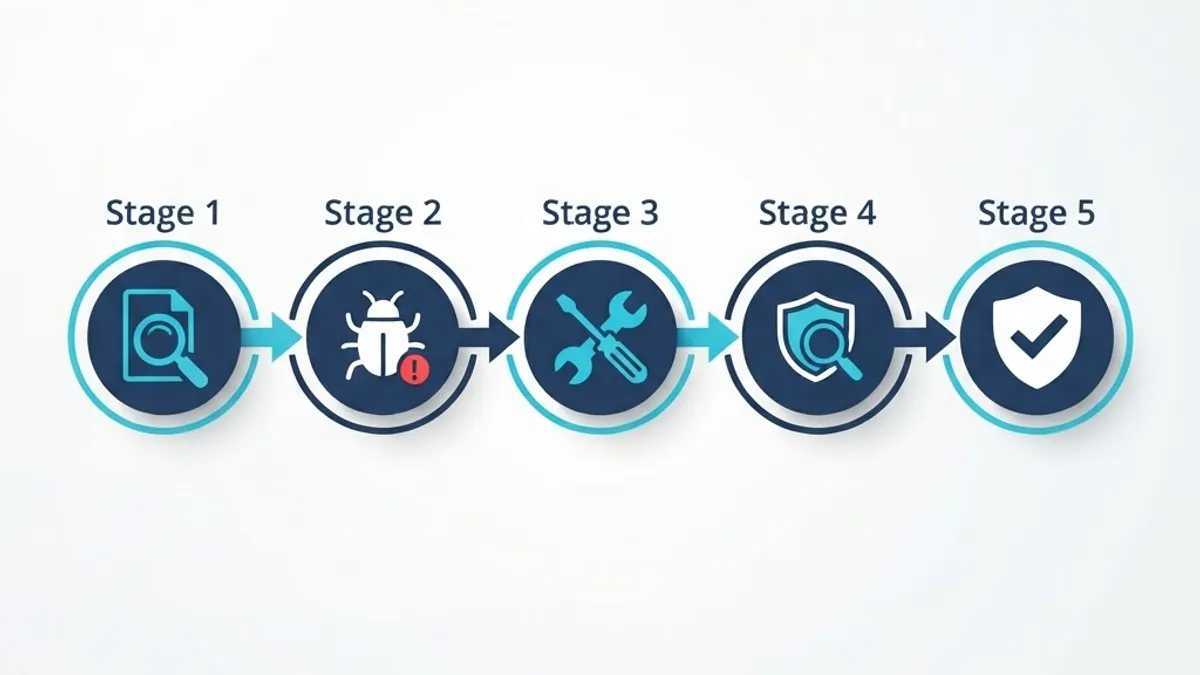
A credible engagement follows a repeatable structure aligned to the OWASP Web Security Testing Guide and PTES. Here is what each phase should produce.
1. Scoping and Authorization
Define the target domains, subdomains, APIs, user roles, and environments in writing. Provide test accounts for every privilege level, because access control cannot be tested with a single role. Get written authorization, confirm hosting provider rules, and agree on rules of engagement for denial of service and social engineering, which are usually excluded.
2. Reconnaissance and Mapping
Testers enumerate endpoints, parameters, technologies, JavaScript bundles, and hidden routes. Modern single page applications leak enormous detail in client bundles, including admin API paths and feature flags. Mapping quality determines everything downstream: an unmapped endpoint is an untested endpoint.
3. Automated Discovery
Scanners run here, not as the deliverable but as a sweep for known issues and low-hanging misconfiguration. The output is triage material, and every result gets manually verified before it reaches a report.
4. Manual Exploitation
This is the core of the engagement. Testers manipulate requests, chain findings, attempt privilege escalation, and probe business logic. A medium-severity information leak plus a weak reset flow can chain into full account takeover, and only a human connects those dots.
5. Post-Exploitation and Impact Analysis
Once access is gained, testers assess how far it reaches: which records, which tenants, which internal services. Impact determines severity, and severity determines your fix order.
6. Reporting and Retesting
The report should include an executive summary, a technical section with reproduction steps, CVSS-style ratings, and concrete remediation guidance. Retesting after fixes is not optional. Roughly speaking, a fix you have not verified is a fix you do not have.
Manual Versus Automated Testing: Where Each Wins

| Factor | Automated Scanning | Manual Penetration Testing |
|---|---|---|
| Speed | Hours | One to three weeks |
| Cost | Low, often subscription based | Higher, project based |
| False positives | High, needs triage | Low, findings are proven |
| Business logic flaws | Rarely detected | Core strength |
| Access control and multi-tenant leaks | Weak coverage | Strong coverage |
| Chained exploits | Not detected | Explicitly tested |
| Best use | Continuous coverage between tests | Pre-release and annual depth testing |
The correct answer for most teams is both. Run automated scanning continuously in CI to catch regressions cheaply, and schedule human-led testing before major releases and at least annually. Teams that build with a security-first engineering process, such as the senior-only delivery model at ZoneTechify, tend to catch entire classes of issues in code review before a tester ever sees them, which lowers the cost of every subsequent engagement.
Tooling: What Professional Testers Actually Use
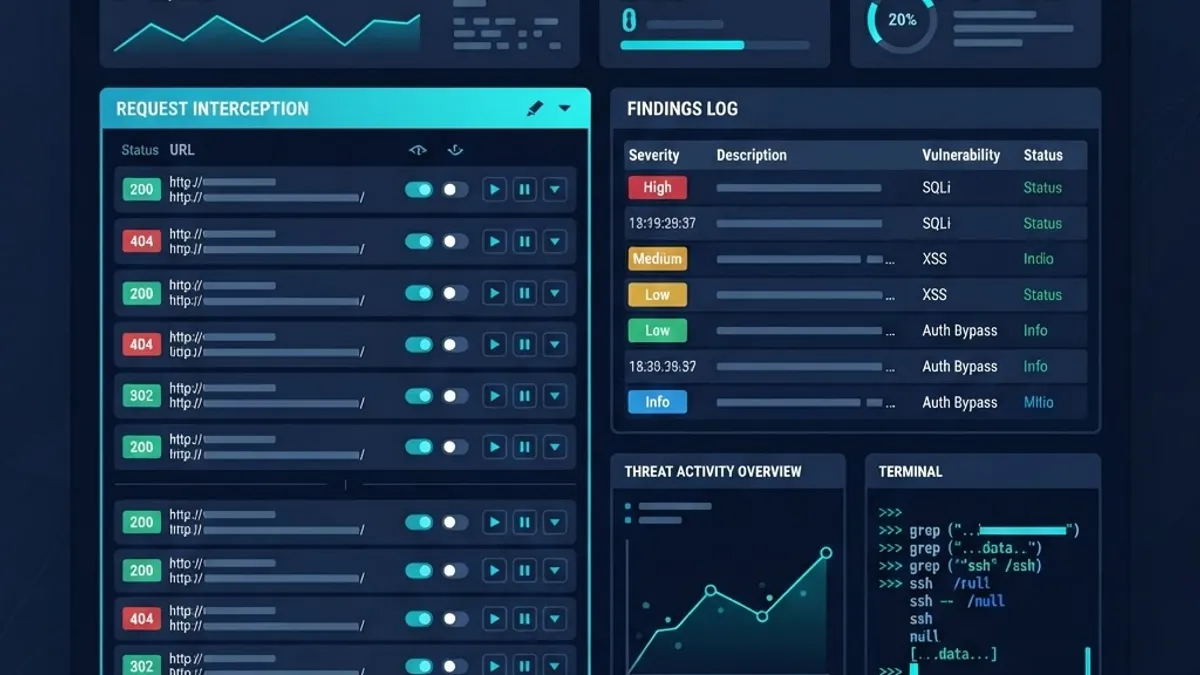
Tools do not make the tester, but the toolkit is fairly consistent across serious engagements:
- Intercepting proxies such as Burp Suite or OWASP ZAP to inspect and modify every request.
- Content discovery tools for finding unlinked directories, backups, and forgotten admin routes.
- Injection and database tooling to confirm and safely demonstrate data access.
- API clients and specification files because OpenAPI or GraphQL introspection dramatically improves coverage.
- Custom scripts for anything the target does uniquely, especially token generation and signature logic.
A short but critical note on API testing: if your app is a React or Next.js frontend against a JSON API, the API is the application. Testing only the browser surface leaves the actual authorization logic unexamined. Any team offering web application penetration testing services should be able to explain their API coverage approach before you sign.
Reporting, Remediation, and Proving the Fix
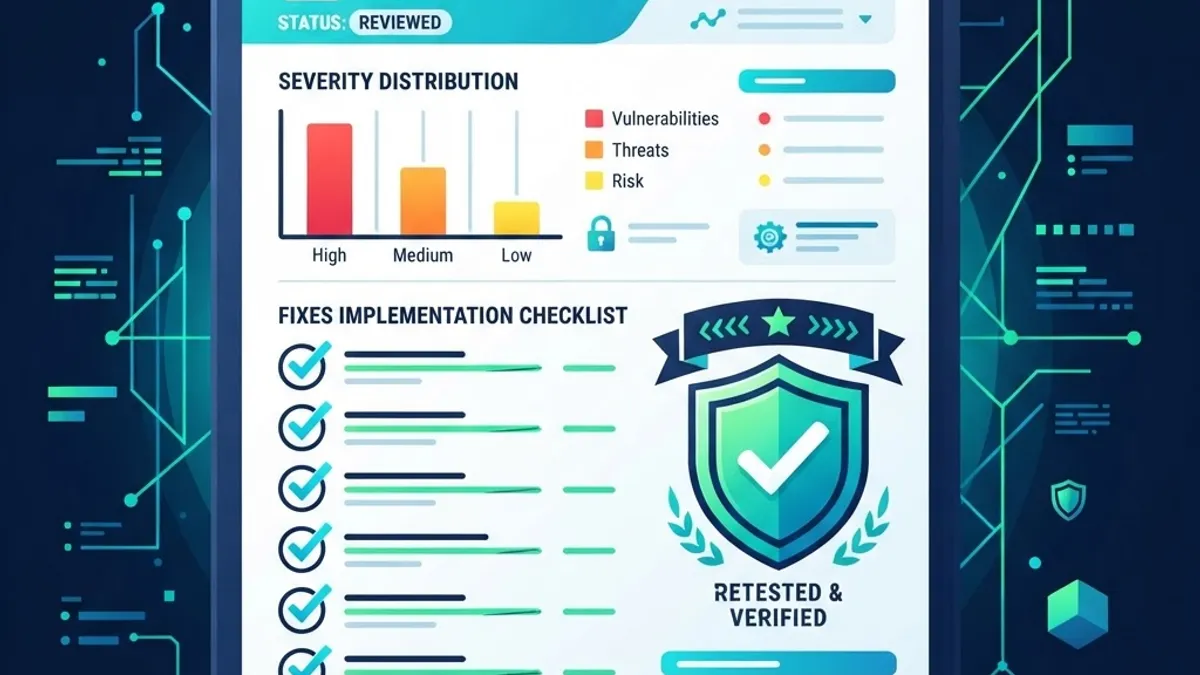
A report is only valuable if it changes what engineers do next week. Judge deliverables against these criteria:
- Reproducibility: can a developer follow the steps and see the issue without asking questions?
- Severity with context: is the rating tied to real business impact, not just a generic score?
- Actionable remediation: does it name the fix, such as server-side authorization checks per record, rather than saying validate input?
- Prioritization: is there a clear order of work for a team with limited capacity?
- Retest evidence: is there written confirmation that each fix holds?
On remediation sequencing, fix by exploitability first, not by count. One broken access control issue exposing all customer records outranks twenty missing security headers, even though the headers make the summary chart look worse.
Also track fixes as engineering work with owners and dates. The most common failure pattern is not weak testing, it is a strong report that becomes a PDF nobody assigns.
Cost, Frequency, and Compliance Expectations
Pricing tracks scope complexity, user role count, and API surface far more than page count. A small marketing site with a single form is a fundamentally different engagement from a multi-tenant platform with role hierarchies and payment flows.
Sensible frequency guidance:
- Annually as a baseline for any production application handling user data.
- Before every major release that changes authentication, authorization, or payment logic.
- After architectural change, such as adding a new tenant model, third-party integration, or public API.
- When compliance requires it, since frameworks including PCI DSS and SOC 2 expect regular testing with documented remediation.
Budget for retesting in the original scope. Vendors that quote testing without retesting are quoting half a service. If you are comparing providers, review their published methodology and case detail, for example the engineering breakdowns from WebPeak Digital, and ask directly how many hours are manual versus automated.
For teams still deciding what to build and secure, reviewing practical web app development patterns and hardened full stack development feature design early is cheaper than retrofitting security after launch.
Key Takeaways
- Penetration testing a web application is human-led, authorized exploitation that proves impact, unlike scanning which only flags patterns.
- Broken access control and business logic flaws are the highest-value findings and are almost never caught by automated tools.
- The methodology has six phases: scoping, reconnaissance, automated discovery, manual exploitation, impact analysis, and reporting with retesting.
- IBM research places average breach cost above USD 4 million, and cost correlates strongly with time to detection and containment.
- Test annually at minimum, plus before any release that changes authentication, authorization, or payments.
- A report without reproduction steps, severity context, and verified retesting is not a completed engagement.
Frequently Asked Questions (FAQ)
How long does a web application penetration test take?
Most web application tests take one to three weeks. A small application with few roles can finish in five to seven days, while a multi-tenant platform with extensive APIs and complex permissions often needs two to three weeks, plus additional time for reporting and post-fix retesting.
Is penetration testing the same as a vulnerability scan?
No. A vulnerability scan is automated and matches known signatures, producing many unverified results. A penetration test uses skilled humans who exploit issues, chain findings together, and confirm real business impact. Scans support penetration tests but cannot replace them, especially for access control and logic flaws.
Can penetration testing break my production application?
Professional testing is designed to avoid outages, and destructive techniques like denial of service are normally excluded from scope. Even so, test against a staging environment that mirrors production where possible. Agree on rules of engagement, notification contacts, and testing windows before work begins.
How much does web application penetration testing cost?
Cost depends on scope: number of user roles, API endpoints, authentication complexity, and whether retesting is included. Simple applications sit at the low end, while multi-tenant platforms with payment flows cost substantially more. Always confirm how many hours are manual testing versus automated scanning.
How often should I run a penetration test?
Run a full test at least once a year, and additionally before any release that changes authentication, authorization, payment handling, or tenant architecture. Compliance frameworks such as PCI DSS and SOC 2 expect regular testing with documented remediation, so align your schedule to audit cycles too.
What should I prepare before the test starts?
Provide written authorization, target URLs, test accounts for every privilege level, API documentation or OpenAPI specifications, and a technical contact for questions. Missing multi-role test accounts is the most common cause of incomplete access control coverage, which is exactly where critical findings usually hide.