
A practical look at how clinical AI and human judgment combine into high-performance medicine, with real accuracy data, workflow gains, governance rules, and adoption steps.
High-Performance Medicine: How AI and Human Expertise Are Transforming Healthcare
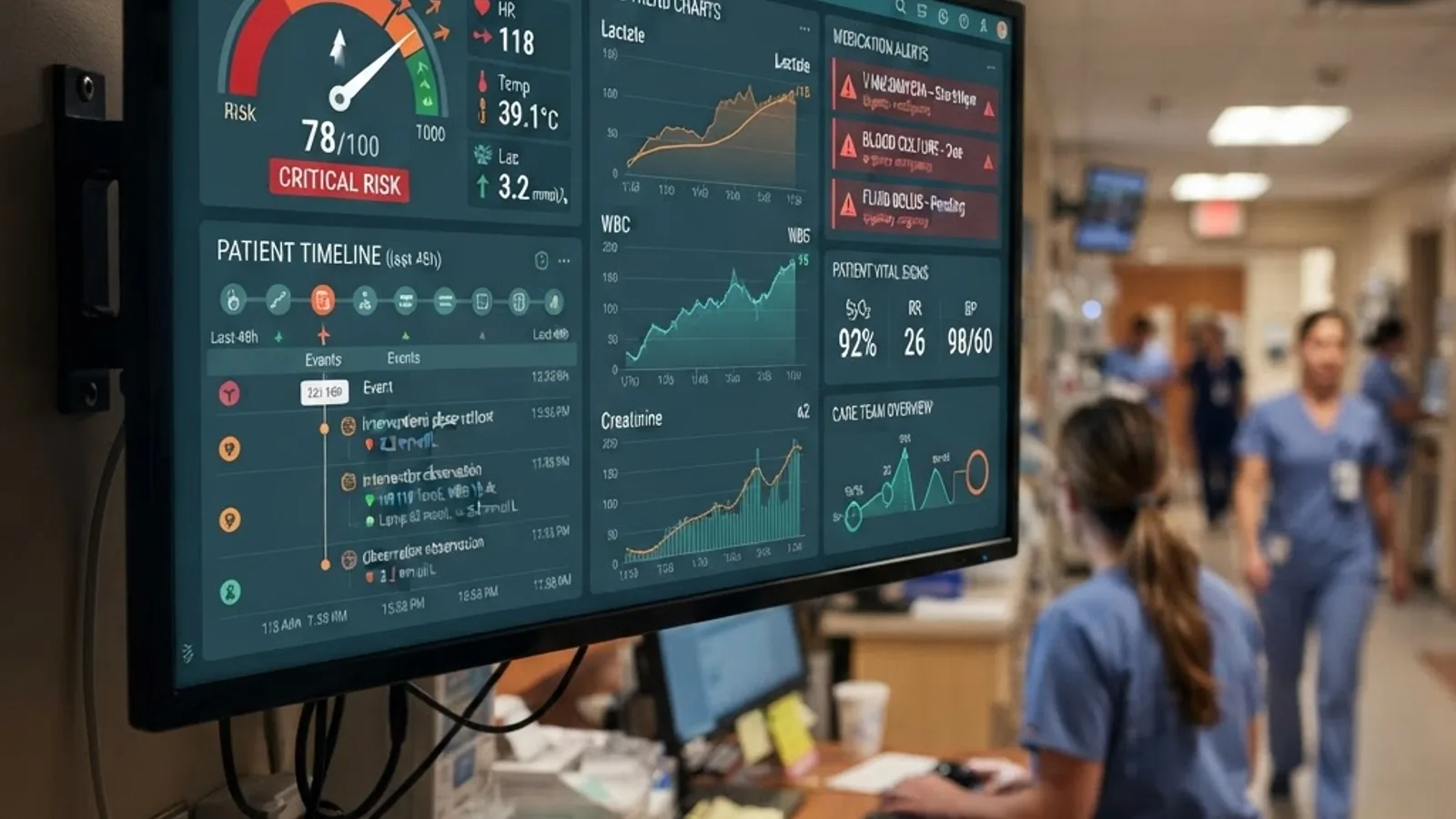
Healthcare has spent a decade digitizing records and is now spending this decade learning what to do with them. High-performance medicine is the answer taking shape: a model of care where machine pattern recognition handles scale and repetition, while clinicians handle judgment, context, and accountability. The distinction matters because the failures of medical AI have rarely been technical. They have been organizational, and they happen when a tool is dropped into a workflow nobody redesigned.
This article explains where the AI and human combination actually outperforms either alone, what the measured results look like, and how health systems can adopt it without creating new risk.
Quick Answer: High-performance medicine pairs AI pattern recognition with human clinical judgment. AI screens images, predicts deterioration, and automates documentation at scale, while clinicians validate findings, weigh context, and own decisions. Combined reading typically beats either alone, cutting missed diagnoses and administrative burden while keeping accountability human.
What High-Performance Medicine Actually Means
High-performance medicine is a care delivery model in which artificial intelligence handles high-volume, pattern-heavy tasks while human clinicians retain interpretive and decision-making authority. The term was popularized by cardiologist and researcher Eric Topol, whose 2019 review in Nature Medicine argued that the greatest near-term value of medical AI was not replacing physicians but restoring their time and attention.
The definition has three working parts:
- Machine scale. Models review every image, every lab trend, and every note without fatigue or queue bias.
- Human context. Clinicians integrate patient history, comorbidities, goals of care, and social circumstances that no model reliably sees.
- Shared accountability with a human endpoint. The AI output is an input, never the final signature.
When any one part is missing, performance drops. AI without human review produces confident errors. Humans without AI support miss findings that appear in the fifth hour of a reading shift.
The Evidence: Where Combined Performance Beats Solo Performance
The strongest case for this model comes from breast cancer screening. The Swedish MASAI randomized trial, involving more than 100,000 women and published in The Lancet Digital Health and Lancet Oncology, found that AI-supported mammography screening detected roughly 29 percent more cancers than standard double reading by two radiologists, while reducing radiologist screen-reading workload by about 44 percent. Recall rates and false positives did not meaningfully increase.
Two details in that result deserve attention. First, the gain came from AI triage plus human reading, not AI alone. Second, the workload reduction is what makes the accuracy gain sustainable, because a screening program that improves detection but burns out its readers does not survive.
A second data point comes from the administrative side. Studies of ambient AI documentation tools deployed across large United States health systems, including published evaluations from The Permanente Medical Group covering thousands of physicians, reported meaningful reductions in after-hours charting time and lower self-reported burnout scores. Given that physician burnout has hovered between 45 and 63 percent in American Medical Association survey cycles since 2020, documentation relief is not a convenience feature. It is a retention strategy.

Diagnostics: Pattern Recognition at a Scale Humans Cannot Match
AI performs best in diagnostics when the task is narrow, the input is standardized, and the ground truth is well labeled. That describes a surprising amount of clinical work.
Proven high-value applications include:
- Diabetic retinopathy screening, where autonomous systems have received regulatory clearance for point-of-care use in primary care settings
- Mammography triage, sorting studies into low-suspicion and high-suspicion queues so senior readers spend time where it matters
- Lung nodule detection on chest CT, where volumetric measurement is more consistent by machine than by eye
- ECG interpretation, including detection of reduced ejection fraction from a normal-looking tracing, a signal humans cannot see at all
- Sepsis and deterioration prediction, using vitals and lab trajectories hours before a clinician would be paged
The last two are the most interesting because they are not faster versions of human work. They are new capabilities. An ECG model inferring structural heart disease from a twelve-lead trace is doing something no cardiologist claims to do unaided.
Where AI still underperforms is the undifferentiated patient. A model trained to answer one question cannot triage a person who arrives with fatigue, weight loss, and a complicated medication list. That remains human work.

Human vs AI vs Combined: A Realistic Comparison
| Capability | Human Clinician Alone | AI System Alone | AI Plus Human |
|---|---|---|---|
| Consistency across a long shift | Declines with fatigue | Constant | Constant with expert override |
| Rare or atypical presentations | Strong reasoning | Weak outside training data | Strong |
| Volume throughput | Limited by hours | Very high | High with triage |
| Contextual judgment and goals of care | Strong | Absent | Strong |
| Explaining a decision to a patient | Strong | Poor | Strong |
| Bias risk | Individual and variable | Systematic and scalable | Detectable through review |
| Legal and ethical accountability | Clear | Unresolved | Clear, held by clinician |
The most important row is the last one. Accountability is why high-performance medicine keeps a human endpoint even when a model outperforms on a benchmark. A benchmark does not get deposed, apologize to a family, or adjust a plan when a patient declines treatment.
Treatment and Procedures: Precision With a Surgeon in Command
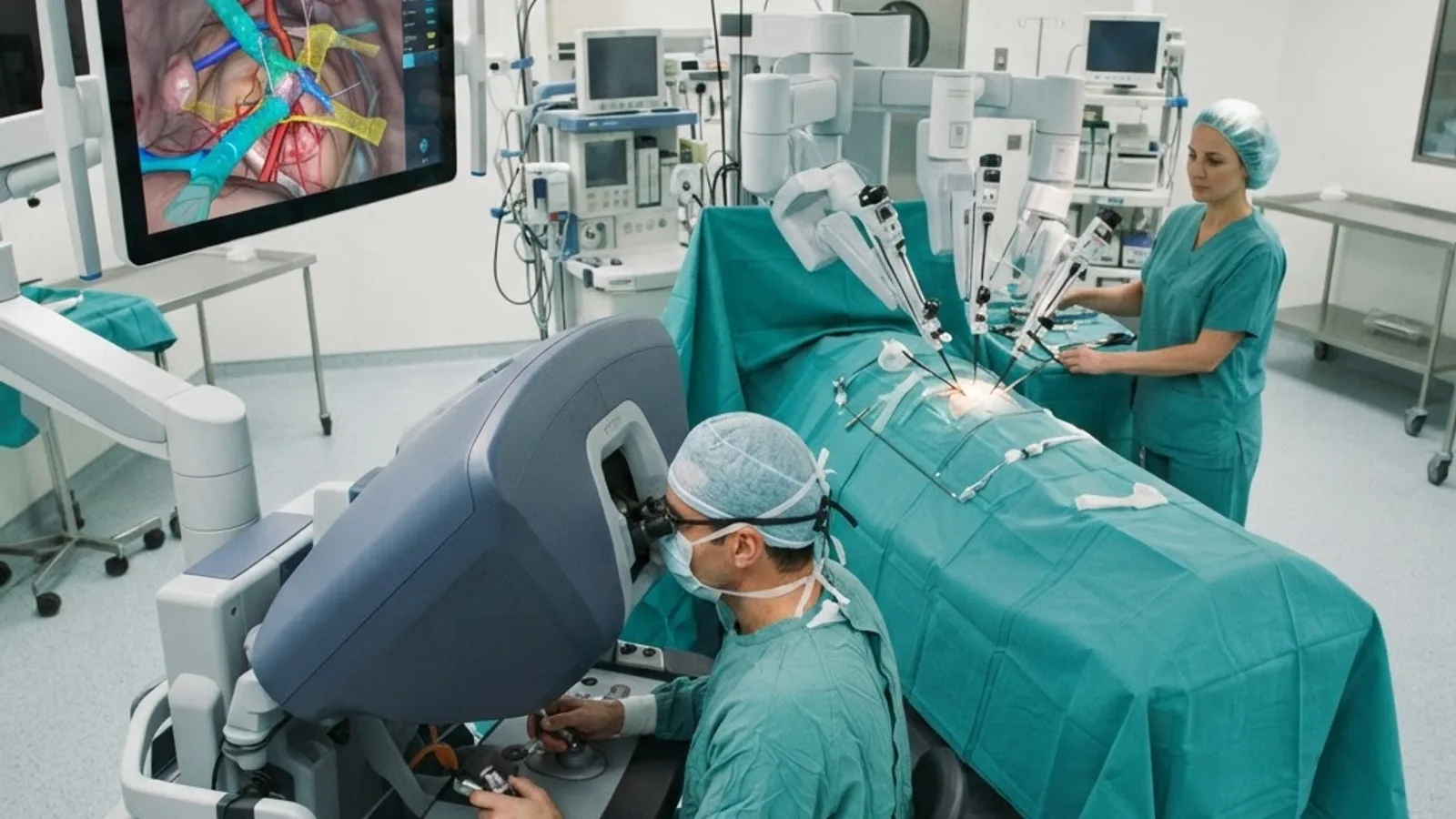
In procedural medicine, AI shows up as guidance rather than autonomy. Image-guided systems help delineate tumor margins, plan radiation dose distribution, and flag anatomical structures during endoscopy. Computer-aided detection in colonoscopy has been shown across multiple randomized trials to increase adenoma detection rates, which is the strongest available proxy for preventing colorectal cancer.
What these tools share is a design principle worth copying: the system narrows attention rather than making choices. It says look here. The clinician decides what that means.
The Operational Layer Most People Ignore
The least glamorous AI in healthcare delivers some of the most reliable returns, because administrative waste is enormous. Analyses published in JAMA have estimated that administrative complexity accounts for roughly 15 to 30 percent of United States healthcare spending, a larger share than any clinical inefficiency.
High-value operational applications include:
- Ambient clinical documentation that drafts the note from the visit conversation for clinician editing
- Prior authorization and coding support that assembles required documentation instead of leaving it to staff
- Capacity and staffing forecasts that predict admissions and discharge timing days ahead
- No-show prediction feeding smarter overbooking and targeted outreach
- Inbox triage that routes patient messages and drafts routine replies
These systems are easier to govern than diagnostic AI because errors are visible, reversible, and low harm. That makes them the correct place to start for most organizations building institutional confidence and internal skills before touching clinical decisions.

Governance: The Part That Determines Whether Any of This Works
Most clinical AI failures trace back to governance gaps, not model quality. A model validated in one population and deployed in another will drift, and nobody notices unless someone is measuring.
A workable governance framework covers five areas:
- Local validation before go-live. Test on your own population, not the vendor's published metrics.
- Continuous monitoring for drift. Track performance quarterly by age, sex, race, insurance status, and site.
- Documented human override. Clinicians must be able to disagree without friction, and overrides must be logged and reviewed.
- Data minimization and access control. Only the fields the model needs, with audit trails on every access.
- Transparency to patients. Disclose when AI contributed to a screening or triage decision.
Bias deserves specific attention. Research published in Science in 2019 showed that a widely used commercial risk algorithm affecting millions of patients systematically underestimated illness severity in Black patients, because it used healthcare spending as a proxy for health need. Nothing about the model was broken. The target variable was wrong. That is a design review problem, and it is caught by people, not code.
Building these systems well requires teams comfortable with both clinical constraint and modern engineering practice, which is why many providers partner with specialists in AI automation services rather than assembling capability from scratch. If you are evaluating implementation partners, the ZoneTechify Team publishes practical guidance on building production-grade AI systems in regulated environments.

A Practical Adoption Sequence
For health systems moving from pilot to practice, sequence beats ambition:
- Start administrative. Documentation, coding, and scheduling. Low harm, measurable return, builds trust.
- Move to triage, not diagnosis. Let AI prioritize the queue before it interprets findings.
- Add clinical decision support with clear escalation paths. Deterioration alerts only work if someone owns the response.
- Instrument everything. Baseline metrics before deployment, or improvement claims are unfalsifiable.
- Retrain the humans. Clinicians need to know how the model fails, not just how to click accept.
Step five is the one most often skipped. Automation bias is real: reviewers agree with a confident wrong suggestion more often than they would have erred alone. Teaching failure modes is the countermeasure.

Key Takeaways
- High-performance medicine means AI handles scale and pattern detection while clinicians retain judgment and accountability.
- The MASAI trial found AI-supported mammography screening detected about 29 percent more cancers while cutting reading workload roughly 44 percent.
- Administrative complexity consumes an estimated 15 to 30 percent of United States healthcare spending, making operational AI a high-return starting point.
- A 2019 Science study showed a major commercial risk algorithm underestimated illness in Black patients due to a flawed proxy variable, proving design review matters more than model accuracy.
- Physician burnout has ranged between 45 and 63 percent in AMA surveys since 2020, and documentation AI has measurably reduced after-hours charting.
- Governance requires local validation, drift monitoring, logged human override, data minimization, and patient transparency.
- Automation bias is the main clinical risk of well-performing AI, and training on failure modes is the mitigation.
Frequently Asked Questions (FAQ)
Will AI replace doctors?
No. Current medical AI performs narrow tasks like image screening and risk prediction, and it cannot manage undifferentiated patients, weigh goals of care, or hold legal accountability. The realistic outcome is redistribution of work, where AI absorbs repetitive volume and clinicians gain time for judgment and patient conversation.
Is AI more accurate than a human radiologist?
On specific narrow tasks, some models match or exceed average human performance. In practice, the combination performs best. Randomized screening trials show AI plus radiologist reading detects more cancers than double human reading alone, because the two make different kinds of errors that offset each other.
What is the biggest risk of using AI in healthcare?
Automation bias is the most underestimated risk. Clinicians tend to agree with confident AI suggestions, including wrong ones. Close behind are dataset bias producing worse care for underrepresented groups, and performance drift when a model meets a population different from its training data without ongoing monitoring.
Where should a hospital start with clinical AI?
Start with administrative applications like ambient documentation, coding support, and capacity forecasting. Errors there are visible, reversible, and low harm, so teams build governance skill and staff trust before touching diagnostic or treatment decisions. Measure baseline metrics first or you cannot prove improvement later.
How is patient data protected when AI is used?
Through data minimization, sending only fields the model requires, plus encryption, role-based access, and audit logging of every record access. Many systems deploy models inside their own environment rather than sending records externally, and disclose AI involvement to patients as part of informed consent.
Does AI in healthcare actually save money?
Operational AI shows the clearest financial return, mainly through reduced documentation time, fewer denied claims, and better capacity use. Diagnostic AI returns are harder to quantify because earlier detection shifts costs across years. Expect measurable savings in administration and long-term clinical value in outcomes.
The Bottom Line
High-performance medicine is not a bet on machines outperforming physicians. It is a bet that most clinical error and burnout comes from volume, fatigue, and paperwork, and that those are exactly the problems software solves well. The systems delivering results today share the same shape: narrow AI tasks, redesigned workflows, measured outcomes, and a clinician who signs the decision. Organizations that treat AI as a governance and workflow project rather than a purchasing decision are the ones seeing gains.