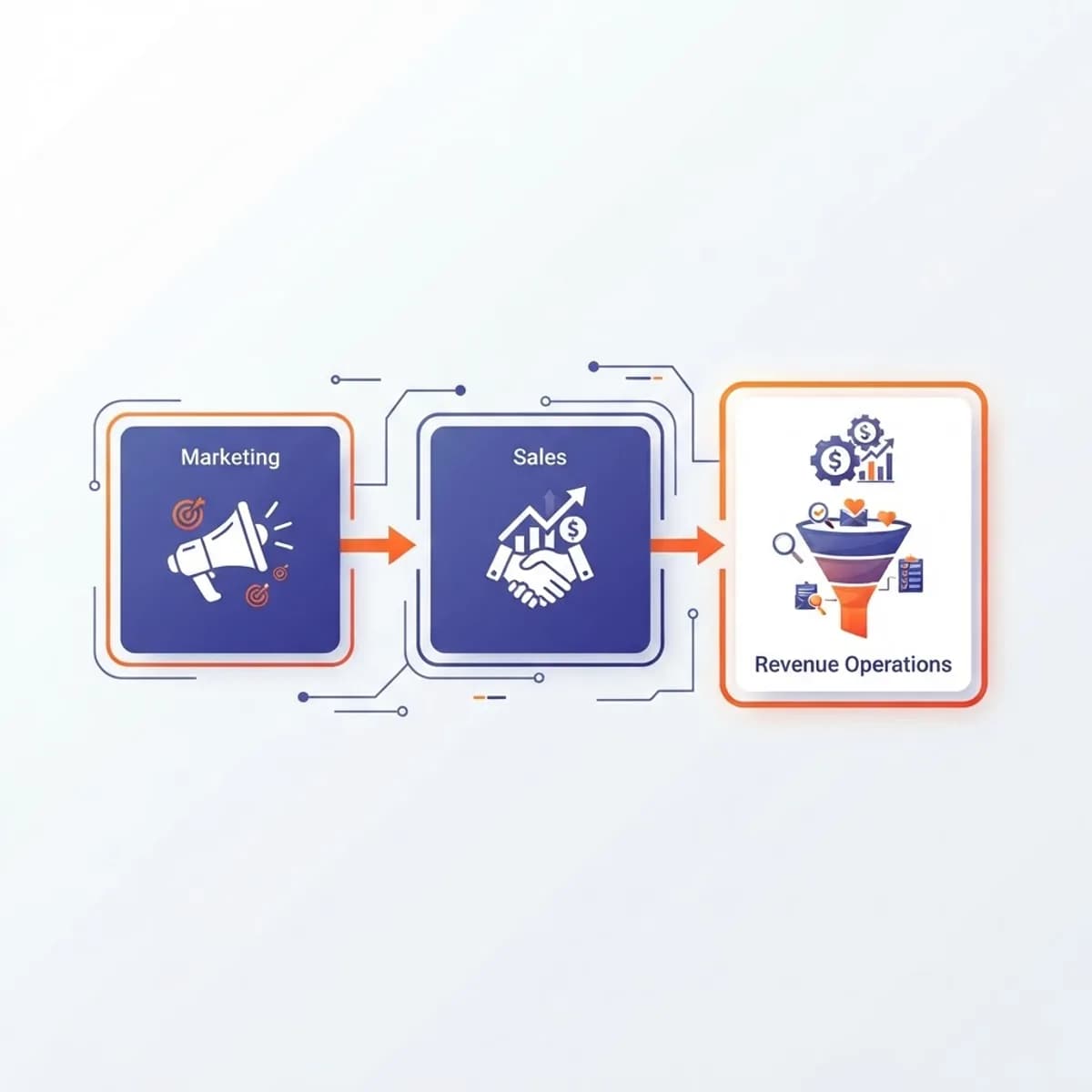
Which department a demand generation and digital marketing leader belongs to, how reporting lines differ by company model, and how to structure the function for pipeline accountability.
Department for Demand Generation and Digital Marketing Leader
When a company posts a role for a demand generation and digital marketing leader, one of the first practical questions is simple: which department does this person actually belong to? The answer changes the budget they control, the metrics they are judged on, and whether they succeed or quietly burn out in eighteen months.
This article explains where the function sits in different organisational models, the trade-offs of each reporting line, and how to design the department so digital marketing and demand generation reinforce each other instead of competing for the same budget.
Quick Answer: A demand generation and digital marketing leader almost always sits in the Marketing department, usually reporting to the CMO or VP of Marketing. In revenue-led B2B companies the role increasingly reports into Revenue Operations or directly to the Chief Revenue Officer, because it is accountable for pipeline rather than brand.
The Default Answer: Marketing
In the overwhelming majority of organisations, demand generation is a sub-function of Marketing. It sits alongside brand, product marketing, content, and communications, and it is the part of marketing that carries a number.
The logic is straightforward. Demand generation uses marketing channels, marketing budget, and marketing technology. Separating it from the rest of marketing creates duplicate agency relationships, duplicate analytics, and contradictory messaging in the market.
Within Marketing, the function is usually structured in one of three ways:
- Channel-based. Separate owners for paid media, SEO, email, and web, all reporting to the demand generation leader.
- Segment-based. Owners aligned to customer segments such as enterprise, mid-market, and self-serve, each running a full channel mix.
- Funnel-based. Owners aligned to acquisition, conversion, and expansion stages.
Channel-based structures are easiest to hire for and easiest to measure. Segment-based structures produce better messaging but need a larger team. Funnel-based structures work best in product-led companies where the product itself is a distribution channel.
When the Role Belongs to Revenue Operations
A growing number of B2B organisations place demand generation inside a revenue function rather than a traditional marketing department. This is a deliberate response to a measurement problem: when marketing reports pipeline and sales reports closed revenue using different definitions, leadership cannot trust either number.
Under a revenue-led structure, the demand generation and digital marketing leader reports to the CRO or to a VP of Revenue Operations. Marketing retains brand and content, while pipeline generation moves closer to sales.
This model has two clear advantages. Lead definitions are agreed once, and handoff friction between marketing and sales drops sharply. It also has a real cost. Short-term pipeline pressure can crowd out brand investment, and digital marketing work with delayed payback, particularly SEO and content, tends to get defunded first.
Department Comparison
| Reporting Department | Best For | Primary Metric | Main Risk |
|---|---|---|---|
| Marketing (CMO) | Companies balancing brand and pipeline | Marketing sourced pipeline | Pipeline accountability can stay vague |
| Revenue Operations | B2B sales-led organisations | Qualified opportunities and win rate | Long-term brand investment gets cut |
| Growth (product-led) | Self-serve software and apps | Activated users and expansion revenue | Weak fit for enterprise sales motions |
| Sales | Very small teams or early startups | Meetings booked | Digital marketing becomes short-term only |
| Commercial or general management | Non-tech mid-market firms | Revenue contribution | Leader lacks specialist support |
How to Decide Where the Role Should Sit
Use three diagnostic questions rather than copying another company structure.
Question one: what is the dominant buying motion? If buyers self-serve and convert in the product, the role belongs in a Growth department. If buyers require a sales conversation, the role belongs in Marketing or Revenue Operations.
Question two: where does measurement break today? If the argument inside the company is about lead quality, moving demand generation closer to sales usually resolves it. If the argument is about brand consistency, keep it inside Marketing.
Question three: who owns the website? This is the most underrated question. The website is the single asset shared by every digital channel. Whichever department owns web publishing, page speed, and conversion testing has the real leverage over digital marketing outcomes.
That last point is where many structures quietly fail. If the demand generation leader has to raise a ticket with an unrelated engineering team every time a landing page needs to change, campaign velocity collapses. Companies solve this either by embedding a developer in marketing or by working with a dedicated web partner. Teams that pair an internal leader with an experienced build partner like zonetechify.com generally ship landing pages in days rather than sprints.
The Interface Points That Must Be Defined
Wherever the department sits, four interfaces determine whether the function works. Define each in writing before the leader starts.
- Marketing to Sales. A single written definition of a qualified lead, an agreed response time, and an agreed recycling rule for leads sales rejects.
- Marketing to Finance. How spend is approved, how it is reforecast mid-quarter, and what evidence is required to increase budget.
- Marketing to Product. Who owns in-product messaging, trial flows, and onboarding emails.
- Marketing to Engineering. Who can publish to the website, who owns tracking implementation, and what the turnaround commitment is.
The fourth interface is the one most commonly left undefined, and it is the one that most often prevents a capable leader from hitting targets.
Team Composition by Company Size
The department structure should scale with revenue, not with ambition. A practical progression looks like this.
- Under fifty employees. One demand generation leader plus external specialists. The leader personally runs campaigns and uses a performance marketing partner for paid media and production work.
- Fifty to two hundred employees. Leader plus a paid media manager, a lifecycle or email manager, and a marketing operations analyst.
- Two hundred to one thousand employees. Add SEO and content specialists, a web conversion owner, and a dedicated analytics resource.
- Above one thousand employees. Regional pods with local channel owners, supported by a central operations and analytics team.
Hiring marketing operations early is the highest-leverage decision in this sequence. Without clean data, every downstream reporting claim the department makes is contestable.
Why Budget Location Matters More Than Reporting Line
A leader can report to Marketing but have their budget controlled by Sales, or report to Revenue Operations while Marketing controls the agency contracts. Both situations create paralysis.
The governing principle is simple: accountability and budget must live in the same place. If the demand generation and digital marketing leader is accountable for pipeline, they need discretion to move spend between channels within an approved envelope, without a separate approval chain for each reallocation.
Gartner spend research has consistently shown marketing budgets holding in the high single digits as a proportion of company revenue in recent years, which means reallocation speed now matters more than budget size. A leader who can shift ten percent of spend within a week outperforms one with a larger budget locked into annual commitments.
Common Structural Mistakes
- Splitting paid and organic across departments. Both compete for the same search results page and should be planned together.
- Giving the leader a pipeline target but no control over the website. Conversion rate is usually the fastest lever available, and it lives on the site.
- Creating a demand generation department with no analyst. The leader ends up building reports instead of building programmes.
- Reporting into a sales leader with a monthly quota. Anything with a payback period longer than the quota cycle gets cancelled.
- Treating brand and demand as rivals. Branded search volume is a demand generation asset created by brand marketing.
Key Takeaways
- The default and most common department for a demand generation and digital marketing leader is Marketing, reporting to the CMO or VP of Marketing.
- Revenue-led B2B companies increasingly place the role under Revenue Operations or the CRO to align lead definitions with sales.
- Product-led companies place the role in a Growth department focused on activation and expansion rather than lead volume.
- Accountability and budget must sit in the same department, otherwise the leader cannot influence the number they are judged on.
- Website ownership is the most overlooked structural decision and directly limits campaign velocity.
Frequently Asked Questions (FAQ)
Is demand generation part of marketing or sales?
Demand generation is part of marketing in most companies, because it uses marketing budget, channels, and technology. Some B2B organisations move it under a revenue function to align lead definitions with sales, but the day-to-day work remains marketing work regardless of reporting line.
Who should a demand generation leader report to?
In most companies, the CMO or VP of Marketing. In sales-led B2B organisations with pipeline disputes, reporting to the Chief Revenue Officer resolves measurement conflicts faster. Avoid reporting to a quota-carrying sales manager, because short-term targets tend to defund longer-payback digital marketing work.
Should digital marketing and demand generation be one department?
Yes in most mid-market companies. Digital marketing supplies the channels and demand generation supplies the pipeline accountability, so splitting them creates duplicate budgets and conflicting reporting. Larger enterprises may separate them once each function exceeds roughly ten people.
What is the difference between demand generation and growth marketing?
Demand generation focuses on creating and capturing qualified buying interest for a sales motion. Growth marketing covers the whole user lifecycle including activation, retention, and expansion, and is more common in product-led companies where the product itself drives acquisition and upgrades.
Does a demand generation department need its own analyst?
Yes, as soon as the team reaches roughly four people or spend becomes material. Without a dedicated analyst, the leader spends significant time assembling reports instead of improving programmes, and attribution claims become difficult to defend in budget conversations with finance.
Final Thoughts
There is no universally correct department for a demand generation and digital marketing leader, but there is a correct test: place the role wherever budget, website control, and pipeline accountability can sit together. Get that alignment right and the reporting line becomes a detail rather than a constraint.