A clear, expert breakdown of how artificial intelligence powers the CEREC Primescan intraoral scanner to deliver faster, more accurate same-day dental restorations.
CEREC Primescan Artificial Intelligence
Digital dentistry has moved from novelty to clinical standard, and few tools capture that shift as clearly as the CEREC Primescan. Built by Dentsply Sirona, Primescan is an intraoral scanner that records a patient's teeth as a high-resolution 3D model. Its real advantage, however, is the artificial intelligence working behind the lens, turning millions of raw optical points into a restoration-ready model in seconds.
As a team that builds AI-powered software and evaluates emerging technology daily, we have watched dental AI grow from marketing buzzword into measurable clinical value. This guide explains, in plain language, exactly how AI drives Primescan, what it means for accuracy and speed, and where the technology genuinely helps versus where human expertise still leads.
Quick Answer: CEREC Primescan is a digital intraoral scanner that uses artificial intelligence to capture, clean, and reconstruct highly accurate 3D models of teeth in real time. Its AI fills data gaps, removes soft-tissue noise, and assists crown design, enabling faster, more precise same-day restorations with fewer errors than traditional impressions.
What Is CEREC Primescan?
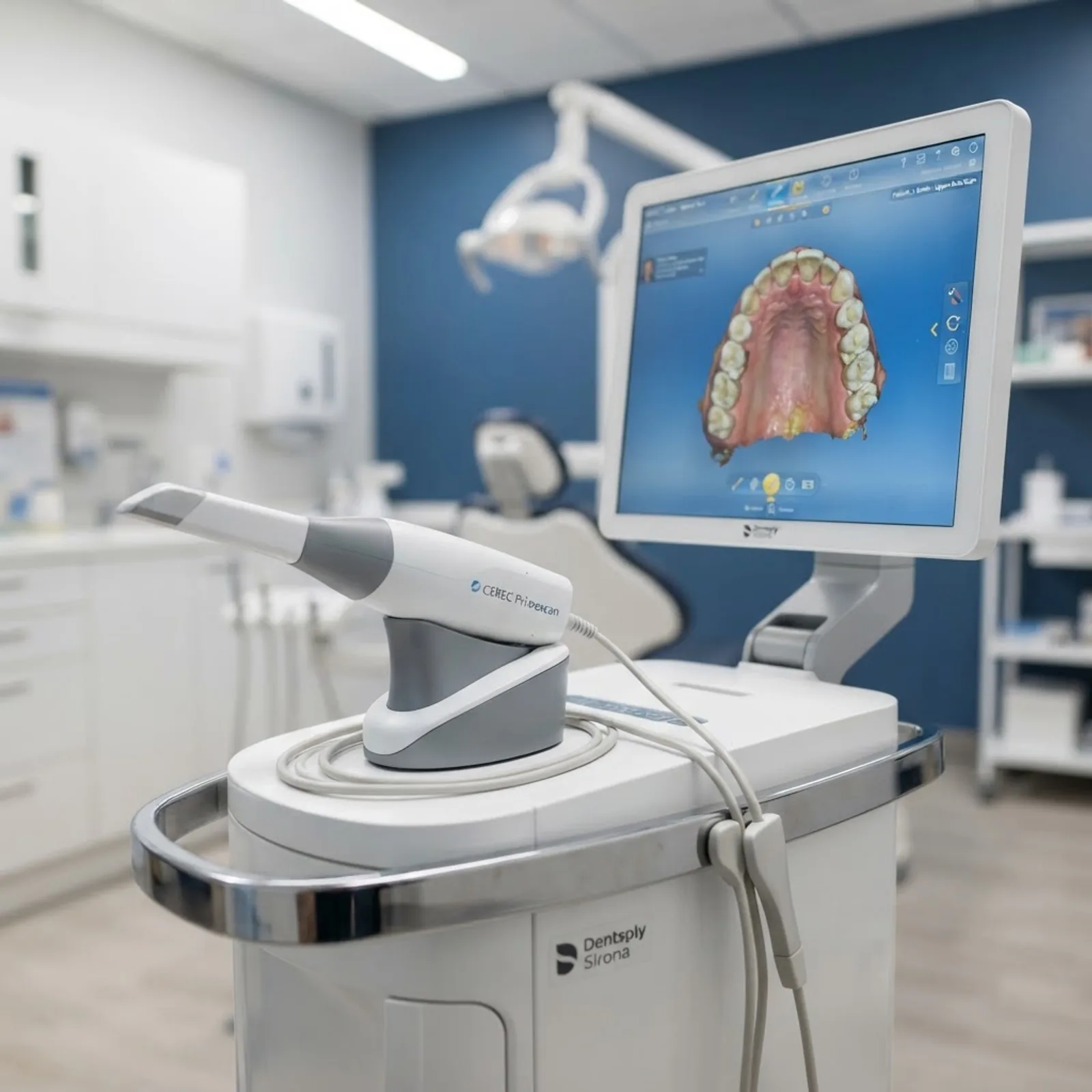
CEREC stands for Chairside Economical Restoration of Esthetic Ceramics, Dentsply Sirona's digital workflow for designing and milling dental restorations in a single appointment. Primescan is the latest-generation scanner inside that ecosystem. Instead of pressing a tray of putty into a patient's mouth, the dentist glides a compact optical wand across the teeth, and the system stitches thousands of frames into a photorealistic 3D model within seconds.
According to Dentsply Sirona, Primescan captures and processes more than 1,000,000 3D points per second using its Smart Pixel Sensor technology. That volume of raw data would be noisy and unusable without software intelligence to interpret it, which is precisely where AI enters the workflow.
How the Scanner Captures Data
The scanner projects structured light onto the tooth surface and measures how that light deforms across ridges, grooves, and preparation margins. A deep depth of field and high-frequency capture let Primescan read moist, reflective, and deep areas that older scanners struggled with. The output is a dense point cloud that AI algorithms convert into a clean, watertight mesh a dentist can trust.
How Artificial Intelligence Powers Primescan
Artificial intelligence is the layer that transforms raw optical data into a clinically reliable model. Every time the wand moves, the system must decide which captured points are true tooth structure and which are noise, such as saliva, cheek, tongue, blood, or an instrument. Machine-learning models trained on huge libraries of scans make those decisions in milliseconds, far faster than any manual process.
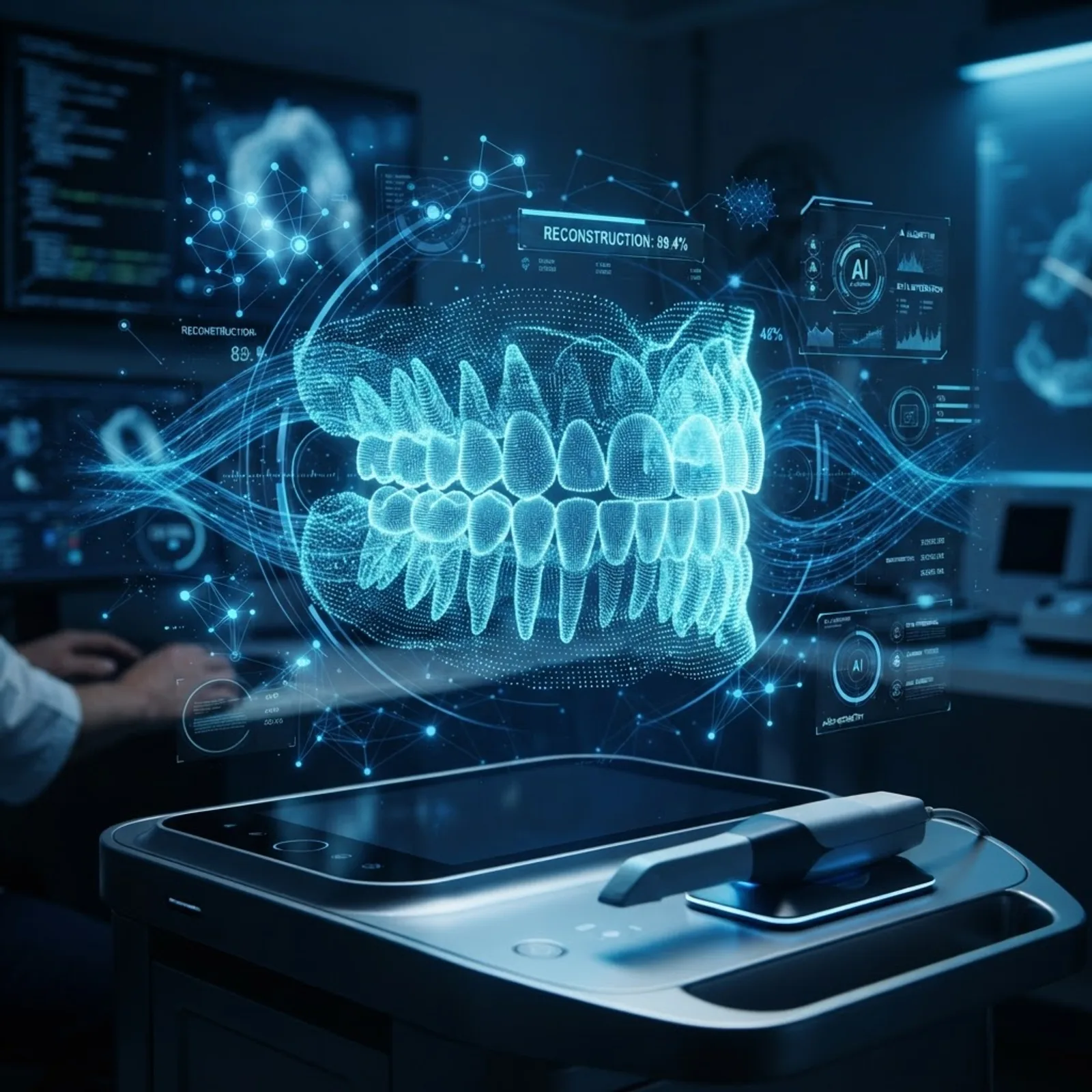
In practical terms, AI performs continuous quality control while the dentist scans. It flags missing data, highlights regions that need a second pass, and merges overlapping frames without introducing distortion. This live feedback loop is the difference between a scanner that simply records and one that actively helps you capture a usable impression the first time.
Key AI Capabilities
- Automatic noise removal: Filters saliva, soft tissue, and instruments out of the model.
- Real-time mesh reconstruction: Builds a clean 3D surface as you scan, not after.
- Intelligent gap detection: Signals exactly where more data is needed.
- Tissue classification: Distinguishes hard tooth structure from gums and cheeks.
- Margin line detection: Identifies preparation edges for accurate restorations.
- Bite and occlusion analysis: Verifies how upper and lower arches meet.
The AI-Driven Workflow: From Scan to Restoration
Understanding the workflow shows where AI removes friction at each stage. A typical Primescan restorative case follows these steps:
- Scan capture: The dentist sweeps the wand across the arch while the system records millions of points per second.
- Real-time cleanup: AI removes noise and stitches frames instantly, showing a live model on screen.
- Model reconstruction: The point cloud becomes a precise, watertight 3D mesh ready for design.
- AI-assisted design: Software proposes a restoration shape based on the patient's remaining anatomy.
- Milling or export: The design is milled chairside or exported to a lab in an open digital format.
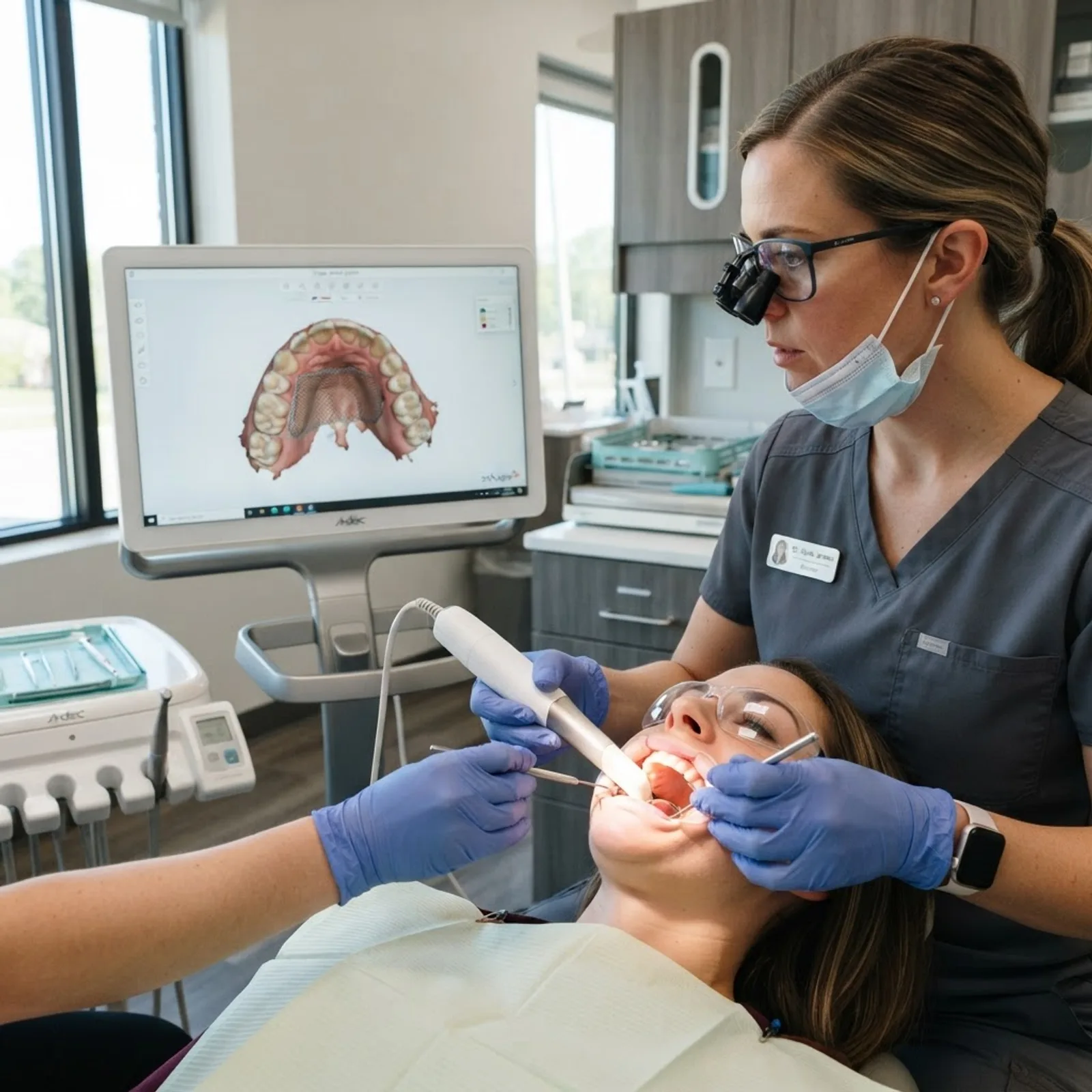
Because each stage is validated by software, errors that once appeared only after a lab poured a model are now caught within seconds at the chair. That single change is why many practices report far fewer remakes after adopting a digital scanner.
AI Crown and Restoration Design
Once a clean model exists, the CEREC design software applies its Biogeneric algorithm, an AI-driven approach that reconstructs natural tooth anatomy from the patient's remaining dentition. Rather than starting from a generic tooth template, the system studies neighboring and opposing teeth to propose a crown, inlay, or onlay that matches the patient's individual morphology and bite.
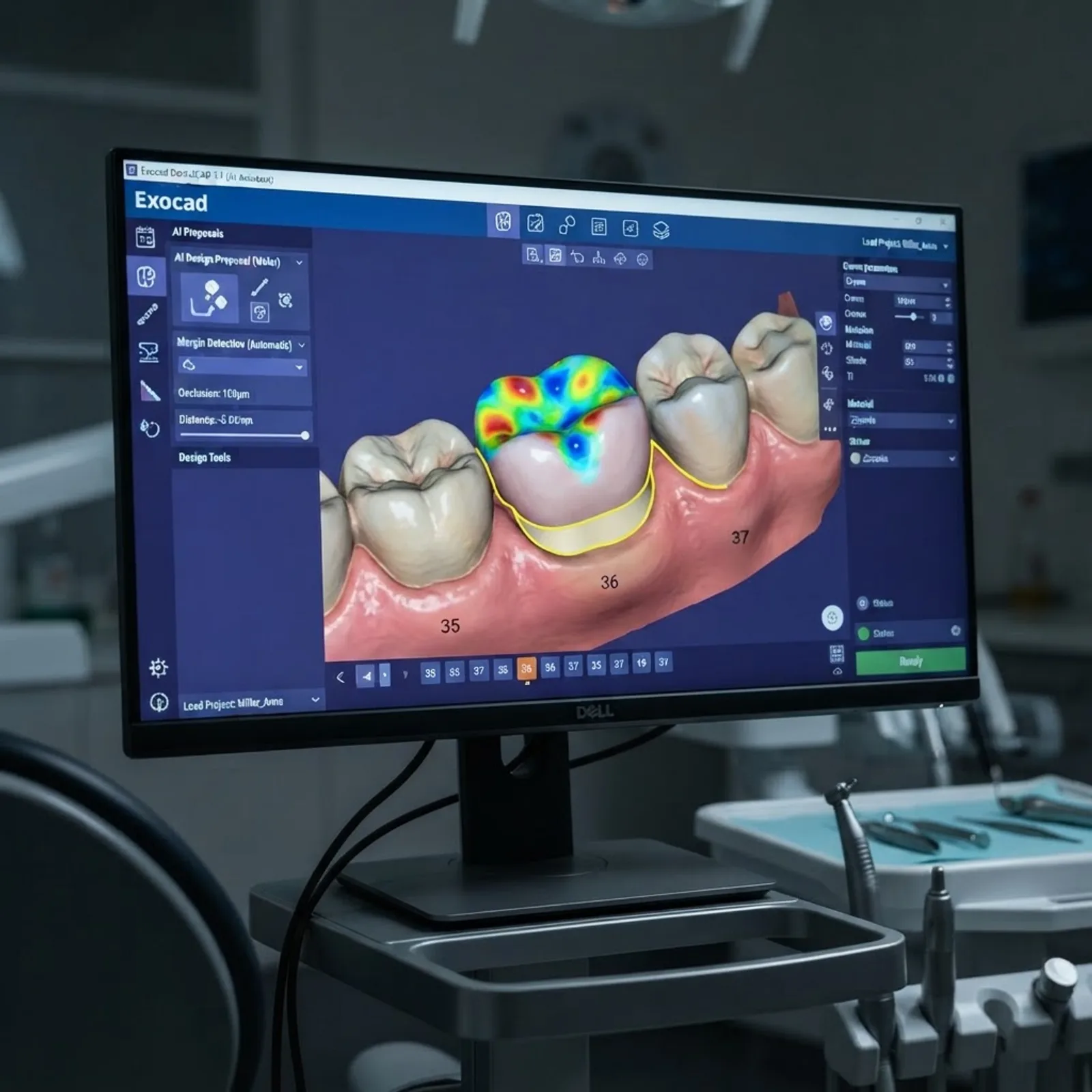
The dentist remains firmly in control. The AI proposal is a highly accurate starting point that clinicians refine for contacts, occlusion, and esthetics. This is a strong example of assistive AI: it removes tedious baseline work so the expert can focus on clinical judgment, not busywork. Teams that want to build similar assistive tooling can explore our artificial intelligence services for guidance on responsible AI design.
Primescan AI vs Traditional Impressions
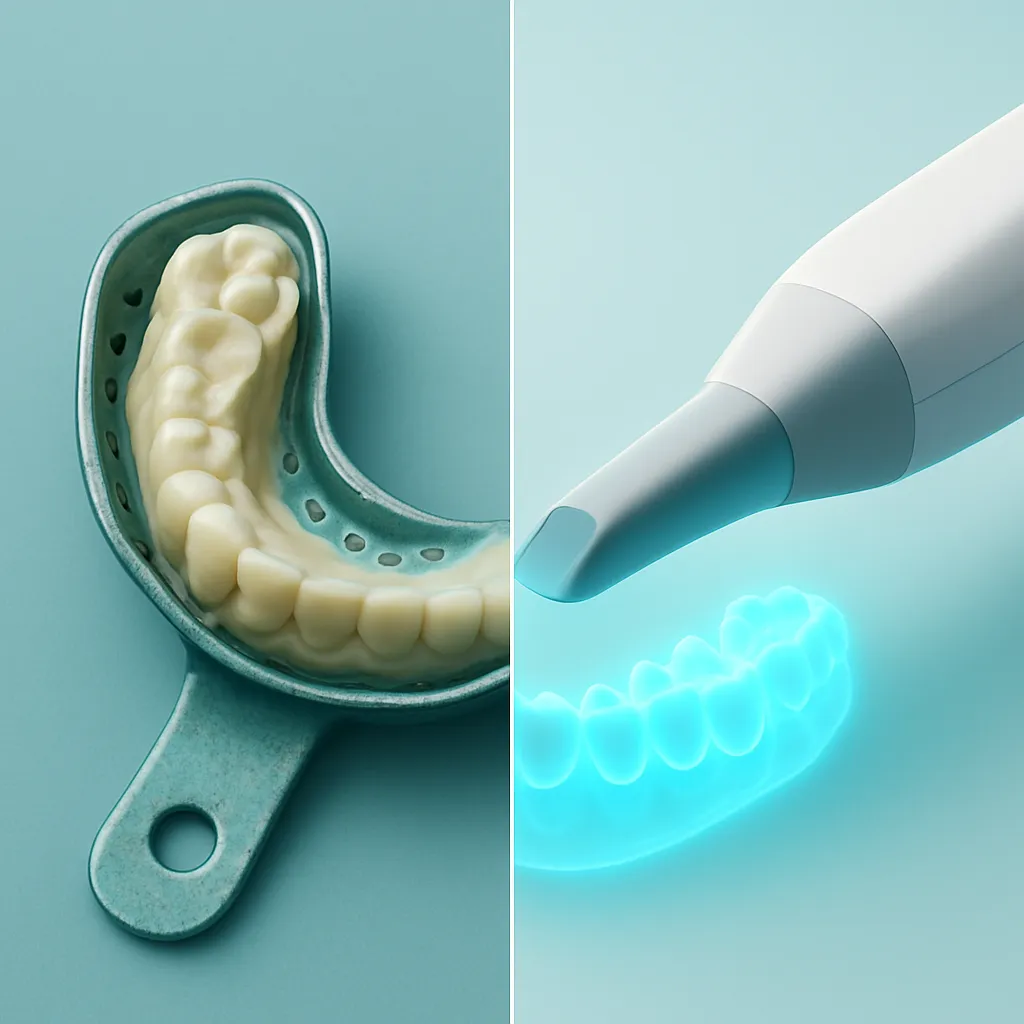
The clearest way to appreciate the technology is a direct comparison with conventional putty impressions.
| Factor | Primescan (AI-Powered) | Traditional Impressions |
|---|---|---|
| Capture time | Roughly 60 to 90 seconds per arch | Several minutes plus set time |
| Patient comfort | High, no putty or trays | Lower, gag reflex common |
| Accuracy | Micron-level digital precision | Prone to material distortion |
| Error detection | Flagged live on screen | Found only after pouring |
| Remakes | Rare | Common from voids or pulls |
| Same-day crowns | Yes | No |
| Storage | Digital and reusable | Physical and degrades over time |
How Accurate Is Primescan's AI?
Accuracy in scanning is measured by trueness (how close a scan is to reality) and precision (how repeatable it is). Published research in the International Journal of Computerized Dentistry has repeatedly shown that modern intraoral scanners can match or exceed conventional impressions, with deviations frequently under 100 microns for single units and short spans.
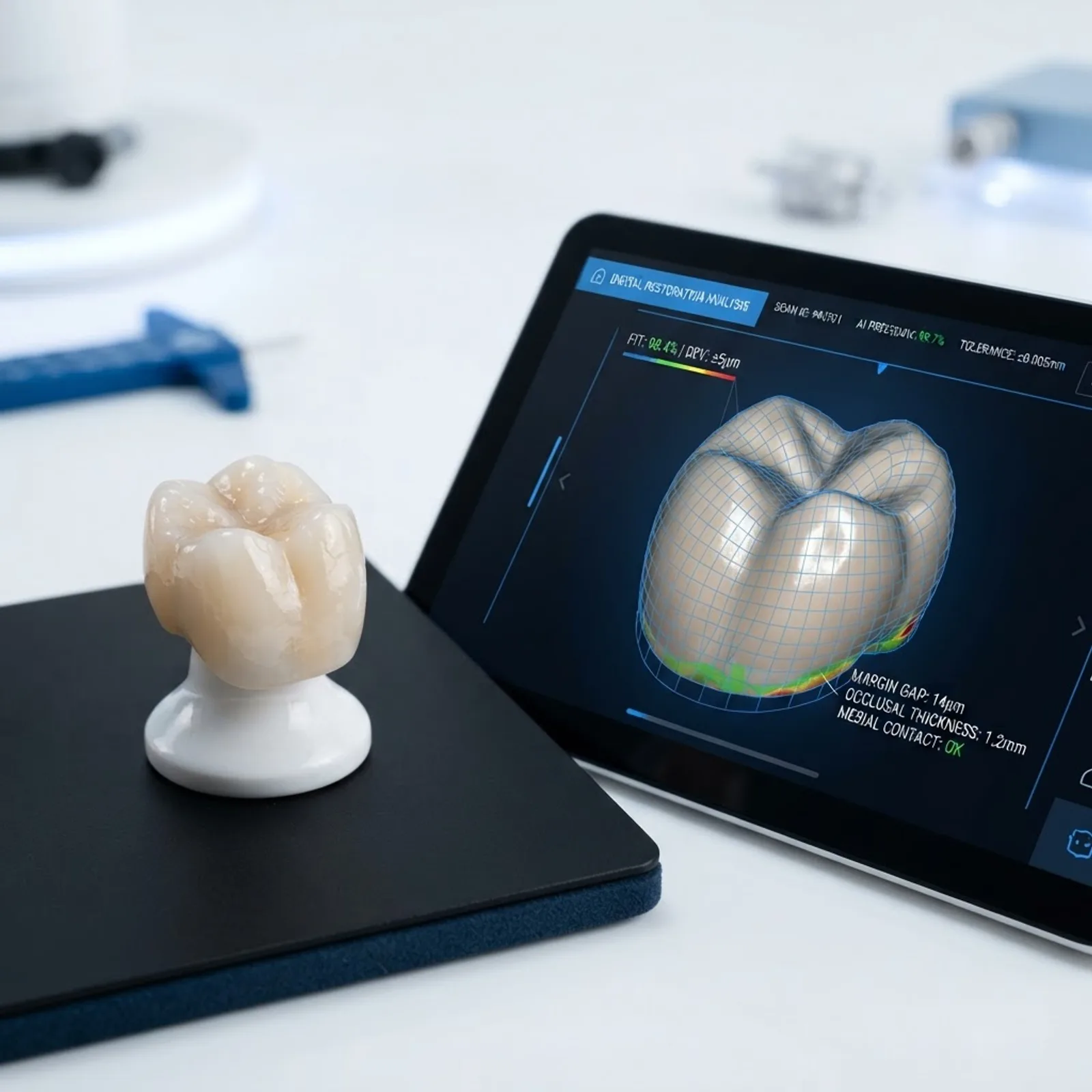
The AI contribution to that accuracy is subtle but important. By continuously discarding noise and reconciling overlapping frames, the software prevents the small cumulative errors that once plagued full-arch scanning. Market analysts also expect this precision to drive adoption: the global dental CAD/CAM market is projected to surpass several billion dollars by 2030, a sign that digital, AI-assisted workflows are becoming the profession's default rather than a premium option.
Benefits for Dentists and Patients
For dentists, the value is measurable: fewer remakes, shorter appointments, predictable margins, and the ability to complete crowns in a single visit. Digital files also integrate cleanly with milling units, labs, and treatment-planning software, reducing the friction of shipping physical models.
For patients, the experience is dramatically better. There is no unpleasant putty, no gagging, and far less waiting. Many patients can watch their own 3D scan appear on screen, which improves understanding and trust when a dentist explains a proposed treatment. That transparency is a quiet but meaningful benefit of the technology.
The Future of AI in Dentistry
Primescan represents an early, practical wave of dental AI, but the trajectory points much further. The next generation of tools is moving toward automated caries and crack detection, orthodontic outcome simulation, and predictive monitoring that compares scans over time to catch problems earlier.
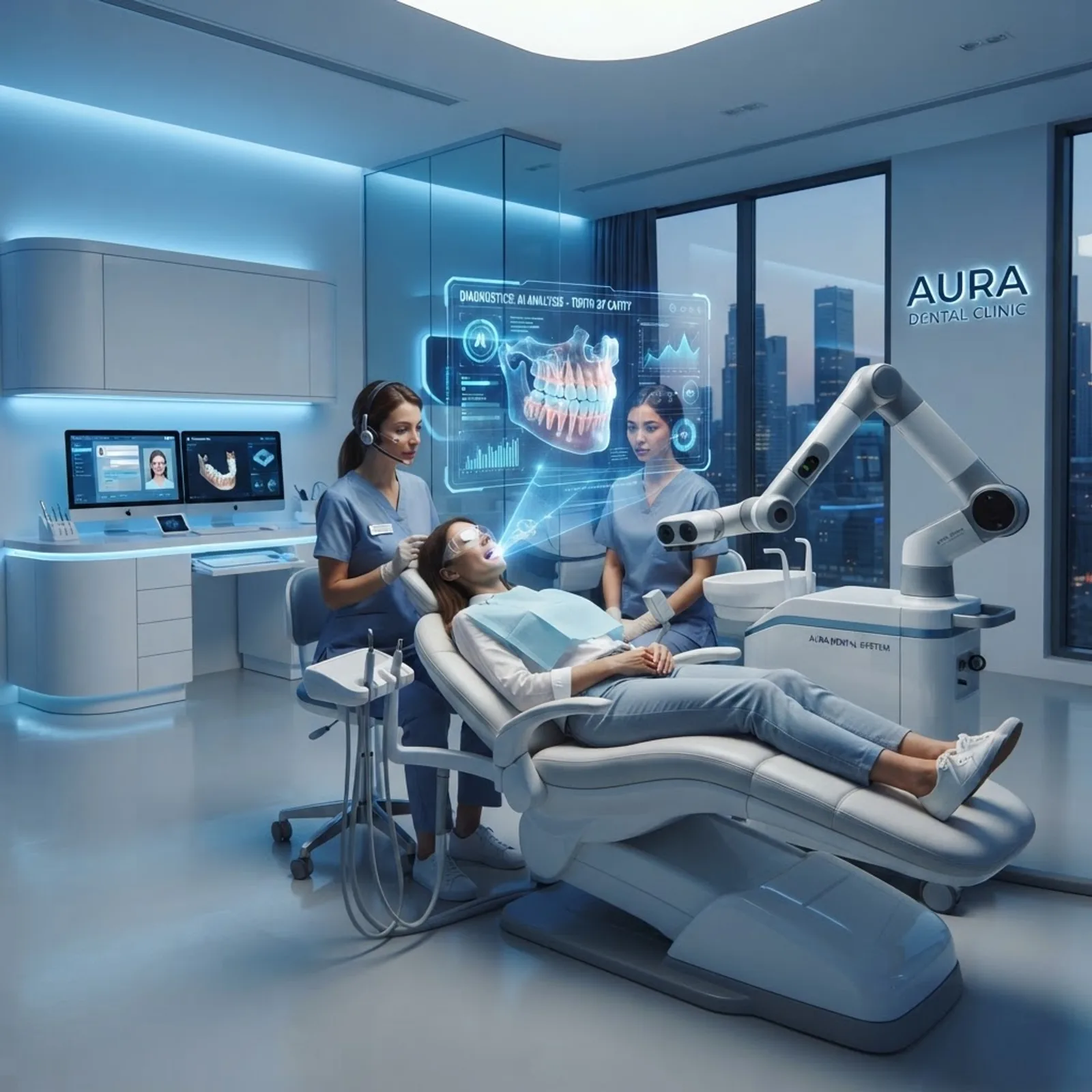
As these systems mature, the winning practices will be those that pair powerful hardware with thoughtful software integration and clean data practices. At ZoneTechify we study how intelligent systems like this reshape entire industries, and our partners at WebPeak explore the same shift across digital products. The common lesson is consistent: AI delivers the most value when it augments expert judgment rather than attempting to replace it.
Key Takeaways
- CEREC Primescan is an AI-assisted intraoral scanner that captures over 1,000,000 3D points per second, according to Dentsply Sirona.
- AI handles real-time cleanup, reconstruction, and margin detection, catching errors at the chair instead of after lab work.
- The Biogeneric algorithm proposes restorations based on a patient's own anatomy, saving design time while keeping the dentist in control.
- Digital scans often deviate under 100 microns, matching or beating traditional impressions in published research.
- The workflow reduces remakes and enables same-day crowns, improving both efficiency and patient comfort.
Frequently Asked Questions (FAQ)
What is CEREC Primescan used for?
CEREC Primescan is used to capture detailed 3D digital impressions of a patient's teeth and gums. Dentists use these scans to design and mill crowns, inlays, onlays, veneers, and other restorations, often in a single visit, replacing messy putty impressions with a fast, accurate digital workflow.
How does artificial intelligence work in the Primescan scanner?
Artificial intelligence in Primescan processes millions of optical points per second, instantly removing noise like saliva and soft tissue, merging overlapping frames, and detecting preparation margins. It provides live feedback while scanning, flagging gaps and errors so the dentist captures a clean, restoration-ready model on the first attempt.
Is Primescan more accurate than traditional dental impressions?
In most single-unit and short-span cases, Primescan matches or exceeds traditional impressions. Research shows intraoral scanners frequently achieve deviations under 100 microns. Because AI catches errors live at the chair, digital scans avoid common problems like material distortion, voids, and tray pulls that ruin conventional impressions.
Can Primescan design a dental crown automatically?
Yes, the CEREC software uses an AI-driven Biogeneric algorithm to automatically propose a crown based on the patient's remaining tooth anatomy and bite. This proposal is a highly accurate starting point, and the dentist then refines contacts, occlusion, and esthetics before the restoration is milled or exported.
Is CEREC Primescan safe for patients?
Yes, Primescan is safe and non-invasive. It uses harmless structured light rather than ionizing radiation, so there is no X-ray exposure during scanning. Most patients find it far more comfortable than putty impressions, with no gagging, no waiting for material to set, and no unpleasant taste.
Does Primescan replace the dentist?
No, Primescan augments the dentist rather than replacing them. The AI automates tedious tasks like noise removal, model reconstruction, and baseline restoration design, but every clinical decision, adjustment, and final approval still relies on the dentist's training, judgment, and hands-on expertise throughout the treatment process.