Discover how artificial intelligence supplier network collaboration software connects buyers and suppliers, cuts delays, and turns supply chain data into decisions.
Artificial Intelligence Supplier Network Collaboration Software

Supply chains rarely break because of one big failure. They break from a thousand small disconnects: a late confirmation, a spreadsheet nobody updated, an email buried in an inbox. Artificial intelligence supplier network collaboration software exists to close those gaps. It gives buyers, suppliers, and logistics partners a single shared workspace where data flows in real time and AI turns that data into action. After a decade advising procurement and operations teams, I have watched this category shift from a niche experiment to a boardroom priority, and the companies adopting it early are pulling ahead.
Quick Answer: Artificial intelligence supplier network collaboration software is a cloud platform that connects buyers and suppliers on one shared system, using AI to automate orders, forecast demand, detect risk, and improve communication so supply chains run faster, cheaper, and with fewer disruptions.
What Is AI Supplier Network Collaboration Software?
AI supplier network collaboration software is a cloud-based platform where every trading partner works from the same live data instead of trading documents back and forth. Purchase orders, invoices, forecasts, inventory levels, and delivery schedules all live in one place. The artificial intelligence layer sits on top of that shared data, spotting patterns, predicting problems, and recommending or automating decisions that a human would otherwise make manually.
Think of it as the difference between a group email chain and a shared control tower. In the email chain, everyone has a slightly different version of the truth. In the control tower, everyone sees the same screen, and an intelligent assistant is constantly scanning for what needs attention.
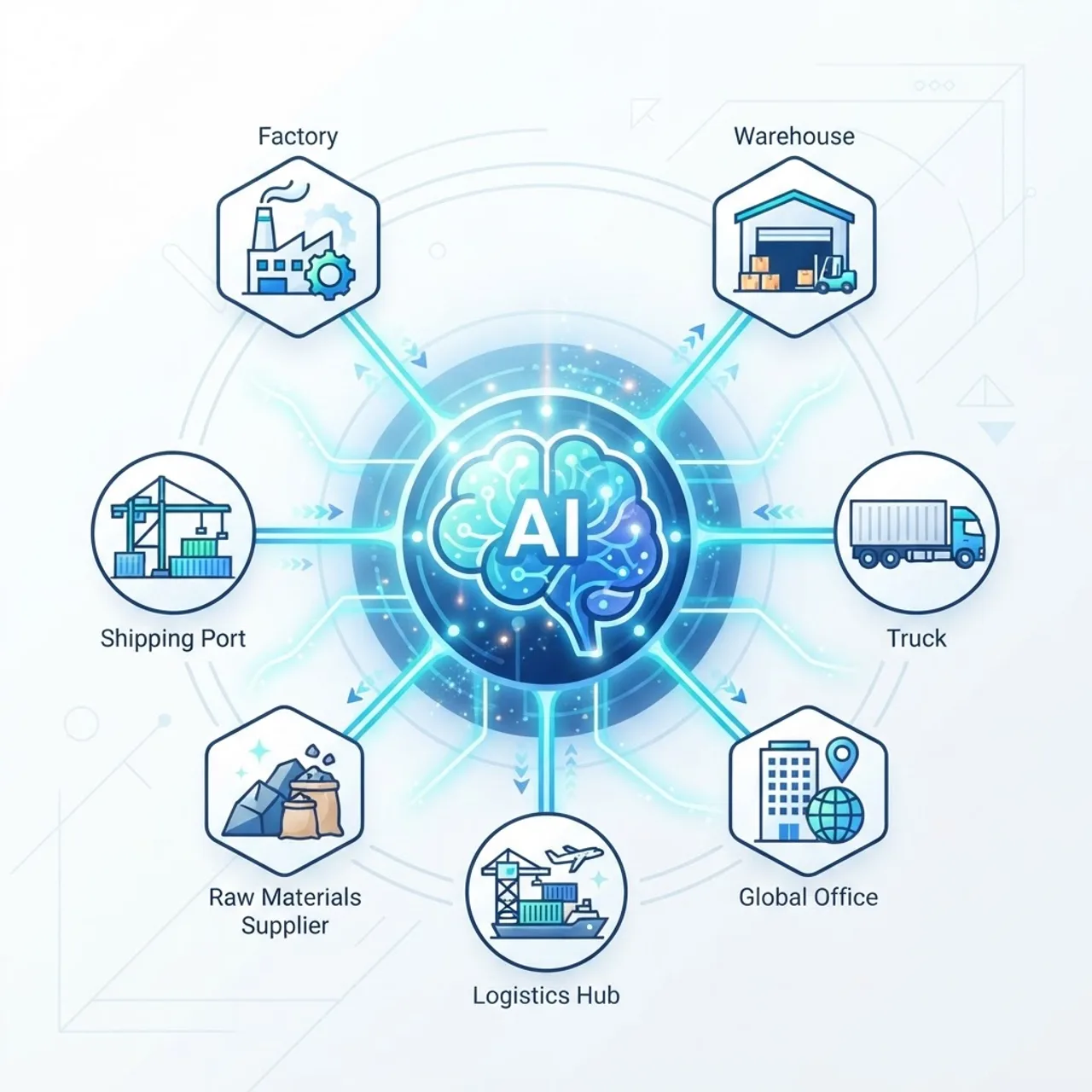
The "network" part matters. Unlike a standalone tool used by one company, these platforms are multi-enterprise. When a supplier updates a ship date, the buyer sees it instantly, and so does the downstream carrier. That shared context is what makes the AI genuinely useful, because it learns from the behavior of the entire network, not just one organization.
Why Traditional Supplier Communication Fails
Most supplier relationships still run on email, phone calls, and disconnected ERP systems. According to McKinsey research, supply chain disruptions costing more than a month of production now occur every 3.7 years on average, and much of that damage traces back to poor visibility rather than the disruption itself.
The core problems are consistent across industries:
- Information latency: By the time a delay is communicated, the buyer has already lost days of reaction time.
- Version conflicts: Multiple spreadsheets and PDFs create disputes over what was actually agreed.
- Manual data entry: Staff rekey the same order details into several systems, introducing errors.
- No early warning: Problems surface only after they have already caused damage.
AI collaboration software attacks each of these directly. Instead of waiting for a supplier to send bad news, the system flags a probable delay based on historical patterns and current signals, giving teams time to act.
Core Features That Actually Move the Needle
Not every feature deserves equal weight. Based on real deployments, these are the capabilities that consistently deliver measurable returns.
Real-Time Data Integration
The foundation is connectivity. The platform integrates with ERP systems, warehouse tools, and supplier portals so data updates automatically. Without this, AI has nothing reliable to learn from.
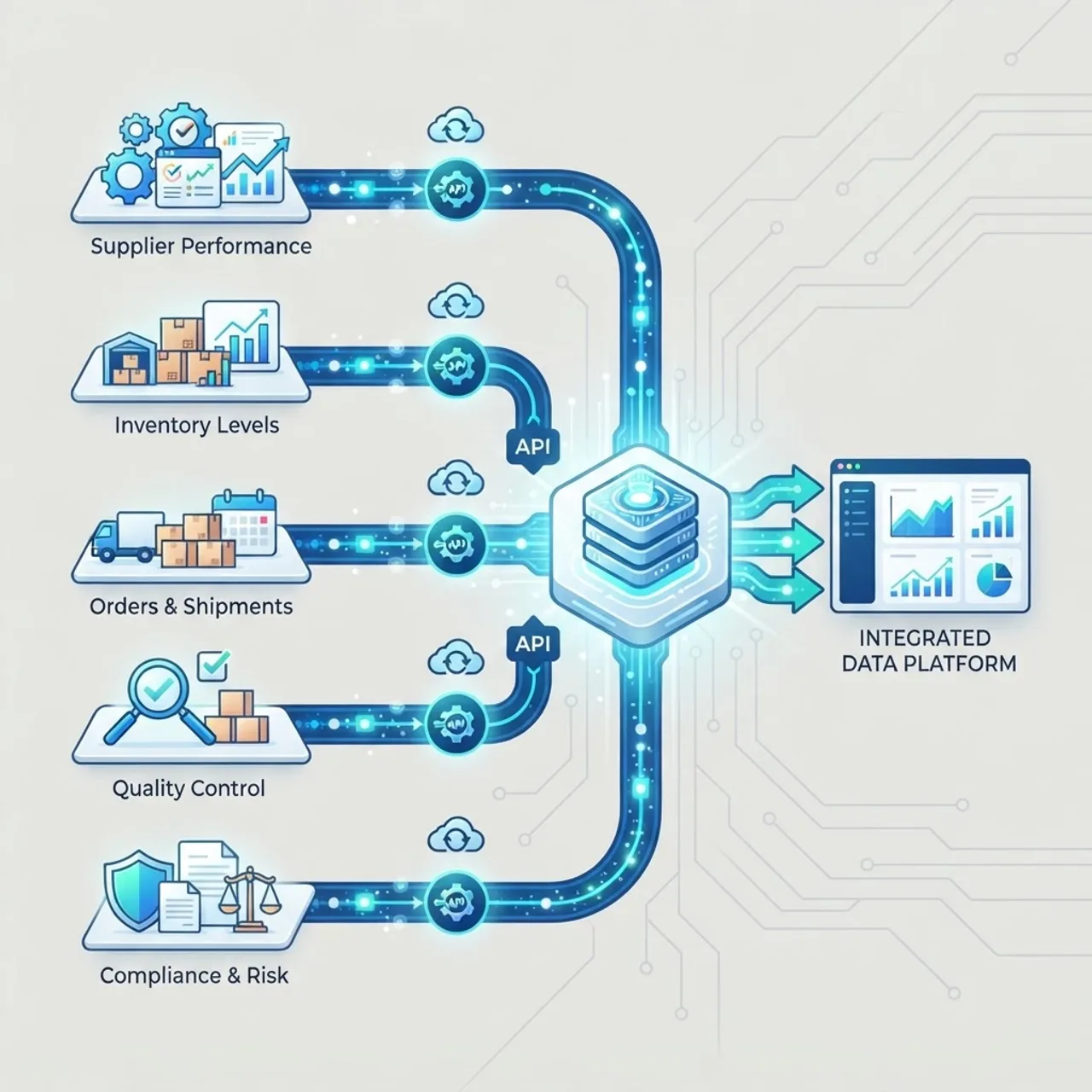
Strong platforms support API connections, EDI, and simple onboarding for smaller suppliers who lack technical resources. The goal is one source of truth that reflects reality within minutes, not days.
AI Demand Forecasting
Forecasting is where artificial intelligence earns its keep. Machine learning models analyze historical orders, seasonality, promotions, and external signals to predict demand far more accurately than manual methods.
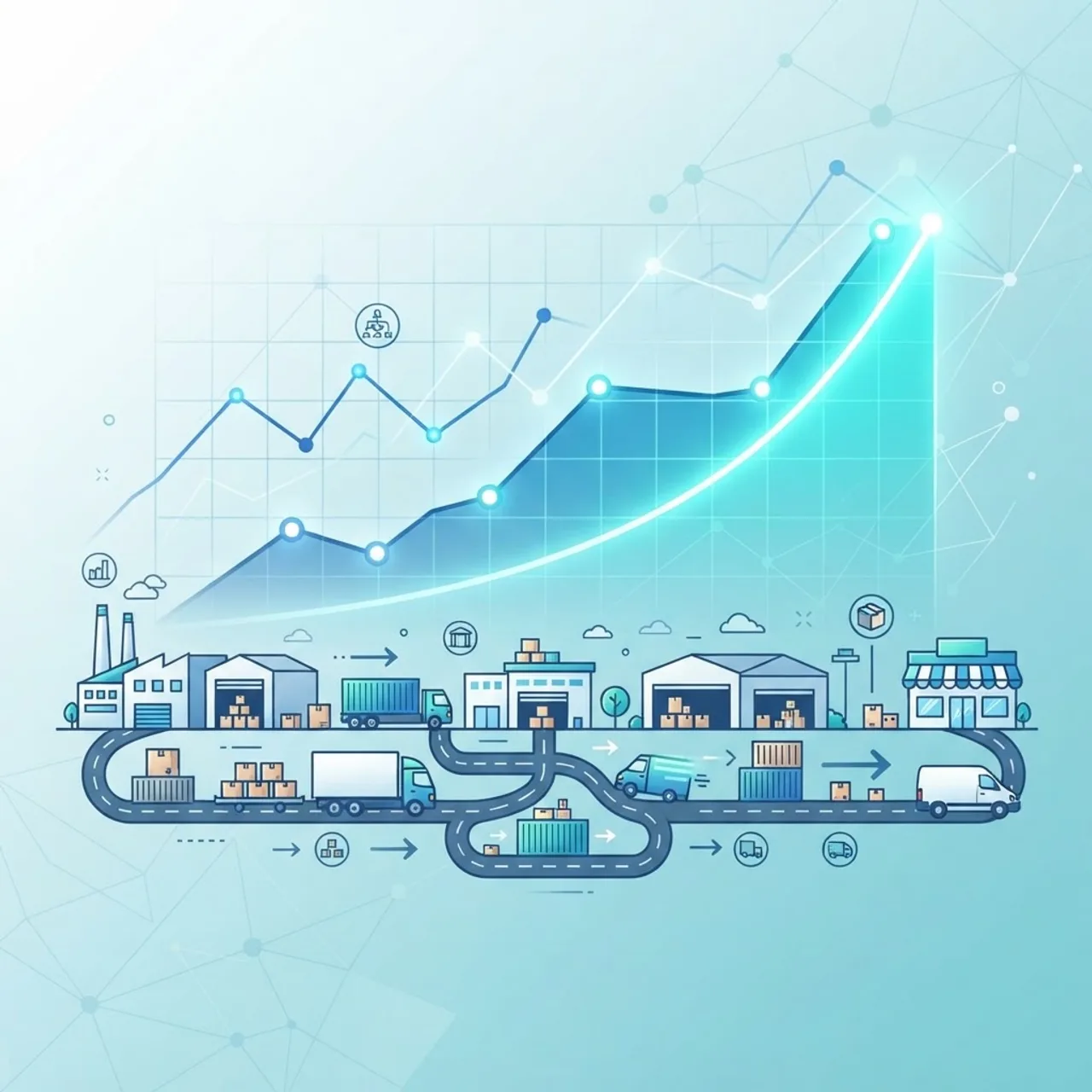
According to McKinsey, AI-driven forecasting can reduce supply chain errors by 20 to 50 percent, which directly lowers both stockouts and excess inventory. Better forecasts shared across the network mean suppliers produce closer to actual need.
Intelligent Risk Management
AI continuously scans for supplier risk: financial instability, late-delivery trends, geopolitical events, or weather that threatens a route. Instead of a static annual audit, you get a living risk score.
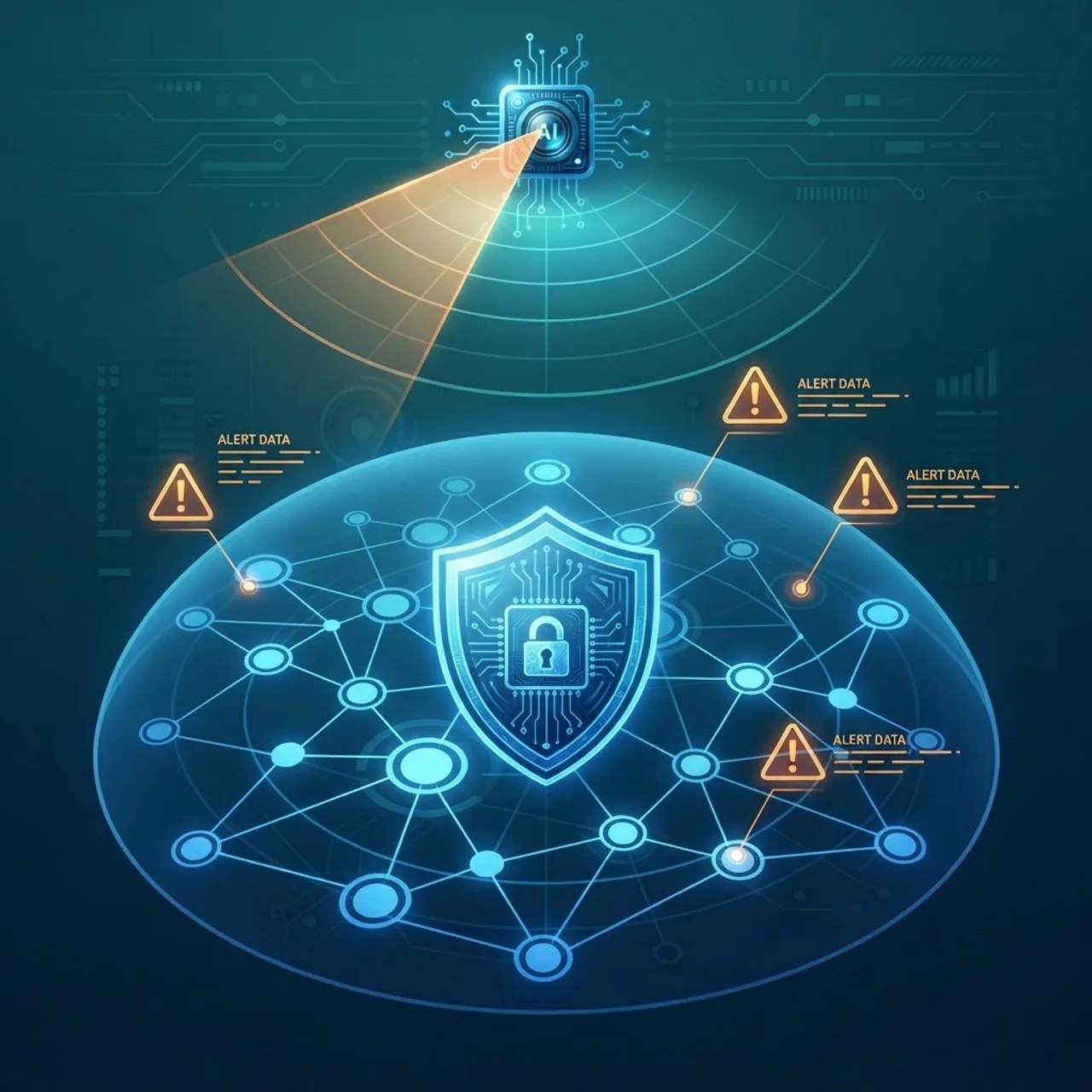
When a risk crosses a threshold, the system alerts the right person and can recommend alternative suppliers already vetted in the network. This turns risk management from reactive firefighting into proactive planning.
Workflow Automation
Repetitive tasks such as order confirmations, invoice matching, and approval routing get automated. The AI handles the routine and escalates only the exceptions that need human judgment.
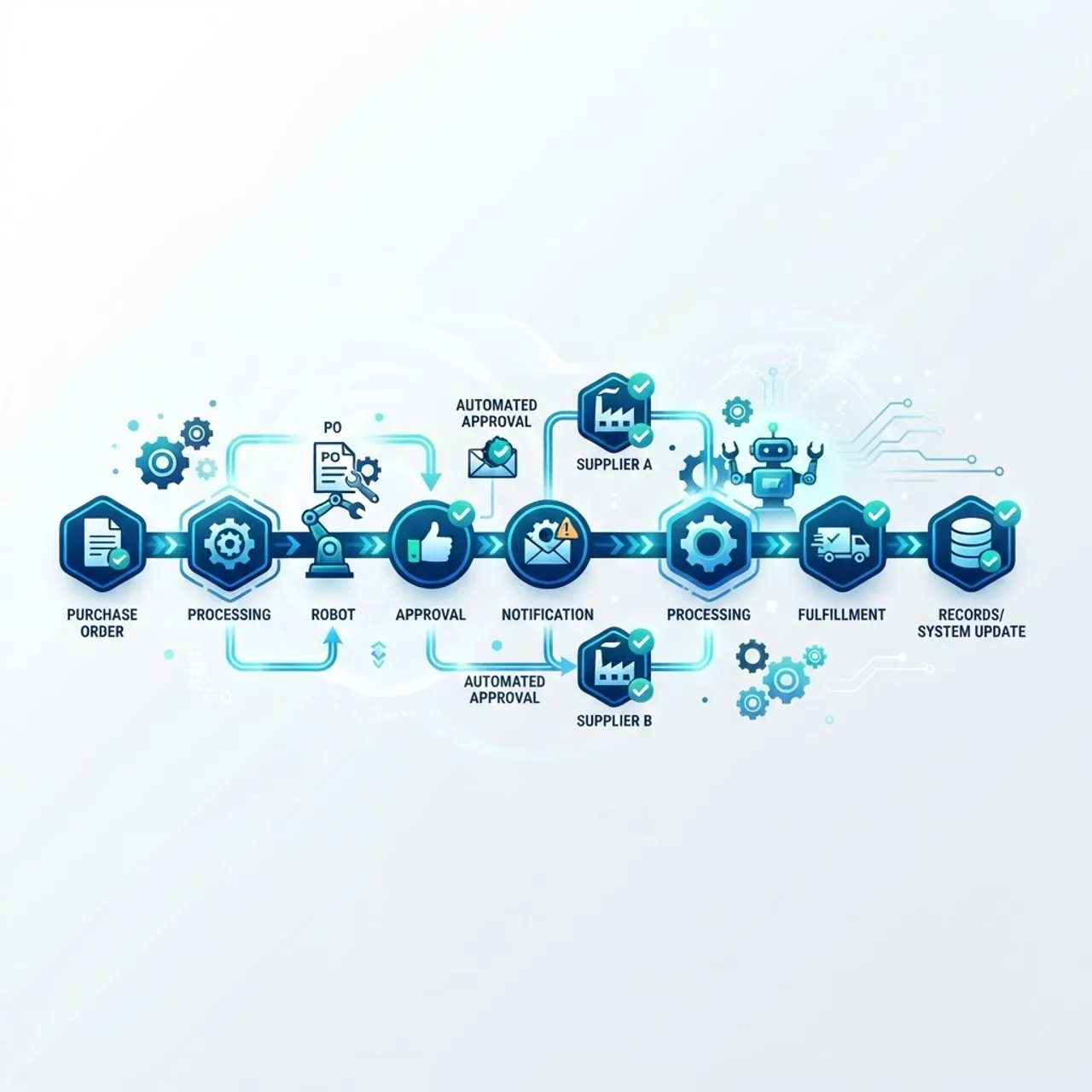
This is often the fastest win. Teams reclaim hours previously lost to data entry and chasing confirmations, redirecting that time to strategic sourcing and relationship building.
Unified Collaboration Dashboard
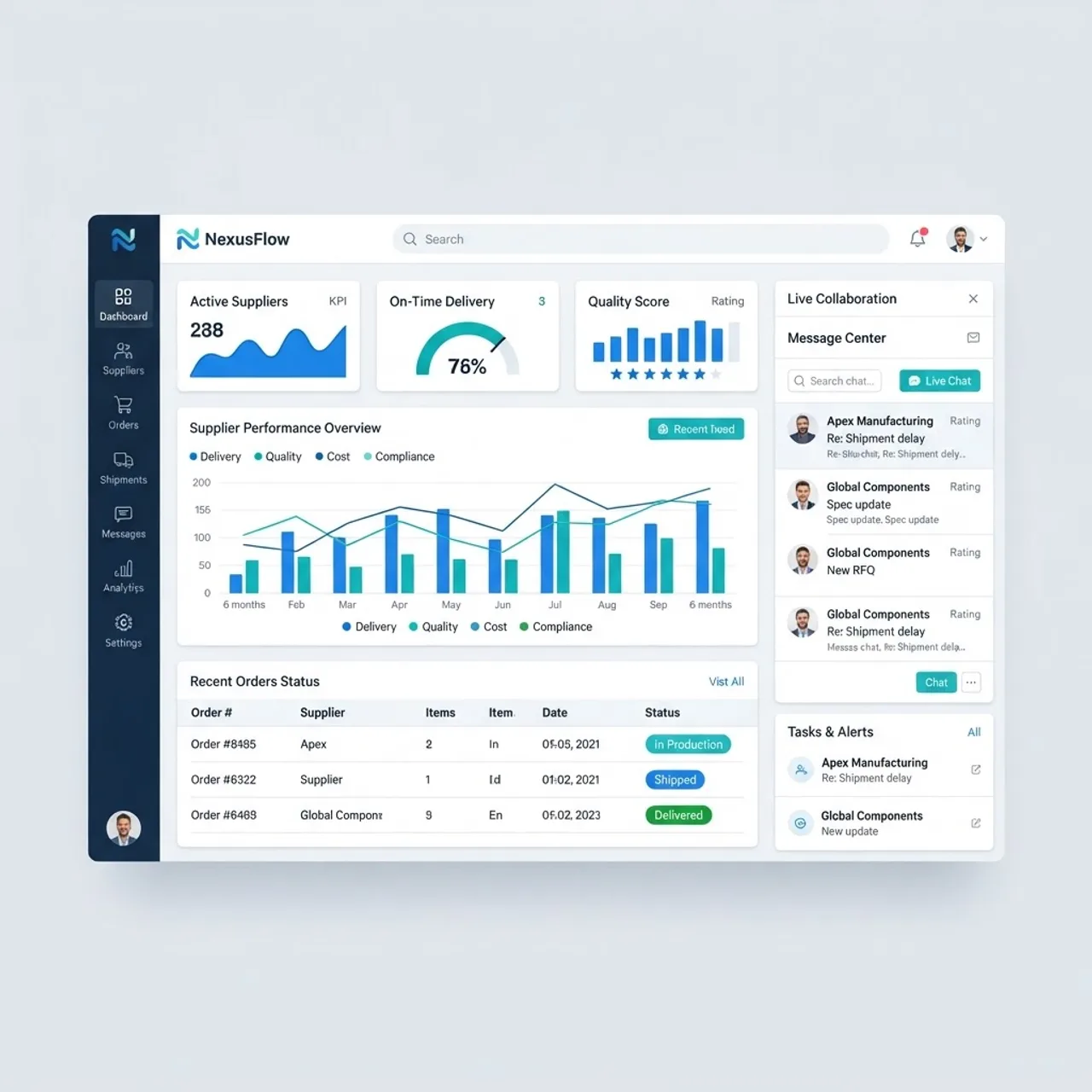
Everything comes together in a shared dashboard where buyers and suppliers see the same orders, messages, and metrics. Communication happens in context, attached to the specific order or shipment it concerns.
Traditional Tools vs AI Collaboration Software
The difference becomes obvious when you compare approaches side by side.
| Capability | Email + Spreadsheets | Basic Supplier Portal | AI Collaboration Software |
|---|---|---|---|
| Real-time visibility | No | Partial | Yes |
| Demand forecasting | Manual | Manual | AI-driven |
| Risk detection | Reactive | Reactive | Predictive |
| Data entry | Manual | Semi-manual | Automated |
| Network-wide learning | No | No | Yes |
| Time to spot a delay | Days | Hours | Minutes |
The pattern is clear: each step up removes manual effort and shortens the time between a problem appearing and a team responding to it.
How to Implement It Successfully
Adopting this software is as much an organizational change as a technical one. Based on projects that succeeded and several that struggled, follow this sequence:
- Map your highest-friction supplier relationships first. Start where delays and disputes cost the most, not with your easiest suppliers.
- Clean and connect your core data. AI amplifies whatever data you feed it, so accurate ERP and inventory data must come first.
- Onboard suppliers with support. Give smaller partners simple tools and training so they participate rather than resist.
- Start with automation, then expand to prediction. Prove value with workflow automation before rolling out advanced forecasting.
- Measure against a baseline. Track lead times, stockouts, and manual hours before launch so you can quantify improvement.
Companies that treat this as a shared initiative with their suppliers, rather than a tool imposed on them, see far higher adoption. If you need help building or integrating a custom platform, teams like ZoneTechify and WebPeak specialize in artificial intelligence solutions tailored to supply chain workflows.
Measuring Return on Investment
The business case rests on a few measurable outcomes. Reduced inventory carrying costs come from tighter forecasts. Fewer stockouts protect revenue. Lower administrative overhead frees skilled staff. And faster disruption response prevents the expensive cascade of missed deliveries.
A practical way to build your case is to calculate the fully loaded cost of a single major disruption last year, then estimate how much earlier the software would have flagged it. Most teams find that avoiding even one or two disruptions annually justifies the investment, before counting the daily efficiency gains.

The Future of Supplier Collaboration
The next wave moves from prediction to autonomy. Emerging platforms use AI agents that can negotiate routine order adjustments, rebalance orders across suppliers, and resolve minor exceptions without human input. Generative AI is also making these systems conversational, so a manager can simply ask, "Which suppliers are at risk this month and why?" and receive a clear, sourced answer.
The direction is unmistakable: supply chains are becoming self-monitoring networks where humans set strategy and AI handles execution. Organizations that build the data foundation now will be ready to adopt these capabilities as they mature.
Key Takeaways
- AI supplier network collaboration software puts buyers and suppliers on one shared, real-time system instead of scattered emails and spreadsheets.
- McKinsey research shows AI-driven forecasting can cut supply chain errors by 20 to 50 percent.
- Major month-long disruptions occur roughly every 3.7 years, and better visibility limits their damage.
- The biggest early wins come from workflow automation and predictive risk detection.
- Success depends on clean data, supplier onboarding, and measuring results against a clear baseline.
Frequently Asked Questions (FAQ)
What does AI supplier network collaboration software actually do?
It connects buyers and suppliers on one cloud platform with shared, real-time data. Artificial intelligence then automates routine tasks, forecasts demand, and detects risks early. The result is faster communication, fewer errors, and quicker responses to disruptions across the entire supplier network.
How is it different from a normal ERP system?
An ERP manages your company's internal operations. Collaboration software is multi-enterprise, meaning suppliers and buyers work on the same shared system. It layers AI on top of that shared data to predict problems and automate decisions, something a single-company ERP cannot do alone.
Is AI supplier collaboration software only for large enterprises?
No. While large enterprises adopted it first, modern cloud platforms now offer scalable pricing and simple supplier onboarding. Small and mid-sized businesses benefit especially from automation and demand forecasting, since they often lack the staff to manage supplier communication manually at scale.
How long does implementation usually take?
Basic automation and data integration can go live within a few weeks if your core data is clean. Advanced forecasting and network-wide risk features take longer as the AI learns from historical data. Most teams start seeing measurable efficiency gains within the first quarter.
Does AI replace procurement and supply chain staff?
No. It removes repetitive tasks like data entry and order chasing, letting staff focus on strategy, negotiation, and supplier relationships. The AI handles routine decisions and escalates exceptions to humans, making teams more effective rather than replacing them.
What is the first step to getting started?
Start by mapping your highest-friction supplier relationships and cleaning your core ERP and inventory data. AI is only as good as the data it learns from. Then pilot workflow automation on those relationships before expanding to forecasting and predictive risk features across your wider network.