A practical, expert guide to the best AI summer programs for high school students, covering costs, formats, application tips, and how to choose the right fit.
Artificial Intelligence Summer Programs for High School Students
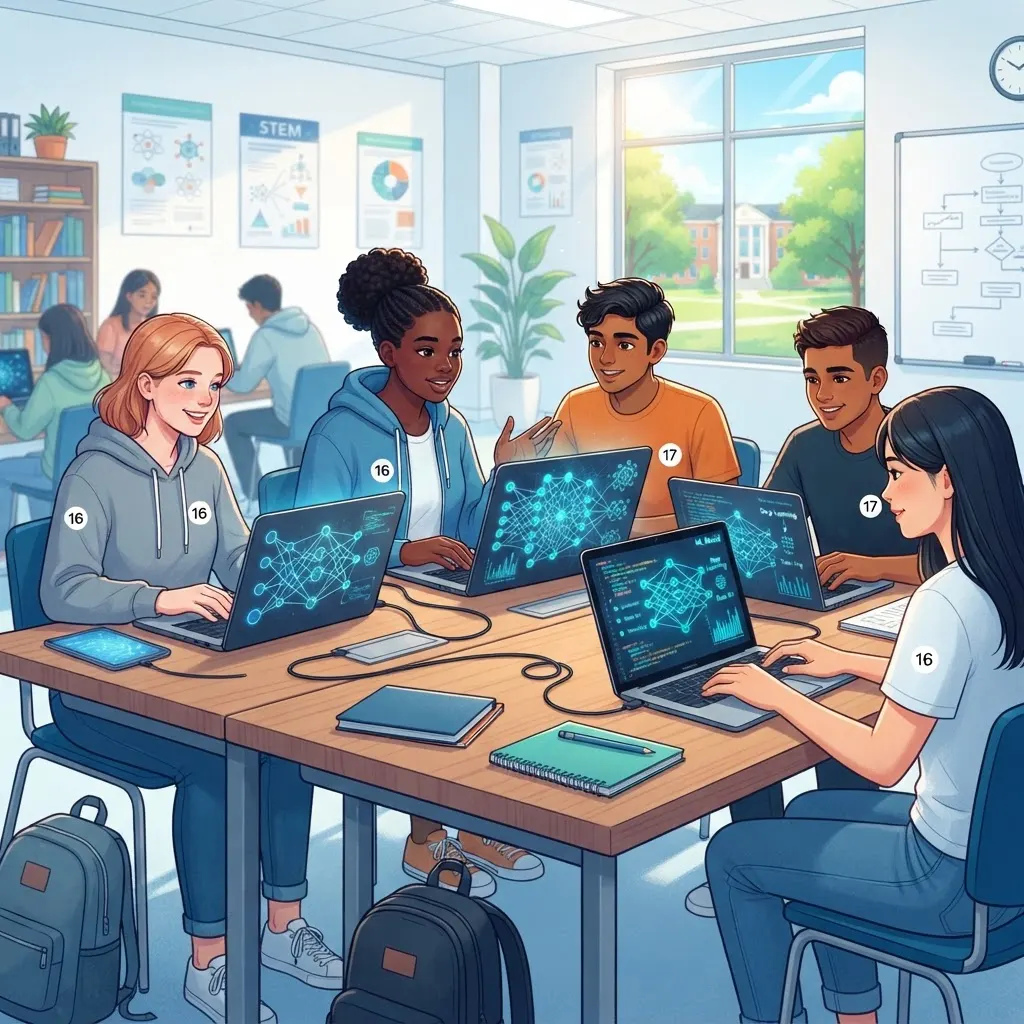
Artificial intelligence is no longer a niche subject reserved for graduate students. Today, teenagers are training machine learning models, building chatbots, and analyzing real datasets before they finish high school. Summer programs have become the fastest, most structured way for students to gain hands-on AI experience, mentorship from researchers, and a portfolio project that strengthens college applications. But with hundreds of options ranging from free university initiatives to $9,000 residential camps, choosing the right one is genuinely difficult.
This guide is written from the perspective of educators and technologists who have reviewed dozens of these programs. It explains what actually matters, what to avoid, and how to match a program to a student's goals and budget.
Quick Answer: AI summer programs for high school students are short, intensive courses that teach machine learning, coding, and ethics through hands-on projects. The best options combine expert mentorship, a real capstone project, and either free or scholarship-based access, helping teens build college-ready AI skills in 2 to 8 weeks.
What Is an AI Summer Program?
An AI summer program is a structured educational experience, typically lasting two to eight weeks, that teaches high school students the fundamentals of artificial intelligence and machine learning through projects, lectures, and mentorship. These programs run online, in person on university campuses, or in hybrid formats.
Unlike a single online course, a quality program includes live instruction, peer collaboration, and a supervised capstone project. This distinction matters: passive video courses have completion rates below 10 percent, while cohort-based programs with deadlines and mentors see far higher engagement and produce tangible outcomes.
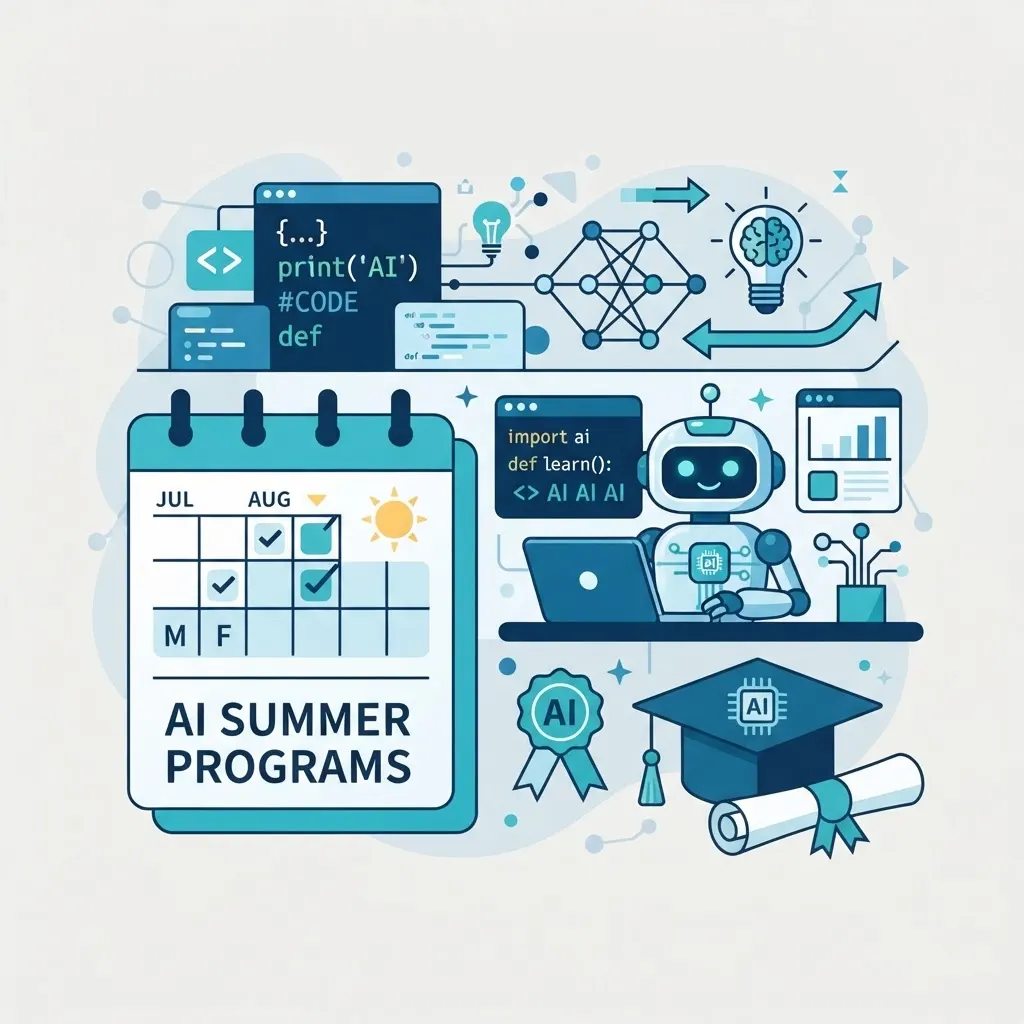
Why AI Summer Programs Matter for High School Students
The demand for AI literacy is accelerating. According to the World Economic Forum's Future of Jobs Report, AI and machine learning specialists are among the fastest-growing roles this decade, and employers increasingly expect baseline AI fluency across nearly every field. Starting in high school gives students a meaningful head start.
Beyond career preparation, these programs deliver three concrete benefits:
- Portfolio projects. A working model or app demonstrates initiative far more convincingly than a transcript alone.
- Mentorship. Direct access to researchers and engineers helps students understand real workflows and career paths.
- College signaling. Selective programs like MIT and Stanford offerings act as credible markers of aptitude on applications.
Students who complete a rigorous program often arrive at university already comfortable with Python, data handling, and the ethical questions that define responsible AI.
Types of AI Summer Programs
Understanding the categories helps narrow the search quickly.
University-Hosted Residential Programs
Hosted on college campuses, these immersive programs combine dorm living with intensive coursework. They are the most expensive but offer the strongest networking and the closest approximation of a college research environment.
Online Cohort Programs
Delivered live over video, these programs pair students with mentors and small cohorts. They remove travel costs and geographic barriers while preserving accountability and real-time feedback.
Free and Nonprofit Initiatives
Organizations and universities increasingly offer free AI education to widen access. These are competitive but eliminate financial barriers entirely, making them ideal for motivated students on a tight budget.
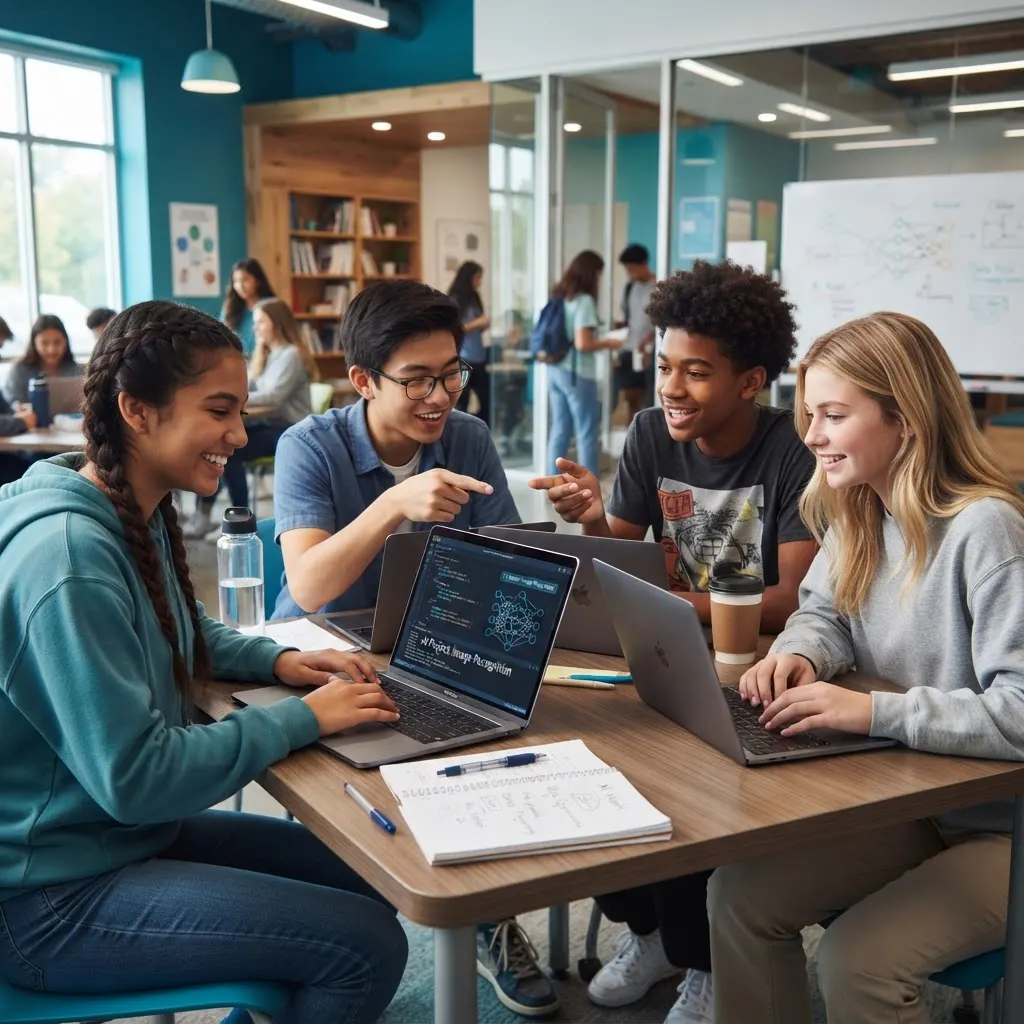
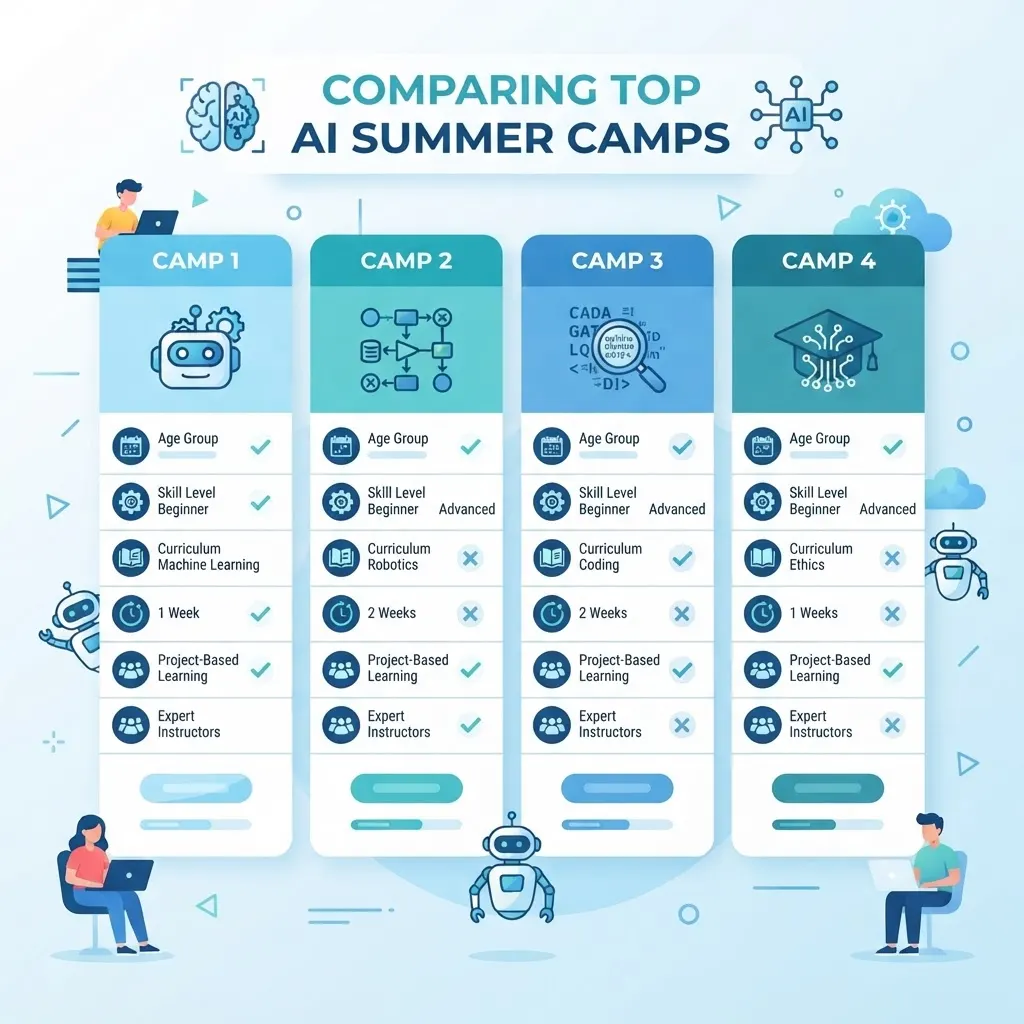
Comparing the Top AI Summer Programs
The table below compares well-known program types across the factors families care about most. Specific costs vary year to year, so always confirm current details on each program's official site.
| Program Type | Format | Typical Cost | Best For |
|---|---|---|---|
| MIT / Stanford pre-college AI | In person | $3,000 to $9,000 | Highly motivated, competitive applicants |
| Inspirit AI / Veritas AI | Online, mentor-led | $1,500 to $4,000 | Project-focused, portfolio building |
| AI4ALL | Online, free or low cost | Free to low | Underrepresented students, equity focus |
| Local university camps | In person | $500 to $2,000 | Beginners wanting exposure |
| Self-paced platforms | Online | Free to $200 | Independent, budget-conscious learners |
How to Choose the Right AI Program
Follow these steps to make a confident decision rather than reacting to marketing.
- Define the goal. Is the student exploring AI for the first time, or building a project for college applications? Beginners need broad exposure; advanced students need depth and a capstone.
- Check the prerequisites. Some programs assume Python fluency. Enrolling in a program that is too advanced leads to frustration and dropout.
- Verify the instructors. Look for mentors who are graduate students, PhDs, or working engineers, not just older undergraduates reading slides.
- Demand a real project. The single best predictor of value is whether students leave with something they built themselves.
- Confirm the ethics component. Responsible programs teach bias, privacy, and the societal impact of AI, not just model accuracy.
If your family or school needs help evaluating the technical depth of a program or building supporting learning materials, the team at ZoneTechify and the specialists at WebPeak work with education-focused AI projects and can offer informed guidance through their artificial intelligence services.
What Students Actually Learn
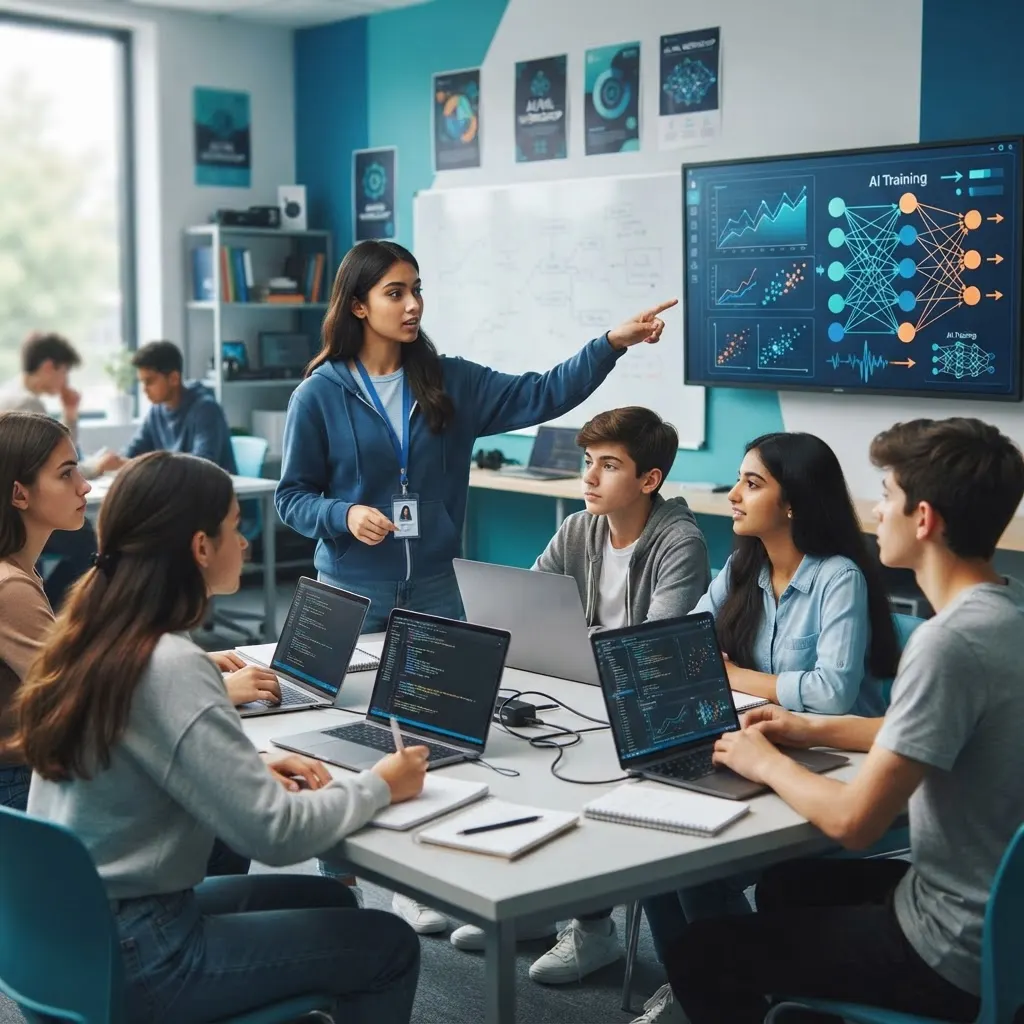
Strong programs move students from theory to application in a logical sequence. A typical curriculum covers:
- Python fundamentals for data manipulation using libraries like Pandas and NumPy.
- Core machine learning concepts including classification, regression, and neural networks.
- Practical tools such as scikit-learn, TensorFlow, or PyTorch at an introductory level.
- Data ethics covering bias, fairness, and privacy.
- A capstone project, such as an image classifier, sentiment analyzer, or recommendation system.
The goal is not to produce professional engineers in a few weeks. It is to give students genuine intuition for how AI systems learn from data and where they fail.
Online vs In-Person AI Programs
Both formats work, but they serve different needs. In-person programs excel at immersion, hands-on lab access, and face-to-face networking. Online programs win on cost, flexibility, and access for students far from major universities.
Research on learning outcomes consistently shows that structured online programs with live mentorship match in-person results for skill acquisition, while removing thousands of dollars in travel and housing costs. For most families, a well-run online cohort delivers the best value per dollar.

Application Tips That Improve Acceptance
Selective AI programs receive far more applicants than they admit. These strategies consistently strengthen an application:
- Start a small project first. Even a simple Python script or a completed free online course signals genuine interest.
- Write a specific essay. Explain exactly why AI interests you and what you want to build, not generic ambition.
- Highlight relevant coursework. Math, statistics, and any prior coding experience matter.
- Apply early. Rolling-admission programs fill spots and scholarships quickly.
- Request scholarships explicitly. Many programs reserve financial aid that goes unclaimed simply because students do not ask.

Free and Low-Cost Alternatives
Cost should never be the reason a motivated student misses out. Free and low-cost paths include university outreach initiatives, nonprofit programs focused on equity, and self-paced platforms offering structured AI tracks. Pairing a free course with a self-directed project and a mentor found through a local university can replicate much of what paid programs offer, at a fraction of the price.
Key Takeaways
- AI summer programs typically run 2 to 8 weeks and teach machine learning, coding, and ethics through hands-on projects.
- The best programs combine expert mentors, a real capstone project, and a clear ethics component.
- Costs range from free nonprofit initiatives to $9,000 residential university camps.
- Structured online programs with live mentorship deliver skill outcomes comparable to in-person options at lower cost.
- Starting a small project before applying meaningfully improves acceptance to selective programs.

Frequently Asked Questions (FAQ)
What age or grade do you need to be for an AI summer program?
Most AI summer programs accept students in grades 9 through 12, typically ages 14 to 18. Some beginner camps welcome younger middle schoolers, while advanced research programs prefer juniors and seniors with prior coding experience. Always check the specific age and prerequisite requirements on each program's page.
Do you need coding experience before joining an AI program?
Not always. Many beginner-friendly programs teach Python from scratch and assume no prior coding. However, advanced or research-focused programs expect basic Python fluency and comfort with math. Reading the prerequisites carefully prevents students from enrolling in something too difficult or too basic for their level.
How much do AI summer programs for high school students cost?
Costs vary widely, from completely free nonprofit and university initiatives to residential campus programs priced between $3,000 and $9,000. Online mentor-led programs usually fall between $1,500 and $4,000. Many programs offer need-based scholarships, so families should always ask about financial aid before ruling out an option.
Are online AI programs as good as in-person ones?
Yes, for most students. Structured online programs with live instruction and mentorship achieve skill outcomes comparable to in-person camps while eliminating travel and housing costs. In-person programs offer stronger networking and lab immersion, but a well-run online cohort delivers excellent value and accessibility for the majority of learners.
Will an AI summer program help with college applications?
Yes. Completing a rigorous program shows initiative, technical aptitude, and genuine interest in a high-demand field. The capstone project is especially valuable, giving students concrete work to discuss in essays and interviews. Selective, well-known programs also serve as credible signals of ability to admissions officers.
How do I find a legitimate AI program and avoid scams?
Verify that instructors have real credentials, confirm the program produces a tangible project, and read independent reviews from past participants. Legitimate programs are transparent about curriculum, costs, and outcomes. Be cautious of any program promising guaranteed college admission or charging high fees with vague deliverables.