
Learn how artificial intelligence category management automates product organization, improves accuracy, and helps businesses scale catalogs efficiently.
Artificial Intelligence Category Management
Managing product categories used to be a slow, manual chore. Teams spent hours tagging items, fixing misplaced products, and rebuilding taxonomies every time a catalog grew. Today, artificial intelligence category management is changing that reality by automating how products, content, and data are classified, organized, and maintained. For businesses with thousands of SKUs, AI-driven systems mean cleaner catalogs, faster updates, and a far better experience for the people browsing them.
In this guide, we break down what AI category management is, why it matters, how it works, and how your business can adopt it without disrupting existing operations.

What Is Artificial Intelligence Category Management?
At its core, category management is the practice of grouping products or content into logical, navigable structures. Traditionally, humans defined these categories and assigned each item by hand. Artificial intelligence category management replaces or augments that manual effort using machine learning models that read product attributes, descriptions, images, and customer behavior to classify items automatically.
Instead of a person deciding that a particular running shoe belongs under "Footwear > Athletic > Running," an AI model analyzes the product data and places it there in milliseconds. It can also detect when an item is mislabeled, suggest new subcategories as the catalog evolves, and keep the entire taxonomy consistent across channels.
This approach scales in ways human teams simply cannot. A model can process an entire catalog of 100,000 products in the time it would take a person to organize a few dozen.
Why AI Category Management Matters
The quality of your category structure has a direct impact on revenue. Shoppers who cannot find what they want leave. Poorly organized catalogs hurt internal reporting, advertising performance, and search relevance. AI addresses all of these at once.
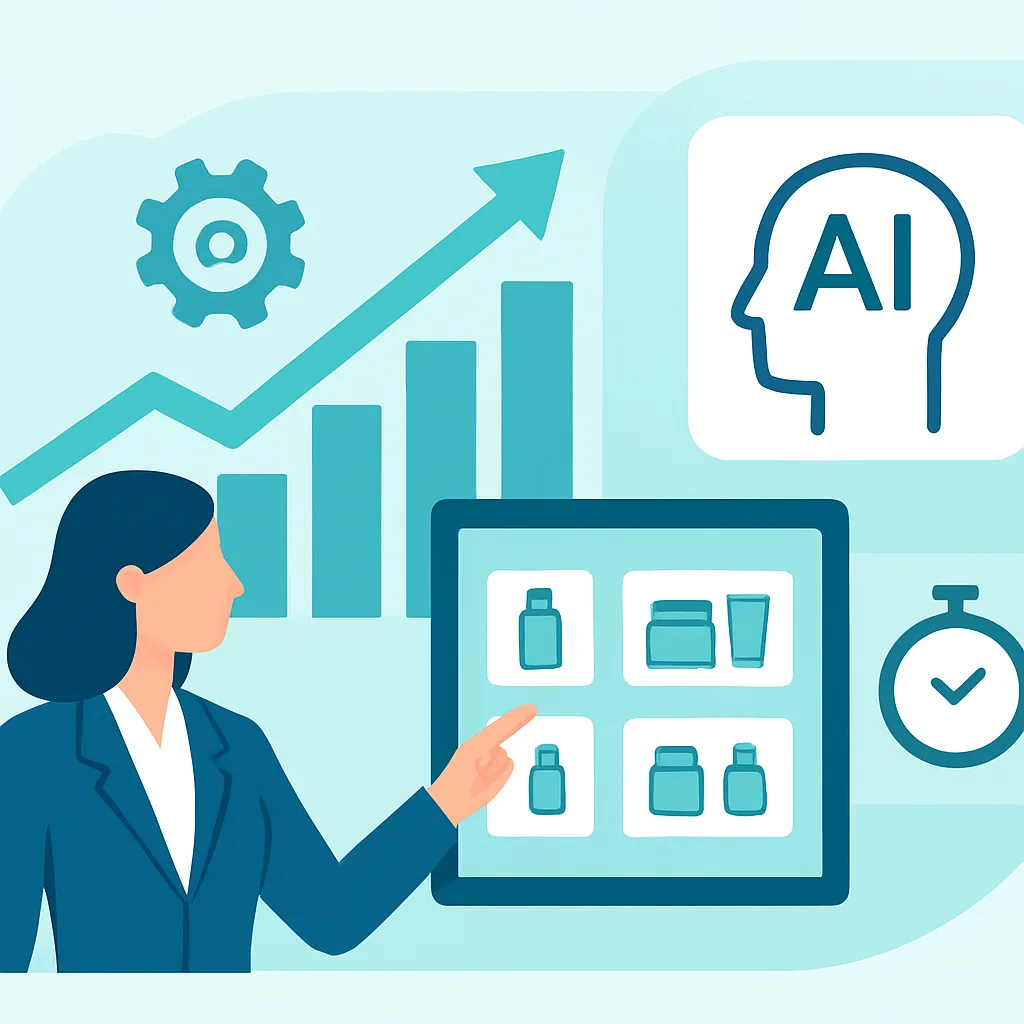
Here are the most important benefits businesses see when they adopt intelligent category management:
- Accuracy at scale: Models apply the same logic to every product, eliminating the inconsistencies that creep in when many people tag items differently.
- Speed: New products are categorized the moment they enter the system, so listings go live faster.
- Adaptability: As trends shift, AI can recommend restructuring categories based on real search and purchase patterns.
- Better discovery: Cleaner taxonomies improve on-site search, filtering, and navigation, which lifts conversion rates.
- Lower operating costs: Teams spend less time on repetitive classification and more time on strategy.
These advantages compound over time. A catalog that stays organized automatically is far cheaper to maintain than one that requires constant manual cleanup.
How AI Category Management Works
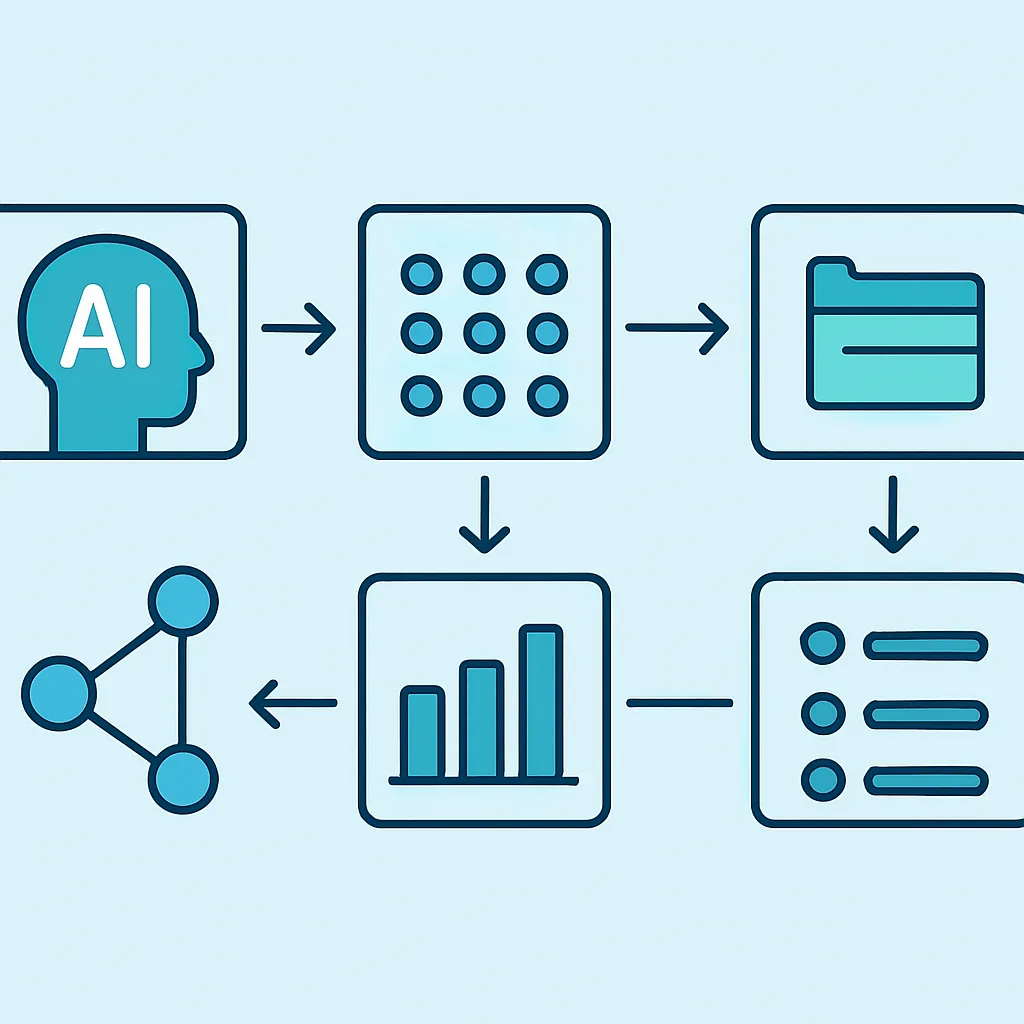
Understanding the underlying workflow helps demystify the technology. While implementations vary, most systems follow a similar pattern.
Step 1: Data Ingestion
The system pulls in raw product data: titles, descriptions, specifications, images, pricing, and any existing tags. The richer this data, the more accurate the model can be.
Step 2: Feature Extraction
Natural language processing reads text fields to understand what a product actually is, while computer vision can analyze images to confirm attributes like color, shape, or type. These signals become "features" the model uses to make decisions.
Step 3: Classification
A trained machine learning model assigns each item to the most appropriate category and subcategory. Modern systems also return a confidence score, so low-confidence items can be flagged for human review.
Step 4: Continuous Learning
As staff correct edge cases and as customer behavior data accumulates, the model retrains and improves. Over time it needs less and less human intervention.
This blend of automation and human oversight is what makes the approach reliable. The AI handles the heavy lifting, while people focus on the small percentage of genuinely ambiguous cases.
AI Category Management in E-Commerce
E-commerce is where the impact of intelligent categorization is most visible. Online stores live and die by how easily shoppers can find products, and category structure is the backbone of that experience.

Consider a marketplace that adds thousands of third-party products every week. Without automation, sellers tag items inconsistently, leading to duplicate categories, empty pages, and frustrated buyers. With AI category management, every incoming product is normalized to a single, coherent taxonomy regardless of how the seller described it.
The results are tangible: improved internal search relevance, more accurate filters, cleaner recommendation engines, and better data for advertising. When a customer filters by "waterproof" or "under 20 dollars," the right products appear because the underlying classification is trustworthy.
Businesses looking to build or upgrade their storefronts often pair this with custom development. If you are planning a scalable online store, exploring professional web application development services can help you integrate AI categorization directly into your platform from the ground up.
Automation: The Real Power Behind It
The true value of artificial intelligence here is not just classification but automation of an entire lifecycle. Once configured, the system runs continuously without waiting for human input.
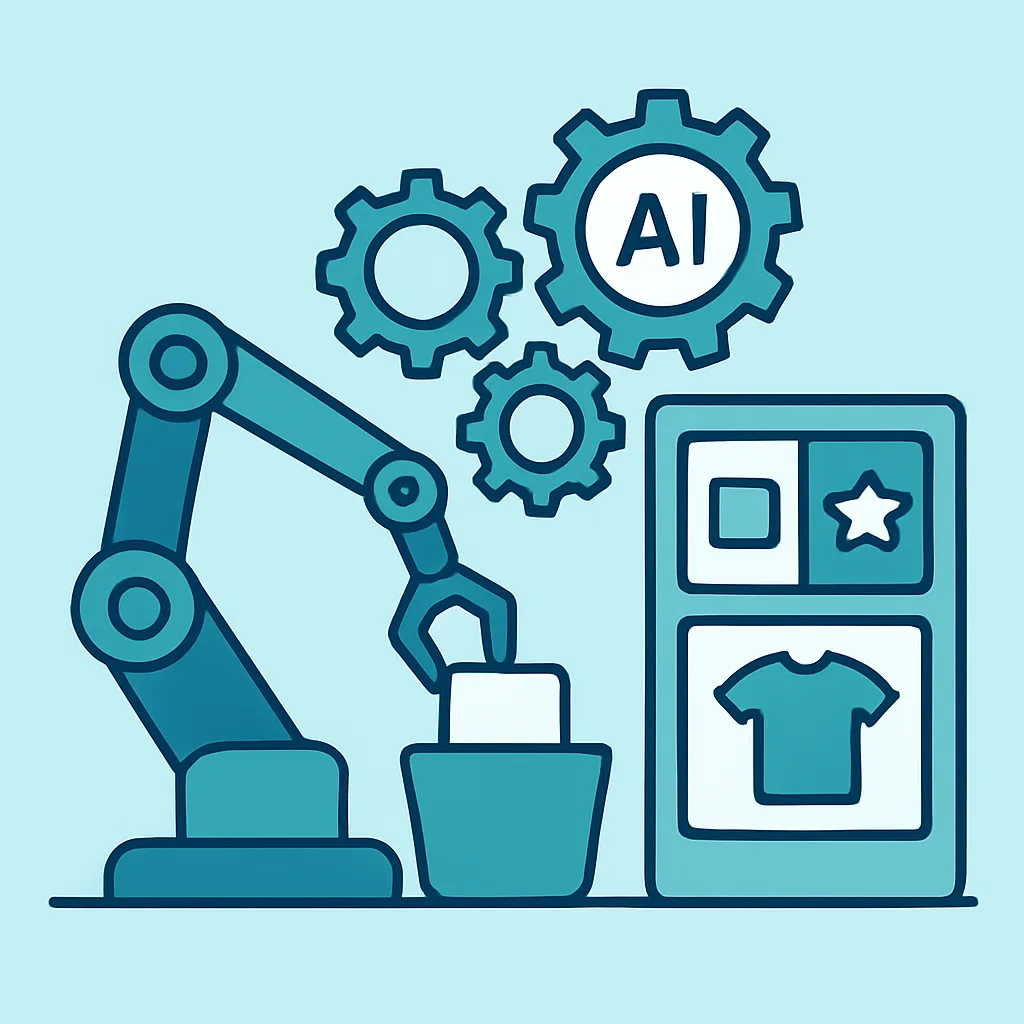
Automated category management can:
- Re-categorize products automatically when their attributes change
- Detect and merge duplicate or near-duplicate categories
- Suggest entirely new categories when a cluster of unclassified items appears
- Maintain consistency across multiple languages and regional storefronts
- Sync taxonomies across web, mobile, and marketplace channels
This level of automation frees teams from reactive maintenance. Instead of constantly patching a broken taxonomy, they oversee a self-correcting system. For organizations exploring how far automation can go, partnering with specialists in artificial intelligence services ensures the models are tuned to your specific catalog and business rules.
Comparing Manual and AI-Driven Category Management
The difference between traditional and AI-powered approaches becomes clear when laid side by side.
| Factor | Manual Management | AI Category Management |
|---|---|---|
| Speed | Slow, hours per batch | Near-instant |
| Consistency | Varies by person | Uniform across catalog |
| Scalability | Limited | Handles millions of items |
| Error correction | Reactive | Proactive and automated |
| Cost over time | High | Lower after setup |
| Adapts to trends | Rarely | Continuously |
While manual management still has a place for highly specialized or low-volume catalogs, AI is the clear choice for any business expecting growth.
Common Challenges and How to Solve Them
No technology is without hurdles. Being aware of the common challenges helps you plan a smoother rollout.
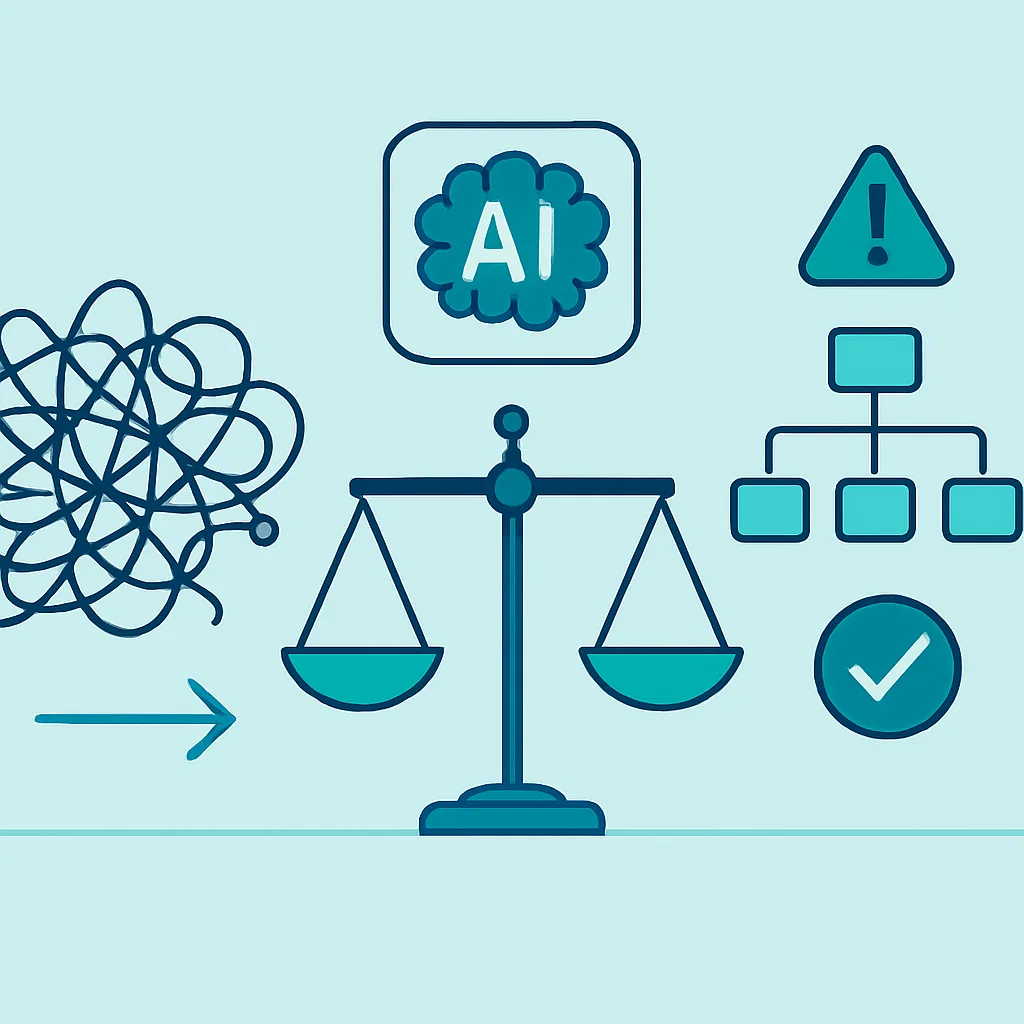
Poor source data: AI is only as good as the data it learns from. Inconsistent titles or missing attributes reduce accuracy. The fix is to clean and standardize data before training, and to enrich product records over time.
Over-automation: Removing humans entirely too early can cause errors to slip through. A confidence-threshold system that routes uncertain items to reviewers keeps quality high.
Resistance to change: Teams accustomed to manual control may distrust automated decisions. Clear reporting, transparency into why the AI made each choice, and a gradual rollout build confidence.
Integration complexity: Connecting AI to existing commerce platforms can be technical. Working with experienced developers smooths the process and prevents costly missteps.
Most of these challenges are operational rather than technical, and they are entirely manageable with the right strategy and partners.
Best Practices for Implementation
To get the most from artificial intelligence category management, follow a few proven principles:
- Start with clean data. Invest in standardizing product attributes before deploying any model.
- Keep humans in the loop. Use confidence scores to route ambiguous items to people, especially in early stages.
- Define clear taxonomy rules. Give the AI a well-structured target taxonomy so its decisions align with your business goals.
- Measure outcomes. Track search relevance, conversion, and time saved to prove ROI and guide refinements.
- Iterate continuously. Treat the system as a living tool that improves with feedback rather than a one-time setup.
These practices ensure your investment delivers lasting value instead of becoming another tool that gets abandoned.
The Future of AI Category Management
The technology is evolving quickly. The next wave goes beyond simple classification toward predictive and generative capabilities.
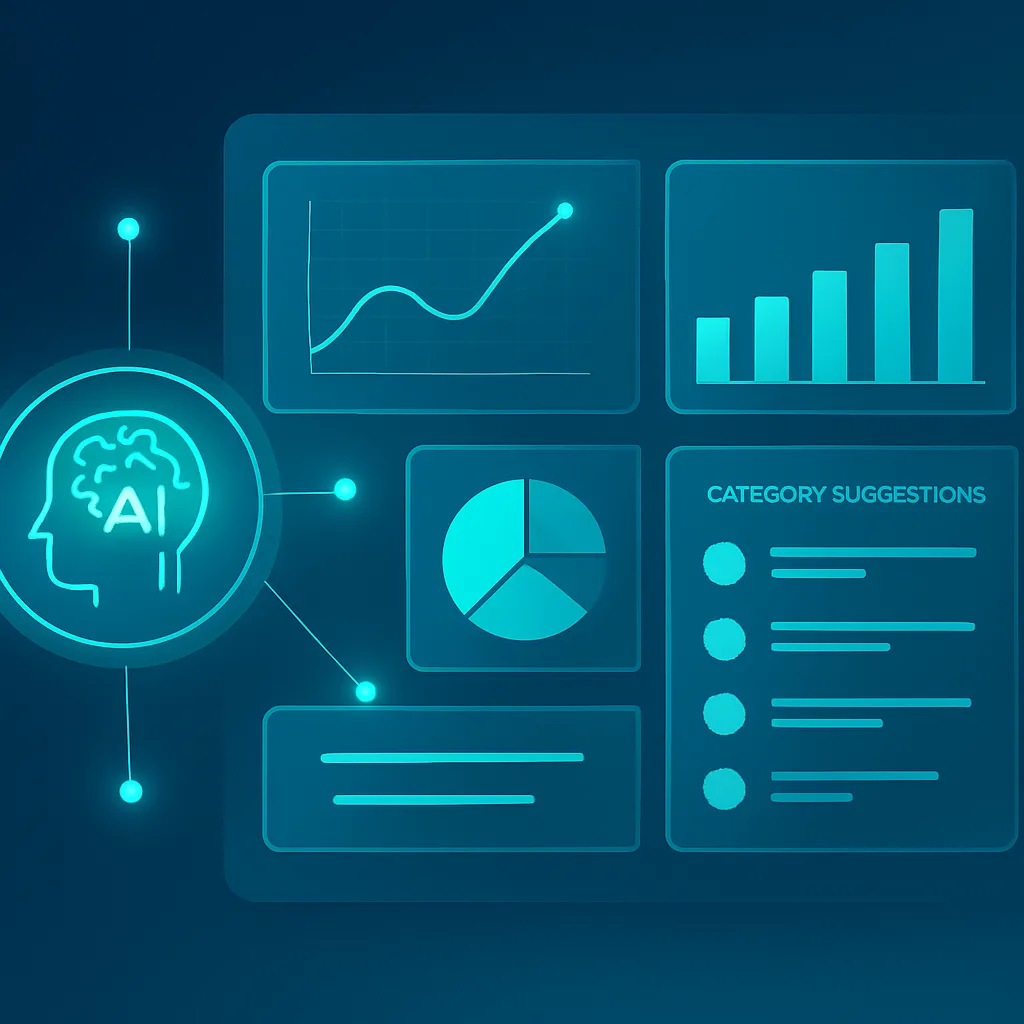
We are already seeing systems that predict which categories will grow based on market signals, automatically generate category descriptions and SEO metadata, and personalize navigation structures for individual shoppers. Imagine a storefront where the category layout subtly adapts to each visitor's intent, all powered by AI working quietly in the background.
As these capabilities mature, category management will shift from a maintenance task to a strategic advantage. Businesses that adopt early will enjoy cleaner data, faster operations, and better customer experiences than competitors still relying on spreadsheets and manual tagging.
Conclusion
Artificial intelligence category management is no longer a futuristic concept; it is a practical tool delivering real results today. By automating classification, maintaining consistency at scale, and continuously learning from data, AI transforms one of the most tedious parts of running a catalog into a competitive strength.
Whether you run a growing online store or manage a massive enterprise catalog, the move toward intelligent, automated categorization is worth making. If you are ready to explore how AI can streamline your operations, the teams at ZoneTechify and WebPeak can help you design and implement a solution tailored to your needs. The result is a catalog that practically organizes itself, freeing your people to focus on growth.