
A practical, expert guide to building and optimizing AI archives with proven Deephacks for smarter storage, faster search, and citable knowledge management.
Artificial Intelligence Archives Deephacks
Most teams do not lose knowledge because they never created it. They lose it because it is scattered across chat threads, forgotten drives, and half-labeled folders no one can search. This is exactly the problem that artificial intelligence archives solve, and the community around "Deephacks" has turned that solution into a repeatable system. After building AI-powered knowledge systems for content teams and SaaS products, I can tell you the difference between a messy folder and a true AI archive is not storage space, it is retrievability.
In this guide, I break down what AI archives actually are, the Deephacks methods that make them genuinely useful, and the tools and workflows that turn a pile of documents into an instant-answer engine. Whether you run a blog, an agency, or an internal wiki, these are the tactics I use in real projects at ZoneTechify and reference alongside resources at WebPeak.
Quick Answer: Artificial intelligence archives are searchable knowledge stores where AI tags, summarizes, and retrieves content on demand. Deephacks are the practical techniques—smart tagging, vector search, and automation—that make these archives fast, accurate, and easy to cite. They turn scattered files into instant, reliable answers.

What Are Artificial Intelligence Archives? (Deephacks Explained)
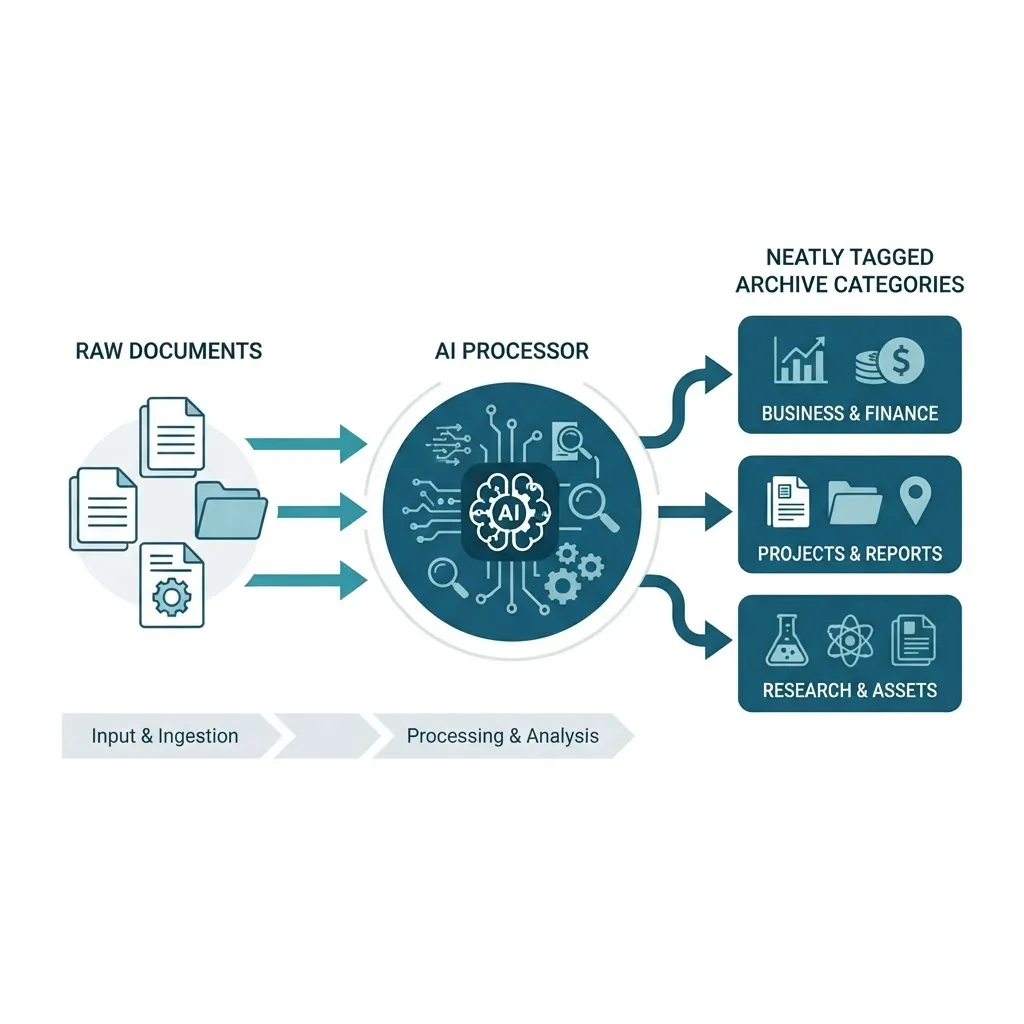
An artificial intelligence archive is a structured collection of documents, media, and data where AI handles the organizing, summarizing, and searching for you. Instead of clicking through folders, you ask a question in plain language and the system returns the exact passage you need, often with a source citation attached.
Deephacks is the term used for the clever, no-nonsense techniques that make these archives perform well. A Deephack is not a gimmick; it is a shortcut grounded in how AI retrieval actually works. Examples include chunking long documents into searchable segments, adding consistent metadata, and using vector embeddings so the system understands meaning rather than just matching keywords.
The core shift is from storage to retrieval. A traditional archive answers "where is this file?" An AI archive answers "what does my knowledge base say about this topic?" That is a fundamentally more useful question for busy teams.

Why AI Archives Matter More Than Ever
The volume of information workers deal with has become the bottleneck, not the shortage of it. According to McKinsey, employees spend an average of 1.8 hours every day—roughly 9.3 hours per week—simply searching for and gathering information. An AI archive attacks that number directly by making retrieval near-instant.
The stakes are rising because content itself is exploding. IDC has projected that global data creation will reach around 175 zettabytes, and most of that is unstructured: emails, notes, transcripts, and documents. Without an intelligent layer on top, more data simply means more noise.
There is also a discoverability angle. As AI answer engines like ChatGPT, Gemini, Perplexity, and Claude become primary research tools, well-structured archives are easier for machines to parse and cite. A clean AI archive is not only useful internally, it makes your public content more likely to be surfaced and quoted by generative engines.
How to Build an AI Archive: Step-by-Step Deephacks
Building an AI archive is less about buying software and more about disciplined structure. Here is the exact sequence I follow on client projects.
- Centralize your sources first. Pull documents, transcripts, and notes into one location before you add any AI layer. A single source of truth prevents duplicate, conflicting answers later.
- Chunk long content. Break big documents into smaller, self-contained sections of a few hundred words. AI retrieves focused chunks far more accurately than entire files.
- Add consistent metadata. Tag every item with topic, date, author, and content type. Consistent tagging is the single highest-impact Deephack for accuracy.
- Generate summaries. Use AI to write a two-line summary for each document. Summaries act as fast previews and improve search matching.
- Enable vector search. Store embeddings so the archive understands meaning, letting "pricing policy" match a document titled "customer billing terms."
- Test with real questions. Ask the questions your team actually asks. If answers are wrong, fix the tagging and chunking, not the model.
The order matters. Teams that jump straight to fancy models without clean structure get confident-sounding but unreliable answers. Structure is the foundation every Deephack builds on.
Best AI Archive Tools Compared
Choosing a tool depends on whether you want a ready-made app or a custom pipeline. The table below compares common approaches so you can match one to your needs.
| Approach | Best For | Search Type | Setup Effort | Citations |
|---|---|---|---|---|
| Notion AI | Small teams and wikis | Keyword plus AI | Low | Limited |
| Custom vector database | Developers and SaaS | Semantic vector | High | Strong |
| Cloud document search | Enterprise archives | Hybrid | Medium | Medium |
| AI note apps | Individuals | Keyword plus AI | Low | Weak |
As a rule, no-code tools win when speed matters and volume is low. Custom vector setups win when accuracy, scale, and source citations are non-negotiable. If your archive powers customer-facing answers, invest in the semantic option early; retrofitting it later is far more painful.

Automating Your AI Knowledge Base
The biggest reason archives decay is manual upkeep. Automation is the Deephack that keeps an archive alive without daily babysitting. The goal is simple: new content should flow in, get tagged, and become searchable without a human touching it.
A practical automation loop looks like this. When a document is added, an automated workflow generates a summary, extracts tags, creates embeddings, and files it into the right category. Tools like webhooks and scheduled jobs handle the plumbing, while the AI handles the judgment.
Automation also protects trust. When summaries and tags are generated by a consistent process, your archive avoids the drift that happens when ten people tag things ten different ways. For teams that want this built properly, ZoneTechify's artificial intelligence services can design the pipeline end to end, from ingestion to retrieval.

The Real Benefits of AI Content Archiving
The benefits of a well-built AI archive compound over time. Here are the ones clients notice first.
- Faster answers. Retrieval drops from minutes of searching to seconds of asking.
- Institutional memory. When employees leave, their documented knowledge stays searchable.
- Consistency. Everyone pulls answers from the same source, reducing conflicting information.
- Better content reuse. Old research and posts resurface instead of being rewritten from scratch.
- Machine-readable knowledge. Clean structure makes your public content easier for AI engines to cite.
The quiet benefit is trust. When a team knows the archive is accurate, they actually use it. An archive that gives one wrong answer loses credibility fast, which is why tagging discipline and testing matter more than any specific model.
Search Optimization Deephacks for AI Archives
A fast archive is useless if it returns the wrong passage. These search-focused Deephacks sharpen accuracy.
- Write descriptive titles. "Q3 refund policy for annual plans" beats "policy doc v2" every time.
- Use synonyms in metadata. Add the words your team actually uses, not just the official term.
- Keep chunks self-contained. Each chunk should make sense on its own, without needing the paragraph before it.
- Refresh embeddings after big edits. Stale embeddings return outdated meaning.
- Log failed searches. The questions that return nothing tell you exactly what content or tags are missing.
The last hack is the most overlooked. Your failed searches are a free content roadmap. Treat them as feedback, close the gaps, and the archive gets smarter with use rather than degrading over time.

The Future of AI Archives
AI archives are moving from passive storage to active reasoning. The near-term future is archives that do not just find a document but synthesize an answer across several sources and show its work with citations. This makes them dramatically more useful for research, support, and content creation.
We are also heading toward multimodal archives that treat images, audio, and video as searchable content, not just attachments. Asking "which webinar covered pricing objections?" and jumping straight to the timestamp will become normal. Teams that structure their archives well today will be ready to plug into these capabilities without rebuilding from scratch.

Key Takeaways
- Artificial intelligence archives turn scattered files into instant, searchable, citable answers.
- Deephacks—chunking, consistent metadata, vector search, and automation—are what make archives accurate and fast.
- Workers spend around 1.8 hours daily searching for information (McKinsey); AI archives target that loss directly.
- Global data creation is projected near 175 zettabytes (IDC), making intelligent retrieval essential, not optional.
- Structure beats model choice: clean tagging and testing matter more than the fanciest AI.
- Automation keeps archives alive, and logged failed searches reveal exactly what to improve next.
Frequently Asked Questions (FAQ)
What is an artificial intelligence archive?
An artificial intelligence archive is a searchable knowledge store where AI tags, summarizes, and retrieves your documents on demand. Instead of browsing folders, you ask a plain-language question and get the exact passage you need, often with a source citation, making stored knowledge instantly usable.
What does Deephacks mean in the context of AI archives?
Deephacks are practical, proven techniques that make AI archives perform well. They include chunking long documents, adding consistent metadata, using vector search for meaning-based retrieval, and automating tagging. Each Deephack is grounded in how AI retrieval actually works, not marketing hype or shortcuts that sacrifice accuracy.
How do I start building an AI archive?
Start by centralizing all your documents into one place. Then chunk long files into smaller sections, add consistent tags, generate summaries, and enable vector search. Finally, test the archive with the real questions your team asks and fix tagging or chunking wherever answers come back wrong.
Are AI archives better than traditional folders?
Yes, for retrieval. Traditional folders answer "where is this file?" while AI archives answer "what does my knowledge say about this topic?" AI archives understand meaning, return specific passages, and can cite sources, which saves significant time compared with manually clicking through nested folder structures.
Can AI archives help my content get cited by AI engines?
Yes. Well-structured archives with clear titles, summaries, and consistent metadata are easier for engines like ChatGPT, Gemini, and Perplexity to parse. Clean structure improves both internal retrieval and your public content's chances of being surfaced and quoted by generative AI answer engines.
How do I keep an AI archive accurate over time?
Automate ingestion so new content is tagged and summarized consistently, refresh embeddings after major edits, and log failed searches to spot missing content. Regularly test the archive with real questions. Consistent tagging discipline and ongoing testing preserve trust far more than switching to a newer model.