
The latest AI regulation news for September 11, 2025, covering EU AI Act enforcement, US policy shifts, and global rules shaping how businesses use AI.
AI Regulation News Today September 11 2025
Meta description: Get the latest AI regulation news for September 11, 2025, covering the EU AI Act, US policy shifts, global rules, and what they mean for your business.
Artificial intelligence is moving faster than the rules designed to govern it, and September 11, 2025 marks another significant day in the global effort to catch up. From sweeping enforcement milestones in Europe to fresh policy signals out of Washington, regulators worldwide are sharpening their focus on how AI systems are built, deployed, and held accountable. For business leaders, developers, and everyday users, staying informed is no longer optional—it directly shapes how companies operate and compete.
In this update, we break down the most important AI regulation developments making headlines today, explain what they mean in practical terms, and outline how organizations can prepare. Whether you are deploying machine learning models or simply relying on AI-powered tools, these changes affect you.
Why AI Regulation Is Dominating Headlines in September 2025
The conversation around AI governance has shifted from theoretical debate to concrete enforcement. Throughout 2025, governments have realized that voluntary commitments alone cannot manage the risks posed by powerful generative systems, autonomous agents, and large-scale data processing. As a result, regulators are now translating principles into binding obligations.
Several forces are converging this month. First, landmark legislation passed in previous years is reaching critical compliance deadlines. Second, high-profile incidents involving deepfakes, biased automated decisions, and data misuse have intensified public pressure. Third, an emerging consensus among international bodies is pushing for interoperable standards so that companies operating across borders are not paralyzed by conflicting requirements.
The bottom line is that AI regulation is no longer a niche legal topic. It has become a board-level priority that touches product design, marketing, hiring, and customer trust.

The EU AI Act Reaches a New Enforcement Phase
The European Union continues to lead the world in comprehensive AI rulemaking. The EU AI Act, the first major horizontal AI law, is now entering phases where specific obligations become enforceable rather than aspirational. Today's coverage focuses heavily on the requirements for general-purpose AI models and the documentation expectations placed on their providers.
Under the current framework, providers of high-impact models must maintain detailed technical documentation, publish summaries of the data used for training, and demonstrate respect for copyright law. Systems classified as high-risk—such as those used in recruitment, credit scoring, or critical infrastructure—face even stricter obligations around transparency, human oversight, and risk management.
What Businesses Operating in Europe Need to Know
Companies serving European users should already be conducting conformity assessments and preparing risk documentation. Penalties for noncompliance are substantial, scaling with global revenue, which means even mid-sized firms cannot afford to ignore the requirements. The practical takeaway is to inventory every AI system in use, classify each by risk level, and assign clear accountability for compliance.
United States Policy Developments
While the EU takes a centralized legislative approach, the United States continues to pursue a more decentralized, sector-by-sector strategy. Today's news reflects ongoing activity at both the federal and state levels. Federal agencies are issuing guidance tied to their existing authority—consumer protection regulators are scrutinizing deceptive AI claims, while financial and health agencies are clarifying how established rules apply to algorithmic decision-making.
At the state level, a patchwork of laws is emerging. Several states have advanced bills addressing automated decision tools, transparency in AI-generated content, and protections against discriminatory outcomes. This fragmentation creates a compliance challenge: a company operating nationwide may need to satisfy multiple overlapping standards.
The most consistent theme in US policy is a focus on transparency and accountability rather than outright restriction. Lawmakers want innovation to continue while ensuring consumers understand when they are interacting with AI and have recourse when automated systems cause harm.
Global Momentum Beyond the US and EU
AI regulation is a worldwide phenomenon. The United Kingdom is refining its pro-innovation, principles-based framework while expanding the role of its dedicated AI safety institute. Canada continues to advance its Artificial Intelligence and Data Act, focusing on high-impact systems. Across Asia, countries including Japan, South Korea, and Singapore are publishing governance frameworks that balance economic ambition with consumer safeguards.
China, meanwhile, maintains some of the most prescriptive rules in the world, particularly around generative AI services, content labeling, and algorithm registration. International coordination efforts through bodies like the OECD and the G7's Hiroshima Process aim to harmonize definitions and reduce friction for companies that operate globally.
For organizations with international reach, the message is clear: build flexible compliance systems that can adapt to multiple jurisdictions rather than designing for a single market.
What These Regulations Mean for Your Business
Regulatory change can feel overwhelming, but it also creates opportunity. Companies that embrace responsible AI practices early gain a competitive advantage through enhanced customer trust and reduced legal exposure. The key is to treat compliance not as a burden but as a foundation for sustainable innovation.
Here is a practical comparison of how leading frameworks differ in approach:
| Region | Primary Approach | Penalty Severity | Focus Area |
|---|---|---|---|
| European Union | Comprehensive law | High | Risk classification |
| United States | Sector and state-based | Moderate | Transparency |
| United Kingdom | Principles-based | Moderate | Innovation safety |
| China | Prescriptive rules | High | Content control |
Navigating this complexity often requires specialized expertise. Partnering with experienced technology providers can help you implement compliant systems without slowing down growth. Teams offering professional artificial intelligence services can guide you through risk assessments, model documentation, and governance design tailored to your industry.

Building a Practical AI Governance Framework
Rather than reacting to each new headline, forward-thinking organizations are establishing durable governance structures. A strong framework rests on a few core pillars.
1. Inventory and Classification
You cannot govern what you cannot see. Start by cataloging every AI system in your organization, including third-party tools embedded in your workflows. Classify each by risk and document its purpose, data sources, and decision authority.
2. Human Oversight
Most regulations emphasize meaningful human control over consequential decisions. Define clear escalation paths and ensure that humans can review, override, or halt automated outputs when necessary.
3. Transparency and Documentation
Maintain records that demonstrate how your systems work, what data they use, and how you test for bias and accuracy. This documentation is your first line of defense during an audit.
4. Continuous Monitoring
AI systems evolve as they encounter new data. Ongoing monitoring helps you catch drift, performance degradation, and emerging risks before they become compliance failures.
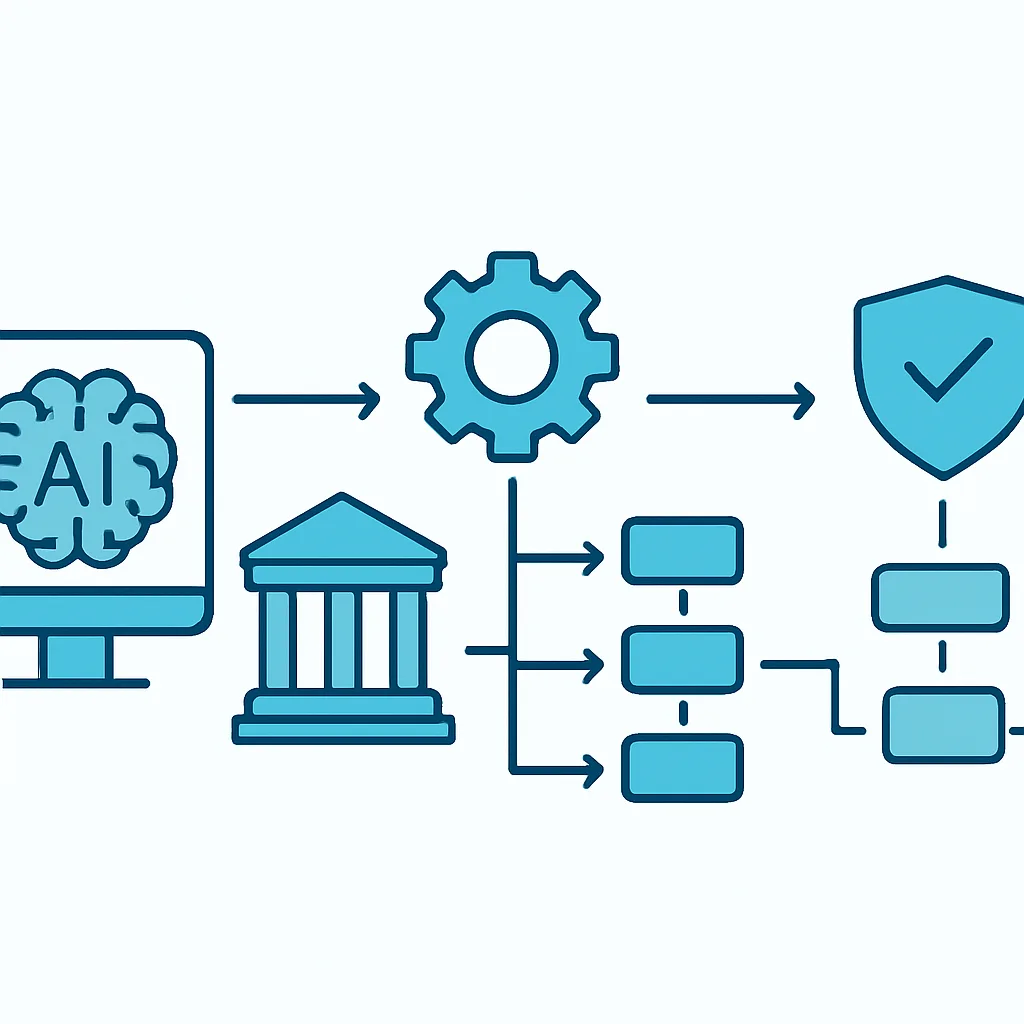
Organizations seeking expert support can explore comprehensive AI solutions from WebPeak, which help businesses align innovation with evolving regulatory expectations. Combining strategic guidance with hands-on implementation ensures that compliance becomes a built-in feature rather than an afterthought.
The Road Ahead for AI Regulation
Looking beyond today's headlines, several trends will define the coming months. Expect deeper scrutiny of autonomous AI agents that act with minimal human input, since these systems raise novel accountability questions. Watch for clearer rules on AI-generated content labeling as deepfake concerns grow ahead of major elections worldwide. And anticipate stronger data governance requirements as regulators connect privacy law with AI training practices.
International harmonization will remain a work in progress. While perfect alignment is unlikely, the gap between major frameworks is gradually narrowing as regulators learn from one another. Companies that invest in adaptable, principles-based governance today will be best positioned to absorb whatever specific rules arrive tomorrow.
The pace of change underscores why staying informed matters. Bookmarking trusted resources, subscribing to regulatory updates, and consulting experienced partners are all smart moves. For ongoing insights and digital expertise, both ZoneTechify and WebPeak offer valuable guidance for businesses adapting to the AI era.
Key Takeaways from Today's AI Regulation News
September 11, 2025 reinforces a clear reality: AI governance has matured from voluntary guidelines into enforceable obligations with real consequences. The EU continues to set the global benchmark with its comprehensive, risk-based law, while the United States advances a flexible patchwork centered on transparency. Around the world, nations are racing to balance innovation with protection.
For businesses, the path forward is proactive preparation. Inventory your AI systems, classify them by risk, document thoroughly, and maintain genuine human oversight. Treat compliance as an investment in trust rather than a checkbox exercise. By acting now, you protect your organization from legal exposure while building the credibility that customers increasingly demand.
AI regulation will keep evolving, but the fundamentals of responsible, people-first technology remain constant. Stay informed, stay adaptable, and partner with experts who understand both the technology and the rules that govern it. The organizations that thrive in this new landscape will be those that view regulation not as a barrier, but as a blueprint for building AI the right way.