
A clear breakdown of AI regulation 2025 news, including the EU AI Act, US state and federal rules, global frameworks, and how businesses can stay compliant.
AI Regulation 2025 News: What Changed and Why It Matters
Artificial intelligence moved from the lab to the boardroom faster than any technology in modern history, and lawmakers spent 2025 racing to keep pace. From the European Union enforcing the world's first comprehensive AI law to a wave of new rules in the United States, Asia, and the Middle East, the regulatory landscape shifted in ways that affect every company building or buying AI. This guide breaks down the most important AI regulation 2025 news, explains what it means in plain language, and shows how organizations can turn compliance into a competitive advantage.

Why 2025 Became the Turning Point for AI Rules
For years, AI governance was mostly voluntary. Companies published ethics statements, signed pledges, and promised responsible development. That era ended in 2025. Generative AI tools reached hundreds of millions of users, deepfakes influenced elections, and high-profile failures in hiring, lending, and healthcare exposed the real-world cost of unregulated systems.
Regulators responded with binding laws rather than guidelines. The shift matters because the rules now carry penalties, audit requirements, and documentation obligations. A startup that ignored governance in 2023 could face fines large enough to threaten its survival in 2025. The message from policymakers was clear: innovation is welcome, but accountability is mandatory.
This new reality is why businesses are investing in proper artificial intelligence services that bake compliance into the build process from day one, rather than bolting it on after launch.
The EU AI Act: From Law to Enforcement
The European Union's AI Act remained the centerpiece of global AI regulation 2025 news. Although the law was formally adopted earlier, 2025 was the year its phased obligations began to bite. The Act uses a risk-based framework that sorts AI systems into four tiers.
- Unacceptable risk: Banned outright. This includes social scoring by governments and certain manipulative systems.
- High risk: Heavily regulated. Covers AI used in medical devices, critical infrastructure, hiring, education, and law enforcement.
- Limited risk: Transparency obligations. Chatbots and AI-generated content must be clearly disclosed.
- Minimal risk: Largely unregulated. Spam filters and AI in video games fall here.
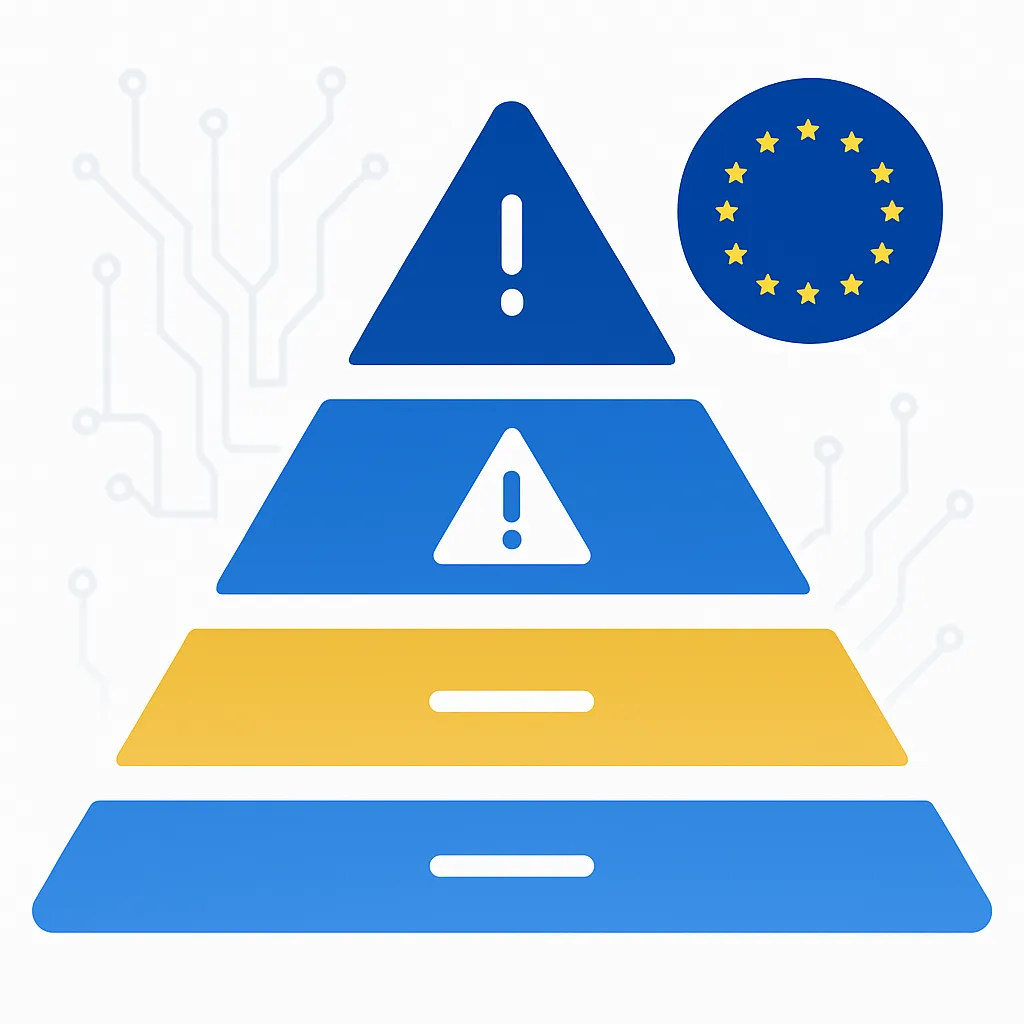
In 2025, prohibitions on unacceptable-risk systems took full effect, and obligations for general-purpose AI models, including large language models, began rolling out. Providers of powerful foundation models now must publish technical documentation, summarize training data, and demonstrate they have tested for systemic risks. For any company offering AI products to European customers, the Act applies regardless of where the business is headquartered, which makes it a de facto global standard.
United States: A Patchwork Accelerates
While the EU pursued one unified law, the United States moved through a mix of federal action and aggressive state legislation. The headline AI regulation 2025 news from Washington centered on shifting executive priorities, new guidance from agencies like the FTC, and growing attention to AI in national security and critical sectors.
The bigger story, however, played out at the state level. Several states advanced laws targeting automated decision-making, algorithmic discrimination, and transparency in AI hiring tools. Rules requiring disclosure of AI-generated political content and protections against unauthorized deepfakes gained momentum. The result is a patchwork: a company operating in multiple states may face overlapping and sometimes conflicting requirements.
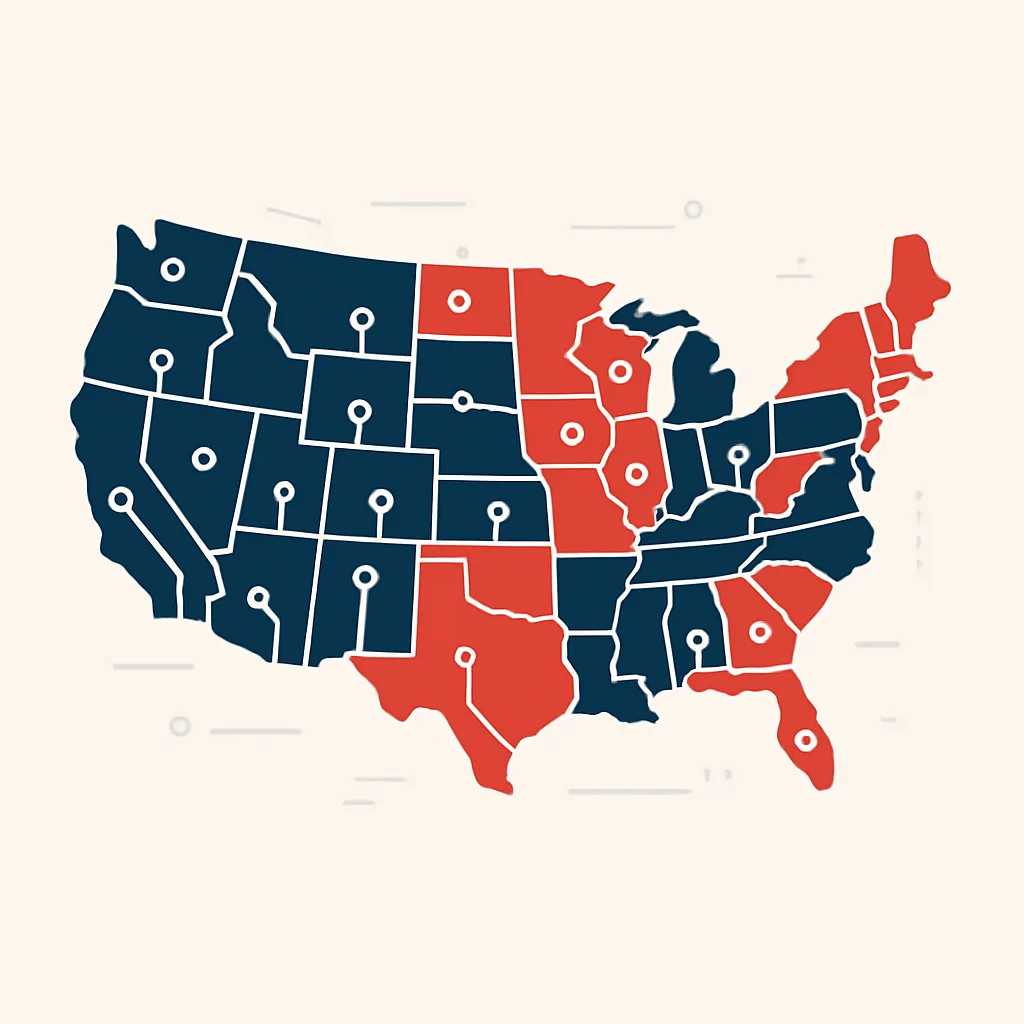
For businesses, this fragmentation is a practical challenge. Compliance teams can no longer assume a single national standard. Instead, they must map where their AI is used and which obligations apply in each jurisdiction. Many organizations now treat the strictest applicable rule as their baseline, since building to the highest standard simplifies operations and reduces legal exposure.
Global Momentum: Asia, the UK, and the Middle East
AI regulation in 2025 was a worldwide phenomenon. The United Kingdom continued its pro-innovation, sector-led approach, empowering existing regulators to apply AI principles within their domains rather than passing a single sweeping law. This lighter-touch model aimed to attract investment while still addressing safety concerns.
In Asia, countries took varied paths. China expanded its rules on generative AI and deepfakes, requiring labeling and security reviews. Several Asian economies introduced or refined national AI strategies that paired funding with guardrails. In the Middle East, governments positioned themselves as AI hubs, blending ambitious investment with emerging governance frameworks designed to build public trust.

The common thread across regions is convergence on a few core ideas: transparency about when AI is used, accountability for harmful outcomes, protection of personal data, and special scrutiny for high-stakes applications. Even where the legal texts differ, the underlying expectations are aligning, which helps companies design once and comply broadly.
Comparing the Major Frameworks
The table below summarizes how the leading approaches differed in 2025.
| Region | Approach | Key Focus | Penalties |
|---|---|---|---|
| European Union | Comprehensive law | Risk tiers, foundation models | High, percentage of revenue |
| United States | Patchwork | State rules, sector guidance | Varies by state and agency |
| United Kingdom | Sector-led | Principles, existing regulators | Lighter, regulator-dependent |
| China | Prescriptive | Generative AI, labeling | Significant, with reviews |
This comparison shows why a one-size-fits-all compliance strategy fails. Each framework rewards different behaviors, but all of them reward documentation, testing, and transparency.
What These Changes Mean for Businesses
The practical impact of 2025's regulatory wave reaches far beyond legal departments. Product teams must now consider compliance during design, not after deployment. Data scientists need to document how models are trained and validated. Marketing teams must disclose AI-generated content. Leadership must understand where liability sits.
Three obligations stand out as universal priorities.
1. Transparency and Disclosure
Users increasingly have a right to know when they are interacting with AI or viewing AI-generated material. Clear labeling builds trust and satisfies a growing list of legal requirements. Companies that hide AI use risk both penalties and reputational damage.
2. Risk Assessment and Documentation
High-risk systems demand formal risk assessments, ongoing monitoring, and detailed records. Even for lower-risk tools, maintaining documentation is now a best practice. If a regulator asks how a system works, "we are not sure" is no longer an acceptable answer.

3. Data Governance and Privacy
AI regulation intersects heavily with data protection laws. Training data must be sourced responsibly, personal information must be handled lawfully, and bias must be tested and mitigated. Strong data governance is the foundation that makes everything else possible.
Turning Compliance Into Opportunity
It is tempting to view regulation as a burden, but the smartest organizations in 2025 treated it as a market advantage. Trust has become a differentiator. Customers, partners, and investors increasingly prefer vendors who can prove their AI is safe, fair, and well-governed.
Companies that invested early in responsible AI practices found compliance easier and faster. They also discovered that the same disciplines that satisfy regulators, such as clear documentation, bias testing, and human oversight, also produce better, more reliable products. In other words, good governance and good engineering point in the same direction.
This is where expert partners add value. Working with specialists in AI development and governance helps teams implement compliant architectures without slowing innovation. Rather than guessing at requirements, businesses gain a structured path from concept to compliant deployment. You can explore broader capabilities at WebPeak and complementary digital solutions at ZoneTechify, both of which focus on building technology that is powerful and responsible.
A Practical Roadmap for the Year Ahead
For organizations feeling overwhelmed, a clear sequence of steps makes the path manageable.
First, inventory your AI. You cannot govern what you cannot see. Catalog every AI system in use, including third-party tools, and classify each by risk and jurisdiction.
Second, identify applicable rules. Map each system to the laws that govern it based on where it operates and what it does. This reveals your true compliance footprint.
Third, close the gaps. Add documentation, disclosure, testing, and human oversight where they are missing. Prioritize high-risk systems that carry the greatest legal and ethical stakes.
Fourth, build for the future. Regulations will keep evolving, so design processes that adapt. Establish an internal AI governance function, train your teams, and review your systems regularly.

Looking Beyond 2025
The trajectory is unmistakable. AI regulation will continue to expand, deepen, and harmonize across borders. Expect more attention to autonomous agents, more scrutiny of AI in sensitive sectors, and stronger enforcement as regulators build technical expertise. International coordination will likely grow, reducing fragmentation over time and giving global businesses a clearer target.
The companies that thrive will be those that stopped treating compliance as an afterthought and started treating responsible AI as a core competency. Regulation is not the enemy of innovation. When done well, it channels innovation toward outcomes that are trustworthy, durable, and genuinely valuable to people.
Final Thoughts
The AI regulation 2025 news cycle delivered a clear lesson: the age of unaccountable AI is over. The EU AI Act set a global benchmark, the United States built a complex patchwork, and nations worldwide raced to define their own rules. For businesses, the path forward is not to fear these changes but to embrace them with strategy and care. By prioritizing transparency, documentation, and strong data governance, and by partnering with experts who understand both the technology and the law, organizations can stay compliant, build trust, and lead in an AI-driven future.