
Discover what a digital marketing agency does for small businesses: SEO, PPC, social media, email, content, and analytics that drive measurable growth.
What Does a Digital Marketing Agency Do for Small Businesses
Most small business owners wear ten hats a day, and marketing is usually the one that slips. You know you need to show up on Google, post consistently on social media, and follow up with leads, but there are only so many hours between serving customers and running operations. That gap is exactly where a digital marketing agency fits. After working with hundreds of small business clients at ZoneTechify, we have seen the same pattern repeat: owners who delegate marketing to specialists grow faster than owners who treat it as a side task. This guide breaks down exactly what an agency does for a small business, service by service, so you can decide whether hiring one makes financial sense for you.
Quick Answer: A digital marketing agency plans, executes, and measures your online marketing so you can focus on running your business. For small businesses, that typically includes SEO, paid advertising, social media management, email campaigns, content creation, and monthly performance reporting, all aligned to one goal: generating leads and sales at a cost you can afford.
What Is a Digital Marketing Agency?
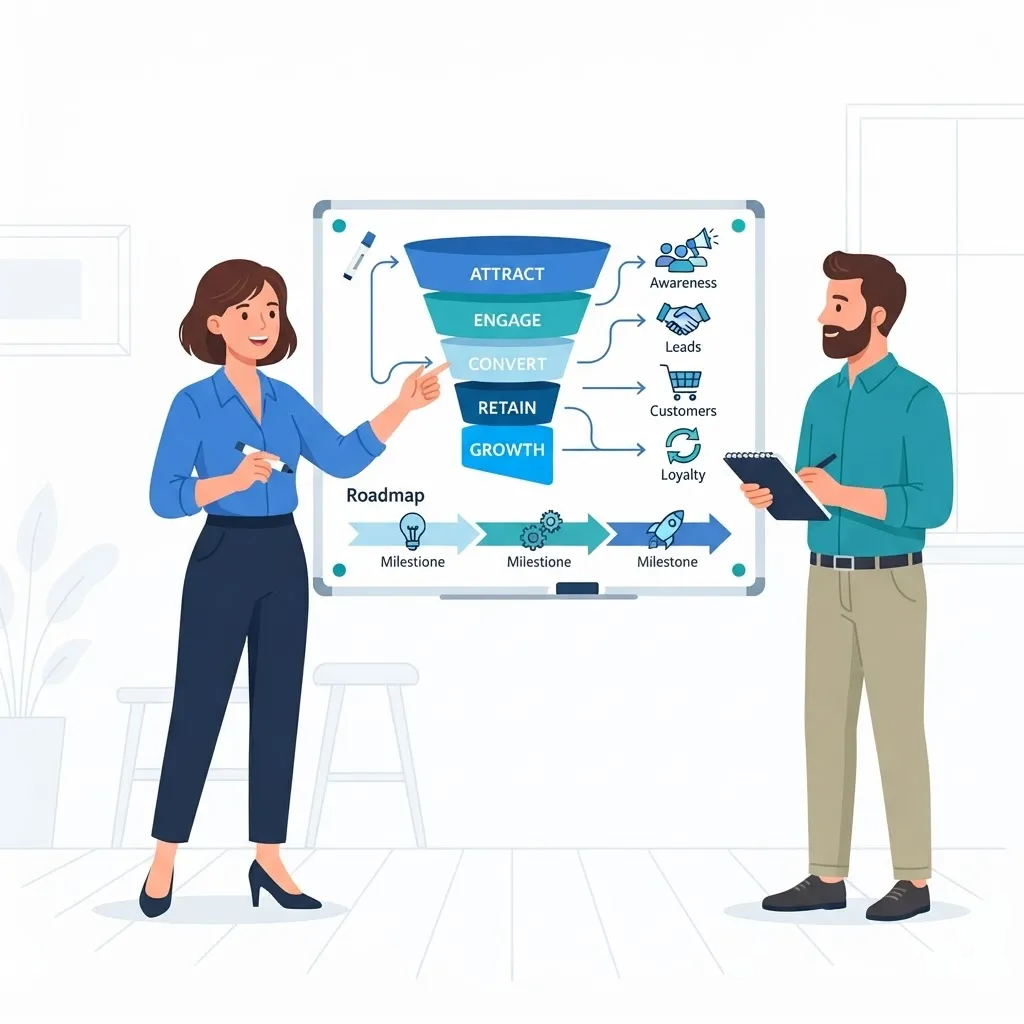
A digital marketing agency is a company that provides outsourced online marketing services, including strategy, execution, and reporting, in exchange for a monthly retainer or project fee. Unlike a single freelancer, an agency gives you access to a team: an SEO specialist, an ad manager, a copywriter, a designer, and an account manager, without paying five salaries.
For small businesses specifically, the agency's job is prioritization. A Fortune 500 brand can fund every channel at once. A local plumber or boutique e-commerce store cannot. A good agency identifies the two or three channels most likely to produce revenue for your specific business, concentrates the budget there, and expands only after those channels prove profitable.
The Core Services a Digital Marketing Agency Provides
Here are the six services small businesses buy most often, and what each one actually involves behind the scenes.
Search Engine Optimization (SEO)
SEO is the practice of improving your website so it ranks higher in unpaid Google search results. It matters more than most owners realize: according to BrightEdge research, 53% of all trackable website traffic comes from organic search, more than any other channel.
For a small business, an agency's SEO work usually includes:
- Keyword research to find the exact phrases your customers type, such as "emergency electrician near me" instead of generic terms you cannot win.
- Local SEO, including optimizing your Google Business Profile, building consistent citations, and generating reviews. Google's own data shows that 76% of people who search for something nearby on their smartphone visit a related business within a day.
- On-page optimization of titles, headings, page speed, and internal links.
- Content and link building to build the authority Google rewards.
SEO compounds slowly, and honest agencies say so. Expect meaningful movement in four to six months, not four to six weeks.

Paid Advertising (PPC)
Pay-per-click advertising, on platforms like Google Ads and Meta Ads, buys immediate visibility while SEO builds. The agency's value here is not just setting up campaigns; it is stopping you from wasting money. In audits we run at ZoneTechify, the most common finding in self-managed accounts is budget leaking to irrelevant search terms because nobody maintained negative keyword lists.
A competent agency will define conversion tracking before spending a dollar, structure campaigns around your highest-margin services, test ad copy weekly, and report cost per lead, not vanity metrics like impressions. For most local businesses, a well-managed Google Ads account can produce leads within the first two weeks, which makes PPC the fastest lever an agency can pull.

Social Media Management
Social media management means an agency plans, creates, publishes, and monitors your social content so your brand stays visible and responsive. For small businesses, the strategic question is platform selection: a wedding photographer belongs on Instagram, a B2B consultant belongs on LinkedIn, and almost no small business needs all six major platforms.
Deliverables typically include a monthly content calendar, branded graphics and short-form video, community management (replying to comments and messages), and engagement reporting. The underrated benefit is consistency. Most owner-run accounts post in bursts and then go silent for weeks, which quietly signals to prospects that the business might be inactive.

Email Marketing
Email remains the highest-ROI channel available to small businesses because you own the audience; no algorithm can take it away. An agency builds this system for you: lead capture forms on your website, a welcome sequence that introduces new subscribers to your offer, automated follow-ups for abandoned carts or unbooked quotes, and regular newsletters that keep past customers coming back.
The difference between agency-run and DIY email is usually automation. A one-time blast is easy; a behavior-triggered sequence that recovers a lost sale at 2 a.m. requires setup expertise most owners do not have time to learn.

Content Marketing
Content marketing is the creation of helpful articles, guides, videos, and landing pages that answer your customers' questions before they ever call you. It feeds every other channel: blog posts earn SEO rankings, guides become email sequences, and videos become social posts.
An agency handles the full pipeline: researching what your audience actually searches for, writing content that demonstrates your expertise, and structuring it so both Google and AI answer engines like ChatGPT and Perplexity can cite it. That last point is increasingly important; content optimized only for traditional search is leaving visibility on the table in 2026.

How an Agency Builds Your Strategy, Step by Step
Every reputable agency follows a version of this process in the first 90 days:
- Discovery: Understand your services, margins, capacity, and what a good customer looks like.
- Audit: Review your website, analytics, ad accounts, and competitors to find gaps and quick wins.
- Goal setting: Define specific targets, such as "30 qualified leads per month at under $50 each."
- Channel selection: Choose the two or three channels with the best expected return for your budget.
- Execution: Launch campaigns, publish content, and optimize your website for conversion.
- Reporting and iteration: Review results monthly, cut what underperforms, and scale what works.
If an agency skips discovery and jumps straight to a package price, treat that as a red flag. Strategy built without understanding your margins is guesswork.
Agency vs. In-House vs. Freelancer: Which Fits a Small Business?
| Factor | Digital Marketing Agency | In-House Hire | Freelancer |
|---|---|---|---|
| Typical monthly cost | $1,500 to $5,000 retainer | $4,500+ salary plus benefits | $500 to $2,500 |
| Skill coverage | Full team across channels | One person's skill set | One specialty |
| Speed to start | 2 to 4 weeks | 2 to 3 months to hire | 1 to 2 weeks |
| Tools included | Yes, agency licenses | You buy them | Sometimes |
| Scalability | High | Limited | Low |
| Best for | Multi-channel growth | Mature marketing operations | Single defined task |
For most small businesses spending under $10,000 per month on marketing, an agency delivers broader expertise per dollar than either alternative. The digital marketing team at ZoneTechify structures retainers this way deliberately, so a small budget still buys specialist-level work in every channel it touches.
How Much Does a Digital Marketing Agency Cost for a Small Business?
Most small businesses pay between $1,500 and $5,000 per month for agency retainers, with ad spend billed separately on top. As a budgeting benchmark, the U.S. Small Business Administration recommends that small businesses with under $5 million in revenue allocate 7% to 8% of gross revenue to marketing.
The more useful question is cost per result. If a $2,500 retainer plus $1,500 in ad spend produces 40 leads and you close 25% of them at a $1,000 average sale, you generated $10,000 from a $4,000 investment. Judge every agency against that math, not against the sticker price.
How Agencies Measure and Report Results
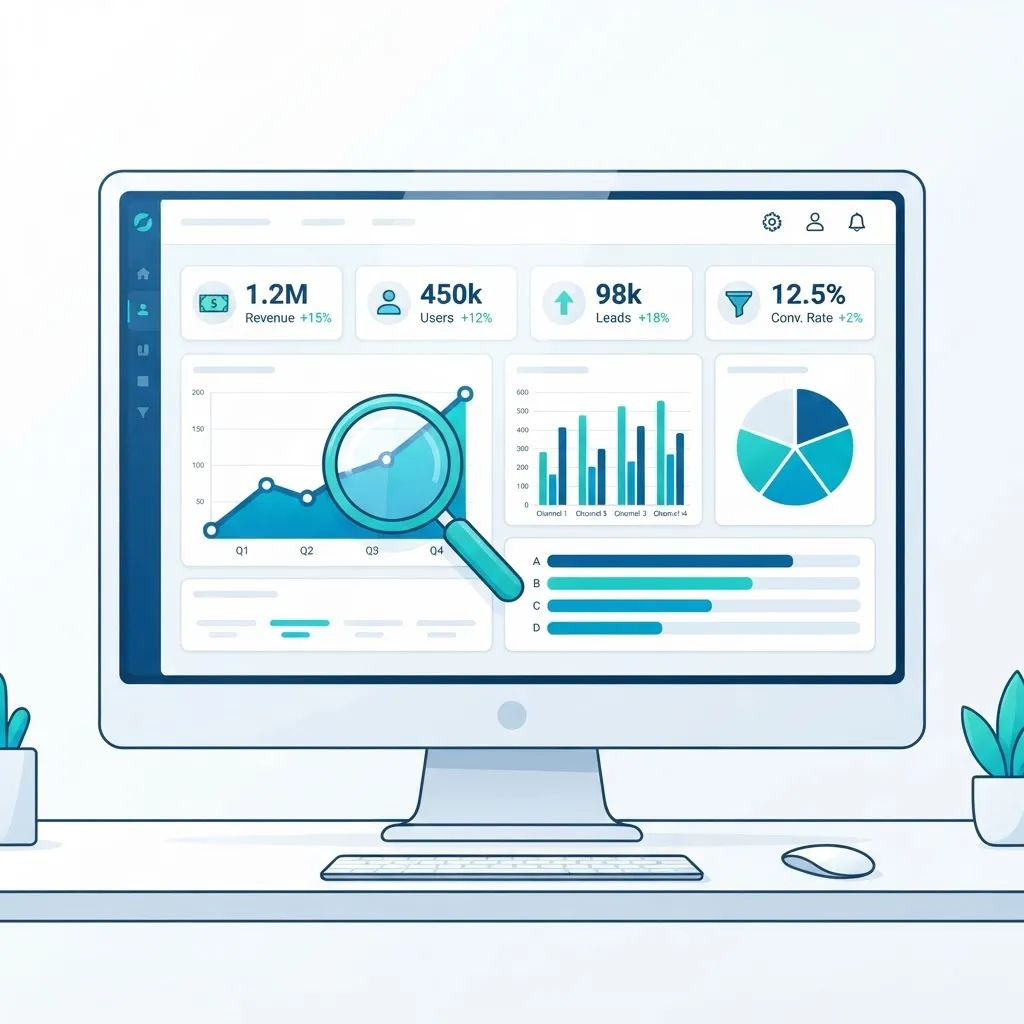
A trustworthy agency ties every activity to numbers you can verify in your own accounts. Expect a monthly report covering organic traffic and keyword rankings, cost per lead and cost per acquisition from paid campaigns, email open and conversion rates, and, most importantly, lead volume and revenue attribution.
Insist on owning your accounts: your Google Analytics, Google Ads, and Business Profile should live under your logins with the agency added as a manager. Partners like WebPeak set clients up this way by default; agencies that lock you out of your own data are building leverage, not results.
When Should a Small Business Hire an Agency?
You are ready for an agency when at least two of these are true:
- Marketing tasks consistently get postponed because operations come first.
- You are spending on ads without knowing your cost per lead.
- Revenue has plateaued and referrals alone are no longer enough.
- You can commit a consistent monthly budget for at least six months.
If none apply yet, start smaller: claim your Google Business Profile, collect reviews, and set up basic analytics yourself, then hire help when demand outgrows your time.
Key Takeaways
- A digital marketing agency handles strategy, execution, and reporting across SEO, PPC, social, email, and content for a monthly retainer.
- Organic search drives 53% of trackable website traffic (BrightEdge), making SEO a core long-term investment.
- 76% of nearby mobile searchers visit a related business within a day (Google), which makes local SEO essential for local businesses.
- Typical small business retainers run $1,500 to $5,000 per month; the SBA recommends budgeting 7% to 8% of revenue for marketing.
- Judge agencies on cost per lead and revenue produced, never on impressions or follower counts.
Frequently Asked Questions (FAQ)
Is a digital marketing agency worth it for a small business?
Yes, when the math works. If the agency's retainer plus ad spend produces leads that convert into more revenue than the total cost, it is worth it. Give any engagement at least six months, track cost per lead from day one, and exit if the numbers never trend toward profitability.
How much should a small business pay a digital marketing agency?
Most small businesses pay $1,500 to $5,000 per month in retainer fees, with advertising spend billed separately. Start at the lower end with one or two channels, prove they generate profitable leads, then scale the budget. Avoid long lock-in contracts before an agency has demonstrated results.
How long does it take to see results from a digital marketing agency?
Paid advertising can generate leads within two to four weeks of launch. SEO and content marketing typically need four to six months before rankings and organic traffic move meaningfully. A good agency combines both, using PPC for immediate pipeline while SEO builds a durable long-term asset.
What should I ask a digital marketing agency before hiring them?
Ask who will actually work on your account, which metrics they will report monthly, whether you keep ownership of all ad and analytics accounts, and for results from businesses similar to yours. Vague answers about "brand awareness" without lead or revenue numbers are a warning sign.
Can I do digital marketing myself instead of hiring an agency?
You can, and early-stage businesses often should. Claim your Google Business Profile, gather reviews, and post consistently on one platform. The tipping point comes when your time is worth more in operations than in marketing, or when ad budgets grow large enough that mistakes cost real money.
Final Thoughts
A digital marketing agency does the work most small business owners know matters but never get to: ranking on Google, running profitable ads, staying visible on social media, and turning past customers into repeat buyers. The right partner behaves like an outsourced growth department, reports in dollars rather than vanity metrics, and leaves you owning every account and asset. Evaluate agencies on that standard, and the decision to hire one becomes a simple return-on-investment calculation rather than a leap of faith.