A practical guide to web development consultation: what happens in the meeting, how to prepare, which questions to ask, and how to spot red flags before you sign.
Web Development Consultation
A web development consultation is the single highest-leverage hour of any website project. It is the point where a vague idea ("we need a new site") turns into a scoped, priced, technically viable plan — or where a project quietly starts failing because nobody defined what success meant. After sitting on both sides of hundreds of these calls, the pattern is consistent: projects that go over budget almost never fail during development. They fail during the consultation, when assumptions were never written down.
This guide explains exactly what happens in a professional consultation, what to bring, what to ask, what a good proposal looks like afterwards, and how to tell a genuine technical advisor apart from a salesperson with a slide deck.
Quick Answer: A web development consultation is a structured session where a developer or agency reviews your business goals, current site, technical constraints, and budget, then recommends a platform, scope, timeline, and cost. A good consultation lasts 45 to 90 minutes and ends with written next steps, not a hard sell.
What Is a Web Development Consultation?
A web development consultation is a discovery session whose only job is to reduce uncertainty before money is committed. It is diagnostic work, not sales work. The consultant's task is to translate business outcomes (more qualified leads, fewer support tickets, faster checkout) into technical requirements (rendering strategy, CMS choice, integrations, hosting model).
Key definition: Discovery is the phase where requirements, constraints, and success metrics are documented before any code or design begins. Scope is the written boundary of what is included — and, critically, what is excluded.
A competent consultation covers five things: business objectives, current-state audit, technical constraints, budget reality, and decision-making process. If a call skips the last two, you will receive a proposal built on guesswork.
Why the Consultation Determines Project Cost
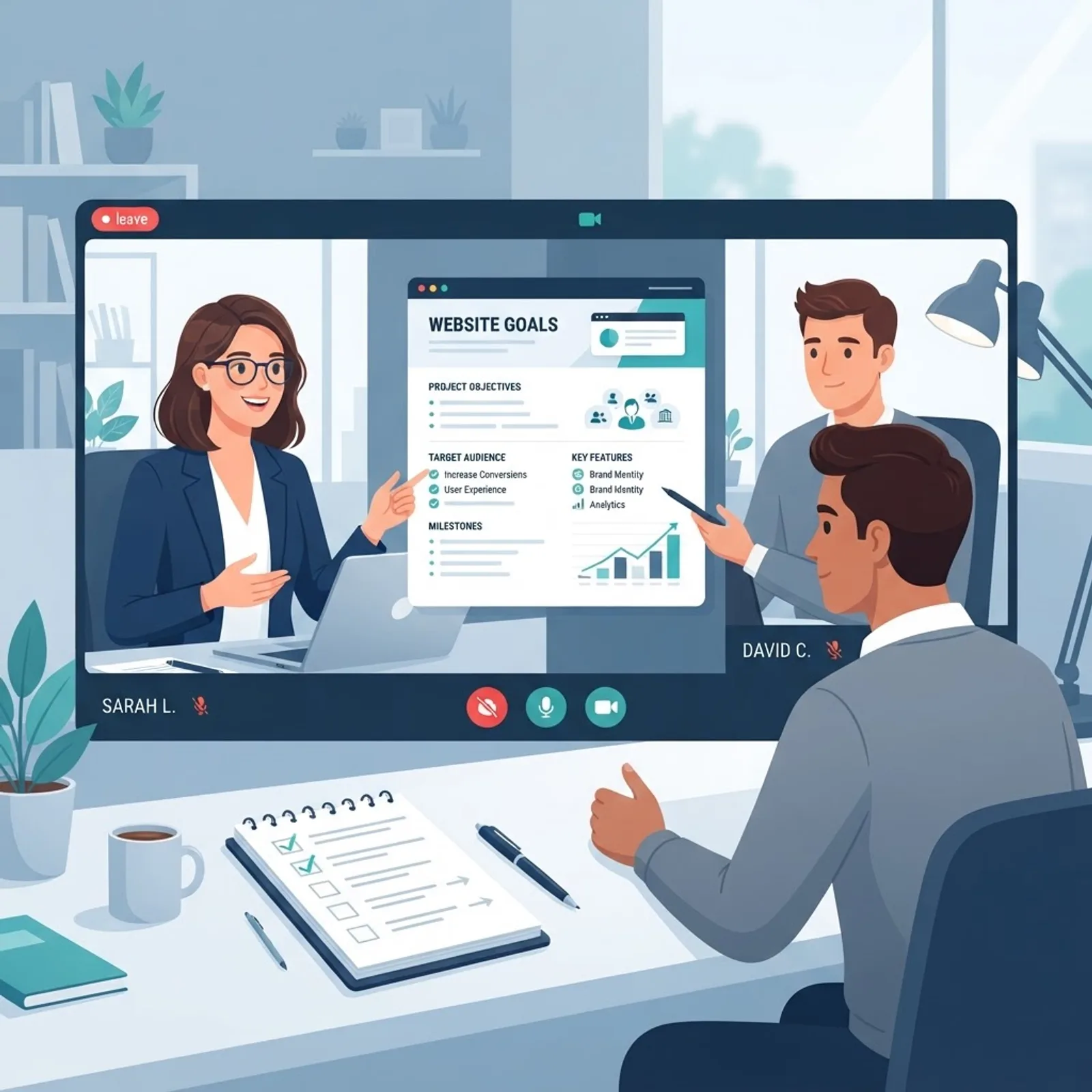
Requirements clarity is the strongest predictor of budget accuracy. The Standish Group's long-running CHAOS research has repeatedly found that unclear requirements and weak stakeholder involvement rank among the top causes of software project failure — and both are consultation-stage problems, not development-stage problems. Every ambiguity you leave unresolved on the call becomes a change request later, priced at full rate.
The economics are simple. Changing a sentence in a requirements document costs minutes. Changing the same decision after the database schema, templates, and integrations are built can cost days.
How to Prepare for Your Consultation
Preparation is what separates a productive 60 minutes from a polite conversation. Bring the following, even in rough form:
- Your primary business goal, stated as a number. "Increase demo bookings from 20 to 50 per month" is actionable. "Look more modern" is not.
- Analytics access or a screenshot of the last 90 days. Traffic sources, top landing pages, and bounce behaviour tell a consultant more than any brief.
- A list of must-keep functionality. Forms, CRM sync, payment gateway, booking system, multilingual content, existing URLs.
- Three competitor or reference sites, with one sentence each on what you like and why.
- Your real budget range and your hard deadline. Withholding budget wastes the call; a consultant cannot recommend architecture without knowing whether you have five thousand or eighty thousand to spend.
- Who signs off. Name the decision makers. Projects stall more often on approval chains than on code.

Content Is the Most Underestimated Input
In practice, content readiness delays more launches than development does. If you do not have final copy, product data, and images, say so on the call so it becomes a scoped line item rather than a surprise. Teams that need help here should budget for it explicitly — a structured content writing service is far cheaper than a finished site sitting unlaunched for two months waiting on page copy.
Questions to Ask in a Web Development Consultation
The quality of your questions controls the quality of the information you get. These ten separate advisors from order-takers:
- What would you recommend we not build in phase one, and why?
- Which platform are you proposing, and what are its limitations for our use case?
- Who owns the code, domain, hosting account, and design files after launch?
- How will you handle URL redirects and preserve existing search rankings?
- What are our Core Web Vitals targets, and how will you verify them?
- What is your process when we request something outside scope?
- Who specifically will write the code — in-house staff, contractors, or an offshore partner?
- What happens in month one after launch if something breaks?
- Can we see a project you delivered in our industry, and speak to that client?
- What is the total first-year cost including hosting, licences, and maintenance?
Question three matters more than most clients realise. Ownership disputes over hosting accounts and repositories are among the most common reasons businesses become locked into an agency they have outgrown. Get ownership in writing.

What a Technical Audit Should Reveal
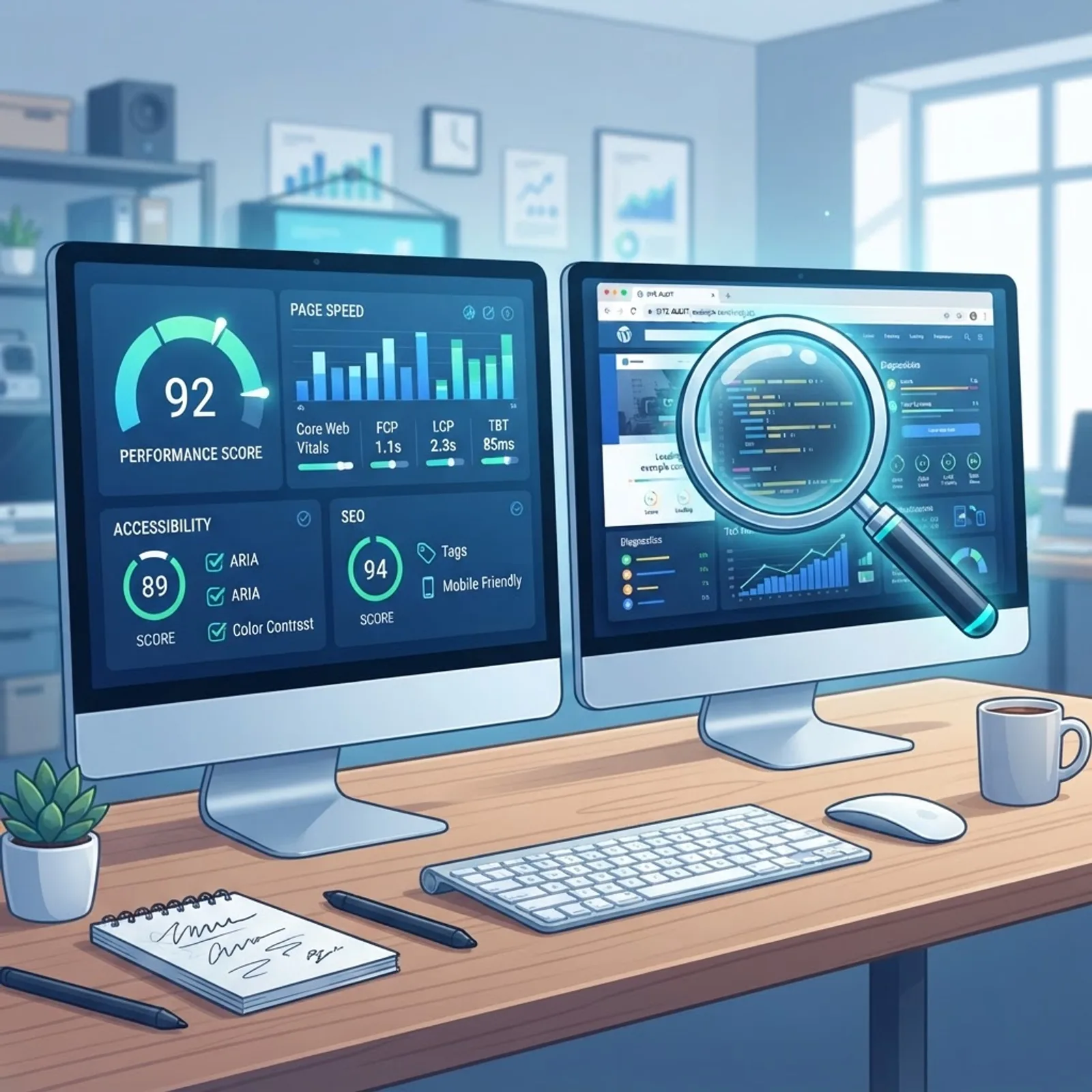
If you already have a website, any serious consultation includes a live audit rather than opinions about your visual design. Expect the consultant to check performance, mobile behaviour, accessibility, indexation, and conversion friction — and to show you the evidence on screen.
Performance is not cosmetic. Google's own research on mobile behaviour found that 53% of mobile site visits are abandoned if pages take longer than three seconds to load, and Google has confirmed page experience signals, including Core Web Vitals, are used as ranking inputs. A consultant who cannot tell you your current Largest Contentful Paint is guessing.
Accessibility is the second area routinely skipped. WebAIM's annual analysis of the top one million home pages has consistently detected automatically identifiable accessibility failures on over 95% of them — low contrast text and missing alternative text dominate. These are cheap to fix during a rebuild and expensive to retrofit afterwards.
Consultation Formats Compared
Not every consultation is the same product. Understanding which one you are buying prevents mismatched expectations.
| Format | Typical length | Best for | Deliverable | Usually paid? |
|---|---|---|---|---|
| Free discovery call | 20 to 30 min | Deciding if there is a fit | Verbal summary, rough range | No |
| Scoping consultation | 60 to 90 min | Defining phase one scope | Written scope and fixed quote | Sometimes |
| Technical audit | 3 to 8 hours | Fixing an existing site | Prioritised issue report | Yes |
| Architecture review | 1 to 3 days | Complex apps and integrations | Technical spec and risk log | Yes |
| Retained advisory | Ongoing monthly | In-house teams needing oversight | Recurring guidance and reviews | Yes |
A free discovery call is a qualification tool and that is fine. Just do not expect a reliable fixed price from it. Paid scoping exists because accurate estimation is real engineering work, and firms that give it away typically pad their quotes to cover the risk.
How Scope and Pricing Should Be Presented
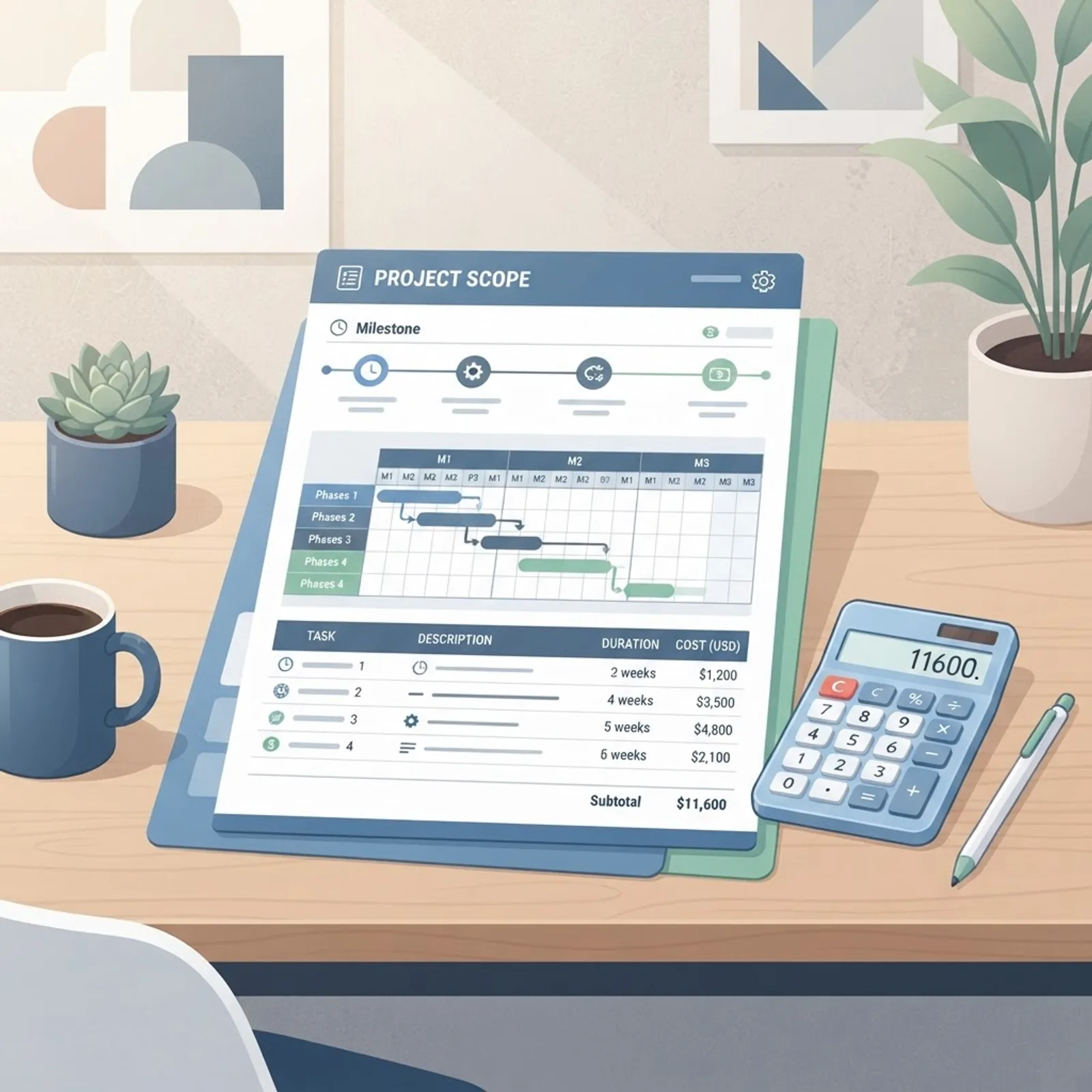
A trustworthy proposal is boring and specific. It lists deliverables, page templates, integrations, revision rounds, hosting assumptions, and an explicit exclusions section. It states payment milestones tied to outcomes rather than dates. It names the change-request rate up front.
Be cautious with any of these three patterns:
- A single lump sum with no breakdown. You cannot negotiate or reduce scope on a number you cannot decompose.
- Unlimited revisions. This is either priced defensively or will be quietly capped later.
- No maintenance line item. Software decays. Dependencies, security patches, and CMS upgrades are recurring costs, not optional extras.
Fixed Price vs Time and Materials
Fixed price suits well-defined marketing sites where the scope is genuinely knowable. Time and materials suits applications with evolving requirements, dashboards, and integrations, where fixed pricing forces the vendor to either pad heavily or cut quality. A hybrid — fixed price for phase one discovery and design, time and materials for build — often produces the fairest outcome for both sides.
Red Flags to Watch For
After enough consultations, warning signs become predictable:
- The consultant recommends a platform before asking about your integrations or content volume.
- Nobody asks what your budget is, yet a price appears within ten minutes.
- SEO results are guaranteed with specific rankings. No one can guarantee positions.
- The proposal has no exclusions section.
- You are pressured to sign during the call for a "this week only" discount.
- They cannot explain their hosting or deployment approach in plain language.
- Post-launch support is described as "we'll look after you" with no hours, response time, or rate.

What Should Happen After the Consultation
Within a few business days you should receive a written recap: goals as you stated them, recommended approach, phased scope, timeline with dependencies, price, assumptions, and open questions. That document is the real output of a consultation. If it never arrives, you learned something important about how the project would have been run.
Use the recap to compare vendors on substance rather than personality. Line up two or three proposals and check whether they scoped the same problem. When one is dramatically cheaper, it is usually solving a smaller problem — read the exclusions.
For teams evaluating partners, reviewing how an agency structures its own web development services is a fast credibility check, and comparing methodologies across firms such as ZoneTechify and WebPeak will show you quickly which questions serious teams ask before quoting.

Key Takeaways
- A web development consultation is diagnostic work: goals, current-state audit, constraints, budget, and decision process.
- Unclear requirements and weak stakeholder involvement are repeatedly identified in Standish Group CHAOS research as leading causes of software project failure — both originate at the consultation stage.
- Google reports that 53% of mobile visits are abandoned when pages take over three seconds to load, so performance targets belong in scope from day one.
- WebAIM's annual study finds detectable accessibility failures on more than 95% of top home pages; fixing them during a rebuild is far cheaper than retrofitting.
- Ask who owns the code, hosting, domain, and design files before signing anything.
- A trustworthy proposal always includes an explicit exclusions section and a named change-request rate.
- Expect a written recap within days. No recap is itself a reliable warning sign.
Frequently Asked Questions (FAQ)
How much does a web development consultation cost?
Initial discovery calls are usually free and last 20 to 30 minutes. Paid consultations typically range from a few hundred to a few thousand dollars depending on depth, because detailed scoping and technical audits require real engineering hours. Many firms credit the fee against the project if you proceed.
How long does a web development consultation take?
A focused scoping consultation runs 45 to 90 minutes. Complex projects with multiple integrations, migrations, or compliance requirements often need two or three sessions plus asynchronous document review. Anything under 20 minutes is a qualification call, not a consultation, and should not produce a firm price.
What should I prepare before a web development consultation?
Bring one measurable business goal, analytics access for the last 90 days, a must-keep functionality list, two or three reference sites, your real budget range, your deadline, and the names of decision makers. Content readiness matters most, since missing copy delays launches more often than development does.
Do I need a consultation if I only want a small website?
Yes, though a short one. Even a five-page site involves decisions about hosting, forms, analytics, redirects, and ownership that are expensive to reverse later. A 30-minute conversation that documents those choices prevents the most common small-project problem: rebuilding something twice.
What is the difference between a consultation and a proposal?
A consultation is the conversation that gathers requirements and constraints. A proposal is the written document produced afterwards, containing scope, exclusions, timeline, pricing, and assumptions. The consultation defines the problem; the proposal commits to a solution. Never accept a proposal that arrived without a consultation.
Should I get consultations from multiple agencies?
Two or three is sensible. Give each the same brief so proposals are comparable, then check whether they scoped the same problem rather than comparing headline prices. Wide price gaps almost always reflect different scopes, different seniority, or missing maintenance and content line items.