A practical guide to hiring an Android app agency: what they actually do, how to vet them, real cost ranges, contract red flags, and the metrics that prove ROI.
Android App Agency
Hiring an Android app agency is one of the highest-stakes decisions a product owner makes, because the wrong partner does not just waste budget, it burns your market window. Android runs on roughly 70 percent of the world's smartphones according to StatCounter's global mobile OS data, which means a poorly built Android app is a poorly served majority of your potential users. After years of auditing Android builds inherited from other vendors, we have found the same pattern: the code is rarely the first failure point. The process is.
This guide is written for founders, marketing directors, and operations leads who need to hire correctly the first time. It covers what a real Android app agency delivers, how to vet one in a single call, what projects actually cost, and how to structure the engagement so you own the outcome.
Quick Answer: An Android app agency is a specialist team that plans, designs, builds, tests, launches, and maintains Android applications. A strong one delivers discovery, Kotlin native or cross-platform development, QA on real devices, Play Store compliance, and post-launch support, with source code ownership and analytics handed to you.
What Does an Android App Agency Actually Do?
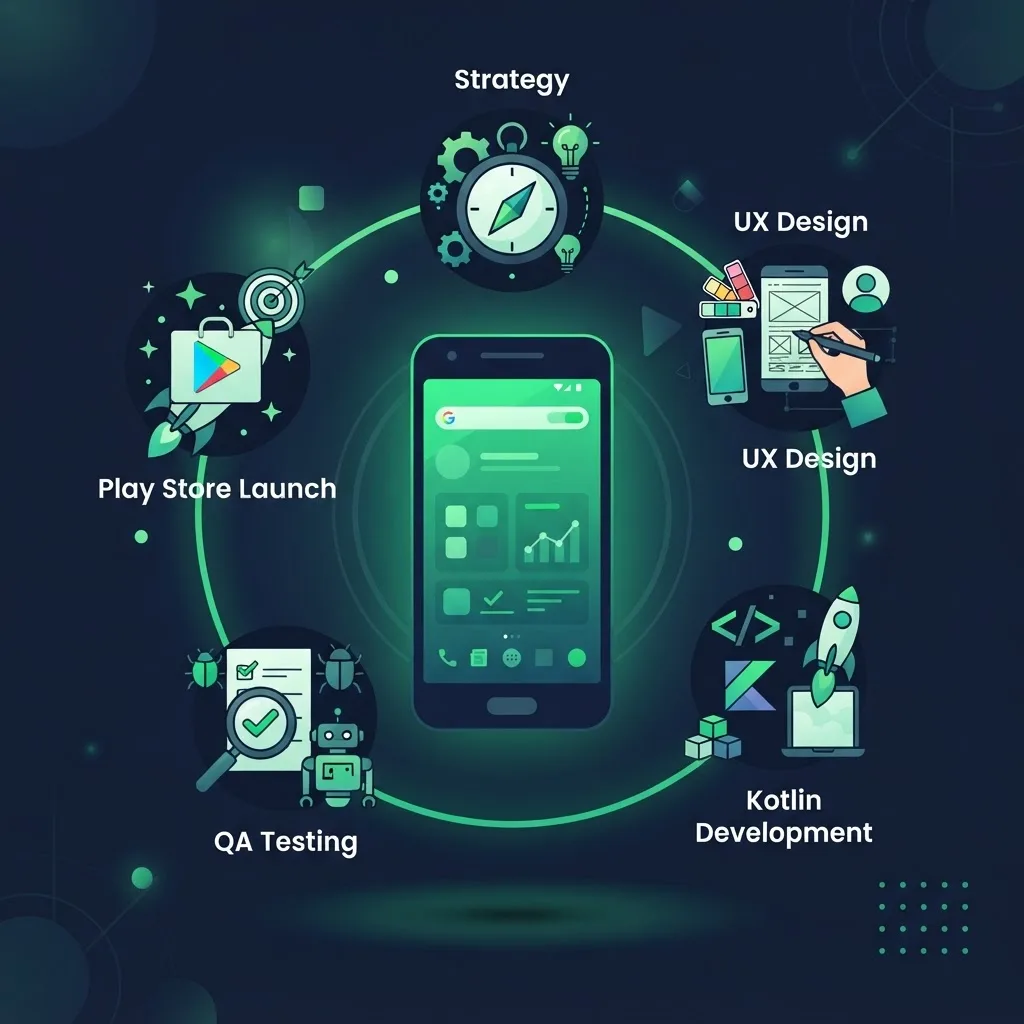
An Android app agency owns the full product lifecycle, not just the coding phase. Definition: an Android app agency is a multidisciplinary firm combining product strategy, UI/UX design, native or cross-platform engineering, quality assurance, and Play Store release management under one accountable contract.
In practice, the deliverables break into six concrete workstreams:
- Discovery and scoping - user interviews, feature prioritization, and a signed-off scope document that defines what version one is and is not.
- UX and UI design - wireframes, then high-fidelity screens built against Google's Material Design 3 specification so the app feels native rather than transplanted from iOS.
- Engineering - Kotlin with Jetpack Compose for native builds, or Flutter and React Native when a shared iOS codebase matters more than platform-perfect polish.
- Backend and API integration - authentication, database, push notifications, payments, and third-party services.
- Quality assurance - testing across real device and OS combinations, not just an emulator on the developer's laptop.
- Release and maintenance - Play Console setup, data safety declarations, staged rollouts, crash monitoring, and version updates.
If a proposal skips discovery or treats QA as an afterthought, you are not buying an agency. You are buying contract coders with a nicer website.
How Do You Choose the Right Android App Agency?
Evaluate agencies on evidence, not adjectives. The fastest filter is asking for a live Play Store link to an app they built, then checking its rating, recent update history, and review complaints yourself. An agency that has shipped and maintained apps leaves a public trail.
Use this vetting checklist on every shortlisted vendor:
- Ask for three live Play Store apps and confirm the agency, not a subcontractor, built them.
- Request a redacted scope document from a past project to see how precisely they define deliverables.
- Confirm source code and repository ownership transfers to you in writing, from day one, not at final payment.
- Ask which real devices they test on - a credible answer names specific models and Android API levels, including low-end hardware.
- Ask how they handle scope changes - a mature agency has a documented change-request process with pricing, not a shrug.
- Verify who your daily contact is - the person in the sales call is often not the person on the project.
- Check post-launch terms - how long is warranty support, and what does month 13 cost?
One more test that reveals everything: ask what they would remove from your feature list. An agency that agrees to build every idea you have is optimizing for invoice size. An agency that pushes back on scope is optimizing for your launch. Teams like the ones behind ZoneTechify and WebPeak treat that trimming conversation as the most valuable hour of the whole engagement.

What Does the Android App Development Process Look Like?
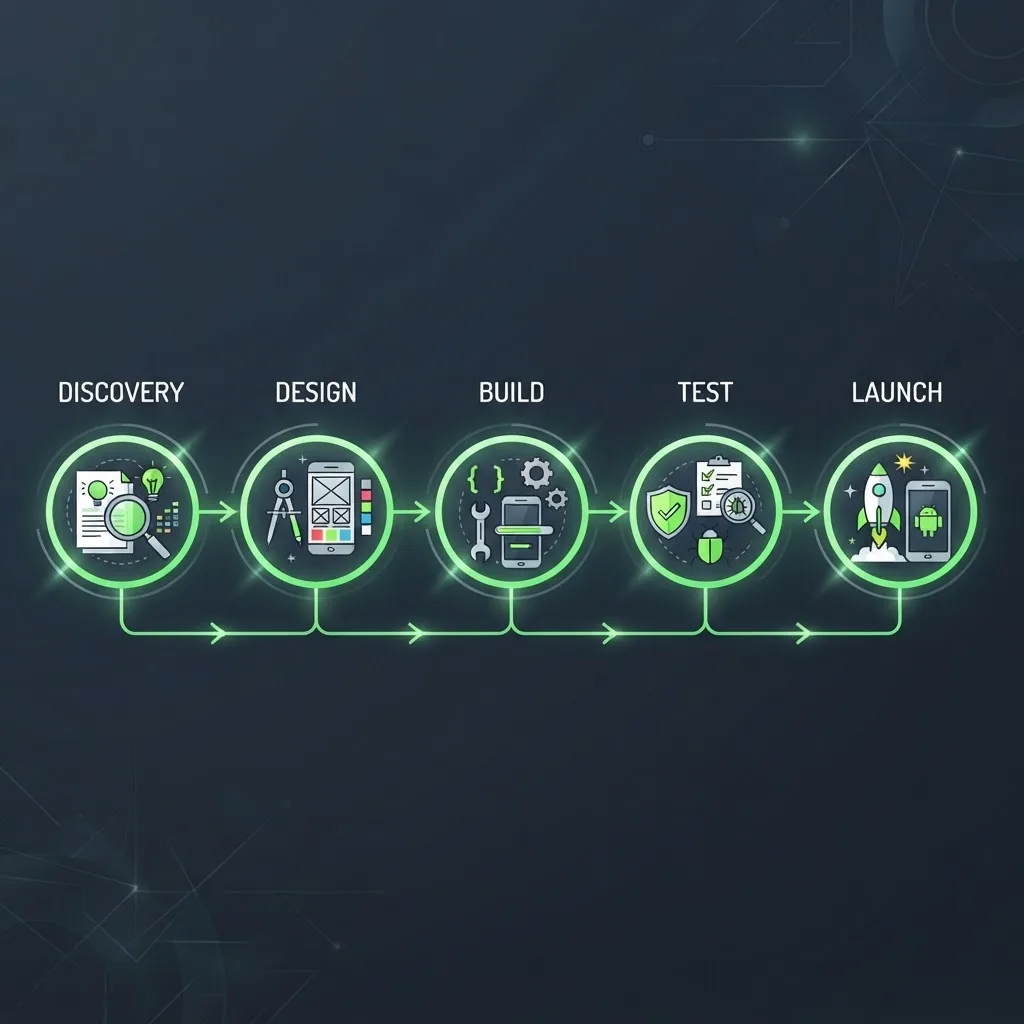
A professional Android build runs in five sequential stages with a client decision gate at the end of each one. Decision gates matter because they are where you can cheaply change direction, before code is written on top of a wrong assumption.
Stage 1: Discovery and Requirements
Two to three weeks of user research, competitor teardown, and technical feasibility review. Output: a prioritized feature list, user flows, and a fixed definition of the minimum viable release.
Stage 2: Design and Prototyping
Wireframes first, then Material Design 3 screens, then a clickable prototype you can hand to five real users before development starts. Fixing a flow in a prototype costs minutes; fixing it in production code costs days.
Stage 3: Development Sprints
Two-week sprints, each ending with an installable build on your own phone. If you cannot install and use the app every two weeks, you have no visibility, and no visibility is how projects quietly go six weeks late.
Stage 4: Quality Assurance
Functional, performance, security, and device fragmentation testing. Android fragmentation is the specific risk here: your app must behave on a three-year-old budget device, not only on a flagship.
Stage 5: Launch and Iteration
Play Console listing, data safety form, staged rollout to a small percentage of users, crash monitoring, then full release. Iteration continues based on analytics, not opinions.
How Much Does an Android App Agency Cost?
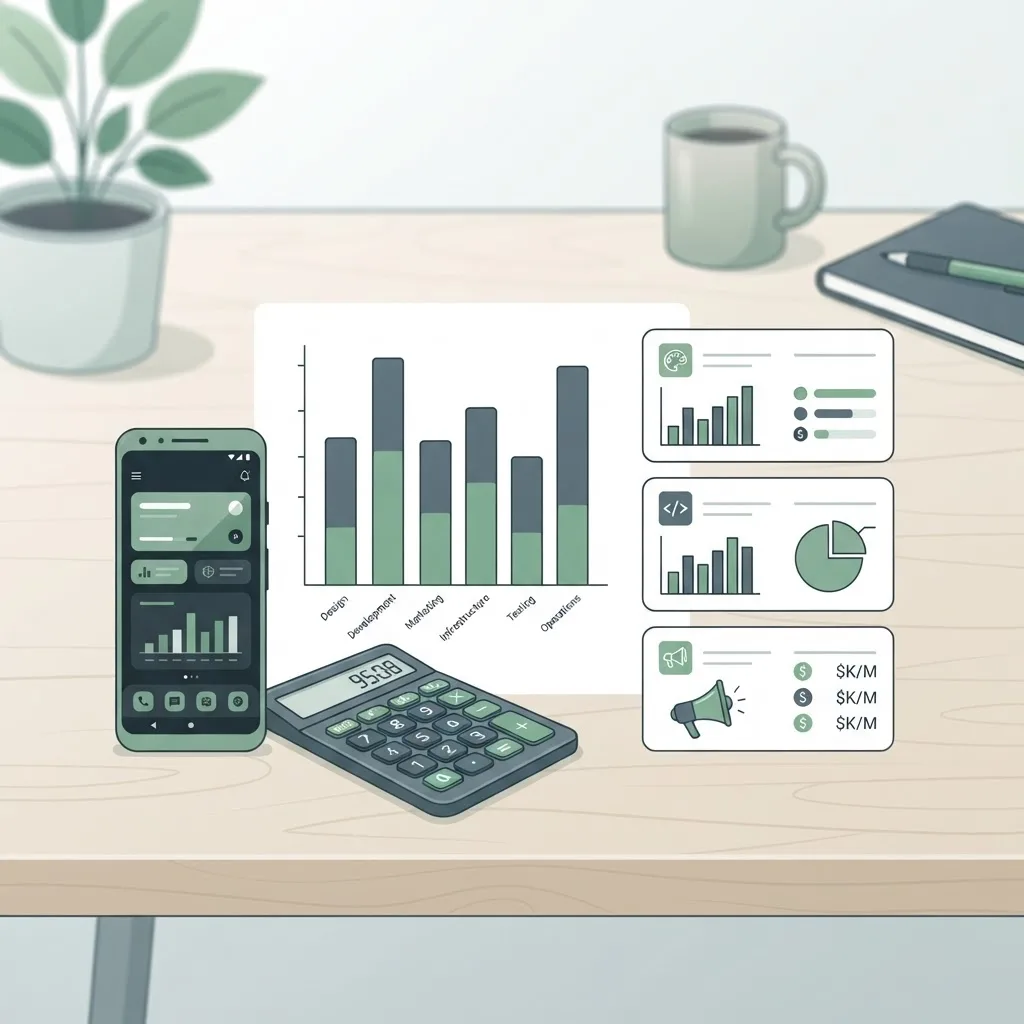
Cost tracks complexity, integrations, and device support, not page count. Below are realistic 2026 market ranges based on scope patterns we see repeatedly in competitive bids.
| Project Type | Typical Scope | Cost Range (USD) | Timeline |
|---|---|---|---|
| Simple app | Static content, forms, basic auth | 8,000 - 20,000 | 4 - 8 weeks |
| Mid-complexity app | Custom backend, payments, push, profiles | 25,000 - 70,000 | 3 - 5 months |
| Complex platform | Real-time data, offline sync, roles, integrations | 80,000 - 200,000+ | 6 - 12 months |
| Maintenance retainer | Updates, OS compatibility, monitoring, fixes | 1,000 - 6,000/month | Ongoing |
Budget for two costs that most first-time buyers forget. First, maintenance: plan on 15 to 20 percent of the original build cost annually, because Google ships a major Android version every year and Play Console policy deadlines are non-negotiable. Second, the backend and third-party service fees, which are operational costs that continue long after the agency invoice is paid.
A warning on pricing: bids that come in at a third of every other quote almost always exclude QA, project management, or code ownership. Ask what is excluded, in writing.
Native Kotlin or Cross-Platform? What Should Your Agency Recommend?
The honest answer depends on whether you need iOS at the same time. Google's own guidance made Kotlin the preferred Android language back in 2019, and Kotlin with Jetpack Compose remains the best choice for performance-critical, hardware-heavy, or animation-rich apps. Cross-platform frameworks like Flutter make sense when a single team shipping both platforms saves more money than native polish is worth.
Here is the decision rule we apply:
- Choose native Kotlin if the app depends on camera, Bluetooth, background location, heavy graphics, or the smoothest possible UI.
- Choose cross-platform if you need Android and iOS simultaneously with a constrained budget and largely standard UI patterns.
- Be suspicious if an agency recommends the same stack for every client. That is a capability limitation being sold as a philosophy.
Ask the agency to justify their recommendation against your specific feature list. An expert will name the exact features that drove the choice. Agencies that also handle broader web application development work are usually better at the backend and API side, which is where most Android projects actually stall.
Agency, Freelancer, or In-House Team?
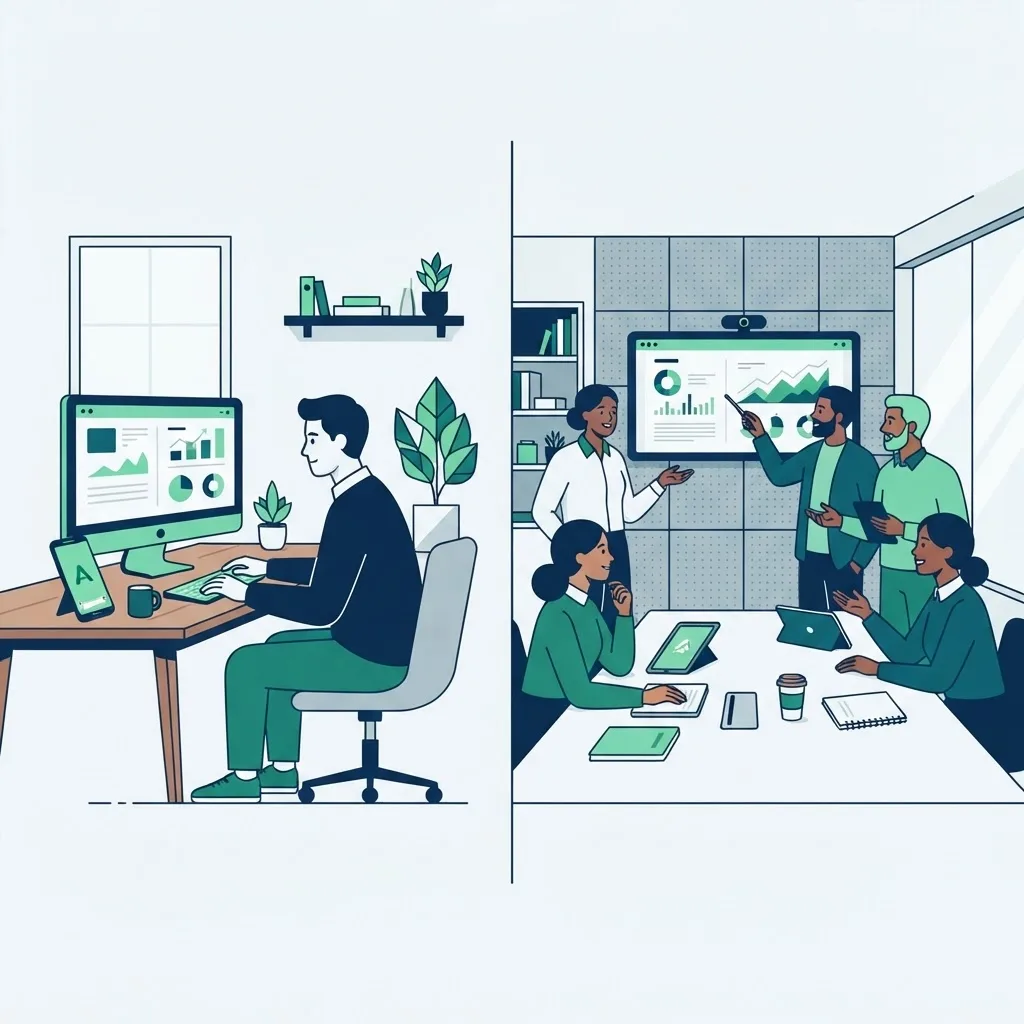
Each model wins in a different situation. Compare them on the dimensions that predict project failure rather than on hourly rate alone.
| Factor | Android App Agency | Freelancer | In-House Team |
|---|---|---|---|
| Upfront cost | Medium to high | Low | Highest |
| Speed to start | Fast | Fast | Slow, hiring cycle |
| Design plus QA included | Yes | Rarely | Depends on headcount |
| Continuity if someone leaves | Yes, team backup | No, single point of failure | Yes |
| Process documentation | Yes | Varies widely | Varies widely |
| Best for | Full launches and complex builds | Small features and prototypes | Long-term core products |
The deciding factor is usually continuity. A freelancer disappearing mid-build is the single most common reason rescue projects land on our desk, and rebuilding undocumented code typically costs more than the original quote you were trying to beat.
How Do You Measure Whether the Agency Delivered?
Judge the engagement on post-launch data, not on the launch itself. Track these five metrics from week one:
- Crash-free user rate - aim above 99 percent; anything below 98 signals rushed QA.
- Day 7 and Day 30 retention - the clearest signal of whether the product solves a real problem.
- App start time - Google flags cold starts above five seconds in Android vitals, and slow starts directly suppress Play Store visibility.
- Play Store rating and review themes - read the one-star reviews for the truth about your UX.
- Conversion on the core action - signup, purchase, or booking completion rate.
Write these into the contract as acceptance criteria before development starts. Agencies behave differently when performance thresholds are contractual instead of aspirational.

Red Flags That Predict a Failed Project
Watch for these five signals during the sales process:
- No written scope document before a deposit is requested.
- Code ownership that transfers only on final payment, or is never mentioned.
- No named QA process or reliance on emulator-only testing.
- A fixed price quoted in under an hour without any discovery conversation.
- Portfolio apps that are not live on the Play Store or have not been updated in two years.
Any single one of these is a conversation. Two or more is a decline.
Key Takeaways
- Android powers roughly 70 percent of global smartphones, making Android quality a majority-audience decision.
- A real Android app agency delivers discovery, design, engineering, QA on real devices, Play Store release, and maintenance.
- Realistic budgets: 8,000 to 20,000 USD for simple apps, 25,000 to 70,000 for mid-complexity, 80,000-plus for complex platforms.
- Reserve 15 to 20 percent of build cost annually for maintenance and Android OS compatibility updates.
- Kotlin with Jetpack Compose suits hardware-heavy and performance-critical apps; cross-platform suits simultaneous iOS launches on tighter budgets.
- Contract acceptance criteria around crash-free rate, retention, and app start time, not just feature completion.
- Insist on source code ownership in writing from day one.
Frequently Asked Questions (FAQ)
How long does it take an Android app agency to build an app?
A simple Android app takes four to eight weeks. Mid-complexity apps with custom backends, payments, and user accounts take three to five months. Complex platforms with offline sync or real-time data run six to twelve months. Discovery and QA account for roughly a third of any honest timeline.
Should I hire a local Android app agency or an offshore one?
Judge on process and communication overlap rather than geography. Offshore agencies often deliver excellent work at lower rates, but require at least three hours of daily timezone overlap and a named project manager. Local agencies simplify contracts and meetings. Ask for client references in your own timezone either way.
Who owns the source code after the project ends?
You should, and it must be stated in the contract before you pay a deposit. Insist on repository access from the first sprint, not at handover. If an agency resists transferring full source code, Play Console ownership, and design files, treat that as a deal-breaker rather than a negotiating point.
What happens after my Android app launches?
Maintenance begins immediately. Expect crash monitoring, Android version compatibility updates, Play Store policy compliance, security patches, and iteration based on analytics. Most agencies offer monthly retainers between 1,000 and 6,000 USD depending on complexity. Budget 15 to 20 percent of the original build cost every year.
Can an Android app agency also build my iOS app?
Most can, either with a separate Swift native build or a shared cross-platform codebase in Flutter or React Native. Cross-platform saves budget when your UI is standard. If either platform needs deep hardware access or heavy animation, native builds for both platforms usually cost less over three years.
How do I know if an agency's portfolio is genuinely theirs?
Ask for live Play Store links, then request a client reference for that specific app. Real agencies connect you within days. Also check whether portfolio apps have recent update histories, since ongoing maintenance is much harder to fake than a polished case study screenshot.
Final Word
The best Android app agency for your project is the one that asks uncomfortable questions before quoting, documents scope in writing, tests on real devices, and hands you the keys to everything. Price is the easiest variable to compare and the worst one to decide on. Judge process, insist on ownership, and measure results with data after launch.