A practical guide to web application design services: what they include, how much they cost, how to evaluate an agency, and how design decisions affect retention and revenue.
Web Application Design Services
Web application design services cover the research, structure, interface, and interaction work that turns a software idea into a product people can actually operate. Unlike marketing website design, which optimizes for a single conversion, application design optimizes for repeat use: dashboards, data tables, permissions, empty states, error handling, and workflows a user may run fifty times a week. That difference in purpose changes almost every design decision, and it is the reason many teams who hire a website designer for an app end up rebuilding within a year.
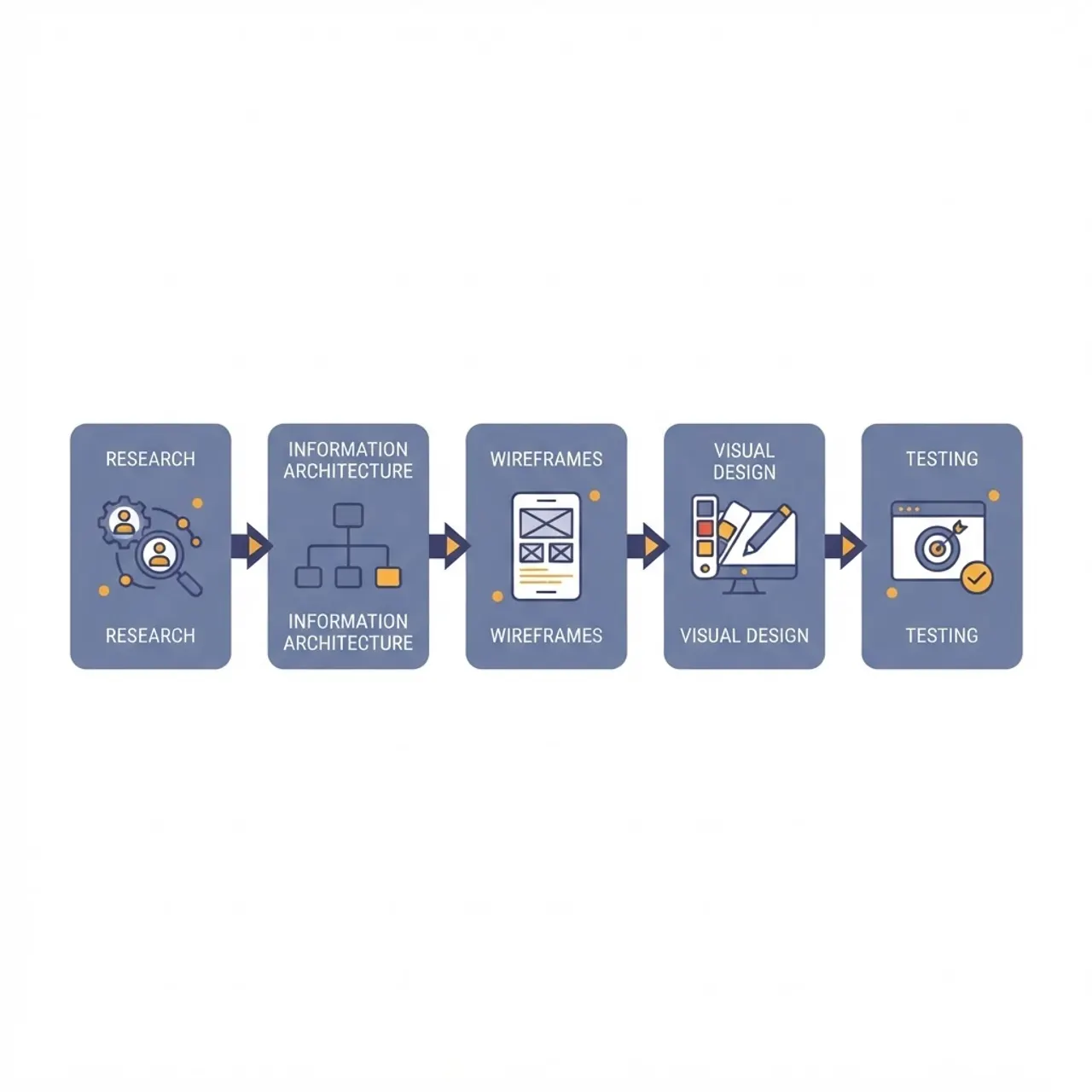
Quick Answer: Web application design services are specialist UX and UI engagements that plan and design software interfaces rather than marketing pages. Typical deliverables include user research, information architecture, user flows, wireframes, a reusable design system, high fidelity screens, prototypes, and developer ready handoff documentation covering states, edge cases, and accessibility.
What Web Application Design Services Actually Include
A credible engagement is built from defined deliverables, not vague creative promises. When you evaluate proposals, look for these seven components and ask which are in scope.
- Discovery and research. Stakeholder interviews, competitive teardown, and user interviews that produce documented jobs to be done rather than assumptions.
- Information architecture. Navigation model, object model, and permission structure. This determines whether the app scales to more features without a redesign.
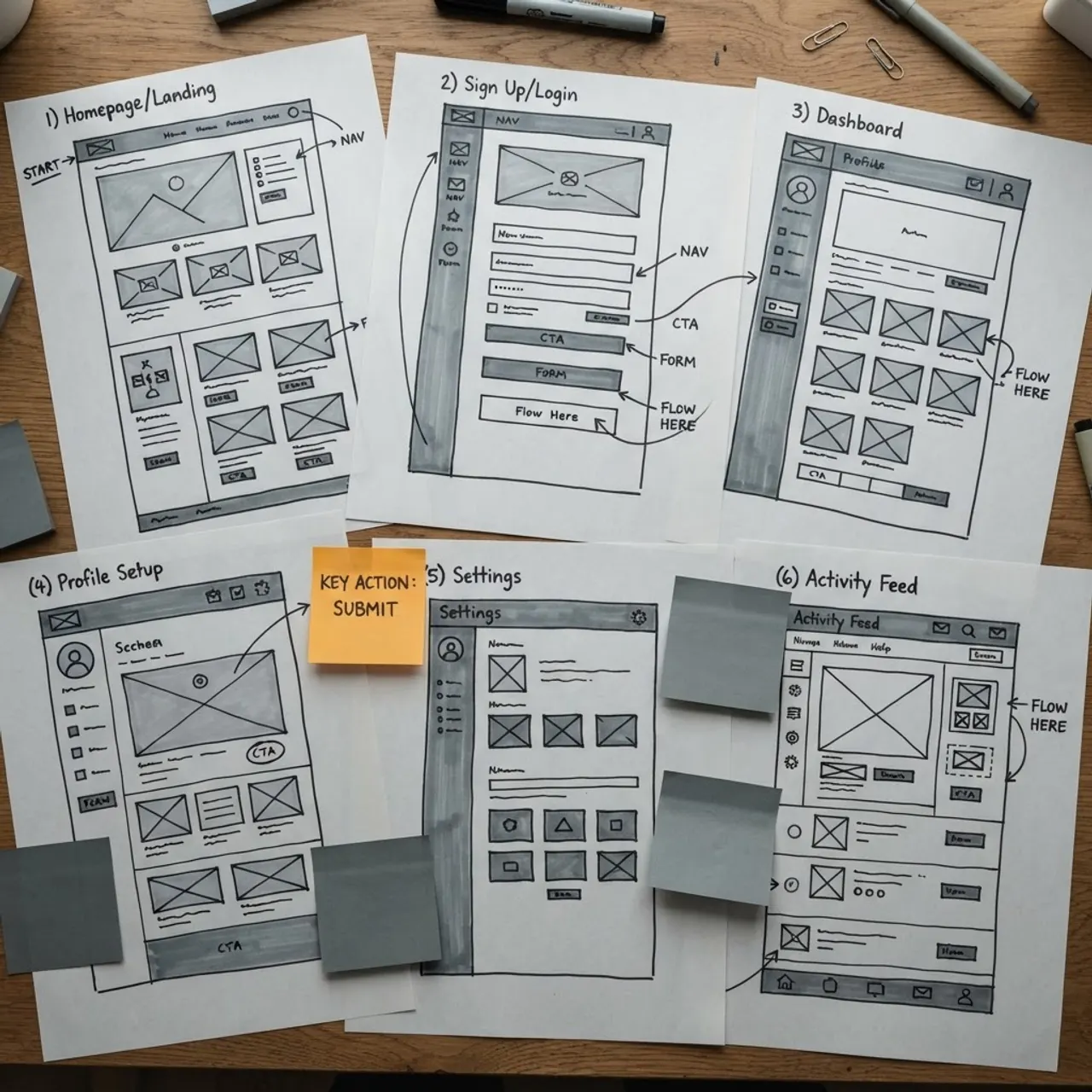
- User flows. Step by step paths for the three to five tasks that define product value, including failure paths.
- Wireframes. Layout and hierarchy decided before visual styling, so structural mistakes are cheap to fix.
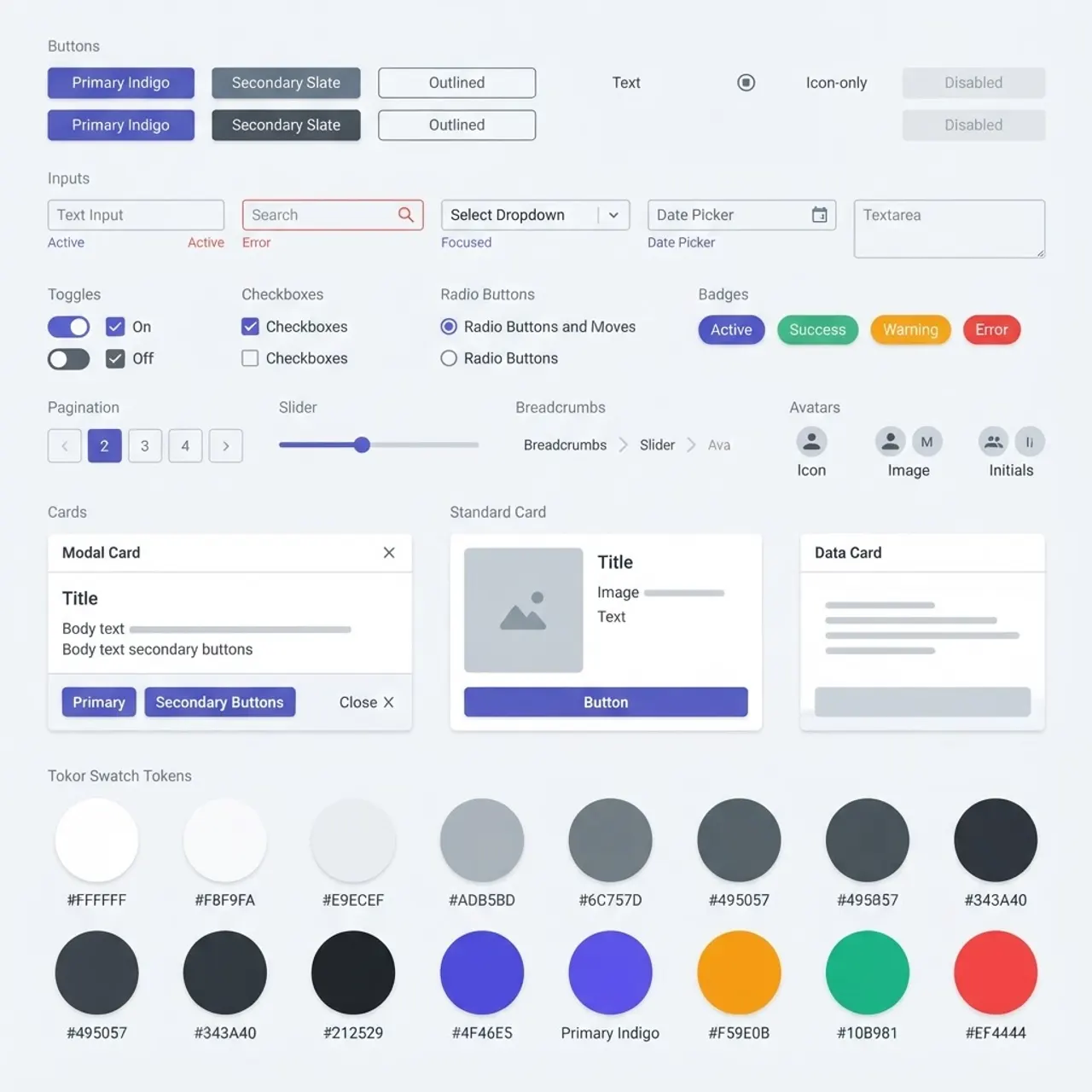
- Design system. Tokens, components, and usage rules that keep the twentieth screen as consistent as the first.
- High fidelity screens and prototypes. Clickable flows used for stakeholder alignment and usability testing.
- Handoff documentation. Spacing, breakpoints, interaction specs, loading and empty states, validation messages, and accessibility notes.
Why Structure Comes Before Visuals
The most expensive design errors are structural. If a project management app models work as flat tasks and the market needs nested projects with shared ownership, no amount of polish repairs it. Structure decisions cascade into the database schema, the API surface, and the pricing model. Good agencies therefore spend the first phase arguing about objects and relationships, not gradients.
Web Application Design Versus Website Design
Both disciplines use similar tools, but success is measured differently. This comparison reflects what changes in practice.
| Dimension | Marketing Website Design | Web Application Design |
|---|---|---|
| Primary goal | Persuade a first time visitor | Enable repeat task completion |
| Core metric | Conversion rate, bounce rate | Task success rate, time on task, retention |
| Screen count | 5 to 20 pages | 40 to 300 states and variants |
| Content model | Mostly static, editorial | Dynamic, user generated, permissioned |
| Deliverable emphasis | Visual impact, copy, imagery | Design system, states, edge cases |
| Typical timeline | 3 to 6 weeks | 8 to 20 weeks for a first release |
| Biggest failure risk | Weak messaging | Wrong information architecture |
A useful definition to keep handy: state coverage is the percentage of realistic conditions a design accounts for, including loading, empty, partial, error, offline, and permission denied. Marketing sites need almost none. Applications need nearly all of them, and incomplete state coverage is the single most common cause of developer rework.
The Business Case, With Real Numbers
Design spending is easier to approve when it is framed as risk reduction. Two widely cited data points give useful context.
- The Nielsen Norman Group has long documented that fixing an issue after development costs roughly ten times more than fixing it during design, and up to one hundred times more after release. That multiplier is why a four week research and wireframing phase often pays for itself before the first sprint ends.
- The 2018 McKinsey Design Index study of 300 publicly listed companies over five years found that businesses in the top quartile for design maturity outperformed industry benchmark revenue growth by as much as two to one.
The honest caveat, which most agency pages omit, is that these figures describe correlation across large samples. They do not guarantee that a redesign lifts your revenue. What design reliably does is reduce the cost of being wrong: a tested prototype invalidates a bad assumption in days instead of a funded quarter.
A Simple Way to Forecast Value
Pick one workflow, measure current completion time, then estimate the saving. If forty support agents each lose four minutes per ticket to a cluttered queue view, and each handles thirty tickets daily, that is eighty hours of lost capacity per day. Redesigning that one screen is trivially justified, and this arithmetic is far more persuasive to a finance team than an award reference.
How to Evaluate a Web Application Design Partner
Use evidence, not aesthetics. Portfolios are curated; process is revealing.
- Ask for a states walkthrough. Request the empty state, error state, and permission denied screens from a past project. Teams who skip these will hand your developers guesswork.
- Request a design system file, not a screenshot. Look for named tokens, component variants, and written usage rules.
- Interview the person who will do the work. Agencies that sell with principals and deliver with juniors are the most common source of quality drift.
- Check developer collaboration. Ask how they handle a technical constraint discovered mid build. Strong answers involve negotiation and revised specs, not escalation.
- Verify research access. If they cannot talk to real users, ask what proxy they use, such as support tickets, session recordings, or sales call transcripts.
- Review accessibility practice. Ask which WCAG level they target and how they verify contrast, focus order, and keyboard operation.
Teams comparing specialist studios often shortlist a senior led partner such as WebPeak Digital alongside broader product engineering groups, because a small senior team tends to produce tighter design systems than a large mixed pool. If you are still deciding between an in house hire and an outside partner, the resource library at ZoneTechify is a reasonable starting point for understanding what modern design and build roles are expected to cover, and the breakdown of web designer job spec requirements helps you write a brief that a good agency can price accurately.
Pricing Models and What Drives Cost
Cost is driven by state count, integration complexity, and decision speed, not by page count. Three common engagement shapes exist.
- Fixed scope project. Best when requirements are stable. You get a defined deliverable list and a fixed fee, but change requests are billed separately.
- Retained design partner. A monthly allocation of design capacity. Best for products shipping continuously, since it removes the restart cost of new briefs.
- Design sprint or audit. A short, focused engagement to validate a concept or fix a specific conversion or usability problem before committing to a full build.
Four factors reliably inflate a quote: many user roles with different permissions, heavy data visualization, legacy systems that constrain layout, and stakeholder groups without a single decision maker. The last one is the most underestimated. A project with five equal approvers routinely takes twice as long as the same project with one accountable owner.

Testing: The Step Most Teams Skip
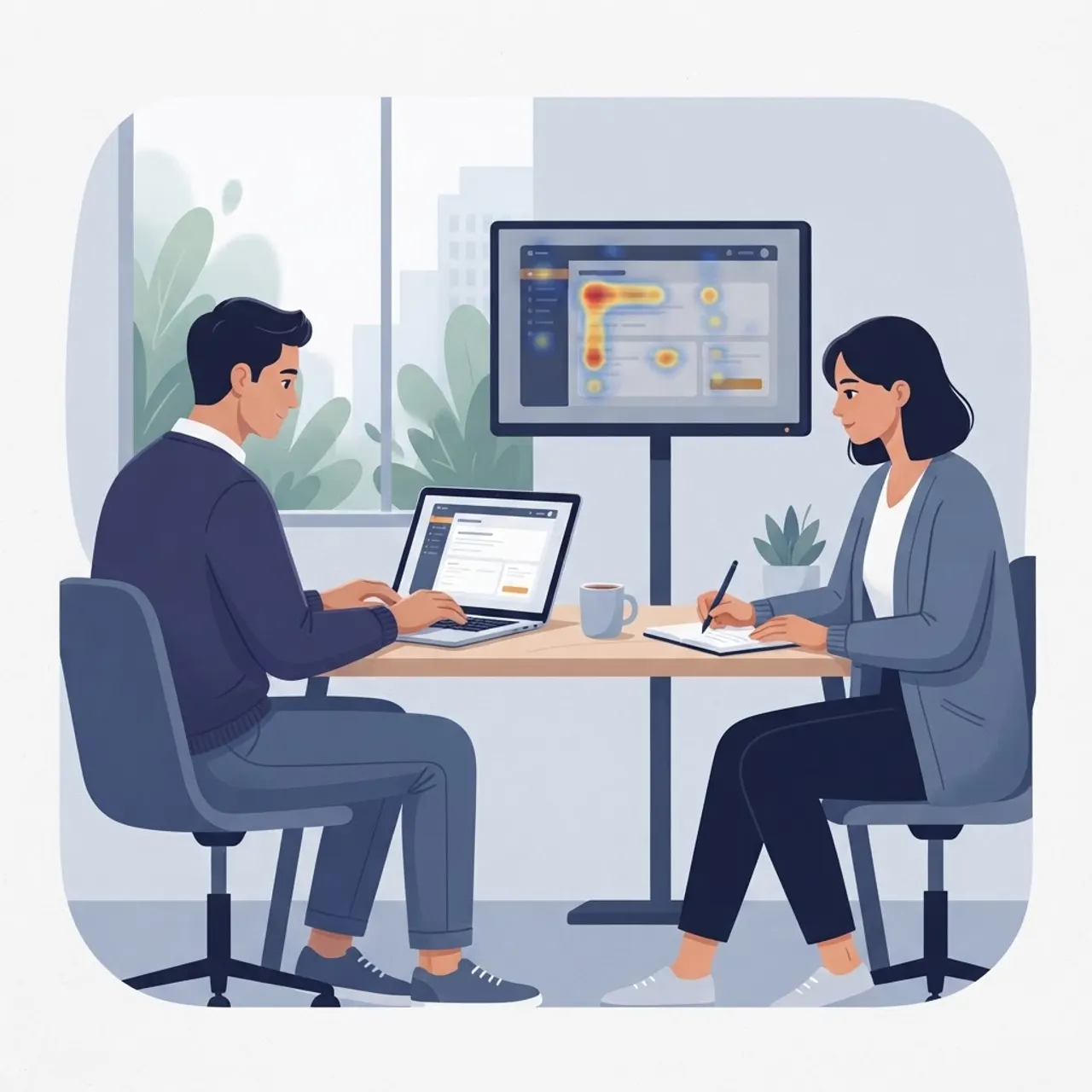
Usability testing with five participants surfaces the majority of severe issues in a given flow, a finding first published by Jakob Nielsen in 2000 and repeatedly replicated since. The practical implication is that you do not need a large research budget to avoid embarrassing mistakes. You need five people who resemble your users and one clear task.
Run tests on the clickable prototype before development, then again on the staging build. Record task success, not opinions. A participant saying the design looks professional while failing to find the export button is a failed test, and treating that gap seriously is what separates a design service from a decoration service.
Handoff and Implementation Quality
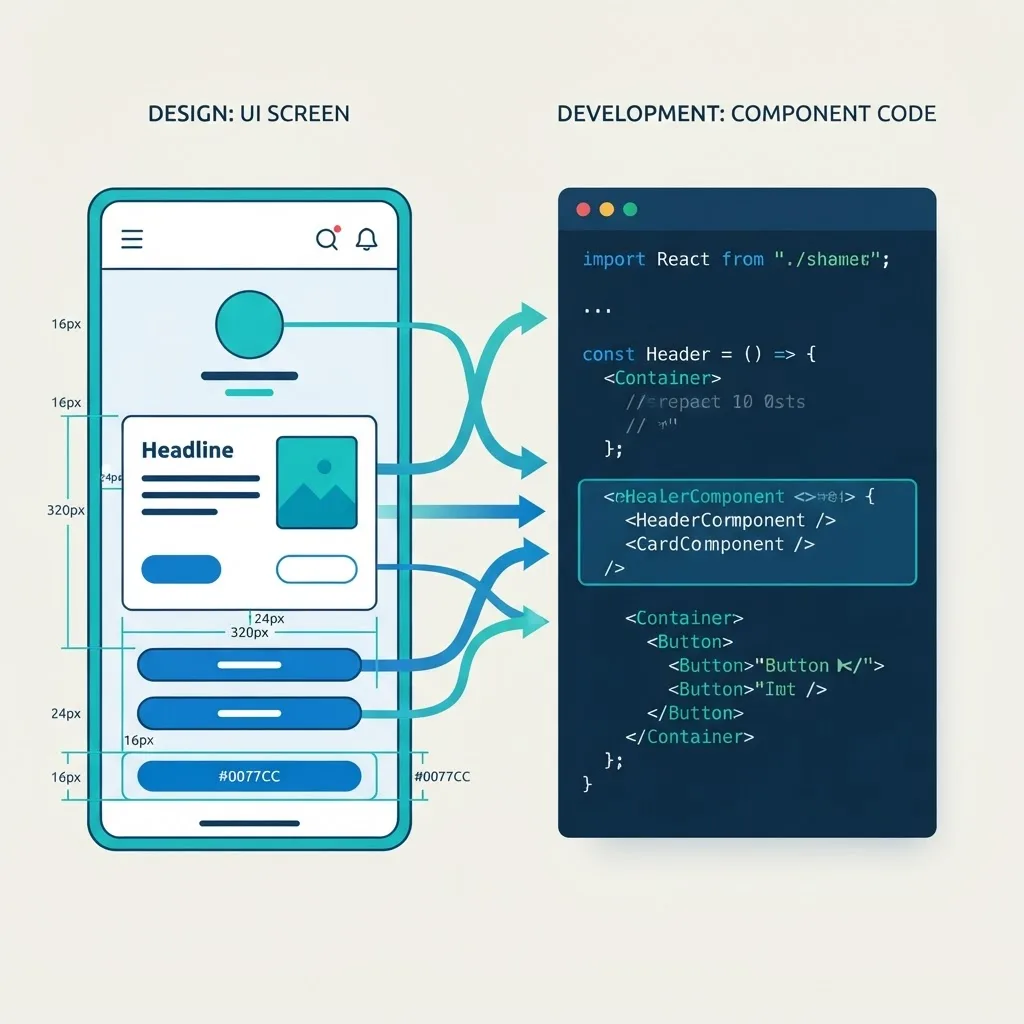
Design value is realized only if it ships accurately. Insist on four handoff artifacts: a token list mapped to code variables, a component inventory with variant names matching the front end, an interaction spec for anything animated or conditional, and a documented breakpoint strategy. Then schedule a design QA pass after the first implementation sprint. Reviewing the built interface against the specification catches drift while it is still cheap, and it prevents the slow decay where each new feature is built slightly off system.
Key Takeaways
- Web application design services deliver research, information architecture, flows, wireframes, a design system, prototypes, and handoff documentation, not just visual screens.
- Applications require 40 to 300 states and variants, whereas marketing sites typically require 5 to 20 pages, which explains the difference in timeline and cost.
- Fixing a usability issue after development costs roughly ten times more than fixing it during design, per Nielsen Norman Group research.
- The 2018 McKinsey Design Index found top quartile design performers outgrew industry revenue benchmarks by up to two to one.
- Five participant usability tests catch most severe problems in a flow, making early testing affordable for almost any budget.
- Cost is driven by user roles, data complexity, legacy constraints, and the number of approvers, not by page count.
Frequently Asked Questions (FAQ)
What are web application design services?
They are specialist UX and UI engagements focused on software interfaces rather than marketing pages. Scope usually includes user research, information architecture, user flows, wireframes, a reusable design system, high fidelity screens, interactive prototypes, and handoff documentation covering every state a developer must build.
How much do web application design services cost?
Pricing depends on state count, number of user roles, and integration complexity rather than page count. Small validated products often fit a short design sprint, while multi role platforms need a longer engagement or a monthly retainer. Ask for a deliverable list tied to the fee before comparing quotes.
How long does designing a web application take?
A first release design phase commonly runs eight to twenty weeks. Discovery and architecture take two to four weeks, wireframes and flows another two to four, and visual design plus the system build the remainder. Slow stakeholder decisions extend timelines more than design complexity does.
Do I need UX design if I already have developers?
Yes, because developers optimize for implementation while designers optimize for task completion. Without design, structural choices get made implicitly inside code, where changing them later is expensive. A short design phase produces the architecture and state coverage that lets your developers build confidently.
What should I look for in a web app design agency?
Ask to see empty, error, and permission denied states from real projects, request an actual design system file, and confirm who performs the work rather than who sells it. Also check their accessibility target and how they respond when a technical constraint changes the plan.
Is web application design different from website design?
Yes. Website design persuades first time visitors and is measured by conversion. Application design enables repeat work and is measured by task success, time on task, and retention. Application design also requires extensive state coverage, permissions modeling, and a documented design system.