
A practical guide to outsourcing web application development, covering cost models, vendor vetting, contracts, delivery workflows, and risk control decisions.
Outsource Web Application Development
Outsourcing a web application is not a cost decision. It is an engineering ownership decision. Companies that treat it as procurement end up with code they cannot maintain. Companies that treat it as an extension of their own engineering organization ship faster than they could have in-house. This guide explains how to make the second outcome happen, based on what actually goes wrong in real delivery cycles.
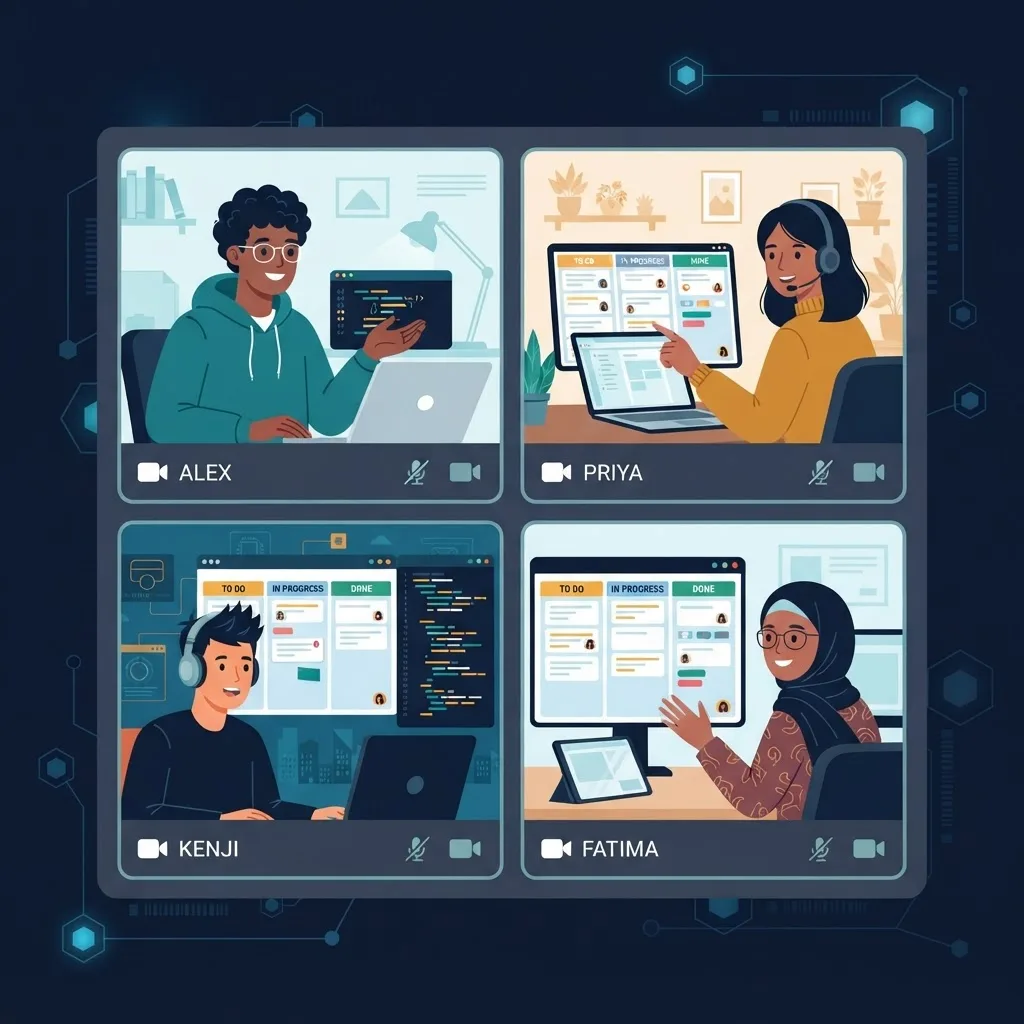
Quick Answer: Outsourcing web application development means hiring an external team to design, build, and maintain your web app. It works best when you keep product ownership in-house, define acceptance criteria before signing, choose a dedicated-team or fixed-scope model that matches your requirement clarity, and retain full code and infrastructure access.
What Outsourcing Web Application Development Actually Means
Web application outsourcing is the contracted delegation of software engineering work for a browser-based application to an external vendor, freelancer, or dedicated remote team. It differs from outsourcing a website in one critical way: a web application has state, authentication, business logic, and a database, so the handover surface is much larger.
Three terms matter before you sign anything.
- Staff augmentation: you rent engineers who join your existing sprints and report to your lead.
- Dedicated team: the vendor supplies a full unit including a lead, QA, and design, working on your roadmap only.
- Project outsourcing: the vendor owns scope, delivery, and timeline against a fixed specification.
Most failed engagements are a mismatch between these three, not a failure of skill. Vague requirements handed to a fixed-scope contract produce change requests. Clear, stable requirements handed to a rented developer with no lead produce drift.
Why Companies Outsource Web App Development in 2026
The economics are documented. Deloitte's Global Outsourcing Survey has consistently found cost reduction cited by roughly 70 percent of executives as a primary outsourcing driver, with access to capability rising sharply as a secondary motive. Separately, the U.S. Bureau of Labor Statistics projects software developer employment to grow about 17 percent between 2023 and 2033, far above the average for all occupations, which means domestic senior hiring stays competitive and slow.
That combination explains the real reason outsourcing keeps growing. It is not that external engineers are cheaper per hour. It is that they are available this month instead of next quarter.

There are four defensible reasons to outsource a web application.
- Time to market: an external team with an existing stack template starts sprint one immediately, skipping recruiting and onboarding cycles.
- Specialist depth: you need one senior Next.js, payments, or data-pipeline specialist for twelve weeks, not forever.
- Capacity smoothing: your in-house team is committed to a core product and a second initiative cannot wait.
- Cost structure: you convert fixed headcount cost into variable project cost, which matters before product-market fit.
If your reason is not on that list, reconsider. Outsourcing to avoid making product decisions never works, because no vendor can decide what your users need.
In-House vs Outsourced vs Hybrid: A Direct Comparison
| Factor | In-House Team | Outsourced Team | Hybrid Model |
|---|---|---|---|
| Time to first commit | 6 to 12 weeks | 1 to 2 weeks | 2 to 3 weeks |
| Cost predictability | Low, fixed and ongoing | High, scoped per phase | Medium |
| Domain knowledge retention | Highest | Lowest without documentation | High |
| Scaling speed | Slow | Fast | Fast |
| Best suited for | Core long-term product | Defined builds and MVPs | Core plus parallel initiatives |
| Main risk | Burn rate and hiring delay | Knowledge loss at handover | Coordination overhead |
The hybrid model wins for most funded companies past their first release. You keep one in-house technical owner who holds architecture authority, and the external team executes against it. That single role prevents almost every knowledge-loss problem that gets blamed on outsourcing.
Choosing the Right Engagement Model
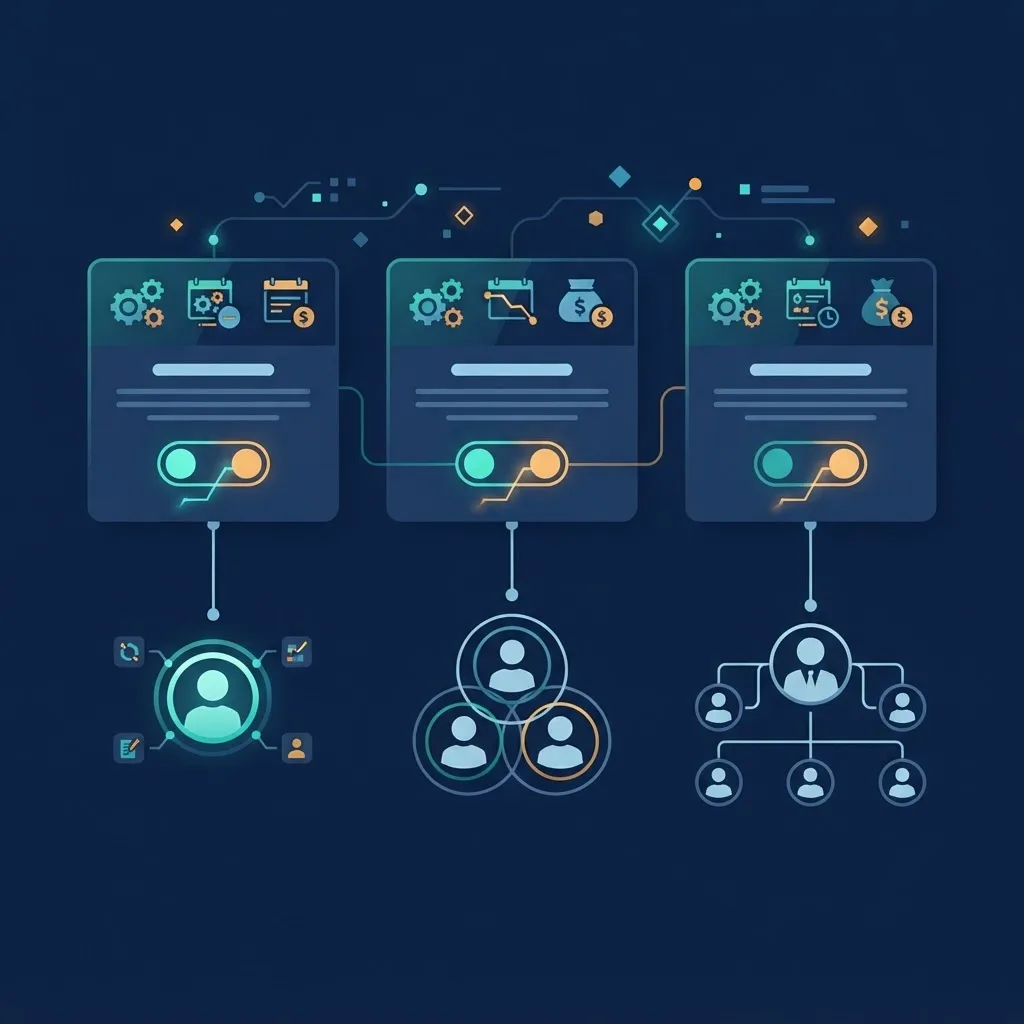
Engagement model should be selected from requirement stability, not from budget preference.
Fixed Scope, Fixed Price
Use this only when your specification includes screens, states, validation rules, and acceptance criteria. It is the correct model for a defined internal tool, a migration, or a clearly bounded portal. Its weakness is that any discovery mid-build becomes a commercial negotiation instead of an engineering conversation.
Time and Materials With a Sprint Cap
This is the most honest model for genuinely new products. You pay for delivered sprints, and you cap spend per sprint so risk stays bounded. Require a demo at the end of every sprint. A vendor unwilling to demo working software every two weeks is hiding progress problems.
Dedicated Team Retainer
Best when the application is a long-lived platform rather than a one-off build. You get continuity, and the team accumulates domain knowledge that would otherwise be rebuilt every engagement. Agencies structured around senior-only staffing, such as the approach taken by scalable web solutions specialists, tend to fit this model because retainer work rewards depth over volume.
How to Vet a Web Application Development Partner
Portfolio screenshots prove nothing. A vendor can show an interface they styled but did not architect. Vet the engineering, not the marketing.

Ask these seven questions and score the answers.
- Who exactly writes the code? Get named engineers with seniority and years of experience. Vendors that answer with a team-size number are staffing you later from whoever is free.
- Show me a live application under load. Ask for a production URL with real users, then check its performance yourself in a browser audit.
- What happens in code review? A real answer includes pull requests, a second reviewer, and a merge policy. No answer means no review.
- How do you handle testing? Expect specifics: unit coverage targets, integration tests on critical paths, and manual QA before release.
- Where does the repository live? It must live in your organization account from day one, not be transferred at the end.
- Who owns infrastructure credentials? You do. The vendor gets scoped access that you can revoke without breaking deployment.
- What does handover include? Architecture documentation, environment setup instructions, and a recorded walkthrough are the minimum.
Geography changes cost but not quality, and reputable teams exist in every region. Teams that publish their process openly, like the delivery breakdowns from WebPeak Digital, are easier to evaluate than vendors who only show finished visuals. If you are weighing location specifically, read a region-level breakdown such as this analysis of how to outsource web development before committing.
A Delivery Workflow That Prevents Failure
Most outsourcing disasters are process failures visible by week three. This sequence catches them early.

Phase One: Paid Discovery
Buy two weeks of discovery before committing to a full build. Deliverables should be a technical architecture document, a data model, a risk list, and a sprint plan. Discovery is the cheapest place to discover that a vendor cannot think structurally. If the architecture document is generic, stop there and you have lost two weeks instead of two quarters.
Phase Two: Thin Vertical Slice
Do not start with the whole login system or the whole dashboard. Build one complete feature end to end: database, API, interface, tests, and deployment. This proves the pipeline works and reveals integration issues while they are still cheap.
Phase Three: Two-Week Sprints With Demos
Every sprint ends with working software in a staging environment you can click through. Written status reports are not evidence. Clicking is evidence.
Phase Four: Continuous Handover
Documentation is written during the build, not after. Require a README that lets a new developer run the project locally in under thirty minutes. Test that claim yourself with someone who has never seen the codebase.
Risks and How to Contain Them
Every outsourcing risk has a specific contractual or technical control.

- Intellectual property ambiguity. Contract must assign all work product to you on creation, not on final payment. Confirm this clause exists in writing.
- Key-person dependency. Require that at least two engineers understand every subsystem, and verify by asking a second engineer to explain a module.
- Scope creep. Maintain a written change log with cost and schedule impact per change. Verbal agreements in a call become disputes in month four.
- Security exposure. Enforce least-privilege access, separate production credentials, and mandatory secret scanning in the pipeline.
- Silent quality decay. Track a small set of objective metrics: pull requests merged, test coverage direction, open bug count, and page performance scores.
- Communication gaps. Insist on a minimum four-hour timezone overlap and one shared channel where decisions are recorded in text.
One underrated control is an exit clause tied to a working state. Specify that on termination the vendor delivers a deployable branch and documentation within ten business days. That single clause changes vendor behavior for the entire engagement.
Scaling After the First Release
The post-launch phase is where outsourcing either compounds or collapses. Applications need dependency updates, security patches, and performance work indefinitely.

Plan a maintenance budget of roughly 15 to 20 percent of original build cost annually. Teams that skip this line item accumulate dependency debt until a routine framework upgrade becomes a rewrite. Also decide before launch whether the same team maintains the app or a smaller retained group handles support, because the transition is easier to arrange while relationships are active.
A useful signal of a healthy long-term partner is that they push back. Vendors who agree to every feature request are optimizing for invoices. Vendors who question whether a feature earns its complexity are optimizing for your product.
Key Takeaways
- Outsourcing web application development succeeds when product ownership stays in-house and execution moves out.
- Roughly 70 percent of executives in Deloitte's outsourcing research cite cost reduction as a driver, but capability access is now the stronger practical motive.
- U.S. software developer employment is projected to grow about 17 percent from 2023 to 2033, keeping senior in-house hiring slow and expensive.
- Match engagement model to requirement stability: fixed price for defined scope, time and materials with a sprint cap for new products, retainer for platforms.
- Own the repository, the infrastructure credentials, and the intellectual property from day one.
- Buy a two-week paid discovery phase before any full build commitment.
- Budget 15 to 20 percent of build cost per year for maintenance or accept accumulating technical debt.
Frequently Asked Questions (FAQ)
How much does it cost to outsource web application development?
Cost depends on scope and seniority far more than location. A focused MVP typically lands in the low five figures, while a multi-role production platform runs into six figures. Ask for a phase-based estimate rather than one total, so you can validate quality after the first phase.
Is outsourcing web app development safe for sensitive data?
Yes, when access is controlled properly. Keep production credentials in-house, give the vendor scoped staging access, sign a confidentiality and IP assignment agreement before code starts, and enforce secret scanning in your pipeline. Most breaches in outsourced projects trace to shared credentials, not to malicious vendors.
Should I outsource my MVP or build it in-house?
Outsource the MVP if speed matters and you lack senior engineers today. Keep one technical decision-maker internal to own architecture and product scope. Building in-house makes sense only when the application is your permanent core product and you can hire seniors within your runway.
How do I know if an outsourcing partner is actually good?
Request a live production application with real users, then audit its performance yourself. Ask who specifically writes the code, how pull requests are reviewed, and what testing exists. Vendors that answer with named senior engineers and a concrete review process are materially more reliable than those quoting team size.
What is the biggest mistake companies make when outsourcing web development?
Handing over product decisions along with the code. Vendors can execute architecture and implementation excellently, but they cannot decide what your users need. Keep requirements, priorities, and acceptance criteria internal, and the engagement stays productive even if the vendor relationship eventually changes.
How long does an outsourced web application take to build?
A thin, functional MVP usually takes eight to twelve weeks with a dedicated team. A full production platform with integrations, roles, and reporting typically takes four to nine months. Any vendor promising a complex application in under six weeks is either reusing a template or skipping testing.