A practical breakdown of the Morningstar Associate Software Engineer technical interview, including real question patterns across DSA, SQL, OOP, and system design. Learn what each round tests and how to prepare in four focused weeks.
Morningstar Associate Software Engineer Technical Interview Questions
Morningstar hires Associate Software Engineers to work on investment research platforms, data pipelines, and client-facing analytics products. That context shapes the entire technical interview: the company cares less about exotic algorithm puzzles and more about whether you can reason correctly about data, write clean maintainable code, and explain a trade-off out loud. This guide breaks down the actual question patterns candidates encounter, round by round, with the reasoning behind each one.
Quick Answer: Morningstar Associate Software Engineer technical interviews typically cover data structures and algorithms at easy-to-medium difficulty, SQL joins and aggregations, object-oriented design in Java or Python, REST API fundamentals, and one light system design or project deep-dive discussion, followed by a behavioral round focused on ownership and communication.
What the Morningstar Associate Software Engineer Role Actually Involves
Before memorizing questions, understand what you are being hired to do, because interviewers score answers against the job, not against a textbook. Associate Software Engineers at Morningstar generally sit on teams that build internal data services, ingest and normalize financial data feeds, or ship features on products like Morningstar Direct and Investor. The stack commonly includes Java, Python, Spring Boot, SQL databases such as PostgreSQL or SQL Server, plus AWS services and React on the front end.
The practical implication: questions lean heavily toward correctness with data. A candidate who writes a slightly slower solution but handles nulls, duplicate records, and boundary dates will usually outscore a candidate who writes an elegant solution that silently drops rows. Financial data has real consequences, and interviewers are trained to notice who thinks about that.
Key Terms Defined
- DSA round: A timed coding interview testing data structures and algorithms, usually one or two problems in 45 minutes.
- Project deep dive: A discussion where the interviewer probes one project on your resume for depth, decisions, and your specific contribution.
- Low-level design: Designing classes, interfaces, and relationships for a small feature rather than full distributed architecture.
The Interview Structure You Should Expect
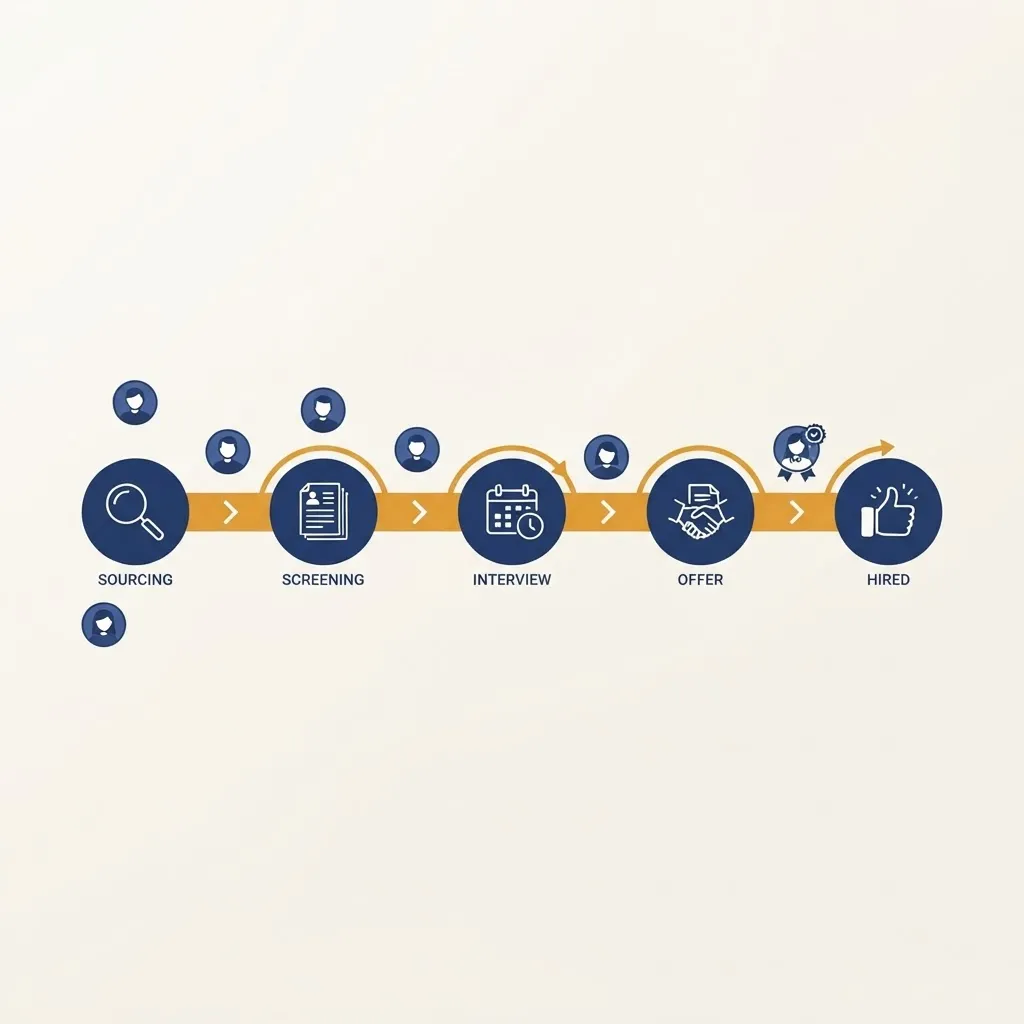
Most Associate Software Engineer loops run four to five stages across two to four weeks. Campus and off-campus pipelines differ slightly, but the technical bar is consistent.

| Stage | Format | Primary Focus | Typical Length |
|---|---|---|---|
| Online assessment | Timed platform test | Coding plus aptitude or MCQ on CS fundamentals | 60 to 90 minutes |
| Technical round 1 | Live coding | Arrays, strings, hashing, complexity analysis | 45 to 60 minutes |
| Technical round 2 | Live discussion | OOP, SQL, project deep dive, debugging | 45 to 60 minutes |
| Design or senior round | Whiteboard or verbal | Low-level design, API design, scalability basics | 45 minutes |
| Hiring manager round | Behavioral | Ownership, collaboration, communication | 30 to 45 minutes |
Industry hiring data provides useful context for pacing your preparation. Research from LinkedIn's Global Talent Trends reporting has consistently placed the average corporate technical hiring cycle in the range of roughly 30 to 45 days from application to offer, and a widely cited Glassdoor study measured the average interview process in the United States at about 23.8 days. Treat a four-week preparation window as realistic rather than rushed.
Coding Round: Data Structures and Algorithms Questions
The coding round targets easy to medium difficulty with an emphasis on clean implementation and spoken reasoning. Interviewers frequently ask you to state complexity before you write code.
Question patterns that appear repeatedly:
- Arrays and hashing: Find the first non-repeating character, two-sum variants, group anagrams, find duplicates in an unsorted array without extra sorting.
- Strings: Reverse words in a sentence while preserving spacing rules, validate a balanced-bracket expression, longest substring without repeating characters.
- Sliding window and prefix sums: Maximum sum subarray of size k, count subarrays whose sum equals a target, longest window satisfying a constraint.
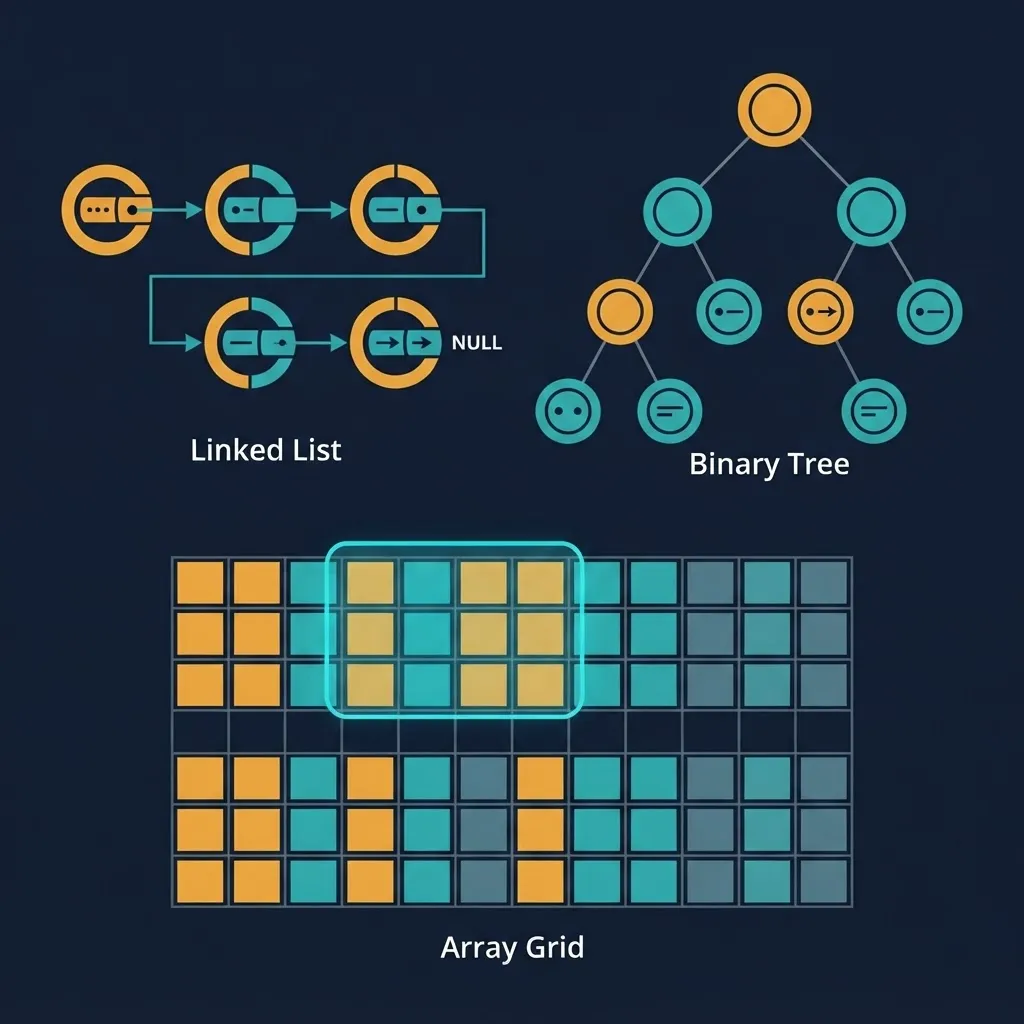
- Linked lists: Detect and remove a cycle, merge two sorted lists, find the middle node in a single pass.
- Trees: Level-order traversal, height of a binary tree, lowest common ancestor, validate a binary search tree.
- Sorting and searching: Binary search on a rotated sorted array, merge intervals, custom comparator sorting for records with multiple keys.
- Time-series flavored problems: Given a list of daily prices, compute the maximum profit from one transaction, or compute a rolling average. These map directly to Morningstar's domain and appear more often than candidates expect.
How to Answer Without Losing Points
Restate the problem in one sentence, then confirm three things: input size, whether the input is sorted, and how to handle empty or malformed input. Announce your brute-force approach and its complexity, then describe the optimization before coding. Write the function, then dry-run it aloud on one small case and one edge case. Candidates who skip the dry run lose points even when the code is correct, because interviewers cannot distinguish verified reasoning from luck.
SQL and Database Questions
SQL carries unusual weight in Morningstar interviews because so much of the work is data retrieval and transformation. Expect to write queries by hand, not just discuss them.
Common questions include:
- Write a query to find the second highest salary or the second highest fund return, and explain what happens with ties.
- Fetch the most recent record per group using a window function such as ROW_NUMBER partitioned by an entity id and ordered by date descending.
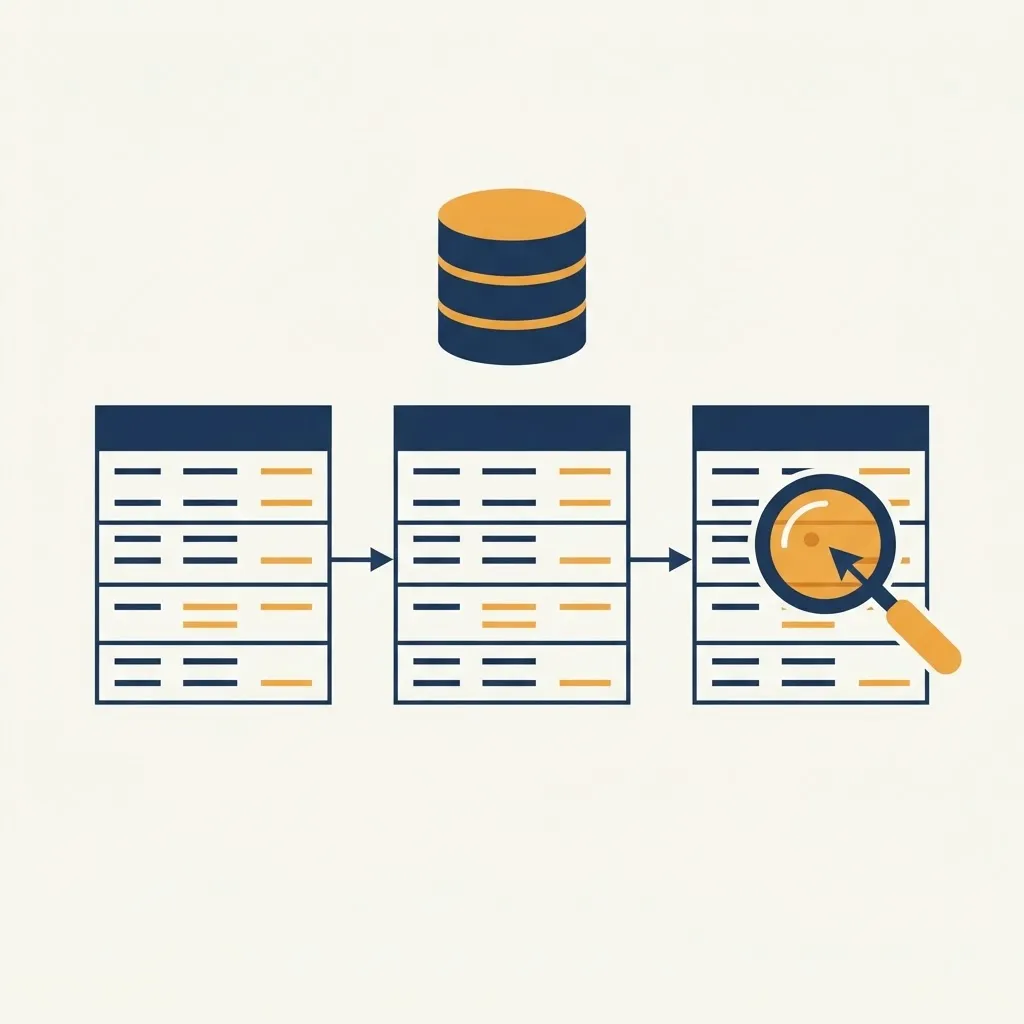
- Explain the difference between INNER JOIN, LEFT JOIN, and FULL OUTER JOIN, then predict the row count for a given pair of tables.
- Explain WHERE versus HAVING and why filtering before aggregation changes the result.
- Describe how an index speeds up reads and what it costs on writes, plus when a composite index column order matters.
- Define normalization and give a concrete case where you would deliberately denormalize for read performance in a reporting table.
- Explain ACID properties and give a real transaction example where isolation prevents a wrong balance.
A senior-level answer connects SQL to correctness. If a query joins a price table to a holdings table and a security has two price rows for the same day, your result silently doubles. Saying that out loud signals production experience faster than any syntax flourish.
Object-Oriented Programming and Language Fundamentals
This section separates candidates who memorized definitions from those who have shipped code. Interviewers ask for examples from your own projects after every definition.

Frequently asked areas:
- Four pillars applied: Do not recite encapsulation, inheritance, polymorphism, and abstraction. Instead, name a class you wrote, describe the field you made private, and explain the bug that decision prevented.
- Interface versus abstract class: Explain that an interface defines a contract with no state, an abstract class shares partial implementation, and describe choosing one for a pluggable data-source layer.
- Overloading versus overriding: Compile-time versus runtime resolution, with a note on why overriding equals also requires overriding hashCode.
- Collections: HashMap internals at a high level, ArrayList versus LinkedList access and insertion costs, HashMap versus TreeMap ordering guarantees, HashMap versus ConcurrentHashMap under threads.
- Exception handling: Checked versus unchecked exceptions, why swallowing exceptions in a catch block hides data pipeline failures, and how finally interacts with try-with-resources.
- Concurrency basics: What a race condition is, what synchronized does, and why immutable objects reduce threading bugs.
- Python variants: Mutable default arguments, list versus tuple, decorators, generators for memory-efficient large-file processing, and the difference between shallow and deep copy.
- SOLID principles: Expect single responsibility and dependency inversion specifically, usually as "where did your last project violate this and what did you do about it."
Design, API, and Project Deep-Dive Round
Associate-level design questions stay deliberately scoped. You are not asked to design a global exchange. You are asked whether you can structure a small system sensibly and defend a choice.
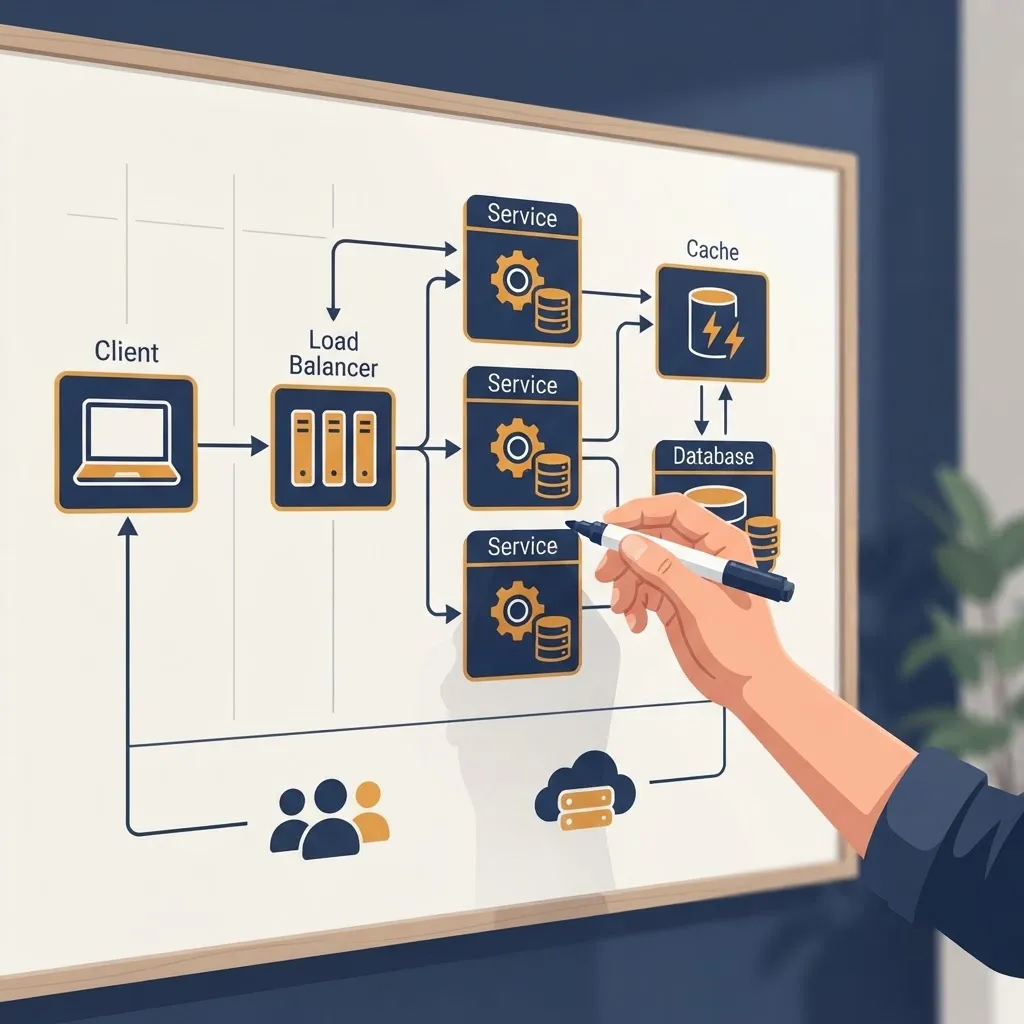
Typical prompts:
- Design a REST API for a portfolio watchlist, covering resource naming, HTTP verbs, status codes, pagination, and idempotency for repeated requests.
- Design classes for a stock alert service where users subscribe to price thresholds. Interviewers look for an observer-style pattern and a clean separation between rule evaluation and notification delivery.
- Design a daily ingestion job that pulls market data from a vendor, validates it, and loads it into a warehouse. Discuss retries, partial failures, duplicate detection, and idempotent reloads.
- Explain caching: what you cache, how you invalidate it, and why a stale price is a worse bug than a slow page.
The project deep dive is scored just as heavily. Prepare one project you can defend for 15 minutes with specifics: your exact contribution, the technical constraint you hit, two alternatives you rejected and why, and the measurable outcome. Teams that build production systems this way, such as the engineers at ZoneTechify, evaluate junior candidates on precisely this ability to justify decisions rather than list technologies.
Behavioral Questions That Still Test Engineering Judgment
Expect questions about a time you disagreed with a teammate's technical approach, a bug that reached production, how you handled an ambiguous requirement, and why Morningstar specifically. Answer in STAR format and always close with what you changed in your process afterward. Interviewers at data-driven companies weigh that final sentence heavily because it demonstrates a learning loop.
A Four-Week Preparation Plan That Works
Structure beats volume. Candidates who solve 400 random problems often underperform candidates who solve 120 problems across deliberately chosen patterns.

- Week 1: Arrays, strings, hashing, and two pointers. Target six problems per pattern and write complexity for each solution before checking any editorial.
- Week 2: Linked lists, stacks, queues, trees, and recursion. Add 45 minutes of SQL daily, focusing on joins, GROUP BY, and window functions.
- Week 3: OOP, SOLID, low-level design, and REST API basics. Rewrite one old project class hierarchy cleanly and document why.
- Week 4: Timed mock interviews with a live audience, plus your project deep-dive script. Simulate the pressure of narrating while coding, because silence is the most common scoring loss.
Track every problem in a sheet with the pattern name and your solve time. Reviewing that sheet the night before the interview is far more effective than attempting new problems.
Key Takeaways
- Morningstar Associate Software Engineer interviews weight easy-to-medium DSA, SQL, and OOP roughly equally, rather than emphasizing hard algorithmic puzzles.
- SQL window functions, join row-count reasoning, and index trade-offs appear in most loops because the role is data-centric.
- Design questions stay at low-level design and REST API scope for associate candidates, not distributed architecture.
- The Glassdoor benchmark of about 23.8 days for a typical United States interview process, alongside LinkedIn talent reporting placing corporate cycles near 30 to 45 days, makes a four-week structured plan a realistic target.
- Narrating your reasoning and dry-running edge cases aloud changes scores more than raw solution speed.
- One deeply defensible project beats five listed projects with shallow answers.
Frequently Asked Questions (FAQ)
How hard are Morningstar Associate Software Engineer technical interviews?
They are moderate in difficulty. Coding problems generally sit at easy to medium level, but interviewers expect precise complexity analysis, clean edge-case handling, and clear verbal reasoning. Depth in SQL and object-oriented fundamentals matters more than solving rare hard algorithm problems under time pressure.
Which programming language should I use in the interview?
Use the language you are strongest in, typically Java or Python since both align with Morningstar's stack. Interviewers care about correctness, readability, and your ability to explain library behavior. Switching to an unfamiliar language to look impressive almost always costs you points during debugging.
How many coding rounds are in the Morningstar interview process?
Most candidates face one online assessment plus two live technical rounds, followed by a design or senior discussion and a hiring manager conversation. That means roughly two to three rounds involve writing actual code, while the remaining rounds test design reasoning, project depth, and collaboration behavior.
Is SQL really important for this role?
Yes, SQL is one of the highest-weighted areas. Morningstar products depend on financial data retrieval and transformation, so expect hand-written queries involving joins, aggregations, and window functions. Being able to predict join row counts and explain index trade-offs consistently distinguishes strong candidates from average ones.
What should I ask at the end of the technical interview?
Ask which services the team owns, how code review and deployment work, what a typical first-quarter ramp looks like, and what separates a strong associate from an average one. These questions signal genuine engineering curiosity and give you real information for evaluating the offer.
How do I answer the project deep-dive question well?
Pick one project and prepare a 15-minute narrative covering your specific contribution, the hardest constraint, two rejected alternatives with reasons, and a measurable result. Specificity is everything. Teams like WebPeak Digital assess junior engineers on exactly this decision-justification ability.
Final Thought
The candidates who convert Morningstar Associate Software Engineer interviews are rarely the fastest coders. They are the ones who treat data as something that can be silently wrong, verify their own work before the interviewer has to, and explain why they chose one path over another. Build that habit during preparation and the questions above stop feeling like a test and start feeling like a normal engineering conversation.