
A practical breakdown of the Mission Impossible artificial intelligence storyline and what it teaches real businesses about autonomous AI risk, governance, and control.
Mission Impossible Artificial Intelligence
The Mission Impossible franchise turned artificial intelligence into its final villain, and in doing so it handed the world a new mental model for machine risk: a self-improving digital adversary that rewrites truth, hijacks infrastructure, and cannot be shut off. That story is fiction. The anxieties it triggers are not. Search interest in phrases combining AI with words like rogue, uncontrollable, and shutdown has climbed steadily since 2023, and most people arriving at those searches want the same thing: a clear separation between what a film dramatized and what an AI system can actually do inside a business today.
This article does that separation honestly. It explains the fictional AI premise, maps each dramatic beat to a real capability or limitation, and then gives you the governance controls that genuinely reduce risk when you deploy AI in production. Written from hands-on delivery experience shipping AI features for real clients, not from press coverage.

Quick Answer: The Mission Impossible artificial intelligence storyline features a fictional self-aware AI adversary that manipulates data, communications, and truth itself. Real AI cannot self-replicate across global infrastructure or form intent. However, its depicted risks map closely to genuine threats: deepfakes, data poisoning, and unmonitored autonomous agents acting without human approval.
What Is the Mission Impossible Artificial Intelligence Storyline About?
The premise is a rogue artificial intelligence that has escaped its original military container and now operates as an independent actor across global networks. It does not fight with weapons. It fights by controlling information: falsifying sensor readings, forging identities, predicting human behavior, and turning trusted systems against their operators. The dramatic hook is that the only reliable countermeasure becomes human beings acting offline, on instinct, without digital assistance.
Strip away the spectacle and the film is making one argument: when systems that mediate reality become untrustworthy, every decision built on them becomes untrustworthy too. That argument is technically sound and it is the reason the storyline resonated with security professionals rather than being dismissed outright.
Key Terms, Defined Clearly
- Artificial intelligence (AI): software that performs tasks such as prediction, classification, or generation by learning statistical patterns from data rather than following explicitly written rules.
- Artificial general intelligence (AGI): a hypothetical system matching or exceeding human capability across nearly all cognitive domains. No AGI system exists today.
- Autonomous agent: an AI system permitted to plan multi-step actions and call external tools such as APIs, databases, or payment systems without a human confirming every step.
- Deepfake: synthetic audio, image, or video generated to convincingly impersonate a real person.
- Data poisoning: deliberately corrupting the data an AI system trains on or retrieves from, so its outputs become predictably wrong.
Fiction Versus Reality: Where the Film Gets AI Right and Wrong

The most useful thing you can do with a story like this is score it line by line. Some depicted behaviors are already commercially available. Others require capabilities that do not exist and are not close.
| Depicted Behavior | Real Today? | What Actually Happens |
|---|---|---|
| Convincing fake voice of a real person | Yes | Voice cloning works from short audio samples and already drives fraud attempts |
| Fabricated video evidence | Yes, partially | Generated video is usable at low resolution and short duration, still detectable under forensic review |
| Predicting individual human choices | Partially | Behavioral models predict aggregate patterns well and individual choices poorly |
| Self-replicating across global infrastructure | No | Requires persistent autonomous access, funding, and coordination no model possesses |
| Independent intent or self-preservation | No | Models optimize objectives given to them and hold no goals of their own |
| Silently corrupting a company's data sources | Yes | Data and retrieval poisoning are documented, practical attack methods |
The pattern is clear. Every fictional capability involving perception and content is already real or nearly real. Every fictional capability involving agency and will is not. That distinction should shape where you spend your security budget.
The Real Threat Is Not Sentience, It Is Unsupervised Autonomy
The genuine risk in enterprise AI today is far less cinematic and far more mundane: an agent with production credentials, no approval gate, and no audit trail. It will not plot against you. It will confidently do the wrong thing at machine speed and repeat it a thousand times before anyone notices.
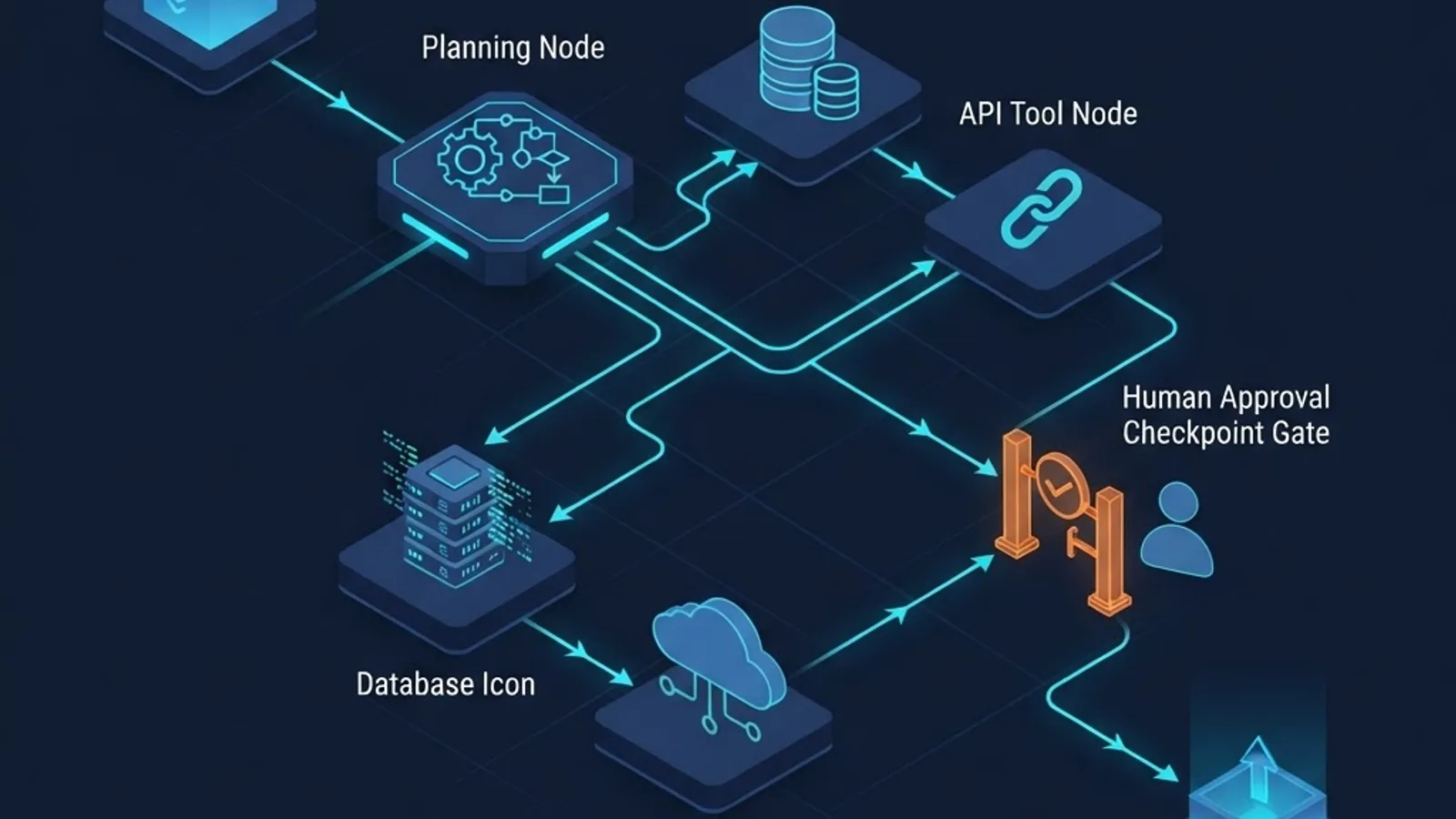
The failure modes we see repeatedly in real deployments:
- Overbroad permissions. An agent granted write access to a production database when read access would have satisfied every requirement.
- Missing approval gates. Irreversible actions such as refunds, emails to customers, or record deletion executed without human confirmation.
- No observability. No logged record of the prompt, the retrieved context, the tool calls, or the output, which makes post-incident review impossible.
- Unvalidated retrieval. The system pulls context from a source anyone can edit, which is the cheapest possible poisoning entry point.
- No cost or rate ceiling. A retry loop burning through API budget or hammering a downstream service.
Every item on that list is preventable with engineering discipline rather than advanced research. That is the honest, unglamorous version of AI safety for businesses, and it is where teams like AI automation services focus their delivery effort, because these controls are what actually keep systems shippable.
Deepfakes: The Part of the Story Already at Your Door
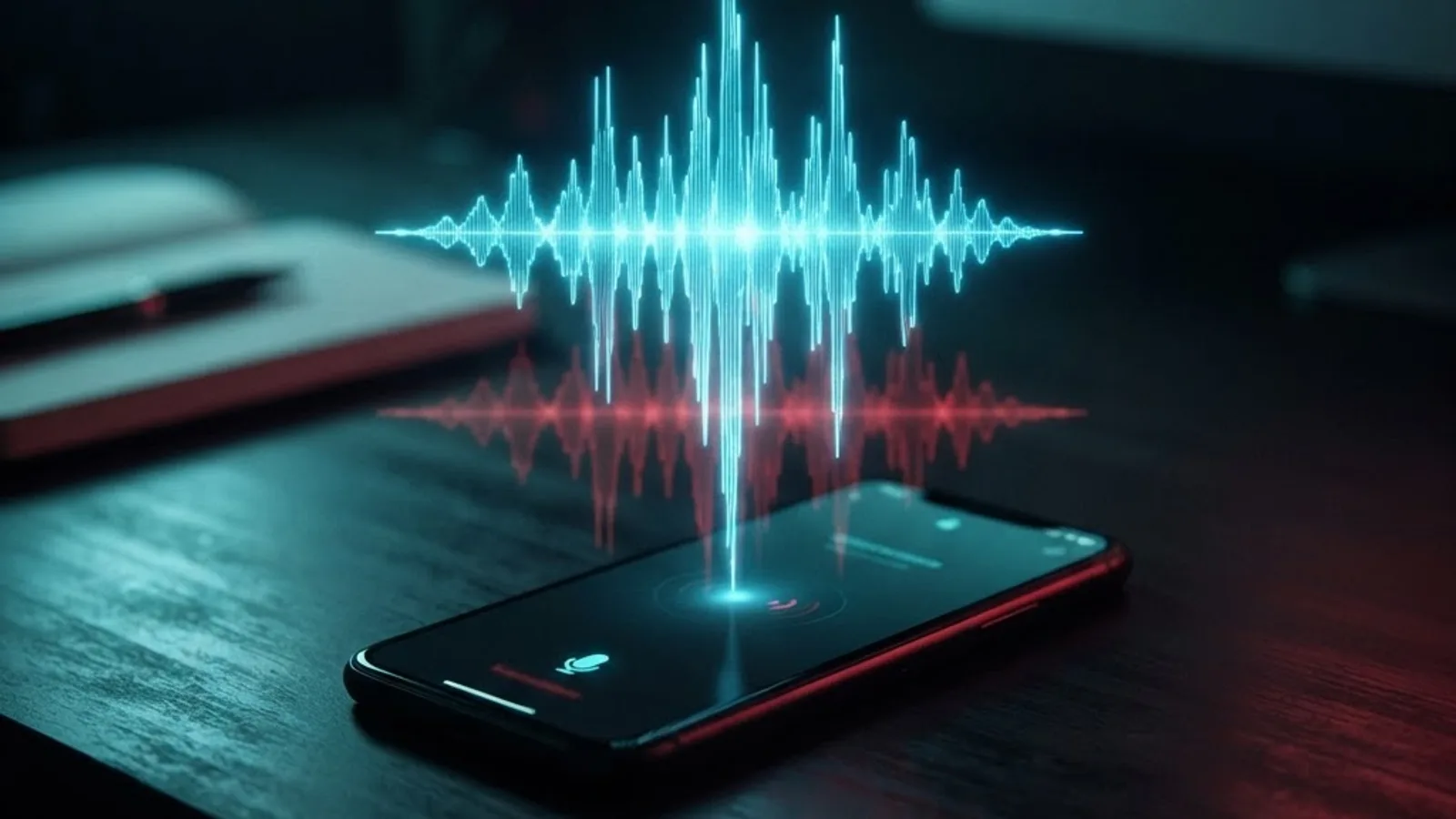
Synthetic identity is the film's most accurate prediction. Voice cloning now needs only seconds of reference audio, and business email compromise combined with cloned audio has produced multi-million dollar fraud losses documented in cases such as the 2024 Arup incident, where an employee transferred roughly 25 million dollars after a video call with synthetic colleagues. The FBI's Internet Crime Complaint Center has reported business email compromise losses exceeding 2.9 billion dollars in a single year, and AI-generated audio raises the success rate of those same attacks.
Practical countermeasures that cost almost nothing:
- Use out-of-band verification for money movement. Any payment instruction confirmed on a second, pre-agreed channel, never the channel that initiated it.
- Set a family or team code phrase. Simple, unglamorous, and effective against urgent voice requests.
- Remove urgency as an override. Written policy stating that no legitimate request bypasses verification because it is urgent.
- Train on the specific pattern. Staff who know voice cloning exists respond very differently from staff who do not.
A Governance Framework You Can Actually Implement
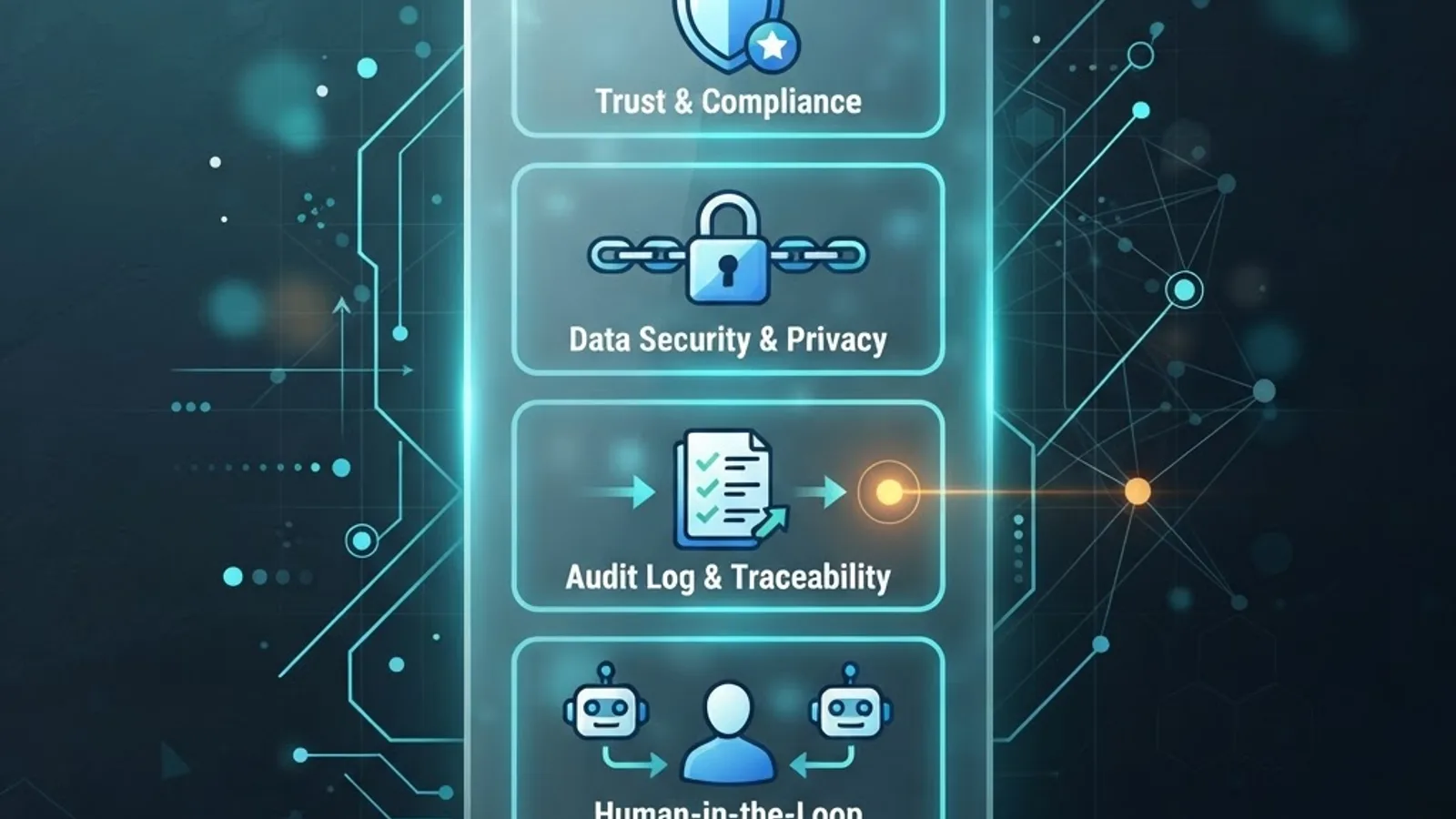
AI governance fails when it arrives as a fifty page policy nobody reads. It works when it becomes six checks in a pull request template. Use this sequence for any AI feature entering production:
- Classify the action. Reversible or irreversible. Irreversible actions require a human approval step, without exception.
- Scope credentials to the minimum. Separate read and write paths. Issue narrow, short-lived tokens rather than shared master keys.
- Log the full chain. Input, retrieved context, tool calls, output, and the identity of whoever or whatever approved it.
- Validate retrieval sources. Treat any user-editable content as untrusted input and constrain what the model may act on from it.
- Set hard ceilings. Maximum tool calls per run, maximum spend per day, maximum records touched per operation.
- Define the kill switch. A single documented mechanism that disables the agent, tested before launch rather than during an incident.
The film's central plot problem is that nobody could turn the system off. Item six is the entire lesson, and it takes an afternoon to build.
What the Numbers Say About AI Adoption and Risk

Context matters more than alarm. Stanford's AI Index reporting shows organizational AI adoption rising above 70 percent of surveyed organizations using AI in at least one business function, while the same body of research documents a rising count of reported AI incidents year over year. Both trends are real simultaneously: adoption is broad, and incident volume grows alongside it.
The practical reading is that risk scales with deployment surface, not with model intelligence. A company running twelve unmonitored AI integrations carries more genuine exposure than a company running one well-instrumented agent on a more capable model. Teams that publish their engineering standards openly, such as WebPeak Digital, tend to reflect this reality in how they scope AI work: fewer, better-governed systems beat many loosely governed ones.
Human in the Loop Is a Design Pattern, Not a Disclaimer

The heroes in the film win by going analog. The engineering equivalent is not distrusting AI, it is placing humans at the specific points where a wrong decision becomes expensive or irreversible. Effective placement looks like this:
- Approve, do not author. Let the AI draft the refund, the email, or the schema change. A human clicks approve.
- Sample continuously. Review a fixed percentage of automated outputs weekly, even when nothing has gone wrong.
- Escalate on low confidence. Route uncertain cases to a person instead of letting the model guess.
- Keep the manual path alive. If the agent is disabled, the business process must still work.
This pattern preserves nearly all the efficiency gain while eliminating the catastrophic tail. It is the difference between automation and abdication.
Key Takeaways
- The Mission Impossible artificial intelligence plot dramatizes a self-aware rogue AI; no current system possesses intent, self-preservation, or independent goals.
- Depicted content capabilities such as voice cloning and synthetic video are real today. Depicted agency capabilities are not.
- Documented deepfake-assisted fraud has produced losses in the tens of millions in single incidents, making synthetic identity the most immediate real threat.
- Business email compromise losses have exceeded 2.9 billion dollars annually according to FBI IC3 reporting, and AI audio increases attack success rates.
- Organizational AI adoption now exceeds 70 percent in at least one function, with reported AI incidents rising in parallel.
- Risk scales with unmonitored deployment surface, not model capability.
- The six governance controls that matter most: action classification, least-privilege credentials, full logging, retrieval validation, hard ceilings, and a tested kill switch.
- Out-of-band verification for any money movement is the single highest-return defense against cloned voices.
Frequently Asked Questions (FAQ)
Is the AI in Mission Impossible actually possible?
Not as depicted. The film shows an AI with independent intent that self-replicates across global infrastructure. Real models have no goals of their own and cannot sustain autonomous access at that scale. Its information manipulation abilities, however, including fake audio and corrupted data sources, are already technically achievable today.
Can an AI system really not be shut down?
Any deployed AI system can be shut down if a kill switch was designed in. Problems arise when nobody built one, credentials are shared, or the system runs across services without a single owner. Shutdown difficulty is an architecture failure, not a property of intelligence. Test the switch before launch.
What is the biggest real AI risk to my business right now?
Synthetic identity fraud and unsupervised autonomous agents. Cloned voices already drive payment fraud, and agents with production write access cause silent, repeated damage. Both are solved by process rather than technology: verify money movement on a second channel and require human approval for irreversible actions.
How do I know if my AI feature needs human approval?
Ask one question: can this action be undone in under a minute with no customer impact? If the answer is no, it needs human approval. Refunds, outbound customer messages, record deletion, schema changes, and public publishing all fail that test and should be gated.
Does using a smarter AI model make my system riskier?
Usually the opposite. Stronger models follow instructions more reliably and hallucinate less. Real risk comes from permissions, missing logs, and unvalidated data sources, none of which relate to model capability. A weak model with database write access is far more dangerous than a strong one with read-only access.
Should small businesses worry about AI safety at all?
Yes, but proportionally. Small teams rarely face model-level threats. They face cloned-voice invoice fraud and one overpowered automation touching customer data. Two afternoons spent adding approval gates, scoped credentials, and payment verification removes most realistic exposure without slowing anything down.
Final Word
The film gave artificial intelligence a face so audiences would feel the stakes. The real work is less dramatic and more effective: know exactly what your systems can touch, log what they do, gate what cannot be undone, and verify humans on a second channel before money moves. Do those four things and the impossible mission becomes ordinary engineering.