
A practical, experience-based roadmap to becoming an SEO content writer, covering the skills, tools, portfolio, pricing, and client-acquisition steps that actually work in 2026.
How to Become an SEO Content Writer?
SEO content writing is one of the few writing careers where your work is measured, not guessed at. You publish an article, and within 60 to 90 days you can see exactly how many people found it, what they searched to get there, and whether they converted. That feedback loop is what separates an SEO content writer from a general blogger, and it is also what makes the role hire-worthy: businesses pay for measurable traffic, not for prose.
This guide is written from the perspective of a team that briefs, edits, and publishes SEO content every week. It covers the exact skills, tools, portfolio structure, and pricing decisions that determine whether you get hired at 0.05 USD per word or 0.35 USD per word.
Quick Answer: To become an SEO content writer, learn search intent and keyword research, master on-page SEO basics like title tags and heading structure, then write 3 to 5 sample articles in one niche to build a portfolio. Publish your own site, track rankings, and pitch agencies or SaaS brands directly.

What Does an SEO Content Writer Actually Do?
An SEO content writer creates written content designed to rank in search engines and satisfy the person who clicked. The job has three parts that happen in order: research what people search and why, structure the article so the answer is easy to find, and write it well enough that the reader stays.
A typical assignment looks like this: you receive a target keyword such as "best CRM for small business," analyze the top 10 results, identify the format Google is rewarding (usually a comparison list), build an outline covering every subtopic competitors mention plus at least two they miss, then write 1,500 to 2,500 words with clean headings, internal links, and a clear conclusion.
What you are not doing: stuffing keywords, hitting arbitrary density targets, or writing thin 500-word posts. Google's helpful content systems have been rolling into core updates since 2022, and the March 2024 core update alone was designed to reduce low-quality, unoriginal content in search results by roughly 40 percent, according to Google's own announcement. Writers who produce generic summaries are the first casualties of every update.
Step 1: Learn Search Intent Before You Learn Anything Else
Search intent is the reason behind a query. Getting it wrong is the single most common reason a well-written article never ranks.
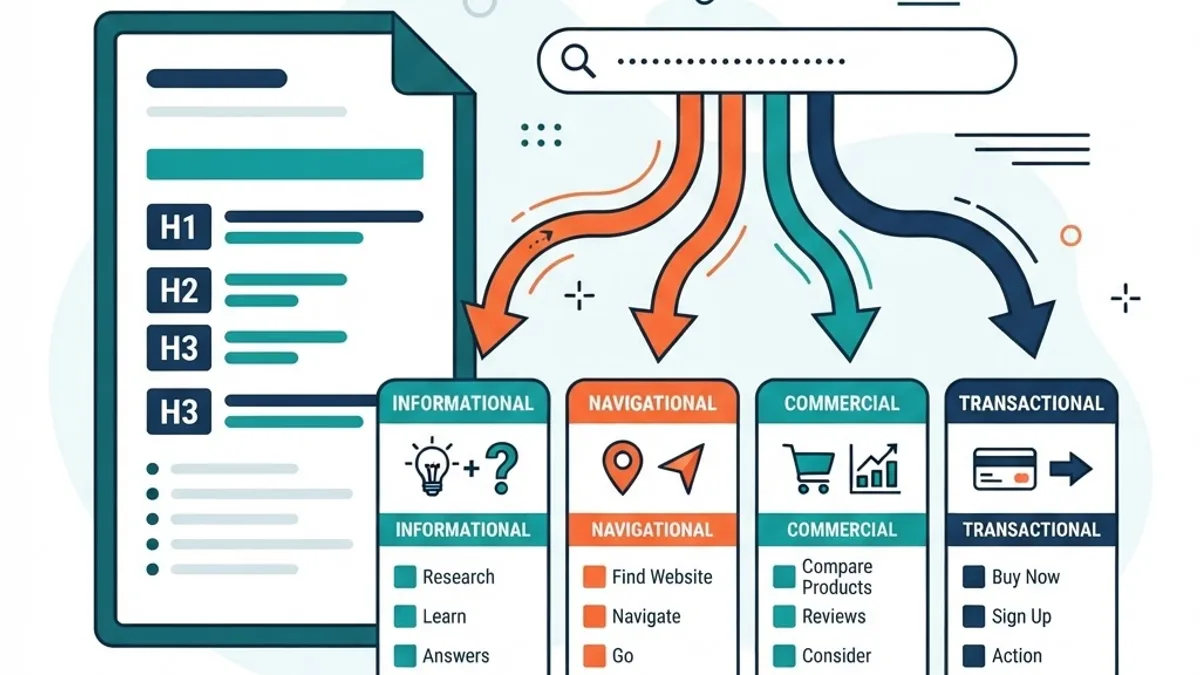
There are four intent types, and each demands a different article format:
- Informational — the user wants to learn ("how to become an SEO content writer"). Format: guide, tutorial, or explainer.
- Commercial — the user is comparing before buying ("best SEO writing tools"). Format: listicle or comparison table.
- Transactional — the user is ready to act ("hire SEO writer"). Format: service page, not a blog post.
- Navigational — the user wants a specific brand ("Ahrefs login"). Format: usually not worth targeting.
The practical test takes 90 seconds: search your keyword in an incognito window and look at the top five results. If they are all step-by-step guides, do not submit a product roundup. Google has already told you what format wins.
Step 2: Build a Repeatable Keyword Research Workflow
Keyword research is not about finding high-volume terms. It is about finding terms you can realistically rank for that bring in buyers.
Here is a workflow you can run in under 30 minutes per article:
- Start with a seed topic tied to a business outcome, not a hobby interest.
- Pull long-tail variations using Google autocomplete, People Also Ask, and a tool like Ahrefs, Semrush, or the free Google Keyword Planner.
- Filter by difficulty, not volume. As a new writer or on a new site, target keywords with low competition and 100 to 1,000 monthly searches.
- Cluster related keywords into one article. A single well-built article can rank for 50 to 200 related queries, so do not write separate posts for "SEO writer skills" and "skills of an SEO writer."
- Check the SERP features — if the top result is a featured snippet with a 45-word definition, write a 45-word definition under your first H2.
According to Ahrefs' widely cited study of 1.9 billion pages, roughly 96.5 percent of pages get zero organic traffic from Google. Almost all of them fail at this step, not at the writing step.

Step 3: Master the On-Page SEO Fundamentals
You do not need to be a technical SEO. You do need to control the elements that live inside the article. Clients notice immediately when a writer delivers a draft that needs no SEO cleanup.
The non-negotiables:
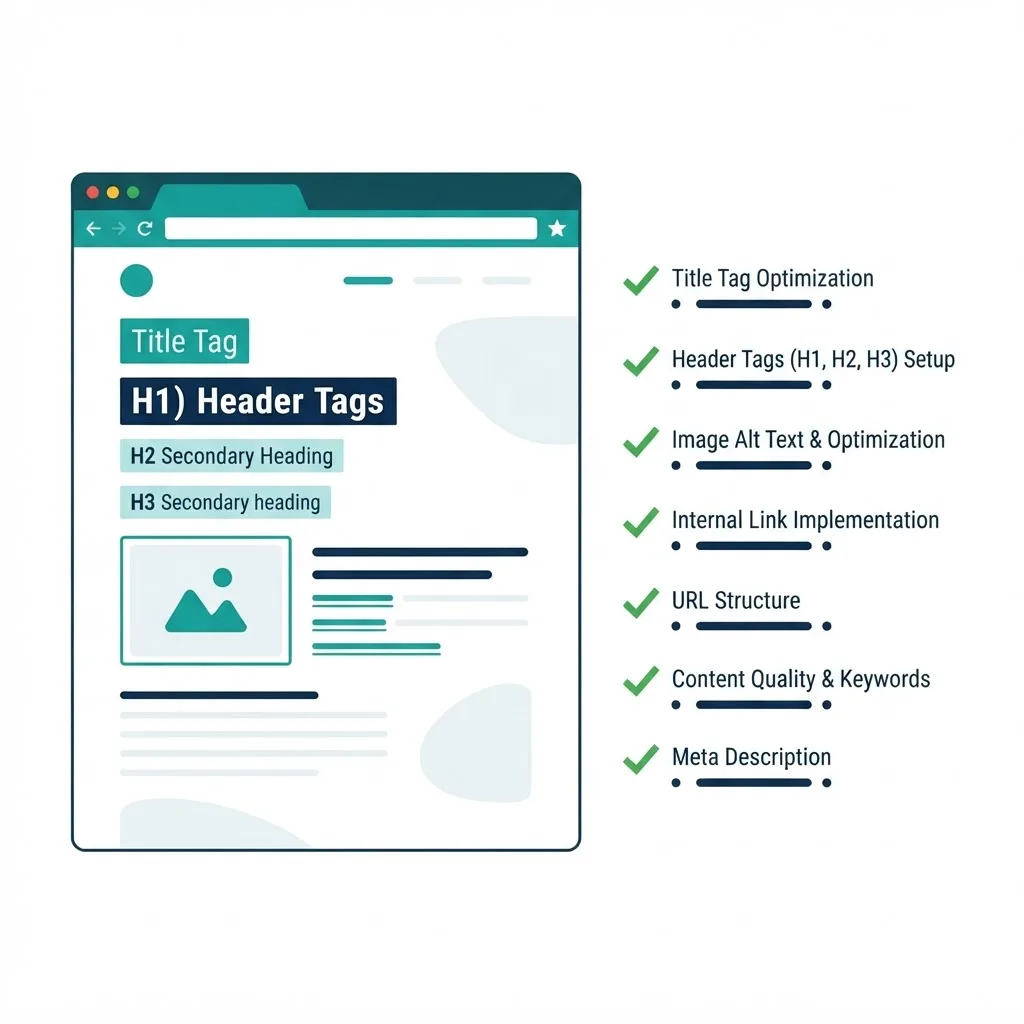
- Title tag — under 60 characters, primary keyword near the front, written for a human to click.
- Meta description — 150 to 160 characters, includes the keyword and a reason to click. It is not a ranking factor, but it drives click-through rate.
- One H1 per page, matching the article topic.
- Logical H2 and H3 hierarchy — each H2 should read like a question a user might ask.
- Short answer first — put a direct 40 to 60 word answer immediately under each heading so answer engines can extract it.
- Internal links — 2 to 5 contextual links to related pages, with descriptive anchor text.
- Image alt text — describe the image for screen readers, do not stuff keywords.
- Scannable formatting — paragraphs of 2 to 4 lines, bullet lists, and at least one table where a comparison exists.
If you want to see how a professional team structures this at scale, review how agency-level teams handle it under structured content writing services, where every draft ships with title, meta, headings, and internal links already mapped.
Step 4: Write Content Google and AI Engines Both Reward
Search has split into two audiences: traditional blue-link results and AI answer engines like ChatGPT, Gemini, Perplexity, and Google's AI Overviews. The good news is that both reward the same things.
What earns citations in AI answers:
- Clear, standalone definitions of key terms.
- Specific numbers with context and attribution.
- Original data, first-hand testing, or documented experience.
- Clean structure with descriptive headings.
- No hedging or filler — AI models extract confident, factual sentences.
What gets ignored: unsourced claims, 200-word introductions before the answer, and paragraphs that restate the heading without adding information.
The practical writing rule I give every new writer: your first sentence under any heading must be a complete answer. Everything after it is supporting evidence. This single habit improves featured snippet capture and AI citation rate more than any other edit.
Step 5: Build a Portfolio That Proves Results
You cannot show client results before you have clients, so create your own proof.
- Pick one niche — SaaS, health, finance, home services, or B2B tech. Specialists earn 2 to 3 times more than generalists because they need less onboarding.
- Publish 3 to 5 full articles on your own domain. A 12 USD domain plus WordPress or a free Next.js site is enough.
- Target genuinely low-competition keywords so at least one piece ranks. A screenshot of Google Search Console showing real impressions beats any writing sample.
- Write two spec pieces for dream clients using their actual content gaps.
- Document your process — publish your content brief template. Clients hire process, not vibes.
If you also need a fast, credible place to host that portfolio, teams at ZoneTechify and WebPeak build the kind of lightweight, fast-loading sites that let a writing portfolio load in under two seconds — which matters, because slow portfolio sites signal that you do not understand technical basics.

Step 6: Use AI as an Assistant, Not an Author
AI drafting tools have compressed research time dramatically, but fully AI-generated articles rarely rank because they contain no original experience. Google's guidance is explicit: content is judged by quality and helpfulness, not by how it was produced.
Use AI for outlining, transcript summarizing, headline variants, and finding gaps in a draft. Do the original thinking, examples, and verification yourself. Every statistic an AI tool gives you must be checked against the primary source before publishing — fabricated citations are the fastest way to lose a client.

Step 7: Find Clients and Price Your Work
Most new SEO writers fail here, not at writing. Your first ten clients come from four places:
- Direct outreach — email 20 companies in your niche with a specific observation about their content, plus one improved headline and outline.
- Agency subcontracting — agencies always need reliable writers and provide steady volume.
- Job boards — ProBlogger, Peak Freelance, and LinkedIn filtered to "SEO content writer."
- Referrals — ask every satisfied client for one introduction.

SEO Content Writer Rate Benchmarks
| Experience Level | Typical Rate | Deliverable Expectation | Portfolio Needed |
|---|---|---|---|
| Beginner (0-6 months) | 0.03 to 0.08 USD per word | Draft only, brief provided | 3 samples |
| Intermediate (6-24 months) | 0.10 to 0.18 USD per word | Draft plus keyword research | Ranking proof |
| Specialist (2 plus years, one niche) | 0.20 to 0.40 USD per word | Full brief, optimization, internal links | Case studies |
| Strategist / Consultant | 1,500 to 6,000 USD monthly retainer | Content strategy plus production | Revenue-linked results |
Move to per-project or per-retainer pricing as soon as you can. Per-word pricing punishes you for writing efficiently, and it invites clients to negotiate length instead of value.

Common Mistakes That Stall New SEO Writers
- Choosing keywords by volume instead of difficulty and intent.
- Writing 400-word introductions before the answer appears.
- Ignoring Google Search Console, which is free and shows exactly which queries you almost rank for.
- Refusing to specialize, which caps rates at the low end permanently.
- Delivering drafts without titles, metas, or internal link suggestions.
- Never updating old articles — refreshing a piece that ranks at position 8 is usually higher ROI than writing a new one.
Key Takeaways
- Roughly 96.5 percent of pages get zero Google traffic, according to Ahrefs, and most failures trace back to wrong intent or unwinnable keywords.
- Google's March 2024 core update aimed to cut unoriginal, low-quality content in results by about 40 percent, making first-hand experience mandatory.
- Specializing in one niche typically raises rates 2 to 3 times versus generalist writing.
- Answer the question in the first 40 to 60 words under every heading to win featured snippets and AI citations.
- Realistic timeline: 3 to 6 months to first paid work, 12 to 18 months to a sustainable full-time income.
- Track results in Google Search Console — measurable proof, not writing style, is what closes higher-paying clients.
Frequently Asked Questions (FAQ)
How long does it take to become an SEO content writer?
Most people reach paid-client level in three to six months of consistent practice, assuming they publish two articles a week and study rankings. Reaching a stable full-time income usually takes 12 to 18 months, because you need ranking proof and repeat clients before rates rise meaningfully.
Do I need a degree or certification to be an SEO content writer?
No. Clients hire based on writing samples and ranking results, not credentials. Free resources like Google Search Central documentation, the Google Analytics certification, and HubSpot's content marketing course give enough foundation. A portfolio with three ranking articles beats any certificate in every hiring conversation.
How much do SEO content writers earn?
Beginners typically earn 0.03 to 0.08 USD per word, intermediate writers 0.10 to 0.18, and niche specialists 0.20 to 0.40 or more. Experienced writers on monthly retainers commonly bill 1,500 to 6,000 USD per client. Specialization and demonstrated traffic results drive nearly all of the difference.
Will AI replace SEO content writers?
AI has replaced generic, undifferentiated writing, not skilled SEO writing. Search engines reward original experience, verified data, and expert judgment that models cannot fabricate. Writers who use AI for research and drafting while adding first-hand insight are producing more work at higher rates, not fewer assignments.
What tools does an SEO content writer actually need?
Start with four: Google Search Console for performance data, Google Keyword Planner or Ahrefs for keyword research, a readability checker like Hemingway, and a plagiarism tool. Add Surfer or Clearscope only when clients require them. Free tools cover roughly 80 percent of professional SEO writing work.
How do I get my first SEO writing client with no experience?
Publish three self-owned articles targeting low-competition keywords, then send 20 personalized pitches to companies in one niche. Include a specific content gap you noticed plus a sample outline. Agencies subcontracting overflow work are the fastest first clients because they hire on skill, not resume.