
A practical, evidence-based look at how robots and humans will share future workplaces, which tasks get automated first, and how teams can prepare with the right skills, safety rules, and collaboration models.
How Robots and Humans Will Work Together in Future Workplaces
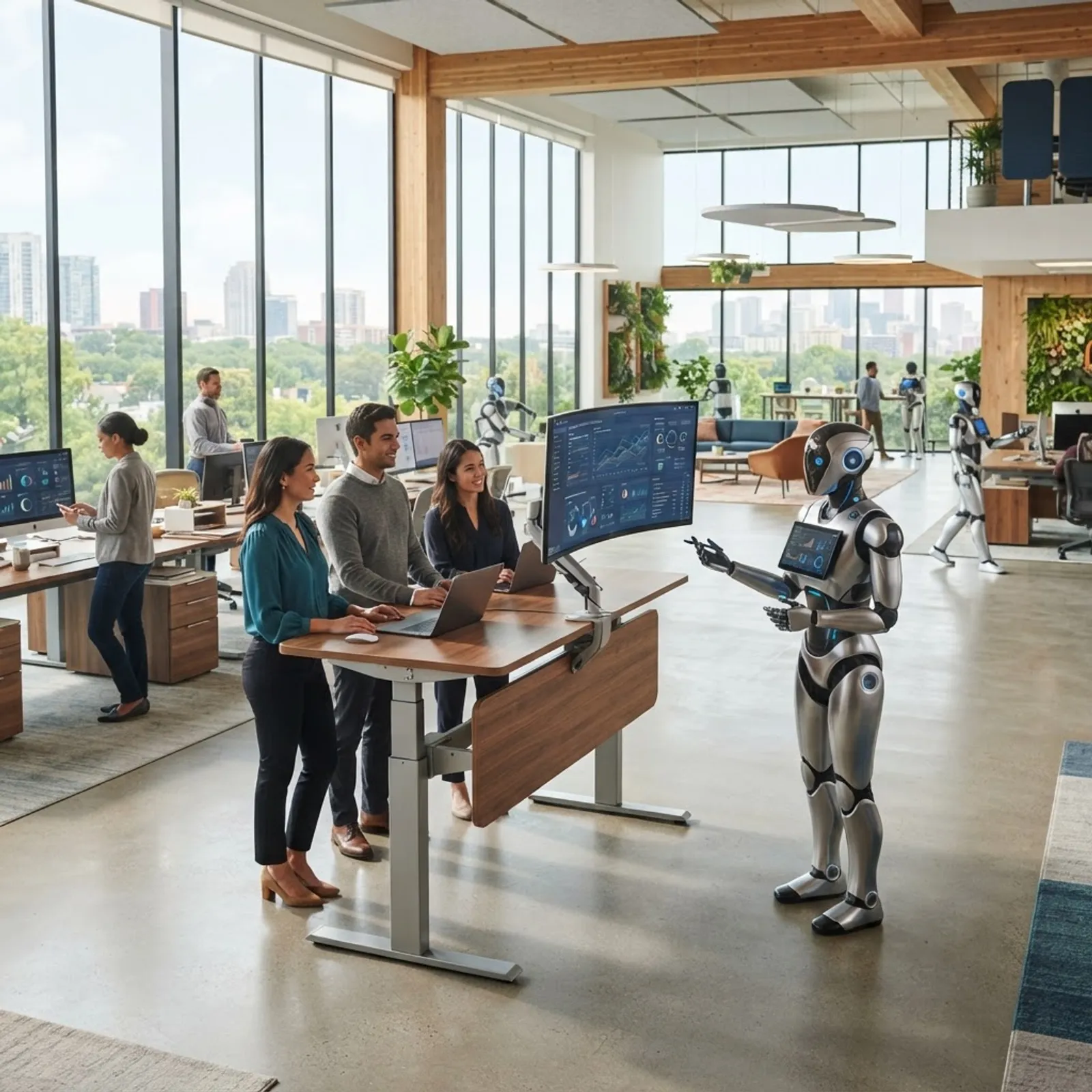
The future workplace will not be a factory floor emptied of people. It will be a shared environment where robots handle repetition, precision, and physical strain, while humans handle judgment, exceptions, relationships, and accountability. Having helped operations teams roll out automation across warehouses, clinics, and back offices, the pattern we keep seeing is consistent: the companies that succeed do not automate jobs, they automate tasks and then redesign the human role around what is left.
This guide explains exactly how that division of labour will work, what evidence supports it, and what you should do in the next twelve months to prepare.
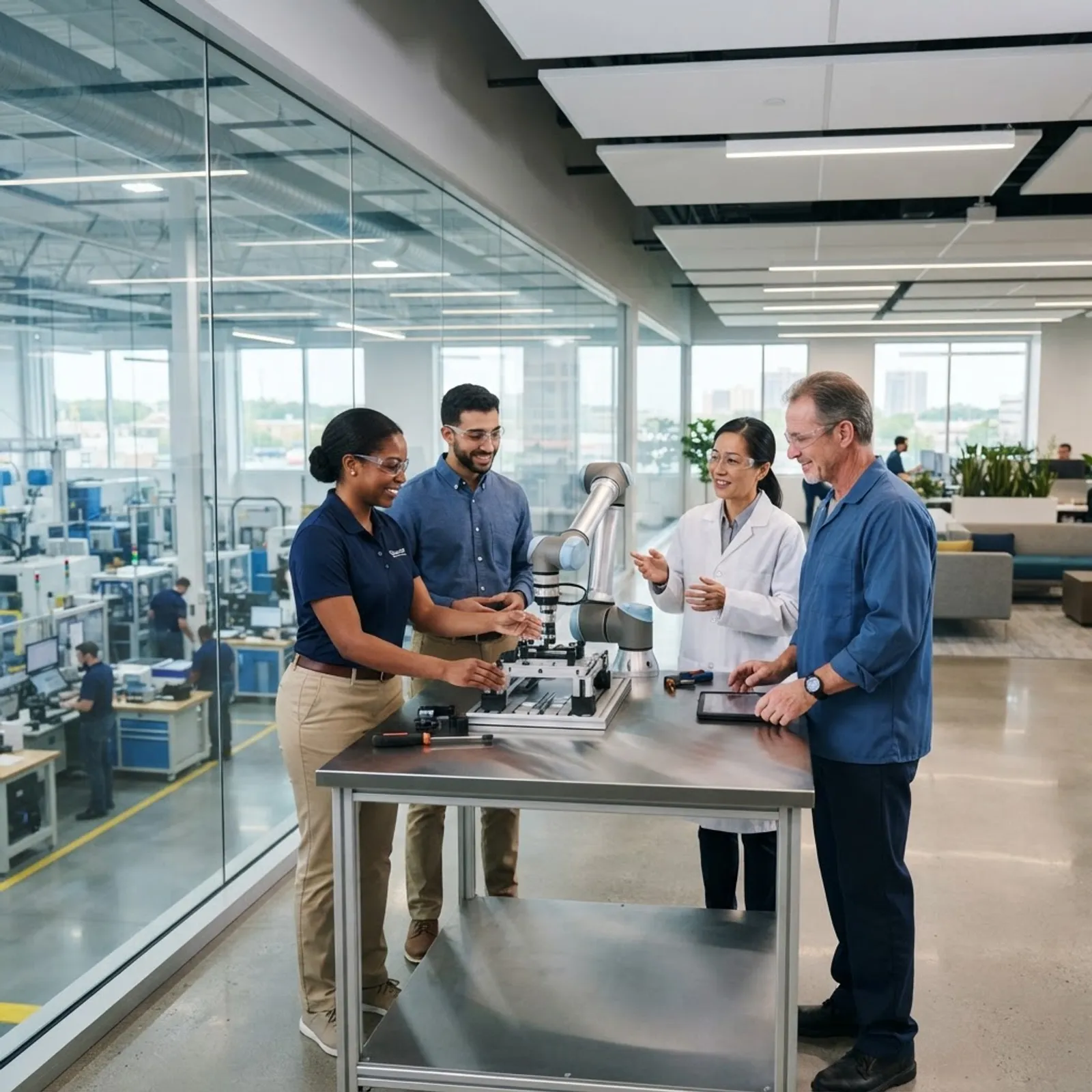
Quick Answer: Robots and humans will work together as complementary teammates rather than competitors. Robots will take repetitive, precise, and physically demanding tasks, while humans manage judgment, exceptions, empathy, and oversight. Success depends on task-level redesign, shared safety standards, clear escalation rules, and continuous reskilling of the existing workforce.
What Human-Robot Collaboration Actually Means
Human-robot collaboration (HRC) is a work model in which people and machines share the same workspace, timeline, or workflow, exchanging tasks based on who performs each step better. It is different from traditional automation, where robots were caged off and humans never entered the cell.
Three terms matter here:
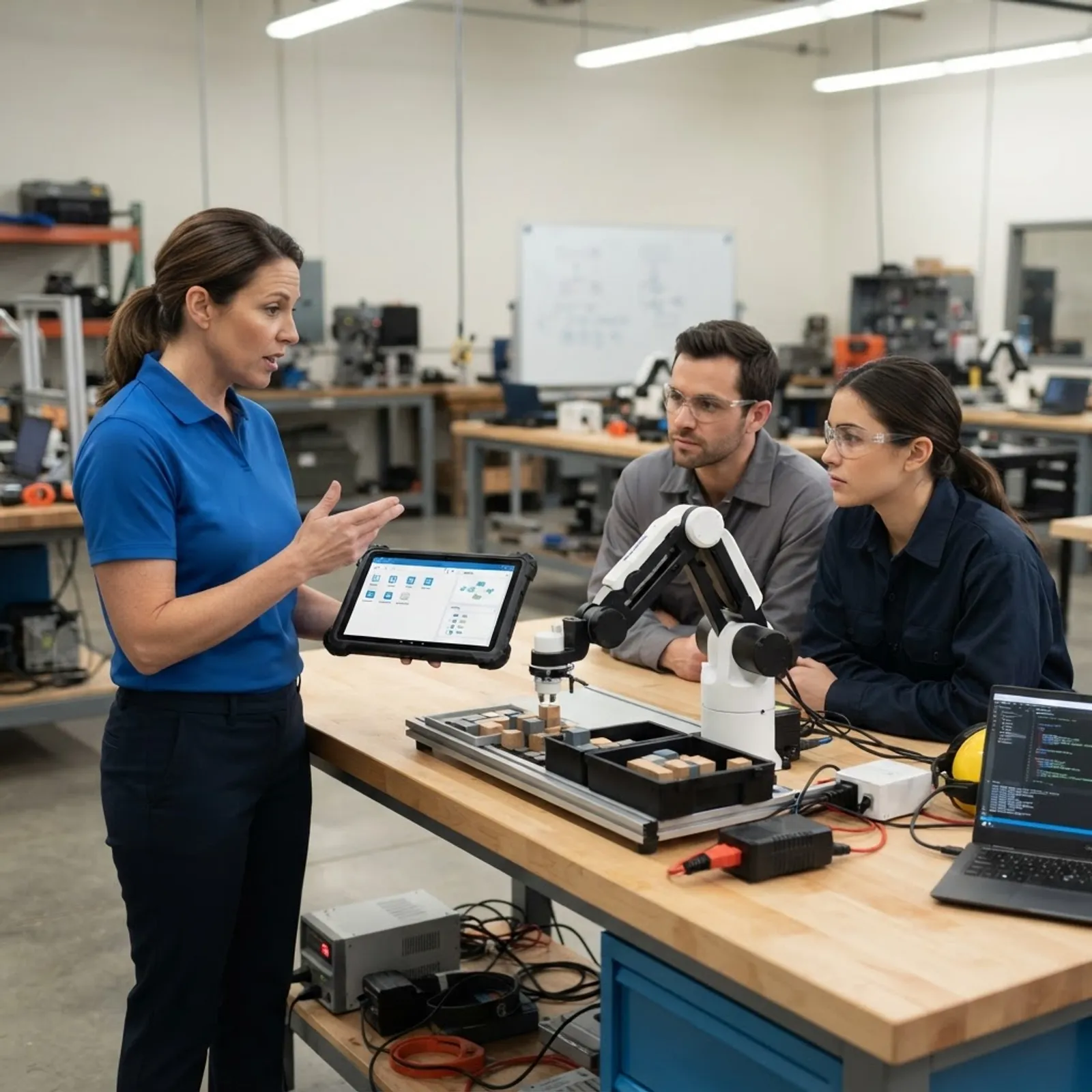
- Cobot (collaborative robot): a force-limited robot arm designed to operate safely near people without full physical barriers.
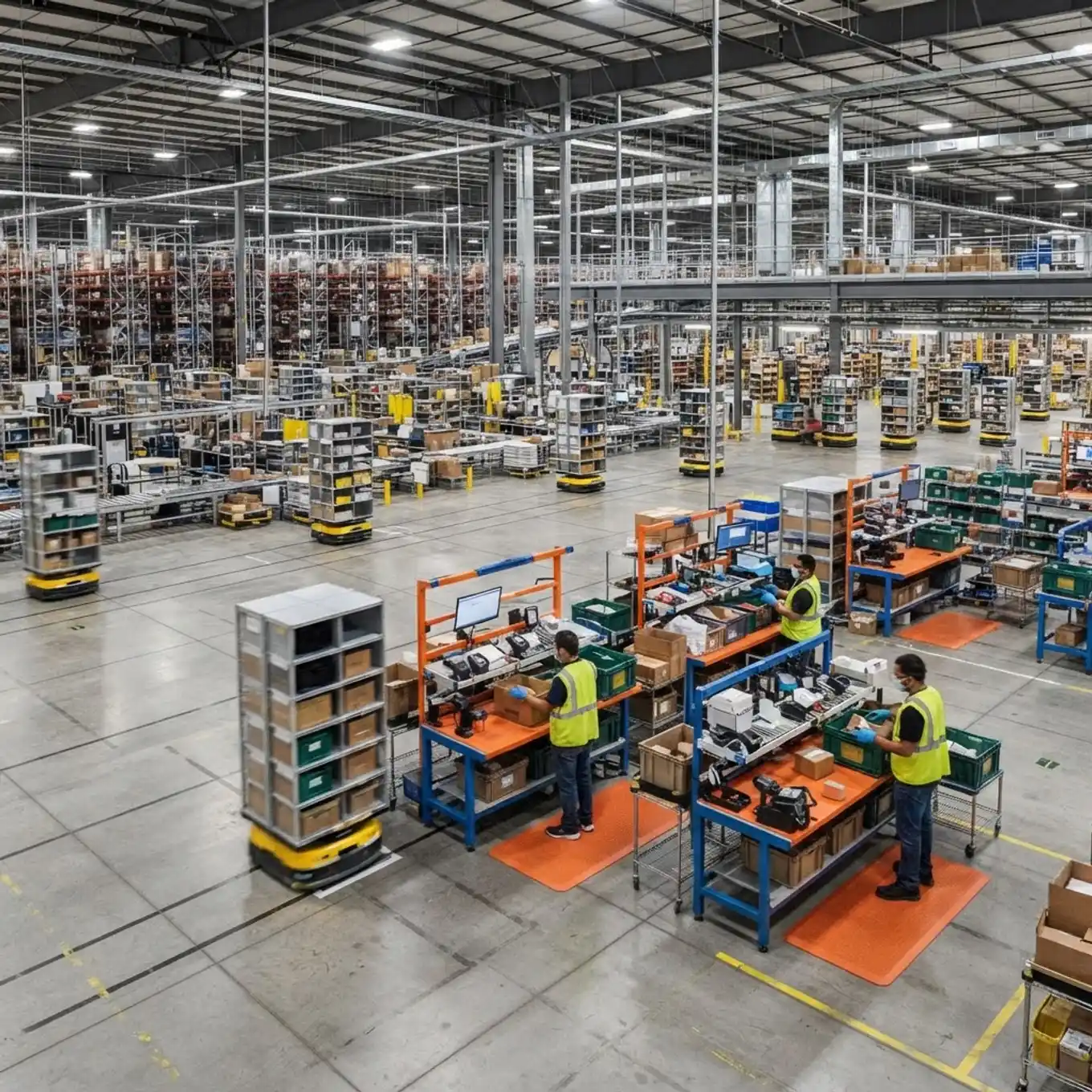
- AMR (autonomous mobile robot): a wheeled robot that navigates a facility on its own, usually moving goods to a human worker.
- Software robot (RPA/AI agent): a digital worker that performs screen-based or data-based tasks such as invoice matching, ticket routing, or report generation.
Most workplaces will use all three at once. A hospital may use an AMR to move linens, a cobot to prepare medication doses, and AI agents to pre-fill insurance claims — while nurses keep every patient-facing decision.
The Evidence: Collaboration, Not Replacement
The data points toward redistribution of work rather than mass elimination.
According to the World Economic Forum's Future of Jobs Report, technology adoption is expected to displace roughly 92 million roles by 2030 while creating about 170 million new ones — a net gain of around 78 million jobs, driven largely by roles that require human-machine coordination.
The International Federation of Robotics reports that around 4 million industrial robots are now operating in factories worldwide, yet manufacturing employment in the most heavily automated economies, including South Korea and Germany, has not collapsed. Instead, job content shifted toward maintenance, programming, quality assurance, and logistics coordination.
The honest reading of this evidence is nuanced: the total number of jobs holds up, but individual roles change substantially, and workers who do not adapt bear real costs. That is a workforce-planning problem, not a technology problem.
Which Tasks Go to Robots First
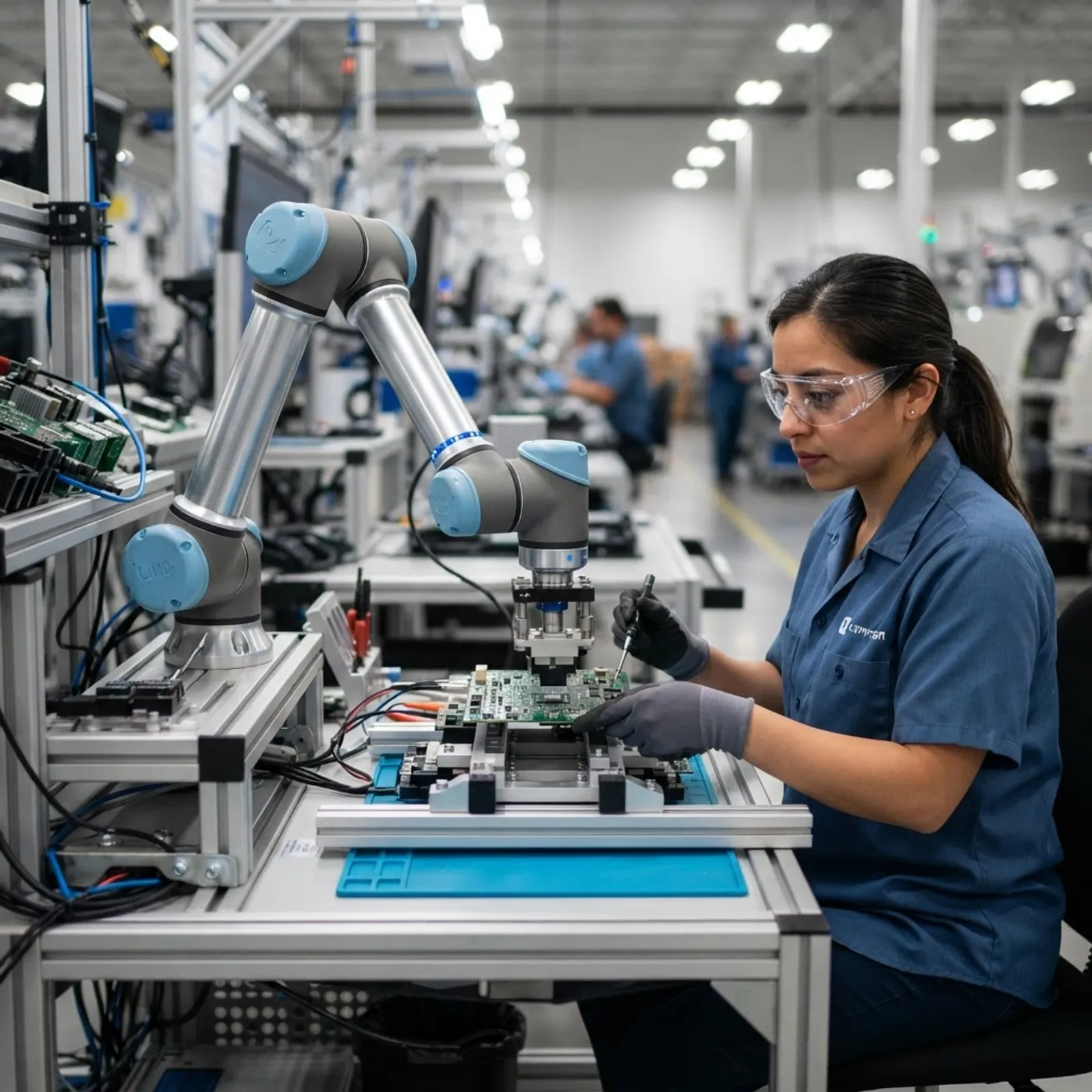
After reviewing dozens of automation pilots, the tasks that transfer to machines earliest share four traits: they are repetitive, rule-based, physically taxing, and measurable. Use this as a screening test before you buy anything.
- High-volume repetition. Palletising, labelling, data entry, and screenshot-driven reporting.
- Physical strain or injury risk. Lifting above shoulder height, repeated bending, exposure to heat, dust, or chemicals.
- Precision at speed. Screw driving to a fixed torque, dispensing exact volumes, visual defect inspection.
- Predictable environments. Fixed lighting, known part positions, stable floor layouts.
Tasks that stay human are the inverse: ambiguous inputs, emotional stakes, novel problems, negotiation, and anything where being wrong carries legal or ethical consequences.
Humans vs Robots: A Practical Capability Comparison
| Capability | Robots and AI Systems | Humans | Best Model |
|---|---|---|---|
| Repetitive precision tasks | Excellent, consistent for long shifts | Declines with fatigue | Robot leads |
| Handling exceptions and edge cases | Poor without retraining | Strong, adapts instantly | Human leads |
| Physical endurance and heavy lifting | Excellent | Limited, injury risk | Robot leads |
| Empathy and customer trust | None | Core strength | Human only |
| Pattern detection in large data | Excellent | Limited by scale | Robot leads, human validates |
| Ethical and legal accountability | Cannot hold responsibility | Legally accountable | Human only |
| Working in unstructured spaces | Improving but fragile | Naturally flexible | Human leads |
| Cost per additional hour of work | Low after setup | Fixed wage cost | Mixed by task |
The useful insight in this table is the right-hand column. Nearly every row resolves to a shared model, not a winner. Teams that assign ownership row by row avoid both over-automation and stalled projects.
The Four Collaboration Models You Will See
1. Coexistence
Humans and robots work in the same room on separate tasks with no shared handoff. This is the lowest-risk entry point and the model most facilities start with.
2. Sequential Handoff
A robot completes a step, then a human completes the next. A cobot places parts; an operator performs final inspection. Most measurable productivity gains in early deployments come from this model because it removes the slowest physical step without redesigning the whole line.
3. Simultaneous Cooperation
Both work on the same product at the same time, in the same space. This requires certified safety monitoring and delivers strong ergonomic benefits — the robot holds the weight while the person does the delicate work.
4. Human-in-the-Loop Supervision
One person oversees several robots or AI agents, intervening only on exceptions. This is where knowledge work is heading: a single specialist reviewing flagged cases instead of processing every case manually.
Office Work Will Change Before Factory Work
The most underestimated shift is in the office, not the plant. Software robots and AI agents need no floor space, no safety certification, and no capital approval committee — so they spread faster.
In practice, the highest-return office automations we see are:
- Drafting first versions of documents, summaries, and reports for human editing
- Reconciling records across two systems that were never designed to talk
- Triaging inbound support tickets by intent and urgency
- Extracting structured fields from PDFs, invoices, and forms
- Monitoring dashboards and alerting a human only when thresholds break
Each one keeps a human as the approver. That single design choice — machine drafts, human approves — is the most reliable governance pattern we have found for AI at work. Teams building this kind of workflow often need help mapping processes before automating them, which is where structured artificial intelligence services make a measurable difference.

Safety and Trust: The Non-Negotiables
Collaboration only works if people trust the machine next to them. Trust is engineered, not assumed.
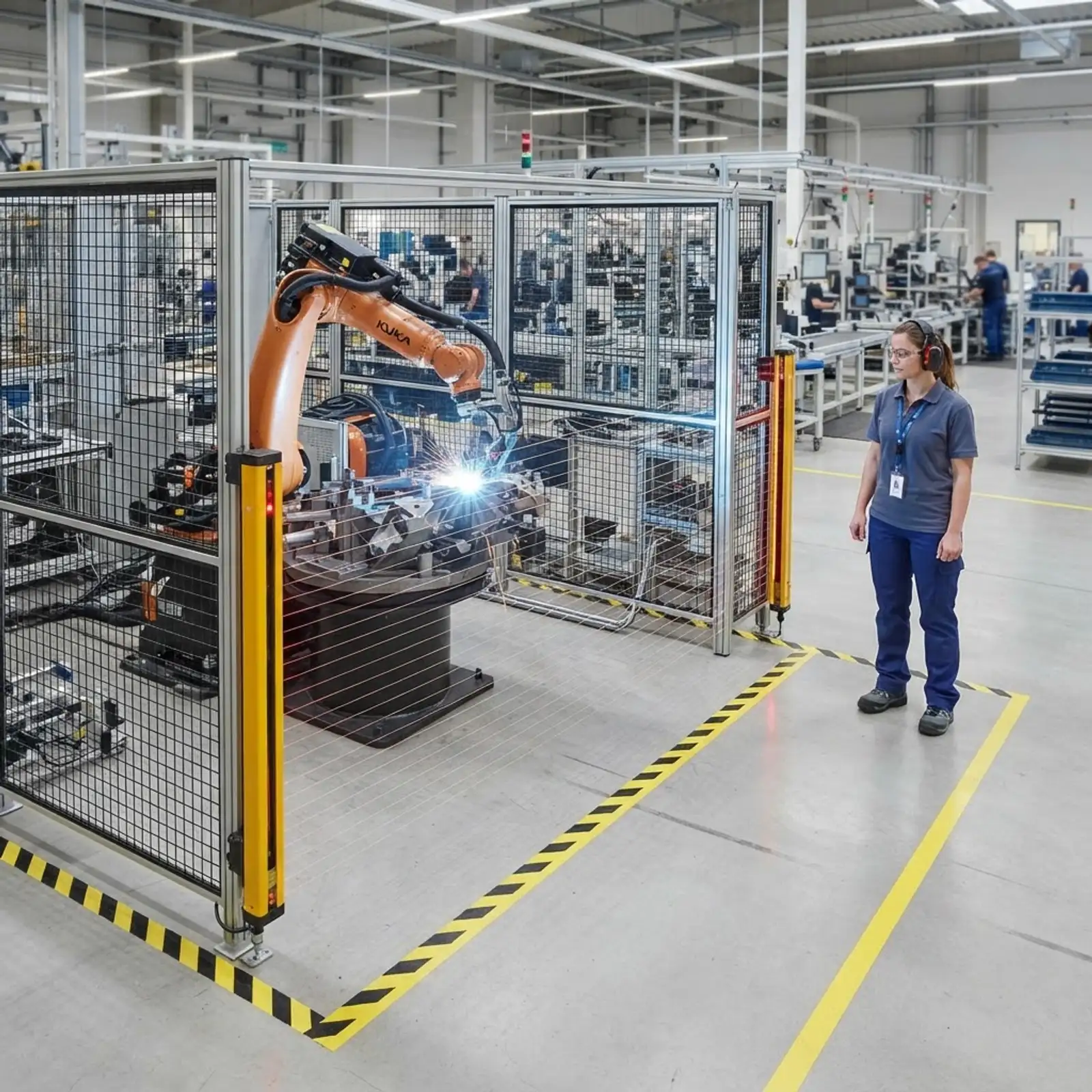
- Follow recognised standards. ISO 10218 governs industrial robot safety, and ISO/TS 15066 specifically defines force and pressure limits for collaborative operation. Any vendor unable to discuss these should be disqualified.
- Design for predictable motion. Robots that move at consistent speeds and signal intent through lights or sound reduce operator stress dramatically.
- Keep a physical stop within reach. Every worker in a shared cell should be able to halt the system in under a second without asking permission.
- Publish what the system does with data. If cameras or sensors monitor a workspace, tell employees what is recorded, who sees it, and how long it is kept.
- Never automate performance surveillance quietly. This is the fastest way to destroy adoption, and in many jurisdictions it carries legal exposure.
The Skills That Will Matter Most
The workers who thrive will not all be engineers. Based on hiring patterns across automation-heavy employers, four skill clusters stand out:
- Robot and system operation. Teaching positions, adjusting parameters, running diagnostics, clearing faults.
- Process design. Mapping a workflow, spotting the automatable step, measuring before and after.
- Data literacy. Reading dashboards critically, questioning outputs, recognising when a model is wrong.
- Human-only strengths. Coaching, negotiation, care, creative problem-solving, and cross-team communication.
A practical reskilling plan looks like this: identify the ten tasks per role most likely to shift within two years, train the affected staff on the supervision version of that task, and give them time inside working hours to practise. Skipping the third step is why most training budgets fail to change behaviour.
A 90-Day Plan to Prepare Your Workplace
- Days 1–15: Task inventory. Break three core roles into individual tasks and score each on repetition, risk, and volume.
- Days 16–30: Baseline measurement. Record cycle time, error rate, and cost for the top five candidate tasks. Without a baseline you cannot prove value.
- Days 31–60: One narrow pilot. Automate a single task end to end. Keep a human approver. Resist scope expansion.
- Days 61–75: Safety and communication review. Confirm standards compliance, brief the team openly, collect operator feedback.
- Days 76–90: Decide and document. Compare results to baseline, publish what you learned, then scale or stop deliberately.
Organisations that need engineering support to build the surrounding systems — dashboards, integrations, and internal tools — often pair this plan with a development partner such as ZoneTechify or the automation specialists at WebPeak.
Key Takeaways
- Human-robot collaboration replaces tasks, not whole jobs; automate at task level for realistic results.
- The World Economic Forum projects roughly 170 million new roles against 92 million displaced by 2030, a net positive that still requires active reskilling.
- Around 4 million industrial robots operate globally, yet employment in highly automated economies shifted rather than shrank.
- Robots win on repetition, precision, and endurance; humans win on judgment, empathy, exceptions, and accountability.
- ISO 10218 and ISO/TS 15066 are the baseline safety standards for any shared human-robot workspace.
- The safest AI work pattern is machine drafts, human approves — keep a person accountable for every consequential decision.
- Start with one narrow pilot, measure a baseline first, and expand only on evidence.
Frequently Asked Questions (FAQ)
Will robots take my job in the next ten years?
Most likely robots will take parts of your job rather than all of it. Repetitive, physical, and rule-based tasks transfer first, while judgment, communication, and exception handling stay human. The realistic risk is role change without training, so learning to supervise and troubleshoot automation is the strongest protection available.
What is the difference between a cobot and an industrial robot?
An industrial robot is fast, powerful, and usually kept behind physical barriers for safety. A cobot is force and speed limited so it can work directly beside people under ISO/TS 15066 guidelines. Cobots are cheaper to deploy and easier to reprogram, which suits smaller production runs and mixed tasks.
Which industries will adopt human-robot teamwork fastest?
Logistics, automotive manufacturing, electronics assembly, warehousing, healthcare support services, and agriculture are moving fastest because their tasks are repetitive, measurable, and often physically demanding. Office-based sectors like finance and insurance are adopting software robots and AI agents even faster since deployment needs no physical safety certification.
How do companies keep workers safe around robots?
Safe deployments combine certified equipment, force limits, light curtains or laser scanners, clear floor markings, predictable robot motion, and emergency stops within arm's reach. Just as important is training: workers should understand what the robot will do next. Transparent data policies prevent sensors becoming covert surveillance tools.
Do small businesses need robots to stay competitive?
Small businesses rarely need physical robots first. Software automation for invoicing, scheduling, reporting, and customer triage usually delivers faster returns with far lower capital risk. Start by measuring where staff hours actually go, automate the single largest repetitive task, then consider hardware once volumes clearly justify it.
How should managers introduce automation without damaging morale?
Announce the task being automated, not the headcount being cut, and explain what each affected person will do instead. Involve operators in choosing the pilot, publish results honestly including failures, and fund training inside working hours. Teams that help design the change consistently adopt it faster than teams told about it afterwards.