A practical engineering guide to healthcare web application development, covering HIPAA architecture, EHR integration, patient portal UX, security, cost, and timelines.
Healthcare Web Application Development
Healthcare web application development is the practice of building browser-based clinical and patient-facing software that handles protected health information under legal, clinical, and interoperability constraints. It is not normal web development with a stethoscope icon added. The database schema, the audit strategy, the session timeout, and even the shape of your API responses are shaped by regulation and by the fact that a bug can delay someone's treatment.
This guide is written from the perspective of teams who have shipped patient portals, telehealth flows, and clinic operations dashboards. It focuses on the decisions that actually determine whether the project succeeds: how you handle PHI, how you connect to the systems of record, and how you keep clinicians from abandoning your interface.
Quick Answer: Healthcare web application development is the process of building secure, compliant, browser-based apps for patients and clinicians. It requires HIPAA-aligned architecture, encrypted PHI storage, audit logging, role-based access, and HL7 or FHIR integration with EHR systems, plus accessibility and clinical workflow validation before launch.
What Makes Healthcare Web Apps Different From Standard Web Apps
The defining difference is that your data has legal weight. Protected health information, or PHI, is any individually identifiable health data, and under HIPAA it triggers concrete technical obligations: access control, audit controls, integrity controls, and transmission security. A marketing site can leak an email address and survive. A patient portal that leaks a diagnosis creates a reportable breach.
Three structural consequences follow:
- Every data path needs an owner. You must be able to say which service touches PHI, where it is stored, and who can read it. Systems with vague data boundaries fail audits.
- Logging becomes a feature, not an afterthought. Audit trails must record who accessed which record and when, and they must be tamper resistant.
- Vendors inherit your obligations. Any third party that processes PHI needs a Business Associate Agreement. That single requirement eliminates a surprising number of popular analytics and support tools.
The cost of getting this wrong is documented. According to the IBM Cost of a Data Breach Report, healthcare has been the most expensive industry for data breaches for more than a decade, with average breach costs running well above the cross-industry average, roughly in the range of USD 9 to 10 million per incident in recent reporting years. That figure is the real budget justification for security work that clients often try to cut.
Core Modules Most Healthcare Platforms Actually Need
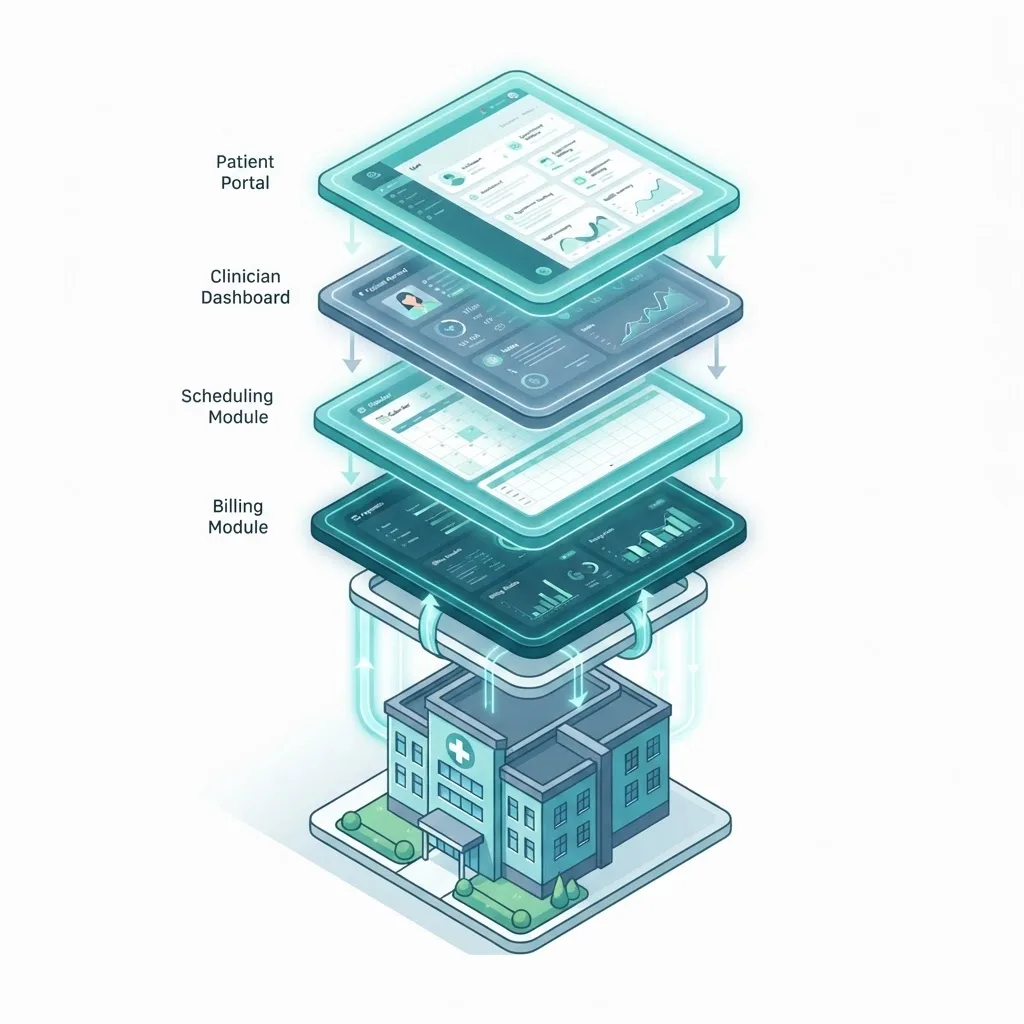
Scope creep kills healthcare projects faster than technical difficulty. A useful discipline is to define the minimum clinically viable product: the smallest set of modules that lets a real care workflow complete end to end.
- Identity and access: patient registration, clinician accounts, role-based permissions, multi-factor authentication for staff.
- Scheduling: availability rules, provider calendars, cancellation and no-show handling, reminder notifications.
- Clinical records view: read access to problems, medications, allergies, and results, usually sourced from an EHR rather than owned by you.
- Secure messaging: asynchronous patient to provider communication with escalation rules for urgent messages.
- Documents and intake: consent forms, insurance cards, uploads with virus scanning and retention rules.
- Billing and eligibility: cost estimates, payment collection, and insurance verification where relevant.
A pattern worth stating plainly: do not try to become the source of truth for clinical data unless you are explicitly building an EHR. Read from the record system, write back narrowly, and keep your own database focused on the workflow you own.
HIPAA-Aligned Architecture: The Non-Negotiables
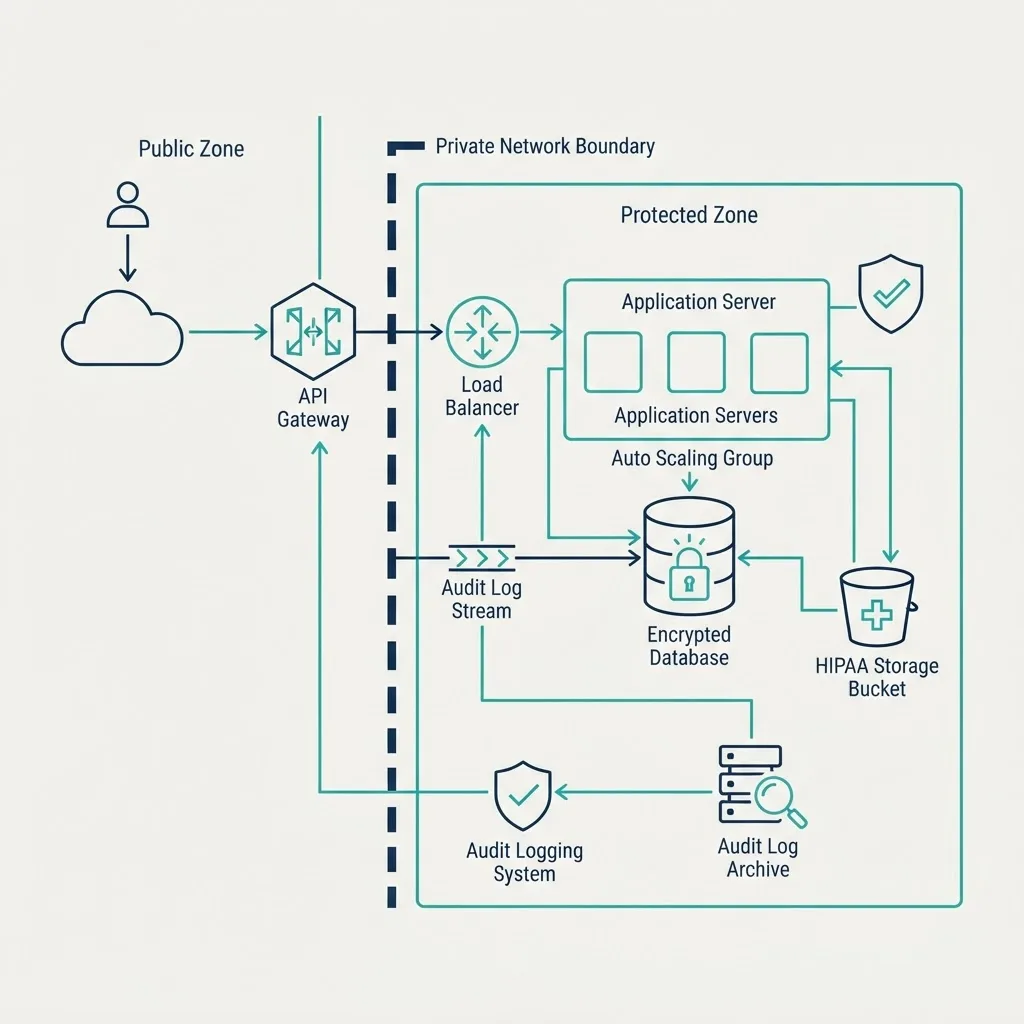
HIPAA does not prescribe technologies. It prescribes outcomes, which means your architecture must be defensible rather than certified. The following controls are what auditors and hospital security reviewers consistently ask about.
Encryption in Transit and at Rest
Enforce TLS 1.2 or higher with HSTS, disable legacy ciphers, and encrypt databases, backups, and object storage. Encrypt PHI columns at the application layer when a subset of fields is unusually sensitive, such as behavioral health notes or HIV status.
Least Privilege Access Control
Implement role-based access control at the query layer, not just the UI layer. A hidden button is not a permission. Every server-side data access should filter by the authenticated user's organization and role. Add break-the-glass emergency access that is allowed but loudly logged.
Audit Logging That Survives Scrutiny
Log authentication events, PHI reads, PHI writes, exports, permission changes, and failed access attempts. Store logs in append-only storage with a defined retention period, commonly six years to match HIPAA documentation requirements.
Data Minimization and Retention
Collect only what the workflow requires. Define retention and deletion schedules per data type, and make de-identification a real function in the codebase for analytics use, following either Safe Harbor removal of the eighteen identifier types or expert determination.
EHR Integration: HL7 v2, FHIR, and the Real-World Middle Ground
Interoperability is where healthcare projects lose months. The standards landscape shifted meaningfully after the ONC Cures Act Final Rule required certified health IT to expose standardized FHIR-based APIs, which made modern integration far more achievable than it was a decade ago. Even so, most hospital environments are hybrid.
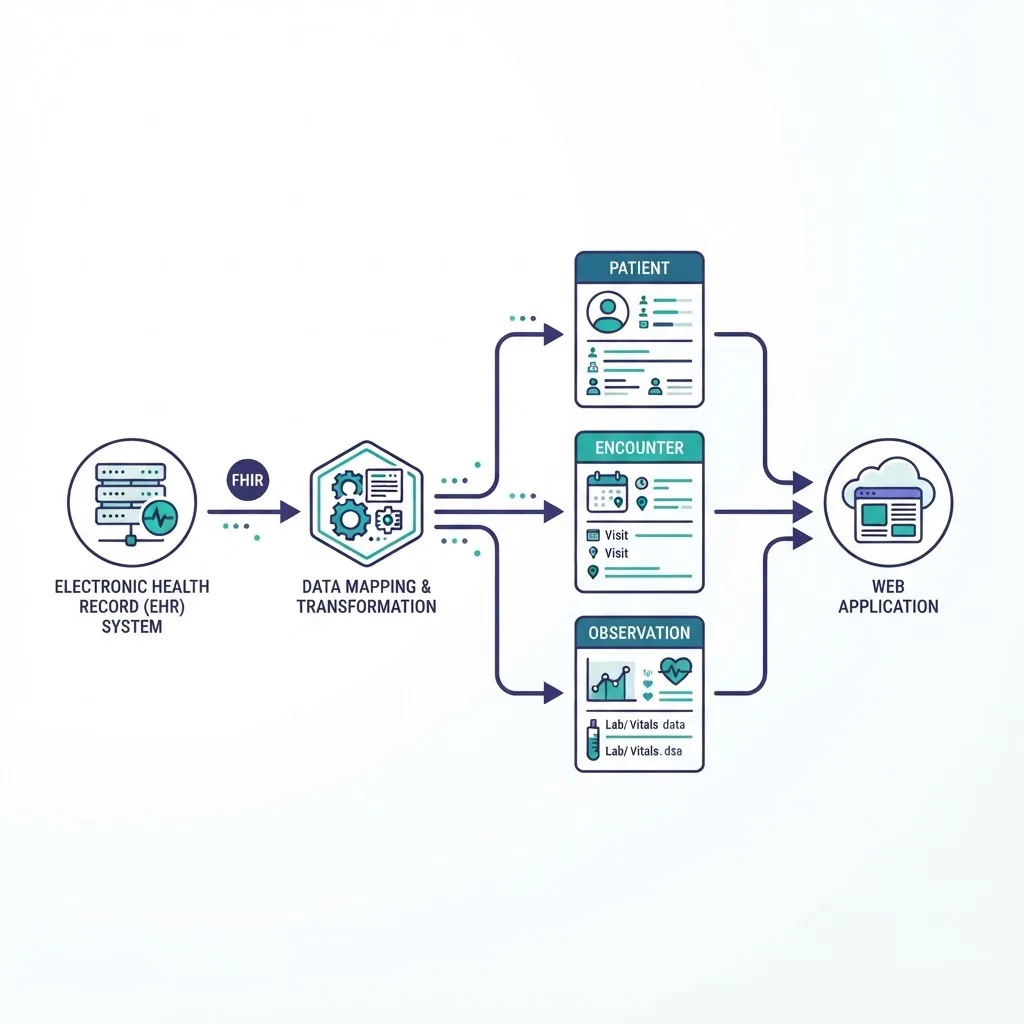
| Integration Approach | Best For | Typical Effort | Main Risk |
|---|---|---|---|
| FHIR REST API | Modern portals, read-heavy apps, SMART on FHIR launches | Low to medium | Uneven resource support across vendors |
| HL7 v2 messaging | Admissions, lab results, order flows in legacy hospital systems | Medium to high | Custom segment mapping and interface engine dependency |
| CSV or SFTP batch feeds | Reporting, reconciliation, non-urgent sync | Low | Stale data and silent failures |
| Third-party integration platform | Multi-EHR products needing broad coverage fast | Low build, ongoing cost | Vendor lock-in and per-connection fees |
Practical guidance from real projects:
- Ask for sandbox access before you estimate. Vendor sandboxes reveal which FHIR resources are actually supported, which is often narrower than documentation suggests.
- Treat mapping as its own deliverable. Terminology alignment across LOINC, SNOMED CT, RxNorm, and ICD-10 is analytical work, not glue code.
- Design for partial failure. Cache last-known-good data, show data freshness timestamps, and never let a failed EHR call render a blank clinical screen.
Designing for Patients and Clinicians at the Same Time
Healthcare apps serve two audiences with opposite needs. Patients use the app rarely, on phones, sometimes while unwell or anxious. Clinicians use it dozens of times a day and measure every extra click as lost patient time.
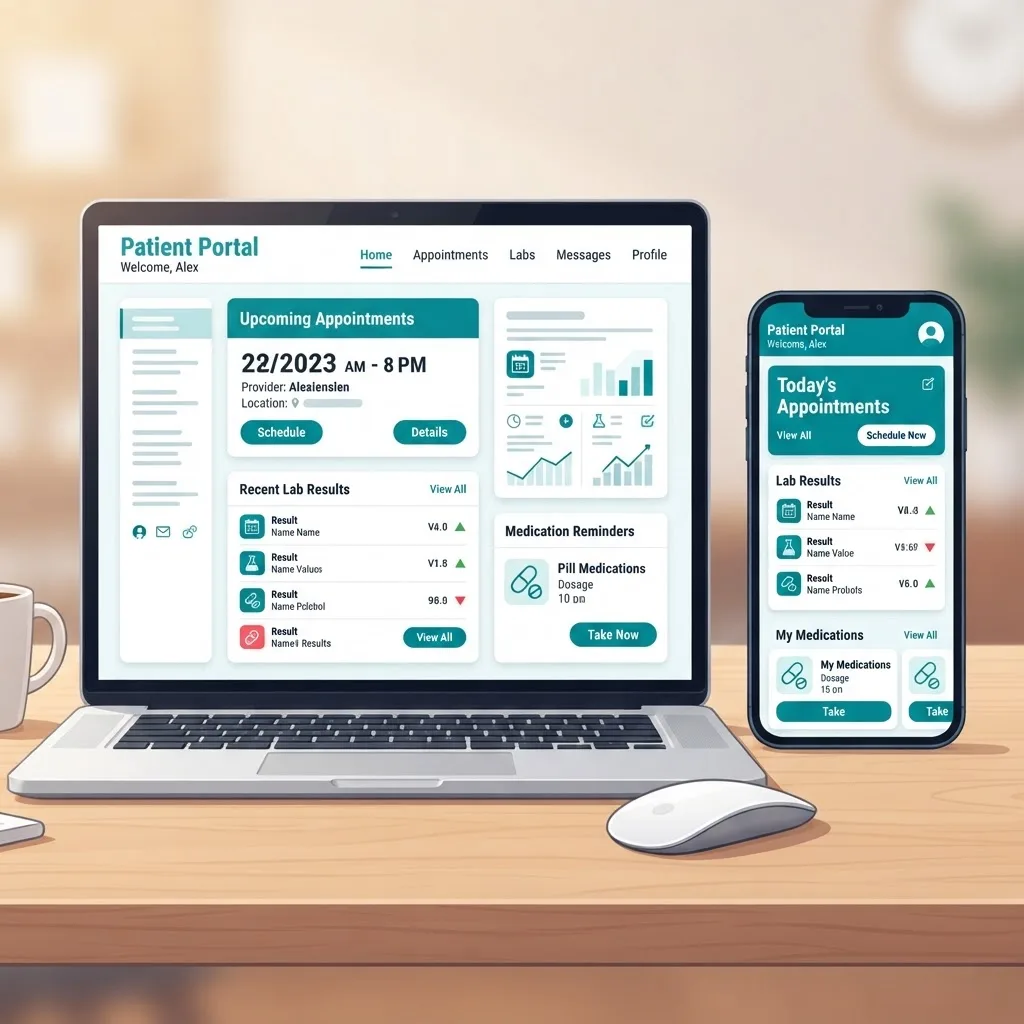
For patient-facing screens: write at a plain-language reading level, explain results rather than dumping raw values, support screen readers and keyboard navigation to WCAG 2.1 AA, and assume shared or borrowed devices when designing session handling. Section 508 and accessibility expectations apply broadly across healthcare organizations, so accessibility is a compliance issue as well as a usability one.
For clinician-facing screens: optimize for density and speed. Keyboard shortcuts, persistent context headers, and bulk actions matter more than visual polish. Validate with time-on-task measurement during real or simulated shifts, because clinician adoption is the single strongest predictor of whether a platform survives its first year. Teams building these interfaces often bring in a partner with dedicated web app development experience specifically because dual-audience design and compliance review rarely fit inside an internal roadmap.
Security Practices Beyond Compliance Checkboxes
Compliance is the floor. Attackers do not read your policy documents. The following practices come from incident patterns that repeat in healthcare environments.
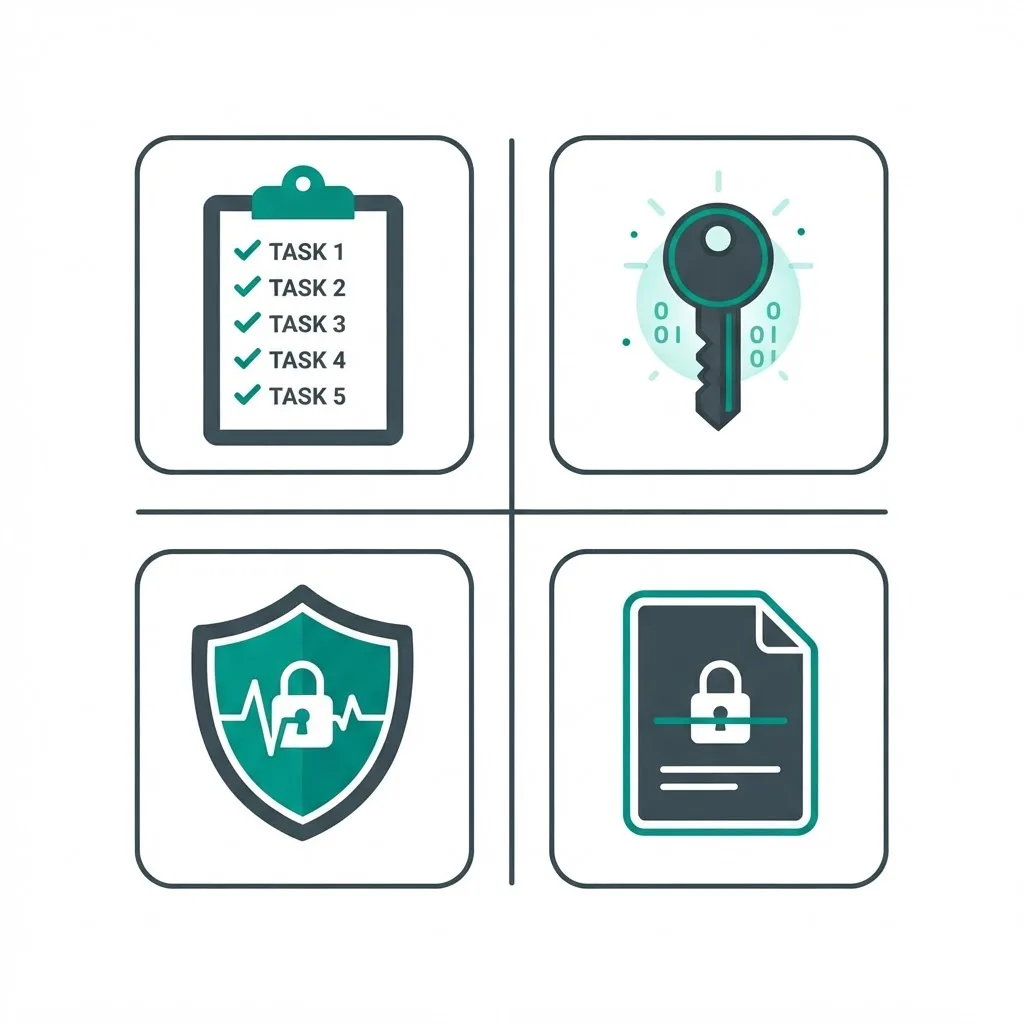
- Kill insecure direct object references. The most common healthcare web vulnerability is a record ID in a URL with no ownership check on the server.
- Rate limit and monitor authentication. Credential stuffing against patient portals is routine; require MFA for staff and offer it to patients.
- Scan dependencies continuously. Pin versions, automate CVE alerts, and treat unpatched packages as clinical risk.
- Separate environments completely. Never seed staging with real PHI. Generate synthetic patients instead.
- Run penetration tests before go-live. Hospital security reviews frequently require a recent third-party test report.
- Write an incident response runbook. HIPAA breach notification timelines make improvisation expensive.
Security work also intersects with performance and infrastructure choices, which is why agencies such as WebPeak Digital tend to fold threat modeling into architecture reviews rather than treating it as a pre-launch gate.
Telehealth and Remote Care Features
Telehealth demand permanently reset expectations. Utilization remains dramatically higher than pre-2020 baselines across most reporting datasets, and patients now expect virtual visits as a standard option rather than a novelty. If your platform includes video care, decide early between building on a compliant real-time communication provider under a BAA or integrating an existing telehealth vendor.
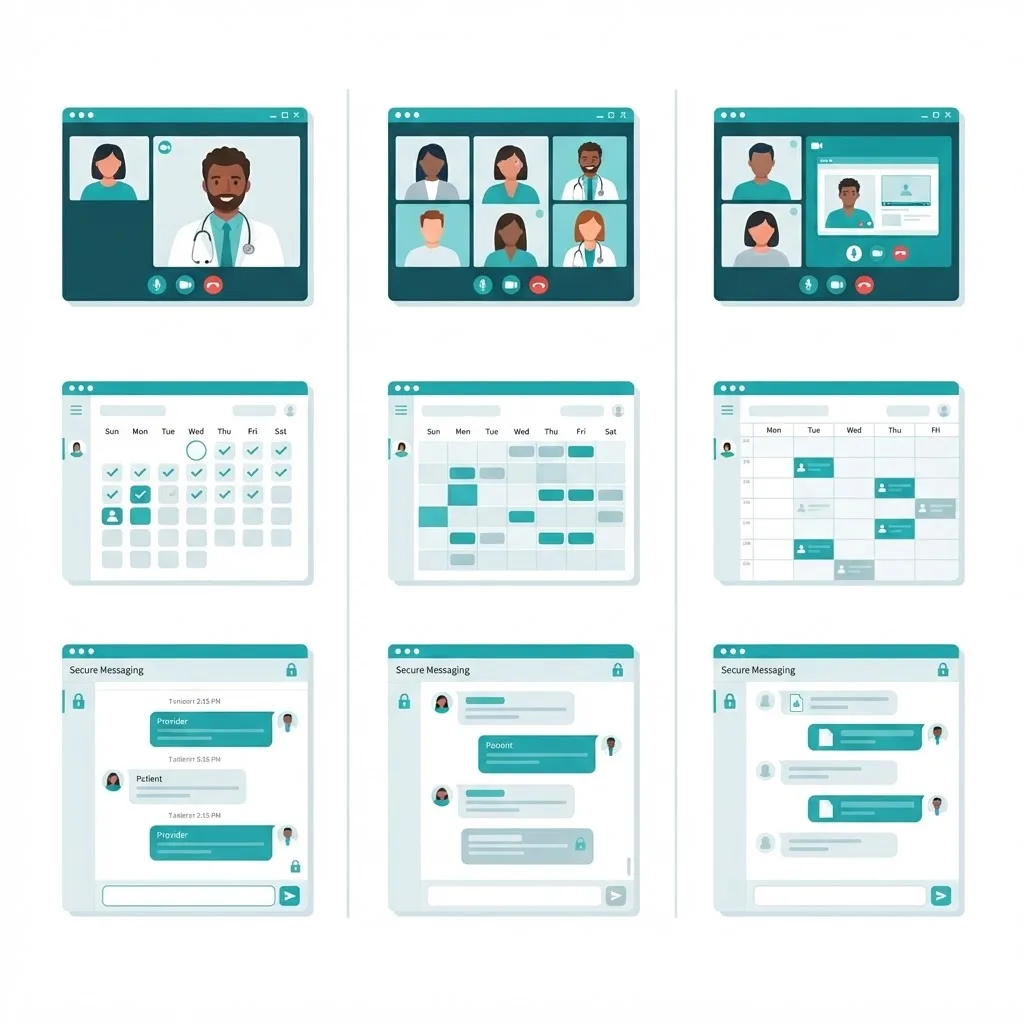
The details that determine quality: pre-call device and bandwidth checks, waiting-room state that clinicians can monitor, automatic documentation handoff into the visit note, and a fallback path to phone when video fails. Consent capture for virtual care and state-level licensure rules also need to be encoded into scheduling logic, not handled manually.
Realistic Cost, Timeline, and Team Composition
Estimates fail in healthcare because teams price the features and forget the compliance surface. A defensible plan separates the two.
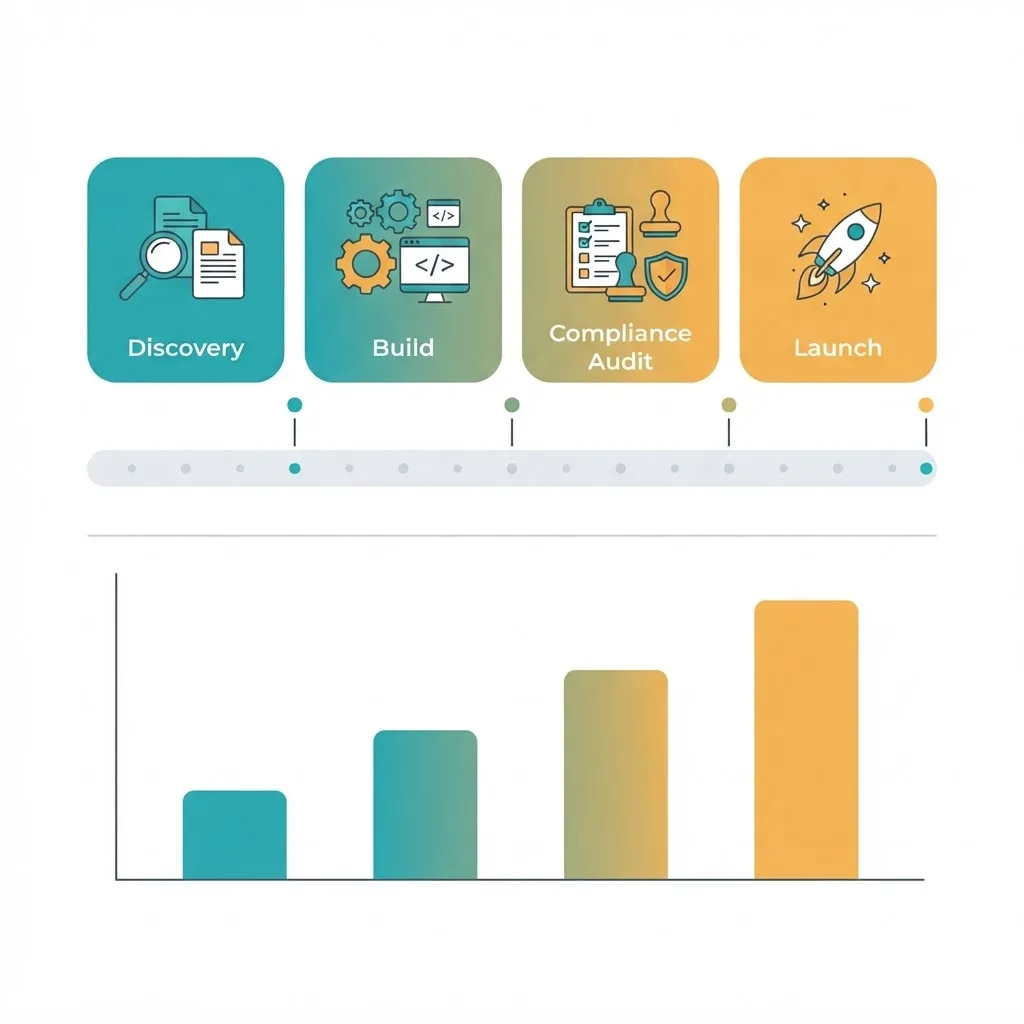
| Project Type | Typical Duration | Core Team | Compliance Overhead |
|---|---|---|---|
| Patient portal MVP | 3 to 5 months | 1 designer, 2 engineers, 1 QA, part-time PM | 15 to 20 percent of effort |
| Telehealth platform | 5 to 8 months | Add real-time media engineer | 20 to 25 percent |
| Multi-EHR clinical product | 9 to 14 months | Add integration engineer and clinical informaticist | 25 to 35 percent |
Budget separately for penetration testing, a compliance or privacy advisor, EHR vendor sandbox and certification fees, and post-launch monitoring. A rule that holds up well: if compliance and security are less than fifteen percent of your plan, the plan is wrong.
Key Takeaways
- Healthcare web application development requires HIPAA-aligned controls: encryption in transit and at rest, role-based access enforced server-side, audit logging, and data minimization.
- Healthcare has ranked as the costliest industry for data breaches for over a decade, with average incident costs in the range of USD 9 to 10 million.
- The ONC Cures Act Final Rule made standardized FHIR APIs a requirement for certified health IT, but most hospital environments still mix FHIR, HL7 v2, and batch feeds.
- Do not become the source of truth for clinical data unless you are building an EHR; read from the record system and write back narrowly.
- Accessibility to WCAG 2.1 AA is both a usability and a compliance requirement for patient-facing screens.
- Any vendor processing PHI needs a Business Associate Agreement, which rules out many default analytics and support tools.
- Compliance and security work typically consumes 15 to 35 percent of total project effort depending on integration depth.
Frequently Asked Questions (FAQ)
How much does it cost to build a healthcare web application?
A compliant patient portal MVP typically takes three to five months with a small senior team, while multi-EHR clinical products run nine to fourteen months. Cost depends less on screen count than on integration depth, security testing, and compliance advisory work, which together consume 15 to 35 percent of total effort.
Is a web application HIPAA compliant by default if I host it on a major cloud provider?
No. Cloud providers offer HIPAA-eligible services and sign Business Associate Agreements, but compliance depends on how you configure and use them. You still own access control, audit logging, encryption settings, retention policies, workforce training, and breach response procedures within your application layer.
What is the difference between HL7 v2 and FHIR for EHR integration?
HL7 v2 is a legacy pipe-delimited messaging standard used heavily for admissions, orders, and lab results inside hospitals. FHIR is a modern REST and JSON API standard with defined resources like Patient and Observation. FHIR is easier to build against, but many environments still require both.
Do patient portals need to meet accessibility standards?
Yes. Patient-facing healthcare software should meet WCAG 2.1 AA, covering keyboard navigation, screen reader support, contrast ratios, and clear labeling. Beyond legal exposure under accessibility rules, patients using these tools are often older, unwell, or stressed, which makes accessible design directly clinically useful.
Can I use Google Analytics or a standard chat widget in a patient portal?
Generally no, not on authenticated PHI pages. Third-party scripts that receive identifiable health data become business associates and require a signed agreement. Regulators have specifically flagged tracking technologies on patient portals. Use server-side, self-hosted, or BAA-covered analytics instead of standard consumer tools.
How long should healthcare audit logs be retained?
HIPAA requires documentation retention of six years, and most healthcare organizations apply that same window to access audit logs. Store them in append-only or write-once storage, separate from the application database, and make them queryable by user, patient record, and time range for investigations.
Final Perspective
The teams that succeed in healthcare web application development treat compliance as an architectural input rather than a launch checklist, and they treat clinician time as the scarcest resource in the system. Build narrow, integrate carefully, log everything that touches PHI, and validate with real users in real conditions before scaling. That sequence is unglamorous, but it is the difference between software that gets adopted and software that gets replaced.