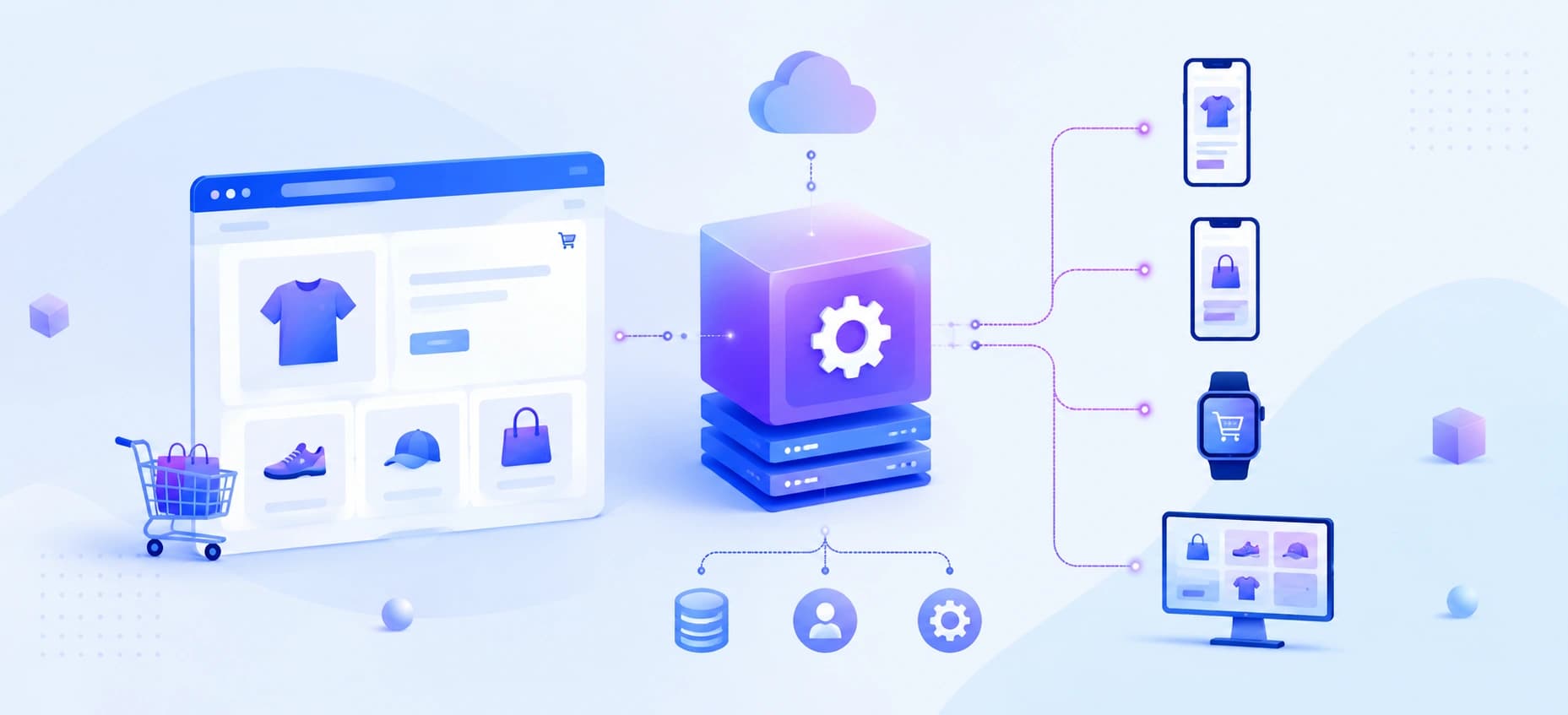
Headless ecommerce development services explained: architecture, costs, tech stack, timelines and how to pick a partner that ships fast, scalable stores.
Headless Ecommerce Development Services
Most online stores do not lose revenue because the products are wrong. They lose it because a product page takes four seconds to render on a mid-range Android phone, because checkout cannot be changed without fighting a theme, and because every new sales channel needs another copy of the catalogue. Headless ecommerce development services exist to solve exactly that class of problem.
This guide explains what headless commerce actually is, when it pays for itself, what the build looks like week by week, what it costs in real numbers, and how to judge a development partner before you sign anything. It is written from the perspective of teams who have migrated live, revenue-generating stores, not from a vendor brochure.
Quick Answer: Headless ecommerce development services separate your storefront front end from your commerce backend and connect the two through APIs. A development team builds a custom front end, usually in Next.js, on top of a platform such as Shopify, BigCommerce or Commercetools, giving you faster pages, unlimited design freedom, and one product catalogue across every channel.
What Is Headless Ecommerce, Exactly?
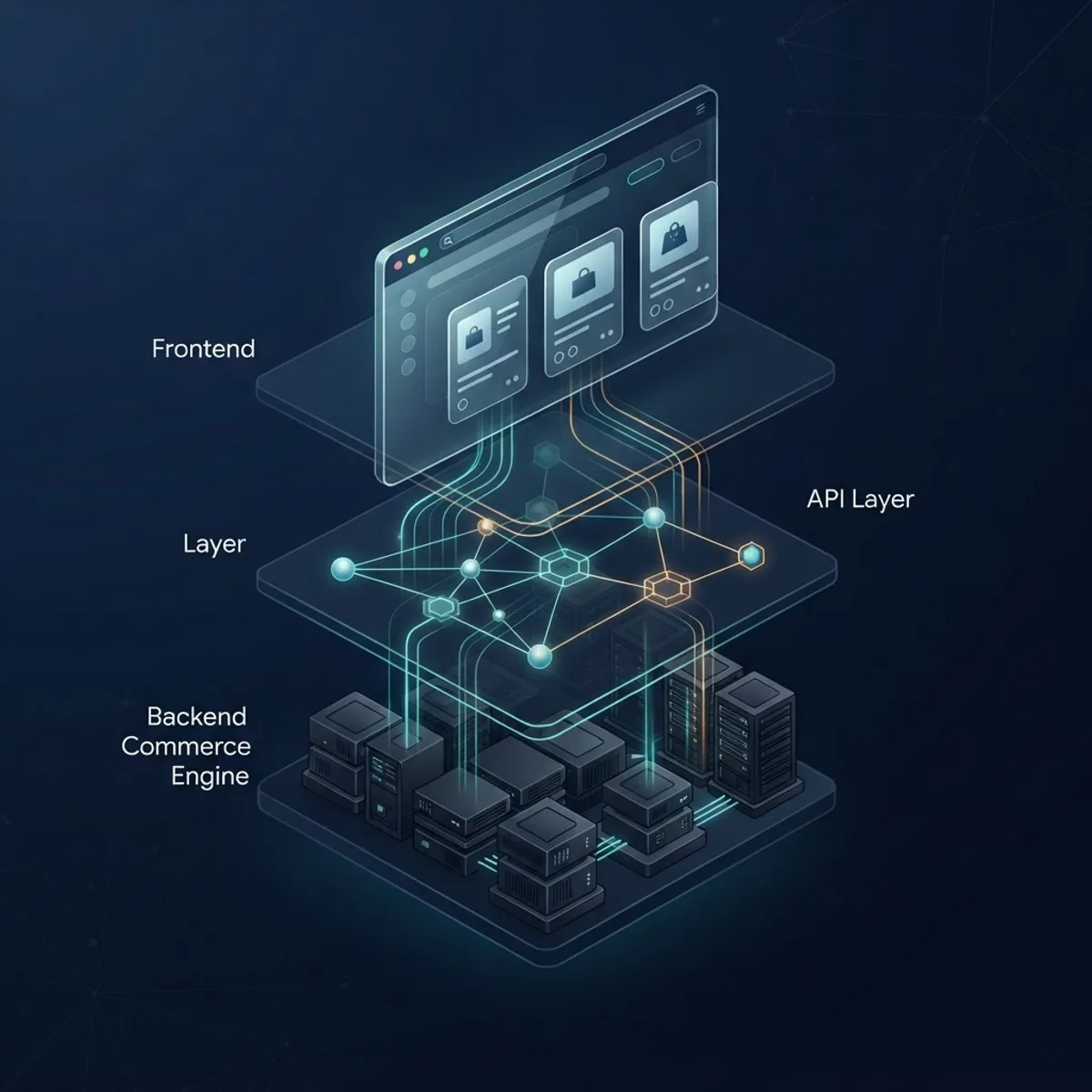
Headless ecommerce is an architecture in which the presentation layer, the head, is decoupled from the commerce engine, the body. The body keeps doing what it does well: products, pricing, inventory, carts, tax, payments, orders and fulfilment. The head becomes a separate application that requests that data over an API and decides entirely on its own how to display it.
The practical consequence matters more than the diagram. In a monolith, a design change and a checkout rule live in the same codebase, so every visual tweak carries commercial risk. In a headless build, a designer can ship a new collection page on Tuesday without touching a single tax rule.
Key Terms Defined
- Monolith: a platform where templates and commerce logic ship together, such as a classic Liquid theme.
- API-first commerce: a backend that exposes every capability through REST or GraphQL endpoints.
- Composable commerce: assembling best-of-breed services for search, content and payments instead of accepting one suite.
- BFF, or backend for frontend: a thin server layer that aggregates APIs, hides secret keys and shapes payloads for the UI.
- ISR and SSG: rendering strategies that let product pages be served from a CDN edge and revalidated on a schedule.
Headless vs Traditional Ecommerce: A Direct Comparison
The honest answer is that headless is not universally better. It is better for a specific profile of store. The table below reflects typical outcomes on real projects rather than best-case marketing claims.
| Factor | Traditional Monolith | Headless Build |
|---|---|---|
| Time to first launch | 2 to 6 weeks | 8 to 16 weeks |
| Design freedom | Limited by theme structure | Effectively unlimited |
| Typical mobile LCP | 3.0 to 4.5 seconds | 1.2 to 2.2 seconds |
| Front end changes | Theme edits, merge conflicts | Independent deploys |
| Channels supported | Web first | Web, app, kiosk, marketplace |
| Ongoing developer need | Low | Moderate, needs a dev team |
| Best fit | Under 500 SKUs, standard flows | Complex catalogues, custom UX, multi-region |
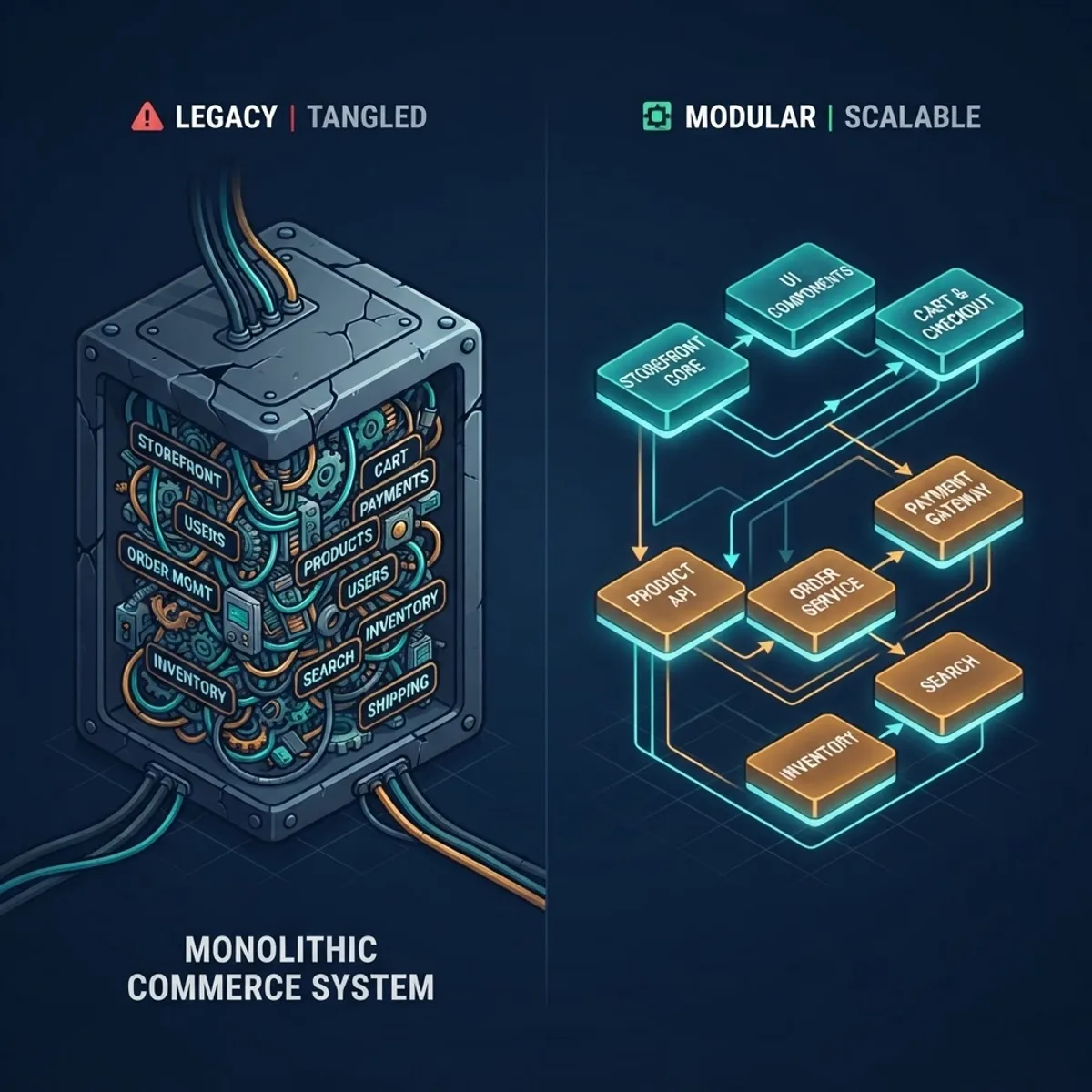
The decisive column is the last one. If your store sells 40 products with a standard cart, a monolith will out-earn a headless rebuild simply because you spend the budget on traffic instead of infrastructure.
The Tech Stack Behind Headless Commerce Services
A credible headless proposal names specific technologies and explains why each one is there. A vague stack is the first warning sign.
- Commerce engine: Shopify Storefront API, BigCommerce, Commercetools, Saleor or Medusa. This owns money, inventory and orders.
- Front end framework: Next.js dominates because it supports static generation, incremental revalidation and server components in one runtime.
- Content layer: a headless CMS such as Sanity or Contentful so marketing can publish landing pages without a deploy.
- Search and merchandising: Algolia, Typesense or Meilisearch, because native platform search rarely handles faceting at scale.
- Edge delivery: a global CDN with image optimisation, since images are usually 60 to 70 percent of page weight.
- Observability: real user monitoring so performance regressions are caught by data, not by complaints.

One architectural rule saves months of pain: never call the commerce API directly from the browser with privileged credentials. Route those calls through a server layer so tokens stay private and payload shapes can change without shipping a new client.
Performance: Why Headless Wins Core Web Vitals
Speed is the most measurable benefit, and it is directly tied to revenue. Google defines a good Largest Contentful Paint as 2.5 seconds or less at the 75th percentile of page loads, and a good Interaction to Next Paint as 200 milliseconds or less. Monolithic themes with stacked third-party apps routinely fail both thresholds on mobile.
The commercial impact is documented. Research published by Deloitte with Google found that a 0.1 second improvement in mobile site speed lifted retail conversion rates by 8.4 percent and increased average order value by 9.2 percent. That is why performance work belongs in the revenue column of a business case, not the technical column.
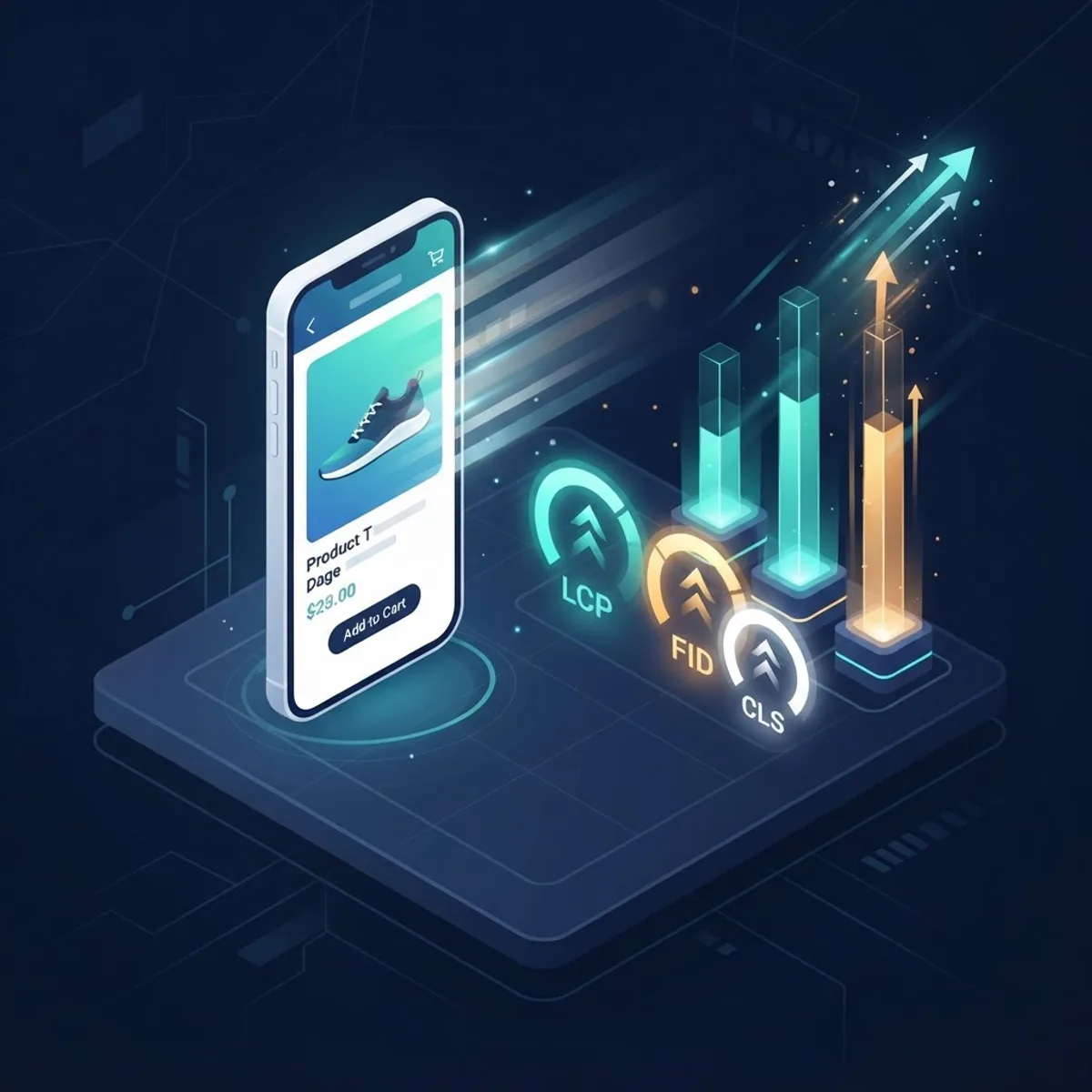
Headless wins here for structural reasons. Product pages can be pre-rendered and served from cache, JavaScript can be split so a collection page does not download checkout logic, and third-party scripts can be deferred or moved to a web worker. None of those levers are fully available inside a template system.
What a Headless Development Engagement Actually Delivers
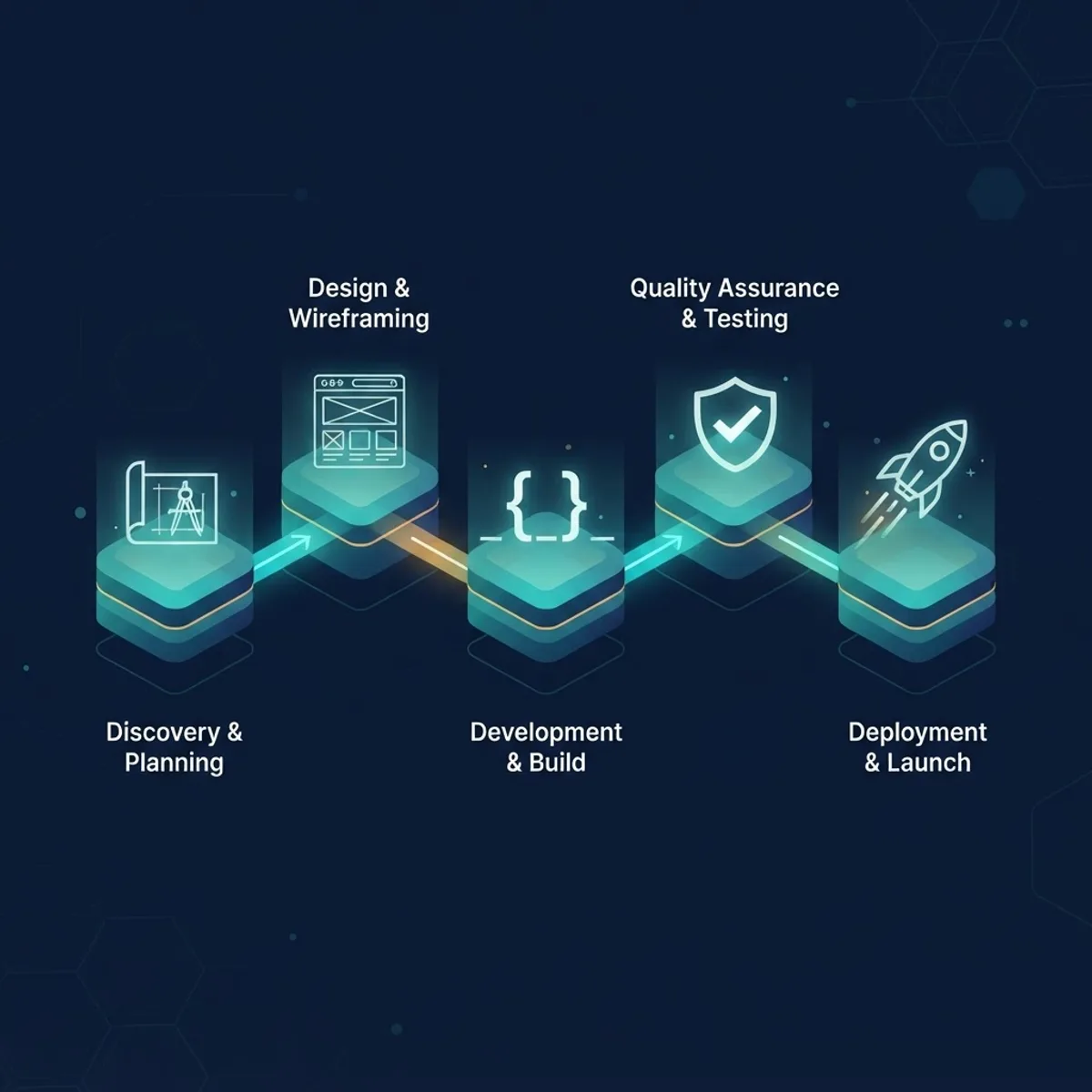
A serious engagement is a sequence, not a single handoff. This is the workflow that consistently produces a stable launch.
- Discovery and data audit, week 1 to 2. Catalogue size, variant complexity, tax and shipping rules, integrations, and a baseline performance and conversion report.
- Architecture decision record, week 2. Chosen platform, rendering strategy per template, caching and revalidation rules, written down and signed off.
- Design system, week 3 to 5. Tokens, components and states built once so future pages cost hours instead of days.
- Core commerce flows, week 5 to 10. Listing, product detail, cart, checkout handoff, account area, search and filtering.
- Integration and migration, week 9 to 13. Payments, ERP or inventory sync, analytics, and a URL-for-URL redirect map.
- Pre-launch hardening, week 13 to 15. Load testing, accessibility audit, structured data validation, and a rollback plan.
- Post-launch monitoring, first 30 days. Watch rankings, crawl errors and real user vitals daily, then tune.
Step 5 is where most migrations fail. If old URLs are not mapped one to one, organic traffic drops and the whole project gets blamed on the architecture rather than on a missing redirect file.
How Much Does Headless Ecommerce Development Cost?
Cost tracks catalogue complexity and integration count far more than page count. Four product templates and one ERP connection cost more than thirty simple content pages.
| Scope | Typical Range | What It Includes |
|---|---|---|
| Starter storefront | 8,000 to 20,000 USD | One platform, standard flows, hosted checkout |
| Growth build | 20,000 to 60,000 USD | CMS, custom search, B2B pricing, multi-currency |
| Enterprise programme | 60,000 USD and above | Multi-region, ERP and PIM sync, custom checkout |

Budget an ongoing 10 to 20 percent of build cost per year for dependency updates, framework upgrades and performance maintenance. A headless storefront is a living application, and treating it as a one-time purchase is the most expensive mistake in this space. Teams that want a fixed scope with a senior-only build often start with a discovery sprint from a Next.js development agency before committing to a full migration.
Omnichannel: One Backend, Many Front Ends
The strategic reason to go headless is rarely speed alone. It is reuse. Once the commerce engine is exposed through an API, the same catalogue, pricing and inventory feed a web storefront, a native mobile app, an in-store kiosk, a marketplace listing and a conversational agent, with no duplicate data entry.

That matters operationally. When a merchandiser changes a price once and it propagates to five surfaces within seconds, you remove an entire category of pricing errors. Retailers running regional catalogues gain the same benefit through market-specific front ends served from one backend, which is why scalable web solutions built on an API-first core age far better than duplicated theme installs.
When Headless Is the Wrong Choice
Skip headless if three conditions apply: your catalogue is small, your flows are standard, and you have no in-house or retained developer. In that situation a well-optimised monolithic theme with fewer installed apps will deliver better economics. Also avoid headless if your team cannot commit to a maintenance retainer, because an unmaintained JavaScript stack degrades faster than a hosted theme.
How to Choose a Headless Development Partner
Ask five questions and judge the specificity of the answers.
- Which rendering strategy will each template use, and why?
- How will you preserve organic traffic during migration?
- What are the current and target Core Web Vitals numbers?
- Who owns the repository, the CI pipeline and the hosting account?
- What happens to the codebase if we end the engagement?
A partner who answers with metrics and named tools is far more reliable than one who answers with adjectives.
Key Takeaways
- Headless ecommerce decouples the storefront from the commerce engine and connects them through APIs.
- Google considers an LCP of 2.5 seconds or less and an INP of 200 milliseconds or less to be good.
- Deloitte and Google research measured an 8.4 percent retail conversion lift from a 0.1 second mobile speed improvement.
- Typical headless launch timelines run 8 to 16 weeks, versus 2 to 6 weeks for a themed monolith.
- Plan 10 to 20 percent of build cost annually for maintenance.
- Stores under roughly 500 SKUs with standard flows usually do not need headless yet.
Frequently Asked Questions
Is headless ecommerce worth it for a small store?
Usually not yet. If you sell fewer than a few hundred products with standard shipping and checkout, an optimised theme converts just as well for a fraction of the cost. Headless becomes worth it when design limits, page speed or multi-channel selling start blocking measurable revenue.
How long does headless ecommerce development take?
Most production builds take 8 to 16 weeks. A focused storefront with standard flows can launch in about eight weeks, while multi-region catalogues with ERP integration commonly run four months. The single biggest schedule risk is data migration, so audit your catalogue and URL structure before the build starts.
Does going headless hurt SEO?
Not if it is done properly. Server rendering, a one-to-one redirect map, canonical tags and product structured data must ship on day one. Migrations that lose rankings almost always lose them to missing redirects or client-only rendering, never to the headless architecture itself.
Can I keep Shopify and still go headless?
Yes. This is the most common setup. Shopify continues to handle products, inventory, payments and orders, while a custom Next.js front end consumes the Storefront API. You keep the admin panel your team already knows and gain complete control over design and performance.
What is the biggest hidden cost of headless commerce?
Ongoing maintenance. Frameworks, dependencies and APIs change several times a year, and an unpatched storefront becomes both slow and insecure. Budget a retainer covering upgrades, monitoring and performance tuning, or plan for an expensive rebuild within two to three years.
Do I need a developer to update a headless store?
Not for content. Pair the storefront with a headless CMS and your marketing team can edit copy, banners and landing pages independently. Developers are only needed for new templates, integrations and framework upgrades, which is exactly how the split should work.
Final Word
Headless ecommerce is an investment in flexibility and speed, not a fashion choice. Decide with numbers: measure your current mobile LCP, count the design changes your theme blocked last quarter, and list the channels you cannot serve today. If those three data points point in the same direction, headless development will pay for itself. If they do not, spend the budget on traffic and revisit the question next year.