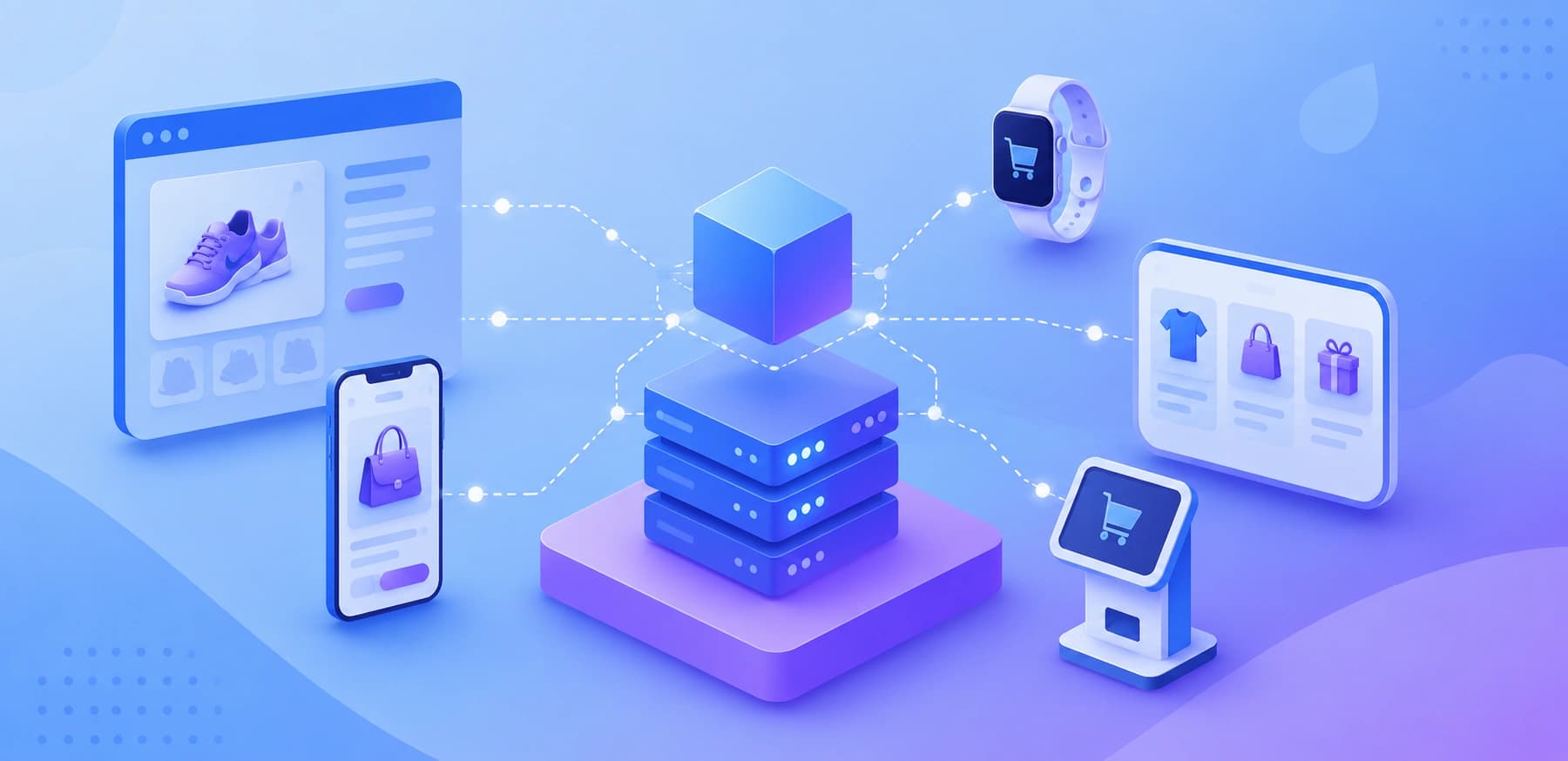
A practical guide to what a headless commerce development company actually does, how to vet one, what it costs, and when decoupling your storefront pays off.
Headless Commerce Development Company
Most brands do not fail at headless commerce because the technology is bad. They fail because they hired a team that could build a storefront but could not own the integration layer, the caching strategy, or the migration plan. Choosing the right headless commerce development company is less about framework preference and more about whether the team can run a decoupled system in production without breaking checkout on a Friday.
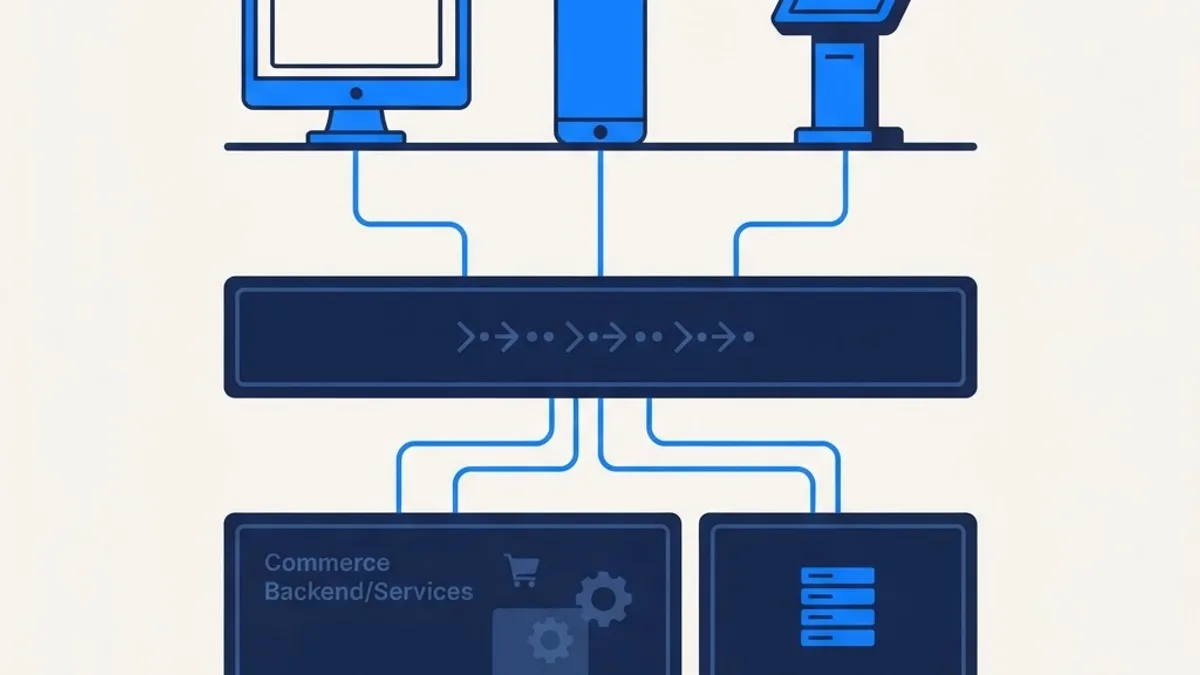
Quick Answer: A headless commerce development company builds a custom storefront frontend that connects to your commerce backend through APIs. It handles frontend architecture, API orchestration, CMS integration, performance engineering, and phased migration, so you control the customer experience while the backend still manages catalog, cart, and payments.
What a Headless Commerce Development Company Actually Delivers
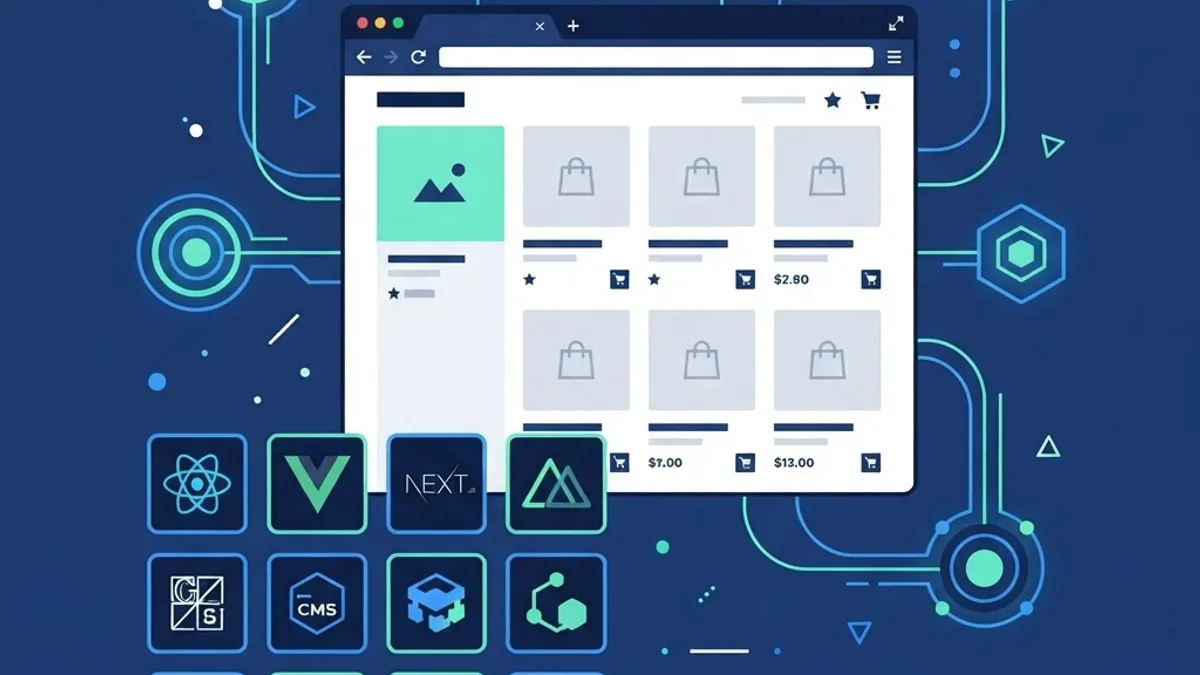
Headless commerce means the presentation layer is decoupled from the commerce engine and communicates only through APIs. A competent agency delivers five concrete things, not slides.
- A custom frontend built in a framework like Next.js, Nuxt, or Remix, deployed on edge infrastructure.
- An API orchestration layer that normalizes responses from your commerce platform, search provider, and inventory system into one contract your frontend consumes.
- Content modeling in a headless CMS so merchandisers can ship landing pages without a developer.
- Performance engineering, including caching rules, incremental static regeneration, image pipelines, and third-party script governance.
- A migration and rollback plan that moves traffic in slices rather than a single risky cutover.
If a proposal covers only item one, you are buying a theme, not an architecture.
Key Terms Defined
- Headless commerce: a storefront where the UI is separate from the backend and consumes commerce APIs.
- Composable commerce: an approach where each capability, such as search or payments, is a swappable best-of-breed service.
- MACH architecture: Microservices, API-first, Cloud-native, Headless, the reference model most vendors align to.
- BFF layer: a backend-for-frontend service that shapes API data specifically for one client.
Why Teams Go Headless: The Business Case in Numbers
Two data points explain most of the demand. Google research shows that as page load time rises from one second to three seconds, the probability of a mobile visitor bouncing increases by 32 percent, which puts real revenue behind frontend control. Separately, Google confirmed in 2021 that Core Web Vitals are a ranking signal in page experience, so storefront speed influences both conversion and acquisition cost at the same time.
The practical value is not speed alone. It is release independence. When your frontend deploys separately from your commerce backend, marketing can ship a campaign page in hours while the platform team runs a payments upgrade in parallel. That decoupling is what makes teams stop waiting on each other.
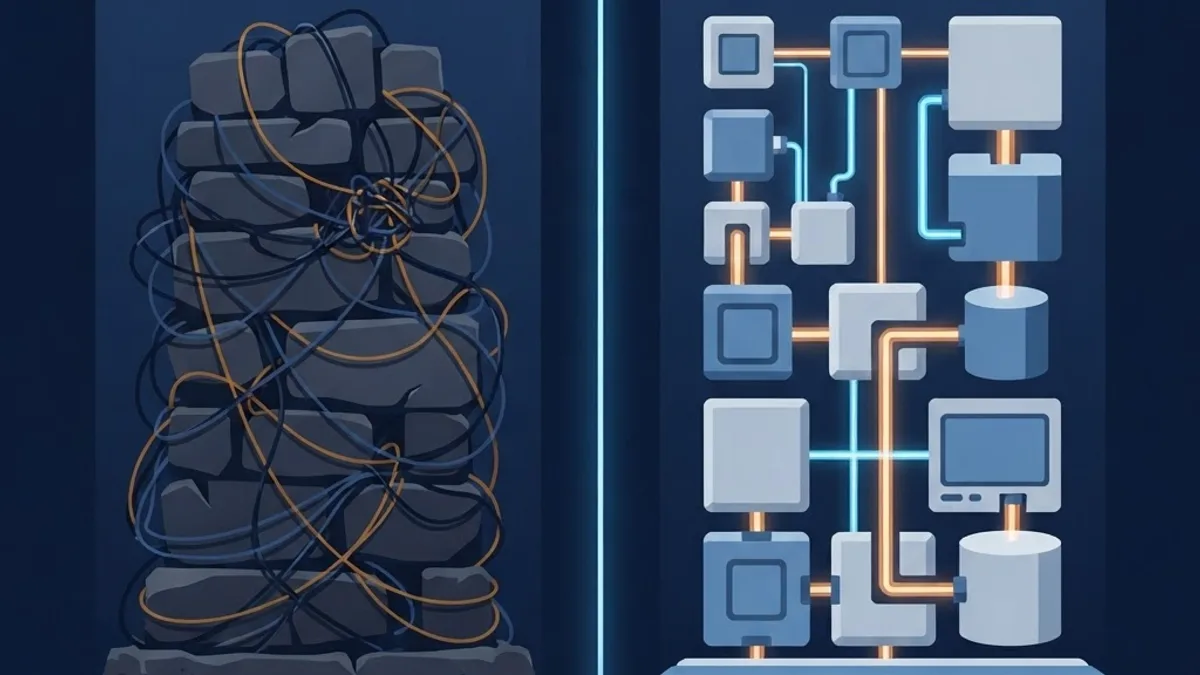
Headless vs Monolithic vs Hybrid: An Honest Comparison
Headless is not automatically correct. Compare the trade-offs before signing anything.
| Factor | Monolithic Platform | Hybrid Or Themed | Full Headless |
|---|---|---|---|
| Time to first launch | Fastest | Fast | Slowest |
| Frontend design freedom | Limited by theme | Moderate | Unlimited |
| Engineering ownership needed | Low | Medium | High |
| Performance ceiling | Platform bound | Moderate | Highest |
| Multi-channel reuse | Poor | Partial | Native |
| Ongoing maintenance cost | Lowest | Moderate | Highest |
| Best fit | Under 500 SKUs, small team | Growing brand, one channel | Complex catalog, multi-market |
A useful rule from real projects: if your storefront requirements can be satisfied by a theme plus two apps, headless will cost more than it returns. If you are fighting the theme every quarter, running several regions, or serving web plus app plus in-store screens from the same catalog, headless pays for itself.
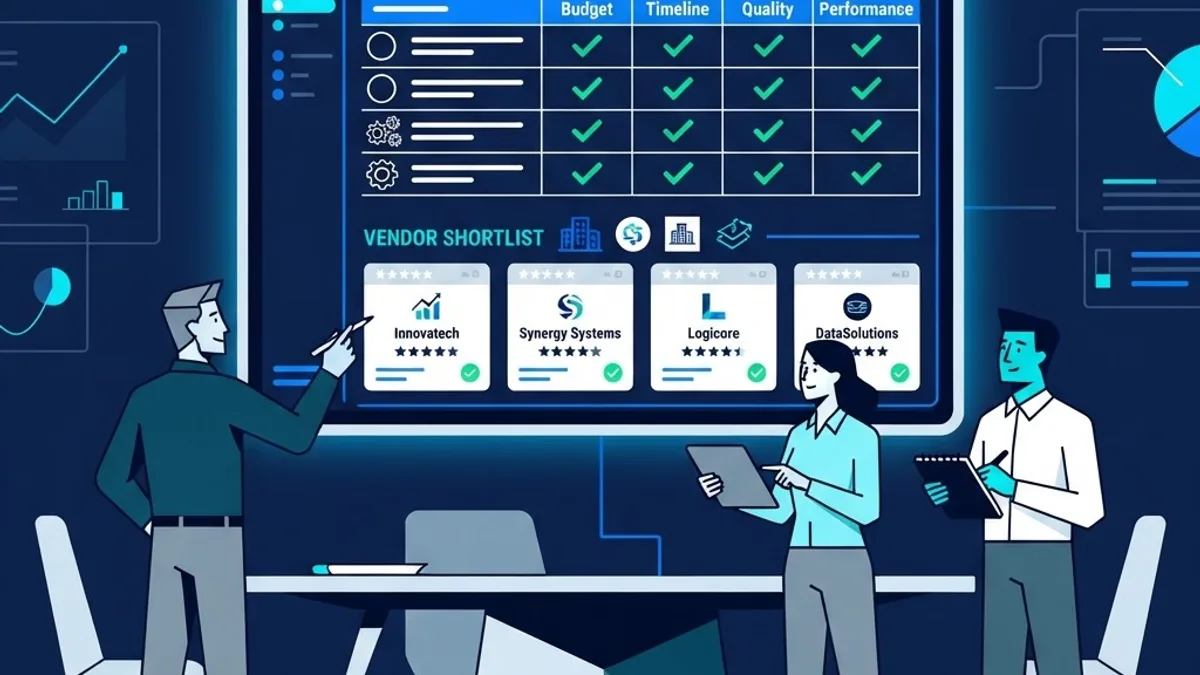
How to Vet a Headless Commerce Development Company
Ask questions that a sales engineer cannot answer with a case study PDF.
Technical Vetting Questions
- How do you cache a product detail page when price and stock change every few minutes? You want a specific answer about stale-while-revalidate, tag-based invalidation, or client-side hydration of volatile fields.
- Who owns the API contract when the commerce platform changes a response shape? Look for a versioned integration layer, not direct calls scattered across components.
- What happens to SEO during migration? Expect a URL parity audit, 301 mapping, structured data plan, and a crawl comparison before and after launch.
- How do you handle third-party scripts? Analytics, chat, and personalization tags routinely destroy the performance gains headless was bought for.
- What is your rollback path on launch day? Traffic splitting by route or geography beats an all-or-nothing switch.
Commercial Vetting Signals
- Fixed-scope discovery before a fixed-price build.
- Named senior engineers, not a pool of rotating juniors.
- A written definition of done that includes performance budgets and accessibility checks.
- Post-launch support terms in the same contract, since months two through six are where headless projects drift.
For teams that want an engineering partner alongside growth execution, agencies such as scalable web solutions and WebPeak Digital structure work around senior ownership of both the storefront and the measurement layer.
The Tech Stack Decisions That Matter Most
Framework choice is the least risky decision on the list. These four matter far more.
1. Rendering Strategy Per Template
Do not pick one strategy for the whole site. Static generation suits category and content pages, server rendering suits search results and personalized blocks, and client rendering suits cart and account. Teams that render everything on the server pay for it in infrastructure cost. Teams that statically generate everything ship stale prices.
2. Search And Merchandising
Native platform search is usually the weakest part of a headless build. Budget for a dedicated search service with synonym control, ranking rules, and faceting, and treat it as a first-class integration rather than an afterthought.
3. Cart And Checkout Ownership
Custom checkout gives control and adds compliance work. Many successful builds keep a hosted checkout from the commerce platform and go fully custom everywhere else. That single decision often removes months of PCI and edge-case work.
4. Content Authoring Experience
If merchandisers cannot preview a page before publishing, they will stop using the CMS and start filing developer tickets. Preview and visual editing are not nice-to-haves, they are adoption requirements.
The Integration Layer Is Where Projects Succeed or Stall
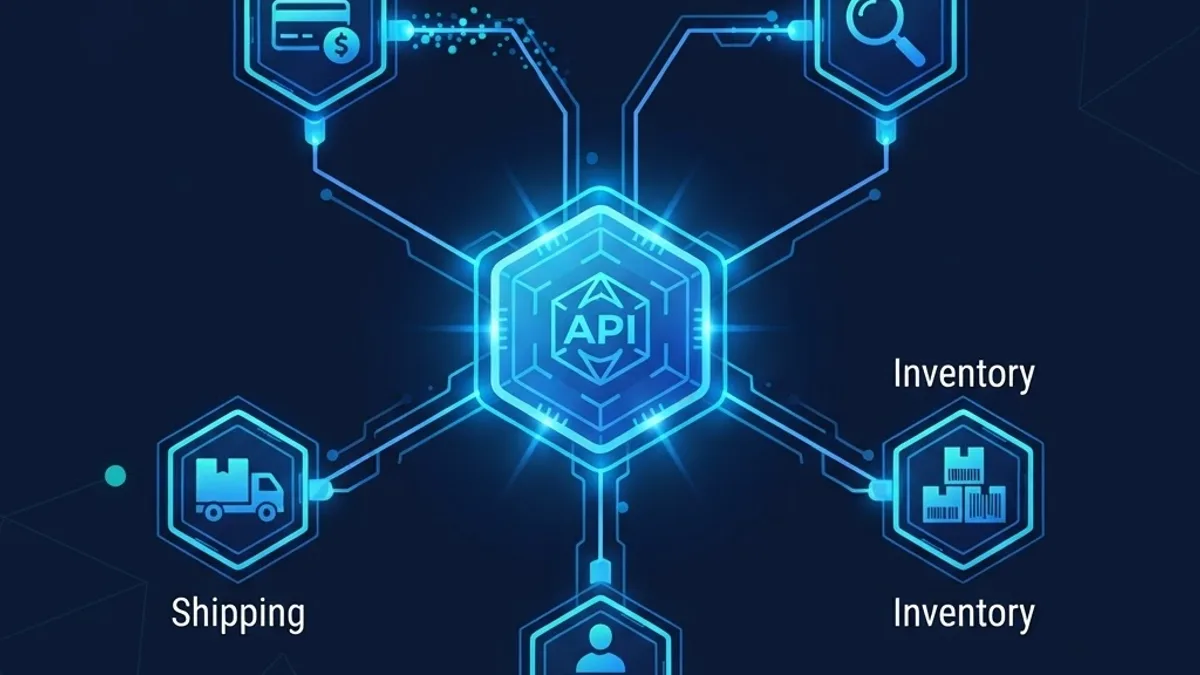
The hardest part of headless commerce is not rendering products, it is reconciling systems that disagree. Inventory says three units, the cart says two, the ERP updates on a fifteen-minute cycle, and the customer clicks buy in between. A capable development company designs for this explicitly.
Patterns that hold up in production:
- A single source of truth per field. Price from commerce, stock from inventory, copy from CMS, with no duplication.
- Idempotent write operations so a retried checkout request cannot create two orders.
- Webhook-driven invalidation instead of fixed timers, so a price change clears the right cache immediately.
- Graceful degradation. If the review service is down, the product page still renders and still sells.
Performance Budgets: Set Them Before Development Starts
Headless does not make a site fast. Discipline does. Agree on numeric budgets in the statement of work and test them in CI on every pull request.
- Largest Contentful Paint under 2.5 seconds on a mid-tier mobile device.
- Interaction to Next Paint under 200 milliseconds.
- Cumulative Layout Shift under 0.1.
- A hard cap on total third-party JavaScript, enforced by a bundle check that fails the build.
Without a failing build, budgets are opinions. With one, they are contract terms.
A Migration Sequence That Protects Revenue
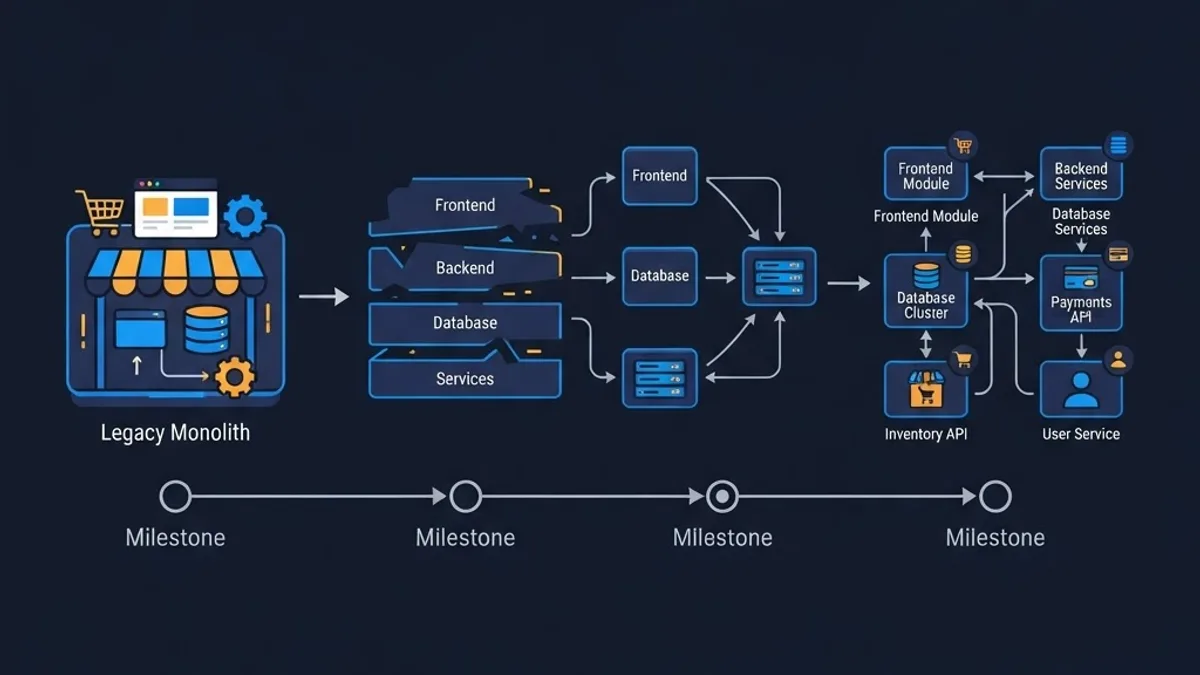
The safest migrations move in this order, because each phase carries less risk than a full cutover.
- Blog and content pages first. Low revenue exposure, real production learning.
- Category and listing pages next. Validates catalog APIs and caching under crawl load.
- Product detail pages third. Validates price and stock accuracy at scale.
- Cart and checkout last, or never. Keep hosted checkout unless a business requirement forces custom.
Run the old and new storefronts in parallel behind route-level routing, compare conversion and organic traffic per template, and only retire the legacy path once the new one wins on both.
Aligning Development With Acquisition
A fast storefront with no demand is an expensive prototype. The teams that see returns pair the rebuild with measurement and channel work, connecting template-level analytics to campaign spend so a performance win can be attributed to revenue. Practical execution guidance sits in performance marketing, and if you are still mapping how commerce and consulting roles fit together operationally, this breakdown of data-driven marketing is a useful reference during planning.
Key Takeaways
- Headless commerce decouples the storefront UI from the commerce backend, connected only through APIs.
- Bounce probability rises 32 percent when mobile load time moves from one second to three seconds.
- Core Web Vitals have been a confirmed Google page experience ranking signal since 2021.
- The integration layer, not the framework, determines whether a headless build succeeds.
- Keep hosted checkout unless a business requirement clearly justifies custom checkout.
- Enforce performance budgets in CI so they fail builds instead of being ignored.
- Migrate in phases: content, then listings, then product pages, then checkout.
Frequently Asked Questions (FAQ)
What does a headless commerce development company do?
It builds a custom storefront frontend that talks to your commerce backend over APIs. The work covers frontend architecture, API orchestration, headless CMS setup, search integration, performance engineering, and phased migration with rollback plans, so you control the customer experience end to end.
How much does headless commerce development cost?
Cost depends on catalog complexity, number of integrations, and markets served. A single-region build with hosted checkout sits at the low end, while multi-market projects with custom checkout and several backend systems cost significantly more. Always separate discovery, build, and ongoing support in the budget.
Is headless commerce better for SEO?
It can be, because you control rendering, markup, and page speed directly. The gain is not automatic. You still need server-side or static rendering for crawlable pages, correct structured data, clean URL mapping during migration, and disciplined third-party script control.
How long does a headless commerce migration take?
Most mid-sized migrations run in phases across several months rather than a single launch. Content pages ship first, then category pages, then product pages. Phasing keeps revenue exposure low and lets each API integration be validated with real production traffic.
Should small stores use headless commerce?
Usually no. If a standard theme plus a couple of apps meets your needs, a monolithic platform costs less to run and maintain. Headless makes sense when you have complex catalogs, multiple channels or regions, or you are constantly fighting theme limitations.
Can we keep our existing commerce platform when going headless?
In most cases yes. Major platforms expose commerce APIs that a headless frontend can consume, so the catalog, promotions, and order management stay in place. Confirm API rate limits, webhook coverage, and response shapes during discovery before committing to the approach.