Discover how DentalX and AI are transforming dentistry with smarter diagnostics, faster treatment planning, and better patient care backed by real data.
DentalX Artificial Intelligence Company Dentistry
Dentistry is quietly becoming one of the most AI-transformed fields in modern healthcare, and companies like DentalX sit at the center of that shift. From reading X-rays in seconds to predicting which patients will miss appointments, artificial intelligence is no longer a futuristic add-on for dental clinics. It is a practical tool that improves accuracy, saves chair time, and helps dentists catch problems earlier. This guide breaks down exactly what an AI dentistry company like DentalX does, how the technology works in a real clinic, and why it matters for both dentists and patients.
Quick Answer: DentalX is an artificial intelligence company for dentistry that uses machine learning to analyze dental images, detect cavities and bone loss, plan treatments, and automate clinic operations. It helps dentists diagnose faster and more accurately while giving patients clearer, evidence-based care.
What Is an AI Dentistry Company Like DentalX?
An AI dentistry company builds software that applies machine learning to clinical and administrative dental tasks. In simple terms, AI dentistry means training computer models on thousands of dental X-rays, scans, and patient records so the software can recognize patterns a human might miss or take longer to spot.
DentalX-style platforms typically focus on three areas: clinical diagnosis (reading radiographs and intraoral scans), treatment planning (mapping out procedures and outcomes), and practice operations (scheduling, billing, and patient communication). The goal is not to replace the dentist but to give them a reliable second opinion and remove repetitive manual work. If you want to understand how AI is reshaping entire industries beyond dentistry, ZoneTechify publishes practical breakdowns of applied AI across sectors.
Why AI Matters in Modern Dentistry
Diagnostic accuracy in dentistry has long depended on the individual clinician's eye, and that introduces variability. According to a study published in the Journal of Dental Research, AI-assisted detection of dental caries can reach accuracy levels comparable to experienced clinicians, and in some early-lesion cases it flags problems the human reviewer initially overlooked.
The stakes are high because untreated dental disease is widespread. The World Health Organization reports that oral diseases affect close to 3.5 billion people globally, making them among the most common health conditions on the planet. When AI helps a clinic catch decay or bone loss earlier, it directly reduces the number of complex, expensive interventions later.
How DentalX AI Reads Dental Images
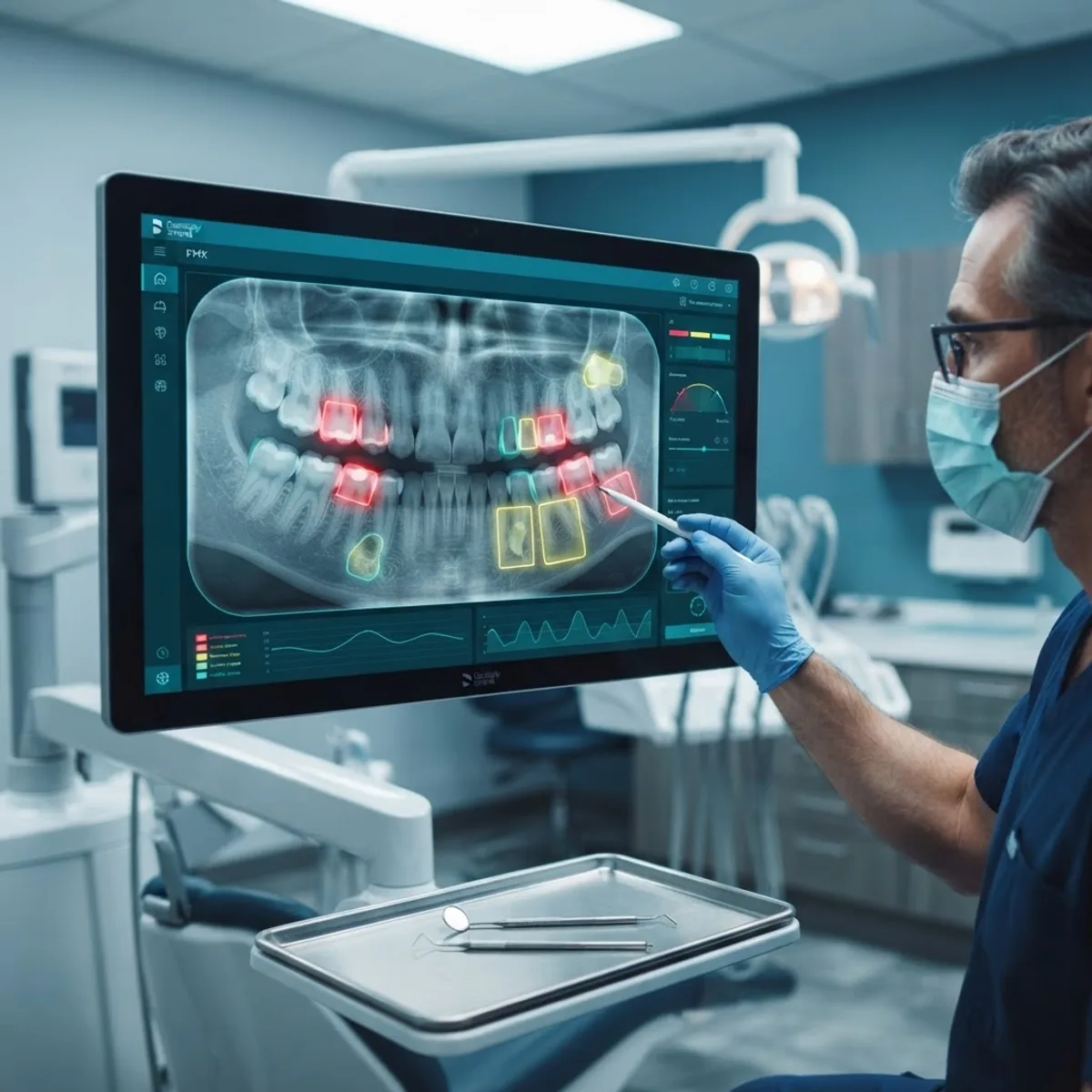
The flagship capability of any AI dentistry company is image interpretation. Here is how the process typically works in a clinic using DentalX-style technology:
- Image capture: The clinic takes a bitewing, panoramic, or periapical X-ray, or an intraoral scan.
- Automatic analysis: The AI model processes the image within seconds and overlays color-coded markers on suspected caries, bone loss, calculus, or periapical lesions.
- Confidence scoring: Each finding is assigned a probability score so the dentist can prioritize what to double-check.
- Clinician review: The dentist confirms or dismisses each flag, keeping full clinical control.
- Patient explanation: The annotated image becomes a clear visual aid the patient can actually understand.
This workflow matters because it turns a subjective conversation into an evidence-based one. Patients are far more likely to accept treatment when they can see the highlighted problem on their own scan rather than take a verbal recommendation on faith.
AI-Powered Imaging and 3D Scanning
Beyond flat X-rays, AI now powers three-dimensional imaging and intraoral scanning. Modern scanners capture a full digital impression of the mouth, and AI aligns, cleans, and analyzes that model automatically.
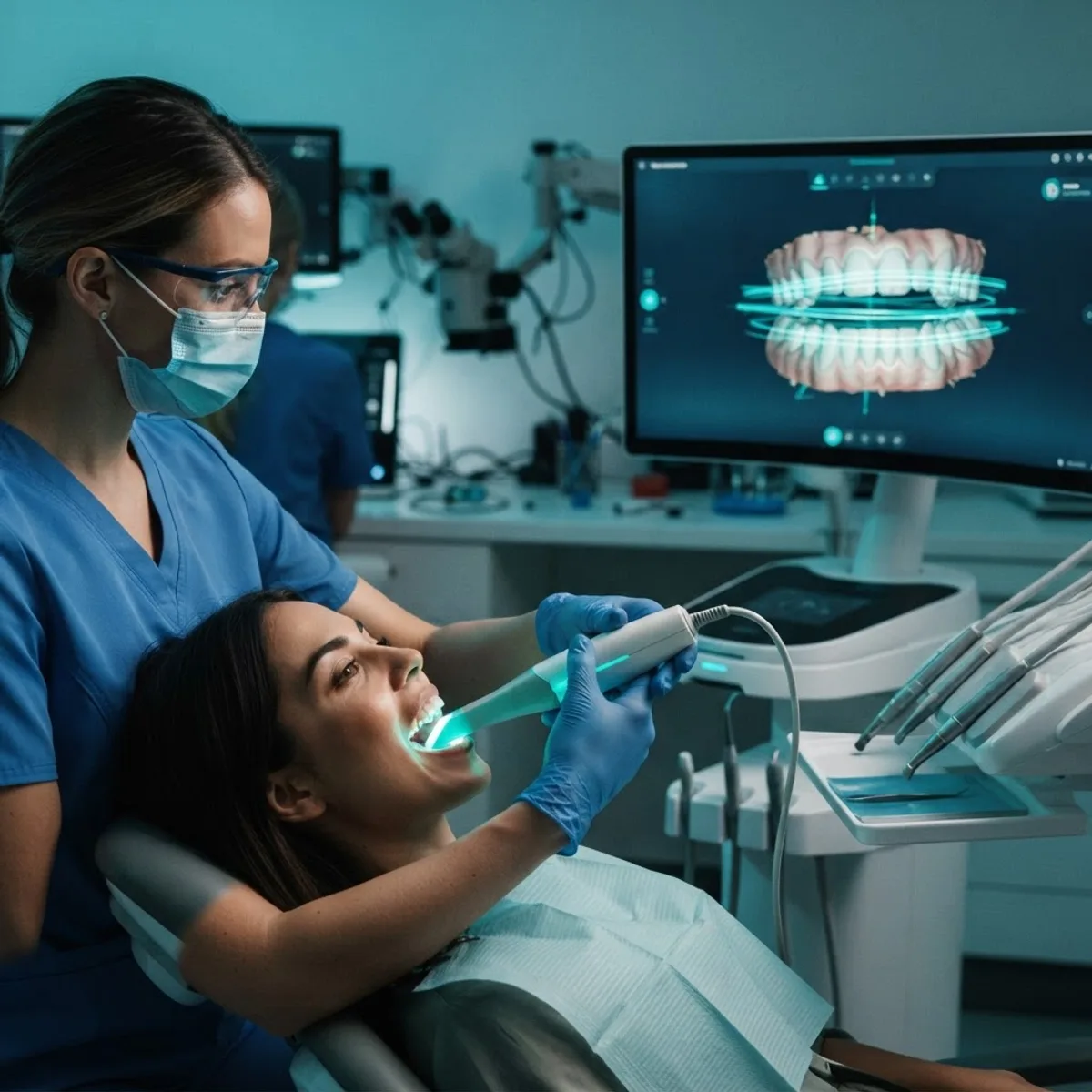
This removes the messy physical impressions patients dislike and speeds up work for crowns, aligners, and implants. AI also measures gum recession, tooth wear, and alignment over time by comparing scans across visits, giving the dentist a longitudinal view of oral health that was nearly impossible to track manually.
Smarter Treatment Planning
One of the most valuable applications of AI in dentistry is treatment planning. Instead of manually sketching a sequence of procedures, the dentist can use AI to generate a data-backed plan and simulate outcomes.
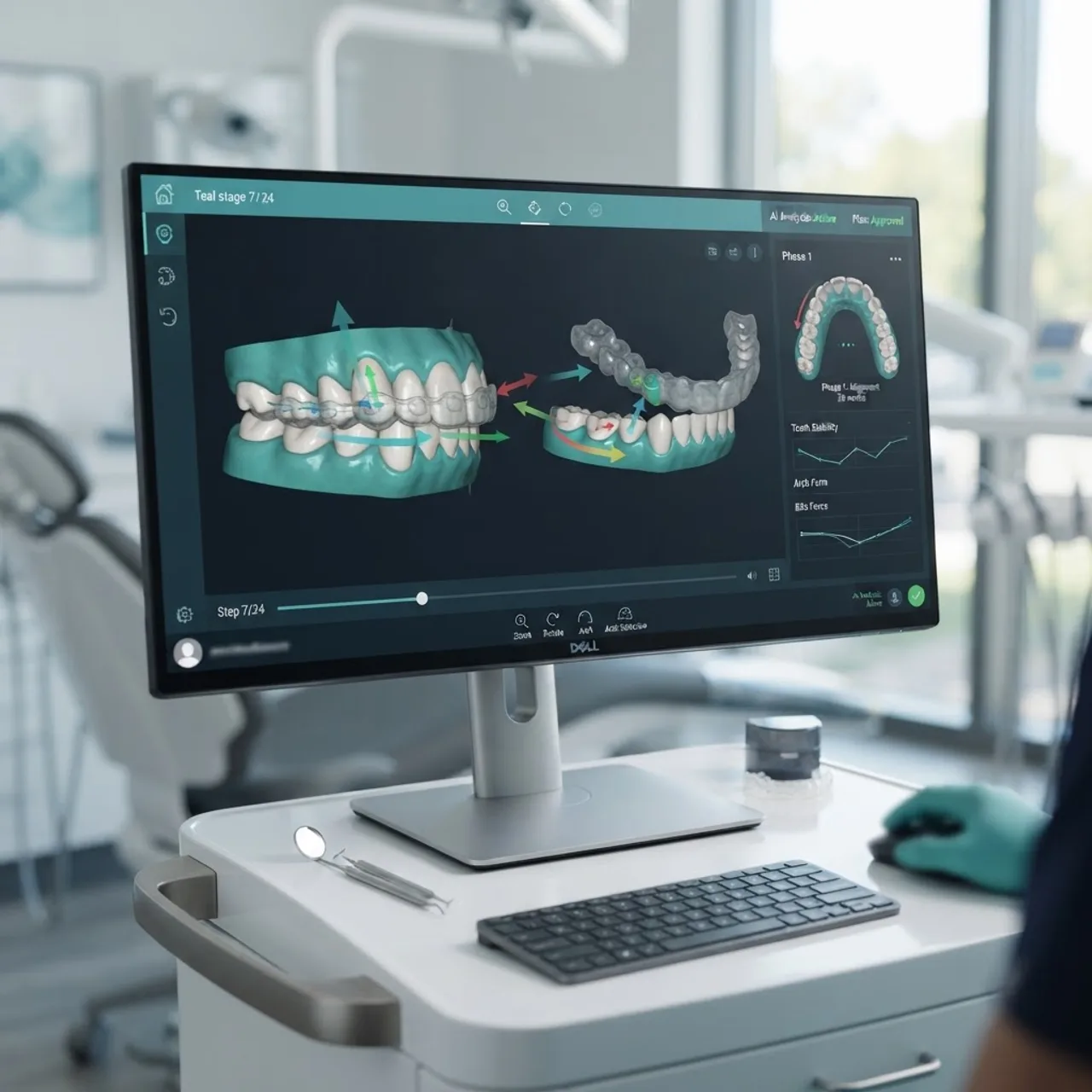
For example, orthodontic AI can predict how teeth will move and display a smile simulation before treatment begins. Implant-planning software uses AI to identify safe placement zones relative to nerves and sinuses, reducing surgical risk. These tools shorten planning time and give patients realistic expectations. Building this kind of predictive, data-driven software is exactly the type of work covered by ZoneTechify's artificial intelligence services, which help organizations turn raw data into decision-support systems.
Improving the Patient Experience
AI does not only help the clinician; it reshapes the entire patient journey. Clear visuals, faster appointments, and personalized communication all raise satisfaction and trust.

AI chatbots handle appointment booking and answer common questions around the clock. Smile-simulation tools let patients preview results before committing to cosmetic work. Automated reminders reduce no-shows, which is a real financial drain: the American Dental Association has noted that missed appointments cost practices thousands of dollars annually in lost chair time. When patients feel informed and in control, treatment acceptance and loyalty both climb.
Automating Dental Practice Operations
Running a dental practice involves a mountain of administrative work, and this is where AI delivers fast, measurable returns. DentalX-style platforms automate scheduling, insurance verification, claims processing, and recall campaigns.

Predictive scheduling models analyze historical data to forecast which slots are likely to go unfilled and which patients are at risk of canceling, so front-desk staff can act early. Automated insurance and billing checks reduce claim rejections caused by manual errors. The result is a leaner practice where the team spends more time on patients and less on paperwork.
Comparison: Traditional Dentistry vs AI-Assisted Dentistry
| Factor | Traditional Dentistry | AI-Assisted Dentistry (DentalX-style) |
|---|---|---|
| Diagnosis speed | Minutes to hours of manual review | Seconds per image |
| Early lesion detection | Depends on clinician experience | Consistent, pattern-based flagging |
| Treatment planning | Manual, time-intensive | Data-driven with outcome simulation |
| Patient communication | Verbal, hard to visualize | Annotated images and simulations |
| Administrative load | High, manual scheduling and billing | Largely automated |
| Diagnostic consistency | Varies between clinicians | Standardized across cases |
Data Security and Ethical AI in Dentistry
Because dental AI handles sensitive health information, security and ethics are non-negotiable. Reputable AI dentistry companies build their platforms around strict compliance standards such as HIPAA in the United States and GDPR in Europe.

Key safeguards include end-to-end encryption of patient records, role-based access controls, and audit trails that log every action. Ethically, the best systems keep the dentist as the final decision-maker rather than allowing AI to auto-approve treatment. Transparency matters too: models should be validated on diverse datasets to avoid bias, and clinics should be able to explain how a recommendation was reached. To explore how AI is deployed responsibly in regulated industries, WebPeak shares in-depth resources on trustworthy AI implementation, and its artificial intelligence services focus on secure, production-ready AI solutions.
The Future of AI in Dentistry
The next wave of dental AI is moving toward prediction and prevention rather than just detection. Emerging models aim to forecast disease risk from a combination of imaging, medical history, and lifestyle data, allowing truly personalized preventive care.

We are also seeing early robotics-assisted procedures, real-time surgical guidance, and voice-driven charting that lets clinicians document hands-free. As these tools mature, the dentist's role shifts further toward interpretation, communication, and complex decision-making, while AI absorbs the repetitive and pattern-heavy tasks. Clinics that adopt this technology early will hold a clear competitive advantage in accuracy, efficiency, and patient trust.
Key Takeaways
- DentalX-style AI dentistry companies apply machine learning to diagnosis, treatment planning, and practice operations, acting as a reliable clinical second opinion.
- AI-assisted caries detection can match experienced clinicians and often flags early lesions humans miss, per dental research findings.
- Oral diseases affect nearly 3.5 billion people worldwide (WHO), so earlier AI-driven detection has major public-health value.
- AI reads X-rays and 3D scans in seconds, adds confidence scores, and turns diagnosis into a clear, visual, evidence-based conversation with patients.
- Automation of scheduling, billing, and reminders cuts costly no-shows and reduces administrative workload.
- Security (HIPAA, GDPR), transparency, and keeping the dentist as final decision-maker are essential for ethical dental AI.
Frequently Asked Questions (FAQ)
What does an AI dentistry company like DentalX actually do?
An AI dentistry company builds software that analyzes dental images, plans treatments, and automates clinic tasks. It trains machine-learning models on thousands of scans so the system can detect cavities, bone loss, and other issues quickly, giving dentists a fast, consistent second opinion while keeping them in full control.
Is AI in dentistry accurate and safe?
Yes, when properly validated. Studies show AI can match experienced dentists in detecting caries and often catches early lesions humans miss. Safety comes from keeping the dentist as the final decision-maker, using diverse training data to reduce bias, and following strict privacy standards like HIPAA and GDPR.
Will AI replace dentists?
No. AI handles repetitive, pattern-heavy tasks like reading X-rays and scheduling, but it does not replace clinical judgment, hands-on treatment, or patient relationships. Its role is to support dentists with faster analysis and clearer data, freeing them to focus on complex decisions and quality patient care.
How does AI improve the patient experience at the dentist?
AI improves the experience through faster diagnoses, clear annotated images, smile simulations, and easy online booking. Patients can see problems on their own scans instead of relying on verbal explanations, which builds trust. Automated reminders also reduce forgotten appointments and keep care on track.
Is dental AI software secure with patient data?
Reputable dental AI platforms use end-to-end encryption, role-based access, and detailed audit logs to protect records. They comply with regulations such as HIPAA and GDPR. Patients should confirm their clinic uses a vetted, compliant provider that treats data privacy and transparency as core priorities.
Final Thoughts
Artificial intelligence has moved from hype to genuine clinical value in dentistry. Companies like DentalX show how machine learning can sharpen diagnosis, speed up treatment planning, protect patient data, and streamline the day-to-day running of a practice. For dentists, the message is clear: AI is a powerful assistant, not a replacement. For patients, it means earlier detection, clearer communication, and more confident care. Adopting these tools thoughtfully today is how forward-looking clinics will define the standard of dentistry tomorrow.