Discover how artificial intelligence learns to play, battle, and master Pokemon using reinforcement learning, neural networks, and data-driven strategy.
Artificial Pokemon Intelligence
When people hear "artificial Pokemon intelligence," they usually picture a bot that presses buttons randomly. The reality is far more interesting. Modern AI agents can now learn Pokemon battle mechanics from scratch, defeat human champions, and even discover strategies that top competitive players never considered. This blog breaks down exactly how AI masters Pokemon, why researchers use games like this as testing grounds, and what it teaches us about building smarter machine learning systems. Whether you are a curious gamer or a developer exploring AI, you will leave with a clear, practical understanding of how it all works.
Quick Answer: Artificial Pokemon intelligence refers to AI systems that learn to play Pokemon using reinforcement learning and neural networks. These agents study game states, predict opponent moves, and optimize decisions through millions of simulated battles, eventually outperforming skilled human players in competitive formats.
What Is Artificial Pokemon Intelligence?
Artificial Pokemon intelligence is the application of machine learning techniques to teach a computer how to play Pokemon effectively. Instead of following hard-coded rules, the AI learns by trial and error, receiving rewards for winning battles and penalties for losing them.
Key definition: An AI agent is a program that observes an environment (the Pokemon battle), takes actions (choosing moves or switching Pokemon), and improves its behavior over time based on feedback signals called rewards.
Pokemon is a surprisingly rich problem for AI research because it combines hidden information, randomness, and deep strategy. Your opponent's team, held items, and exact stats are unknown at the start of a match. Every attack has probability rolls, status effects, and type interactions. This mix of uncertainty and long-term planning makes Pokemon an ideal proving ground for algorithms that must also work in the messy real world.
Why Researchers Use Pokemon to Train AI
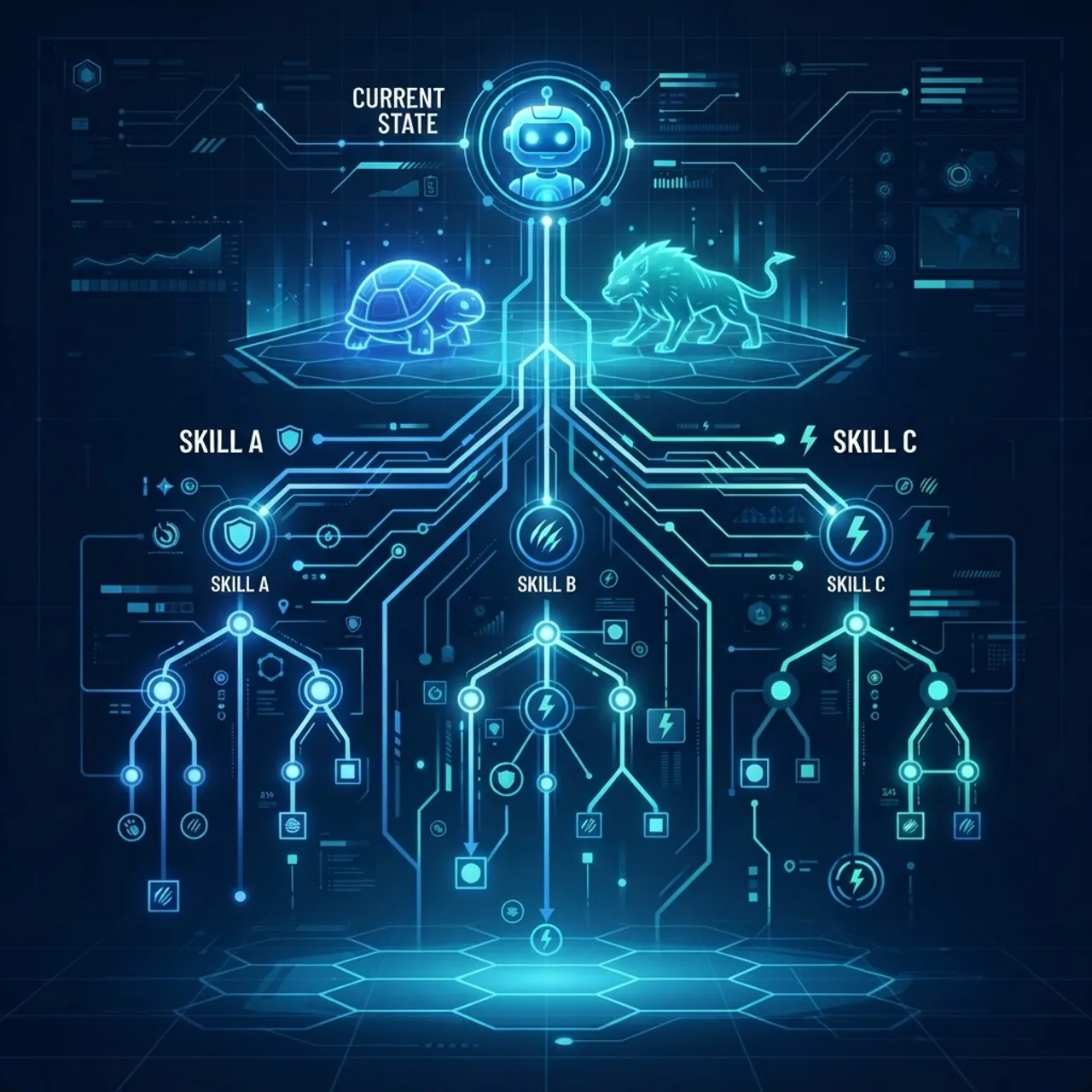
Games have always been benchmarks for artificial intelligence. According to DeepMind, its AlphaGo system studied millions of positions before defeating world champion Lee Sedol in 2016, proving that AI could master games once thought too complex for machines. Pokemon offers similar complexity but with different challenges.
Here is why Pokemon is valuable for AI development:
- Imperfect information – The AI cannot see the opponent's full team, so it must reason under uncertainty.
- Stochastic outcomes – Critical hits, accuracy checks, and status chances force the AI to think in probabilities.
- Massive decision space – With hundreds of Pokemon, thousands of moves, and countless item combinations, the number of possible game states is enormous.
- Long-term strategy – Winning often depends on setups that pay off many turns later, testing an AI's ability to plan ahead.
These qualities mirror real-world problems in finance, logistics, and robotics, where decisions must be made without complete data. That is why studying artificial Pokemon intelligence produces insights that extend far beyond gaming.
How AI Learns to Battle: Reinforcement Learning
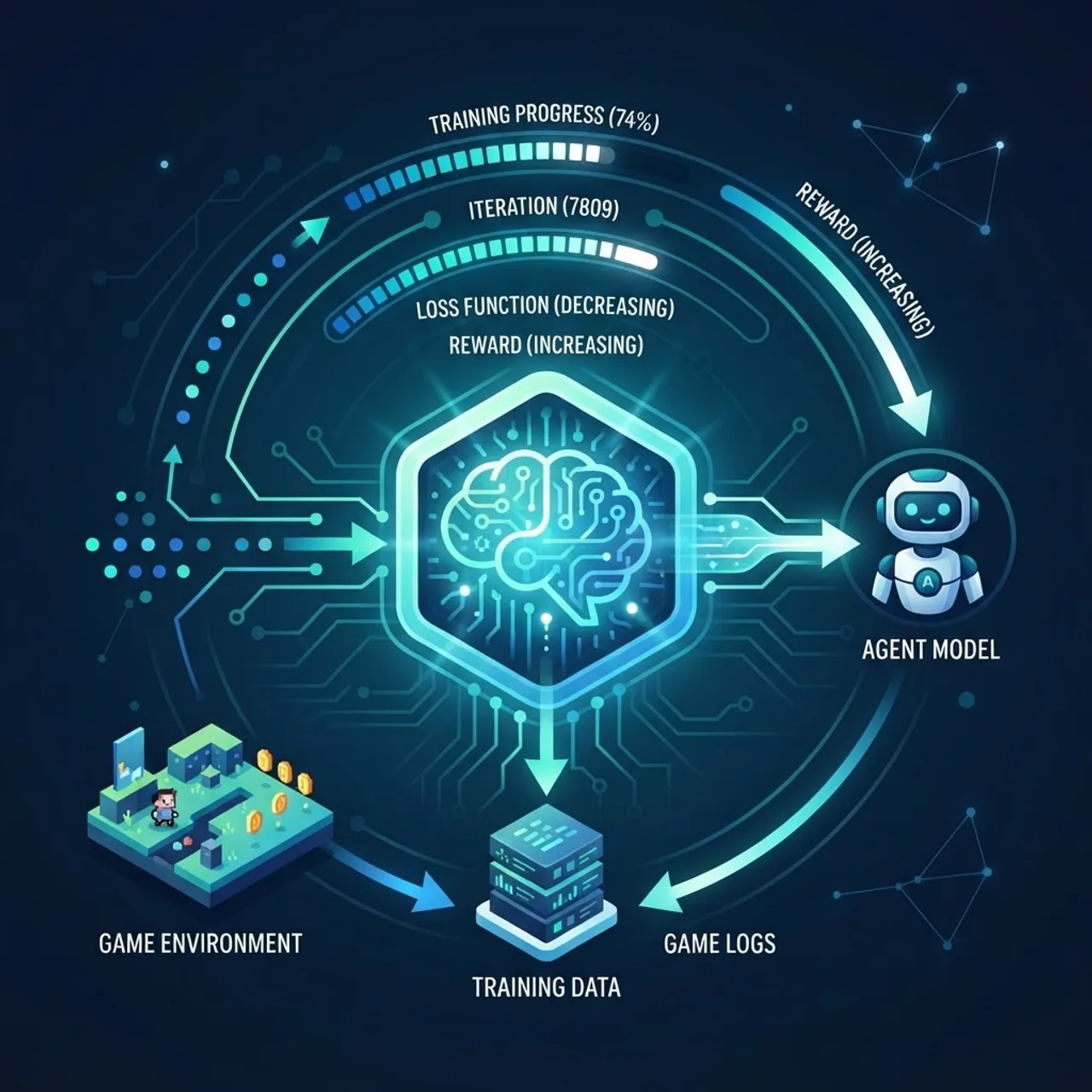
The engine behind most Pokemon-playing AI is reinforcement learning (RL). In RL, an agent learns a policy — a strategy that maps game situations to the best possible actions — by playing enormous numbers of matches and adjusting based on results.
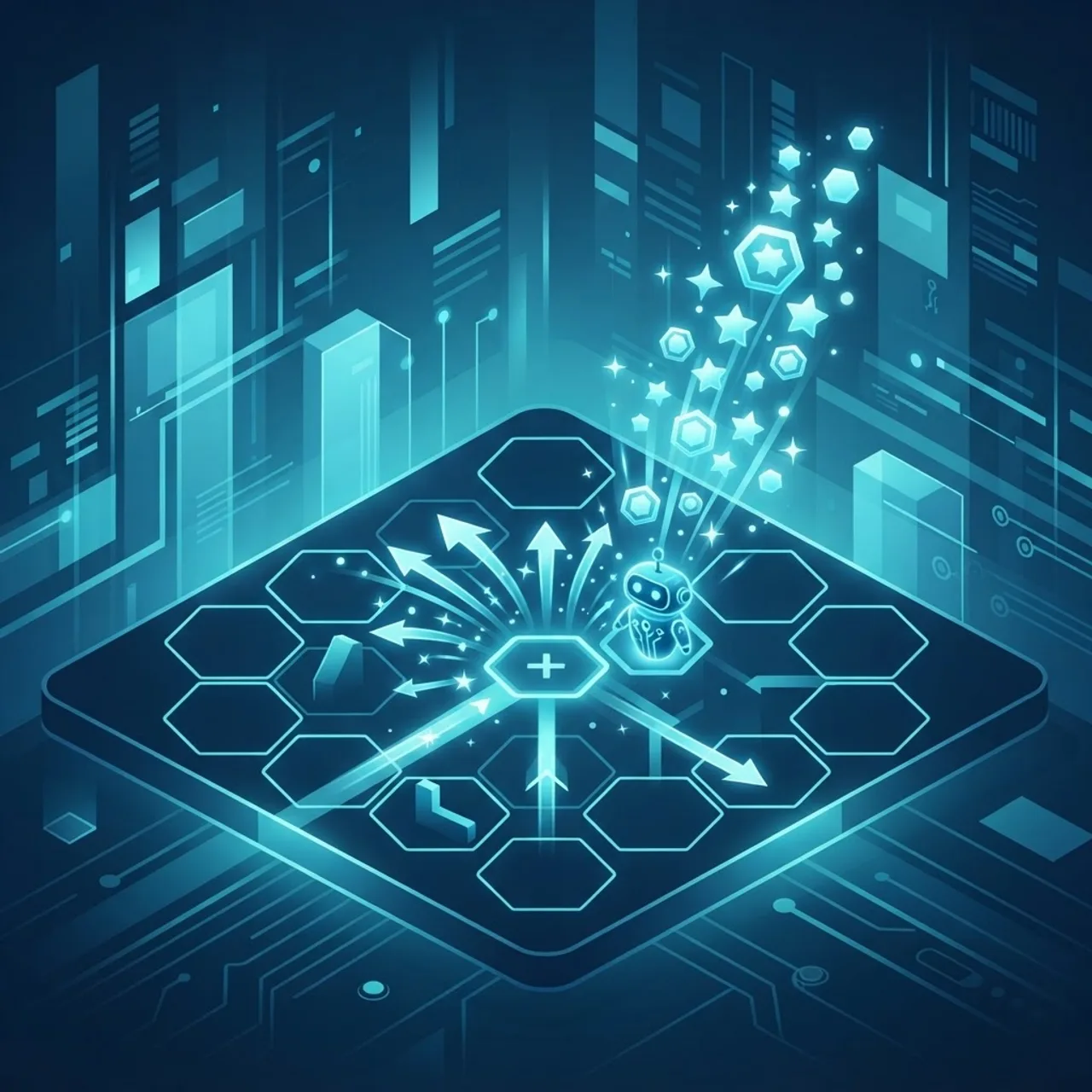
The process typically follows these steps:
- Observation – The AI reads the current battle state: active Pokemon, HP, boosts, weather, and known moves.
- Action selection – It chooses a move or switch based on its current policy.
- Reward feedback – Winning, dealing damage, or knocking out an opponent generates positive rewards; fainting or losing generates negative ones.
- Policy update – The neural network adjusts its parameters to make winning actions more likely in the future.
Projects built on the open-source Pokemon Showdown simulator, such as the popular "poke-env" framework, let researchers run thousands of automated battles per hour. Over millions of games, an agent that started by flailing randomly gradually develops coherent, human-like tactics — and sometimes superhuman ones.
Neural Networks and Game State Prediction
Behind the reinforcement learning loop sits a neural network that turns raw game data into decisions. This network takes numerical representations of the battle — encoded stats, type matchups, and move data — and outputs a probability for each possible action.
Definition: A neural network is a layered mathematical model that learns patterns from data by adjusting the connection strengths between artificial neurons.
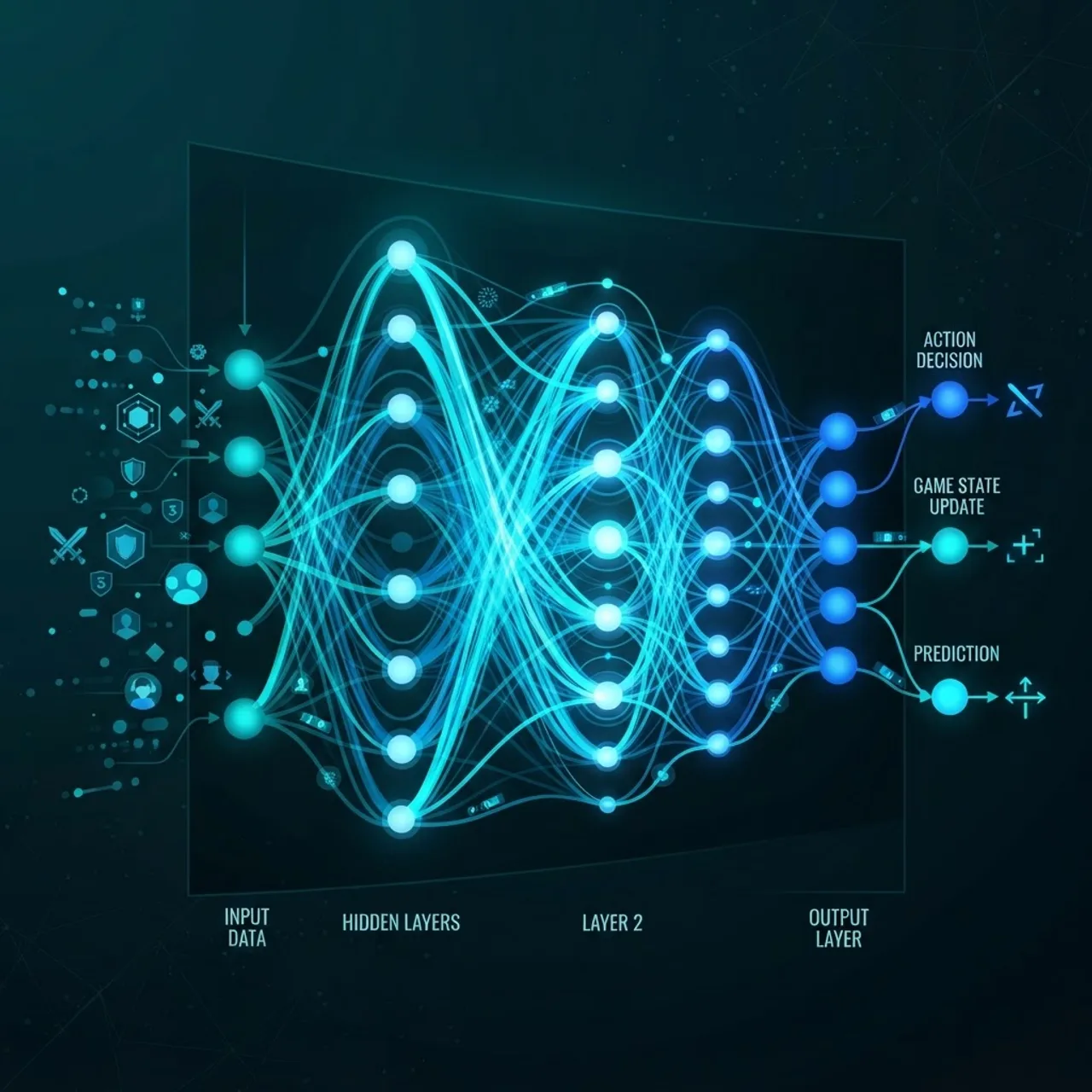
Advanced Pokemon AI often adds a prediction module that estimates what the opponent is likely holding. If a defensive Pokemon repeatedly survives hits it should not, the AI infers it may be carrying a defensive item or ability, then updates its damage calculations accordingly. This kind of opponent modeling is the difference between an average bot and one that can outplay experienced humans. If you want to build systems like this for real products, teams such as WebPeak's artificial intelligence services specialize in turning experimental machine learning models into production-ready applications.
Building a Competitive AI Team
Strategy in Pokemon does not begin in battle — it begins with team building. AI can analyze usage statistics from millions of ranked matches to construct teams with strong synergy and few exploitable weaknesses.
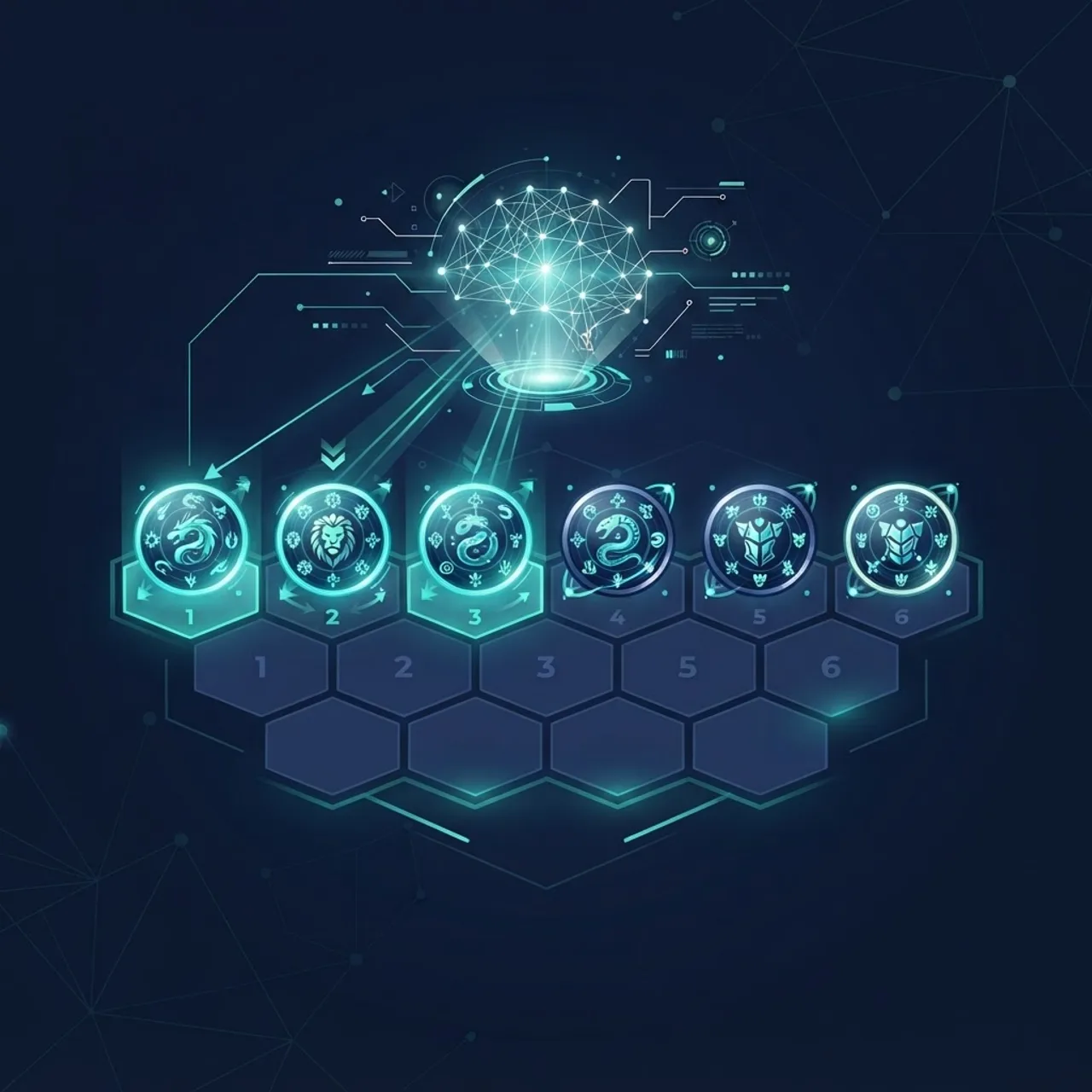
A data-driven AI approach to team building considers:
- Type coverage – Ensuring the team can hit every defensive type for meaningful damage.
- Role balance – Mixing attackers, walls, pivots, and support Pokemon.
- Speed tiers – Optimizing which Pokemon outspeed common threats in the current meta.
- Counterplay – Preparing answers to the most popular strategies in the ranked ladder.
Because the competitive metagame shifts constantly, AI systems retrain regularly to stay current. What dominated last season may be obsolete today, and a good agent adapts automatically instead of relying on outdated assumptions.
Human Players vs. AI: A Comparison
How does artificial Pokemon intelligence actually stack up against people? The table below highlights the practical differences observed across research projects and community tournaments.
| Factor | Human Players | AI Agents |
|---|---|---|
| Damage calculation | Estimated mentally | Exact and instant |
| Fatigue | Declines over long sessions | None |
| Creativity | High, intuitive | Emerging, data-driven |
| Learning speed | Weeks to months | Millions of games in days |
| Prediction | Reads opponents socially | Reads statistical patterns |
| Adaptation | Flexible but slow | Rapid with retraining |
The takeaway is nuanced. AI dominates precision, consistency, and raw calculation, while skilled humans still hold an edge in creative, unconventional plays. The strongest results often come from hybrid setups where humans use AI analysis to sharpen their own decisions.
Real-World Lessons From Artificial Pokemon Intelligence
The value of teaching AI to play Pokemon is not the battles themselves — it is the transferable techniques. According to research shared by OpenAI, agents trained through self-play in complex games repeatedly discovered strategies their creators never programmed, demonstrating genuine emergent behavior.
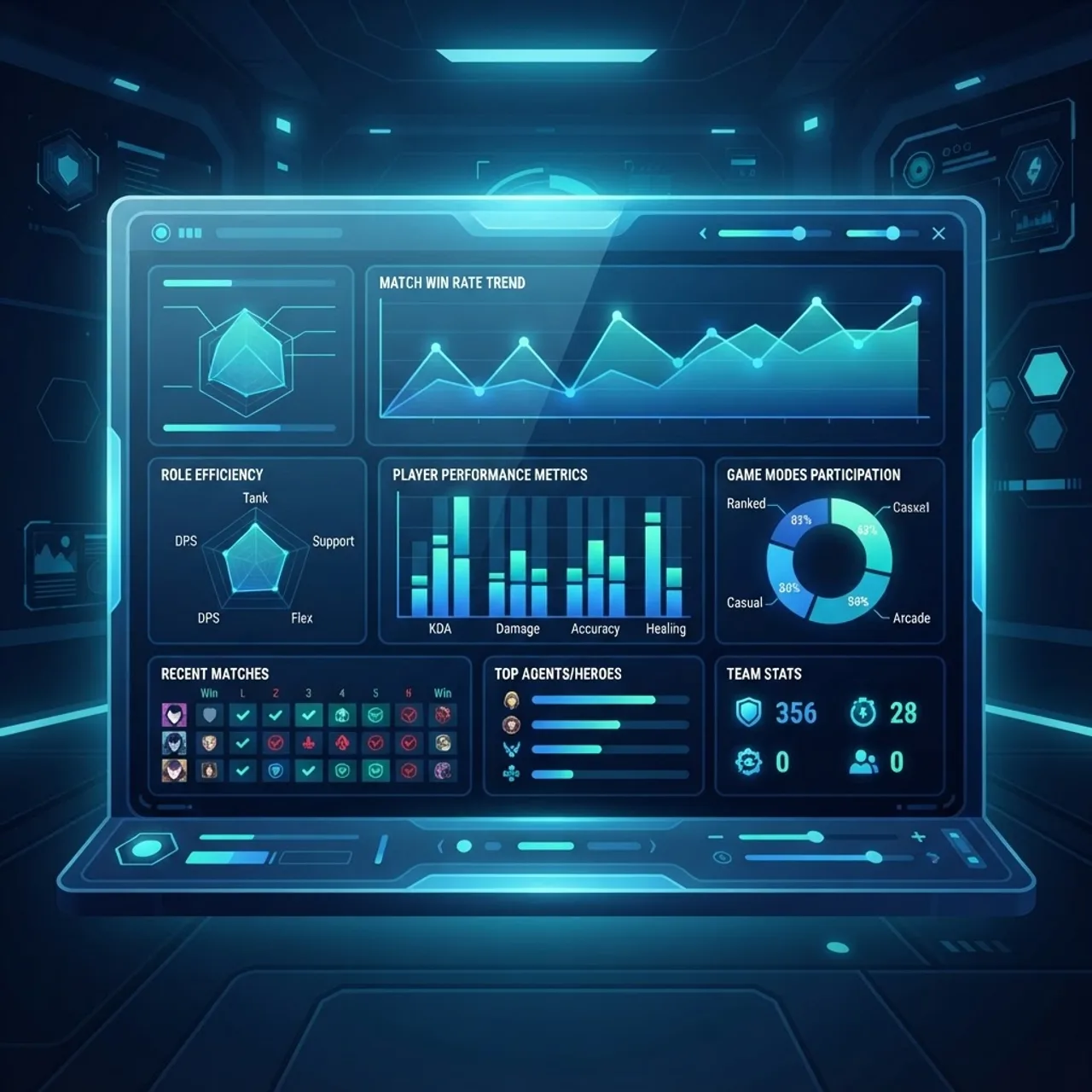
The same methods that master Pokemon now power:
- Recommendation systems that predict what users want next.
- Supply chain tools that plan around uncertain demand.
- Automated trading models that act under incomplete information.
- Robotics controllers that learn physical tasks through simulation.
This is the real reason companies invest in game-based AI research. A system that can win a Pokemon match while managing hidden information and probability is exercising the exact skills needed for high-stakes business decisions. Agencies like ZoneTechify and WebPeak apply these principles when building intelligent tools for clients across industries.
The Future of AI in Pokemon and Gaming
The next wave of artificial Pokemon intelligence will likely focus on explainability and collaboration. Instead of black-box bots, developers want agents that can explain why they chose a move, helping players learn faster. We can also expect AI coaches that watch your matches, identify recurring mistakes, and suggest personalized improvements in plain language.
As large language models merge with reinforcement learning, future systems may combine deep strategic play with natural conversation — imagine an AI that battles at a championship level and teaches you its reasoning turn by turn. That fusion of performance and education is where gaming AI is heading, and it will reshape how we learn every competitive game, not just Pokemon.
Key Takeaways
- Artificial Pokemon intelligence uses reinforcement learning and neural networks to master battles through millions of simulated games.
- Pokemon is a strong AI benchmark because of imperfect information, randomness, and long-term strategy.
- DeepMind's AlphaGo (2016) and OpenAI's self-play research proved AI can discover strategies humans never taught it.
- AI excels at precision and consistency, while humans still lead in creative, unconventional play.
- The techniques behind game AI power real-world systems in recommendations, logistics, trading, and robotics.
Frequently Asked Questions (FAQ)
Can AI actually beat human Pokemon players?
Yes. Well-trained reinforcement learning agents on platforms like Pokemon Showdown can defeat highly ranked human players. They calculate damage perfectly, never tire, and predict moves using statistics. However, top humans still win some matches through creative, unpredictable strategies that AI has not yet learned to anticipate reliably.
How does AI learn to play Pokemon from scratch?
AI learns through reinforcement learning. It starts by making random moves, then receives rewards for good outcomes like winning or dealing damage. Over millions of simulated battles, a neural network adjusts its strategy, gradually turning random choices into coherent, competitive tactics without any hand-coded rules.
What software is used to train Pokemon AI?
Most researchers use the open-source Pokemon Showdown battle simulator combined with Python frameworks such as poke-env. These tools automate thousands of matches per hour, provide clean game-state data, and connect easily to reinforcement learning libraries, making large-scale AI training practical and reproducible.
Why do researchers train AI on games like Pokemon?
Games offer controlled environments with clear rules and measurable outcomes. Pokemon specifically features hidden information, randomness, and deep strategy, mirroring real-world problems in finance, logistics, and robotics. Solving these challenges in a game builds techniques that transfer directly to complex business and scientific applications.
Will AI replace competitive Pokemon players?
No. AI is best viewed as a training and analysis partner rather than a replacement. Players use AI to study matchups, refine teams, and spot mistakes. The human elements of creativity, community, and unpredictable decision-making keep competitive play engaging and firmly in human hands.
Is building game-playing AI useful for real businesses?
Absolutely. The reinforcement learning methods that master Pokemon power recommendation engines, automated trading, and robotics. A system that decides well under uncertainty and randomness is solving the same core problem businesses face daily, which is why companies invest in game-based AI research and development.