
Discover how an artificial intelligence wedding works, from AI planning and vendor matching to budgeting, seating, and photo editing that saves couples time and money.
Artificial Intelligence Wedding

Planning a wedding has always meant juggling dozens of moving parts: venues, vendors, guest lists, budgets, timelines, and the emotional weight of getting it all right. Today, an artificial intelligence wedding approach is quietly reshaping that experience. Instead of drowning in spreadsheets and vendor emails, couples are using AI tools to plan faster, spend smarter, and reduce the stress that traditionally comes with the biggest celebration of their lives.
At ZoneTechify and WebPeak, we work with automation and AI systems daily, and the same technology powering business efficiency is now powering weddings. This guide breaks down exactly how AI fits into modern wedding planning, where it genuinely helps, and where human judgment still matters most.
Quick Answer: An artificial intelligence wedding uses AI tools to automate and optimize planning tasks like budgeting, vendor matching, guest management, seating charts, and photo editing. It saves couples time and money by handling repetitive decisions while leaving creative and emotional choices to the couple.
What Is an Artificial Intelligence Wedding?
An artificial intelligence wedding is a celebration planned with the help of AI-powered software that analyzes data, predicts outcomes, and automates repetitive tasks. Rather than replacing planners or personal taste, AI acts as a tireless assistant that processes information faster than any human could.
Key definition: AI wedding planning refers to using machine learning, natural language processing, and generative tools to manage logistics such as budgeting, scheduling, guest communication, and design recommendations.
The wedding industry is enormous and ripe for this shift. According to The Knot's real weddings studies, the average U.S. wedding costs roughly 33,000 dollars, and couples spend around 200 hours planning. Even a modest efficiency gain from AI translates into real savings of time and money.

How AI Streamlines Wedding Planning
AI shines in the parts of wedding planning that are data-heavy and repetitive. Here is where couples see the biggest impact.
1. Intelligent Timelines and Checklists
AI planning apps build a personalized timeline based on your wedding date, budget, and priorities. If you book a venue late, the system automatically reshuffles dependent tasks, so you never miss a deposit deadline or a dress-fitting window. This dynamic scheduling is something static checklists simply cannot do.
2. Natural Language Assistants
Many platforms now include chatbots that answer planning questions instantly, day or night. You can ask, "What order should the toasts happen in?" and get a structured, etiquette-aware answer. These assistants pull from thousands of real weddings, giving you crowd-tested guidance rather than guesswork.
3. Design and Theme Generation
Generative AI can produce mood boards, color palettes, and décor concepts from a simple text prompt. Describe "a rustic autumn garden wedding in warm tones" and receive visual direction in seconds, which you can refine with a florist or designer.
AI Vendor Matching: Finding the Right Team
One of the most time-consuming wedding tasks is finding vendors who fit your style, budget, and location. AI vendor matching solves this by analyzing your preferences against vendor portfolios, reviews, availability, and pricing.
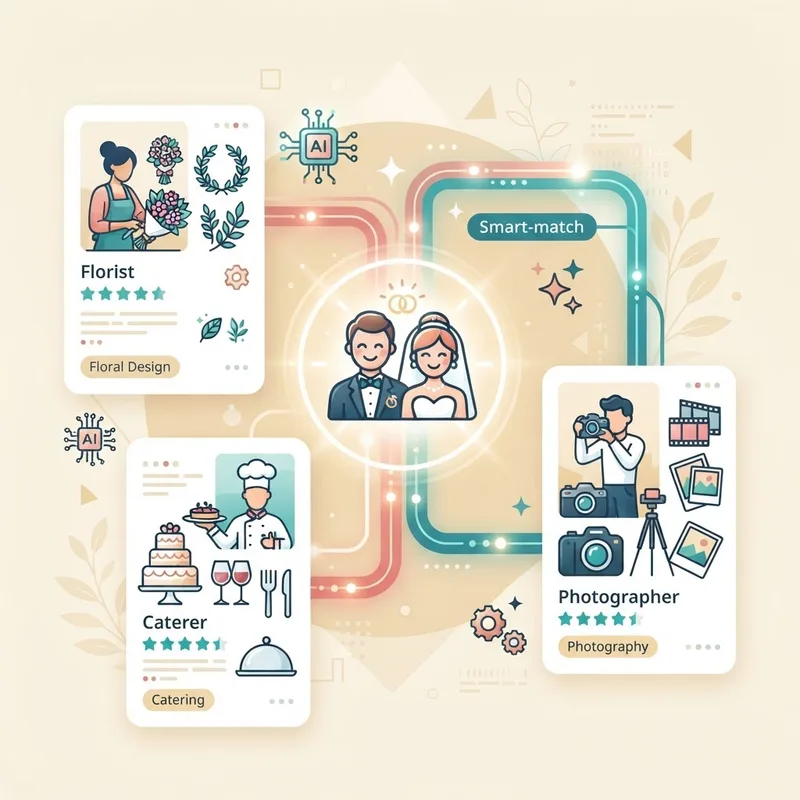
Instead of manually messaging 15 photographers, an AI system surfaces the three most compatible options and can even draft outreach messages. The result is fewer dead-end conversations and faster bookings.
Here is how AI vendor matching compares to the traditional approach:
| Factor | Traditional Vendor Search | AI Vendor Matching |
|---|---|---|
| Time to shortlist | Days to weeks | Minutes to hours |
| Style compatibility | Manual guesswork | Data-driven scoring |
| Budget filtering | Manual, error-prone | Automatic and precise |
| Availability checks | Individual emails | Real-time syncing |
| Personalized outreach | Written from scratch | AI-drafted templates |
The automation techniques behind this matching are the same ones businesses use to scale operations. If you want to explore that side further, ZoneTechify's artificial intelligence services apply similar logic to real-world workflows.
Smart Guest Management and Communication
Managing a guest list is deceptively hard: tracking RSVPs, meal choices, plus-ones, dietary needs, and travel details across dozens or hundreds of people. AI turns this into a manageable, self-updating system.
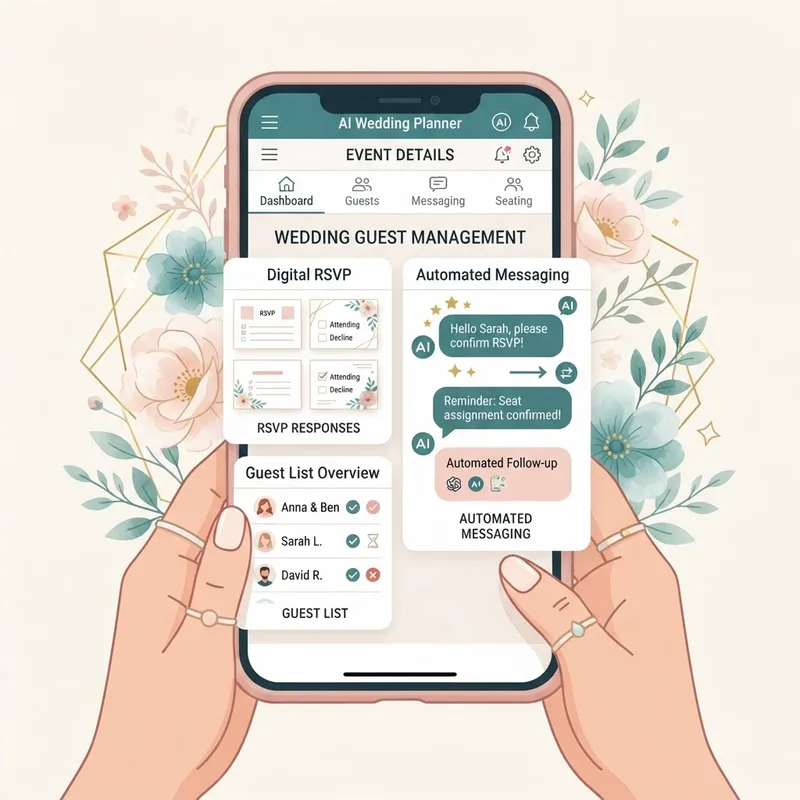
AI-driven guest tools can:
- Send automated, personalized RSVP reminders based on who has not responded.
- Predict final headcount using historical response patterns, improving catering accuracy.
- Flag dietary conflicts and group guests logically for seating.
- Answer common guest questions (dress code, parking, timing) through a shared chatbot.
Accurate headcount prediction matters more than couples realize. Catering is often billed per head, so shaving even a small percentage of over-ordering can save hundreds of dollars while reducing food waste.
AI Budgeting: Spending Smarter, Not Just Less
Budget overruns are one of the most common wedding regrets. AI budgeting tools help by modeling your spending in real time and predicting where costs are likely to creep.
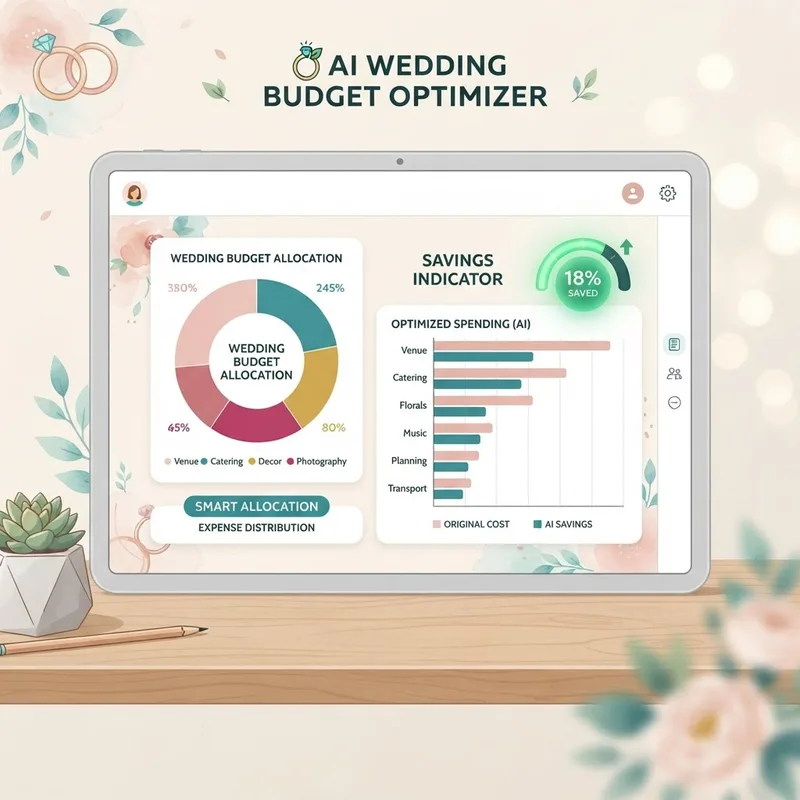
A good AI budget assistant will:
- Allocate your total budget across categories based on regional averages.
- Alert you when a category is trending over its cap.
- Suggest trade-offs, such as reallocating flower spending toward photography.
- Forecast final totals based on your confirmed contracts and pending items.
This predictive approach reflects a key principle we see across our automation work: the most valuable AI is not the kind that simply cuts costs, but the kind that helps you make informed trade-offs aligned with what you value most. A couple who cares deeply about photos and less about favors can shift money confidently instead of guessing.
AI Seating Charts and Logistics
The seating chart is the puzzle that breaks many couples. Family dynamics, friend groups, and accessibility needs all collide. AI seating tools treat this as an optimization problem, arranging guests to maximize compatibility and minimize conflict.
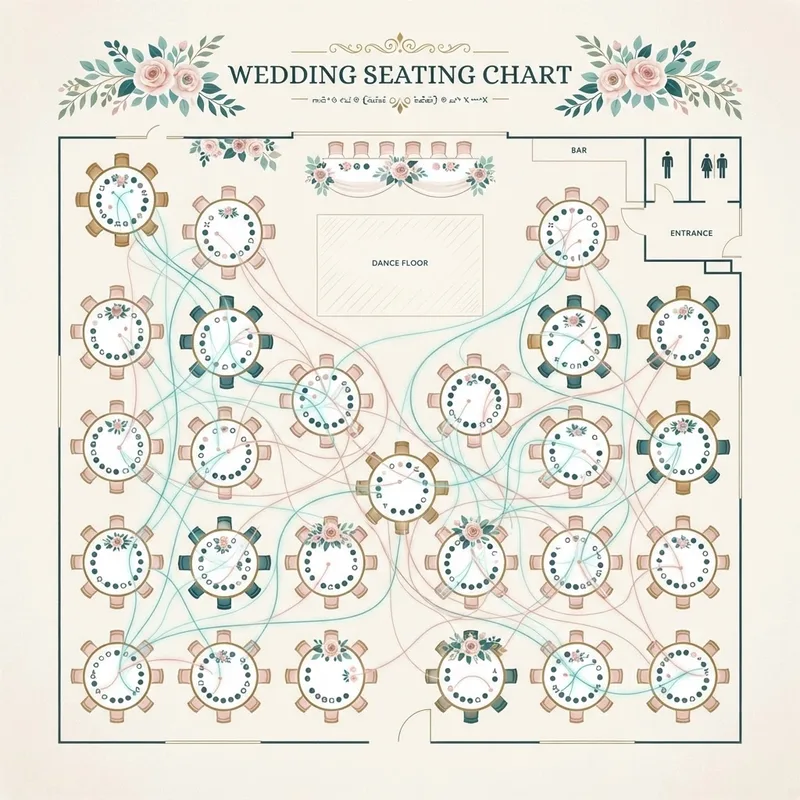
You input relationships and constraints, such as "keep divorced parents apart" or "seat college friends together," and the system generates a workable layout in seconds. When one guest cancels, the chart rebalances instantly rather than forcing a full redo. This is the same category of constraint-solving used in complex scheduling software, applied to a very human problem.
AI in Wedding Photography and Video
AI has quietly transformed post-production. Photographers now use AI to cull thousands of shots, automatically discarding blinks and blurry frames, then apply consistent color grading across an entire gallery.
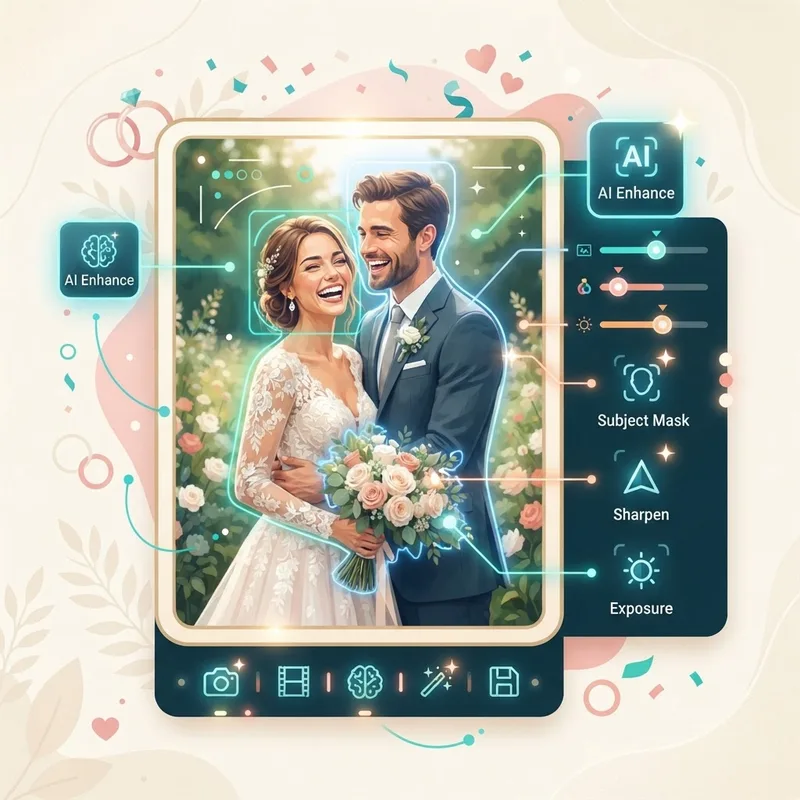
For couples, this means faster delivery of finished galleries, sometimes weeks sooner. AI upscaling can also rescue older or lower-resolution family photos for slideshows, and AI video tools can auto-generate highlight reels synced to music. The creative eye still belongs to the photographer, but AI removes hours of tedious sorting.
The Human Side: What AI Should Not Replace
Here is the honest, experience-based caveat. AI is exceptional at logistics but should never own the emotional core of your wedding. Vows, cultural traditions, family sensitivities, and the feeling of a room are deeply human. Over-automating personal touches can make a wedding feel generic.
The best artificial intelligence wedding strategy is hybrid: let AI handle spreadsheets, reminders, and optimization, while you and your loved ones make the meaningful decisions. Treat AI as a capable assistant, not the decision-maker. This balance is exactly what separates helpful technology from hollow automation.

The Future of AI Weddings
The next wave is already emerging. Virtual reality venue tours let couples "walk" a space before booking. AI translation tools help multicultural and multilingual guests feel included in real time. Generative design is moving toward fully rendered previews of your reception, complete with lighting and floral arrangements, before a single decoration is purchased.
As adoption grows, expect AI planning features to become standard inside mainstream wedding platforms rather than niche add-ons. The couples who benefit most will be those who understand both the power and the limits of the technology.
Key Takeaways
- An artificial intelligence wedding uses AI to automate budgeting, vendor matching, guest management, seating, and photo editing.
- The average U.S. wedding costs around 33,000 dollars and takes roughly 200 hours to plan, so efficiency gains are significant.
- AI vendor matching can shrink shortlisting from weeks to hours using data-driven compatibility scoring.
- Predictive headcount and budgeting tools reduce catering waste and prevent common budget overruns.
- The strongest approach is hybrid: AI handles logistics while humans keep control of emotional and creative decisions.
Frequently Asked Questions (FAQ)
What is an artificial intelligence wedding?
An artificial intelligence wedding is one planned with AI tools that automate tasks like budgeting, vendor matching, guest tracking, seating charts, and photo editing. The AI handles repetitive logistics and data analysis, while the couple keeps control over creative, cultural, and emotional decisions that make the day personal.
Can AI really plan my entire wedding?
AI can plan most of the logistics, including timelines, budgets, vendor shortlists, and seating, but it should not plan everything. Vows, traditions, and emotional choices need a human touch. The best results come from using AI as an assistant while you make the meaningful, personal decisions yourself.
Is AI wedding planning expensive?
Many AI wedding features are built into free or low-cost planning apps, and premium tools are usually affordable compared to overall wedding costs. Because AI reduces catering waste, budget overruns, and wasted vendor outreach, it often saves couples far more money than the tools themselves cost.
How does AI help with wedding budgets?
AI budgeting tools allocate your total across categories using regional averages, then track spending in real time. They alert you when a category trends over budget, suggest smart trade-offs, and forecast your final total based on confirmed contracts, helping you avoid the overruns that cause common wedding regrets.
Will AI make my wedding feel impersonal?
Not if you use it correctly. AI should handle logistics like scheduling and headcounts, not emotional details. When you reserve creative choices, family traditions, and personal moments for yourselves, AI simply removes stress and busywork, leaving you more time and energy to focus on what makes your wedding meaningful.