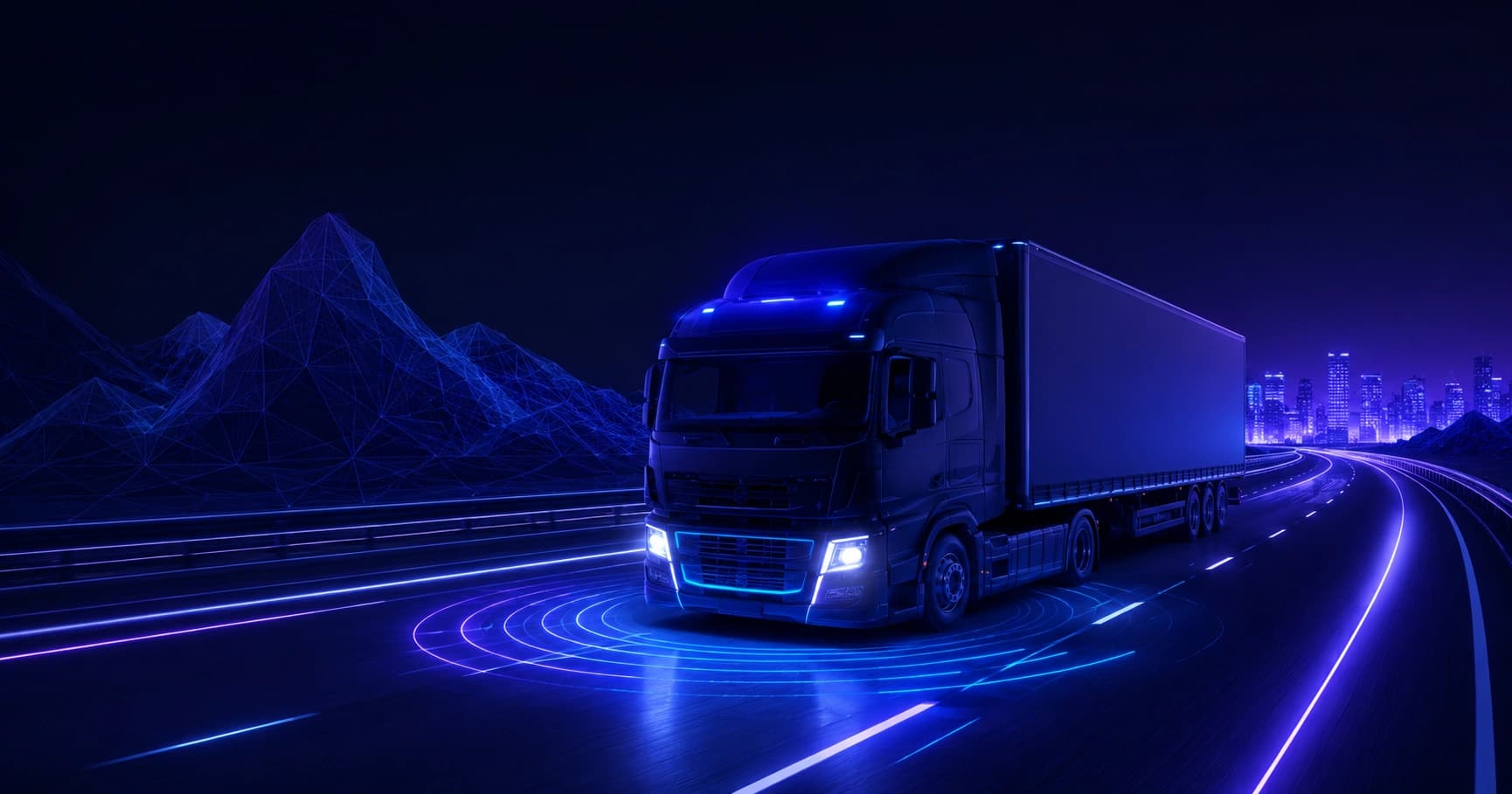
A clear, expert guide to artificial intelligence truck driving: how autonomous trucks work, real safety and cost data, key challenges, and what the future holds.
Artificial Intelligence Truck Driving
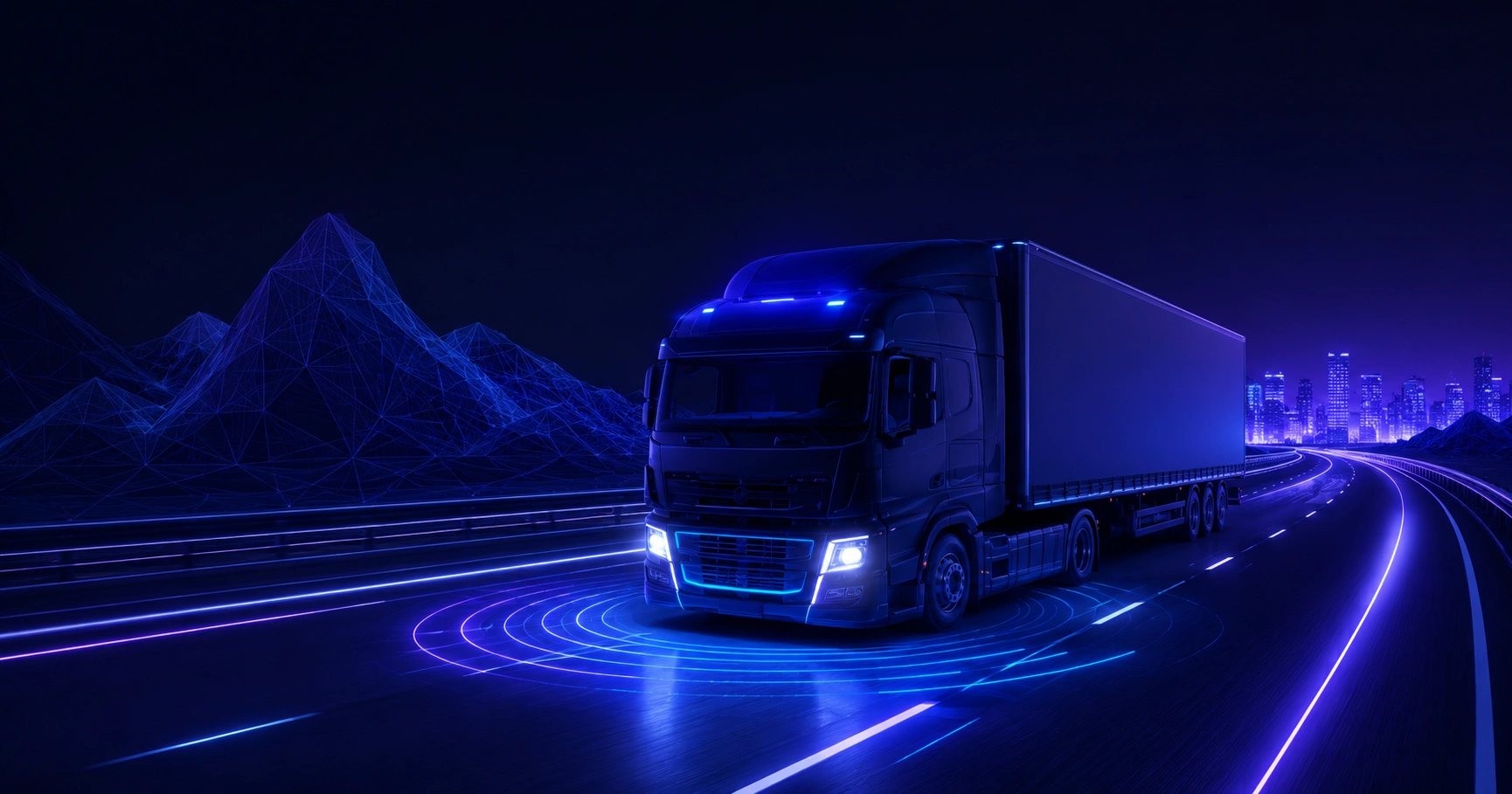
Artificial intelligence truck driving is no longer a science-fiction concept confined to demo tracks. Self-driving freight trucks are already hauling real cargo across highways in Texas, Arizona, and beyond, and the technology is reshaping how goods move across entire continents. If you drive, work in logistics, or simply want to understand where transportation is heading, this guide explains exactly how AI takes the wheel, what it can and cannot do today, and why it matters for the economy.
At ZoneTechify we work with businesses adopting AI-driven automation every day, and the trucking sector is one of the clearest examples of machine learning solving a genuine, expensive, human problem. Let's break it down in plain language.
Quick Answer: Artificial intelligence truck driving uses cameras, LiDAR, radar, and machine-learning software to perceive the road, plan routes, and control a truck with little or no human input. It aims to improve highway safety, cut costs, and ease driver shortages, though full autonomy is still emerging.
What Is Artificial Intelligence Truck Driving?
Artificial intelligence truck driving is the use of self-learning software and sensor systems to operate a commercial truck without continuous human control. Instead of a driver reacting to the road, an AI "driving stack" perceives the environment, predicts what other vehicles will do, decides on an action, and physically controls steering, braking, and acceleration.
The key term to understand is the autonomous driving stack — the layered software that turns raw sensor data into driving decisions. It typically includes perception (seeing the world), localization (knowing precisely where the truck is), prediction (anticipating other road users), planning (choosing a safe path), and control (executing the maneuver). Each layer is powered by machine-learning models trained on millions of real and simulated road miles.
Autonomy is measured on the SAE scale from Level 0 (no automation) to Level 5 (full automation anywhere). Most commercial autonomous trucks today target Level 4, meaning the truck drives itself within a defined area — usually highway corridors — with no human needed inside that zone.
How Do Self-Driving Trucks Actually Work?
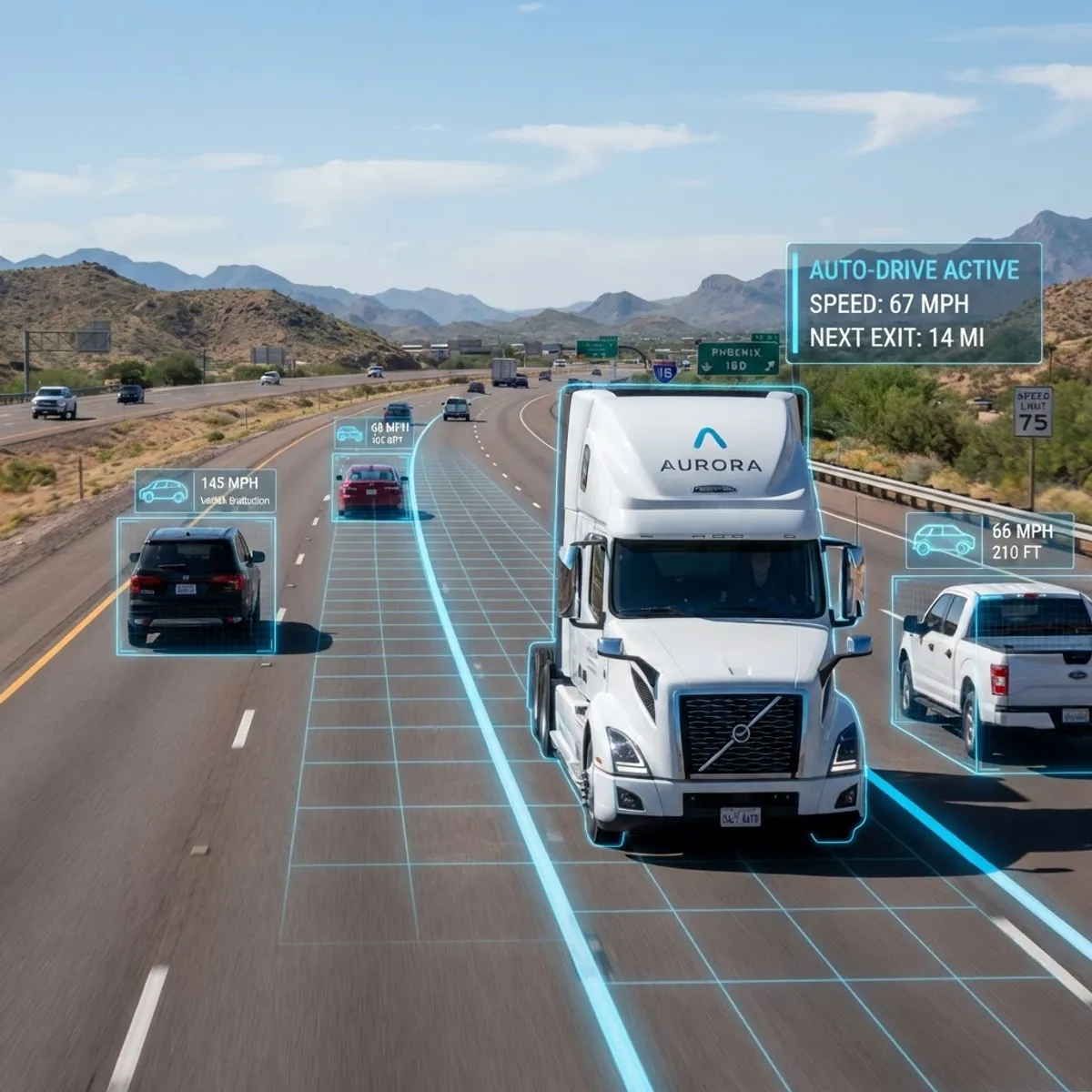
Self-driving trucks combine hardware sensors with AI software in a continuous loop that repeats many times per second. The process is easier to grasp when broken into steps.
- Sense: Cameras, LiDAR, and radar capture a 360-degree view of the road, vehicles, lane lines, and obstacles.
- Perceive: Deep-learning models classify what each object is — a car, pedestrian, cone, or debris — and measure distance and speed.
- Predict: The system forecasts where nearby vehicles are likely to move in the next few seconds.
- Plan: A path-planning algorithm selects the safest, most efficient trajectory.
- Act: Drive-by-wire controls execute steering, braking, and throttle commands.
This loop runs continuously, and because software never gets tired, distracted, or emotional, it can maintain consistent attention across long hauls where human fatigue is the leading risk factor.
The Sensors Behind the Intelligence
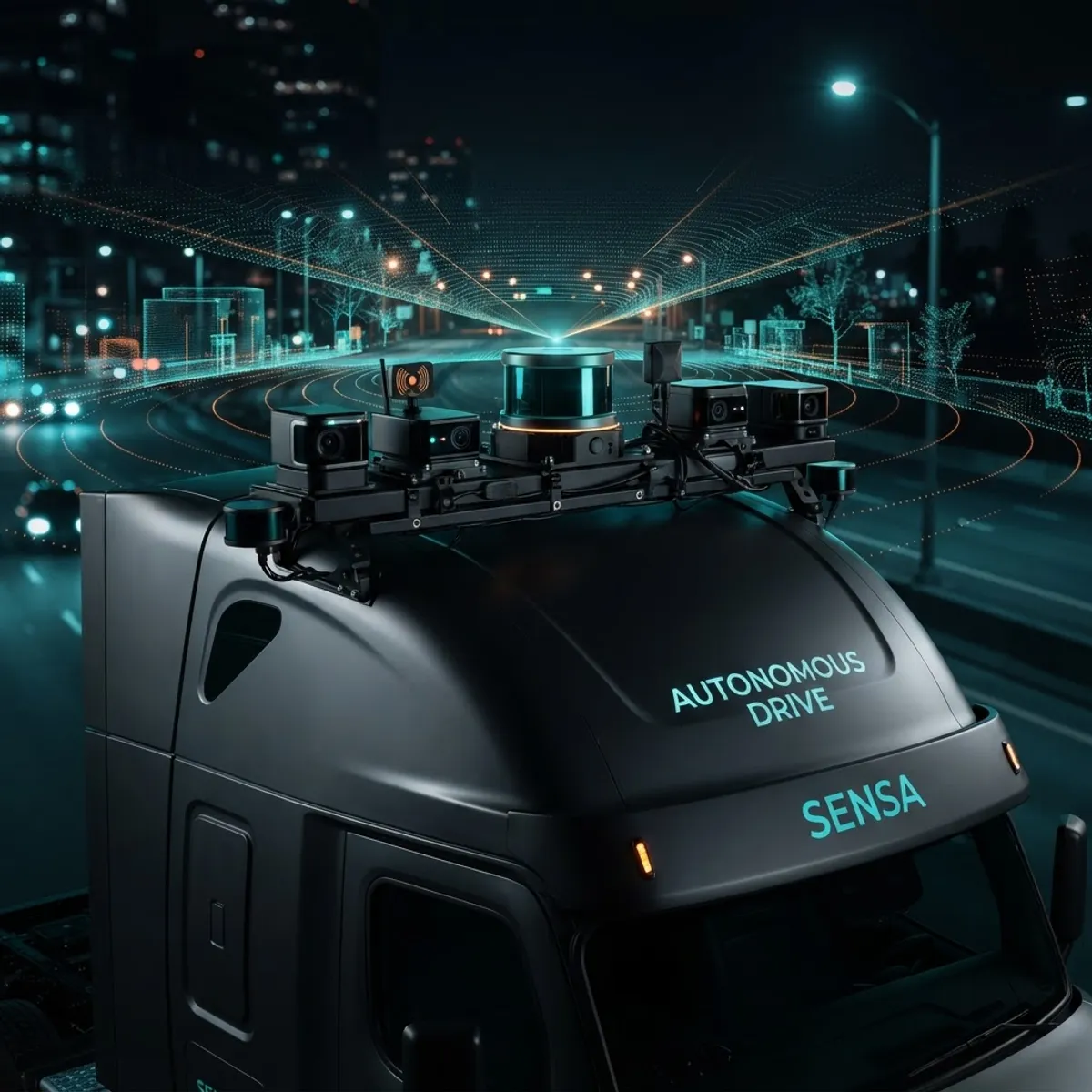
Sensors are the eyes and ears of an autonomous truck. LiDAR (Light Detection and Ranging) fires laser pulses to build a precise 3D map of surroundings, even in darkness. Radar excels at measuring speed and works well in rain or fog. Cameras read color, text, and traffic signals. AI fuses all three streams — a technique called sensor fusion — so a weakness in one sensor is covered by the strengths of another.
Why the Trucking Industry Is Turning to AI
The trucking industry is embracing AI because it addresses three costly, persistent problems at once: safety, labor shortages, and operating expenses.
Safety is the biggest driver. According to the U.S. Federal Motor Carrier Safety Administration, large trucks are involved in thousands of fatal crashes each year, and driver-related factors such as fatigue and distraction are among the leading causes. Since AI systems don't experience drowsiness, they target the exact failure point that causes many highway collisions.
Labor is the second pressure. The American Trucking Associations has reported an industry driver shortage in the tens of thousands, projected to grow substantially over the coming decade as experienced drivers retire faster than new ones are recruited. Autonomous trucks help fill long-haul highway routes that are hardest to staff.
Cost is the third. Fuel, labor, and idle time make up the majority of per-mile expenses. AI can optimize speed and braking to reduce fuel burn, and driverless highway operation removes the federally mandated hours-of-service limits that force human drivers to stop and rest.
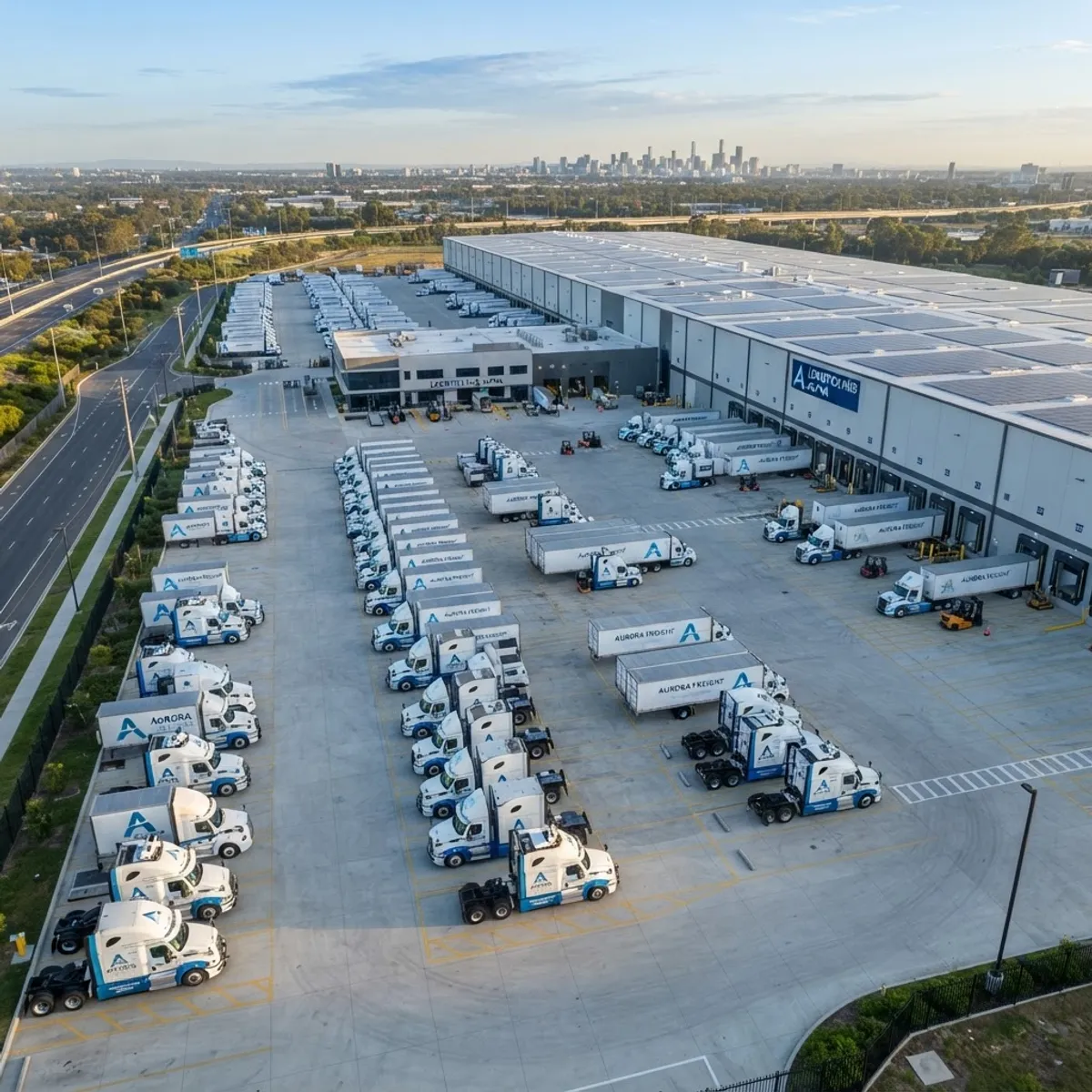
AI Truck Driving vs. Human Truck Driving
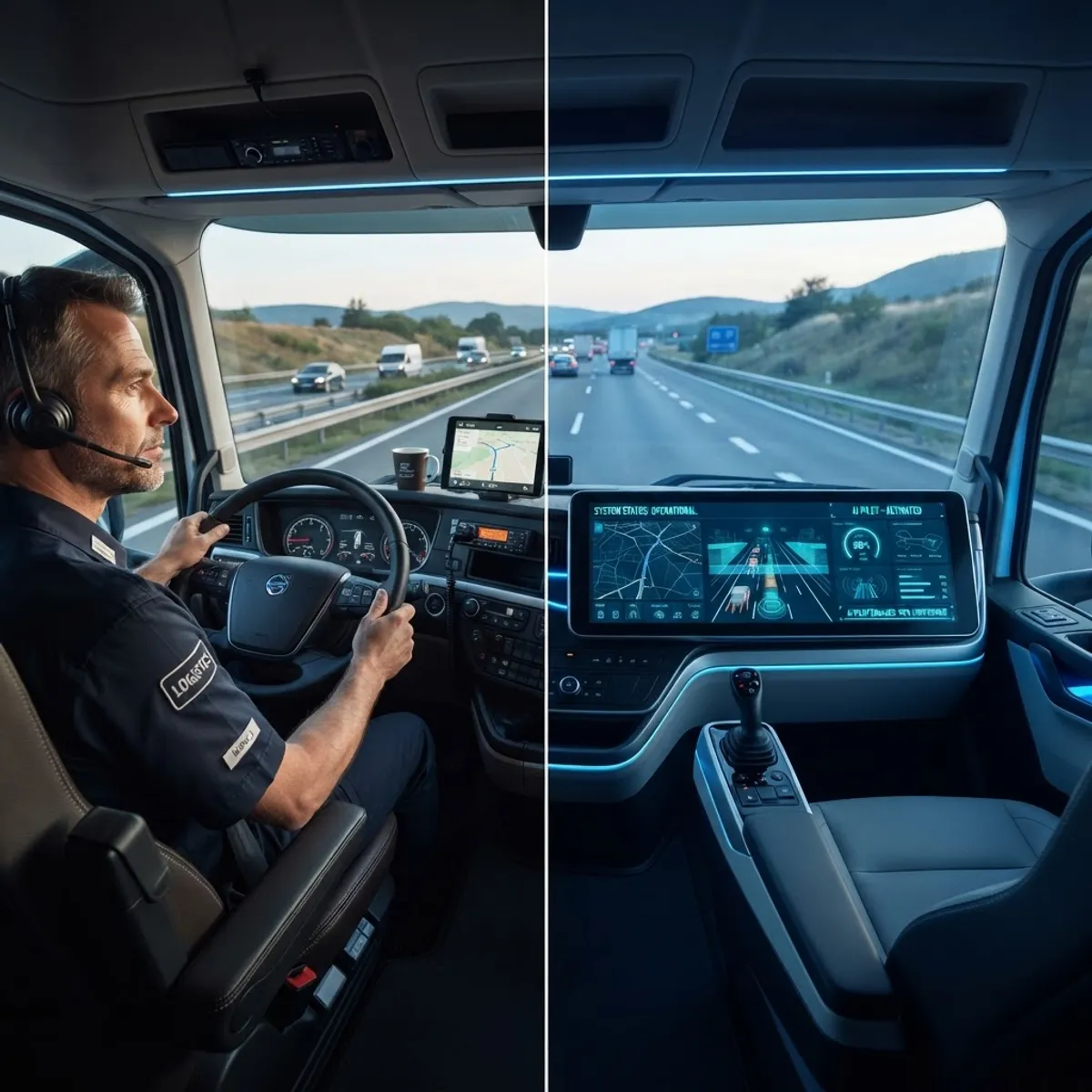
Both AI and human drivers have distinct strengths. The table below compares them across the factors that matter most to fleet operators.
| Factor | AI Truck Driving | Human Truck Driving |
|---|---|---|
| Fatigue | Never tires | Limited by rest rules |
| Attention | Constant 360-degree awareness | Can be distracted |
| Complex city streets | Still limited | Highly capable |
| Reaction time | Milliseconds | Slower, variable |
| Unusual situations | Struggles with edge cases | Adapts with judgment |
| Operating hours | Nearly continuous | Capped by regulation |
| Upfront cost | High hardware investment | Lower entry cost |
The realistic near-term model is collaboration, not replacement. AI handles predictable highway miles while human drivers manage the complex first and last miles through cities, docks, and loading zones. This hybrid approach is where most of the industry is investing today.
The Real Challenges Still Facing Autonomous Trucks
Despite rapid progress, autonomous trucks face serious hurdles that prevent instant, widespread adoption. Being honest about these limitations is essential.
- Edge cases: Rare, unpredictable events — a mattress falling off a vehicle, unusual construction zones, or hand signals from a police officer — remain difficult for AI to handle reliably.
- Weather: Heavy snow, dense fog, and glare can degrade sensor performance, though radar and sensor fusion continue to improve resilience.
- Regulation: Autonomy laws differ by state and country, creating a patchwork that complicates cross-border routes.
- Public trust: Surveys consistently show many drivers remain wary of sharing highways with driverless trucks.
- Cybersecurity: A connected, software-driven truck must be hardened against hacking and data breaches.
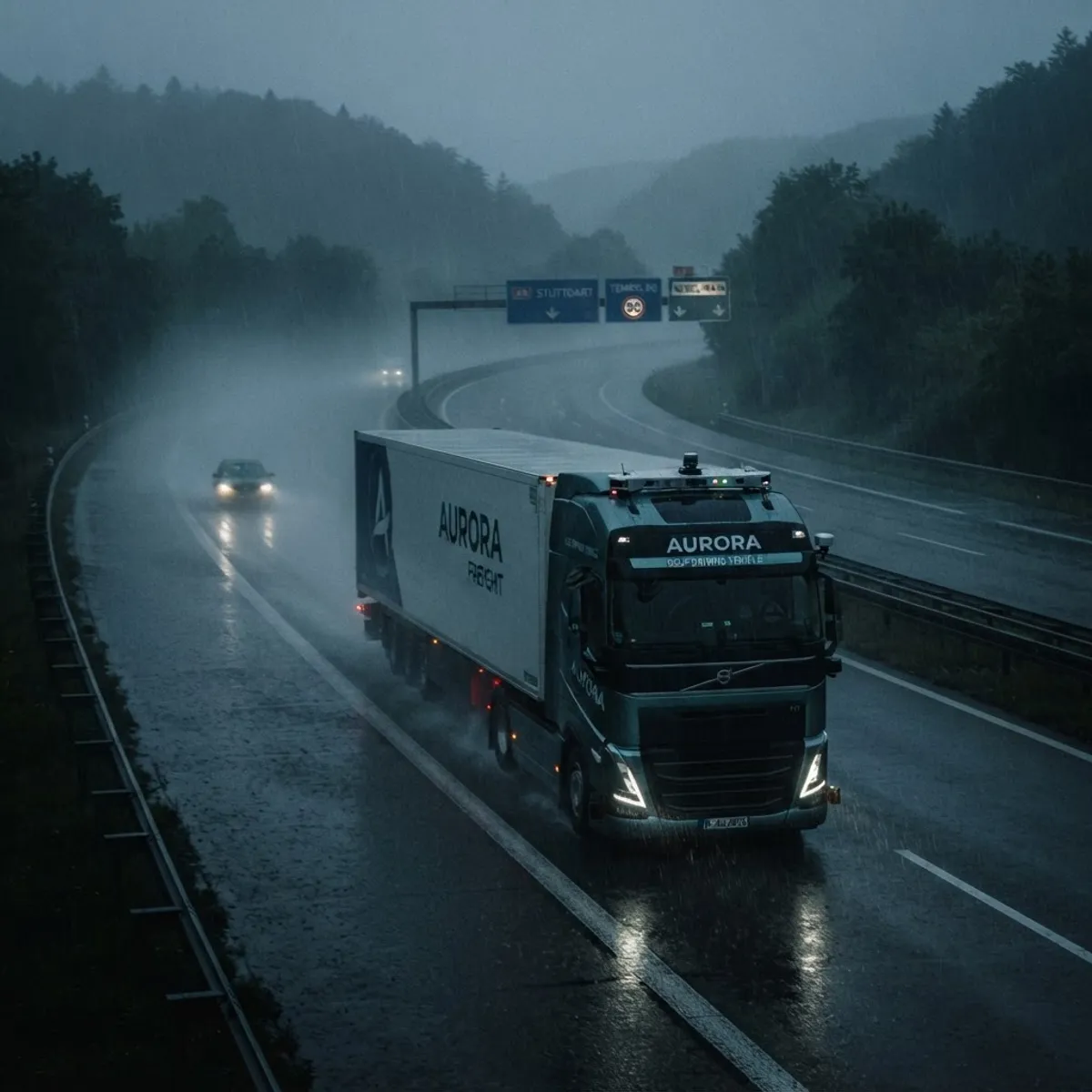
These challenges are why most companies deploy trucks on carefully mapped, sun-belt highway corridors first — the environments where the technology is safest and most reliable today.
The Future of AI Truck Driving
The future of AI truck driving points toward gradual, corridor-by-corridor expansion rather than an overnight revolution. Expect autonomous trucks to dominate specific long-haul routes while humans continue to own complex urban delivery for years to come.
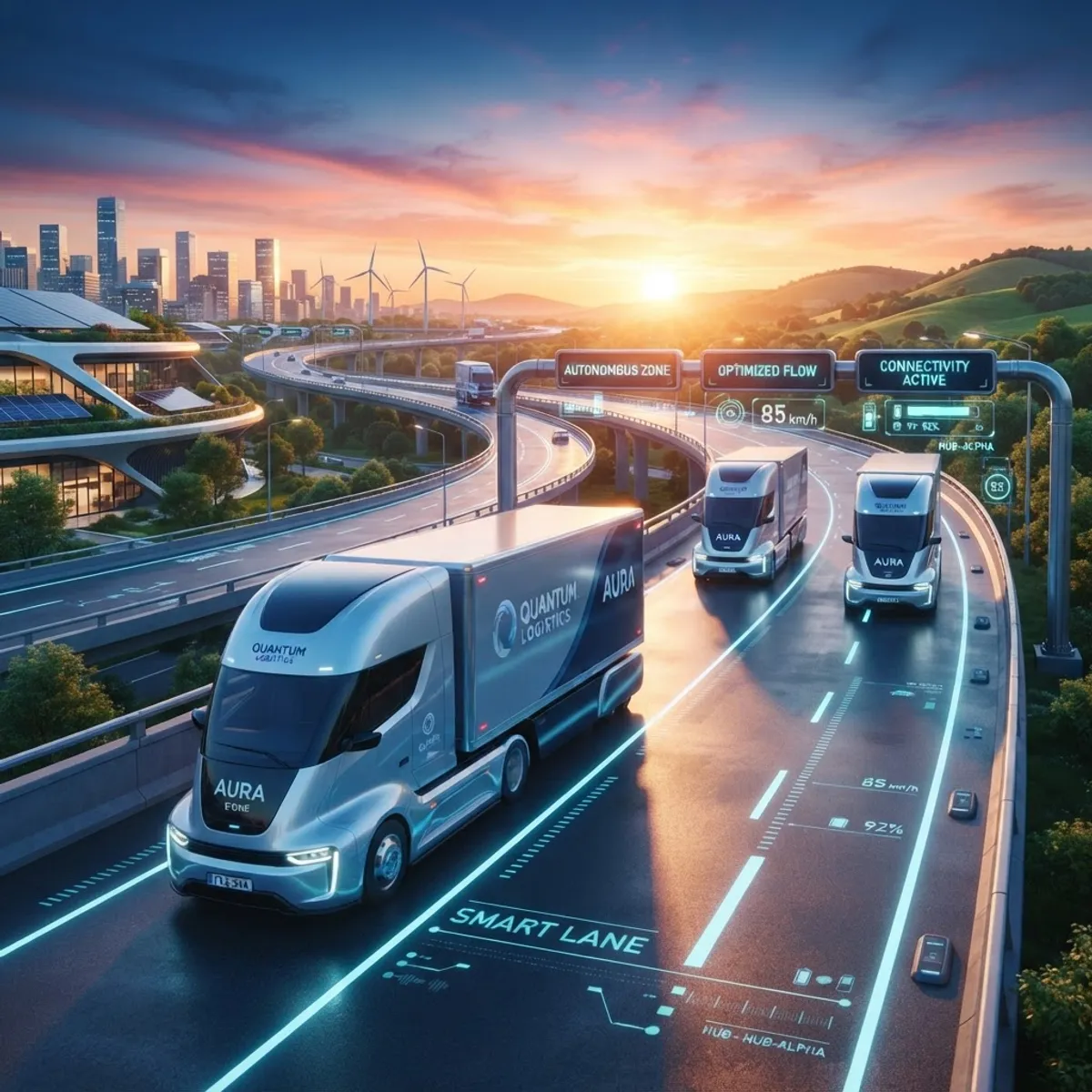
Electric and autonomous technology will increasingly converge, pairing zero-emission powertrains with self-driving software for cleaner, cheaper freight. Smart-highway infrastructure — connected sensors and vehicle-to-everything (V2X) communication — will further boost reliability. For businesses planning to integrate machine learning into operations, partnering with experienced teams such as WebPeak and exploring dedicated AI development services is the practical first step toward automation readiness.
How AI Improves Trucking Safety and Efficiency
AI improves trucking by turning every trip into measurable, optimizable data. Beyond driving itself, fleets use AI for predictive maintenance — flagging a failing part before it breaks down — and for route optimization that trims fuel use and delivery times.
Driver-assistance features already common in modern trucks, such as automatic emergency braking, lane-keeping, and blind-spot monitoring, are early forms of the same technology. These systems have demonstrably reduced rear-end collisions, proving that even partial automation delivers real safety returns today, long before full autonomy arrives.
Key Takeaways
- Artificial intelligence truck driving uses sensor fusion (LiDAR, radar, cameras) and machine learning to perceive, plan, and control a truck.
- Most commercial autonomous trucks target Level 4 autonomy, self-driving within defined highway corridors.
- The technology addresses three big problems: highway safety, driver shortages reported in the tens of thousands by the American Trucking Associations, and operating costs.
- Driver fatigue and distraction — leading crash causes per the FMCSA — are exactly what AI is designed to eliminate.
- Near-term reality is human-AI collaboration: AI handles highways, humans handle cities.
- Key challenges remain: edge cases, severe weather, regulation, public trust, and cybersecurity.
Frequently Asked Questions (FAQ)
Are AI-driven trucks legal on public roads?
In many U.S. states, autonomous trucks can legally operate on public highways, often within pilot programs or specific corridors. Rules vary widely by state and country, so companies must follow local regulations. Fully driverless operation without any safety driver is still being expanded region by region under close oversight.
Will AI completely replace truck drivers?
Not in the near future. The realistic model is collaboration: AI handles long, predictable highway stretches while human drivers manage complex city streets, docks, and loading. Drivers are also shifting into roles like remote monitoring and fleet oversight, so the profession is evolving rather than disappearing overnight.
How safe are self-driving trucks compared to human drivers?
AI trucks never get tired, distracted, or emotional, directly targeting the top causes of human-error crashes. They also maintain constant 360-degree awareness. However, they still struggle with rare edge cases and harsh weather, which is why most operate on carefully mapped, well-tested highway routes today.
What sensors do autonomous trucks use?
Autonomous trucks rely on three main sensor types: LiDAR for precise 3D mapping, radar for measuring speed and seeing through rain or fog, and cameras for reading signs and colors. AI fuses all three streams together, a process called sensor fusion, so the system stays reliable even if one sensor is limited.
When will fully autonomous trucks be common?
Experts expect gradual, corridor-by-corridor rollout rather than sudden adoption. Level 4 trucks are already hauling freight on select routes, and expansion will continue through the coming decade. Widespread everyday presence depends on improving edge-case handling, weather performance, regulation, and public trust before scaling nationwide.