
A guided artificial intelligence tour through machine learning, neural networks, NLP, computer vision, and generative AI, with practical steps to explore each field.
Artificial Intelligence Tour

Artificial intelligence can feel overwhelming when you first approach it, because the field spans everything from spam filters to self-driving cars. The best way to understand it is not to memorize definitions but to take a structured artificial intelligence tour — a guided walk through the core “stops” that make up modern AI. In this article, I map that route the way an experienced practitioner would, so you leave knowing what each area does, why it matters, and how to explore it yourself.
Quick Answer: An artificial intelligence tour is a structured walk through AI's core fields — machine learning, neural networks, natural language processing, computer vision, and generative AI. It helps beginners and businesses understand how each area works, where it applies, and how to adopt AI tools with clarity and confidence.
What Is an Artificial Intelligence Tour?
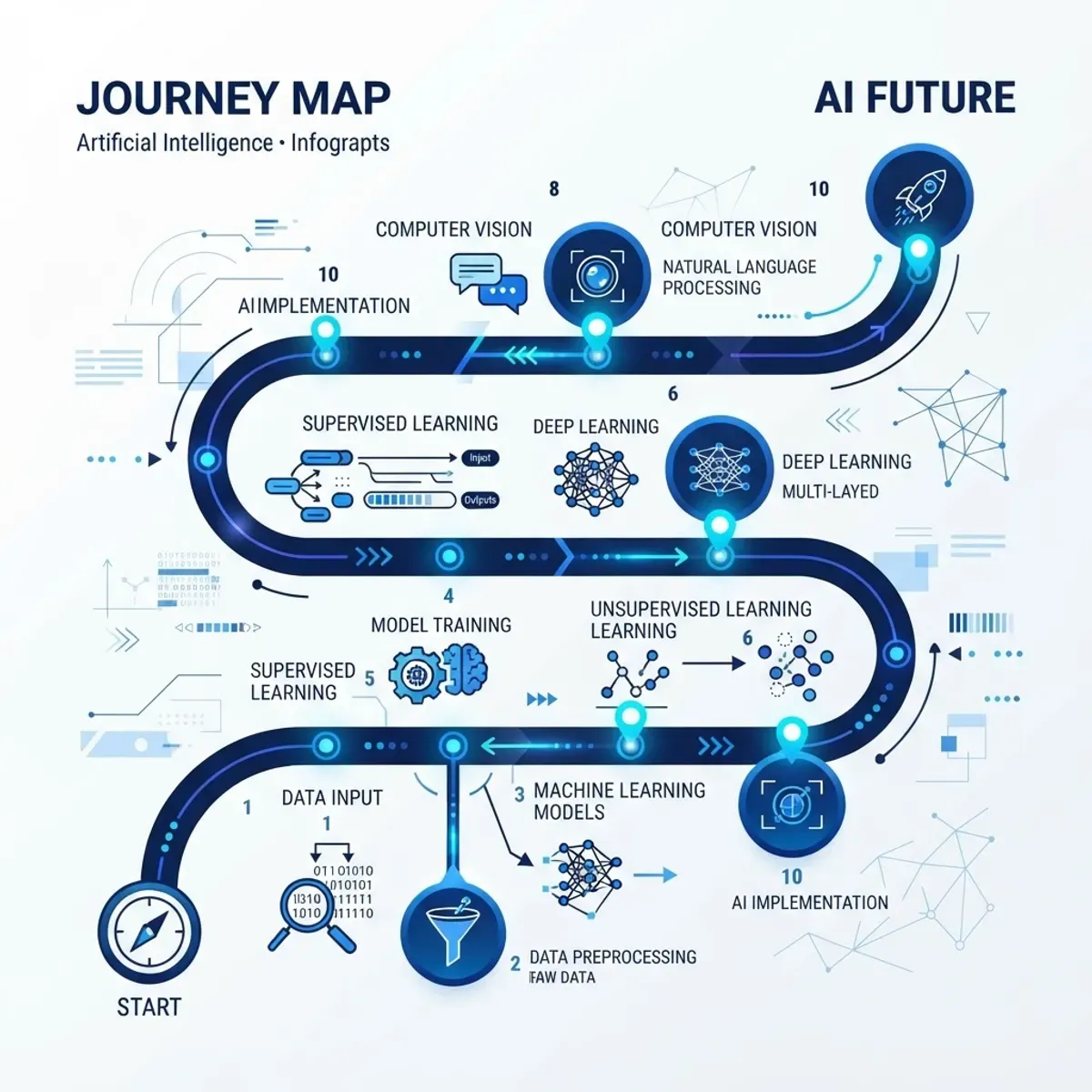
An artificial intelligence tour is a learning framework that organizes the sprawling AI landscape into a logical sequence of connected topics. Instead of jumping randomly between buzzwords, you follow a path: foundational concepts first, then specialized subfields, then real-world applications and the future. This approach mirrors how AI actually builds on itself — neural networks depend on machine learning, and generative AI depends on both.
Definition: Artificial intelligence (AI) is the ability of computer systems to perform tasks that normally require human intelligence, such as recognizing speech, making decisions, and identifying patterns in data.
The tour matters because AI adoption is no longer optional. According to McKinsey's 2024 global survey, 65% of organizations reported regularly using generative AI — nearly double the figure from the previous year. Understanding the terrain before you invest saves money and prevents the common mistake of buying tools you don't actually need.
Why Take an AI Tour in 2026?
Taking a deliberate tour beats piecemeal learning for three concrete reasons. First, it gives you vocabulary that lets you evaluate vendors honestly. Second, it reveals which AI capability solves your specific problem. Third, it protects you from hype — you learn what AI genuinely does well versus what it merely promises.
The stakes are real. According to Stanford's AI Index, private investment in generative AI reached roughly $25.2 billion in 2023, an eightfold jump from 2022. When that much capital flows into a field, the surrounding marketing noise grows just as fast. A tour gives you a filter.
If you run a business and want expert guidance rather than trial and error, teams like ZoneTechify and WebPeak help organizations map AI to actual outcomes instead of chasing trends.
Stop 1: Machine Learning — The Engine Room
Machine learning (ML) is the first stop because almost everything else depends on it. Rather than being explicitly programmed with rules, an ML model learns patterns from data and improves its predictions over time.
Definition: Machine learning is a subset of AI where systems learn from examples and data instead of following hand-coded instructions.
There are three main learning styles you will encounter on this stop:
- Supervised learning — the model learns from labeled examples (e.g. emails tagged “spam” or “not spam”).
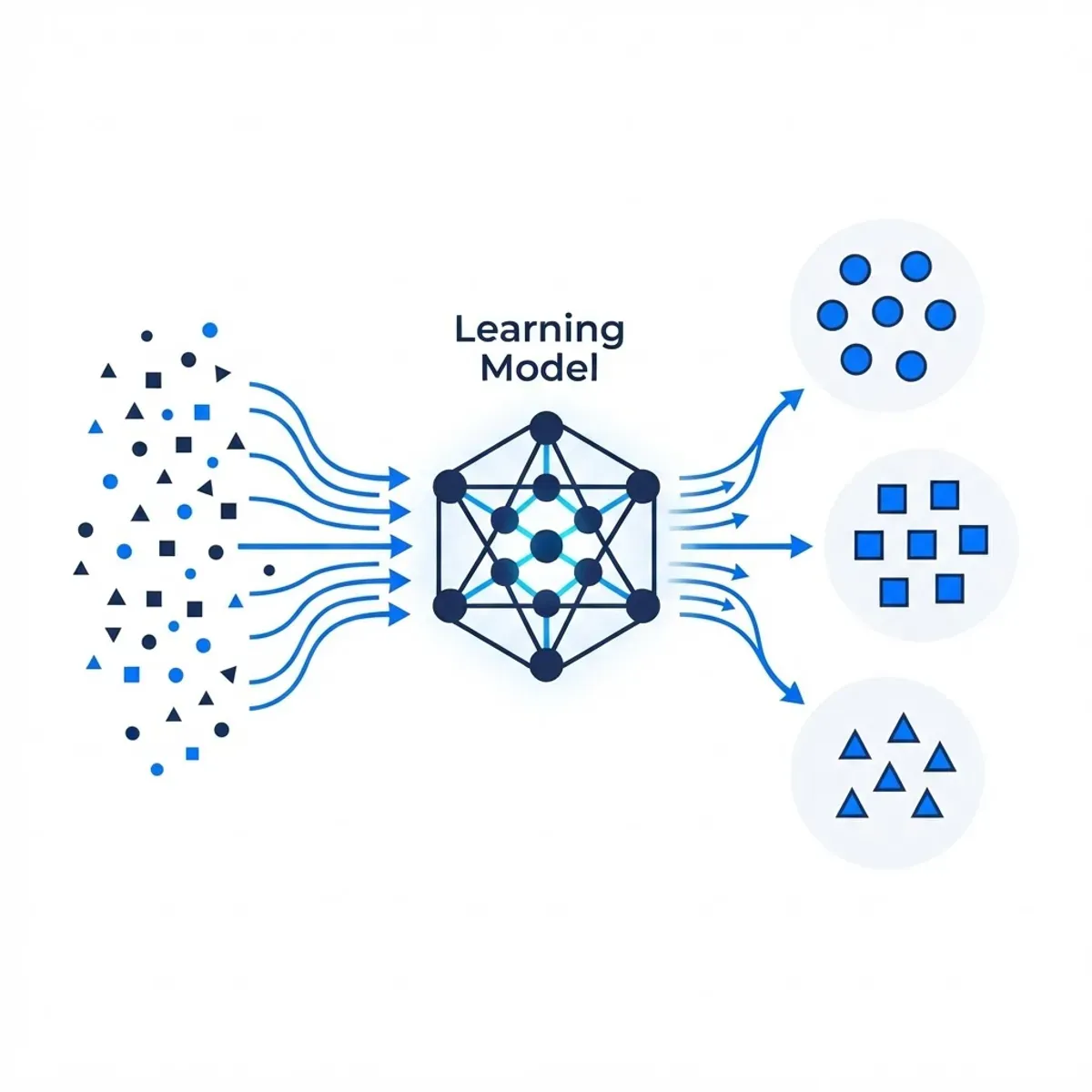
- Unsupervised learning — the model finds hidden structure in unlabeled data (e.g. grouping customers by behavior).
- Reinforcement learning — the model learns by trial, reward, and error (e.g. game-playing agents).
In my experience advising early adopters, most business problems — churn prediction, demand forecasting, fraud detection — are solved with plain supervised learning, not exotic techniques. Starting simple almost always wins.
Stop 2: Neural Networks and Deep Learning
The second stop explains how AI handles messy, high-dimensional data like images and audio. Neural networks are computing systems loosely inspired by the human brain, built from layers of connected “neurons” that pass signals forward and adjust their strength during training.
Definition: Deep learning is machine learning that uses neural networks with many layers to automatically learn complex features from raw data.
Deep learning is why voice assistants understand you and why medical imaging tools can flag anomalies. The trade-off is that deep models need large datasets and significant computing power. That is a critical thing to understand on your tour: deep learning is powerful, but it is not always the most efficient answer for small, structured datasets where simpler models perform just as well at a fraction of the cost.

Stop 3: Natural Language Processing (NLP)
Natural language processing is the stop where machines learn to read, understand, and generate human language. Every chatbot, translation app, and voice search feature you use is powered by NLP.
Definition: Natural language processing (NLP) is the branch of AI focused on enabling computers to interpret and produce human language in text or speech.
Modern NLP is dominated by large language models (LLMs) built on the transformer architecture introduced by Google researchers in 2017. These models power tools such as ChatGPT, Gemini, and Claude. On the tour, the key insight is that LLMs predict likely text rather than “know” facts — which is exactly why they can sound confident while being wrong. Treating their output as a draft to verify, not a final truth, is the professional way to use them.

Stop 4: Computer Vision
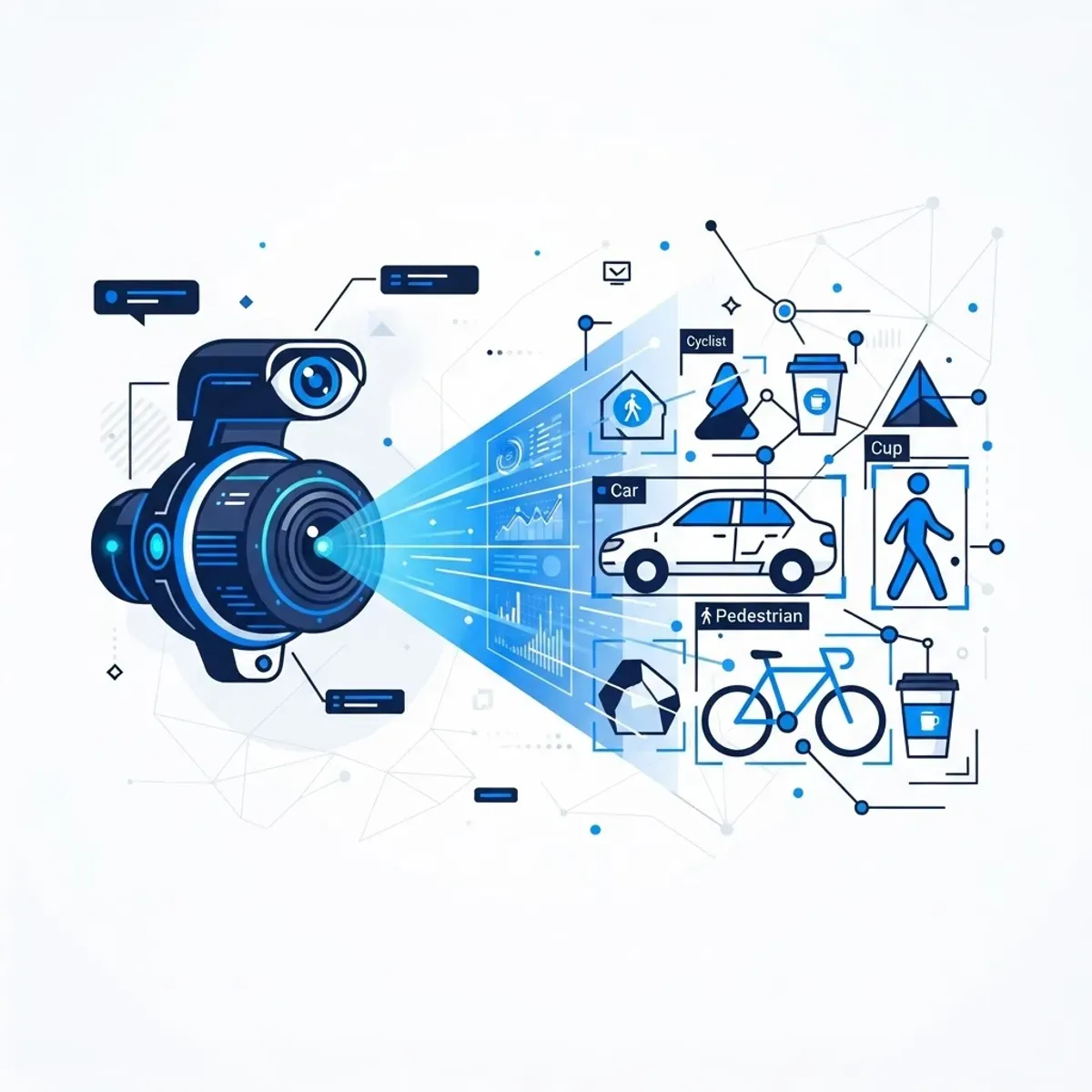
Computer vision teaches machines to interpret visual information the way humans interpret what they see. This stop covers image classification, object detection, facial recognition, and scene understanding.
Definition: Computer vision is the field of AI that enables machines to extract meaning from images and video.
Practical applications are everywhere: quality inspection on factory lines, license-plate reading in parking systems, tumor detection in radiology, and cashier-less retail checkout. The lesson from this stop is that computer vision thrives when you can clearly define what “correct” looks like and gather enough labeled example images. Vague visual tasks with few examples remain genuinely hard, and no amount of budget changes that quickly.
Stop 5: Generative AI — The Creative Frontier
Generative AI is the most visible stop on the tour and the reason AI entered mainstream conversation. Unlike traditional AI that classifies or predicts, generative models create new content — text, images, code, audio, and video.
Definition: Generative AI is a category of models that produce original content based on patterns learned from training data.
This is where most businesses see the fastest return, because generative tools accelerate real work: drafting content, summarizing documents, writing code, and designing visuals. If you want to build these capabilities into a product or workflow, specialized help such as WebPeak's artificial intelligence services can shorten the path from idea to deployment. The honest caveat is that generative output still needs human review — it is an amplifier of skilled people, not a replacement for judgment.

Comparing the Core AI Fields
The table below summarizes the stops so you can see, at a glance, where each field fits and what it demands.
| AI Field | Main Purpose | Example Use Case | Data Needs |
|---|---|---|---|
| Machine Learning | Predict from patterns | Fraud detection | Moderate, structured |
| Deep Learning | Learn complex features | Speech recognition | Large, high compute |
| NLP | Understand language | Chatbots, translation | Large text corpora |
| Computer Vision | Interpret images | Quality inspection | Labeled images |
| Generative AI | Create new content | Drafting, design, code | Very large, pre-trained |
Use this comparison as a decision aid: match your problem to the field, not the other way around.
How to Start Your Own Artificial Intelligence Tour
You can begin exploring AI today with a simple, low-risk plan. These steps reflect what actually works for beginners and teams:
- Pick one real problem you want AI to solve — not “use AI,” but a specific outcome.
- Match it to a field using the comparison table above.
- Experiment with existing tools before building anything custom.
- Measure results against a baseline so you know if AI actually helped.
- Scale only what works, and document what you learn along the way.
Starting with off-the-shelf tools rather than custom models is the single biggest time-saver I recommend. Most organizations discover their needs are met by existing platforms long before they require bespoke engineering.

The Future Stop: Where AI Is Heading
The final stop looks forward. Expect three trends to define the next phase: smaller and more efficient models that run on everyday devices, AI agents that can complete multi-step tasks autonomously, and stronger regulation around transparency and safety. The direction is clear — AI is becoming more embedded, more capable, and more accountable at the same time.
The practical takeaway is that continuous learning matters more than any single tool. The AI you use in two years will differ from today's, but the map you built on this tour will still guide you.
Key Takeaways
- An artificial intelligence tour organizes AI into five core stops: machine learning, deep learning, NLP, computer vision, and generative AI.
- According to McKinsey, 65% of organizations regularly used generative AI in 2024, nearly double the prior year.
- Stanford's AI Index reported roughly $25.2 billion in private generative AI investment in 2023, an eightfold rise from 2022.
- Match your problem to the right AI field first; start with existing tools before building custom systems.
- Generative AI accelerates skilled work but still requires human review and verification.
Frequently Asked Questions (FAQ)
What is an artificial intelligence tour?
An artificial intelligence tour is a structured way to learn AI by moving through its core fields in a logical order. It covers machine learning, neural networks, NLP, computer vision, and generative AI, helping you understand what each does and how they connect before you adopt any tools.
Do I need coding skills to understand AI?
No, you do not need coding to understand AI conceptually or to use most modern tools. Many platforms offer no-code interfaces. Coding becomes helpful only when you build custom models, but understanding what each AI field does is entirely possible without any programming background at all.
What is the difference between AI and machine learning?
AI is the broad goal of making machines act intelligently, while machine learning is one method to achieve it. Machine learning lets systems learn patterns from data instead of following fixed rules. All machine learning is AI, but not all AI relies on machine learning.
Which AI field should a business start with?
Most businesses should start with the field that matches a specific, measurable problem. For predictions use machine learning; for content and drafting use generative AI; for images use computer vision. Begin with existing tools, measure results against a baseline, then scale only what clearly works.
Is generative AI safe to rely on for important work?
Generative AI is powerful but not fully reliable, because it predicts likely output rather than verified facts. Treat its results as drafts that skilled humans review and confirm. Used this way, it dramatically speeds up work while keeping accuracy, accountability, and quality firmly under human control.
Final Thoughts
An artificial intelligence tour turns a confusing field into a clear, walkable path. Once you understand the five core stops and how they build on one another, you can evaluate tools honestly, avoid hype, and apply AI to problems that genuinely matter. Start small, measure everything, and keep exploring — the map you built here will stay useful as the technology grows.