
Discover how artificial intelligence is reshaping private equity, from AI deal sourcing and due diligence to portfolio management, risk scoring, and value creation.
Artificial Intelligence Private Equity

Private equity has always been a business of information advantage. The firm that finds the best deal first, prices risk most accurately, and improves a company fastest wins. Today, that advantage is increasingly powered by artificial intelligence. AI is no longer a back-office experiment for private equity (PE) firms, it is becoming the engine behind deal sourcing, due diligence, portfolio monitoring, and value creation. This guide explains exactly how AI is being used across the private equity lifecycle, where it delivers measurable returns, and what firms should do to adopt it responsibly.
We write this from hands-on experience helping investment and fintech teams deploy AI workflows. The goal here is practical clarity, not hype.
Quick Answer: Artificial intelligence in private equity uses machine learning, natural language processing, and predictive analytics to automate deal sourcing, accelerate due diligence, monitor portfolio performance, and forecast risk. It helps PE firms screen more targets faster, reduce manual research, and make data-driven investment decisions with greater accuracy.
What Is Artificial Intelligence in Private Equity?
Artificial intelligence in private equity refers to the use of machine learning models, natural language processing (NLP), and predictive analytics to support and automate investment decisions throughout the deal lifecycle. Instead of analysts manually reading thousands of company profiles, AI systems ingest structured and unstructured data, score opportunities, flag risks, and surface insights in minutes.
Key term definitions:
- Machine learning (ML): Algorithms that learn patterns from historical data to predict future outcomes, such as which companies are likely to be strong acquisition targets.
- Natural language processing (NLP): Technology that reads and interprets human language, used to analyze contracts, earnings calls, and news.
- Predictive analytics: Statistical models that forecast metrics like revenue growth, churn, or default risk.
Private equity is unusually well suited to AI because the work is data-heavy, repetitive at the research stage, and rich with historical deal outcomes that models can learn from.
Why AI Matters for Private Equity Right Now
The pressure on PE firms has intensified. According to Bain & Company, global private equity dry powder, the capital committed but not yet invested, has repeatedly exceeded record levels above 3.7 trillion dollars in recent years, creating fierce competition for quality assets. When more money is chasing similar deals, speed and precision become the differentiators.
At the same time, Deloitte has reported that a majority of surveyed private equity firms are actively investing in or piloting AI tools, signaling that AI adoption has moved from optional to expected. Firms that automate the earliest, most labor-intensive stages of the funnel can evaluate far more opportunities without expanding headcount proportionally.
The takeaway is simple: AI does not replace investment judgment, it expands the surface area a team can cover while sharpening the quality of what reaches the partners' desk.
AI-Powered Deal Sourcing and Origination

Deal sourcing is where AI delivers some of the clearest value. Traditionally, origination relied on networks, intermediaries, and analysts manually combing databases. AI changes the math by continuously scanning thousands of signals to surface targets that match a firm's thesis.
Modern AI sourcing systems can:
- Aggregate data from company registries, web traffic, hiring trends, patent filings, and financial databases.
- Score and rank targets against a firm's investment criteria, such as sector, growth rate, and EBITDA margins.
- Detect early signals like sudden hiring surges or funding gaps that indicate a company may be open to investment.
- Reduce false positives by learning from a firm's past deals, which ones closed, and which ones underperformed.
The practical result is a wider, smarter funnel. Instead of reviewing a few hundred companies a year, a team can systematically screen tens of thousands and focus human attention only on the highest-fit opportunities. For firms building these capabilities, partnering with specialists in artificial intelligence services can shorten the path from concept to working model.
Accelerating Due Diligence With Machine Learning
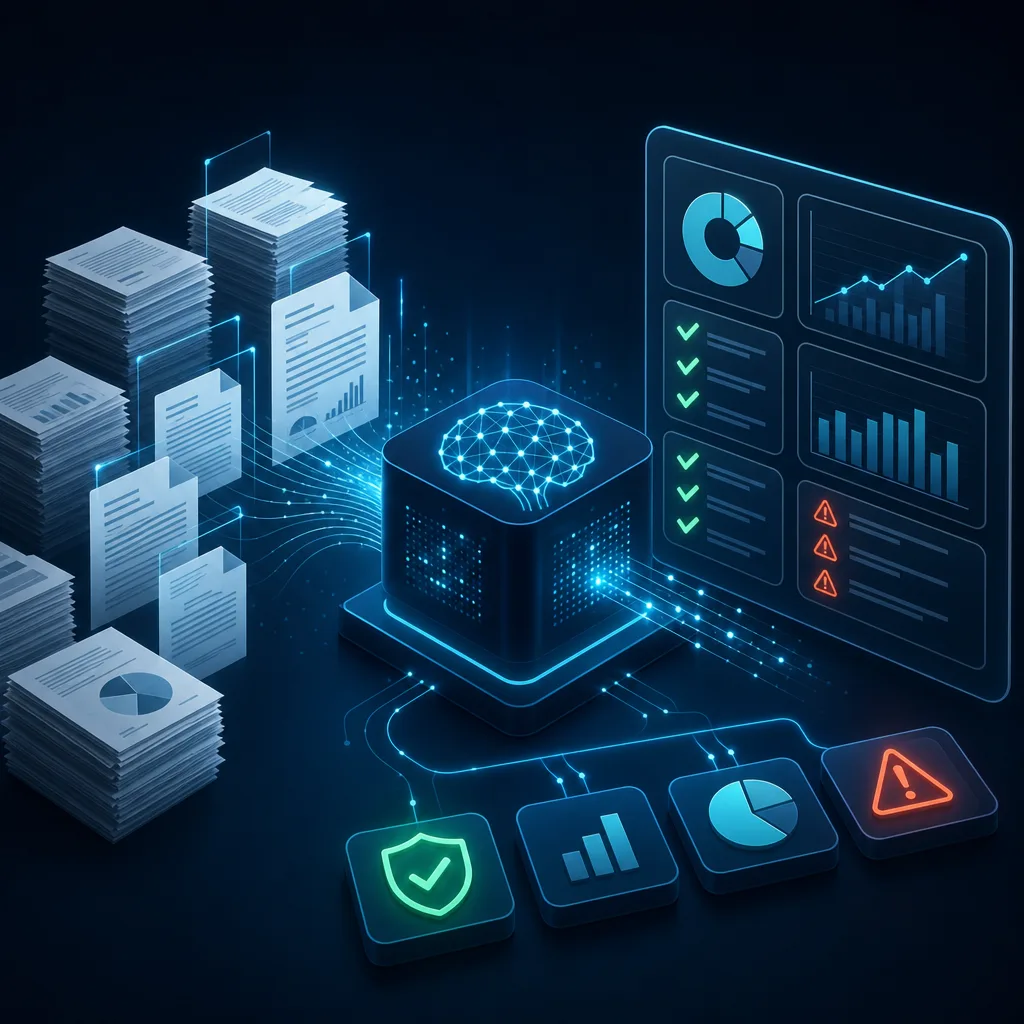
Due diligence is traditionally the most time-consuming and expensive stage of a deal. AI compresses weeks of manual document review into hours.
NLP models can read data rooms full of contracts, financial statements, and compliance documents, then extract key clauses, flag unusual terms, and summarize risks. Machine learning can benchmark a target's financials against thousands of comparable companies to detect anomalies that humans might miss.
Where AI adds the most diligence value:
- Contract analysis: Identifying change-of-control clauses, indemnities, and liabilities buried in legal documents.
- Financial anomaly detection: Spotting irregular revenue recognition or margin patterns.
- Sentiment and reputation analysis: Scanning news, reviews, and social data to assess brand and customer health.
- Customer concentration risk: Quickly mapping how dependent a target is on a few large accounts.
The critical point is that AI does not remove the need for expert reviewers. It removes the grunt work, so analysts spend their time on judgment-heavy questions rather than document hunting.
Smarter Portfolio Management and Value Creation

The value of a private equity investment is created after the deal closes. AI plays a growing role in monitoring and improving portfolio companies during the hold period.
Predictive analytics dashboards consolidate operational data across the portfolio, allowing firms to track KPIs in near real time and forecast performance. If a portfolio company's customer churn begins trending upward, AI models can flag it early, before it shows up in quarterly financials.
Beyond monitoring, AI helps drive operational improvements:
- Demand forecasting to optimize inventory and pricing.
- Customer segmentation to improve marketing efficiency.
- Process automation to reduce operating costs across finance, support, and HR.
- Cross-portfolio benchmarking to spread proven playbooks from one company to another.
This is where AI shifts from a screening tool to a genuine value-creation lever, directly affecting the returns a fund delivers to its limited partners.
AI in Investment Decision-Making
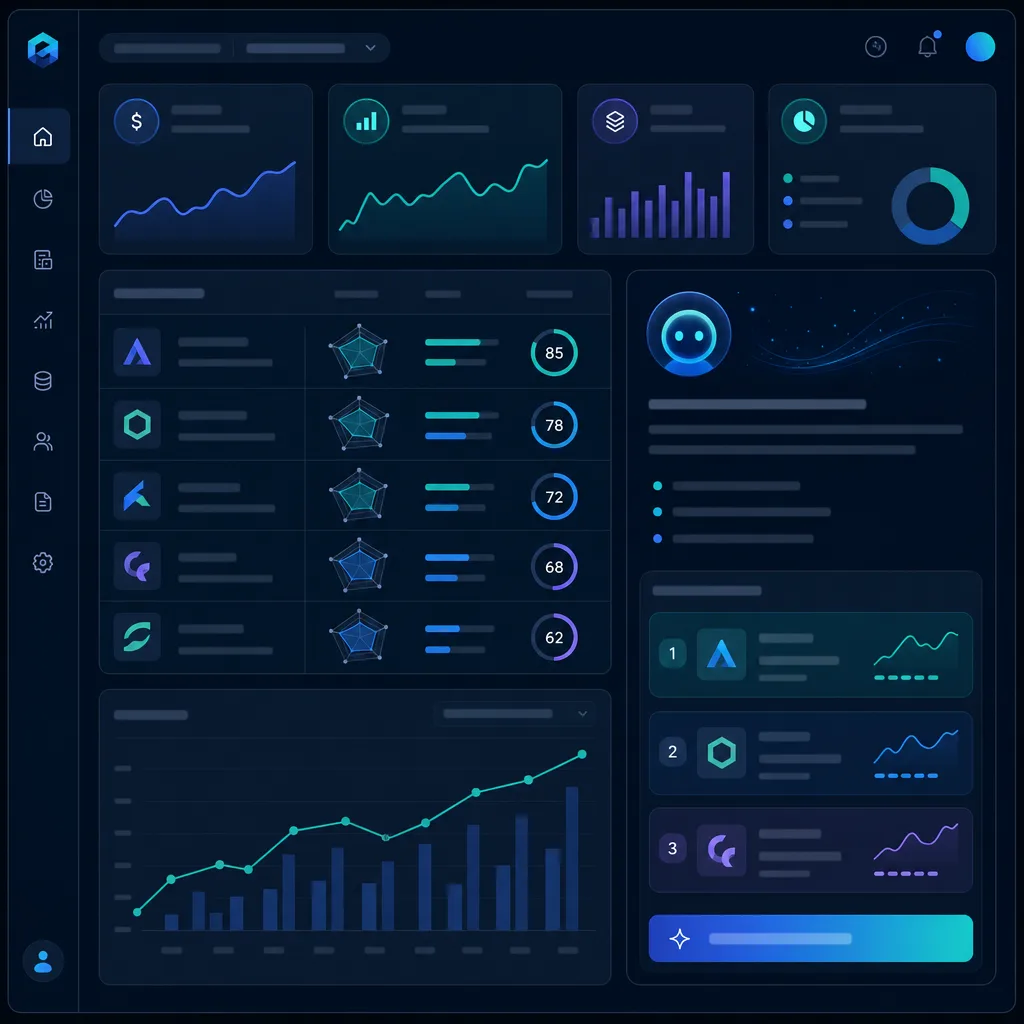
Investment committees increasingly rely on AI-assisted dashboards that consolidate valuation scenarios, comparable transactions, and risk scores into a single view. Rather than replacing the committee, these tools standardize how opportunities are evaluated and reduce the influence of cognitive bias.
A well-designed decision system presents the assumptions behind each recommendation, allowing partners to challenge inputs rather than accept a black-box output. Transparency here is essential, both for trust and for regulatory comfort.
Generative AI and Deal Screening

Generative AI has added a new layer to private equity workflows. Large language models can summarize lengthy CIMs (confidential information memorandums), draft investment memos, and answer natural-language questions about a target in seconds.
For example, an associate can ask, "Summarize this company's revenue concentration and top three risks," and receive a structured answer drawn directly from the data room. This accelerates the screening stage dramatically while keeping a human firmly in the loop to verify outputs.
The key discipline with generative AI is verification. Models can hallucinate, so outputs must be checked against source documents before they inform any decision.
Managing Risk With AI

Risk assessment is a natural fit for machine learning. Models trained on historical defaults, downturns, and deal outcomes can estimate the probability of underperformance and quantify exposure across a portfolio.
AI-driven risk tools help firms:
- Stress-test portfolios against macroeconomic scenarios.
- Detect early warning signals in covenant compliance.
- Monitor cybersecurity and operational risk across holdings.
- Quantify concentration and correlation risk across funds.
Used well, these systems turn risk management from a periodic, manual review into a continuous, data-driven process.
Traditional vs AI-Driven Private Equity
| Stage | Traditional Approach | AI-Driven Approach |
|---|---|---|
| Deal sourcing | Manual networks and database searches | Automated scanning and target scoring |
| Due diligence | Weeks of manual document review | Hours of NLP-assisted analysis |
| Portfolio monitoring | Quarterly manual reporting | Near real-time predictive dashboards |
| Risk assessment | Periodic manual review | Continuous model-based scoring |
| Decision support | Spreadsheets and intuition | Standardized, bias-reduced dashboards |
How Firms Should Start Adopting AI

Adopting AI in private equity works best as a phased journey, not a single leap.
- Identify the bottleneck. Start with the most time-consuming stage, often sourcing or diligence.
- Clean your data. AI is only as good as the data feeding it; consolidate deal history and portfolio metrics first.
- Pilot one workflow. Prove value on a single use case before scaling.
- Keep humans in the loop. Use AI to augment analysts, not replace judgment.
- Measure outcomes. Track time saved, deals screened, and decision accuracy.
Firms that lack in-house engineering often accelerate by working with experienced partners such as ZoneTechify and WebPeak, who build custom AI and data platforms tailored to investment workflows.
Key Takeaways
- Artificial intelligence in private equity automates deal sourcing, due diligence, portfolio monitoring, and risk assessment.
- Global PE dry powder has exceeded 3.7 trillion dollars, intensifying competition and making AI-driven speed a real advantage.
- A majority of PE firms are now investing in or piloting AI, per Deloitte, signaling mainstream adoption.
- AI augments rather than replaces investment judgment; human verification remains essential, especially with generative AI.
- Successful adoption is phased: fix data quality, pilot one workflow, then scale.
Frequently Asked Questions (FAQ)
How is artificial intelligence used in private equity?
AI is used across the private equity lifecycle to source deals, automate due diligence, monitor portfolio performance, and assess risk. Machine learning ranks targets, NLP reads documents, and predictive analytics forecasts outcomes, helping firms evaluate more opportunities faster while improving decision accuracy and reducing manual research.
Will AI replace private equity professionals?
No, AI will not replace private equity professionals. It automates repetitive research and document review, freeing analysts and partners to focus on judgment, negotiation, and relationships. The most effective firms keep humans in the loop, using AI as a decision-support tool rather than a replacement for investment expertise.
What data does AI need in private equity?
AI in private equity relies on both structured data, such as financial statements and KPIs, and unstructured data, such as contracts, news, and earnings calls. Clean, consolidated deal history and portfolio metrics are essential, because model accuracy depends directly on the quality and completeness of the underlying data.
Is generative AI safe to use for deal analysis?
Generative AI is useful for summarizing documents and drafting memos, but it can hallucinate or produce errors. It is safe only when outputs are verified against source materials and a human reviews every conclusion. Treat it as an accelerator for analysts, never as the final authority on an investment decision.
How long does it take to implement AI in a PE firm?
Implementation time varies, but a focused pilot on a single workflow, such as deal screening, can often be running within a few months. Full adoption across sourcing, diligence, and portfolio monitoring takes longer and depends heavily on data quality, internal buy-in, and whether the firm builds in-house or partners externally.
Final Thoughts
Artificial intelligence is rewriting the economics of private equity. Firms that use AI to widen their funnel, accelerate diligence, and monitor portfolios in real time gain a durable edge in a crowded market. The winners will not be those who chase hype, but those who pair disciplined investment judgment with well-governed, data-driven AI workflows.