
Discover how an artificial intelligence metal detector works, where it is used, and why AI-powered detection beats traditional metal detectors for accuracy and speed.
Artificial Intelligence Metal Detector

The humble metal detector has guarded airports, factories, and archaeological sites for decades. But the version sitting in most security lanes today is closer to a smoke alarm than a smart device: it beeps at any metal and leaves the thinking to a human. An artificial intelligence metal detector changes that equation entirely. By layering machine learning over electromagnetic sensing, it does not just detect metal, it identifies what the metal likely is, how dangerous it is, and whether a human even needs to be alerted.
This guide explains how AI metal detectors actually work, where they deliver measurable value, and how they compare to the conventional units you have walked through your whole life. Everything here reflects hands-on patterns we see when teams at ZoneTechify and WebPeak build detection and computer-vision systems for real clients.
Quick Answer: An artificial intelligence metal detector combines electromagnetic or imaging sensors with machine learning to detect metal and classify it. Instead of just beeping, it identifies object type, ignores harmless items, reduces false alarms, and flags real threats, making screening faster, smarter, and more accurate than traditional detectors.
What Is an Artificial Intelligence Metal Detector?
An artificial intelligence metal detector is a detection system that pairs traditional metal-sensing hardware with AI algorithms that interpret the signal. A standard detector measures a disturbance in an electromagnetic field and triggers an alarm. An AI detector takes that same raw signal, plus data from cameras or radar, and runs it through a trained model that recognizes patterns, classifies objects, and decides what matters.
Key definition: Machine learning is a branch of AI where software improves at a task by learning from examples rather than being explicitly programmed for every case. In detection, this means the system learns the difference between a belt buckle and a knife by studying thousands of labeled scans.
The result is a device that thinks in context. A coin, a phone, and a concealed blade all contain metal, but they produce different signatures. AI turns those signatures into decisions.
How AI Metal Detectors Actually Work
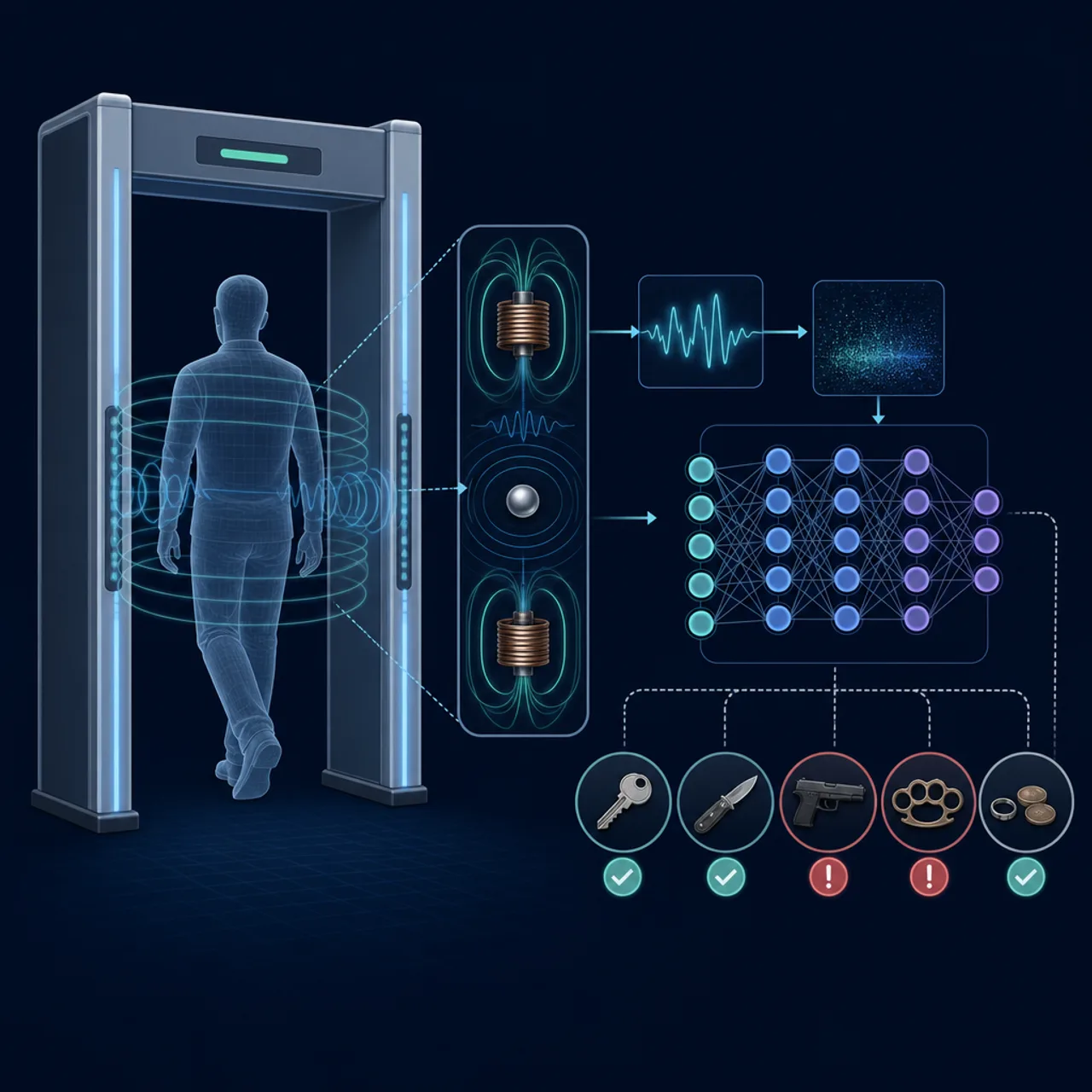
The technology follows a clear pipeline, and understanding it removes most of the mystery.
- Signal capture. Sensors collect raw data: electromagnetic induction readings, millimeter-wave images, X-ray scans, or a fusion of several.
- Preprocessing. The system filters noise, normalizes the signal, and isolates the region of interest.
- Feature extraction. The model identifies meaningful traits, such as shape, density, conductivity, and size.
- Classification. A trained neural network compares those features against learned categories and assigns a probability, for example 92 percent likely a smartphone.
- Decision and alert. Based on confidence thresholds, the system clears the item, flags it, or escalates to a human operator.
The magic is in step four. Traditional detectors stop at step one and simply react to any metal. AI detectors keep going, which is why they can ignore the keys in your pocket while flagging something genuinely concerning.
Why Machine Learning Matters Here
The accuracy of any AI detector depends entirely on its training data. A model trained on millions of diverse, well-labeled scans recognizes edge cases that rule-based systems miss. This is also why these systems improve over time: every new scan can become training data, tightening the model with each deployment.
This continuous-learning quality is what separates modern AI detection from the static hardware of the past. The hardware ages; the intelligence keeps getting sharper.

Where AI Metal Detectors Are Used
AI metal detection has spread far beyond the airport arch. Here are the highest-impact applications today.
Security Screening
This is the most visible use case. Modern AI-driven walkthrough systems screen people without requiring them to remove shoes, belts, or laptops, dramatically increasing throughput. According to the U.S. Transportation Security Administration, more than 2.9 million passengers are screened on a typical busy day, so even small per-person time savings scale into enormous operational gains. AI systems also cut false alarms, which are the single biggest cause of screening delays.

Industrial and Food Safety
Food and pharmaceutical manufacturers use AI metal detection on conveyor lines to catch metal contamination before products ship. AI reduces costly false rejects, where a perfectly good product is thrown out because of a harmless signal, protecting both safety and margins. The global metal detection equipment market was valued in the billions and continues to grow steadily, driven largely by automated industrial inspection.

Other Growing Use Cases
- Recycling and mining: sorting valuable metals from waste streams with high precision.
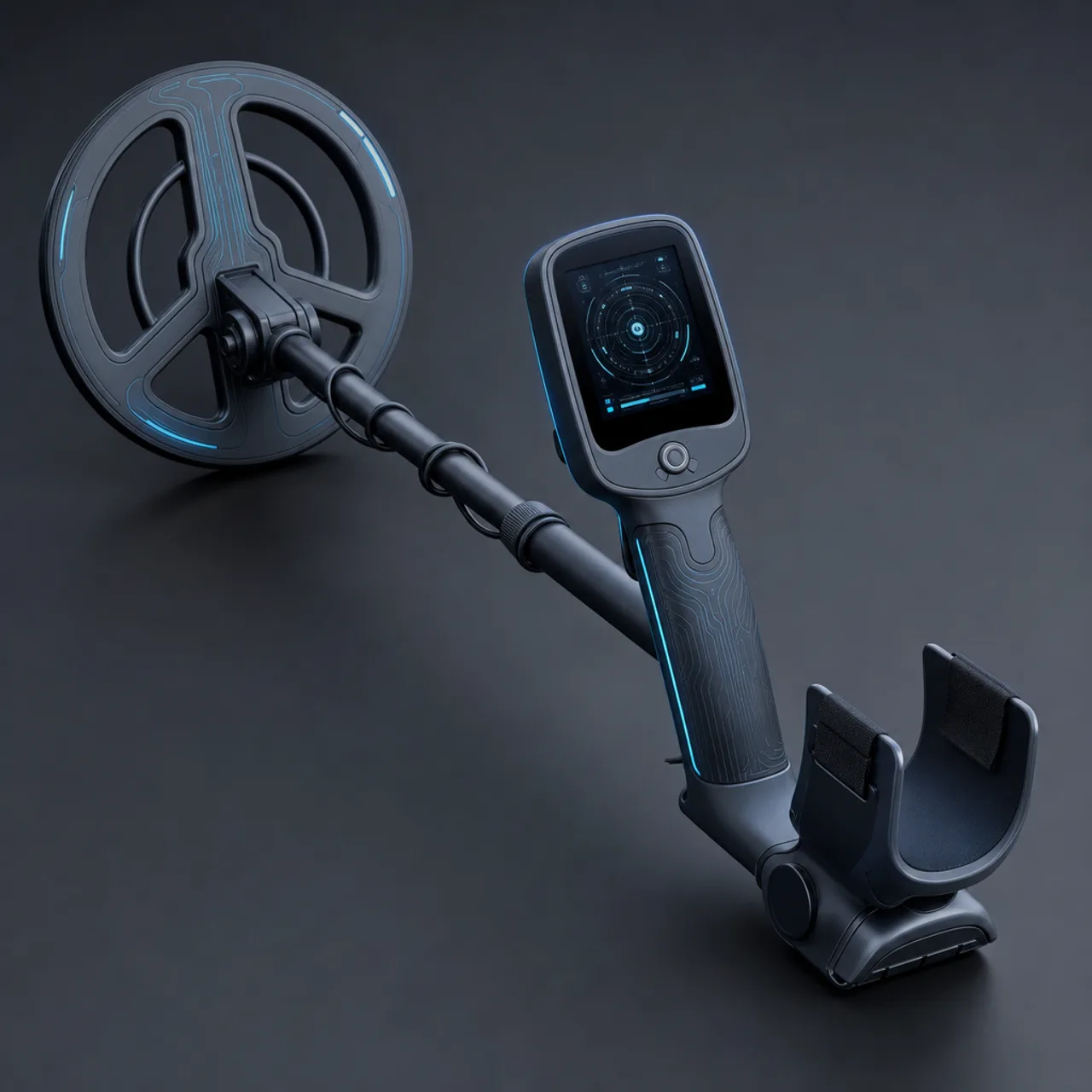
- Hobbyist treasure hunting: consumer detectors now use AI to distinguish trash targets from genuine finds.
- Event and venue security: discreet, high-flow screening at stadiums and concerts.
- Critical infrastructure: protecting data centers, courthouses, and government buildings.
If you are exploring custom detection, automation, or computer-vision tools for any of these scenarios, our artificial intelligence services focus on turning raw sensor data into reliable, deployable decisions.
AI Metal Detector vs Traditional Metal Detector
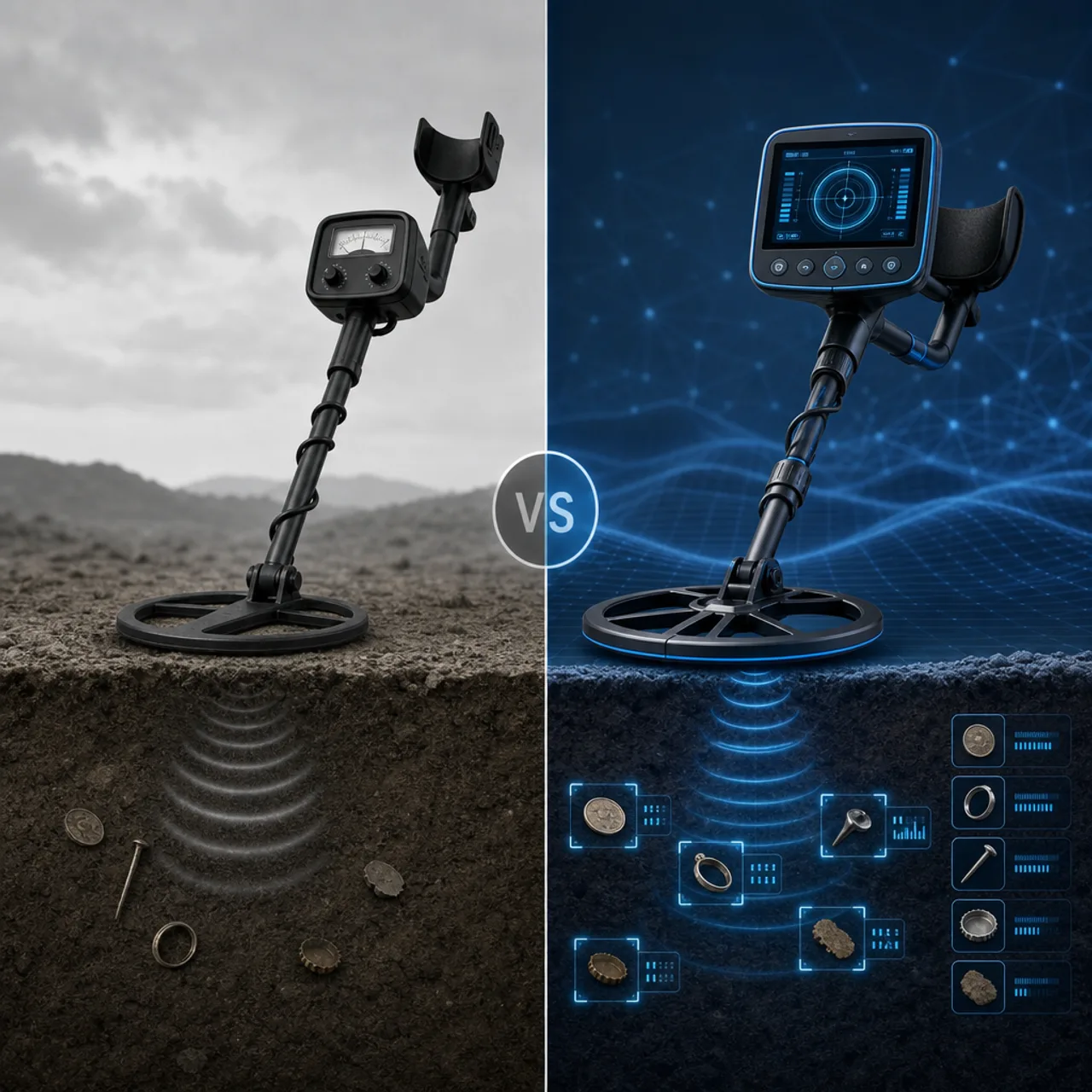
The difference is not incremental, it is categorical. The table below compares the two on the factors that matter most in real deployments.
| Factor | Traditional Metal Detector | AI Metal Detector |
|---|---|---|
| Output | Simple beep or alarm | Object classification and threat scoring |
| False alarm rate | High | Significantly lower |
| Object identification | No | Yes |
| Throughput | Slower, manual checks | Faster, fewer pat-downs |
| Learns over time | No | Yes, with new data |
| Upfront cost | Lower | Higher |
| Operator workload | High | Reduced |
The takeaway is straightforward: traditional detectors are cheaper to buy but expensive to operate because they generate constant false alarms that humans must resolve. AI detectors cost more upfront but lower the long-term operational burden.
Benefits and Honest Limitations
The benefits are real:
- Fewer false alarms and faster lines.
- Object-level identification, not just metal presence.
- Reduced reliance on subjective human judgment.
- A system that improves with use.
But the limitations deserve equal honesty:
- Data quality dependency. A poorly trained model produces poor decisions. Garbage in, garbage out applies fully.
- Bias and edge cases. If training data underrepresents certain objects, the model misclassifies them.
- Cost and integration. Deployment requires investment in hardware, software, and staff training.
- Privacy considerations. Imaging-based systems must handle personal data responsibly and comply with regulations.
Responsible deployment means treating AI as a decision-support tool that augments trained humans, not a black box that replaces oversight. The most trustworthy systems keep a human in the loop for high-stakes calls.
How to Evaluate an AI Metal Detector
If you are considering one, judge it against these criteria rather than marketing claims:
- Detection accuracy measured on independent, real-world data, not vendor demos.
- False alarm rate, since this drives your real operating cost.
- Throughput in people or items per hour.
- Explainability, meaning the system can show why it flagged something.
- Update path, confirming how and how often the model is retrained.
- Compliance with relevant safety and privacy standards.
A vendor who cannot give you concrete numbers on accuracy and false-alarm rates is selling hope, not hardware.
The Future of AI Metal Detection
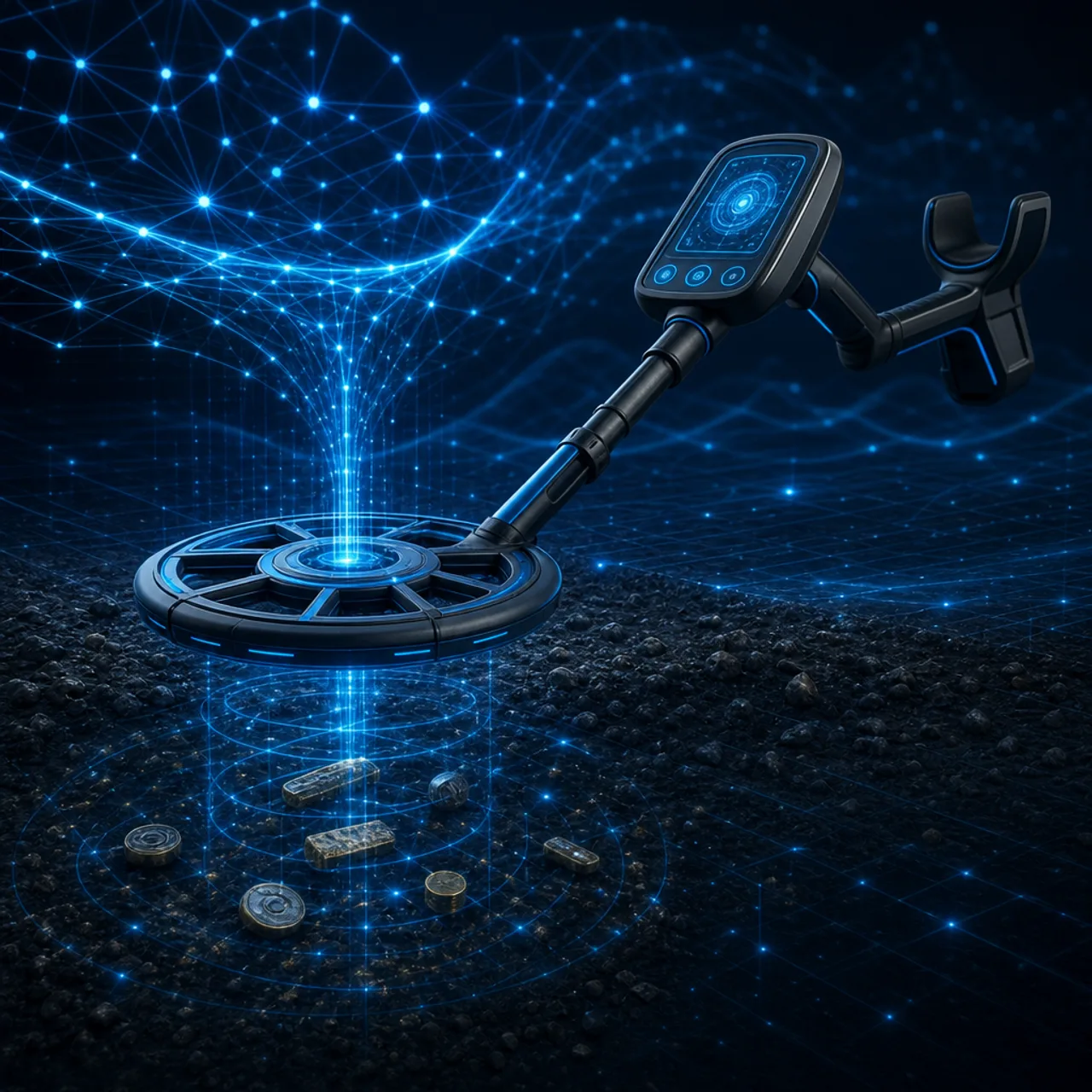
The trajectory points toward sensor fusion: combining metal detection, millimeter-wave imaging, and radar into a single AI brain that sees more than any one sensor could alone. Expect smaller, walk-without-stopping systems, real-time threat scoring, and detectors that explain their reasoning to operators in plain language. As models grow more efficient, this intelligence will run on the edge, directly inside the device, instead of relying on distant servers.
The long-term vision is screening that feels invisible: you walk, the system thinks, and only genuine concerns ever interrupt the flow.
Key Takeaways
- An artificial intelligence metal detector pairs sensing hardware with machine learning to classify objects, not just detect metal.
- The core advantage is fewer false alarms and higher throughput, which lowers long-term operating costs.
- Accuracy depends entirely on the quality and diversity of training data.
- The TSA screens more than 2.9 million passengers on busy days, so even small efficiency gains scale massively.
- AI works best as decision support with a human in the loop, especially for high-stakes screening.
- Evaluate systems on real-world accuracy, false-alarm rate, explainability, and compliance, not demos.
Frequently Asked Questions (FAQ)
What is an artificial intelligence metal detector?
It is a detection system that combines traditional metal-sensing hardware with machine learning. Instead of only beeping at metal, it analyzes the signal to identify what an object likely is, score its risk, ignore harmless items, and alert humans only when something genuinely needs attention.
How accurate are AI metal detectors?
Accuracy depends heavily on training data quality, but well-built systems significantly outperform traditional detectors on object identification and false-alarm reduction. The best models are tested on diverse real-world scans rather than vendor demos, and they keep improving as new labeled data is added over time.
Can an AI metal detector tell what type of metal object it found?
Yes, that is its defining feature. By learning from thousands of labeled examples, the model distinguishes between common items like phones, coins, and belt buckles versus concerning objects. It assigns each detection a probability and category instead of issuing a single undifferentiated alarm.
Are AI metal detectors better than traditional ones?
For accuracy, speed, and false-alarm reduction, yes. AI detectors classify objects and reduce manual checks, lowering long-term operating costs. Traditional detectors are cheaper upfront but generate constant false alarms that humans must resolve, which makes them more expensive to operate at scale.
Where are AI metal detectors used today?
They are used in airport and venue security, food and pharmaceutical production lines, recycling and mining sorting, government buildings, and even consumer treasure-hunting devices. Anywhere metal must be detected and identified quickly with low error rates, AI-driven detection is increasingly the practical standard.
Do AI metal detectors replace human security staff?
No. The most trustworthy deployments use AI as decision support, keeping trained humans in the loop for high-stakes decisions. AI handles the repetitive filtering and reduces fatigue-driven errors, while people make the final judgment calls, which improves both accuracy and accountability.