
A complete, expert guide to the Artificial Intelligence GTU subject covering syllabus, key topics, exam strategy, practical applications, and career scope for students.
Artificial Intelligence GTU

Artificial Intelligence has moved from being an elective curiosity to a core engineering subject, and at Gujarat Technological University (GTU) it now shapes how thousands of students think about computation. If you are a GTU student searching for clarity on what the Artificial Intelligence subject actually demands, this guide gives you a structured, exam-ready, and career-aware roadmap. We have taught, mentored, and reviewed AI coursework for years, and the advice here reflects what genuinely helps students pass and apply the knowledge.
The goal is simple: help you understand the syllabus, master the high-weight topics, prepare efficiently for the GTU exam, and connect classroom theory to real industry work. Whether you are in your fifth, sixth, or seventh semester, the fundamentals below apply.
Quick Answer: Artificial Intelligence GTU is a core computer and IT engineering subject that teaches intelligent agents, search algorithms, knowledge representation, reasoning, and basic machine learning. To score well, focus on search techniques, logic, and expert systems, then practice past GTU papers regularly for exam-pattern familiarity.
What Is the Artificial Intelligence Subject at GTU?
The Artificial Intelligence subject at GTU is a theory-and-application course that introduces how machines simulate human-like reasoning, learning, and problem solving. It is offered primarily to Computer Engineering and Information Technology branches, and it builds directly on your earlier work in data structures, algorithms, and discrete mathematics.
Definition: Artificial Intelligence is the branch of computer science that builds systems capable of performing tasks that normally require human intelligence, such as perception, reasoning, decision making, and language understanding.
GTU frames the subject around intelligent agents that perceive their environment and act to maximize a defined goal. Understanding the agent model early makes the rest of the syllabus far easier, because nearly every topic, from search to learning, is a different strategy an agent uses to act rationally.
Artificial Intelligence GTU Syllabus Breakdown
The GTU AI syllabus is modular, and knowing the weight of each unit helps you allocate study time intelligently. While exact unit numbering varies slightly across syllabus revisions, the core structure remains consistent.
Core Units You Must Master
- Introduction to AI and Intelligent Agents - definitions, history, agent types, and the PEAS framework.
- Problem Solving and Search - uninformed search (BFS, DFS), informed search (A*, greedy), and heuristics.
- Adversarial Search - game playing, Minimax, and Alpha-Beta pruning.
- Knowledge Representation - propositional and first-order logic, inference rules.
- Reasoning and Planning - forward and backward chaining, resolution.
- Uncertainty - probability basics, Bayes theorem, and Bayesian reasoning.
- Learning - introduction to machine learning, supervised vs unsupervised approaches.
- Expert Systems and Applications - rule-based systems and real-world AI uses.
Focus your earliest energy on search algorithms and logic, because these units repeatedly carry the highest marks in GTU question papers and also form the foundation for advanced topics.
Search Algorithms: The Highest-Scoring Topic
Search algorithms are the backbone of the Artificial Intelligence GTU paper, and examiners frequently ask you to trace, compare, or evaluate them. Mastering this single area can secure a large share of your marks.
Uninformed search explores the problem space without domain knowledge. Breadth-First Search guarantees the shortest path in unweighted graphs but consumes heavy memory, while Depth-First Search is memory-light but can get trapped in deep branches.
Informed search uses heuristics to reach goals faster. The A* algorithm, which combines path cost and an admissible heuristic, is the most examined technique. Be ready to prove why an admissible heuristic never overestimates and how that guarantees optimality.

For adversarial problems, Minimax with Alpha-Beta pruning is essential. Practice tracing pruning by hand, because GTU often supplies a game tree and asks which nodes get cut. Doing five to ten of these manually builds the speed you need under exam pressure.
Knowledge Representation and Reasoning
Knowledge representation teaches a machine to store facts and derive new conclusions, and it is where many students lose marks by underpreparing. The key is fluency in converting English statements into first-order logic.
Practice translating sentences such as "Every student who studies passes" into quantified logic. Then apply inference techniques like Modus Ponens, resolution, and unification. Resolution proofs appear often, so rehearse converting statements to Conjunctive Normal Form and refuting the negated goal step by step.
Reasoning under uncertainty using Bayes theorem is increasingly common as AI shifts toward probabilistic methods. Understand conditional probability with a concrete numerical example, because GTU regularly presents a small data scenario and asks for a posterior probability.
Machine Learning Foundations in the GTU AI Course
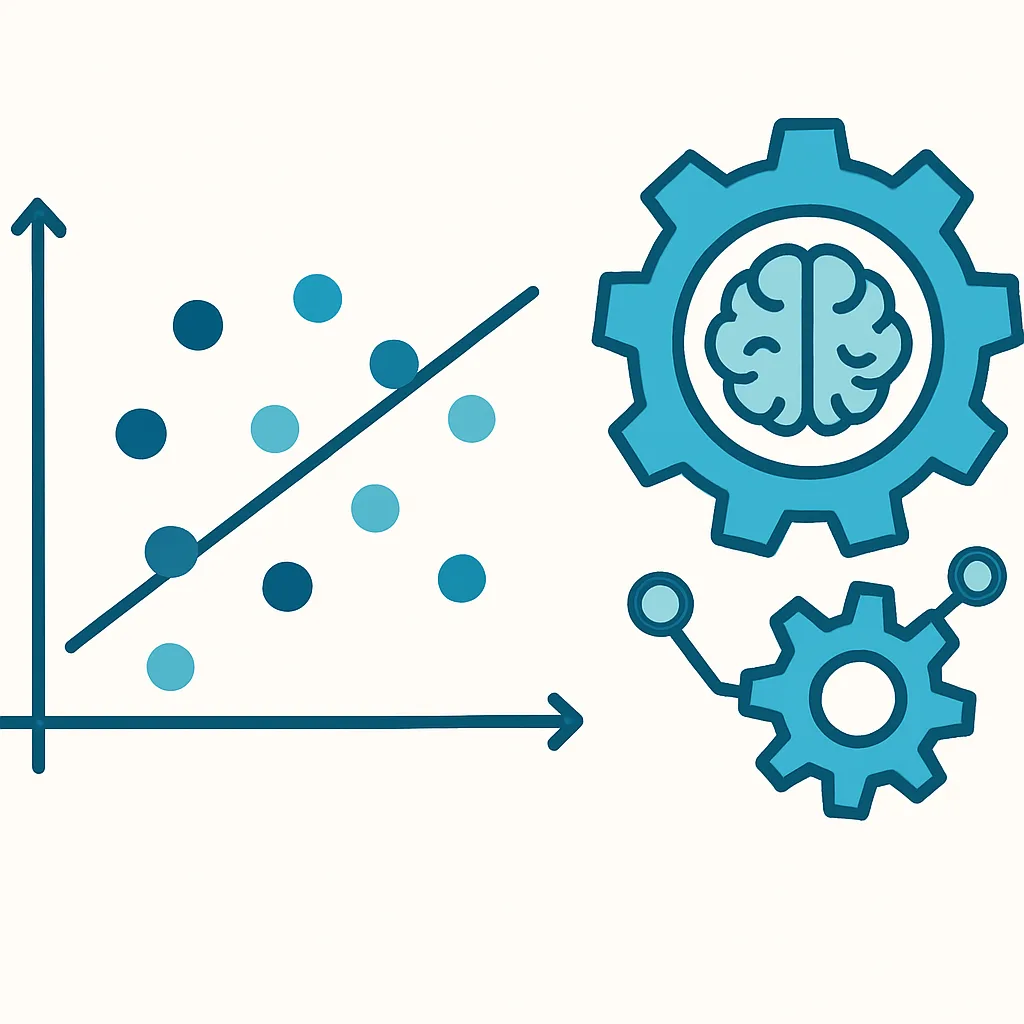
Machine learning is the gateway from classical AI to modern data-driven systems, and the GTU course introduces its core ideas. You are not expected to master deep learning here, but you must clearly explain how machines learn from data.
Definition: Machine learning is a subset of AI where systems improve their performance on a task automatically through experience, without being explicitly programmed for every case.
Know the three learning paradigms: supervised learning (labeled data, like classification), unsupervised learning (pattern discovery, like clustering), and reinforcement learning (reward-driven decision making). According to industry reporting, supervised learning still powers the majority of deployed commercial AI systems, which is why it dominates introductory coursework.
If you want to extend these foundations into applied, build-ready skills, professional teams such as the AI specialists at WebPeak and the artificial intelligence services at ZoneTechify show how textbook concepts become production systems.
How to Prepare for the Artificial Intelligence GTU Exam
Effective preparation for the GTU AI paper is about pattern recognition, not endless reading. The exam rewards students who practice past papers and master a focused set of repeatable problems.

Follow this proven study sequence:
- Read the official GTU syllabus and map every topic to your study material before you start.
- Solve at least the last five GTU question papers to identify repeating questions.
- Master numerical and tracing problems in search, Minimax, and Bayes theorem.
- Memorize comparison points (BFS vs DFS, supervised vs unsupervised) since these are frequent two-to-four mark questions.
- Write answers in structured points with diagrams, because GTU evaluators reward clarity and labeled figures.
Research on learning consistently shows that active recall and spaced repetition outperform passive rereading, so test yourself instead of just highlighting notes. A single well-practiced past paper teaches more than three hours of silent reading.
Practical Applications That Strengthen Your Answers
Real-world examples make your exam answers stronger and your understanding deeper. GTU often asks where AI is applied, and specific, current examples score higher than generic statements.
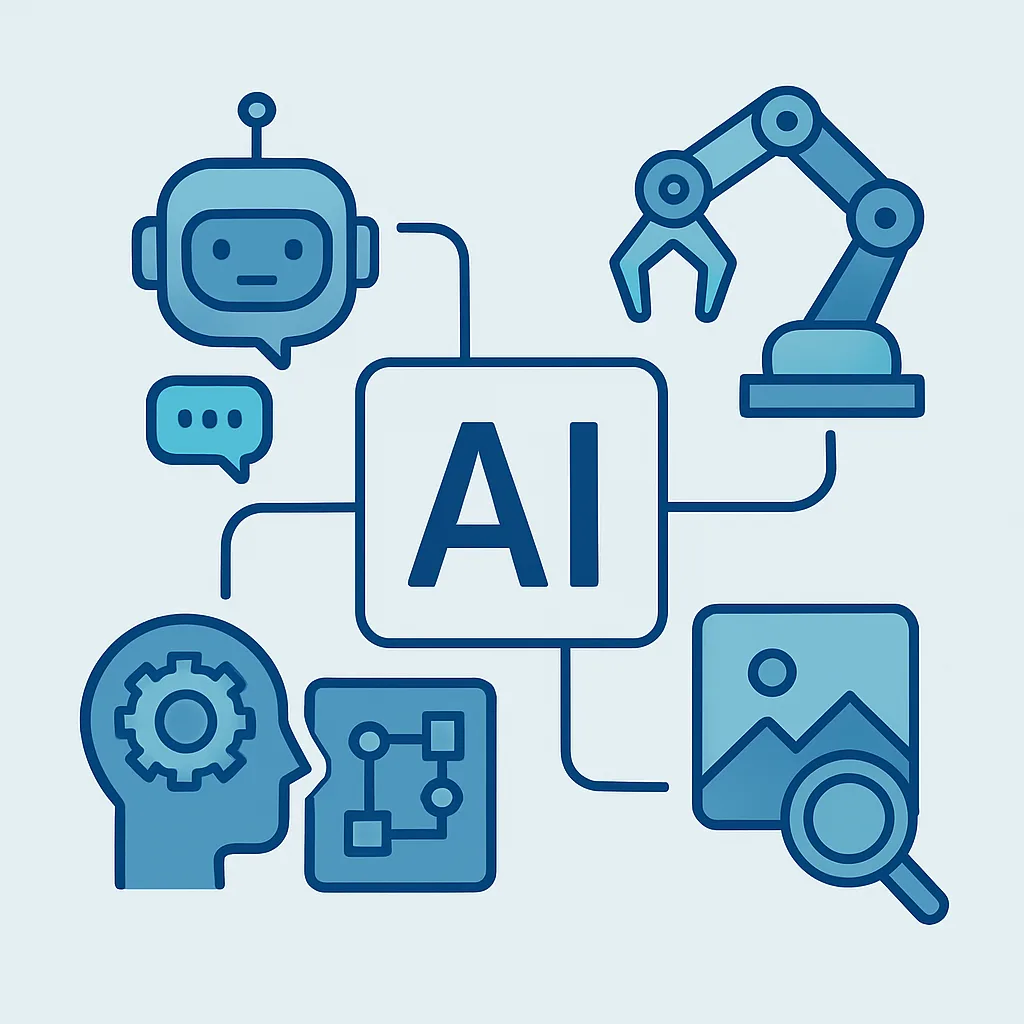
High-value application areas include:
- Healthcare - diagnostic image analysis and treatment recommendation systems.
- Finance - fraud detection and algorithmic risk scoring.
- Natural Language Processing - chatbots, translation, and voice assistants.
- Robotics - path planning using the exact search algorithms in your syllabus.
- Recommendation engines - the systems behind e-commerce and streaming platforms.
Connecting Minimax to game AI or A* to robot navigation shows examiners that you understand theory in context, which is exactly the kind of applied insight that earns full marks.
Comparison: Traditional AI vs Modern Machine Learning
Understanding how classical AI differs from data-driven machine learning is a frequent conceptual question, and a clear comparison helps you answer it confidently.
| Aspect | Traditional AI | Modern Machine Learning |
|---|---|---|
| Approach | Rule and logic based | Data and pattern based |
| Human input | Explicit rules written by experts | Learns rules from examples |
| Adaptability | Low, needs manual updates | High, improves with more data |
| Example | Expert systems, search agents | Neural networks, classifiers |
| Transparency | High, easy to explain | Often lower, harder to interpret |
GTU values students who can articulate this shift, because it reflects the real evolution of the field from handcrafted logic toward learning systems.
Career Scope After Mastering AI
Strong AI fundamentals open clear and growing career paths, and the GTU course is your entry point. The demand for AI talent continues to outpace supply across the technology sector.
Common roles for graduates with solid AI knowledge include Machine Learning Engineer, Data Scientist, AI Research Assistant, NLP Engineer, and Automation Developer. The search, logic, and learning concepts you study at GTU are the literal interview foundation for these positions. To explore how these skills translate into business solutions, review the work at ZoneTechify.
Key Takeaways
- Artificial Intelligence GTU centers on intelligent agents, search algorithms, logic, reasoning, and introductory machine learning.
- Search algorithms (BFS, DFS, A*, Minimax) and knowledge representation carry the highest exam weight.
- Solving the last five GTU papers is the single most effective preparation strategy.
- Active recall and spaced repetition outperform passive reading for retention.
- Supervised learning dominates real-world AI, making it the most important learning paradigm to master.
- Strong AI fundamentals lead directly to roles like ML Engineer, Data Scientist, and NLP Engineer.
Frequently Asked Questions (FAQ)
What is the Artificial Intelligence subject in GTU?
It is a core engineering subject that teaches how machines simulate intelligent behavior through agents, search algorithms, logic, reasoning, and basic machine learning. Offered mainly to Computer and IT branches, it blends theory with real-world applications and builds on your earlier algorithms and mathematics coursework.
Which AI topics carry the most marks in the GTU exam?
Search algorithms and knowledge representation consistently carry the highest marks. Focus on BFS, DFS, A*, Minimax with Alpha-Beta pruning, first-order logic, resolution, and Bayes theorem. These topics appear repeatedly across past papers, so mastering them gives you the strongest return on your study time.
How should I prepare for the Artificial Intelligence GTU paper?
Start by mapping the official syllabus, then solve the last five GTU question papers to spot repeating questions. Practice numerical and tracing problems, memorize key comparisons, and write structured answers with diagrams. Active recall through self-testing is far more effective than simply rereading your notes.
Is Artificial Intelligence GTU difficult to pass?
No, it is manageable with focused preparation. The paper rewards pattern recognition rather than memorization. If you master search algorithms, logic, and a handful of numerical problems, then practice past papers, you can comfortably pass and often score well above the average mark threshold.
What career options open after studying AI at GTU?
Mastering AI fundamentals leads to roles such as Machine Learning Engineer, Data Scientist, NLP Engineer, AI Research Assistant, and Automation Developer. The search, reasoning, and learning concepts taught in the GTU course form the exact technical foundation that employers test during AI and data science interviews.