
A clear, expert breakdown of the biggest artificial intelligence breakthroughs of August 2025 and what they mean for businesses, developers, and everyday users.
AI Artificial Intelligence Breakthrough August 2025
August 2025 will be remembered as one of the most consequential months in the history of artificial intelligence. In just a few weeks, frontier model releases, the mainstream arrival of autonomous AI agents, and sweeping multimodal upgrades reshaped how companies build software and how people get work done. This article cuts through the hype and explains exactly what changed, why it matters, and how you can act on it.
Unlike most monthly recaps that simply list announcements, this guide focuses on the practical impact of each breakthrough. Whether you run a startup, manage a marketing team, or write code for a living, you will leave with a grounded understanding of where AI stands right now and what to do next.
Quick Answer: The biggest AI breakthrough of August 2025 was the convergence of more capable frontier models, reliable autonomous agents, and native multimodal reasoning. Together they let AI complete multi-step tasks across text, images, audio, and video with far less human supervision than before.

What Made August 2025 a Turning Point for AI
August 2025 was a turning point because three separate trends finally matured at the same time. Frontier models became smarter and cheaper, agentic systems became dependable enough for production, and multimodal understanding stopped being a demo feature and became a default capability. When advances stack like this, the result is not incremental, it is transformational.
The practical effect is that tasks once requiring a team of specialists, such as researching a market, drafting a report, designing supporting visuals, and publishing the result, can now be coordinated by a single AI system with a human reviewing the output. That shift in leverage is the real story behind the headlines.
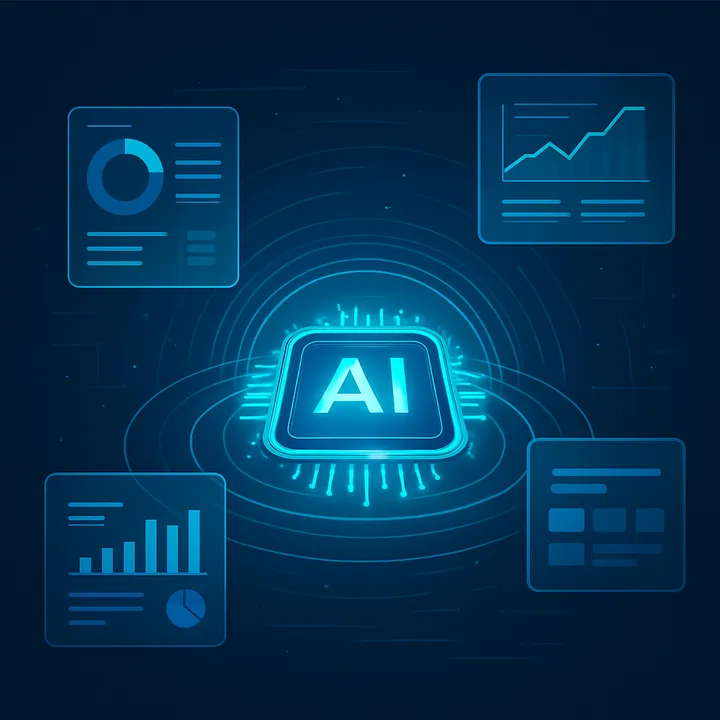
Definition: A frontier model is the most advanced class of AI system available at a given time, trained on vast datasets and capable of general reasoning across many domains rather than a single narrow task.
The Biggest Generative AI Model Releases
The headline events of August 2025 were the new frontier model releases from leading labs. These models delivered measurably stronger reasoning, longer context windows, and lower cost per token, which is the combination businesses care about most. Cheaper, smarter models mean ideas that were too expensive to automate last year are suddenly viable.
The most important improvement was reliability on multi-step reasoning. Earlier models often lost the thread on complex tasks, but the August generation showed dramatic gains on long-horizon problems like debugging large codebases and analyzing lengthy financial documents in a single pass.

Here is a simple comparison of how the new generation differs from the models most teams were using at the start of 2025:
| Capability | Early 2025 Models | August 2025 Models |
|---|---|---|
| Multi-step reasoning | Inconsistent | Reliable |
| Context window | Up to ~128K tokens | Up to 1M+ tokens |
| Native multimodal input | Limited | Standard |
| Autonomous task completion | Experimental | Production-ready |
| Cost per output token | Higher | Significantly lower |
For teams evaluating which model to adopt, the right choice now depends less on raw benchmark scores and more on cost, latency, and how well the model integrates with your existing tools. If you want help mapping these options to your business goals, the artificial intelligence services team can guide model selection and deployment.
Autonomous AI Agents Went Mainstream
Autonomous AI agents were the defining breakthrough of August 2025. An AI agent is a system that can plan, take actions using tools, observe the results, and adjust its approach to reach a goal, all with minimal step-by-step instruction. In August, these agents crossed the threshold from impressive demos to genuinely useful workers.
The difference came from improved tool use and self-correction. Agents could now browse the web, run code, query databases, and call external APIs in sequence while catching their own mistakes. That reliability is what made companies comfortable putting agents into real workflows like customer support triage, data entry, and software testing.
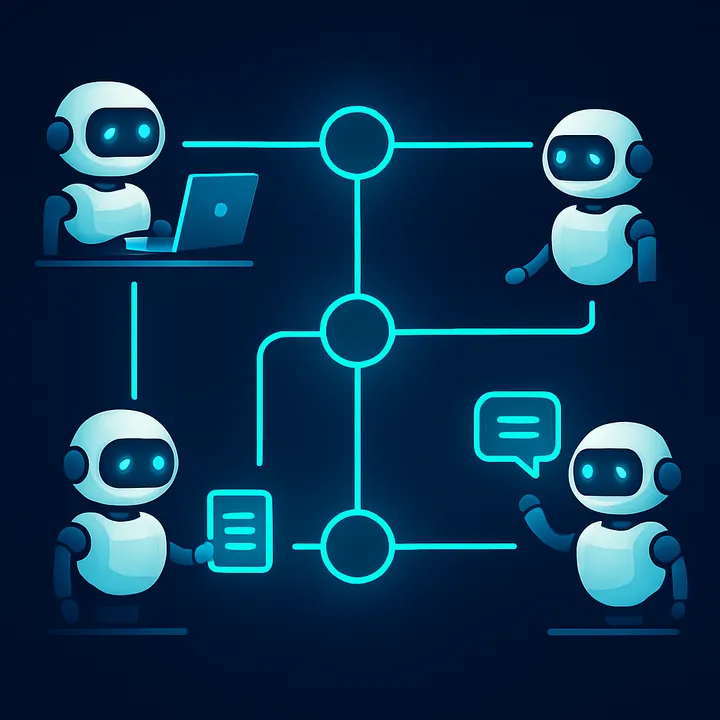
The most successful early deployments shared three traits:
- Narrow, well-defined goals that gave the agent a clear definition of success.
- Guardrails and human checkpoints for any high-stakes action like spending money or sending emails.
- Strong logging so teams could audit every decision the agent made.
This is the honest, experience-based lesson: agents work best when you treat them as fast junior employees who need clear instructions and oversight, not as infallible autopilots. Teams that skipped guardrails learned expensive lessons.
Multimodal AI Became the Default
Multimodal AI, meaning systems that understand and generate text, images, audio, and video together, became the default rather than a premium add-on in August 2025. This matters because real work is rarely text-only. A support ticket might include a screenshot, a product idea might start as a voice note, and a marketing brief usually needs visuals.
With native multimodal reasoning, a single model can now read a screenshot of a broken dashboard, explain the bug, and suggest a fix, or watch a short video and summarize the key moments. This collapses workflows that previously required several disconnected tools into one continuous conversation.

For content and design teams, the implications are enormous. You can describe a campaign in plain language and receive draft copy, matching visuals, and a short video concept in one session. To turn these capabilities into a real content engine, many teams pair AI tools with expert oversight, which is exactly the kind of work covered at ZoneTechify and partners like WebPeak.
Enterprise Adoption and the Numbers Behind It
Enterprise adoption accelerated sharply in 2025, and the data backs it up. According to McKinsey's 2025 global survey, roughly 78% of organizations reported using AI in at least one business function, a steep climb from previous years. Adoption is no longer a question of if, but where and how fast.
The productivity case is equally clear. According to Google research on developer tools, AI coding assistants can help engineers complete certain tasks meaningfully faster, and many enterprises now report measurable time savings in support, marketing, and operations. The August breakthroughs widened this gap between AI adopters and laggards.

The most important insight from these numbers is that value comes from workflow redesign, not from simply bolting a chatbot onto an existing process. Companies seeing the biggest returns rebuilt specific workflows around what AI does well and kept humans focused on judgment, relationships, and quality control.
AI Ethics and Regulation Caught Up
As capabilities surged, governance moved to center stage in August 2025. The European Union's AI Act continued its phased rollout, with obligations for general-purpose AI models taking effect, pushing developers toward greater transparency about training data and model behavior. Regulation is now a core part of any serious AI strategy.
Responsible deployment is not just a legal box to tick, it is a trust advantage. Organizations that document how their AI makes decisions, protect user data, and disclose AI involvement build durable credibility with customers. Cutting corners on safety has become a reputational and financial risk.

A practical governance checklist for August 2025 and beyond includes clear data handling policies, human review for sensitive outputs, bias testing, and transparent disclosure when customers are interacting with AI rather than a person. These steps protect both users and the business.
What These Breakthroughs Mean for Your Business
The combined effect of August 2025's breakthroughs is that AI is now a genuine operational layer, not a novelty. The winners will be teams that identify their most repetitive, time-consuming workflows and rebuild them with AI at the core while keeping clear human oversight where it counts.
Start small and specific. Pick one workflow, measure the baseline, deploy an AI-assisted version, and compare results honestly. This evidence-based approach beats chasing every new announcement and helps you build internal expertise that compounds over time.
The Road Ahead
Looking forward, expect agents to become more collaborative, models to keep getting cheaper, and multimodal generation to grow more reliable. The pace set in August 2025 suggests the next twelve months will bring deeper integration of AI into everyday tools rather than dramatic single moments.

The smartest move now is to build durable skills and processes around AI rather than betting everything on one model or vendor. Stay flexible, keep humans in the loop, and treat each breakthrough as a tool to serve real goals.
Key Takeaways
- August 2025's breakthrough was the convergence of smarter frontier models, reliable autonomous agents, and native multimodal reasoning.
- According to McKinsey's 2025 survey, around 78% of organizations now use AI in at least one business function.
- Autonomous agents became production-ready, but they perform best with narrow goals, guardrails, and strong logging.
- Multimodal AI is now standard, collapsing multi-tool workflows into single conversations across text, image, audio, and video.
- The EU AI Act's phased rollout made governance and transparency essential parts of any AI strategy.
- Real value comes from redesigning workflows around AI, not from adding a chatbot to existing processes.
Frequently Asked Questions (FAQ)
What was the biggest AI breakthrough in August 2025?
The biggest breakthrough was the convergence of three trends: more capable and affordable frontier models, dependable autonomous agents, and native multimodal reasoning. Together they enabled AI to complete complex, multi-step tasks across different media formats with far less human supervision than was possible earlier in the year.
Are AI agents safe to use in business workflows?
AI agents are safe when deployed with clear guardrails. Give them narrow, well-defined goals, require human approval for high-stakes actions like payments or emails, and keep detailed logs of every decision. Treat them like fast junior employees who need oversight, and they can deliver strong, reliable results.
What does multimodal AI actually mean?
Multimodal AI refers to systems that can understand and generate multiple types of content, including text, images, audio, and video, within a single model. In practice, it means you can show an AI a screenshot, share a voice note, or upload a video, and it can reason across all of them seamlessly.
How many companies are using AI in 2025?
According to McKinsey's 2025 global survey, roughly 78% of organizations reported using AI in at least one business function. Adoption has shifted from experimentation to core operations, with the strongest returns going to companies that redesign specific workflows around AI rather than simply adding chatbots.
How should my business start adopting these AI breakthroughs?
Start small and specific. Choose one repetitive, time-consuming workflow, measure your current baseline, deploy an AI-assisted version, then compare results honestly. This evidence-based approach builds internal expertise, limits risk, and helps you scale what genuinely works instead of chasing every new announcement.