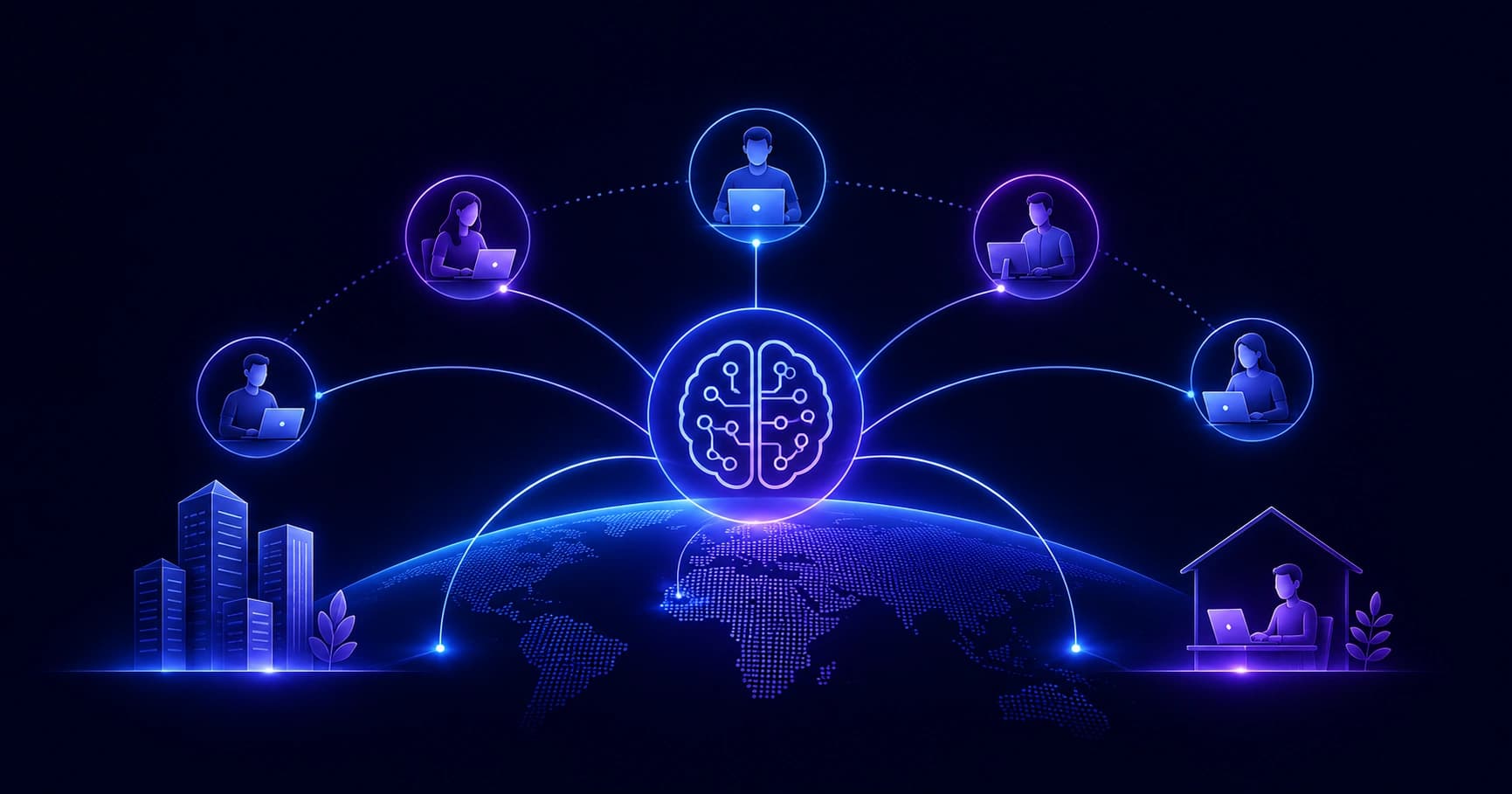
Learn when and how to outsource artificial intelligence services, the real benefits and costs, and how to choose a reliable AI development partner in 2026.
Outsource Artificial Intelligence Services
Artificial intelligence has shifted from a competitive edge to a business necessity, yet most companies still lack the in-house talent to build it. That gap is exactly why so many organizations now outsource artificial intelligence services. Drawing on years of delivering AI projects for both startups and enterprises, this guide explains when outsourcing makes sense, how to pick the right partner, what it actually costs, and how to sidestep the mistakes that quietly kill most AI initiatives. If you want practical, people-first guidance rather than hype, you are in the right place. You can also explore more expert resources at ZoneTechify and WebPeak.
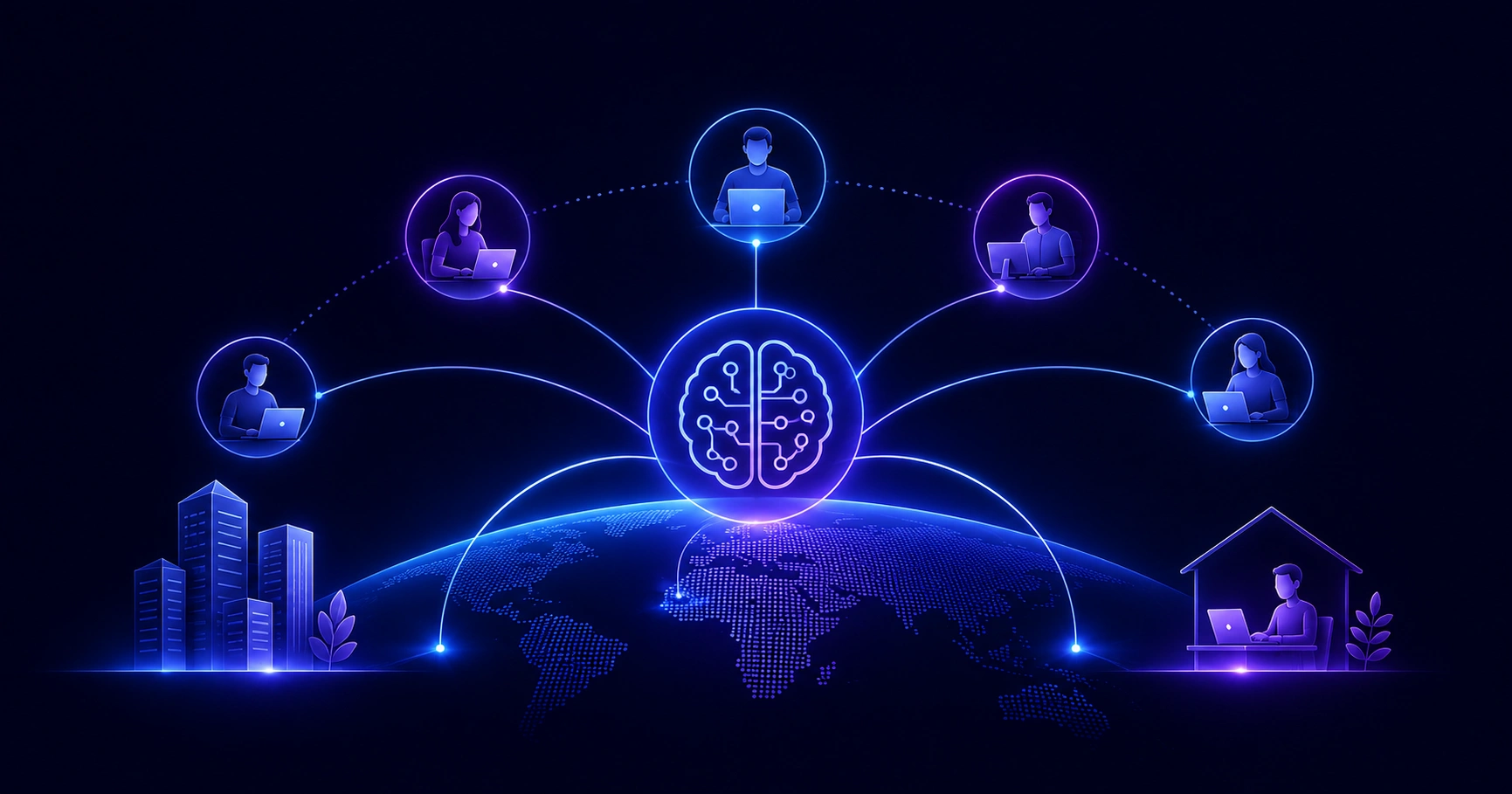
Quick Answer: Outsourcing artificial intelligence services means hiring an external specialist team to design, build, deploy, or maintain AI solutions instead of building them in-house. It gives businesses instant access to scarce expertise, can lower development costs by up to 40%, and speeds time to market without long, expensive hiring cycles.
What Does It Mean to Outsource AI Services?
Outsourcing AI services is the practice of delegating artificial intelligence work to a specialized third-party provider instead of hiring a full internal team. This work commonly includes machine learning model development, data engineering, natural language processing (NLP), computer vision, predictive analytics, and MLOps (the discipline of deploying and monitoring models in production).
In plain terms, you keep control of your business goals and data strategy while an expert partner handles the technical heavy lifting. A well-structured engagement feels less like handing off a black box and more like extending your own team with senior specialists you could not easily hire alone.
Why Businesses Outsource AI Development
The core reason is a talent shortage. Qualified machine learning engineers and data scientists remain among the hardest technical roles to hire, and salaries reflect that scarcity. Building an internal AI team from scratch can take six to twelve months before a single model reaches production.
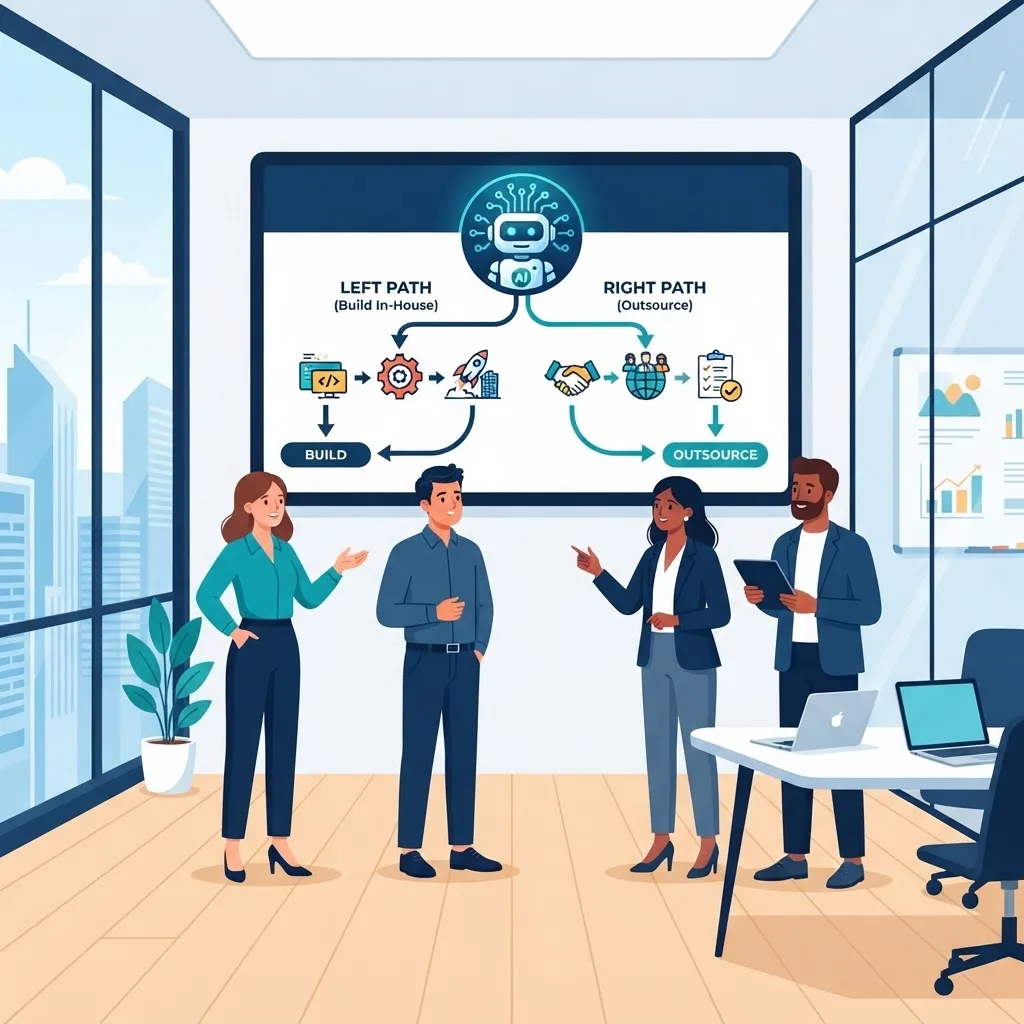
Outsourcing compresses that timeline dramatically. Instead of recruiting, onboarding, and hoping the hires work well together, you engage a team that has already shipped comparable solutions. According to McKinsey's State of AI research, roughly 72% of organizations have now adopted AI in at least one business function, which means the competitive pressure to move quickly has never been higher. Waiting a year to staff up is often a year you cannot afford.
Key Benefits of Outsourcing AI Services
When done well, outsourcing delivers advantages that go far beyond simple cost cutting:
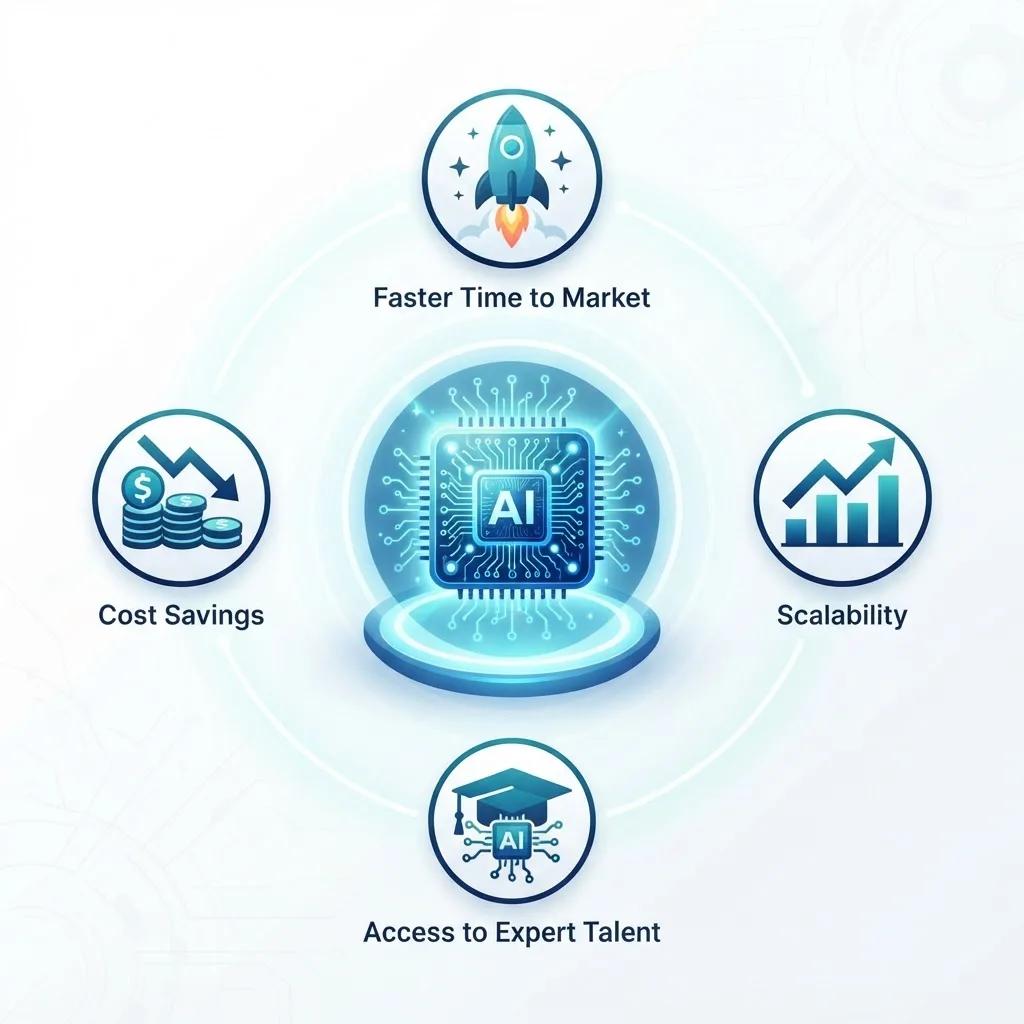
- Access to specialized talent: Tap into senior ML engineers, data scientists, and AI architects on demand.
- Faster time to market: Skip long hiring cycles and start building within days, not months.
- Lower and predictable costs: Convert fixed salary overhead into flexible, project-based spending.
- Scalability: Ramp teams up or down as project needs change, without layoffs or idle staff.
- Reduced risk: Experienced partners have already solved the data, tooling, and deployment problems you would otherwise learn the hard way.
- Focus on core business: Free your internal staff to concentrate on strategy and customer value.
In-House vs Outsourced AI: A Comparison
The right choice depends on your budget, timeline, and long-term strategy. This table summarizes the trade-offs:
| Factor | In-House AI Team | Outsourced AI Services |
|---|---|---|
| Setup time | 6 to 12 months | Days to a few weeks |
| Upfront cost | High (salaries, tools, infrastructure) | Low to moderate (project-based) |
| Access to expertise | Limited by who you can hire | Broad, senior, and immediate |
| Scalability | Slow and costly | Fast and flexible |
| Long-term ownership | Full internal control | Shared, with knowledge transfer |
| Best for | Core, always-on AI products | Defined projects and fast validation |
Many mature companies eventually run a hybrid model: outsourcing early experimentation, then internalizing the workloads that become mission-critical.
Common AI Services You Can Outsource
Almost every stage of the AI lifecycle can be delegated. The most requested services include:
- Machine learning model development for forecasting, recommendations, and classification.
- Natural language processing for chatbots, sentiment analysis, and document automation.
- Computer vision for quality inspection, medical imaging, and object detection.
- Generative AI integration using large language models for content, search, and support.
- Data engineering and labeling to prepare clean, usable training data.
- MLOps and model monitoring to keep deployed models accurate over time.
If your project centers on these capabilities, a dedicated provider such as ZoneTechify's artificial intelligence services can cover the full lifecycle end to end.
How to Choose the Right AI Outsourcing Partner
Choosing the wrong partner is the fastest way to burn budget. Use this checklist, refined across dozens of engagements, to evaluate candidates:
- Review real case studies. Ask for measurable outcomes, not just impressive-sounding demos.
- Verify domain expertise. AI for healthcare differs sharply from AI for retail or finance.
- Inspect their data practices. Confirm compliance with GDPR, security standards, and clear data ownership.
- Assess the MLOps maturity. A model that never reaches production creates zero value.
- Clarify communication. Insist on a named technical lead and regular, transparent reporting.
- Plan for knowledge transfer. The best partners document everything so you are never locked in.
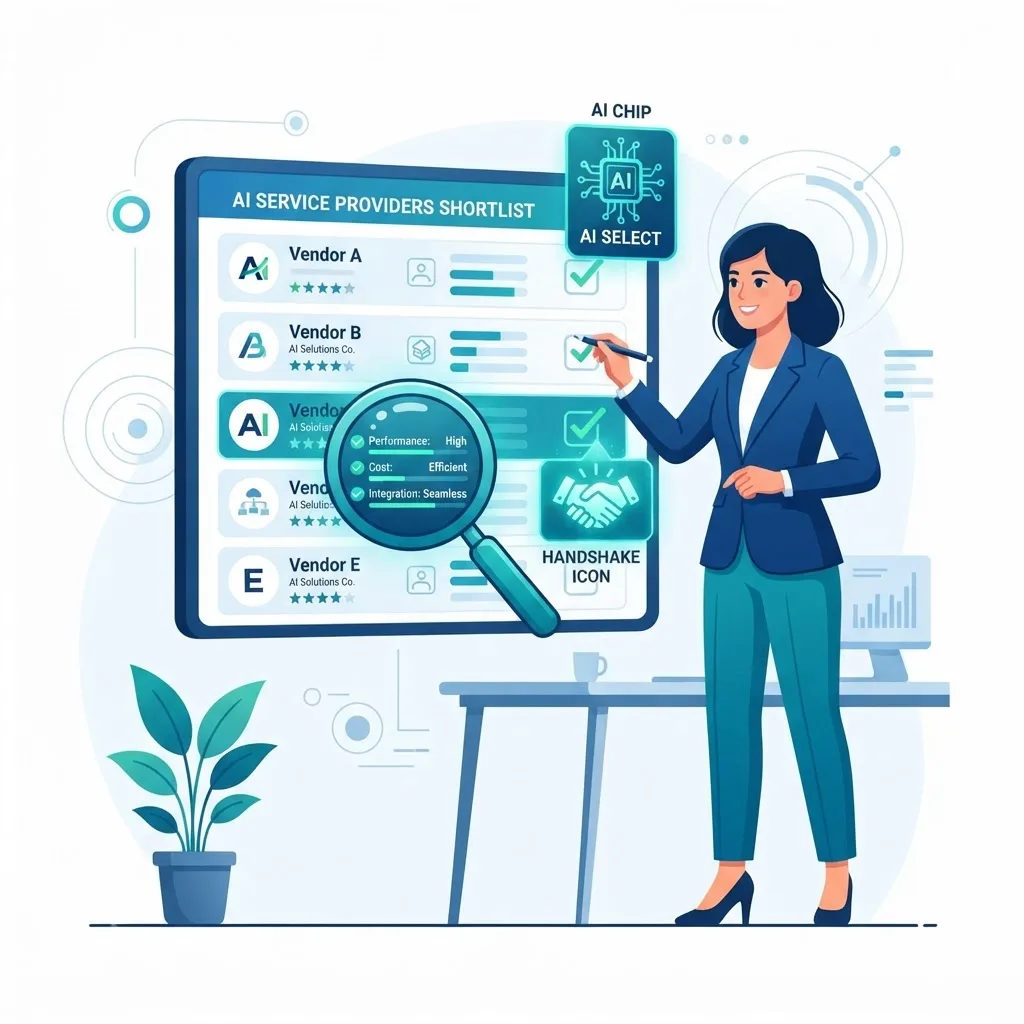
A trustworthy partner will welcome these questions. If a vendor resists transparency early, that resistance rarely improves after the contract is signed.
AI Outsourcing Engagement Models
Providers typically offer three engagement models, each suited to a different situation:
| Model | How It Works | Best For |
|---|---|---|
| Project-based | Fixed scope, timeline, and price | Well-defined, one-off deliverables |
| Dedicated team | A full team works exclusively for you | Long-term, evolving AI products |
| Staff augmentation | Individual experts join your team | Filling specific skill gaps quickly |
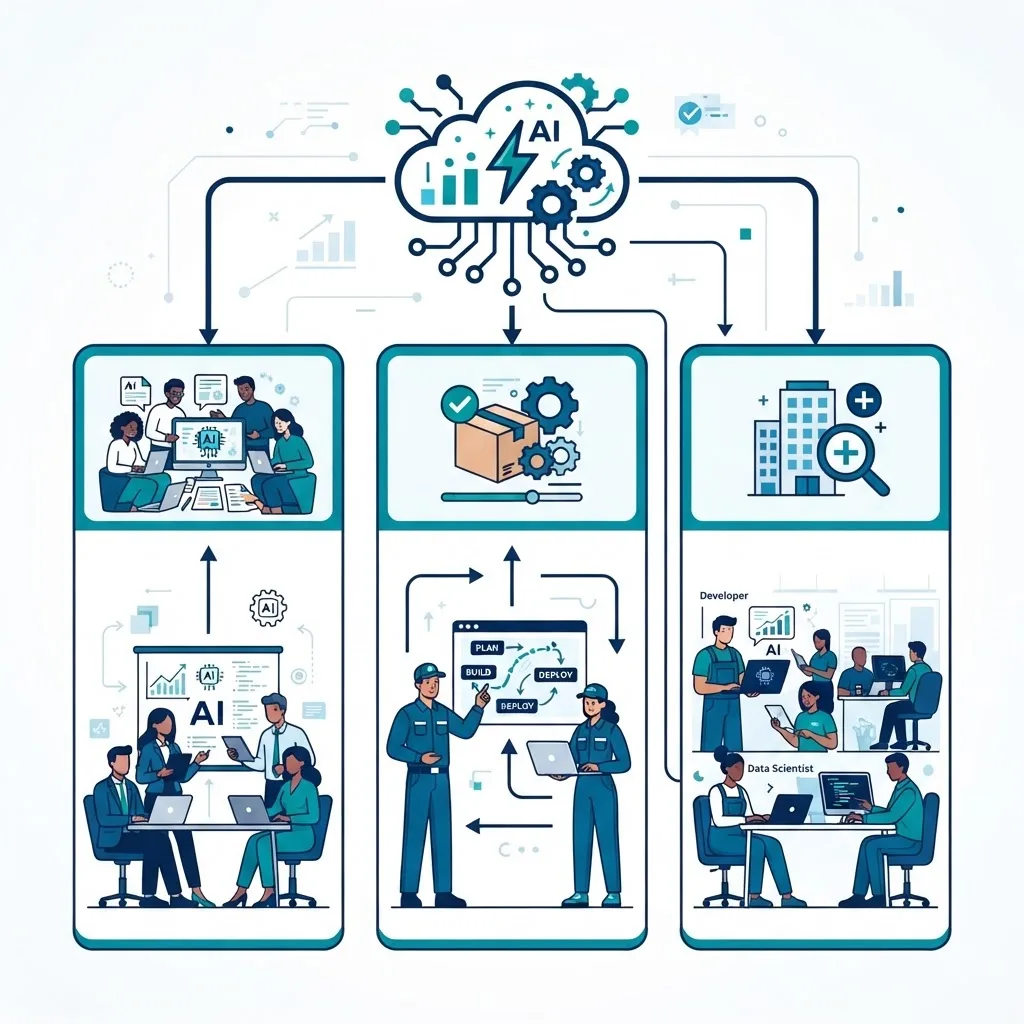
Start with a project-based pilot when you are validating an idea. Move to a dedicated team once the solution proves its value and needs continuous improvement.
A Typical AI Outsourcing Project Workflow
Understanding the workflow helps you set realistic expectations and hold your partner accountable at each stage:
- Discovery: Define the business problem, success metrics, and feasibility.
- Data preparation: Collect, clean, and label the data that will train your models.
- Model development: Build, train, and iterate until accuracy targets are met.
- Validation: Test against real-world scenarios and edge cases.
- Deployment: Integrate the model into your systems and applications.
- Monitoring and maintenance: Track performance and retrain as data drifts.
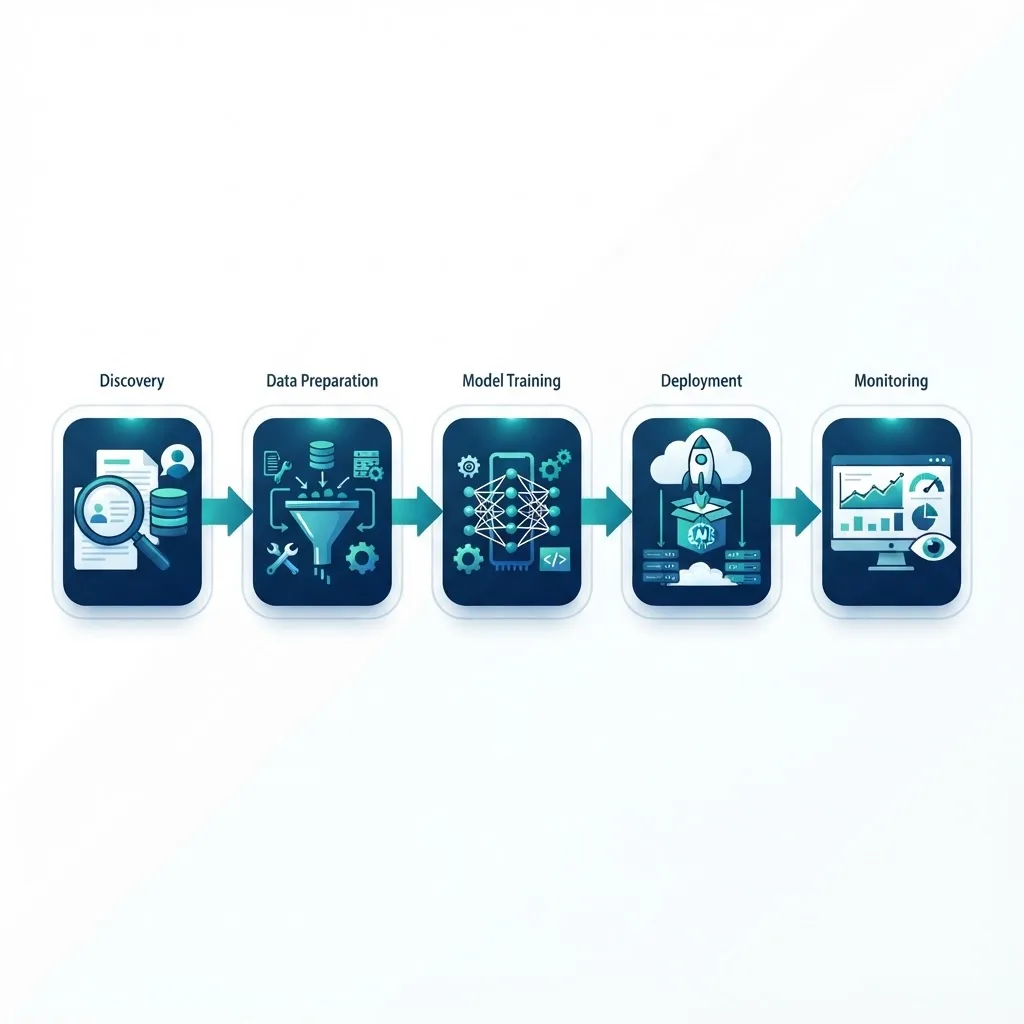
Skipping the discovery and data stages is the single most common cause of failure. Gartner has warned that a large share of AI projects never make it into production, and weak problem definition is almost always the root cause.
Understanding the Cost of Outsourcing AI
Cost depends on complexity, data readiness, and the engagement model. A focused proof of concept may run a few thousand dollars, while a production-grade system with ongoing MLOps represents a larger, sustained investment.

The smarter way to evaluate cost is by total value, not hourly rate. A cheaper team that ships a model which never reaches production costs infinitely more than a slightly pricier team that delivers measurable ROI. Always tie payment milestones to working, tested outcomes. Specialist agencies like WebPeak's AI services structure engagements around deliverables precisely so budgets stay predictable and results stay accountable.
The Future of AI Outsourcing
The demand for outsourced AI will keep climbing as generative AI, autonomous agents, and industry-specific models become standard. Providers are shifting from one-off projects toward long-term partnerships that blend strategy, engineering, and continuous optimization.
Expect three trends to define the next few years: deeper specialization by industry, tighter integration of AI into everyday software, and a stronger emphasis on responsible, transparent AI. Businesses that build trusted outsourcing relationships now will be positioned to adopt each new wave faster than competitors scrambling to hire.
Key Takeaways
- Outsourcing AI means delegating model development, data work, and MLOps to expert partners instead of building fully in-house.
- It can reduce development costs by up to 40% and cut time to market from months to weeks.
- McKinsey research shows roughly 72% of organizations have adopted AI, intensifying the pressure to move quickly.
- Weak problem definition and poor data are the top reasons AI projects fail before production.
- Choose partners based on proven outcomes, data compliance, MLOps maturity, and clear knowledge transfer.
- Start with a project-based pilot, then scale to a dedicated team once value is proven.
Frequently Asked Questions (FAQ)
What does it mean to outsource artificial intelligence services?
It means hiring an external specialist team to design, build, deploy, or maintain AI solutions instead of doing it in-house. The provider handles technical work like model development and MLOps, while you retain control of business goals, data strategy, and the outcomes you want to achieve.
Is outsourcing AI cheaper than building an in-house team?
In most cases, yes. Outsourcing removes the cost of salaries, tools, and infrastructure and converts them into flexible, project-based spending. It can lower development costs by up to 40% and avoids the six-to-twelve-month delay of recruiting and onboarding a full internal AI team.
What AI services can I outsource?
You can outsource almost the entire AI lifecycle, including machine learning model development, natural language processing, computer vision, generative AI integration, data engineering, data labeling, and MLOps monitoring. Providers can handle a single stage or manage the complete project from discovery through deployment and maintenance.
How do I choose a reliable AI outsourcing partner?
Evaluate real case studies with measurable results, verify domain expertise, and confirm strong data security and compliance practices. Check their MLOps maturity so models actually reach production, insist on transparent communication with a named technical lead, and require clear documentation for knowledge transfer.
How long does an outsourced AI project take?
Timelines vary by complexity. A proof of concept can take a few weeks, while a production-grade system with monitoring may take several months. Outsourcing is still far faster than building in-house, since an experienced partner can begin work within days instead of hiring for months.