A practical, expert guide to artificial intelligence with uncertainty: how AI models reason under doubt, quantify confidence, and make safer real-world decisions.
Artificial Intelligence with Uncertainty
Most people imagine artificial intelligence as a system that always knows the right answer. In reality, the best AI systems are built to admit what they do not know. Artificial intelligence with uncertainty is the discipline of designing models that reason in probabilities, express confidence levels, and behave sensibly when data is incomplete, noisy, or contradictory. After a decade of building and reviewing machine learning systems, I can tell you the difference between a fragile model and a trustworthy one almost always comes down to how it handles doubt.
This guide explains what uncertainty in AI actually means, why it matters, the core techniques engineers use to measure it, and how you can apply these ideas to real products. Whether you build chatbots, medical tools, or recommendation engines, understanding uncertainty is the line between a demo and a dependable system.
Quick Answer: Artificial intelligence with uncertainty refers to AI systems that represent and reason about what they do not know using probability. Instead of forcing a single answer, these models output confidence scores, ranges, or distributions, helping them make safer, more honest, and more reliable decisions in the real world.
What Does Uncertainty in AI Actually Mean?
Uncertainty in AI is the measurable gap between what a model predicts and what it can actually justify from its data. A model might classify an image as a cat with 51% confidence or 99% confidence. Both are predictions, but only one is reliable. Treating them the same is how systems fail in production.
Researchers split uncertainty into two clear types, and knowing the difference changes how you fix problems:
- Aleatoric uncertainty: Randomness inherent in the data itself, such as sensor noise or blurry photos. You cannot remove it by collecting more data.
- Epistemic uncertainty: Uncertainty caused by the model's lack of knowledge. This shrinks as you add more relevant training data or improve the model.
This distinction is practical. If errors come from aleatoric noise, you invest in better sensors. If they come from epistemic gaps, you collect more diverse examples. Confusing the two wastes budgets on the wrong fix.
Why Uncertainty Matters More Than Raw Accuracy
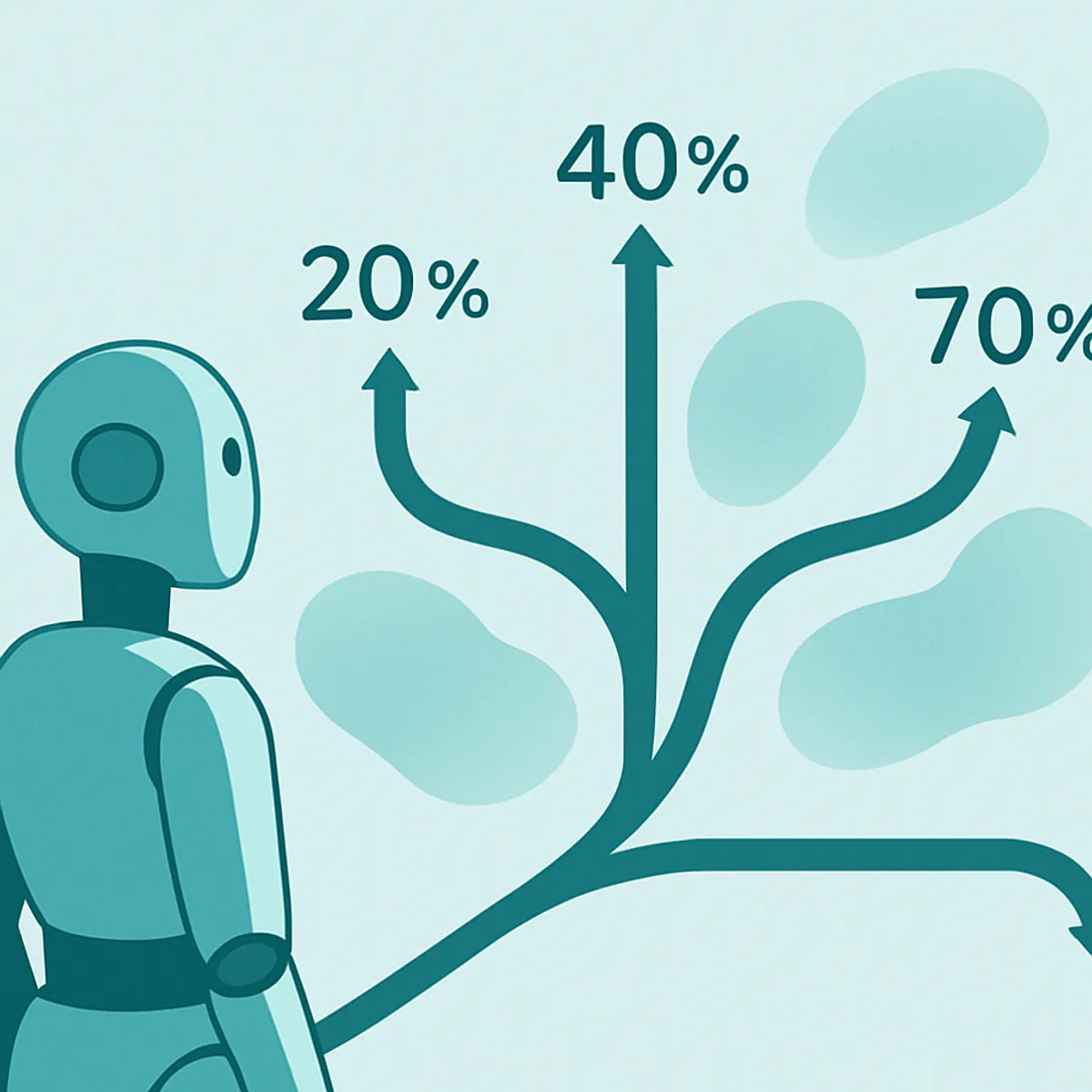
A model that is 95% accurate but cannot tell you when it is wrong is more dangerous than a model that is 85% accurate but flags its own doubt. Accuracy is an average across a test set. Uncertainty tells you about the specific decision in front of you right now.
The stakes are real. According to Stanford's AI Index report, AI incident reports have risen sharply year over year as systems are deployed in high-impact settings, and many failures trace back to overconfident predictions on unfamiliar inputs. In healthcare, finance, and autonomous driving, an AI that knows when to say "I am not sure, escalate to a human" prevents the most expensive mistakes.
There is also a trust dimension. Research from Google and others has repeatedly shown that users calibrate their reliance on AI based on expressed confidence. When a system communicates uncertainty honestly, people use it more effectively and override it appropriately. Teams that build AI products at agencies like ZoneTechify and WebPeak increasingly treat calibrated confidence as a core feature, not an afterthought.
Probabilistic Reasoning: The Foundation
Probabilistic reasoning is the practice of treating every prediction as a distribution of possible outcomes rather than a single fixed value. Instead of "the temperature will be 22 degrees," a probabilistic model says "the temperature will most likely be between 20 and 24 degrees, centered on 22."
This matters because the real world is rarely deterministic. A spam filter does not know with certainty that an email is spam; it estimates a probability. A loan model does not know a borrower will default; it estimates risk. By keeping the full distribution, you can set thresholds that match your tolerance for risk instead of being forced into a binary guess.
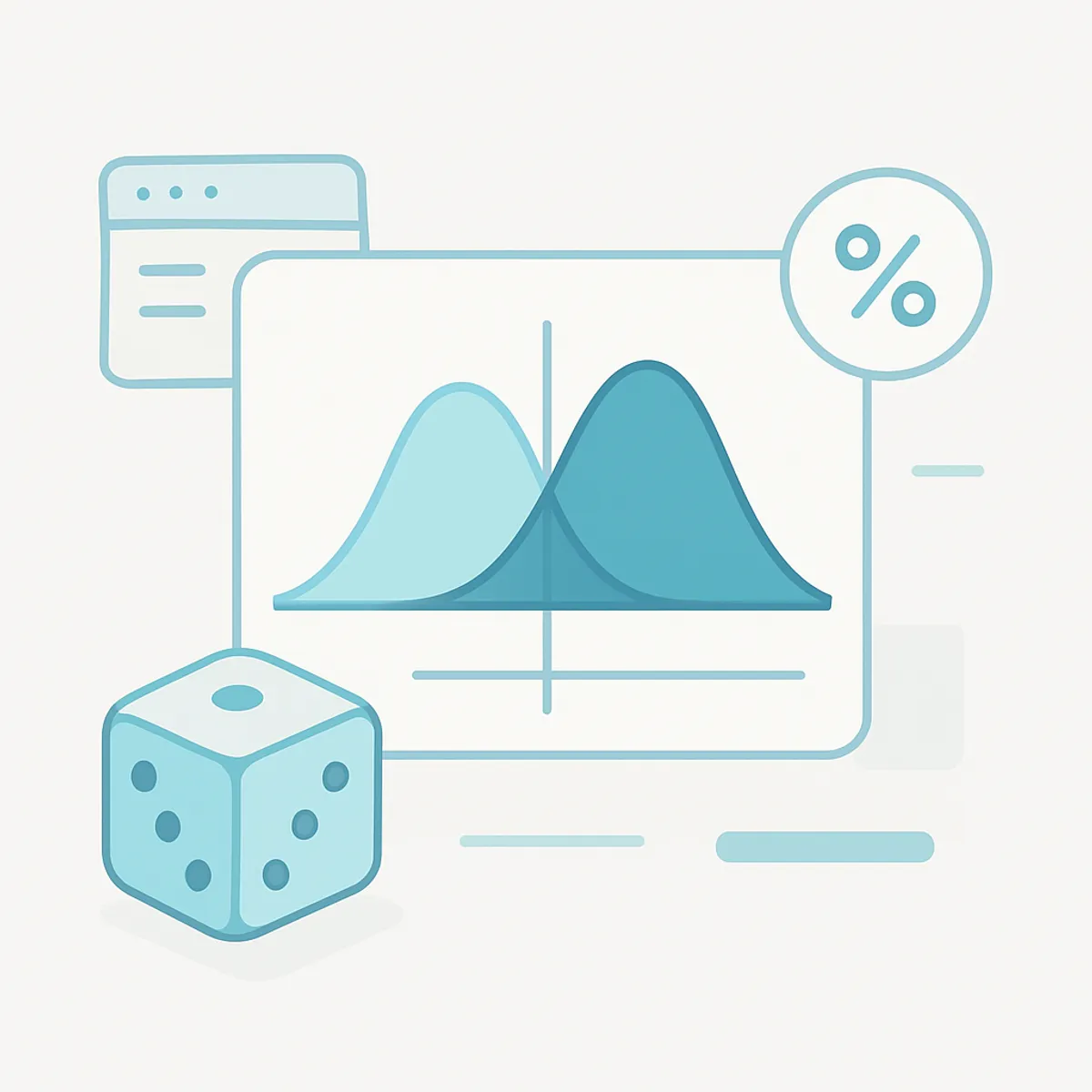
The key insight from years of practice: a calibrated probability is worth more than a confident label. A model whose 70% predictions are correct 70% of the time is calibrated, and calibration is what makes downstream decisions trustworthy.
Bayesian Methods and Uncertainty
Bayesian methods give AI a formal language for updating beliefs as new evidence arrives. They start with a prior belief, observe data, and produce a posterior belief that blends the two. The width of that posterior is a direct, honest measure of uncertainty.
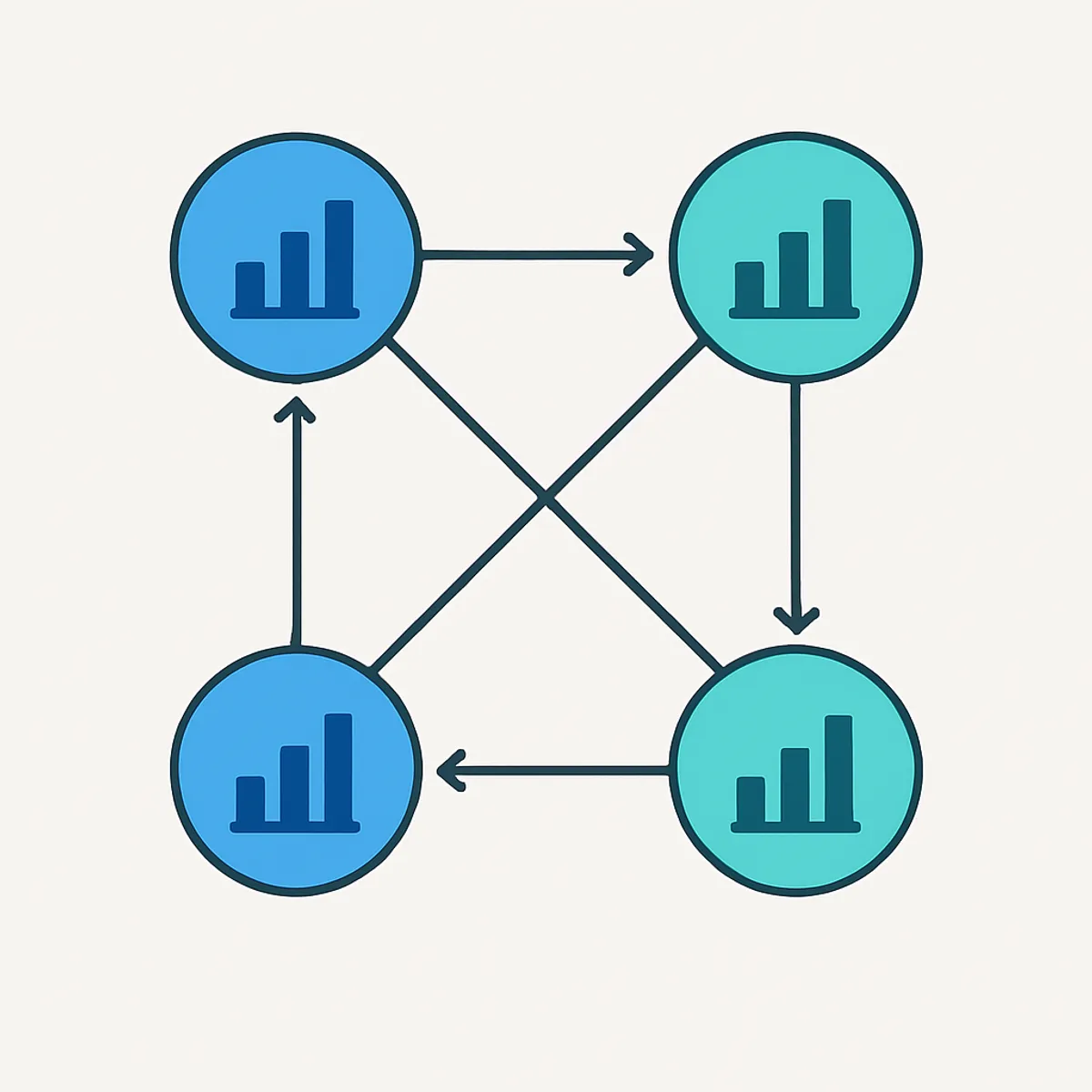
Bayesian neural networks, Gaussian processes, and Bayesian networks all share this property: they do not just predict, they tell you how sure they are. The trade-off is computational cost, which is why engineers often use practical approximations:
- Monte Carlo dropout: Keep dropout active at prediction time and run the model many times to sample a distribution of outputs.
- Deep ensembles: Train several models and measure how much they disagree; high disagreement signals high uncertainty.
- Variational inference: Approximate the full Bayesian posterior with a simpler distribution that is faster to compute.
In my experience, deep ensembles are the most reliable starting point for teams new to uncertainty. They are simple to implement, parallelize well, and consistently produce better calibrated estimates than a single model.
Measuring Confidence in Machine Learning Models
Confidence scores are only useful when they are calibrated to reality. A raw softmax output that says 0.98 does not mean the model is right 98% of the time. Modern neural networks are famously overconfident, and fixing this is a core engineering task.
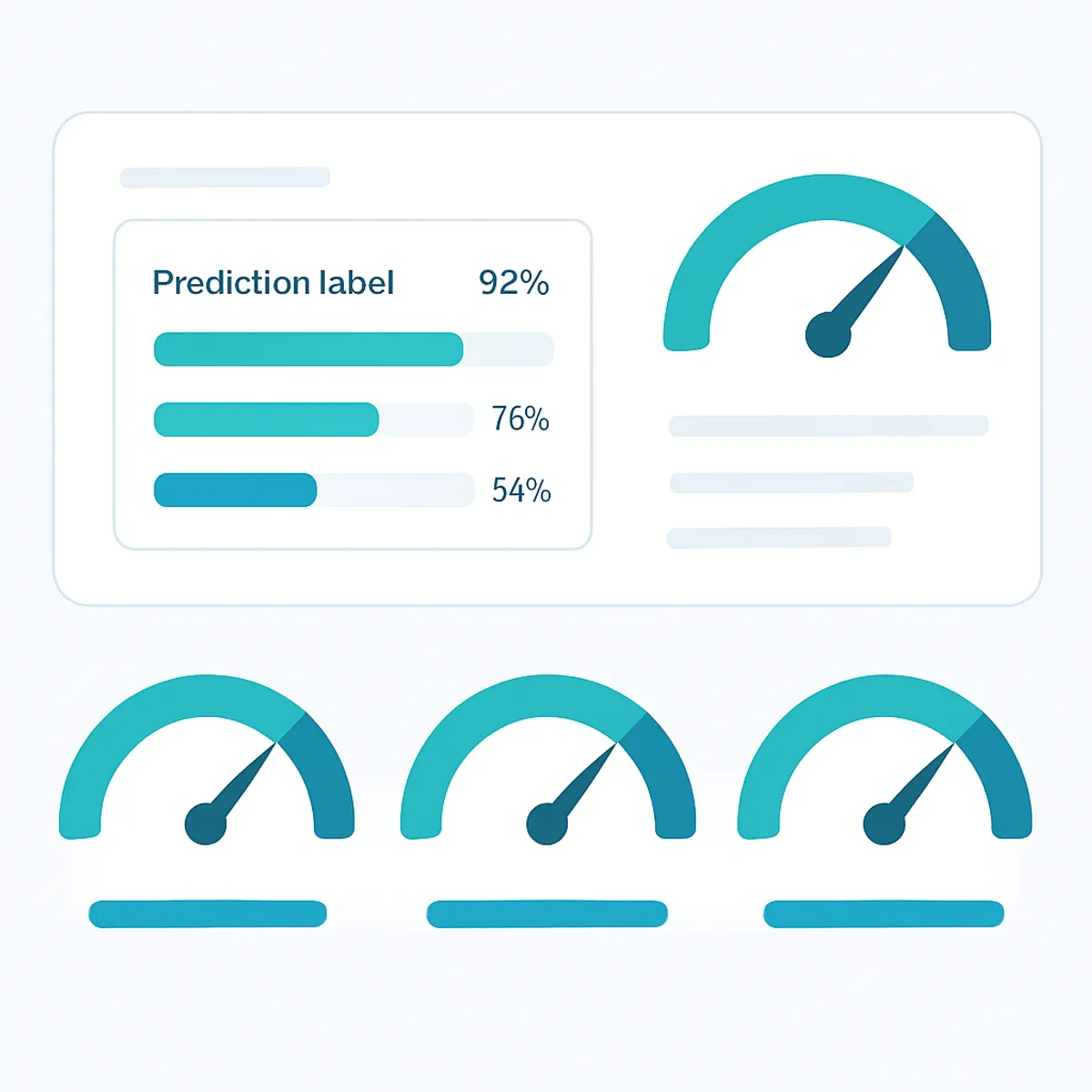
Practical techniques to measure and improve confidence include temperature scaling, isotonic regression, and reliability diagrams that plot predicted confidence against observed accuracy. The goal is simple: when your model says 80%, it should be right about 80% of the time. Once confidence is calibrated, you can build decision rules such as "auto-approve above 90%, route the rest to a human reviewer."
This is where artificial intelligence with uncertainty becomes a business advantage. Calibrated confidence lets you automate the easy 80% of cases safely while focusing human effort on the genuinely hard 20%.
Uncertainty Quantification in Practice
Uncertainty quantification (UQ) is the engineering process of attaching reliable error bars to every AI output. It turns abstract probability into something product teams can act on.
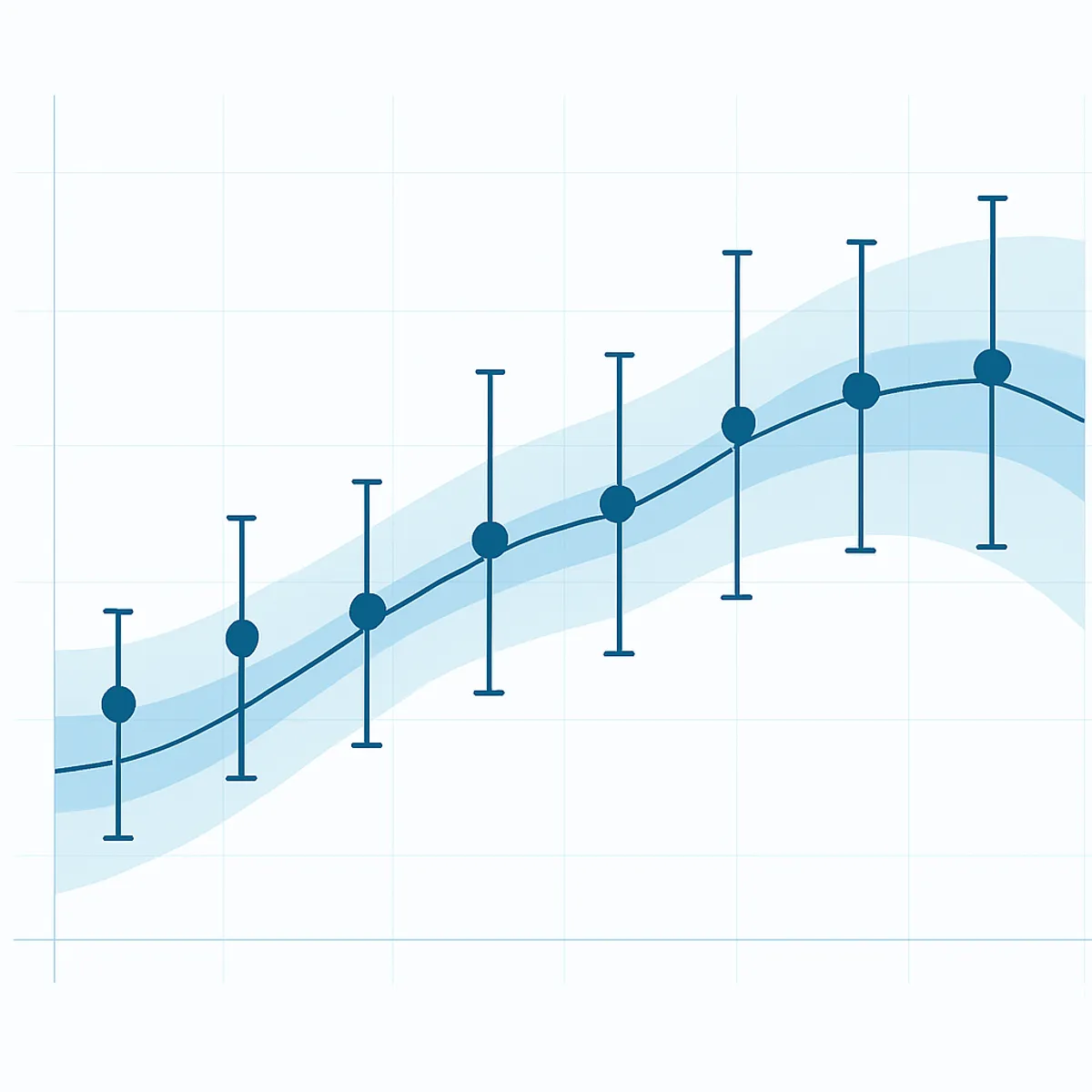
A practical UQ workflow looks like this:
- Choose an uncertainty method (ensembles, dropout, or conformal prediction).
- Calibrate outputs against a held-out validation set.
- Define action thresholds tied to business risk.
- Monitor for distribution shift, which inflates uncertainty over time.
- Route low-confidence cases to humans or fallback logic.
Conformal prediction deserves special mention because it offers statistical guarantees: instead of a single label, it returns a set of labels that contains the true answer with a chosen probability, such as 95%. This is increasingly popular precisely because it is honest about ambiguity without requiring you to retrain everything.
AI Decision-Making Under Risk
Good AI decision-making weighs not just the most likely outcome, but the cost of being wrong. A model might predict "safe" with 60% confidence, but if the downside of an error is catastrophic, the right action is caution, not blind acceptance.
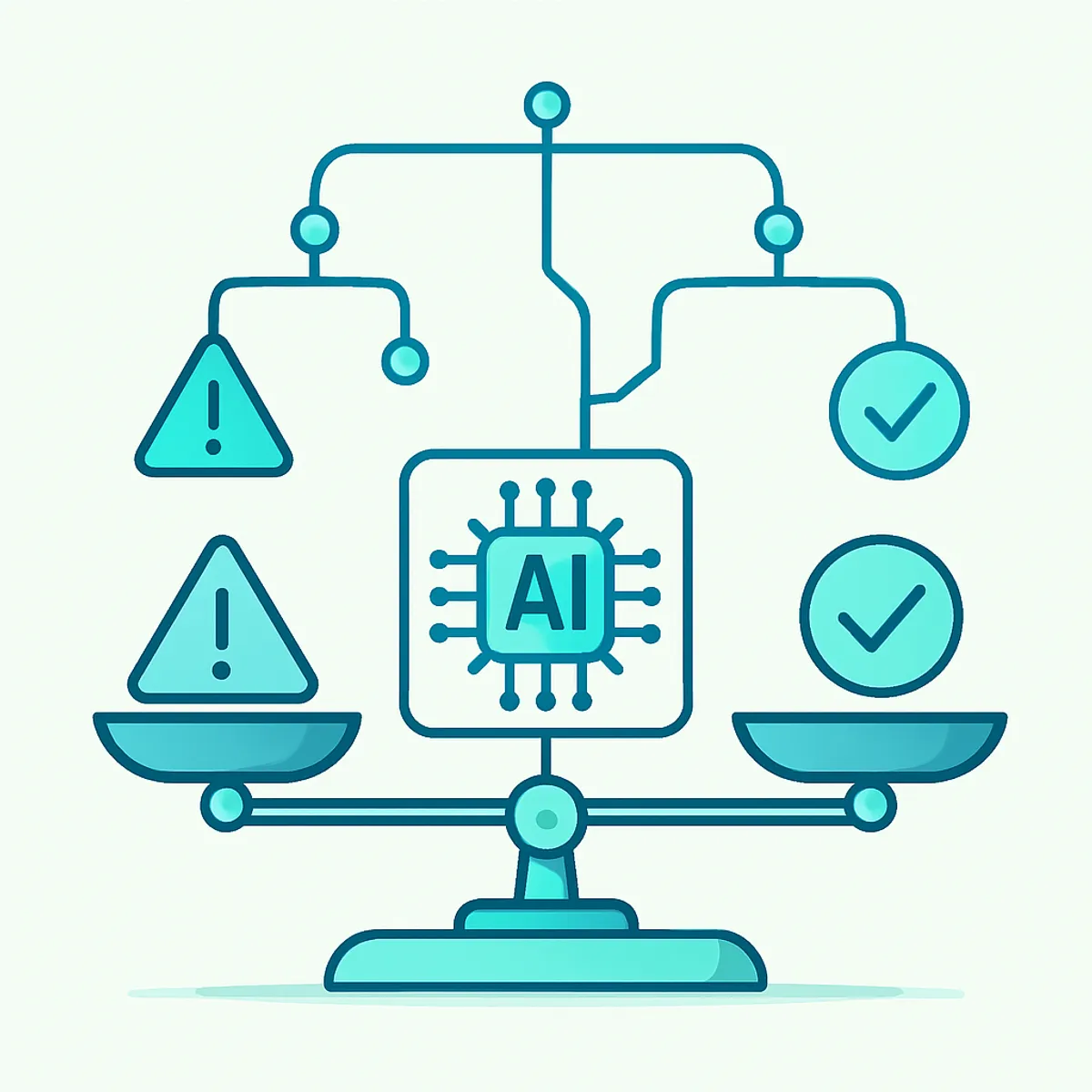
This is the core of decision theory applied to AI. You combine the probability of each outcome with its consequences to choose the action with the best expected value. A self-driving car that is only 70% sure the road is clear should slow down, because the cost of a collision dwarfs the cost of a few lost seconds.
For businesses deploying these systems, building uncertainty-aware decision logic is a specialized task. Teams offering AI development services increasingly bake risk-weighted thresholds directly into production pipelines so that automation stays safe under pressure. The same principle applies to advanced AI platforms built through dedicated artificial intelligence services, where reliability under uncertainty is the differentiator.
Uncertainty in Large Language Models
Large language models hallucinate precisely because they were not originally built to express uncertainty. They generate the most statistically likely next token, which can sound confident even when wrong. This is one of the biggest open challenges in modern AI.
Newer approaches help LLMs signal doubt: asking the model to provide confidence estimates, using self-consistency to sample multiple answers and measure agreement, and retrieval-augmented generation that grounds answers in verifiable sources. When an LLM can say "I do not have enough information to answer that," it becomes dramatically more trustworthy for real applications.
Comparison of Uncertainty Techniques
| Technique | Reliability | Compute Cost | Best Use Case |
|---|---|---|---|
| Softmax confidence | Low | Very low | Quick prototypes only |
| Temperature scaling | Medium | Very low | Calibrating existing models |
| Monte Carlo dropout | Medium | Medium | Single-model uncertainty |
| Deep ensembles | High | High | High-stakes predictions |
| Conformal prediction | High | Low | Guaranteed coverage sets |
| Bayesian networks | High | High | Explainable risk reasoning |
The Future of Trustworthy AI
The next generation of AI will be judged less on raw capability and more on how honestly it handles what it does not know. Regulators, enterprises, and users are all converging on the same demand: AI that is calibrated, transparent, and safe under uncertainty.

Expect uncertainty quantification to become a standard part of model cards, audits, and compliance frameworks. The organizations that win will be those that treat doubt as a feature to engineer, not a weakness to hide.
Key Takeaways
- Artificial intelligence with uncertainty means models reason in probabilities and express confidence rather than forcing single answers.
- Uncertainty splits into aleatoric (data noise) and epistemic (model knowledge gaps), and each requires a different fix.
- Calibrated confidence is more valuable than raw accuracy because it tells you when to trust a specific prediction.
- Deep ensembles and conformal prediction are the most practical starting points for reliable uncertainty estimates.
- Stanford's AI Index shows rising AI incidents, many tied to overconfident predictions on unfamiliar inputs.
- Risk-weighted decision-making, not just likelihood, is what keeps automated systems safe in high-stakes settings.
Frequently Asked Questions (FAQ)
What is artificial intelligence with uncertainty?
It is the design of AI systems that represent what they do not know using probability. Instead of producing a single fixed answer, these models output confidence scores, ranges, or distributions, allowing them to make safer and more honest decisions when data is incomplete or noisy.
Why is uncertainty important in machine learning?
Uncertainty matters because average accuracy hides individual mistakes. A model that flags low confidence can escalate hard cases to humans, preventing costly errors. In healthcare, finance, and autonomous systems, knowing when an AI is unsure is often more valuable than overall accuracy alone.
What is the difference between aleatoric and epistemic uncertainty?
Aleatoric uncertainty comes from randomness in the data itself, like sensor noise, and cannot be reduced with more data. Epistemic uncertainty comes from the model's lack of knowledge and shrinks as you add more diverse, relevant training examples. Each type points to a different solution.
How do AI models measure their confidence?
Models measure confidence using techniques like temperature scaling, Monte Carlo dropout, deep ensembles, and conformal prediction. These methods produce calibrated probabilities, meaning a stated 80% confidence should correspond to being correct about 80% of the time, which makes downstream decisions far more reliable.
Why do large language models hallucinate?
Language models hallucinate because they generate the most statistically likely next words, not verified facts, and were not originally built to express doubt. Methods like self-consistency sampling, confidence prompting, and retrieval-augmented generation help them ground answers and signal when they lack enough information.
Can uncertainty be eliminated from AI completely?
No. Aleatoric uncertainty from inherent randomness can never be fully removed, and some epistemic uncertainty always remains in real systems. The realistic goal is to measure uncertainty accurately, calibrate it, and build decision logic that responds safely when confidence is low rather than ignoring it.