Discover how artificial intelligence is reshaping the valve industry through smart manufacturing, predictive maintenance, AI quality control, and IoT-driven monitoring.
Artificial Intelligence Valve Industry
The valve industry has spent more than a century perfecting mechanical reliability, but the next leap forward is not mechanical at all. It is computational. Artificial intelligence is now embedded across valve design, manufacturing, inspection, and field operation, turning passive components into data-rich, self-aware assets. After years working alongside manufacturing and automation teams, I have watched AI move from a marketing buzzword to a measurable driver of uptime, safety, and margin. This guide explains exactly how AI is transforming the valve industry, where it delivers real value, and what manufacturers should do next.

Quick Answer: Artificial intelligence is transforming the valve industry by enabling predictive maintenance, automated quality control, smart valve design, and IoT-based real-time monitoring. AI reduces unplanned downtime, improves defect detection, optimizes flow performance, and extends valve lifespan across oil, gas, water, and process industries worldwide.
What Does AI Mean for the Valve Industry?
Artificial intelligence in the valve industry refers to using machine learning, computer vision, and sensor analytics to design, build, monitor, and maintain valves with minimal human intervention. Instead of reacting to failures after they happen, AI systems forecast them. Instead of manual visual inspection, computer vision scans every unit at line speed.
A valve is a deceptively complex device: it controls pressure, flow, and direction of fluids and gases in environments where failure can be catastrophic. Traditionally, valve performance depended on engineering tolerances and scheduled maintenance. AI adds a continuous learning layer that interprets vibration, temperature, acoustic, and torque data to understand each valve's true condition in real time. The result is a shift from time-based maintenance to condition-based intelligence. Companies like ZoneTechify and WebPeak help industrial brands bridge this gap by connecting physical equipment to intelligent software systems.
How AI Is Transforming Valve Manufacturing
AI touches every stage of valve production, from raw material handling to final packaging. The biggest gains appear where repetitive precision and large data volumes meet.
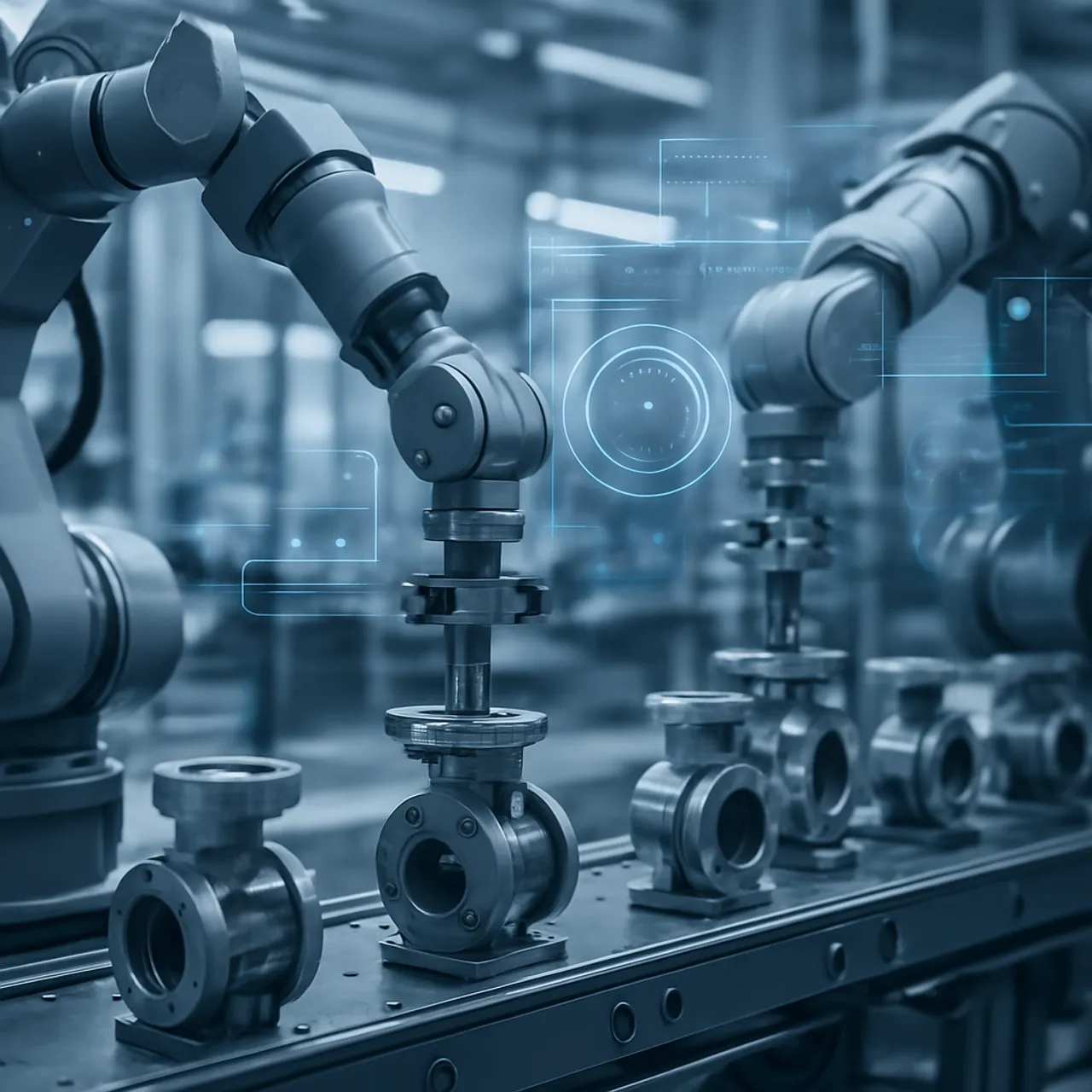
Smart Automation on the Production Line
Modern valve plants use AI-guided robotics to handle machining, casting, and assembly with sub-millimeter consistency. Machine learning models adjust cutting speeds and tool paths based on live feedback, reducing scrap and tool wear. According to McKinsey, AI-enabled manufacturing can cut machine downtime by 30 to 50 percent and increase throughput by 10 to 30 percent, gains that directly improve a valve maker's cost per unit. Automation also frees skilled engineers from repetitive tasks so they can focus on tolerance optimization and product innovation.
Predictive Maintenance and Smart Valves
Predictive maintenance is the single most valuable AI application in the valve sector. Predictive maintenance uses sensor data and machine learning to forecast component failure before it occurs. Smart valves equipped with sensors stream torque, position, vibration, and seal-wear data to AI models that flag anomalies days or weeks in advance.
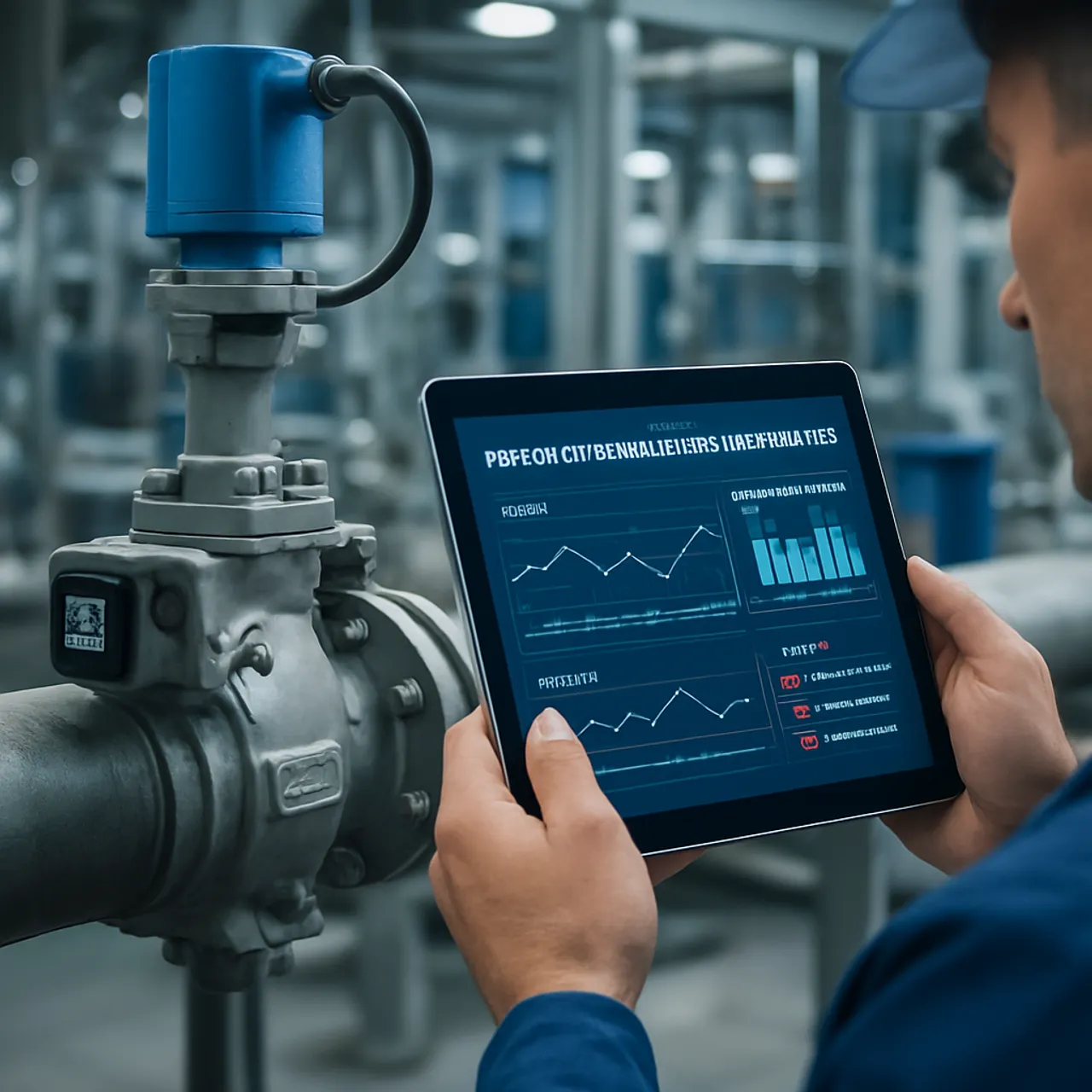
This matters because unplanned downtime is brutally expensive. According to a Deloitte analysis, unplanned downtime costs industrial manufacturers an estimated 50 billion dollars annually, and predictive maintenance can reduce maintenance costs by up to 40 percent. For a refinery running thousands of control valves, even a single avoided shutdown can justify an entire AI deployment.
AI-Driven Quality Control
AI quality control uses computer vision to inspect valves for surface defects, dimensional errors, and casting flaws faster and more accurately than the human eye. Trained on thousands of labeled images, these systems detect micro-cracks, porosity, and threading errors that inspectors routinely miss during fast-moving shifts.
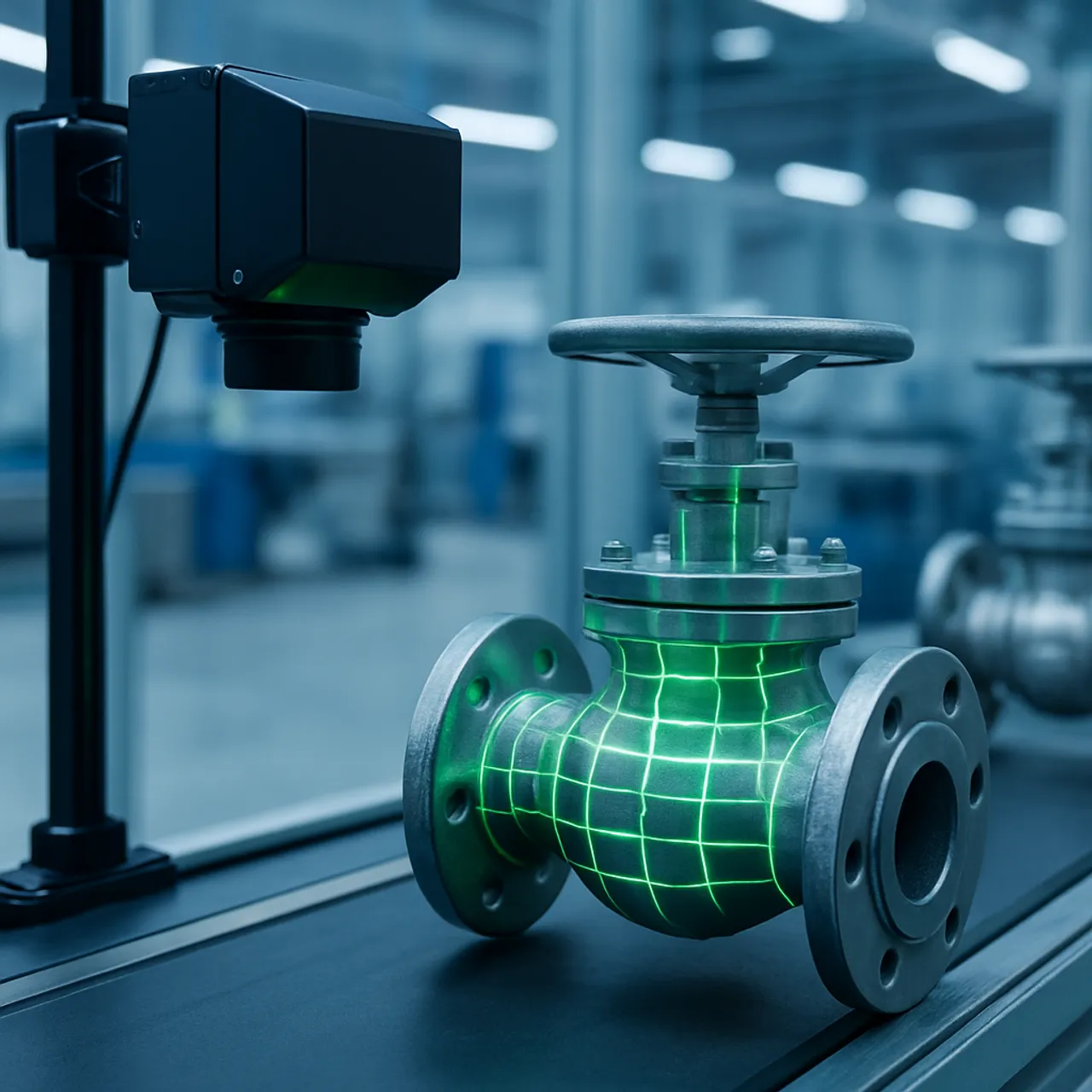
In practice, vision-based inspection achieves consistency that manual checks cannot match across long shifts. It logs every inspection, creating a digital quality trail that supports certification and traceability requirements in regulated industries like oil and gas, pharmaceuticals, and nuclear power. The defect data also feeds back into design and casting processes, creating a closed loop where each batch teaches the system to prevent the next failure. This blend of automation and accountability is exactly why demand for artificial intelligence services is rising sharply among industrial manufacturers.
IoT Sensors and Real-Time Valve Monitoring
The Internet of Things is the nervous system that makes AI possible in valves. IoT sensors capture the raw operational data, and AI turns it into decisions.
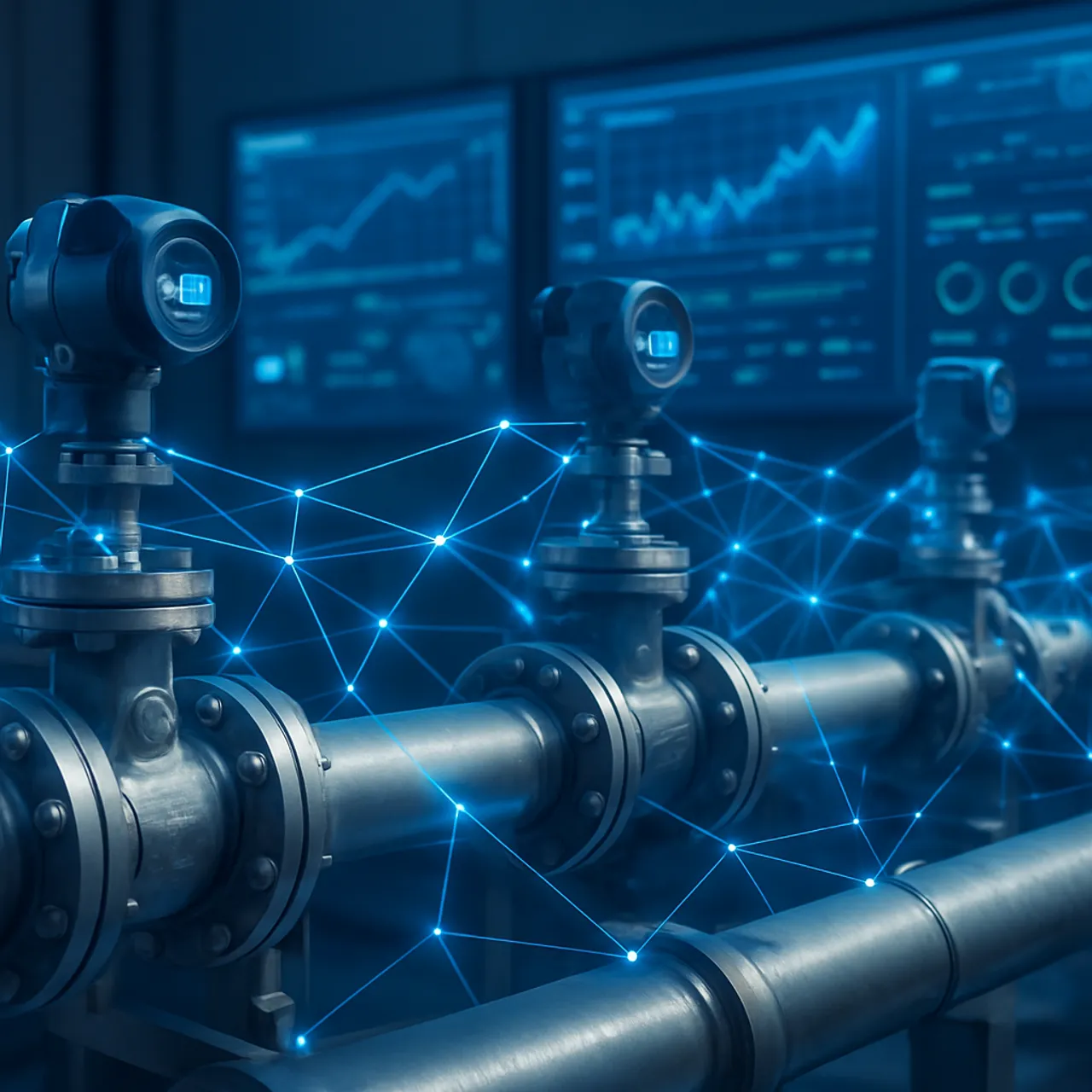
Connected valves continuously report parameters such as flow rate, internal pressure, actuator position, and temperature. AI models compare this live data against expected performance curves and alert operators the moment a valve drifts out of range. Key benefits of AI-driven IoT valve monitoring include:
- Remote diagnostics: Engineers assess valve health from a control room or mobile device without entering hazardous zones.
- Leak and emission detection: AI identifies fugitive emissions early, supporting environmental compliance and safety.
- Energy optimization: Smart actuation reduces unnecessary cycling, lowering power consumption and mechanical stress.
- Digital twins: A virtual replica of each valve simulates wear and predicts remaining service life.
This level of visibility was impossible a decade ago. Today it is becoming the baseline expectation for critical infrastructure operators.
Machine Learning in Valve Design and Engineering
AI is moving upstream into the design phase, where it compresses development cycles dramatically. Generative design uses machine learning to produce optimized valve geometries based on performance goals such as flow efficiency, weight, and pressure rating.
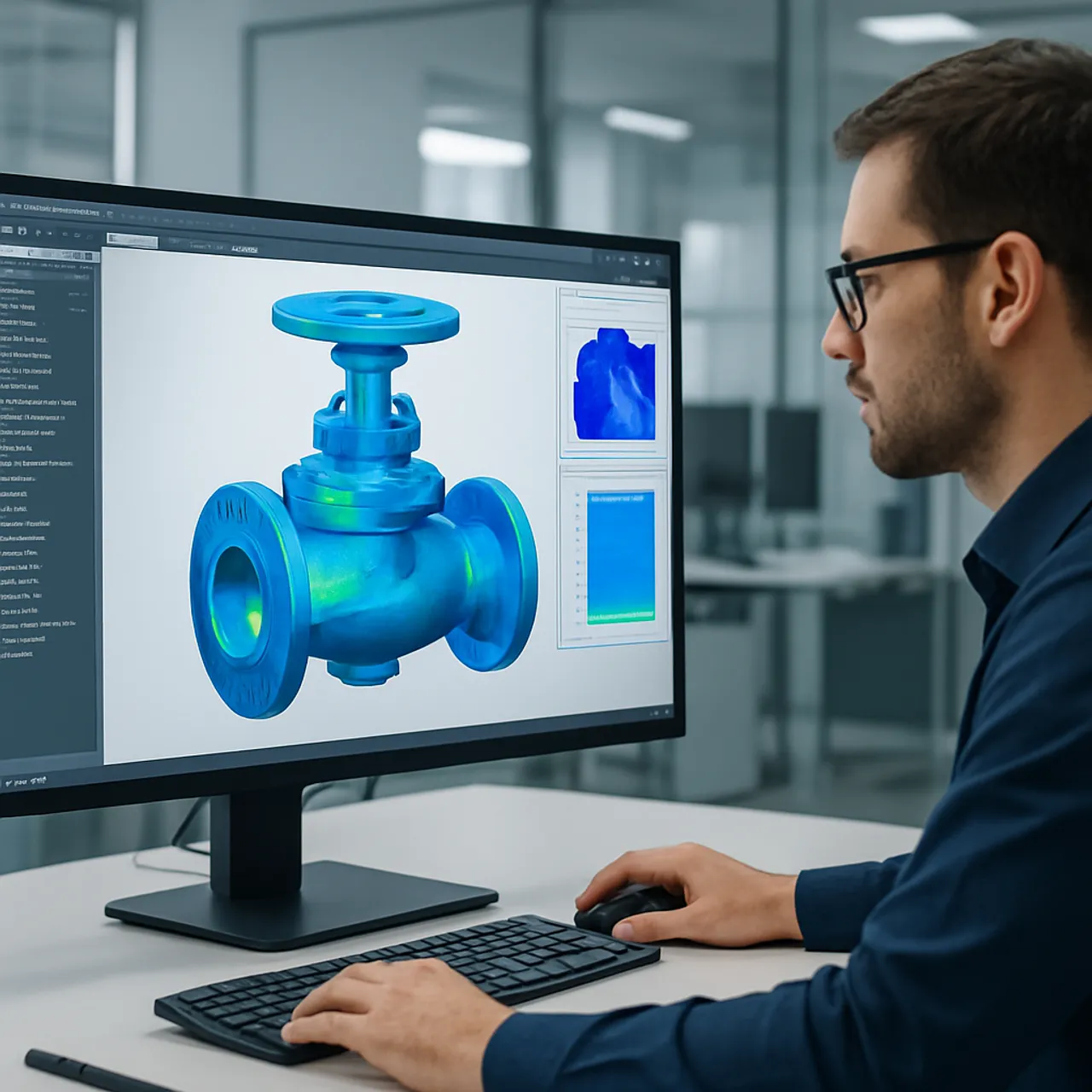
Instead of iterating through dozens of manual CAD revisions, engineers define constraints and let algorithms explore thousands of design variations. Computational fluid dynamics powered by machine learning predicts how each design will behave under real flow conditions, reducing the need for expensive physical prototypes. The outcome is lighter valves, smoother flow paths, less cavitation, and faster time to market. Manufacturers investing in custom engineering tools often partner with web application development specialists to build the dashboards and simulation platforms that make this data usable on the plant floor.
AI and the Valve Supply Chain
AI extends beyond the factory into procurement and logistics. Demand forecasting models analyze historical orders, market signals, and project pipelines to predict which valve types will be needed and when. This prevents both stockouts and costly overproduction of slow-moving SKUs.
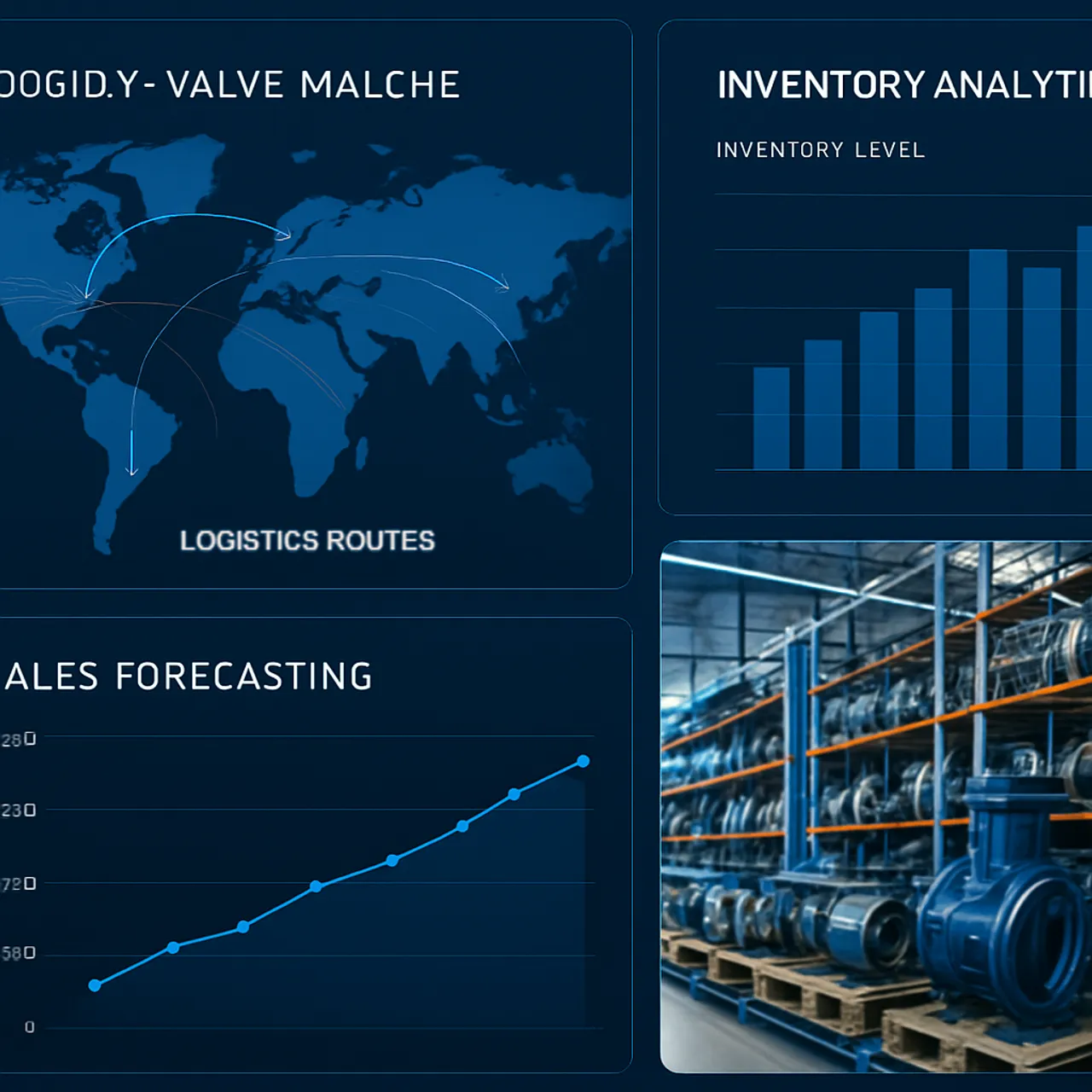
AI also optimizes inventory placement, supplier selection, and shipping routes, shortening lead times in an industry where custom valves can take weeks to deliver. By linking production data with supply chain analytics, manufacturers gain a single source of truth that improves on-time delivery and cash flow.
Comparison Table: Traditional vs AI-Powered Valve Operations
| Factor | Traditional Valve Operations | AI-Powered Valve Operations |
|---|---|---|
| Maintenance approach | Scheduled or reactive | Predictive and condition-based |
| Quality inspection | Manual, sample-based | Automated computer vision, 100 percent coverage |
| Downtime risk | High and unpredictable | Significantly reduced |
| Design cycle | Slow, prototype-heavy | Fast, simulation-driven |
| Field monitoring | Periodic manual checks | Continuous real-time data |
| Data usage | Limited and siloed | Centralized and actionable |
Real-World Data and Industry Impact
The momentum behind AI in industrial settings is backed by hard numbers. According to a PwC report, AI could contribute up to 15.7 trillion dollars to the global economy by 2030, with manufacturing among the largest beneficiaries. In the valve and flow control market specifically, predictive maintenance and smart instrumentation are cited as primary drivers of double-digit growth in industrial IoT adoption.
From my own work with process plants, the pattern is consistent: the first AI win is almost always downtime reduction, the second is quality improvement, and the third is energy and emissions savings. Each builds the data foundation for the next, which is why early adopters compound their advantage over competitors who delay.
Challenges of Adopting AI in the Valve Industry
AI is powerful, but deployment is not automatic. Honest expertise means acknowledging the obstacles:
- Legacy equipment: Older valves lack sensors, so retrofitting is required before data collection can begin.
- Data quality: Models are only as good as the data feeding them; noisy or incomplete sensor data weakens predictions.
- Workforce skills: Plants need technicians who can interpret AI outputs and trust them in critical decisions.
- Integration complexity: Connecting OT systems with IT platforms securely demands careful cybersecurity planning.
- Upfront cost: Hardware, software, and integration require investment, though ROI typically arrives within one to three years.
The organizations that succeed treat AI as a phased program, not a single purchase. They start with one high-value asset class, prove the savings, then scale.
The Future of AI in the Valve Industry
The next wave will be autonomous valve systems that self-diagnose, self-adjust, and order their own replacement parts. Digital twins will simulate entire fluid networks, allowing operators to test changes virtually before touching physical assets.
As generative AI matures, expect natural-language interfaces where an engineer simply asks, "Which valves will likely fail this quarter?" and receives a ranked, explained answer. Sustainability pressure will also push AI toward emissions reduction and energy efficiency, making intelligent valves central to greener industrial operations. The valve of the future is not just a mechanical part; it is a connected, thinking node in a smart industrial ecosystem.
Key Takeaways
- Artificial intelligence is reshaping the valve industry through predictive maintenance, AI quality control, smart design, and IoT monitoring.
- Predictive maintenance can reduce maintenance costs by up to 40 percent and cut unplanned downtime dramatically.
- Unplanned downtime costs industrial manufacturers an estimated 50 billion dollars annually, making AI a strong financial investment.
- AI computer vision delivers 100 percent inspection coverage with consistent, traceable accuracy.
- Successful adoption is phased: start with one high-value asset, prove ROI, then scale across operations.
Frequently Asked Questions (FAQ)
How is artificial intelligence used in the valve industry?
AI is used for predictive maintenance, automated quality inspection, generative valve design, and real-time IoT monitoring. It analyzes sensor data to forecast failures, uses computer vision to detect defects, and optimizes flow performance, reducing downtime and improving safety across industrial fluid control systems worldwide.
What are smart valves?
Smart valves are valves equipped with sensors and connectivity that stream operational data such as pressure, torque, and position to AI systems. These systems analyze the data to monitor valve health, predict failures, optimize performance, and enable remote diagnostics without manual physical inspection in hazardous environments.
Does AI reduce maintenance costs for valves?
Yes. AI-driven predictive maintenance can reduce maintenance costs by up to 40 percent by identifying problems before failure. It replaces fixed maintenance schedules with condition-based servicing, preventing both unnecessary repairs and costly unplanned shutdowns, which significantly improves equipment reliability and overall operational profitability.
Is AI in the valve industry expensive to implement?
There is an upfront cost for sensors, software, and integration, but most manufacturers see return on investment within one to three years. Starting with one high-value asset class proves the savings quickly, allowing companies to scale AI adoption affordably and confidently across their operations.
What is a digital twin for a valve?
A digital twin is a virtual replica of a physical valve that simulates its behavior using real-time sensor data. It predicts wear, tests operating changes safely, and estimates remaining service life, helping engineers make smarter maintenance and design decisions without disrupting live industrial processes.